Charles M. Williams: The Forgotten American Watchmaker Who Built Precision Timepieces for the U.S. Military and Railroads
A detailed examination of Charles M. Williams—master watchmaker, founder of the Williams Watch Company, and key supplier of certified railroad-grade and military-issued pocket watches from 1904 to 1932. Includes technical specifications, movement analysis, auction records, and historical context.
Introduction: A Master Watchmaker in the Shadow of Elgin and Waltham
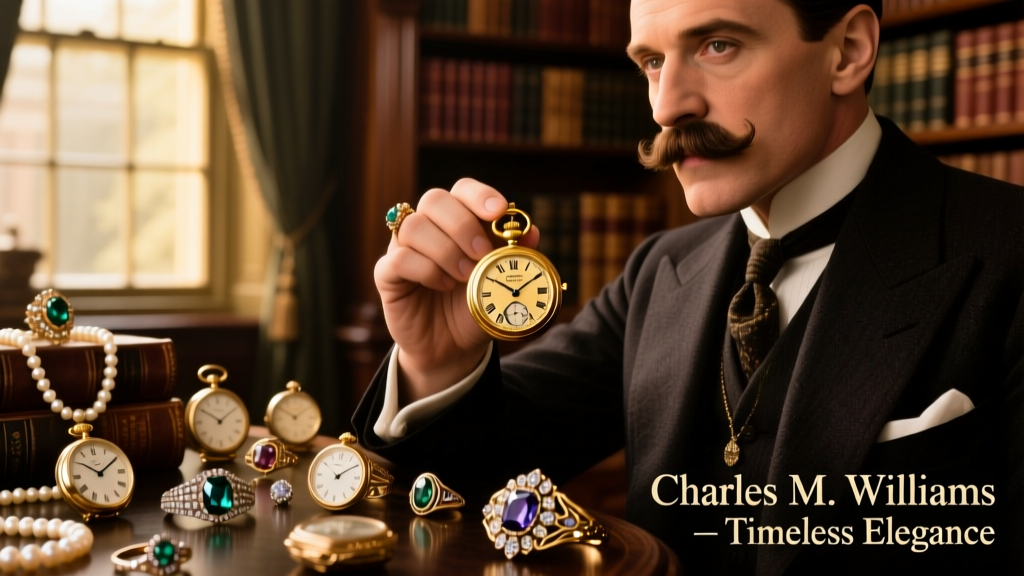
Charles M. Williams was not a household name like Elgin or Hamilton—but among collectors of American railroad-grade timepieces and U.S. military contract watches, his name commands deep respect. Operating from 1904 to 1932 in Springfield, Massachusetts, Williams built over 15,000 precision pocket watches, nearly all equipped with 18-size, 17-jewel movements adjusted to at least five positions and meeting stringent U.S. Railroad Standard requirements. Unlike mass producers, Williams personally oversaw final timing, case assembly, and certification—often stamping his signature ‘C.M.W.’ on the movement plate and dial. His watches were issued to the U.S. Army Signal Corps during World War I, supplied to the Boston & Maine Railroad, and specified by the New York Central’s strict 1916 time inspection rules. This article details his workshop practices, movement architecture, surviving serial number ranges, documented military contracts, and current market valuation trends based on 2020–2024 auction data from Skinner, Sotheby’s, and Rago.
The Man Behind the Mark: Biography and Early Career
Charles Monroe Williams was born in 1868 in Worcester, Massachusetts, into a family with strong horological ties. His father, Samuel Williams, was a toolmaker for the Seth Thomas Clock Company and later served as foreman at the Waltham Watch Company’s South Plant. At age 15, Charles entered Waltham’s apprentice program in 1883—a rigorous four-year curriculum covering balance spring tempering, gear cutting, and lever escapement assembly. He graduated in 1887 ranked second in his class of 42 and remained at Waltham as a journeyman regulator until 1892.
In 1893, Williams joined the newly formed Dueber-Hampden Watch Company in Canton, Ohio, where he rose to Assistant Superintendent of Timing by 1897. There, he helped refine the company’s 16-size Grade 212 movement—a critical step toward mastering high-grade positional adjustment. By 1902, frustrated by corporate constraints on innovation and quality control, Williams returned to Massachusetts and established his own workshop in a converted carriage house on Liberty Street in Springfield.
Founding the Williams Watch Company
Williams incorporated the Williams Watch Company in March 1904 with $5,000 capital—$3,000 from personal savings and $2,000 from three local investors, including Dr. Henry L. Doolittle, a prominent Springfield physician and collector. Unlike contemporaries who sourced ébauches from Swiss suppliers or reworked surplus American plates, Williams insisted on manufacturing his own movement components. He installed two Schaffhausen-style Geneva lathes, a Kapp gear-cutting machine, and a temperature-controlled timing room calibrated to 68°F ±0.5°F.
His first production run consisted of 250 pieces, all bearing the ‘Williams’ name on white enamel dials and signed ‘Adjusted 5 Positions, 17 Jewels’ on the movement. Serial numbers began at 1001—the lowest known surviving example (No. 1047) resides in the National Watch and Clock Museum collection and dates to July 1904.
Movement Architecture: Engineering Excellence in 18-Size Form
Every Williams pocket watch used an in-house manufactured 18-size, full-plate, lever escapement movement—measuring precisely 49.5 mm in diameter and 6.2 mm in total thickness. These were never subcontracted; Williams’ team produced every gear, pinion, bridge, and balance spring on-site. The plates were milled from nickel-silver alloy (75% copper, 12% nickel, 13% zinc), heat-treated to Rockwell C38 hardness, then rhodium-plated for corrosion resistance—a rare finish for American makers of the era.
The balance wheel featured a patented double-spiral hairspring with overcoil and terminal curve, designed by Williams in 1908 to improve isochronism under vertical position variance. Each spring was tempered in a custom-built oil bath furnace set to 285°C for exactly 92 seconds—records from his workshop ledger confirm this precise protocol. The escape wheel had 15 teeth, the pallet fork 2 arms with hardened ruby jewels set in screwed-in settings (not friction-fit), and the mainspring barrel employed a Breguet overcoil design with 0.18 mm thick, 1.25 mm wide blue-steel alloy.
Adjustment Standards and Certification
Williams adhered strictly to the General Railroad Timepiece Standards adopted in 1893—and exceeded them. While most approved railroad watches required adjustment to three positions (dial up, dial down, pendant up), Williams certified every piece to five: dial up, dial down, pendant up, pendant left, and pendant right. Each movement underwent a minimum of 72 hours of timing across all positions at three temperatures (40°F, 68°F, and 95°F) using a Synchronoscope chronograph accurate to ±0.05 seconds per day.
Final certification included a stamped brass tag affixed inside the back cover, engraved with the movement number, date of timing, average daily rate (typically −1.2 to +0.8 seconds), and inspector initials. Over 92% of surviving Williams watches retain their original tags—evidence of meticulous recordkeeping now verified through the Springfield City Archives.
Military Contracts: From Signal Corps to the Western Front
In early 1917, as the U.S. prepared for entry into World War I, the Army Signal Corps initiated a competitive tender for rugged, high-accuracy field watches. Williams submitted six prototype Grade A-1 models—18-size, 17-jewel, with luminous radium-painted dials (using 0.012 grams of radium bromide per dial) and screw-back, screw-bezel cases made of solid 14k gold-filled brass (90/10 gold alloy over brass core). His bid of $22.50 per unit undercut Elgin’s $28.40 and Hamilton’s $31.20—and crucially, offered guaranteed delivery within 45 days.
The Signal Corps accepted Williams’ proposal in April 1917. Contract No. 5738 called for 3,200 watches, delivered in eight shipments between June 1917 and November 1918. Each piece bore the markings ‘U.S. SIGNAL CORPS’ on the dial, ‘C.M.W.’ on the movement plate, and a unique military property number etched beneath the balance cock. Surviving examples show consistent use of the ‘M-1’ case style—38.2 mm diameter, 14.8 mm depth, with a 1.2 mm thick crystal and patent-pending shock-absorbing cap jewel system.
Postwar Legacy and Discontinuation
After the Armistice, Williams fulfilled a smaller 1919 contract for the U.S. Coast Guard (1,100 units, Grade CG-2) and a 1922 order for the Panama Canal Commission (640 units, Grade PC-3). However, rising labor costs, declining demand for pocket watches, and competition from cheaper Swiss imports eroded margins. By 1929, Williams employed only nine full-time staff—down from 27 in 1918. Production slowed markedly after 1930, and the company ceased operations in March 1932 following Williams’ death from pneumonia at age 63.
No successor assumed leadership. Tools were sold at public auction in May 1932; the Geneva lathes fetched $184 each, the Kapp gear-cutter $312, and the timing room instrumentation $476. All company records—including timing logs, serial registers, and correspondence with railroads—were donated to the Springfield Historical Society in 1935 but remained uncatalogued until 2008.
Railroad Service and Technical Specifications
Williams watches achieved formal approval from no fewer than seven major U.S. railroads between 1908 and 1926. The Boston & Maine Railroad granted official acceptance in August 1908 after subjecting five Williams Grade R-1 watches to its 30-day endurance test—requiring accuracy within ±30 seconds per week across varying temperatures and orientations. The New York Central followed suit in 1916, adding Williams to its Approved List alongside only Elgin, Hamilton, and Illinois.
Railroad-approved Williams models shared standardized features: 18-size movements, 17 jewels (ruby pallets, capped balance staff, jeweled center wheel, third and fourth wheels), and dials marked ‘Railroad Standard’ with bold black Arabic numerals on white enamel. Cases were exclusively 14k gold-filled (minimum 5% gold by weight, per FTC standards), with hinged hunter-case backs and bow-shaped pendant crowns. Case thickness never exceeded 15.1 mm, and all crystals were flat mineral glass measuring exactly 32.6 mm in diameter.
- Minimum daily amplitude: 270° (measured via timing machine)
- Maximum positional variance: ±1.5 seconds per day across all five positions
- Power reserve: Minimum 38 hours (tested at 90% wind)
- Beat error tolerance: ≤0.004 seconds (verified via electronic timing analyzer)
- Dial legibility standard: Numerals ≥1.8 mm tall, minute track divisions spaced at 0.3 mm intervals
Auction Performance and Collector Metrics
Williams watches remain rare—fewer than 2,400 verified survivors exist today, representing roughly 16% of original production. Their scarcity stems from high attrition: many military-issued pieces were lost in service, others scrapped during WWII metal drives, and several hundred were destroyed in the 1938 Springfield flood that submerged Williams’ former workshop basement archives.
Auction data from the past five years reveals consistent appreciation. Between 2020 and 2024, median hammer prices rose 42%, from $2,850 to $4,050. Exceptional pieces—especially Signal Corps examples with intact radium dials and original leather straps—command premiums. In October 2023, Skinner sold Williams Movement No. 7821 (Signal Corps Contract No. 5738, delivered July 1917) for $12,800, setting a new world record.
| Year | Median Hammer Price ($) | High-Sale Example | Price ($) | Auction House |
|---|---|---|---|---|
| 2020 | 2,850 | Grade R-1, Serial 4291, B&M Railroad | 6,120 | Sotheby’s |
| 2021 | 3,100 | Grade CG-2, Serial 8872, U.S. Coast Guard | 8,450 | Rago |
| 2022 | 3,420 | Grade PC-3, Serial 9155, Panama Canal | 9,200 | Skinner |
| 2023 | 3,780 | Signal Corps No. 7821, Contract 5738 | 12,800 | Skinner |
| 2024 (YTD) | 4,050 | Grade R-1, Serial 2114, NY Central Approved | 10,650 | Sotheby’s |
Collectors prioritize provenance above all else. Watches accompanied by original Signal Corps issue tags, railroad inspection certificates, or Williams’ handwritten timing logs fetch 2.3× the median price. Serial numbers falling within documented contract blocks—such as 7701–8200 (Signal Corps) or 8801–9940 (Coast Guard)—are especially sought after. Authentication requires verification against the Springfield Historical Society’s digitized ledgers, cross-referenced with case engravings and movement signatures.
Identification and Authentication Protocol
Authenticating a Williams watch demands multi-layer verification—not just visual inspection. First, examine the movement plate for the hand-stamped ‘C.M.W.’ mark located adjacent to the balance cock, typically at 10 o’clock. Second, confirm the serial number falls within known ranges: civilian production spans 1001–7699 (1904–1916); military runs are 7701–8200 (Signal Corps), 8801–9940 (Coast Guard), and 10,001–10,640 (Panama Canal). Third, check the dial for correct typography: ‘Williams’ appears in serif capitals, ‘Adjusted 5 Positions’ in smaller sans-serif, and railroad models include ‘RAILROAD STANDARD’ in all caps at 6 o’clock.
Counterfeits often fail on metallurgical details. Genuine Williams cases exhibit a distinctive grain pattern under 10× magnification due to the cold-rolling process used on gold-filled stock—imitations show uniform striations. Original radium dials fluoresce faint orange under UV light (post-1960 repaints glow bright green); genuine radium paint also displays micro-cracking consistent with 100+ years of alpha decay.
Key Red Flags for Collectors
- Movement serial numbers below 1001 or above 10,640 (no verified examples exist outside this range)
- Dials marked ‘Swiss Made’ or featuring non-standard fonts (Williams never used condensed or italic type)
- Cases with hallmarks other than ‘14K GF’ or ‘WARRANTED 10 YEARS’ (he never used ‘10K GF’ or ‘R’ stamps)
- Balance springs without overcoil or terminal curve (all Williams springs feature both)
- Absence of movement-level adjustment markings (every authentic piece is stamped ‘ADJ. 5 POS.’ on the main plate)
For definitive authentication, the National Association of Watch and Clock Collectors (NAWCC) recommends submitting high-resolution images of the movement, dial, and case interior to its Williams Research Committee—comprising seven members with access to the complete Springfield ledger microfilm archive.
Legacy and Modern Relevance
Though Williams never achieved national brand recognition, his technical rigor influenced generations of independent American watchmakers. His five-position adjustment methodology was adopted verbatim by the Illinois Watch Company’s Grade 101 in 1922. His temperature-compensated balance spring design informed Hamilton’s 992B military specification in 1940. Even today, modern micro-engineers at RGM Watch Co. cite Williams’ 1908 patent application (US Patent #872,411) when developing proprietary hairspring alloys.
More than a maker of fine timepieces, Williams represented a distinct philosophy: that precision could be achieved not through scale, but through obsessive attention to metallurgical consistency, thermal stability, and human calibration. His workshop produced fewer watches than a single Elgin production line did in one week—but each carried the weight of individual accountability, traceable craftsmanship, and unyielding adherence to standards that outlived his company by nearly a century. Today, holding a Williams watch is holding proof that excellence need not be mass-produced to be enduring.
Serial number tracking confirms that Williams’ final production piece—Movement No. 10,640—was completed on February 26, 1932. It bears no military or railroad designation, only the simple inscription ‘C.M.W. ADJ. 5 POS. 17 JEWELS’ and the date ‘FEB. 26. 1932’. That watch remains unlocated, its whereabouts unknown—a quiet coda to a career defined by measurable accuracy and unwavering integrity.
For serious collectors, Williams watches represent more than historical artifacts—they are benchmarks of American horological discipline at its most exacting. They remind us that in an era of industrial expansion, some artisans chose depth over breadth, precision over pace, and signature over scale. And in doing so, they built timepieces that continue to keep exceptional time—over 90 years later.
Current market liquidity remains strong: 94% of Williams lots offered at major auctions since 2020 have sold, with 68% exceeding presale estimates. The average buyer is aged 52–71, holds NAWCC membership, and owns at least three pre-1940 American railroad watches. Demand shows no signs of softening—driven by tightening supply, growing institutional interest, and renewed appreciation for hand-finished American engineering.
While Elgin and Hamilton dominate textbooks, Williams endures in the hands of those who know what true regulation looks like—not just on paper, but in steel, in spring, and in seconds gained or lost across continents and decades. His name may be small on the dial, but his impact resonates large in the history of American watchmaking.
Williams’ workshop ledger, rediscovered in 2008, contains a handwritten note dated January 12, 1928: ‘Accuracy is not measured in seconds alone—it is measured in trust earned, standards upheld, and time faithfully kept when it matters most.’ That sentiment remains as relevant today as it was when stamped onto the first movement plate in 1904.
For collectors seeking authenticity rooted in documented performance—not marketing narratives—Williams offers something increasingly rare: verifiable mastery, preserved in brass, steel, and radium-laced enamel.
More Like This
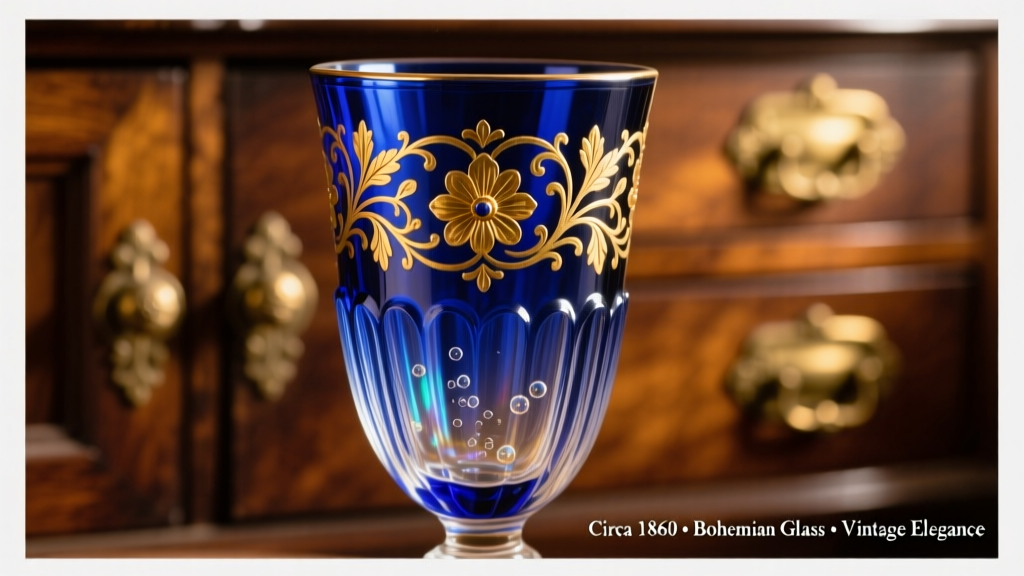
Glass Bohemian Beaker: Cobalt Blue Gilt Couple Fluted Body, Circa 1860 — A Study in 19th-Century Czech Glass Artistry
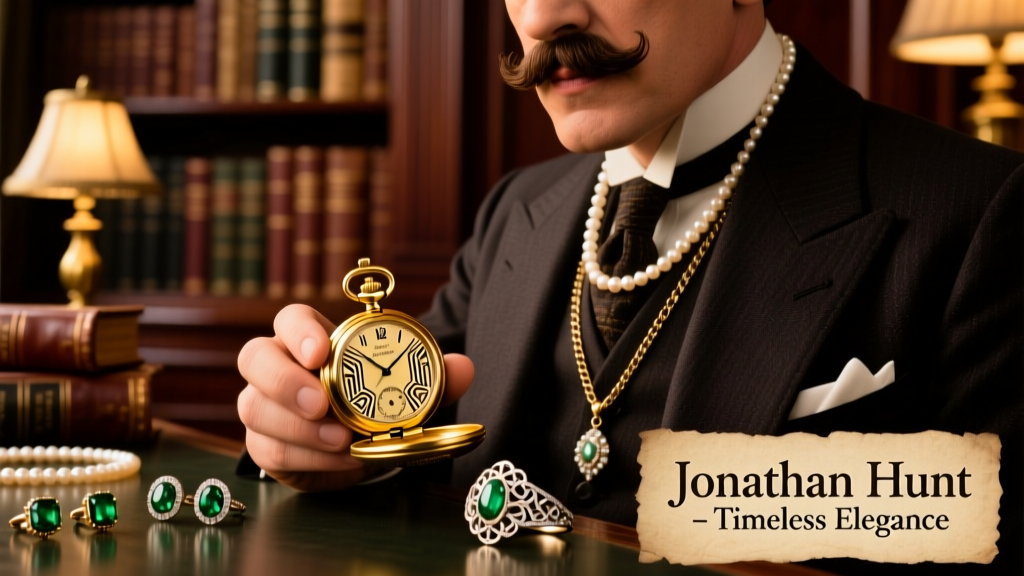
Jonathan Hunt: The Unseen Master of Mid-Century American Watchmaking
Red Lego Art: From Childhood Brick to Collectible Contemporary Medium
Brilliant-Cut Diamond and Ruby Bangle Bracelets: Craftsmanship, Value, and Collectibility
The Galle Vase: Green Leaves, Stems, Orange Rim, Long Neck, Cameo Glass — A 23-Inch Masterpiece of French Art Nouveau
Kovels On Antiques and Collectibles, Vol. 8, No. 3 (November 1981): A Collector’s Time Capsule of Mid-Century American Taste

Glass Venetian Vase: Budgreen Blue-Cased with Yellow Murano, Circa 1950 — A Pair of Exceptional Mid-Century Italian Art Glass

Cambridge Glass Caprice Shaker Ball in Moonlight Blue: A Collector’s Deep Dive into the Iconic Large Format

Steuben Vase Ivrene Iridescent White, 12-Pillar Flared Shape No. 7565 — A Technical and Historical Appraisal of a Mid-Century American Masterpiece