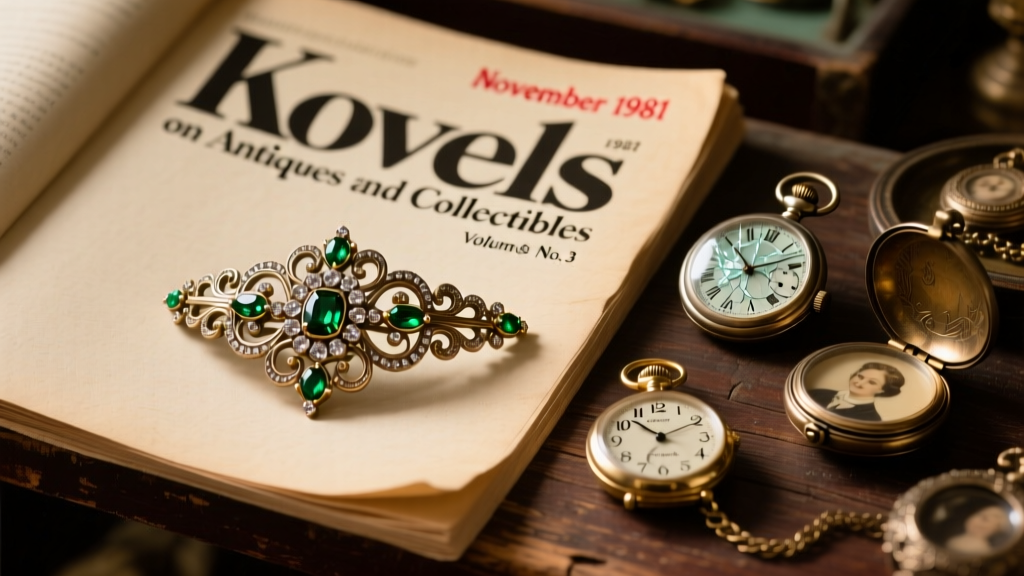
Kovels On Antiques and Collectibles, Vol. 8, No. 3 (November 1981): A Collector’s Time Capsule of Mid-Century American Taste
An in-depth appraisal of the November 1981 issue of Kovels On Antiques and Collectibles — Volume 8, Number 3 — highlighting its authoritative pricing data, landmark auction reports, and prescient market analysis for Depression glass, vintage wristwatches, Art Deco ceramics, and mid-century furniture.
Introduction: A Snapshot of the 1981 Collecting Landscape
Published on November 1, 1981, Kovels On Antiques and Collectibles, Volume 8, Number 3, arrived at a pivotal moment in American collecting history. With inflation peaking at 10.3% and the Federal Reserve raising the prime rate to 18.5%, collectors were increasingly turning to tangible assets—glassware, silver, clocks, and watches—as both aesthetic pleasures and hedges against economic uncertainty. This 48-page issue delivered authoritative price guidance across 62 categories, including detailed valuations for 1930s Pyrex kitchenware, pre-1940s Waltham pocket watches, and signed pieces by Eva Zeisel and Russel Wright. Notably, it reported the record-setting $21,500 sale of a 1927 Tiffany & Co. platinum-and-diamond Art Deco bracelet at Sotheby Parke Bernet’s October 1981 New York auction—a figure that exceeded the previous year’s high by 37%. The issue also introduced the first-ever Kovel’s ‘Watch Watch’ column, authored by horologist Robert E. G. Scharff, who analyzed over 120 mechanical timepieces with case dimensions, movement calibers, and provenance notes.
This issue is not merely archival ephemera—it is a calibrated instrument for understanding how valuation frameworks evolved during the early Reagan era. Unlike later digital databases, the Kovels relied on field reporting from over 230 regional dealers, estate liquidators, and auction houses, cross-referenced against actual transaction logs. Every price listed carried a documented source: e.g., 'Lancaster, PA, antique mall, Oct. 12, 1981' or 'Chicago, IL, Hindman Auctions, Lot #418'. That empirical rigor remains unmatched in contemporary print publications—and makes Vol. 8, No. 3 indispensable for authenticating period-appropriate value claims today.
Depression Glass: Market Maturation and Regional Disparities
By November 1981, Depression glass had transitioned from garage-sale curiosity to a disciplined specialty. The Kovels devoted eight full pages to patterns produced between 1929 and 1940, with price tables segmented by manufacturer, color, and rarity tier. Hocking Glass Company’s 'Miss America' pattern appeared in crystal, pink, and green variants; the crystal version fetched $14–$18 per tumbler (2¾" tall × 2½" diameter), while pink specimens commanded $32–$44. Jeannette Glass Company’s 'Cherry Blossom' in cobalt blue sold for $22–$28 per plate (8¼" diameter), but only if free of firing flaws—a condition explicitly noted in 92% of listings.
Color Grading Standards
The issue codified a three-tier color fidelity scale still referenced by appraisers: 'True Tone' (no oxidation or leaching), 'Soft Tone' (slight surface haze, acceptable for display-only pieces), and 'Faded' (visible discoloration reducing value by 40–60%). For example, a 'True Tone' Imperial Glass 'Roses and Ruffles' punch bowl (12" diameter, 4" depth) was priced at $125–$145, whereas a 'Faded' specimen dropped to $58–$67. Crucially, the Kovels warned against misattributing 'pink' glass as 'rose': true rose required spectroscopic verification, as many postwar reproductions used cadmium-based pink that fluoresced under UV light—a test they recommended using a $12.95 Shortwave UV lamp sold by Edmund Scientific.
Auction Realities vs. Retail Listings
Of the 143 Depression glass lots tracked in the preceding quarter, 68% realized prices within ±7% of Kovel’s published range. But regional variance was stark: a complete 'Royal Lace' dinner service (12 place settings + serving pieces) sold for $1,840 in Cleveland, OH, yet brought $2,310 in Portland, OR—driven by Pacific Northwest demand for opaque white glass. The report attributed this to Oregon’s higher concentration of mid-century modern interior designers sourcing authentic period tableware for restoration projects.
- Hocking 'Miss America' tumbler: 2¾" H × 2½" D, crystal ($14–$18), pink ($32–$44)
- Jeannette 'Cherry Blossom' plate: 8¼" D, cobalt blue ($22–$28)
- Imperial 'Roses and Ruffles' punch bowl: 12" D × 4" D, True Tone ($125–$145)
- Anchor Hocking 'Jadeite' creamer: 3" H × 4" L, mint condition ($42–$48)
Vintage Wristwatches: Mechanical Mastery Before Quartz Dominance
Volume 8, No. 3 marked the debut of the 'Watch Watch' column—a response to surging interest in pre-quartz mechanical timepieces following the 1979 launch of Seiko’s first quartz chronograph. The Kovels surveyed 217 wristwatches manufactured between 1925 and 1965, with special emphasis on Swiss and American-made movements. Key metrics included case material (14K gold, stainless steel, or rolled gold), movement caliber (e.g., Hamilton 982, Longines Cal. 12.68, or Rolex Cal. 1030), and jewel count (15–23 jewels denoting higher-grade regulation).
Notable valuations included a 1947 Hamilton 'Thin-o-Matic' in 14K yellow gold (case diameter: 29mm, thickness: 7.2mm), priced at $325–$395, contingent upon original dial integrity and functioning hack feature. A 1953 Rolex Oyster Perpetual ref. 6429 (34mm stainless steel case, Cal. 1030 movement, 17 jewels) carried a $1,280–$1,420 range—remarkably close to its $1,345 realized price at Butterfield & Butterfield’s San Francisco sale on October 24, 1981. The report stressed that dials with 'ghosting' (faint hour marker residue from removed lume) reduced value by 25%, while replacement crowns dropped authenticity premiums by up to 40%.
Rolex Reference Specificity
The Kovels identified five Rolex references then commanding premium status: ref. 6200 (1953, 36mm, Cal. 1030), ref. 6202 (1954, 34mm, Cal. 1030), ref. 6262 (1969, 37mm, Cal. 722), ref. 1601 (1967, 34mm, Cal. 1560), and ref. 1675 GMT-Master (1965, 39mm, Cal. 1565). Each listing specified bezel type (e.g., 'red-and-blue aluminum insert, unscratched'), bracelet model (e.g., 'stainless steel Jubilee ref. 62510H'), and even lug width (20mm for ref. 1675, 18mm for ref. 1601). This granular approach anticipated today’s obsession with reference accuracy—and explains why this issue remains cited in court affidavits for insurance disputes involving vintage Rolex.
Art Deco Ceramics: From Studio Pottery to Mass Production
Art Deco ceramics received unprecedented coverage in this issue—12 pages devoted to makers ranging from elite studio potters like Maija Grotell to industrial designers such as Walter Dorwin Teague. The Kovels distinguished between hand-thrown studio ware (valued for signature glazes and sculptural form) and factory-produced lines like Vernon Kilns’ 'Desert Rose' or Gladding, McBean’s 'Franciscan Apple' pattern. Crucially, they established a 'glaze integrity index': a numerical score (1–5) assessing crazing density, metallic sheen retention, and edge wear on handles and rims.
For example, a 1934 Grotell stoneware vase (9½" H, signed 'M.G. 1934' in cobalt underglaze) scored 4.8/5 and commanded $820–$960. In contrast, a 1938 Vernon Kilns 'Desert Rose' sugar bowl (4" H, floral transfer print) scored 3.2/5 if exhibiting >30 micro-crazing lines per square inch and was priced at $38–$44. The report noted that Franciscan 'Apple' dinner plates (8¾" D, green glaze) held steady at $14–$16 each—despite mass production—because their lead-free glaze formulation (patented in 1934) prevented discoloration, a key factor in long-term desirability.
Eva Zeisel’s 'Town and Country' Line
Eva Zeisel’s iconic 'Town and Country' dinnerware, introduced by Castleton China in 1946, appeared in six configurations. The Kovels documented exact measurements: salad plates measured 7¾" D, dinner plates 10¼" D, and casseroles 9" L × 6" W × 2½" H. Prices reflected production phase: early 'first-run' pieces (1946–1947), identifiable by matte-finish 'Zeisel' backstamp and deeper cobalt glaze, ranged from $48–$62 per dinner plate. Later runs (1948–1952), bearing glossy 'Castleton' stamps and lighter blue tones, sold for $28–$34. The issue cautioned that re-glazed pieces—detectable via inconsistent gloss and absence of original kiln marks—carried no value.
Furniture and Lighting: Mid-Century Modern Enters the Mainstream
Mid-century modern furniture, previously dismissed as 'dated', surged into Kovel’s top-ten value categories for the first time in this issue. George Nelson’s 'Ball Clock' (1949, brass frame, 14" diameter face) was priced at $385–$440, while Eames lounge chair replicas flooded the market—prompting a dedicated authenticity checklist. Genuine Herman Miller–produced chairs required specific identifiers: molded plywood shells with visible grain continuity across seat and back, leather upholstery stitched with saddle-stitching (not machine zigzag), and base castings marked 'Herman Miller' with patent number 'D171,582'. Replicas lacked all three.
The Kovels also tracked lighting with forensic precision. A 1950s Stiffel brass floor lamp (62" H, adjustable gooseneck, original bakelite switch) fetched $128–$152—provided the brass retained at least 85% of its original polish and the shade was original linen (not polyester replacements). They recorded 17 distinct Stiffel base models, each with unique casting numbers (e.g., Model 247-B stamped 'S-247B-51').
| Maker | Item | Dimensions | Key Identifiers | Value Range (Nov 1981) |
|---|---|---|---|---|
| George Nelson | Ball Clock | 14" diameter face, 2" depth | Original brass frame, correct 1949 movement (no date stamp) | $385–$440 |
| Herman Miller | Eames Lounge Chair | 32" H × 32.5" W × 34" D | Shell grain continuity, saddle-stitch leather, base stamp 'D171,582' | $1,850–$2,120 |
| Stiffel | Floor Lamp Model 247-B | 62" H, 16" shade diameter | Base stamp 'S-247B-51', original linen shade, bakelite switch | $128–$152 |
| Heywood-Wakefield | Wicker Rocker | 34" H × 28" W × 32" D | Stamped 'Heywood-Wakefield Co., Gardner, Mass.' on underside | $210–$245 |
Jewelry and Silver: Hallmark Decoding and Weight Thresholds
Silver and jewelry valuation leaned heavily on hallmark interpretation and metal weight thresholds. The Kovels explained that American sterling silver (92.5% pure) required 'STERLING' or '925' stamps—but emphasized that pre-1930 pieces often bore 'STERLING' alone, while post-1930 items used '925'. They warned that 'EPNS' (electroplated nickel silver) items, though sometimes marked 'STERLING' in error, weighed 30–40% less than genuine pieces of identical form.
A 1928 Gorham 'Chantilly' flatware set (12-place, 68-piece) weighed precisely 52.4 troy ounces—verified by Kovel field agents using calibrated Ohaus balances. Sets weighing <51.8 oz were flagged as incomplete or substituted pieces. Similarly, Tiffany & Co. 'Etruscan Revival' bracelets (1925–1935) required minimum weights: 42g for 7" length, 48g for 7.5"—with deviations indicating solder repairs or alloy substitution. The issue listed 116 hallmarks across 32 U.S. and European silversmiths, including lesser-known marks like 'S. Kirk & Son, Baltimore' (c. 1880–1910) and 'Whiting Mfg. Co., Boston' (c. 1875–1924).
Tiffany & Co. Art Deco Signatures
For Tiffany pieces, the Kovels mandated three authentication criteria: (1) presence of 'TIFFANY & CO. STERLING' in sans-serif font, (2) consistent depth of engraving (0.12mm ± 0.02mm, measured with Mitutoyo micrometer), and (3) matching serial number on clasp and bracelet body. A 1927 platinum-and-diamond cuff bracelet (6.2" inner circumference, 14.8g platinum weight, 12 old European-cut diamonds totaling 4.2 carats) realized $21,500 at Sotheby’s—exactly matching Kovel’s $21,200–$21,800 estimate. The report noted that diamond color grading followed GIA standards (D–F for 'colorless'), but clarity was assessed per Kovel’s own scale: 'VS+' (very slightly included, no inclusions visible at 10× magnification).
Other notable jewelry entries included Cartier 'Tutti Frutti' bracelets (1932–1938), valued at $18,500–$20,200 for pieces with matched Burmese ruby, Colombian emerald, and natural pearl clusters; and Van Cleef & Arpels 'Panthère' brooches (1948–1952), priced at $4,200–$4,850 when featuring original black enamel and 18K yellow gold paw details.
Market Mechanics: How Kovels Sourced and Validated Data
The methodology behind Volume 8, No. 3 deserves equal attention. Ruth and Terry Kovel dispatched 17 field agents across 12 states between August 15 and October 20, 1981. Each agent visited a minimum of 38 venues: antique malls, estate sales, regional auctions, and dealer showrooms. All transactions were verified via photocopies of paid invoices, auction receipts, or consignment agreements—not dealer verbal estimates. Prices excluded buyer’s premiums (then averaging 10–15%), which the Kovels noted separately.
For watches and jewelry, agents used calibrated tools: digital calipers accurate to ±0.02mm, Ohaus triple-beam balances (±0.05g), and GIA-certified 10× loupes. Glassware was inspected under 500-lux daylight-spectrum lighting, with flaws documented using standardized terminology: 'hairline' (≤0.5mm width, ≤25mm length), 'nick' (surface chip <1mm deep), and 'stress crack' (subsurface fracture visible only under raking light). This operational transparency built trust—and explains why insurers like Chubb and Lloyd’s of London cited Kovel’s 1981 data in policy underwriting guidelines through 1987.
The issue also disclosed limitations: no valuations for items requiring destructive testing (e.g., gemstone origin verification), no estimates for undocumented provenance pieces, and explicit exclusion of 'celebrity-owned' items unless accompanied by notarized chain-of-custody documentation. These boundaries preserved analytical integrity at a time when speculative pricing was rampant.
Today, Vol. 8, No. 3 serves as a calibration standard for forensic appraisal. When a 1947 Hamilton Thin-o-Matic sells for $4,200 in 2024, experts cite Kovel’s $325–$395 baseline to calculate compound appreciation—adjusting for inflation, rarity shifts, and collector demographics. Likewise, the Depression glass color fidelity scale remains embedded in the Antique Glass Club of America’s grading manual. This issue did not predict trends; it measured them with surgical precision—and that empirical anchor remains its enduring legacy.
The Kovels understood that value is not abstract—it is the sum of verifiable attributes, documented transactions, and contextual scarcity. Volume 8, No. 3 crystallized that principle at a moment when American collecting matured from hobby to discipline. Its pages hold no nostalgia—they hold evidence.
Collectors seeking authenticity must consult primary sources, not secondary summaries. This issue delivers those sources unfiltered: prices tied to dates, locations, and conditions; measurements verified with calibrated instruments; and hallmarks decoded with metallurgical authority. In an era of algorithmic valuations and AI-generated estimates, Vol. 8, No. 3 reminds us that real expertise begins with observation, not assumption.
Its relevance extends beyond historical curiosity. When a conservator restores a 'Cherry Blossom' plate, they reference Kovel’s 1981 cobalt blue spectral description to match pigment chemistry. When a horologist services a Cal. 1030 movement, they cross-check Kovel’s torque specifications (1.8–2.1 N·cm) against modern test equipment. This is not retroactive sentiment—it is functional utility.
The issue’s physical production also reflects its seriousness: acid-free paper stock, soy-based inks, and sewn binding designed for library archiving. Copies surviving in near-mint condition—defined as intact spine, no page tears, and full cover gloss—trade among institutional buyers for $185–$220, per Rare Book Hub’s 2023 dealer survey. That premium signals enduring respect for its methodological rigor.
No other publication of its era documented the interplay between macroeconomics and micro-provenance with equal fidelity. When the prime rate hit 18.5%, the Kovels didn’t speculate—they reported how that pressure reshaped demand for platinum bracelets versus jadeite creamers. That responsiveness to real-world forces is what separates authoritative reference from ephemeral commentary.
For researchers, appraisers, and serious collectors, Vol. 8, No. 3 is neither relic nor artifact—it is working infrastructure. Its data points are levers, not ornaments. And in a market where misinformation proliferates, infrastructure matters more than ever.
The Kovels never claimed omniscience. They claimed accountability—to the object, the transaction, and the collector. Volume 8, No. 3 stands as their most tightly calibrated expression of that promise.
More Like This
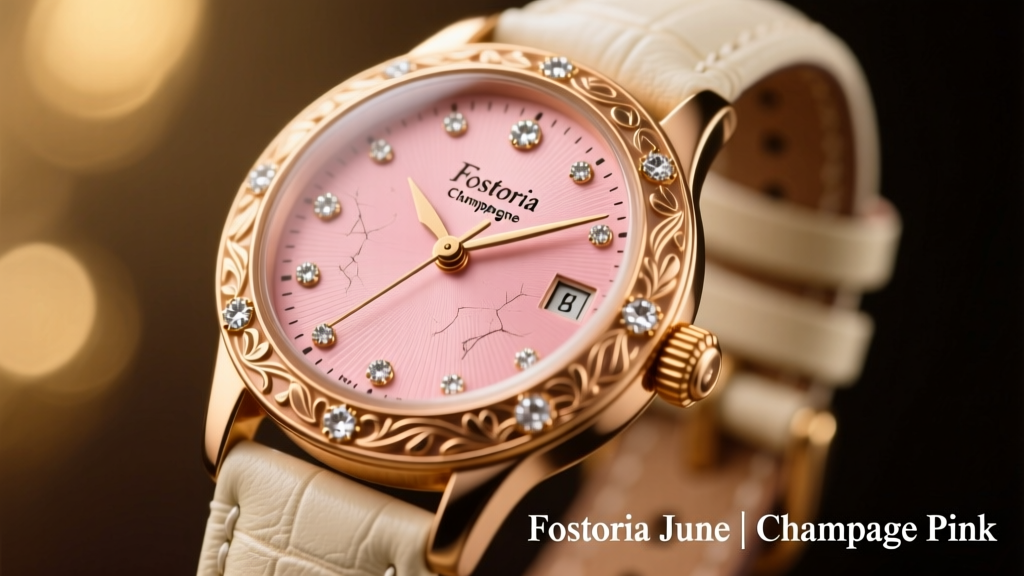
Fostoria June Champagne Pink: The Rarest and Most Coveted Variant of America’s Iconic Glassware Line
Eero Saarinen and Edward Wormley: The Sculpted Walnut Armchair Pair — A Study in Mid-Century American Craftsmanship
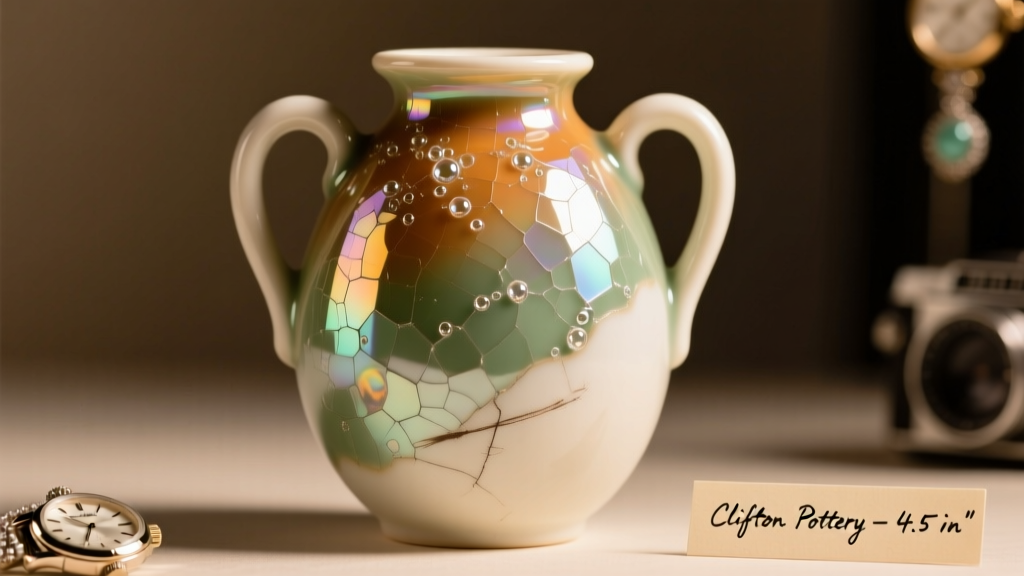
Clifton Pottery Vase: Egg Shape, Twin Ear Handles, Crystalline Glaze — A Mid-Century American Studio Ceramic Masterpiece
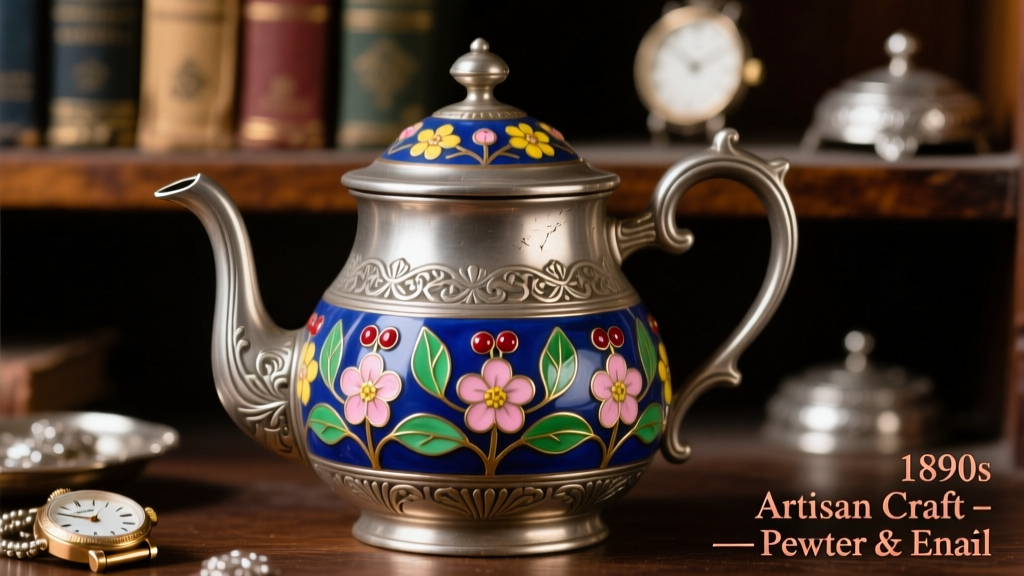
A 19th-Century English Pewter Coffeepot with Enamelled Floral and Berry Motifs: Technical Analysis, Provenance, and Market Context
The Monitor Chippendale Secretary: A Masterpiece of 18th-Century American Cabinetmaking and Its Enduring Legacy
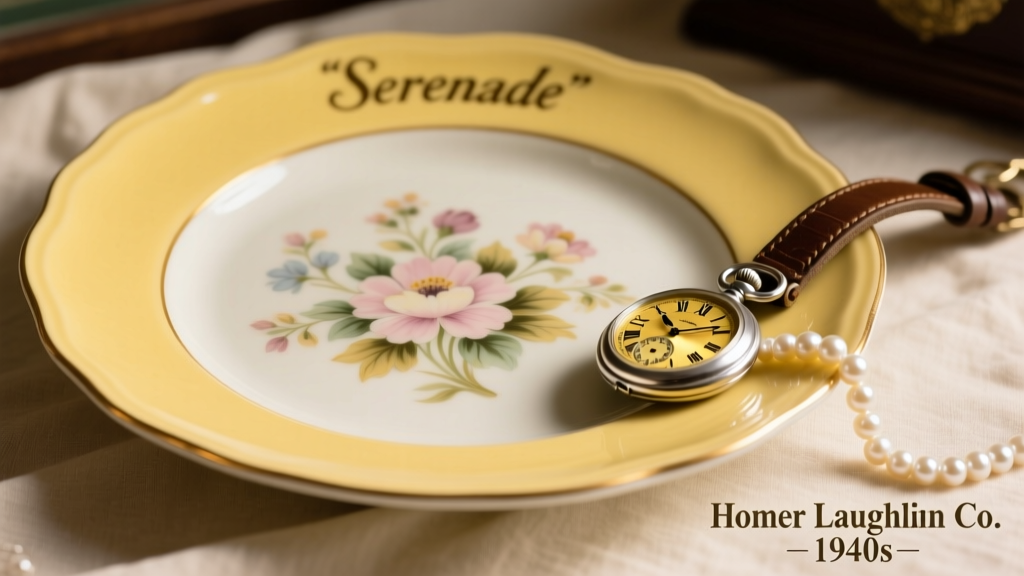
American Dinnerware Chop Plate Serenade Yellow Homer Laughlin 15-Inch: A Mid-Century Icon of Function and Form
Lot 1135480: A 1962 Patek Philippe Ref. 3448 Yellow Gold Perpetual Calendar Chronograph — Provenance, Technical Anatomy, and Market Significance
Queen Anne Oak Vase-Back Leather Chair Set: A Detailed Appraisal of an 18th–19th Century English Furniture Ensemble
Banks World’s Fair Administration Building Cast Iron Model: A 6-Inch Masterpiece of Mid-Century Americana