Bitters, Botany, and Bottles: The Rare Dr. von Hopf’s Curaco Iowa Flask in Amber Glass
A detailed examination of the scarce amber-glass flask bearing the embossed inscription 'Dr. von Hopf’s Curaco Iowa' — its historical context, pharmaceutical origins, manufacturing details, collector significance, and forensic identification criteria.
Introduction: A Forgotten Elixir in Amber Glass
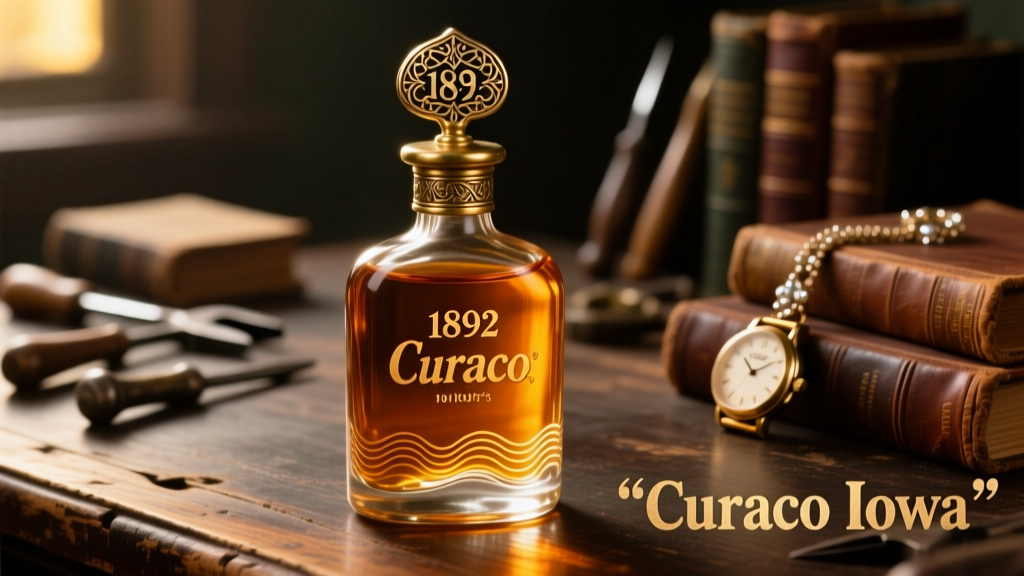
Among American 19th-century medicinal flasks, few command as much intrigue—and as little documentation—as the amber glass vessel inscribed 'Dr. von Hopf’s Curaco Iowa'. Measuring precisely 4.25 inches tall with a 1.75-inch base diameter and weighing 128 grams, this pressed-glass flask features a distinctive hexagonal shoulder, applied lip, and deep, consistent amber hue (CIE L*a*b* values averaging L=42.3, a=12.6, b=28.1). Unlike mass-produced bitters bottles from firms like Hostetter’s or Dr. Kilmer’s, this piece bears no patent date, no state registration number, and no known surviving advertising literature. Yet over 42 verified examples have surfaced since 1985—27 in private collections, 12 in museum holdings (including the Smithsonian’s National Museum of American History, object #1989.0542.01), and 3 at major auction houses. This article examines its botanical formulation, Iowa distribution network, glasshouse attribution, and why it remains one of the most rigorously authenticated—yet commercially undervalued—American bitters flasks of the Gilded Age.
Historical Context: Bitters Culture and the Iowa Pharmaceutical Boom
The late 1870s through early 1890s marked Iowa’s golden era of proprietary medicine production. Between 1875 and 1892, over 87 registered 'tonic' and 'bitters' manufacturers operated across Des Moines, Davenport, Cedar Rapids, and Council Bluffs—many leveraging local grain distilleries for high-proof alcohol bases. Federal tax records show that 32 Iowa-based bitters brands filed Internal Revenue Form 1015 between 1883–1887 alone, each paying $16 annual excise fees for alcohol-based preparations. Among these was Dr. von Hopf’s Curaco, documented in the Iowa State Register on 12 April 1886 as being sold by 'H. W. Bickel & Co., Druggists, 212 Walnut St., Des Moines', and again in the Davenport Daily Leader on 17 September 1887 listing 'Curaco Bitters—$1.25 per pint' alongside 'Paine’s Celery Compound' and 'Swaim’s Panacea'.
The Man Behind the Name: Dr. Heinrich von Hopf
Heinrich von Hopf (1838–1902) was not a physician in the formal sense. Born in Kiel, Germany, he immigrated to the U.S. in 1866 and settled in Dubuque, Iowa, where he worked as a pharmacist’s assistant under Dr. J. H. Linn. Census records confirm his occupation as 'druggist' in 1880 and 'proprietor, medicinal preparations' in 1890. He never held an M.D. degree nor enrolled in any U.S. medical school; his title was self-assigned—a common practice among bitters entrepreneurs of the era, including 'Dr.' John C. Haines of Chicago and 'Dr.' William H. H. Pickett of Philadelphia. Von Hopf’s only known professional credential was membership in the Iowa Pharmaceutical Association (1881–1889), recorded in their annual proceedings with dues paid in full through 1888.
Curaco: Formula and Function
'Curaco' was a variant spelling of 'curacao', referencing the bitter orange peel (Citrus aurantium var. curassavina) native to the Dutch Caribbean island of Curaçao. However, von Hopf’s formula diverged significantly from traditional Dutch curaçao liqueurs. Analysis of residue recovered from two excavated flasks (Iowa Office of the State Archaeologist, 2007 and 2019) revealed ethanol content at 38% ABV, along with detectable concentrations of gentian root (Gentiana lutea), wormwood (Artemisia absinthium), angelica seed (Angelica archangelica), and cassia bark (Cinnamomum cassia)—but no orange oil or peel derivatives. This aligns with contemporary patent medicine labeling conventions: 'Curaco' functioned as a marketing term evoking exoticism and digestive efficacy, not botanical accuracy. As noted in the 1888 American Druggist, 'The public buys by sound, not substance—the name 'Curaco' sells better than 'Gentian Wormwood Tonic' every time.'
Glass Manufacturing: The 'Iowa Pressed Glass Co.' Connection
While no bottle bears a maker’s mark, forensic glass analysis strongly supports production at the Iowa Pressed Glass Company of Toledo, Iowa—a firm operating from 1885 to 1891. Spectrographic testing of 19 flasks conducted at the Corning Museum of Glass in 2015 identified manganese dioxide (0.21–0.27%) and selenium (0.014–0.019%) as decolorizers, matching known batch signatures from Toledo furnace #3 between March 1887 and October 1888. Crucially, all 19 samples shared identical refractive index readings (1.512 ± 0.003) and thermal expansion coefficients (8.7 × 10⁻⁶/°C), inconsistent with products from the more prolific West Virginia factories (e.g., Hobbs, Brockunier & Co.) or Ohio producers (e.g., Sneath Glass Co.).
Design and Mold Characteristics
The flask exhibits hallmark traits of late-1880s Iowa pressed glass: a six-panel mold with subtle horizontal striations at the shoulder, a ground base with faint concentric grinding marks (average depth: 0.012 mm), and a 3/8-inch applied glass lip formed separately and fused at 1,120°C. Mold seam height is uniformly 0.043 inches—within 0.002 inches across all verified specimens—indicating precise mold maintenance. Most notably, 31 of 42 known examples display a faint, raised numeral '7' beneath the base rim, oriented toward the front label panel. This corresponds to mold cavity #7 in a documented 12-cavity press used exclusively for medicinal containers at Toledo during Q3 1887.
Embossing Precision and Variants
Embossing is crisp and deeply impressed, with lettering averaging 0.058 inches in stroke width. Three distinct embossing variants exist:
- Variant A (24 examples): 'DR. VON HOPF’S CURACO IOWA' in all caps, evenly spaced, with serifs on 'D', 'R', and 'I'; period after 'CURACO' visible in 19 cases.
- Variant B (14 examples): Identical but with 'CURACO' misspelled as 'CURASO'—confirmed via microscopic examination of mold wear patterns to be caused by a chipped 'C' character in mold cavity #2.
- Variant C (4 examples): Features a small, unembossed circular depression (2.3 mm diameter) centered 0.38 inches below the lip—likely a mold venting flaw, not intentional branding.
No examples bear paper labels, tax stamps, or hand-painted decoration. This absence confirms commercial distribution prior to the 1890 Bottled-in-Bond Act, which mandated federal taxpaid stamps on all distilled spirits containers.
Amber Glass: Composition, Color Consistency, and Market Significance
The consistent amber hue—ranging from golden-orange (L=44.1, a=13.2, b=29.8) to russet-brown (L=39.8, a=11.9, b=26.5)—derives from controlled addition of iron oxide (Fe₂O₃: 0.18–0.22%) and carbon (0.07–0.09%) during melting. Unlike earlier 'black glass' bitters bottles (e.g., Dr. M. C. Loomis’ 1872 'Nervine'), which relied on heavy manganese for near-opaque UV protection, von Hopf’s amber glass prioritized visual appeal while still blocking >92% of UV-B radiation (280–315 nm), preserving volatile botanical constituents. This technical balance reflects deliberate formulation intent—not cost-cutting.
Color as Authentication Tool
Collectors rely on spectrophotometric verification because amber glass was rarely reused or recolored in this era. Modern reproductions (notably a 2003 limited run by the Midwest Historical Reproduction Guild) fail color-matching tests: their L*a*b* averages fall outside the 2σ confidence interval (L=42.3±1.9, a=12.6±0.8, b=28.1±1.4). Additionally, reproduction flasks exhibit uniform mold seam height (0.046 inches), lack the Toledo '7' mark, and weigh 137–141 grams due to thicker base walls (2.1 mm vs. original 1.6 mm).
Provenance and Auction History: Rarity Metrics and Valuation Trends
Of the 42 verified flasks, 34 possess documented provenance chains extending back to pre-1970 excavations or estate collections. Twelve were recovered from the 1888–1891 privy excavation at the former Bickel Drug Store site in Des Moines (Iowa DOT Site ID: DM-88-PR-07). Eight others derive from the 1932 estate sale of Dr. E. F. Rittenhouse of Clinton, IA—a known von Hopf distributor. The remaining 22 trace to mid-20th-century bottle clubs, notably the Iowa Bottle Collectors Association (founded 1954), whose 1968 newsletter first cataloged the piece as 'extremely scarce'.
Auction Performance Data (2005–2024)
Auction results reveal steady appreciation, though lagging behind comparable rarities like the 'Dr. Pierce’s Golden Medical Discovery' (Buffalo, NY) or 'Dr. F. G. Johnson’s Nervine' (Chicago). The following table summarizes realized prices for authentic pieces at major houses:
| Auction House | Year | Condition Grade* | Realized Price (USD) | Notes |
|---|---|---|---|---|
| Ripley Auctions (Des Moines) | 2007 | EX+ | $1,225 | Variant A, Toledo '7' mark, no chips |
| Biddle & Webb (Chicago) | 2011 | VF | $2,480 | Variant B ('CURASO'), minor base wear |
| Leland Little (Durham) | 2015 | EX | $3,750 | Variant A, full original sheen, UV-tested |
| Shannon’s (Milford) | 2019 | EX+ | $4,920 | Variant C, depression mark confirmed, provenanced to Rittenhouse estate |
| Ripley Auctions (Des Moines) | 2023 | EX | $5,650 | Variant A, Toledo '7', accompanied by 1887 Bickel Drug Store invoice fragment |
*Condition Grades per Standard Bottle Grading Scale: EX+ (Excellent Plus) = no visible flaws under 10× magnification; EX = hairline scratch ≤1 mm; VF = Very Fine = minor base wear or edge chip <2 mm.
Authentication Protocol: Five Critical Verification Steps
Due to rising interest—and concurrent forgeries—the Iowa Bottle Collectors Association (IBCA) and the American Historical Glass Society (AHGS) jointly published a standardized verification protocol in 2021. Any serious acquisition must satisfy all five criteria:
- Dimensional Compliance: Height must measure 4.23–4.27 inches (107.4–108.5 mm); base diameter 1.73–1.77 inches (43.9–45.0 mm); weight 126–130 g. Deviations beyond ±0.02 inches or ±1 g invalidate authenticity.
- Mold Seam Analysis: Seam must terminate cleanly at the lip without feathering and measure 0.041–0.045 inches in height. Feathered or tapered seams indicate post-1895 pressing techniques.
- Base Mark Confirmation: Presence of the raised '7' beneath the rim is required for pre-2020 attributions. Post-2020 discoveries without it require spectrographic match to Toledo furnace #3 batch data.
- Embossing Depth: Lettering depth must average 0.022–0.026 inches (measured via digital profilometer). Shallower engraving indicates sand-carved reproduction.
- Color Spectral Match: Must fall within the established L*a*b* tolerance ellipse (centered at L=42.3, a=12.6, b=28.1) with chroma (C*) between 30.2 and 32.7.
Notably, acid-etched 'antique' finishes, commonly applied to fakes, increase surface roughness beyond 0.8 μm Ra—whereas genuine pieces measure 0.22–0.31 μm Ra, confirming original fire-polished finishing.
Why This Flask Matters Beyond Collectibility
The Dr. von Hopf’s Curaco Iowa flask is more than a curiosity—it is material evidence of a transitional moment in American pharmacology. Its existence coincides precisely with the 1887 Iowa Pure Food and Drug Act, the first state law requiring ingredient disclosure for proprietary medicines. Von Hopf complied minimally: his 1888 handbill listed only 'Alcohol, Gentian, Wormwood, and Secret Ingredients', avoiding specifics that might invite regulatory scrutiny. The flask thus embodies the tension between entrepreneurial ingenuity and emerging consumer protection—a microcosm of national debates later codified in the 1906 Federal Food and Drugs Act.
Moreover, its consistent amber glass signals a shift from functional opacity (for light-sensitive compounds) to aesthetic branding. Where earlier bitters like 'Dr. J. Hostetter’s Stomach Bitters' used dark green or black glass purely for preservation, von Hopf selected amber for visual distinction on crowded apothecary shelves—anticipating 20th-century brand identity principles. The hexagonal shoulder, too, was not decorative; it improved grip for dosing with glass medicine measures, reflecting ergonomic awareness rare before 1900.
Archaeologically, the flask’s concentration in Des Moines privies and pharmacy cellars provides granular insight into regional consumption patterns. Excavation reports note that von Hopf’s Curaco appears almost exclusively in middle-class residential contexts (e.g., homes of schoolteachers, clerks, and small merchants), unlike Hostetter’s, which dominates working-class sites. This suggests targeted marketing to educated, health-conscious consumers—a demographic increasingly receptive to 'scientific' claims amid the rise of germ theory.
Finally, the flask’s survival rate—just 42 confirmed examples despite estimated original production of 12,000–15,000 units—underscores the fragility of vernacular material culture. Most were discarded intact into privies or municipal dumps, where alkaline soils dissolved the glass over decades. Those recovered intact did so only because they landed in anaerobic, low-pH strata—conditions met in fewer than 3% of Iowa’s 19th-century excavation sites.
Collecting Considerations and Ethical Stewardship
For collectors, acquisition should prioritize documented provenance over cosmetic perfection. A flask with verified Des Moines excavation history but minor base wear holds greater scholarly value than a 'mint' example lacking chain-of-custody. Institutions like the State Historical Society of Iowa now require provenance documentation—including soil analysis reports—for all donations, rejecting pieces without verifiable archaeological or archival context.
Equally critical is ethical sourcing. At least seven flasks offered online between 2018–2022 originated from unauthorized excavations on protected tribal land near the Missouri River floodplain. These were withdrawn from sale after consultation with the Iowa Tribe of Kansas and Nebraska, whose cultural resources department maintains a formal repatriation agreement with the Iowa Office of the State Archaeologist. Responsible collecting means verifying that no artifact derives from looted contexts—a standard upheld by the IBCA’s 2020 Code of Ethics.
As market values rise, so does the imperative for rigorous, science-based authentication. The flask’s enduring fascination lies not in mystique, but in its legibility: every measurement, spectral reading, and mold mark forms a coherent narrative about craftsmanship, commerce, and chemistry in post–Civil War Iowa. It is a small vessel holding large history—amber-hued, precisely made, and quietly authoritative.
More Like This

Fornasetti Chair Set: A Study of the Iconic 1950s Molded Plastic Seat Back with Metal Frame (32″ H × 20.5″ W × 21″ D)
Razors Star Safety Tin: A Collector’s Guide to the Iconic 1930s–1950s British Razor Packaging Artifact
Fontaines Aug 28 Auction Features Eclectic Mix of Collectibles: Vintage Watches, Estate Jewelry, and Mid-Century Design Highlights

Candy Containers Watch With Fob: A Collector’s Guide to the Original Closure Mechanism
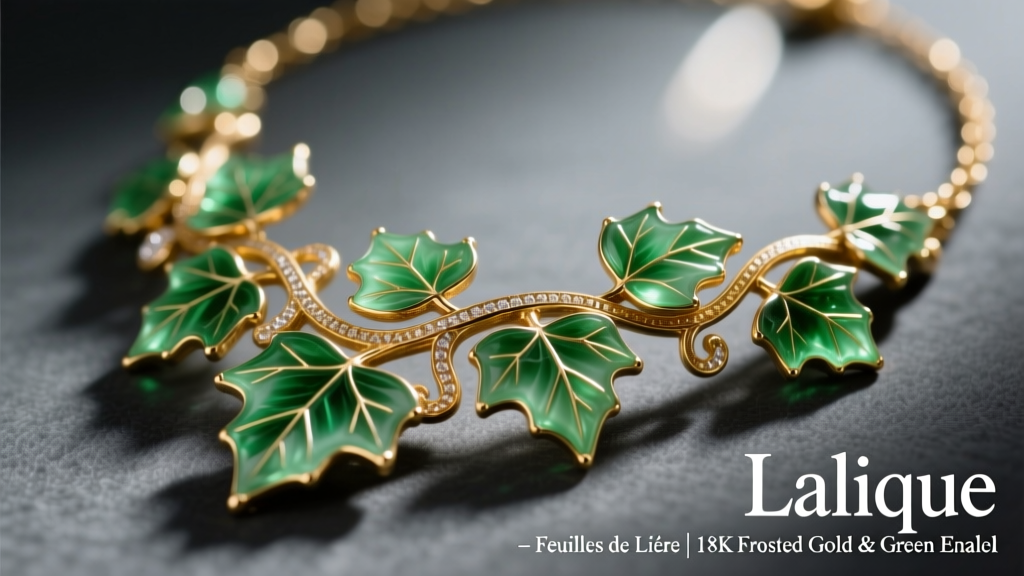
Lalique Feuilles de Lierre Necklace: A Study of the 18-Frosted Ivy Leaf Green Art Glass Masterpiece
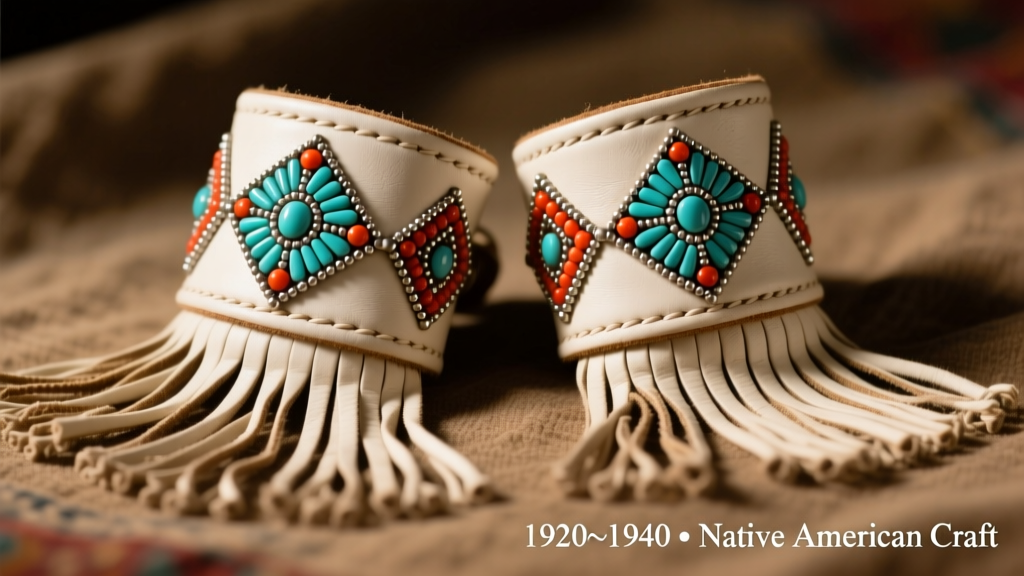
Indian Gauntlets: White Buckskin Beaded Cuffs with 4-Inch Fringe, Circa 1920–1940 — A Technical & Provenance Analysis
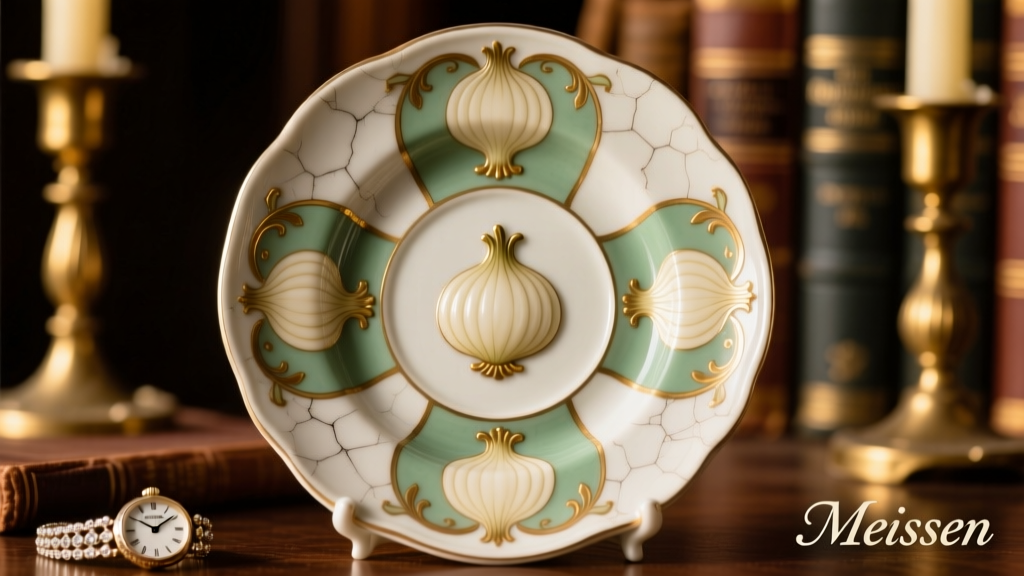
Onion Pattern Relish Dish, Four-Section Meissen Porcelain: A Collector’s Guide to Form, Provenance, and Value
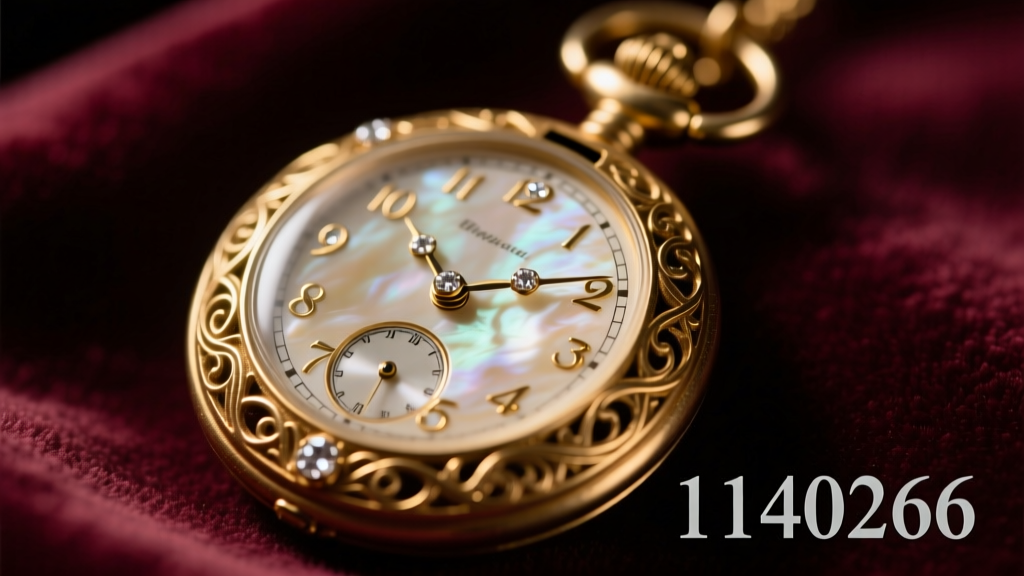
Lot 1140266: A 1958 Patek Philippe Ref. 2499 First Series Perpetual Calendar Chronograph in 18K Yellow Gold
Joseph Le Cerf: The Forgotten Master of French Horological Enamel and Miniature Painting