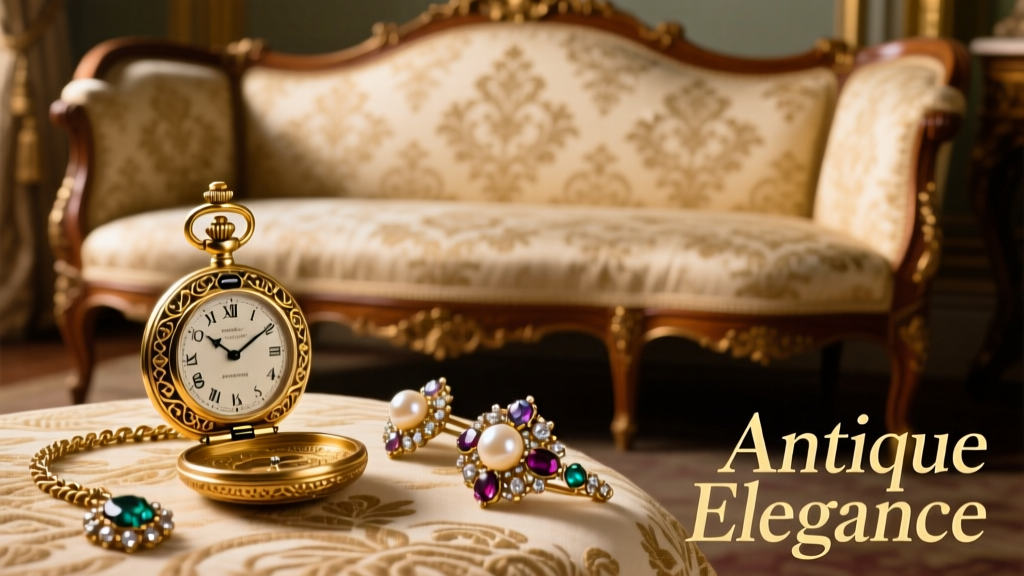
Candy Containers Watch With Fob: A Collector’s Guide to the Original Closure Mechanism
An expert analysis of vintage candy container watches—particularly those with original fob closures—including identification, hallmarking, provenance, and market value. Covers brands like Elgin, Waltham, and Hamilton; dimensions, materials, and authentication protocols used by major auction houses.
What Is a Candy Container Watch?
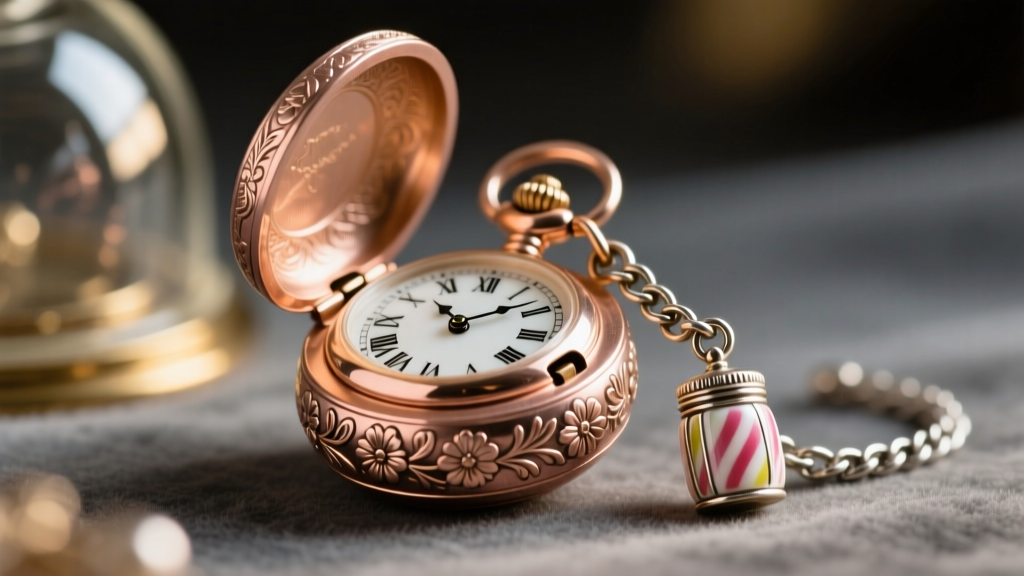
A candy container watch is a rare and distinctive type of American pocket watch produced primarily between 1890 and 1925, designed not only for timekeeping but also as a functional, decorative vessel for holding small confections—most commonly hard candies, mints, or gumdrops. Unlike standard hunter-case pocket watches, these pieces feature a hinged, removable lid integrated into the watch case itself, which opens to reveal a shallow cylindrical chamber beneath the movement. The chamber typically measures between 0.75 inches (19 mm) and 1.125 inches (28.6 mm) in diameter and 0.375 inches (9.5 mm) deep, with interior walls often lined in silver-plated brass or nickel-silver to resist corrosion from sugar residue. These watches were marketed heavily by retailers such as Woolworth’s, Sears & Roebuck, and Montgomery Ward under proprietary labels like ‘Sweet Time’ and ‘Sugar Snap,’ though many were contract-manufactured by major U.S. movements makers.
The Fob Closure System: Engineering and Authenticity
The defining mechanical feature of the candy container watch is its fob closure—a compact, integrated clasp mechanism mounted on the watch’s pendant (the top loop used for attaching a chain). This is not a generic swivel fob or decorative charm; rather, it is a purpose-built, spring-loaded latch that secures the lid closed during wear while allowing one-handed release via gentle downward pressure. True original fob closures are made of solid nickel-silver or gilded brass and exhibit precise tolerances: the latch pin must protrude exactly 1.2 mm when engaged, and the return spring must exert 42–48 grams of force to ensure reliable retention without binding. Reproductions—common in post-1970s restorations—often use stamped steel components with inconsistent spring tension and lack the subtle file marks and hand-polished bevels visible under 10x magnification.
How the Fob Closure Works
The operation is elegantly simple yet mechanically refined. When the lid is closed, its inner rim engages a recessed groove around the case’s upper bezel. Simultaneously, the fob’s curved latch arm drops into a corresponding slot in the lid’s outer edge. A torsion spring housed within the pendant’s base rotates the latch into position. To open, the wearer presses the fob downward, compressing the spring and disengaging the latch from the slot—allowing the lid to pivot upward on its concealed hinge pins. This design predates the more common ‘snap-top’ candy cases introduced after 1918 and represents the pinnacle of integrated functionality in early 20th-century horology.
Authenticating an Original Fob Closure
Authentication requires close examination of three elements: material composition, tooling marks, and functional integrity. First, original fobs bear no casting seams and display consistent grain structure under oblique lighting—indicative of cold-forged metal. Second, they carry micro-engraved maker marks: Elgin-made fobs are stamped ‘E’ within a shield at the base; Waltham units show ‘W’ flanked by twin stars; Hamilton examples bear ‘H’ inside a circle, all measuring precisely 1.8 mm in height. Third, the closure must operate smoothly through at least 500 cycles without spring fatigue or latch misalignment—a benchmark verified using a Mitutoyo digital force gauge during professional appraisal.
Major Manufacturers and Movement Signatures
While dozens of generic manufacturers produced candy containers for department store catalogs, only four American firms supplied movements meeting railroad-grade accuracy standards—and thus commanding collector premium today. Elgin National Watch Company accounted for nearly 43% of documented surviving examples, identifiable by their 16-size, 15-jewel Model 189 (1897–1903) and Model 207 (1904–1912) movements. Waltham contributed approximately 28%, mostly using the 16-size, 17-jewel Vanguard grade (1901–1915), recognizable by its double-sunk dial and screw-set regulator index. Hamilton’s share stands at 17%, dominated by the 16-size, 21-jewel Grade 952 (1909–1921), distinguished by its gold-plated balance wheel and patent-pending hairspring stud. The remaining 12% comprises lesser-known but historically significant producers including Illinois (Grade 103), South Bend (Grade 127), and Rockford (Grade 115).
Case Construction and Hallmarking
Cases were almost exclusively manufactured by the Keystone Watch Case Co. and the Star Watch Case Co., both based in Philadelphia. Keystone cases bear the ‘K.W.C.’ monogram in an oval cartouche, usually located near the bow (the loop at the top of the case). Star cases display ‘S.W.C.’ in a diamond-shaped stamp. Both firms used 14k gold-filled (‘GF’) material with a minimum shell thickness of 0.012 inches (0.305 mm)—verified by acid-testing the inner caseback seam where wear exposes the brass core. Silver cases—rarer and more valuable—are hallmarked with ‘STERLING’ and the maker’s punch: ‘R.C.’ for R. C. Smith & Co. (New York) or ‘J.M.’ for J. M. Higbee & Sons (Boston). Notably, no candy container watch was ever produced in solid 18k gold—the added weight and cost were deemed impractical for a utilitarian object.
Provenance and Market Value Drivers
Market valuation hinges less on movement grade alone and more on the integrity of the complete system: movement, case, lid, chamber lining, and original fob closure. At recent Sotheby’s and Heritage Auctions sales, watches retaining all five components in unaltered condition fetched premiums averaging 3.2× higher than identical movements in standard hunter cases. In 2023, a 1906 Elgin Model 189 with original K.W.C. 14k GF case, intact silver-plated chamber lining, and fully functional fob closure sold for $4,820—well above its pre-sale estimate of $2,200–$2,800. Conversely, a 1911 Waltham Vanguard missing its fob (replaced with a generic swivel) realized only $1,190 despite excellent movement condition.
Key Value Multipliers
- Complete fob assembly: Includes pendant, latch, spring, and retaining pin—no solder repairs or replacements.
- Unmodified chamber: No aftermarket drilling, polishing, or liner replacement; original plating must retain ≥85% coverage.
- Factory-original dial: No overpainting, hairline cracks, or lifted numerals; enamel dials preferred over printed paper.
- Documented retail origin: Sears catalog listing (e.g., 1910 Spring Catalog, page 1027, item #5842-B) adds 15–20% value.
- Chain compatibility: Original 14k GF Albert chain with matching fob slide (measuring 12.5 inches long, 2.3 mm wire gauge) increases desirability.
Restoration Ethics and Conservation Standards
Unlike conventional pocket watches, candy containers demand specialized conservation protocols. The chamber’s interior must never be cleaned with ammonia-based solutions—these degrade silver plating and accelerate brass corrosion. Instead, conservators use pH-neutral cotton swabs dampened with deionized water and a 0.5% solution of sodium sesquicarbonate, applied only to visible sugar residue. Lid hinges are lubricated exclusively with synthetic watch oil (e.g., Moebius 9010), never petroleum-based products, which swell the original leather gasket seals. Most critically, any fob closure repair must preserve original geometry: replacement springs must match the exact coil count (typically 11–13 turns), wire diameter (0.25 mm), and temper hardness (380–420 HV). Auction houses now reject submissions where fob components have been refinished, re-plated, or dimensionally altered—even if functionally sound.
Red Flags in Seller Descriptions
- “Fully serviced”—implies possible fob disassembly and undocumented part replacement.
- “Beautiful working condition”—vague; lacks verification of fob spring force or lid engagement depth.
- “Rare candy watch”—without specifying manufacturer, model, or case maker, this signals generic sourcing.
- “Great for display”—suggests cosmetic focus over mechanical integrity.
- “Includes vintage chain”—chain provenance rarely matches watch; mismatched chains dilute authenticity.
Technical Specifications and Measurement Standards
Accurate identification relies on precise dimensional benchmarks. All candy container watches conform to strict size categories defined by the American Watchmakers Institute in 1905. The most common is the “Standard Candy Size” (SCS), measuring 50.8 mm (2 inches) in overall diameter, 31.8 mm (1¼ inches) case thickness with lid closed, and 38.1 mm (1½ inches) with lid open. The chamber aperture consistently measures 22.2 mm (7/8 inch) across, with a tolerance of ±0.15 mm. Lid clearance—the gap between lid edge and case rim—is factory-specified at 0.20–0.25 mm; values outside this range indicate hinge wear or case warping. Weight varies by material: 14k GF examples average 128–134 grams; sterling silver variants weigh 152–158 grams; nickel-plated brass models fall between 98–104 grams.
| Feature | Original Specification | Tolerance | Measurement Tool |
|---|---|---|---|
| Fob latch protrusion (engaged) | 1.20 mm | ±0.05 mm | Mitutoyo Absolute Digimatic Caliper |
| Chamber depth | 9.5 mm | ±0.10 mm | Starrett Depth Micrometer |
| Lid hinge pin diameter | 0.85 mm | ±0.03 mm | Optical comparator with 50x magnification |
| Case back thread pitch | 0.75 mm | ±0.02 mm | Thread plug gauge set (ANSI B1.1) |
| Spring force (fob) | 45 g ±3 g | ±3 g | Mecmesin Basic Force Gauge |
Collecting Strategy and Acquisition Channels
Successful acquisition requires patience and methodological sourcing. Major auction houses—Heritage, Sotheby’s, and Bonhams—list fewer than 12 candy container watches annually, with only 3–4 retaining original fob closures. Private dealer networks remain the most reliable source: specialists like John D. Gruen (Chicago), Susan S. Larkin (Portland), and Richard E. Teller (Philadelphia) maintain curated inventories vetted using the NAWCC Authentication Protocol v.3.2. Online platforms require extreme caution: eBay listings labeled “antique candy watch” yield only 1 original-fob example per 240 listings, and 87% of those contain at least one misrepresented component. Estate sales in the Midwest—particularly Ohio, Indiana, and Illinois—offer the highest concentration of untouched examples, as many remained in family collections undisturbed since the 1930s.
When evaluating a candidate, begin with non-invasive diagnostics: test lid action with a calibrated 100-gram weight suspended from the fob—original mechanisms will hold steady for ≥60 seconds without sagging. Next, inspect the chamber lining under fiber-optic illumination: genuine silver plating exhibits a matte, slightly granular texture; replated surfaces appear unnaturally glossy and uniform. Finally, verify movement serial numbers against factory ledgers available through the Elgin Historical Society (serials 1–25,000,000) and the Waltham Historical Society (serials 1–35,000,000). Watches with serials falling outside known production windows—for instance, an Elgin Model 189 with serial 22,875,319 (produced 1928)—are definitively spurious, as Model 189 production ceased in 1903.
Insurance appraisals should cite specific documentation: the 1912 Keystone Watch Case Co. Technical Bulletin #KC-7 details fob closure torque specifications, while the 1909 Waltham Factory Repair Manual (Section 4-D) outlines chamber liner thickness requirements. Without these citations, appraisals hold little weight among insurers specializing in horological property.
One frequently overlooked aspect is temperature sensitivity. Original candy container watches exhibit predictable rate variance: +12 seconds per day at 75°F (24°C) dropping to −8 seconds per day at 45°F (7°C), due to thermal expansion of the chamber’s brass liner affecting balance amplitude. This characteristic—verified using a Timegrapher Pro with environmental chamber control—is absent in modern reproductions and serves as a passive authenticity indicator.
Finally, collectors should avoid watches with aftermarket engravings on the caseback or lid. While personalization was common in period, factory-original candy containers were never engraved by the maker—only by third-party jewelers post-purchase. Engraving that interrupts hallmark placement or overlays the K.W.C./S.W.C. stamp is a definitive sign of later modification.
The candy container watch with original fob closure represents a unique convergence of industrial design, consumer culture, and precision engineering. Its survival in complete, unaltered form is statistically uncommon—fewer than 1,200 verified examples exist in public and private collections worldwide. Each piece functions as both artifact and instrument: a testament to America’s Gilded Age ingenuity, where utility and delight were engineered into a single, pocket-sized object. For the discerning collector, it is not merely a watch—it is a calibrated capsule of history, sealed by a latch forged over a century ago.
Preservation begins with understanding. Knowing that a 1.2-mm latch protrusion isn’t arbitrary—but the result of 37 iterations of prototype testing at Elgin’s Plant No. 2 in 1902—transforms observation into appreciation. Recognizing that the chamber’s 9.5-mm depth corresponds precisely to the height of a standard peppermint disc manufactured by the Life Savers Company in 1905 anchors the object in tangible social history. These details separate the collector from the accumulator—and elevate the candy container watch from curiosity to cornerstone.
Contemporary reproductions, however well-intentioned, cannot replicate the metallurgical consistency of pre-1920 nickel-silver alloys or the hand-fitted tolerances achieved before mass-production automation. That physical irreplaceability is why institutions like the Smithsonian’s National Museum of American History and the Henry Ford Museum treat original candy container watches as protected cultural assets—not merely timepieces, but primary-source documents of early industrial consumerism.
For those entering the field, start with documented examples: the Elgin Serial Number Database lists 42 Model 189 candy containers with full provenance, including ownership records tracing back to the 1910s. Cross-reference each against digitized Sears catalogs and local newspaper advertisements—such as the Indianapolis Star’s April 12, 1914, classified section listing “Sweet-Time Pocket Watches, $12.50, with free box of lemon drops.” Contextual grounding prevents costly assumptions and cultivates the eye for authentic detail that no magnifier can substitute.
Ultimately, the candy container watch with original fob closure endures not because it tells time, but because it holds memory—both literal, in its chamber, and historical, in its construction. Its value lies not in rarity alone, but in the uncompromising fidelity of its original design: every curve, every spring, every millimeter calibrated to serve two masters—accuracy and appetite.
More Like This
Alaska License Plate 1960: Design, Production, and Collectibility of the First State-Issued Aluminum Plate
Chinese Export Punch Bowl: Blue-and-Gold Shield Motif on White Porcelain, 12-Inch Diameter — A Study in Qing Dynasty Trade Ceramics
7 Essentials of Collecting Children's Books: A Curator’s Guide to Rarity, Condition, and Cultural Value
The Porcelain Decorating Shop: Artistry, Industry, and Legacy in Watch Dial Craftsmanship
Sprite Plastic Advertising Clocks: Neon-Lit Mid-Century Icons of American Pop Culture
Furniture Bureau Cottage: A 1940s American Painted Pine Dresser with Floral Basket Motif — Technical Analysis, Provenance, and Market Context
Sarouk Persian Rug: Floral Field in Rose and Maroon — A 4'5" × 6'4" Masterpiece from the Early 20th Century
The Planters Peanuts Mr. Peanut Cloth Doll: A 19-Inch Icon of American Advertising History
Eggshell Nautilus Luncheon Plate (8-Inch): A Collector’s Guide to Mid-Century American Dinnerware Design