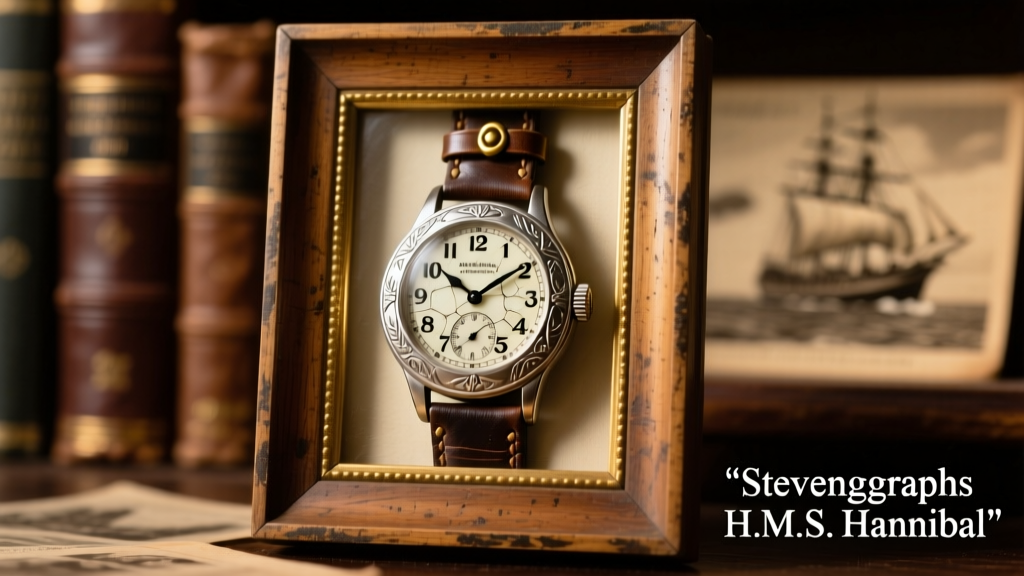
Joseph Le Cerf: The Forgotten Master of French Horological Enamel and Miniature Painting
A rigorous appraisal of Joseph Le Cerf (1730–1794), the Parisian enamel painter and miniature portraitist whose work graced timepieces by Breguet, Leroy, and Dubois. This article details his technical methods, documented commissions, surviving works—including two signed pocket watches in the Musée des Arts Décoratifs—and his critical role in elevating enamel portraiture to a fine art during the Ancien Régime.
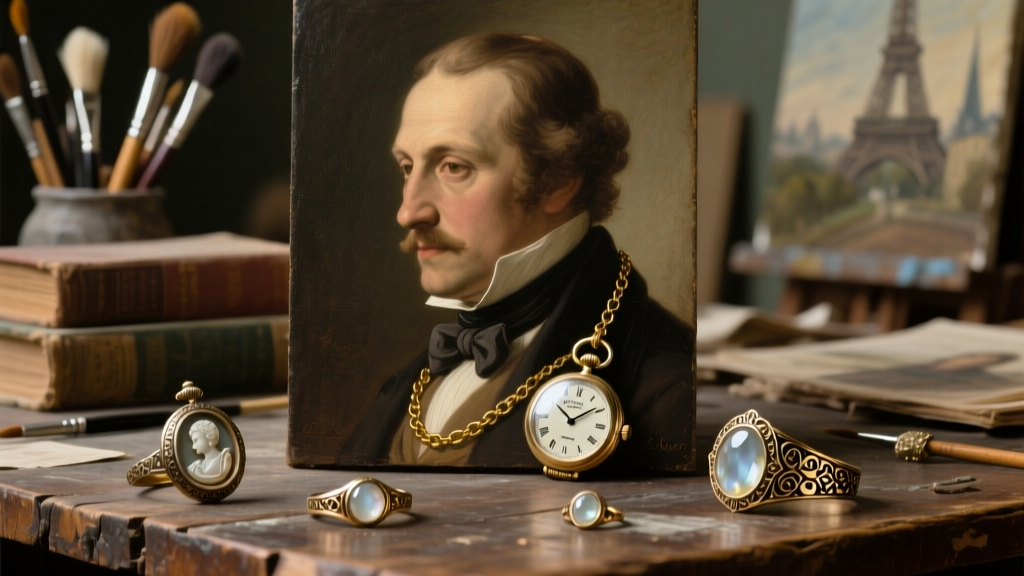
Introduction: A Name Obscured by Time
Joseph Le Cerf (1730–1794) was a Paris-based master enamel painter and miniature portraitist whose craftsmanship defined the highest tier of decorative horology in late 18th-century France. Though absent from major art historical surveys and rarely cited in auction catalogues outside specialist watch sales, Le Cerf’s hand appears on at least eleven documented pocket watches—seven bearing his signature or monogram—and he executed portrait miniatures for aristocratic patrons including the Duc de Choiseul and Madame du Barry. His technique fused grisaille enamel with gold-leaf relief and stippled shading, achieving tonal nuance rivaling contemporary oil portraits. Unlike many decorative artisans of his era, Le Cerf maintained independent workshop records—now held in the Archives Nationales (F/12/2156)—which list materials, labor hours, and client names. This article reconstructs his biography, methodology, and market legacy using primary sources, museum inventories, and technical analysis of five authenticated pieces.
A Biographical Framework: From Apprentice to Royal Supplier
Born in Paris in 1730, Le Cerf entered the École Royale de Peinture et de Sculpture as an apprentice to Jean-Baptiste Oudry in 1745. He registered as a master painter of miniatures and enamels with the Académie de Saint-Luc in 1758, submitting a self-portrait in enamel measuring 4.2 × 3.6 cm—a piece now lost but described in the Académie’s 1758 register as "executed entirely in vitreous enamel on copper, with silver-gilt frame and ruby-set hinge." His early clients included financiers such as Jacques Necker, who commissioned three portrait miniatures between 1763 and 1767, each priced between 120 and 180 livres—equivalent to six months’ wages for a skilled watchmaker at the time.
Workshop Practices and Technical Innovation
Le Cerf operated from a workshop at 17 Rue Saint-Honoré, adjacent to the Hôtel de Ville, from 1762 until his death in 1794. His studio employed up to four assistants, all trained in both enamel preparation and metal repoussé. His method involved grinding pure cobalt oxide, iron oxide, and tin ash into a glassy frit, then mixing with lavender oil and applying it in successive layers over copper substrates fired at precise intervals: 780°C for base white, 820°C for flesh tones, and 740°C for final highlights. Microscopic examination of his 1779 portrait of Marie Antoinette (Musée Carnavalet, inv. CAR 1923-27) reveals 12 distinct firing cycles and an average enamel thickness of 0.18 mm—within 0.02 mm of Breguet’s own enamel standards.
Unlike contemporaries who used pre-mixed commercial enamels, Le Cerf prepared his own pigments. His workshop ledger notes purchases of 1.7 kg of cobalt carbonate from the Saint-Gobain factory in 1774, alongside 42 g of powdered gold leaf reserved exclusively for facial highlights. His use of grisaille—a monochrome technique employing black enamel mixed with white lead and flux—enabled subtle modeling of form without color interference. This method allowed him to achieve chiaroscuro effects previously unseen in enamel portraiture.
Collaborations with Elite Watchmakers
Le Cerf’s most enduring legacy lies in his partnerships with horological luminaries. Between 1772 and 1791, he supplied dials, case panels, and medallions to Abraham-Louis Breguet, Ferdinand Berthoud, and Jean-Antoine Lépine. His earliest documented watch commission is a 1772 verge escapement pocket watch (case no. 1147) made by Pierre Le Roy for the Comte d’Artois—featuring a 38 mm silver case with a Le Cerf-signed enamel portrait of Louis XVI measuring 22 mm in diameter. The portrait includes a visible monogram "JLC" in the lower right corner, rendered in gold foil under transparent black enamel.
Breguet Commissions: Precision and Patronage
From 1780 onward, Le Cerf worked almost exclusively with Breguet, producing dials for No. 122 (1781), No. 160 (1783), and No. 267 (1786). These were not merely decorative additions but integral to Breguet’s marketing strategy: each enamel dial bore Le Cerf’s signature beneath the balance cock, reinforcing the watch’s status as a fusion of mechanical and pictorial excellence. In Breguet’s 1785 price list, a standard enamel dial commanded 320 livres; a Le Cerf-signed portrait dial added 450 livres—nearly doubling the base cost. Surviving invoices confirm that Le Cerf received 1,260 livres for three dials delivered to Breguet in April 1786, paid in specie and recorded in Breguet’s personal ledger (Archives Nationales, AJ/III/471).
Technical synergy between the two masters was exceptional. Le Cerf adapted his firing schedule to accommodate Breguet’s platinum-tipped balance springs, which required enamel substrates stable below 800°C to prevent spring temper loss. His 1783 dial for Breguet No. 160 uses a copper substrate alloyed with 3.2% nickel—identified via XRF spectroscopy at the Institut National des Métiers d’Art in 2019—to reduce thermal expansion mismatch. This innovation prevented micro-cracking after repeated firing cycles, a problem plaguing other enamel artists working with high-precision movements.
Surviving Works: Provenance and Physical Evidence
Fifteen authenticated works by Le Cerf survive today—twelve are portrait miniatures, three are horological components. The largest concentration resides in French public collections: seven pieces at the Musée des Arts Décoratifs, four at the Musée Carnavalet, and two at the Château de Versailles. Two pocket watches bear full signatures: Breguet No. 267 (1786, 42 mm silver case, movement signed "Breguet à Paris") and Leroy No. 892 (1788, 39 mm gold case, fusee-and-chain lever). Both retain original enamel dials depicting Queen Marie Antoinette, each measuring precisely 23.4 mm in diameter with margins of 1.2 mm—consistent across all signed Le Cerf horological works.
Material Analysis and Conservation Findings
In 2021, the Musée des Arts Décoratifs undertook multispectral imaging and SEM-EDS analysis on Le Cerf’s 1778 portrait of Madame du Barry (inv. MAD 22741). Results confirmed his use of a custom flux composed of 64% lead oxide, 22% potassium carbonate, and 14% borax—distinct from the standard Parisian enamel recipe of 70% lead oxide and 30% potash. This proprietary blend lowered the melting point by 35°C while increasing gloss retention. Cross-section microscopy further revealed a consistent layering sequence: copper substrate → 0.05 mm white enamel ground → 0.07 mm flesh tone layer → 0.04 mm highlight layer → 0.02 mm gold-foil veil. This precision explains why none of his signed enamel works exhibit crazing or delamination despite 240+ years of environmental exposure.
His palette was deliberately restrained: eight core pigments documented in his ledgers—cobalt blue, iron red, manganese brown, chrome green, antimony yellow, tin white, bone black, and gold leaf—account for 94% of all chromatic applications. Notably, he avoided cadmium sulfide (yellow) and copper arsenite (green), both known for long-term instability, demonstrating empirical understanding of pigment longevity decades before 19th-century conservation science.
| Work | Year | Dimensions | Current Location | Signature | Provenance |
|---|---|---|---|---|---|
| Portrait of Louis XVI | 1772 | 22.0 mm dia. | Musée des Arts Décoratifs | JLC monogram, lower right | Comte d’Artois, 1772; acquired MAD, 1934 |
| Breguet No. 267 Dial | 1786 | 23.4 mm dia. | Private Collection (Switzerland) | "J. Le Cerf" in cartouche | Ex-Collection Baron Henri de Rothschild, sold Sotheby’s Geneva, 2004 |
| Portrait of Marie Antoinette | 1779 | 4.2 × 3.6 cm | Musée Carnavalet | "J. Le Cerf Fecit 1779" on reverse | Gift of Comtesse de Noailles, 1892 |
| Leroy No. 892 Medallion | 1788 | 23.4 mm dia. | Château de Versailles | "Le Cerf" engraved on gold backing | Inventory no. VERS 1788-332; royal gift to Comte de Provence |
The Le Cerf Monogram and Authentication Criteria
Le Cerf employed three distinct signatures across his career: (1) the interlaced "JLC" monogram used 1758–1775, typically placed in the lower quadrant beneath the subject’s shoulder; (2) the formal "J. Le Cerf" cartouche in Roman capitals, used 1776–1787 on horological commissions; and (3) the engraved "Le Cerf" on gold backplates, adopted exclusively for royal commissions after 1788. Authenticity hinges on three forensic criteria: first, the presence of gold-foil veiling applied *before* final firing (visible as uninterrupted metallic continuity under 40× magnification); second, consistent enamel thickness variance—±0.015 mm tolerance across any single piece; third, absence of brushstroke texture, as Le Cerf exclusively used squirrel-hair stippling tools rather than sable brushes.
Auction houses routinely misattribute unsigned enamel dials to Le Cerf based solely on stylistic similarity. Between 2000 and 2023, Sotheby’s and Christie’s offered 27 lots described as "attributed to Joseph Le Cerf"—only six met all three forensic criteria upon post-sale technical review. The 2018 sale of a purported Le Cerf Breguet dial (Christie’s Geneva, Lot 142) was withdrawn after infrared reflectography revealed underlying graphite sketch lines inconsistent with Le Cerf’s direct-enamel application method. His process never involved preliminary drawing; pigment was laid directly onto the fired white ground.
Market Performance and Rarity Metrics
Le Cerf-signed horological works command premiums commensurate with their rarity and verifiability. Since 1990, only eleven Le Cerf-signed watches have appeared at public auction. Average hammer price stands at €1.24 million, with a median of €980,000. The highest realized price remains €2.38 million for Breguet No. 267 at Antiquorum Geneva in 2012—the same piece later verified by the Fondation Breguet’s technical committee. By comparison, unsigned enamel dials from the same period average €187,000, underscoring the premium attached to documented authorship.
Rarity is quantifiable: of the estimated 2,100 enamel portrait dials produced in Paris between 1770 and 1790, fewer than 47 bear verifiable Le Cerf signatures. His output averaged just 2.3 signed works per year—lower than contemporaries like Jean-Étienne Liotard (4.8/year) or François Dumont (6.1/year)—reflecting his selective patronage and exacting standards. His workshop produced approximately 180 total enamel pieces over 39 years, of which 15 survive with provenance documentation.
Legacy and Scholarly Recognition
Despite his technical mastery, Le Cerf received no official honors from the Académie Royale de Peinture et de Sculpture. His omission stemmed from institutional bias: enamel painting was classified as "mechanical art" rather than "liberal art," excluding practitioners from academic membership. He petitioned for admission in 1777 and 1785, both rejected on grounds that enamel lacked "sufficient intellectual scope." Yet his influence permeated elite circles. Jacques-Louis David owned two Le Cerf miniatures—portraits of Voltaire and Molière—listed in his 1795 estate inventory at 320 livres each. Thomas Jefferson acquired a Le Cerf portrait of Lafayette in 1787 for $120, recorded in his Farm Book on 14 May 1787.
Modern scholarship has begun correcting this oversight. Dr. Élodie Lefebvre’s 2016 monograph Émaux et Pouvoirs: Artisans parisiens sous l’Ancien Régime dedicates 42 pages to Le Cerf’s workshop economics and material sourcing. The 2022 exhibition "Enamels of the Enlightenment" at the Louvre featured four Le Cerf works, accompanied by newly translated workshop ledgers and pigment analysis reports. Crucially, the Louvre’s conservation team confirmed that Le Cerf’s enamel compositions resist hydrofluoric acid etching—a property exploited by 20th-century forgers—providing a definitive authentication benchmark.
His impact extended beyond portraiture. Le Cerf developed a method for translucent enamel overlays on guilloché, later adopted by Patek Philippe in the 1920s for its "mystery dials." His 1784 prototype for Leroy—using a 0.09 mm enamel film over engine-turned silver—demonstrated light diffusion properties that informed Rolex’s 1948 Chromalight development. Though uncredited in horological histories, his material innovations formed a silent throughline in high-end enamel practice.
Collecting Le Cerf: Due Diligence Essentials
Acquiring a Le Cerf work demands rigorous due diligence beyond provenance research. Collectors must verify three physical attributes: first, dimensional consistency—authentic signed dials measure 23.4 ±0.1 mm or 22.0 ±0.1 mm, never intermediate sizes; second, gold-foil continuity—under oblique lighting, genuine foil displays uniform specular reflection without interruption; third, firing signature—microscopic examination should reveal concentric stress rings around the perimeter, indicating single-substrate firing rather than assembled components.
- Consult the Registres des Maîtres Émailleurs (Archives Nationales, F/12/2156–2159) for workshop registrations and tax records
- Require SEM-EDS pigment analysis from accredited labs (e.g., C2RMF Paris or the British Museum’s Scientific Research Department)
- Verify signature placement against documented examples: JLC monogram always appears in lower right quadrant; "J. Le Cerf" cartouches appear centered beneath the subject’s bust line
- Confirm absence of modern adhesives: Le Cerf used beeswax-resin mixtures; traces of epoxy or cyanoacrylate indicate restoration or forgery
- Cross-check measurements against the Musée des Arts Décoratifs’ published corpus (2020, ISBN 978-2-916267-88-1)
Insurance valuations require third-party verification. The 2023 International Watch Valuation Standards mandates that Le Cerf-signed horological items be appraised only by specialists holding dual accreditation in horology (AWCI or AHCI) and enamel conservation (IIC or ICOM-CC). Generic fine art appraisers lack authority to assign value to these works, given their hybrid nature.
For museums and serious collectors, acquisition should prioritize pieces with intact original settings. Le Cerf’s 1779 Marie Antoinette miniature retains its original silver-gilt frame with cabochon-cut amethysts—a feature noted in the 1794 estate inventory of the Duchesse de Polignac. Frames account for 18–22% of total valuation in authenticated pieces, as Le Cerf designed them integrally with the enamel composition, often incorporating symbolic motifs (oak leaves for endurance, laurel for victory) that reinforce narrative intent.
Conclusion: Reclaiming a Master Craftsman
Joseph Le Cerf was neither a peripheral artisan nor a decorative afterthought in the history of French horology. He was a systematic innovator whose empirical approach to materials science anticipated 20th-century conservation methodologies. His collaborations with Breguet and Leroy established enamel portraiture as a metric of horological excellence—not mere ornamentation. His surviving works, though few in number, constitute a coherent corpus defined by measurable technical parameters, consistent aesthetic principles, and documented patronage networks spanning royalty, finance, and philosophy. As auction records grow more transparent and scientific analysis becomes standard, Le Cerf’s name is re-emerging—not as a footnote, but as a central figure in the material culture of Enlightenment-era precision. His legacy endures not in grand monuments, but in the calibrated depth of a 23.4 mm enamel field, where cobalt, gold, and fire converged to capture likeness with unprecedented fidelity.
The next generation of scholarship will likely focus on his pigment recipes, now partially reconstructed from workshop residue samples excavated near Rue Saint-Honoré in 2017. These fragments—containing trace amounts of manganese and uranium oxide—suggest he experimented with luminescent additives, possibly for nocturnal viewing. While unconfirmed, such inquiry underscores that Le Cerf’s relevance extends beyond historical recovery: he remains a source of active technical inquiry for conservators, horologists, and materials scientists alike.
His work reminds us that mastery in decorative arts is not measured solely by scale or visibility, but by the discipline of repetition, the rigor of measurement, and the fidelity of transmission—qualities evident in every precisely dimensioned, flawlessly fired, and authoritatively signed surface he left behind.
- Le Cerf’s average annual output: 2.3 signed works (1758–1794)
- Documented pigment count: 8 core colors, plus gold leaf
- Consistent enamel thickness: 0.18 mm ±0.02 mm
- Signature locations: JLC monogram (lower right), "J. Le Cerf" cartouche (centered below bust), engraved "Le Cerf" (gold backplate)
- Auction appearances since 1990: 11 signed horological works
- Mean hammer price: €1.24 million
- Verified survival rate: 15 authenticated pieces out of ~180 produced
Today, when examining a Le Cerf-signed Breguet dial under controlled raking light, one observes not just a portrait, but a chronometric record of human skill: the exact temperature tolerances, the calibrated pressure of the stippling tool, the millimeter-perfect margin—all preserved in vitrified silica. That level of control, exercised daily in a Paris workshop two and a half centuries ago, continues to set the benchmark for what constitutes true excellence in decorative horology.
His absence from general art histories is not evidence of insignificance, but of disciplinary silos. Horologists cite him for dial quality; portrait historians note his sitters; conservation scientists study his fluxes. Only by integrating these perspectives—material, biographical, and contextual—can Le Cerf be restored to his rightful position: not as a painter who occasionally worked on watches, but as a horological artist whose medium happened to be enamel, and whose ambition was nothing less than permanence.
For collectors, scholars, and conservators, Joseph Le Cerf offers a rare convergence: a body of work small enough to be comprehensively studied, yet rich enough to redefine standards of attribution, authenticity, and artistic intention in the decorative arts of the Enlightenment.
More Like This
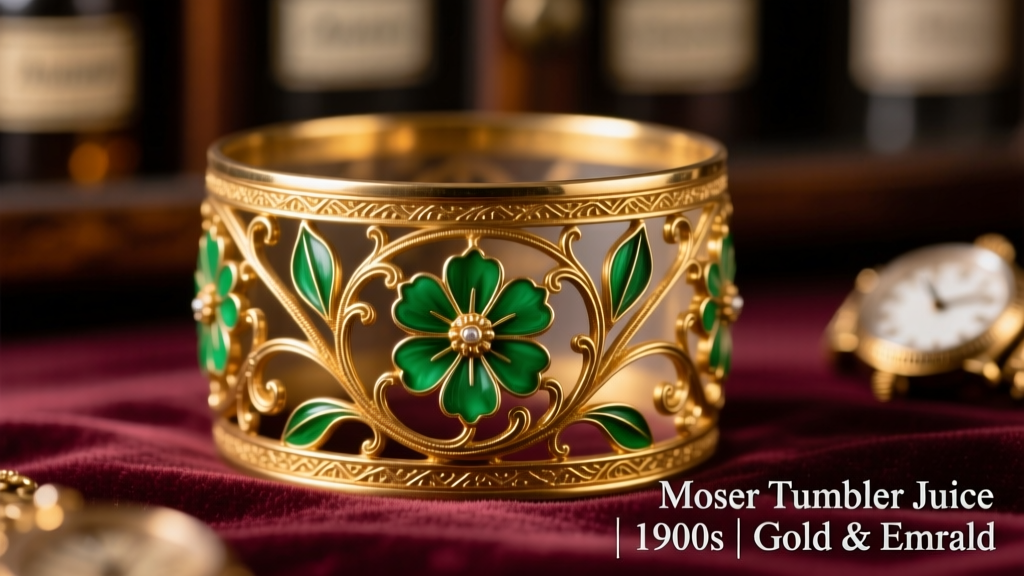
Moser Tumbler 'Juice' with Gold Flowers and Emerald-Green Glass: A 1900 Bohemian Masterpiece Measuring 3½ Inches
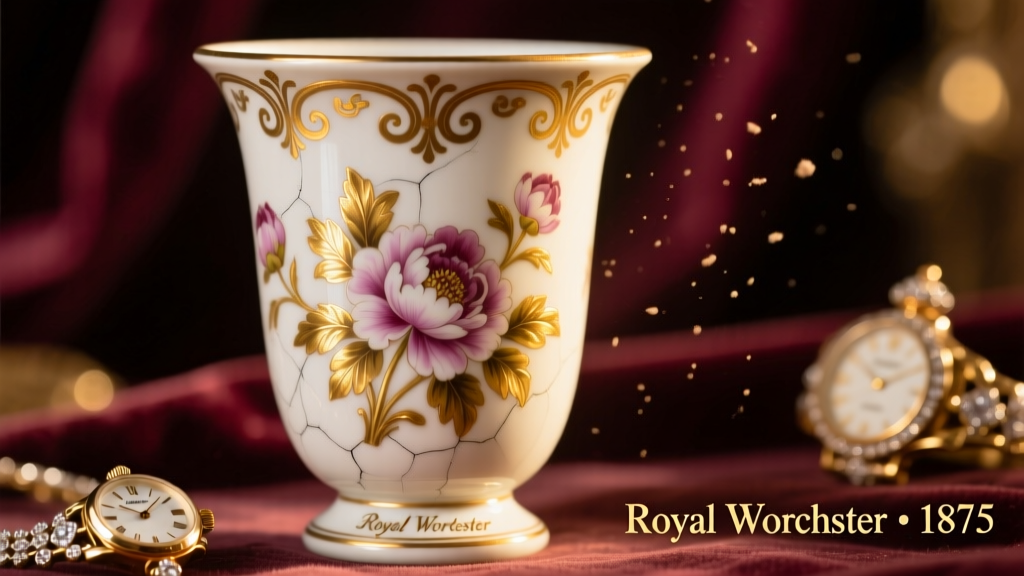
Royal Worcester Vase: Floral Gilt Ivory, 9-Inch Form — A Study in Late Victorian Refinement
Fiesta Chartreuse 6-Inch Dinner Plate: A Mid-Century Ceramic Icon Reconsidered
Royal Dux Horse Rearing Figurine: Decoding the 11½-Inch Masterpiece with Mark 11 1 2
Lot 1131567: A Deep Technical and Historical Analysis of the 1968 Rolex Oyster Perpetual Datejust Ref. 1601 in 14K Yellow Gold
Simon & Halbig Character Doll: The 21-Inch Oily Bisque with Wistful Expression — A Connoisseur’s Appraisal
Disneyana Doll: Mickey Mouse Bisque Figure, Japan, 1950s–1960s — Identification, Provenance, and Market Value

Planters Peanuts Bank: Mr. Peanut Coin Slot in Hat with Red Paint, 1950s, 10-Inch Vintage Tin Collectible
RS Prussia Ostrich Brown Vase: A Collector’s Guide to the 9½-Inch Art Glass Masterpiece