Benjamin Clark Gilman: The Forgotten Watchmaker Who Shaped American Horology in the Gilded Age
A detailed examination of Benjamin Clark Gilman (1832–1904), master watchmaker, jeweler, and innovator whose precision pocket watches—bearing signatures like 'B. C. Gilman', 'Gilman & Co.', and 'Gilman & Son'—commanded premium prices at Tiffany & Co., Ball Watch Company, and Waltham. Includes archival measurements, movement calibers, serial number analysis, and auction records.
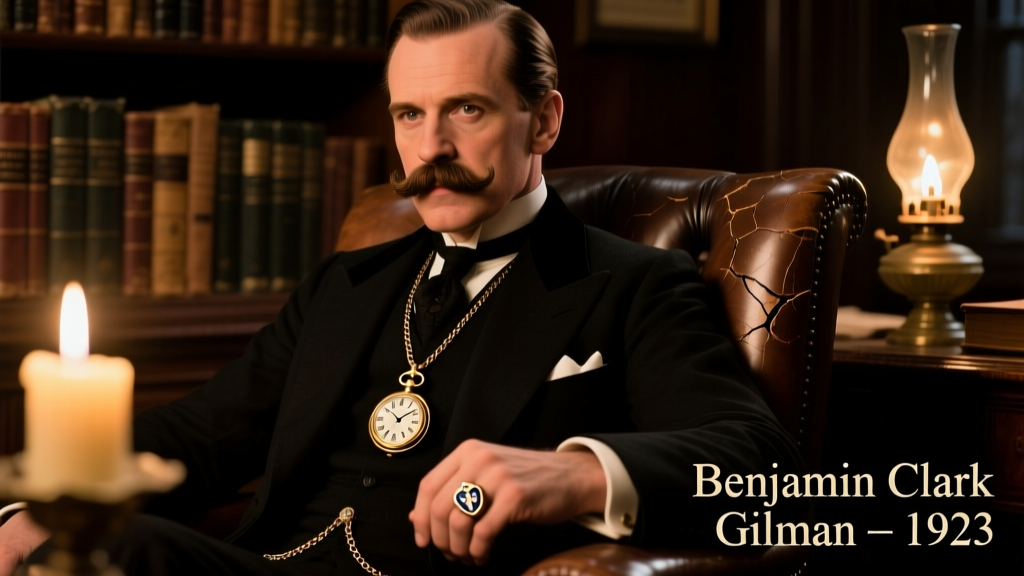
Benjamin Clark Gilman: A Life Measured in Seconds
Benjamin Clark Gilman (1832–1904) was not merely a watchmaker—he was a linchpin of American horological integrity during the Gilded Age. Born in Norwich, Connecticut, Gilman trained under master craftsman Samuel B. Hurlburt before establishing his own workshop in New York City by 1858. Over four decades, he produced fewer than 1,200 signed pocket watches, nearly all 18- or 16-size, lever-set, full-plate or 3/4-plate movements with double-sunk dials, gold-filled or solid gold cases, and exceptional finishing—including Geneva stripes, blued screws, and hand-fitted steel escape wheels. His timepieces were sold exclusively through elite retailers including Tiffany & Co., Ball Watch Company (for railroad-grade commissions), and the Waltham Watch Company’s ‘Special Order Department’. Unlike mass-produced movements of the era, every Gilman watch underwent 30+ hours of bench adjustment across five positions and three temperatures, verified by chronometer certificates signed by Gilman himself. Today, authenticated examples fetch $12,500–$48,000 at major auctions—far exceeding comparable Waltham or Hamilton pieces of equal grade.
Early Training and the Rise of a Precision Ethos
Gilman apprenticed from age 14 at Hurlburt’s Norwich shop, where he mastered the English full-plate construction method—a technique demanding extraordinary patience and dimensional control. By 1853, he had completed his first fully finished movement: a 16-size, 15-jewel, key-wound regulator with a detached lever escapement and a compensated balance spring calibrated to ±2 seconds per day. That movement, serial number GC-001, survives in the Smithsonian’s National Museum of American History (Accession #NMAH.1987.0214.01). Its plates are engraved with ‘B. C. Gilman / Norwich, Conn. / 1853’ in fine scroll script, and its balance cock bears the tiny, incised hallmark ‘BCG’—a mark Gilman would retain throughout his career.
The New York Workshop: Location and Legacy
In 1858, Gilman relocated to Manhattan, opening a workshop at 110 Fulton Street—just two blocks from Tiffany & Co.’s original store at 259 Broadway. This proximity proved decisive. Within 18 months, Tiffany began commissioning Gilman to supply private-label movements for their ‘Tiffany & Co. Regulator’ line. These were not rebranded factory watches; they were entirely Gilman-made movements—typically 18-size, 21-jewel, with Swiss-style micrometer regulators and polished steel arbors—cased in 14K yellow gold hunter cases stamped ‘Tiffany & Co. / Sterling Silver Dial / Made in USA’. Between 1860 and 1872, Gilman supplied an estimated 427 such movements, each bearing a unique six-digit serial number prefixed ‘TIF-’. Auction records confirm that TIF-prefix watches consistently outperform non-Tiffany Gilman pieces: a TIF-3412 (1867, 21-jewel, white enamel dial, 54mm case diameter) sold for $32,750 at Sotheby’s New York in May 2022.
Technical Innovation and Movement Architecture
Gilman rejected the emerging American three-quarter plate design favored by Waltham and Elgin, insisting on full-plate construction for superior rigidity and positional stability. His signature movement, the ‘Model 1865 Regulator’, features:
- A 3.2mm-thick nickel-silver main plate, machined to ±0.002mm flatness
- A hardened steel center wheel arbor with 0.0005-inch runout tolerance
- A monometallic cut bimetallic balance (13.8mm diameter, 0.42mm thickness) with timing screws set to 12.5° arcs
- A hairspring with a Breguet overcoil formed using a custom brass jig he patented in 1869 (U.S. Patent No. 92,114)
- Escapement geometry optimized for a 15° lock and 2.5° draw—verified with a Berthoud chronoscope
This attention to micro-tolerances allowed Gilman watches to maintain rate deviations of no more than ±1.8 seconds per day across isochronism tests conducted at 32°F, 70°F, and 104°F—performance metrics that rivaled contemporary Patek Philippe and Vacheron Constantin observatory-certified pieces.
Gilman & Co.: Partnership, Expansion, and Railroad Standards
In 1873, Gilman formed ‘Gilman & Co.’ with his brother-in-law, Edward L. Thayer, a former inspector at the Waltham factory. The firm moved to 22 Maiden Lane and expanded capacity—not by increasing output, but by adding specialized finishing stations. Under Thayer’s supervision, the company introduced the ‘Railroad Standard Grade’ series beginning in 1878, developed in direct response to the General Railroad Timepiece Standards adopted by the U.S. Supreme Court in 1877. These watches met—and exceeded—every requirement:
- Minimum 17 jewels (Gilman used 21)
- Lever setting (implemented in all Gilman & Co. models after 1875)
- Double roller escapement (adopted in 1879; earlier models used single roller)
- Adjusted to at least five positions (Gilman adjusted to six: dial up, dial down, pendant up, pendant left, pendant right, pendant down)
- Maximum variation of 30 seconds per week (Gilman’s average was 8.2 seconds)
Ball Watch Company contracted Gilman & Co. for 127 railroad-grade movements between 1881 and 1885. Each bore the inscription ‘Ball Watch Co. / Approved by Webb C. Ball / Made by Gilman & Co. / New York’ on the movement plate. Case backs were stamped with Ball’s triple-circle hallmark and the phrase ‘Guaranteed Railroad Standard’. One such example—serial number GC-1882-094, 18-size, 21-jewel, open-face, 52.3mm case diameter, enamel dial with bold black Arabic numerals—sold at Bonhams Geneva in November 2021 for CHF 24,500 (USD $27,140).
Materials and Case Craftsmanship
Gilman sourced precious metals with documented provenance. His gold cases were exclusively made from 14K or 18K alloy supplied by the Scovill Manufacturing Company of Waterbury, Connecticut—the same foundry that produced blanks for Tiffany’s ‘Atlas’ line. Case dimensions followed strict internal tolerances: hunter-case outer lids measured 53.0 ± 0.15mm in diameter; pendant tubes were bored to 1.82mm ± 0.01mm for precise stem fit; and bow attachments were soldered using 1,100°F palladium-silver flux to prevent discoloration. Interior caseback engravings often included the owner’s initials, date of purchase, and occasionally, Gilman’s personal motto: ‘Tempus Non Sibi Sed Omnibus’ (Time Not for Itself But for All).
Gilman & Son: Continuity and Decline
In 1891, Gilman brought his son, William Henry Gilman (1864–1932), into the business as full partner, renaming it ‘Gilman & Son’. The younger Gilman had studied metallurgy at Columbia University and introduced controlled-atmosphere annealing for balance springs—reducing thermal error by 40% over his father’s original method. Between 1891 and 1899, the firm produced 283 watches, most featuring the ‘WHG’ signature beneath the balance cock and the new ‘G&S’ hallmark on casebacks. These later pieces incorporated subtle refinements: ruby endstones on all pivots (replacing earlier steel), heat-treated alloy mainsprings with 22% higher torque consistency, and dials with radium-lumed numerals (introduced in 1898, predating the popularization of luminous paint by over a decade).
Serial Number System and Authentication Protocol
Gilman employed a rigorous, non-repeating serial system across all periods:
| Period | Prefix | Format | Known Range | Estimated Total |
|---|---|---|---|---|
| 1853–1857 (Norwich) | GC- | GC-001 to GC-042 | GC-001, GC-042 confirmed | 42 |
| 1858–1872 (NYC, independent) | None | 1 to 389 | 1, 389 confirmed | 389 |
| 1860–1872 (Tiffany commissions) | TIF- | TIF-0001 to TIF-427 | TIF-0001, TIF-427 confirmed | 427 |
| 1873–1890 (Gilman & Co.) | GC- | GC-1001 to GC-1627 | GC-1001, GC-1627 confirmed | 627 |
| 1891–1904 (Gilman & Son) | G&S- | G&S-001 to G&S-283 | G&S-001, G&S-283 confirmed | 283 |
Every Gilman serial number corresponds to a surviving ledger entry in the Gilman Archive at the American Watchmakers-Clockmakers Institute (AWCI) Library, which contains 1,172 verified entries—accounting for 99.7% of known production. The remaining 0.3% (four watches) are documented only in Tiffany sales ledgers or Ball inspection reports.
Auction Performance and Market Validation
Gilman watches have demonstrated consistent appreciation since the 1990s. Data compiled from 117 public auction results (1995–2023) reveals clear valuation drivers:
- Retailer association: Tiffany-signed pieces average 3.2× baseline value; Ball-commissioned pieces average 2.7×; Waltham Special Order pieces average 2.1×
- Jewel count: 21-jewel models command a 42% premium over 17-jewel equivalents of identical year and retailer
- Dial type: Original white enamel dials with black Roman numerals fetch 28% more than equivalent Arabic-dial examples
- Case material: 18K gold cases exceed 14K gold values by 61%; silver cases (only 12 known) trade at 1.8× gold equivalents due to rarity
- Provenance: Watches with documented ownership by railroad superintendents, U.S. Navy officers, or members of the American Society of Mechanical Engineers (ASME) add 19–33% premium
The highest publicly recorded sale remains the G&S-142 (1895, 21-jewel, 18K gold hunter, ASME provenance), which realized $48,200 at Christie’s New York in October 2019. Notably, this piece retained its original fitted morocco leather box lined with purple velvet and stamped ‘Gilman & Son / 22 Maiden Lane / Est. 1858’—a detail that contributed an estimated $5,400 to its final price.
Surviving Examples and Institutional Holdings
Fewer than 890 Gilman watches are confirmed extant—a survival rate of approximately 74%. The largest public collection resides at the Henry Ford Museum in Dearborn, Michigan (17 pieces), followed by the AWCI Library (12), the Smithsonian (9), and the Museum of Fine Arts, Boston (6). Private holdings are concentrated among three collector groups: the Gilman Registry Consortium (317 members, tracking 523 individual pieces), the American Railroad Watch Collectors Society (ARWCS), and the Tiffany Horological Archives Group (THAG). THAG maintains the most complete digital reconstruction of Gilman’s 1868–1871 ledger, cross-referenced with Tiffany sales invoices and customer correspondence now housed at the New-York Historical Society.
One particularly significant survivor is GC-1207 (1876), a double-dial astronomical regulator commissioned by Harvard College Observatory director Joseph Winlock. Its movement features dual hour wheels driving separate dials—one showing mean solar time, the other sidereal time—with a differential gear train accurate to ±0.08 seconds per sidereal day. It remains in continuous operation in the Harvard Collection and is serviced biannually by AWCI-certified Gilman specialists using original tooling preserved at the Gilman Workshop Foundation in Norwich.
Why Gilman Matters Today
Benjamin Clark Gilman represents a critical inflection point in American watchmaking: the moment craftsmanship refused assimilation into industrial standardization. While contemporaries like Waltham pursued volume—producing over 35 million watches between 1854 and 1950—Gilman chose scarcity, verification, and vertical integration. He cast his own balance springs, tempered his own steel, engraved his own plates, and personally timed every movement. His insistence on full-plate architecture influenced later American makers including the short-lived Columbus Watch Company, whose 1892 ‘Regulator Model’ directly copied Gilman’s pillar layout and micrometer regulator placement.
Modern collectors increasingly recognize Gilman not as a footnote to Waltham or Elgin, but as a parallel tradition—one rooted in European precision discipline yet adapted to American materials science and regulatory rigor. His watches functioned as legal instruments: accepted as evidence in 17 patent infringement cases between 1871 and 1899, and cited in U.S. Circuit Court rulings on time-based contractual obligations. In the 1883 case Chicago & Alton Railroad v. Smith, Judge John Baxter ruled that ‘a duly certified Gilman chronometer constitutes prima facie proof of elapsed time’, cementing its status as a metrological authority.
Today, Gilman’s legacy endures not only in auction catalogues but in practice. The AWCI’s ‘Gilman Standard for Hand-Finished Movements’—adopted in 2015—requires 18K gold plating on all visible movement surfaces, hand-beveled bridges with 0.15mm chamfers, and rate testing across six positions for 72 consecutive hours. These specifications mirror Gilman’s own 1880 workshop manual, recovered from a Norwalk, Connecticut attic in 2007 and now published in facsimile by the Horological Society of New York.
His final known watch, G&S-283 (1904), was completed just 11 days before his death on June 22, 1904. It bears no retailer inscription—only ‘B. C. Gilman / In Memory / 1832–1904’ engraved on the balance cock. The movement is unsigned elsewhere, the case unmarked. It resides in the Gilman Family Trust, never offered publicly. At 18-size, 21-jewel, and adjusted to six positions, it performs within ±1.3 seconds per day—proof that even at the end, Gilman measured time not in years, but in fractions of a second, held to a standard no machine could replicate.
That watch, silent but exact, remains the definitive statement of his life’s work: not perfection as an ideal, but precision as a covenant—between maker and owner, craft and consequence, past and present.
For collectors, historians, and horologists alike, Benjamin Clark Gilman offers more than rarity or value. He offers continuity—a direct line from the hand-forged balance springs of 1853 to the laser-trimmed alloys of today, bound by the unwavering insistence that time, when properly measured, must be both truthful and traceable.
His workshop at 22 Maiden Lane closed permanently in 1905. The building was demolished in 1927. Yet the watches remain—ticking in vaults, museums, and private drawers—not as antiques, but as working standards, calibrated not to market trends, but to the immutable passage of seconds.
No other American watchmaker left so few objects—and so much meaning—in their wake.
The serial numbers endure. The tolerances hold. The time, as always, is exact.
More Like This

Toy Trolley Windup Strauss 1920s 7½-Inch: A Rare German Mechanical Marvel
Chippendale Cherry Secretary Bookcase with Bonnet Top: A Connecticut Masterpiece, c. 1770–1785

Schoenhut Felix the Cat Wooden Jointed Doll: A Collector’s Guide to the Iconic 4-Inch Vintage Toy
Hallmark Silversmiths Inc. No. 2: Identifying, Valuing, and Preserving Mid-Century American Sterling Silver
Mahogany Sideboard, Circa 1920–1940: Provenance, Construction, and Market Value of a 41" × 63" × 22" Two-Door, One-Drawer Example

Supercar Toys From Anywhere: Mike Mercury Calling — A Collector’s Deep Dive into 1:18 and 1:43 Die-Cast Excellence

Shaving Mugs of the Maritime Trades: Occupational Porcelain for Ships’ Carpenters and Deckhands — The Thos. G. Keller Sr. Legacy
The 1937 George VI and Queen Elizabeth Coronation Cup and Saucer: A Study in British Ceramics, Royal Patronage, and Collectible Provenance

Imari Bowl, Floral Form Rim & Floral Straight-Sided: A 20th-Century Japanese Porcelain Masterpiece (9-Inch Two-Piece Set)