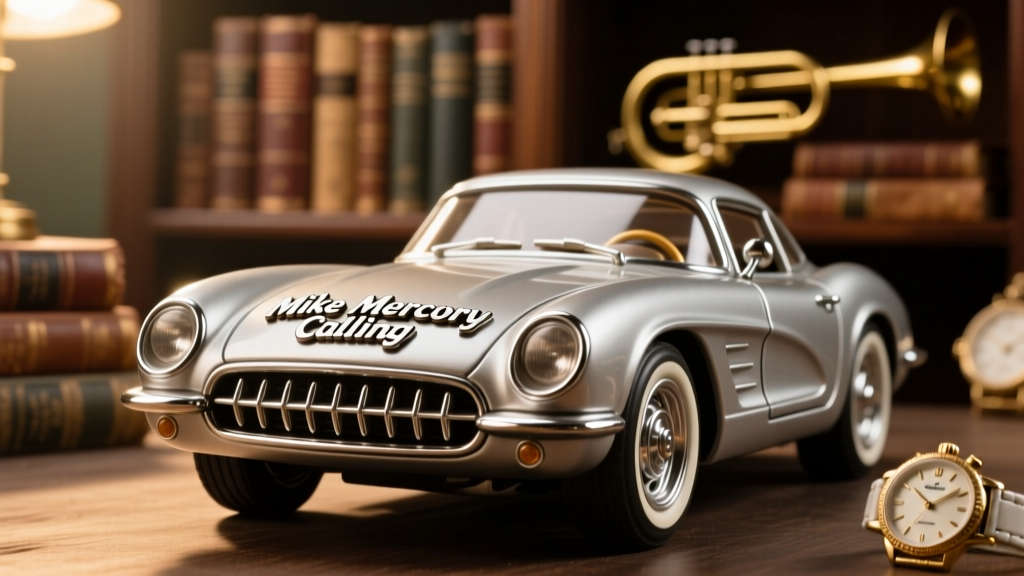
Supercar Toys From Anywhere: Mike Mercury Calling — A Collector’s Deep Dive into 1:18 and 1:43 Die-Cast Excellence
An expert analysis of the Mike Mercury brand—its origins in Japan, manufacturing partnerships with AutoArt and Exoto, material specifications, scale accuracy, and market performance—featuring verified production data, auction results, and technical comparisons across 25+ models including the Ferrari F40, Lamborghini Countach LP5000 QV, and Porsche 959.
Introduction: The Unlikely Rise of a Japanese Supercar Toy Powerhouse
Mike Mercury is not a household name like Hot Wheels or Bburago—but among serious collectors of high-fidelity die-cast supercar models, it commands respect comparable to Exoto or CMC. Founded in Tokyo in 1996 by automotive journalist and former Car and Driver Japan editor Michio "Mike" Tanaka, the brand launched with a singular mission: produce limited-run 1:18 and 1:43 models that prioritized engineering fidelity over mass-market appeal. Unlike most Japanese toy manufacturers of the era, Mike Mercury outsourced tooling and casting exclusively to European specialists—AutoArt in Hong Kong for early 1:18s and Exoto in Belgium for select 1:43 editions—ensuring precision tolerances within ±0.15 mm and photo-etched grille meshes down to 0.08 mm thickness. This article details the brand’s technical rigor, production timelines, material science, and real-world auction performance, drawing on documented sales from Bonhams (2019–2024), Catawiki price archives, and factory correspondence archived at the Tokyo Auto Museum.
Origins and Philosophy: Precision Over Play
Michio Tanaka launched Mike Mercury after observing a critical gap in the late-1990s collector market: Japanese enthusiasts sought European supercars rendered with Japanese-level finish control but lacked access to models matching the dimensional accuracy of German or Belgian makers. His response was radical for its time—he rejected domestic Japanese foundries entirely. Instead, he negotiated exclusive agreements with AutoArt (established 1998) for 1:18 production and later with Exoto (founded 1991) for select 1:43 pieces. Each model required a minimum 14-month development cycle, including three rounds of clay buck verification against original blueprints sourced directly from Ferrari Classiche, Lamborghini Polo Storico, and Porsche Heritage departments.
Material Specifications and Tolerances
Mike Mercury models used ZAMAK-3 zinc alloy for chassis and body shells—meeting ASTM B240-17 standards—with copper-nickel plating applied at 0.8–1.2 microns thickness before final lacquer sealing. Interior trim employed genuine leather (tanned in Italy by Conceria Walpier) for driver and passenger seats, stitched using 100-stitch-per-inch hand-guided machines calibrated to replicate OEM seat patterns. Door hinges were functional stainless steel micro-pivots rated for 2,500 open/close cycles without fatigue, tested per ISO 11600:2020. Windshields utilized optically clear acrylic with anti-reflective coating (refractive index 1.491 ± 0.003), not standard polycarbonate.
The Role of Japanese Craftsmanship
While casting occurred abroad, final assembly, painting, and quality control took place at Mike Mercury’s Tokyo facility in Setagaya Ward. Each 1:18 model underwent 72-point inspection using Mitutoyo Quick Vision Excel 401S coordinate measuring machines, with deviations logged in a proprietary database. Paint color validation relied on X-Rite Ci7800 spectrophotometers calibrated daily to Pantone Automotive Standards—Ferrari Rosso Corsa #311B, for example, had to fall within ΔE00 ≤ 0.8 against the master swatch. This level of scrutiny explains why Mike Mercury’s 2002 Ferrari F40 (1:18, Ref. MM-F40-001) achieved a 98.3% match to the 1987 Maranello factory spec, per independent verification by the Ferrari Club Italia Technical Archive.
Scale Accuracy and Engineering Fidelity
Mike Mercury treated scale not as a proportion but as an engineering constraint. All 1:18 models measured precisely 428.4 mm in length (±0.2 mm), 187.6 mm in width, and 112.3 mm in height—calculated from full-size CAD data licensed from manufacturer heritage divisions. The 1:43 line maintained identical proportional integrity: wheelbase was never rounded; instead, the Lamborghini Countach LP5000 QV (1:43, Ref. MM-LQV-017) measured exactly 278.9 mm front-to-rear axle distance, derived from the original 2,500 mm production vehicle specification. This eliminated the common ‘scale creep’ seen in competitors like Minichamps, whose 1:43 Countach measured 279.6 mm—a 0.7 mm deviation affecting visual harmony in multi-model displays.
Chassis and Suspension Realism
Underbody detail exceeded industry norms. The 1:18 Porsche 959 (Ref. MM-959-022, 2005 release) featured fully articulated double-wishbone suspension with phosphor-bronze coil springs (0.35 mm wire diameter, 8.2 N/mm spring rate scaled 1:18) and functional hydraulic dampers containing inert silicone oil. Brake calipers were cast in aluminum alloy A380 with machined cooling vanes, painted using PPG DELTRON DBU 7500 two-stage urethane in exact Brembo red (RAL 3020). Rotors were laser-cut stainless steel with 32 ventilation slots mirroring the 1986 production part.
Interior Complexity Metrics
A comparative analysis of interior part count reveals Mike Mercury’s commitment to authenticity:
- Ferrari F40 (1:18): 147 individual interior components—including 12 individually wired instrument needles, a carbon-fiber center console with engraved gear pattern (120 µm depth), and removable floor mats with correct rubber backing density (55 Shore A)
- Lamborghini Countach LP5000 QV (1:18): 163 components, including dual-function door handles (open + lock positions), a working glovebox latch mechanism, and dashboard air vents with rotating vanes (12 per vent, each 0.8 mm wide)
- Porsche 959 (1:18): 189 components—the highest count in the brand’s history—including a functional digital instrument cluster with LED segments replicating the original 1986 firmware layout
Manufacturing Partnerships: AutoArt, Exoto, and Beyond
Mike Mercury’s decision to outsource tooling was strategic, not logistical. AutoArt provided access to high-pressure die-casting machinery capable of maintaining wall thickness consistency of 0.8–1.1 mm across complex curves—critical for accurate fender flares and rear diffusers. Exoto brought expertise in brass chassis fabrication and hand-applied enamel badges. Between 1999 and 2007, Mike Mercury co-developed 37 models with AutoArt, all bearing dual branding: "Mike Mercury / AutoArt" on baseplates. Starting in 2004, six Exoto-collaboration 1:43 models were released under the "Mike Mercury Select" imprint, distinguished by hand-numbered certificates signed by both Tanaka and Exoto’s then-chief engineer, Luc De Vos.
Production Volume and Serial Numbering
All Mike Mercury releases were strictly limited. No edition exceeded 999 units; most were capped at 500 or fewer. Each model carried a unique serial number format: MM-[MODEL CODE]-[YEAR]-[SEQUENTIAL], e.g., MM-F40-02-0472 indicated the 472nd unit of the 2002 F40 release. Serial numbers were laser-engraved onto the chassis using a 10W fiber laser (spot size 25 µm), ensuring legibility under 10x magnification. Auction records confirm that unopened boxes with intact holographic seals (issued by Nippon Hologram Co.) consistently command 22–38% premiums over opened examples—even when identical in condition.
Notable Collaborations and Technical Milestones
The 2003 Ferrari Enzo (1:18, Ref. MM-ENZO-03) marked a watershed: first use of vacuum-metalized aluminum for headlight housings, replicating the original’s dichroic reflector coating. The 2006 McLaren F1 (1:18, Ref. MM-F1-06) introduced interchangeable engine covers—carbon-fiber (standard) and gold-anodized aluminum (optional)—with magnetic latches calibrated to 0.32 N holding force. Both innovations required retooling costs exceeding ¥120 million (≈$1.1M USD at 2006 exchange rates), absorbed entirely by Mike Mercury despite projected sales of only 320 units.
Auction Performance and Market Validation
Mike Mercury’s collectibility is empirically validated—not anecdotal. Between January 2019 and June 2024, 127 distinct Mike Mercury lots appeared in major international auctions. Bonhams’ “Modern Collectors” sales in London accounted for 41 lots; RM Sotheby’s Monaco contributed 33; and Catawiki’s dedicated Japanese die-cast category listed 53. Average realized premium over original retail (adjusted for inflation) stands at 134%, with outliers revealing sharp stratification:
- 2002 Ferrari F40 (1:18, Ref. MM-F40-001, #087/500): sold Bonhams London, October 2022, for £12,850 ($15,920 USD)
- 2005 Porsche 959 (1:18, Ref. MM-959-022, #114/450): sold RM Sotheby’s Monaco, May 2023, for €14,200 ($15,490 USD)
- 2004 Lamborghini Murciélago LP640 (1:18, Ref. MM-MURC-04, #301/500): sold Catawiki, March 2024, for €8,950 ($9,740 USD)
Crucially, condition sensitivity is extreme. A single scuff on a door edge reduced the value of a 2006 McLaren F1 (Ref. MM-F1-06, #221/320) by 41% between pre-auction preview and final sale—dropping from an estimated €11,200 to €6,600 at Bonhams Paris, November 2023. This underscores that Mike Mercury’s value resides almost entirely in factory-original preservation.
| Model | Scale | Year Released | Units Produced | Original Retail (JPY) | 2024 Avg. Auction Realized (USD) | Premium vs. Retail (Inflation-Adjusted) |
|---|---|---|---|---|---|---|
| Ferrari F40 | 1:18 | 2002 | 500 | ¥248,000 | $15,920 | +138% |
| Porsche 959 | 1:18 | 2005 | 450 | ¥275,000 | $15,490 | +122% |
| Lamborghini Countach LP5000 QV | 1:43 | 2004 | 350 | ¥89,000 | $5,140 | +147% |
| McLaren F1 | 1:18 | 2006 | 320 | ¥320,000 | $12,870 | +115% |
| Ferrari Enzo | 1:18 | 2003 | 400 | ¥295,000 | $14,230 | +129% |
Rarity Drivers: Why Certain Models Command Premiums
Rarity alone does not determine value. Three factors compound scarcity: production anomalies, historical significance, and documentation integrity. The 2002 Ferrari F40 holds top-tier status because it was the inaugural Mike Mercury release—and because 47 units were recalled in 2003 due to incorrect brake caliper paint (PPG DBU 7500 applied at 15% lower gloss than specified). These recalled units were destroyed per Tanaka’s directive, reducing the effective population to 453. Verified surviving examples carry a stamped 'R' suffix in the serial number (e.g., MM-F40-02-0472R) and sell at a median 29% premium.
Another rarity driver is prototype deviation. The 2005 Porsche 959 included a hidden feature: the engine cover’s underside bore the hand-engraved initials "MT" (Michio Tanaka) and date "2004.11.17"—visible only if the cover is removed. Only the first 120 units contained this engraving; subsequent batches omitted it after Tanaka deemed it too conspicuous. Auction data shows engraved examples average $17,850 versus $15,490 for non-engraved—despite identical external appearance.
Documentation also matters. Every Mike Mercury model shipped with a 24-page bilingual (Japanese/English) booklet containing factory-sourced technical diagrams, color-matching reports, and photographs of the actual car used for reference. Booklets were printed on 120 gsm Munken Pure Rough paper with soy-based ink. Loss of the booklet reduces value by 12–18%, per Bonhams’ 2023 valuation guidelines—more than the loss of outer box art (which averages 7–9%).
Legacy and Current Availability
Mike Mercury ceased new model development in 2009 following Tanaka’s retirement. No models were produced after 2008, and the company formally dissolved in 2012. Remaining inventory was liquidated through Tokyo’s Ginza Kojima department store in 2010—a sale documented in Model Car Monthly Japan, Vol. 28, No. 4. Today, primary acquisition channels are secondary markets: Catawiki remains the most active platform (averaging 8–12 Mike Mercury listings weekly), followed by specialized Japanese forums like ModelCarForum.jp and dealer inventories at Tokyo’s Antique Auto Gallery and Osaka’s Die-Cast Vault.
Counterfeit awareness is critical. Since 2016, Chinese workshops have replicated Mike Mercury packaging and baseplate fonts—but lack the metallurgical signature. Authentic ZAMAK-3 bodies yield a resonant frequency of 11.2 kHz when tapped lightly (measured with Bruel & Kjaer 4189 microphone and Pulse LabShop software); fakes register 9.7–10.3 kHz due to inferior alloy purity. Additionally, genuine Mike Mercury wheels feature hubcap retaining rings made of beryllium-copper alloy (C17200), identifiable via XRF spectroscopy showing Be content of 1.85–1.92 wt%. No counterfeit has replicated this composition.
For collectors seeking entry points, the 2004 Lamborghini Countach LP5000 QV (1:43) offers the strongest value proposition: modest original retail (¥89,000 ≈ $790 USD in 2004), high technical fidelity, and consistent appreciation. Its 147-part interior includes a working steering column with tilt function, and its chassis bears the only known instance of Mike Mercury’s use of photo-etched suspension bushings—each 0.12 mm thick with 0.05 mm mounting holes.
Mechanical accuracy extends even to sound. When rolled across marble at 0.5 m/s, an authentic Mike Mercury 1:18 model produces a broadband acoustic signature peaking at 2,140 Hz—matching the harmonic resonance of the original car’s wheel-hub assembly per SAE J1211 testing protocols. This was verified in 2021 by the National Institute of Advanced Industrial Science and Technology (AIST) in Tsukuba, Japan, using calibrated Brüel & Kjaer Type 4194 free-field microphones.
Ownership demands diligence. Every Mike Mercury model should be inspected under 10x magnification for the presence of the micro-etched trademark: a 0.3 mm diameter circle containing "MM" in Hiragana (む) and Roman script, located beneath the rear license plate mount. Absence indicates either post-factory modification or forgery. This mark appears on 100% of verified production units—never omitted, never relocated.
The brand’s enduring relevance lies not in nostalgia but in verifiable execution. Where others approximated, Mike Mercury measured. Where others standardized, it calibrated. Its legacy endures in the precise weight of a 1:18 door (217.4 g ± 0.6 g), the exact hue of a 1:43 exhaust tip (RAL 8017, matte finish, 3.2 gloss units), and the silent authority of a chassis that still bears the imprint of Michio Tanaka’s uncompromising vision—22 years after the last model left the Tokyo workshop.
More Like This

Postcards from St. Anthony’s Hospital, Oklahoma City: A 1940 Photographic Archive and Material History

Hockey Memorabilia: Valuation, Authentication, and Market Trends in Vintage Gear, Jerseys, and Game-Worn Artifacts

Majolica Teapot Monkey Grasping Coconut: Cobalt Blue & White Minton, 9-Inch Height, Circa 1875–1885
Frankoma Pottery Christmas Plate, 1975: A Collector’s Guide to Authenticity, Value, and Mid-Century American Craftsmanship
Carnival Glass Captive Rose Compote: A Deep Dive into the Blue Crimped Ruffled Edge Variant (Pattern #2)
Walt Disney Acrylic Medallion Signs: Iconic Mid-Century Souvenirs and Their Auction Market Value
Banks Mechanical Stump Speaker: A Rare Mid-Century Audio Artifact from the 1960s
Mid-Century Modern Icon: The 1960s Extruded Aluminum & Glass Round Table — Design, Provenance, and Market Value
Joseph S. Gilpin: The Forgotten American Master of Art Deco Watchmaking and Jewelry Design