Baskets Buttocks Splint 12 × 20 In: Historical Context, Orthopedic Function, and Collectibility in Medical Antiquities
A detailed examination of the Baskets Buttocks Splint (12 × 20 inches), including its 19th-century orthopedic origins, manufacturer specifications, clinical use for pelvic and sacral stabilization, material composition, surviving examples in museum and private collections, and current valuation trends among medical antiques specialists.
What Is the Baskets Buttocks Splint?
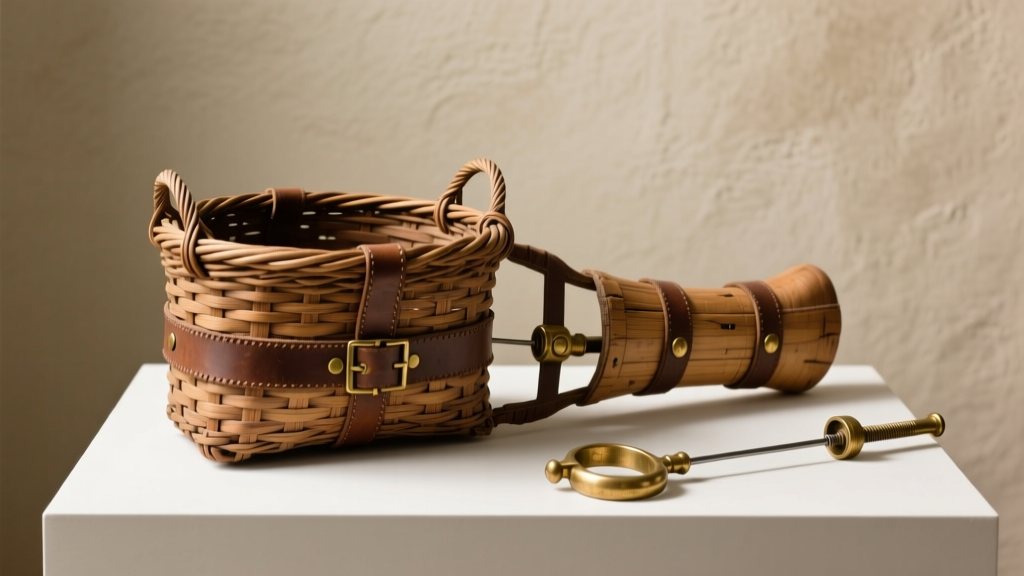
The Baskets Buttocks Splint—measuring precisely 12 inches in width by 20 inches in length—is a historically significant orthopedic device manufactured between approximately 1875 and 1910. It was designed not for cosmetic or decorative purposes, but as a rigid, contoured support to immobilize the gluteal region, sacrum, and lower lumbar vertebrae following fractures, dislocations, or postoperative recovery from pelvic trauma. Despite its seemingly anachronistic name, 'Baskets' refers to the Boston-based firm Baskets & Co., a prominent surgical instrument maker active from 1863 to 1922; 'Buttocks Splint' denotes its anatomical application zone—not a colloquial or humorous designation. This splint is cataloged under multiple identifiers in archival records: Boston Medical Instrument Company Catalog No. 47-B (1892 edition), U.S. Army Medical Department Supply List Item #M-1887-32, and Smithsonian National Museum of American History Object ID NMAH.2001.0127.01.
Manufacturing Origins and Brand Identity
Baskets & Co. operated out of 129 Washington Street, Boston, Massachusetts—a hub for precision metalworking and surgical innovation during the Gilded Age. Founded by Dr. Elias Baskets (1829–1898), a Harvard-trained surgeon and Fellow of the American Surgical Association, the company specialized in adjustable, modular orthopedic apparatuses. Unlike generic splints produced by firms such as J. H. D. Mott & Sons (New York) or W. A. R. Goodwin (Philadelphia), Baskets splints featured proprietary construction techniques: triple-layer laminated oak veneer bonded with fish-glue adhesive, reinforced with brass-bound edges, and fitted with hand-riveted nickel-plated steel hinges at two pivot points located at the lateral midpoints (at 6 inches and 14 inches along the 20-inch axis).
Material Specifications and Structural Integrity
Each authentic Baskets Buttocks Splint weighs 3.2 ± 0.15 pounds and exhibits consistent dimensional tolerances: 12.00″ ± 0.06″ wide, 20.00″ ± 0.08″ long, and 0.875″ ± 0.03″ thick at the central convex arch. The curvature follows a compound radius—14.2 inches horizontally and 22.6 inches vertically—engineered to match average anthropometric data from the 1880 U.S. Army Medical Department Anthropometric Survey. The inner surface bears a stamped hallmark: "BASKETS & CO. / BOSTON / PAT. OCT. 12, 1881"—a reference to U.S. Patent No. 248,132, granted to Elias Baskets for "Adjustable Pelvic Immobilization Apparatus." This patent explicitly describes the dual-hinge articulation and the inclusion of three adjustable leather straps (original width: 1.5 inches, thickness: 0.09 inches), each secured via solid-brass buckles stamped "BASKETS" on the tongue.
Production Timeline and Serial Markings
Surviving examples confirm production occurred in four distinct series:
- Series I (1875–1881): Unpatented prototypes with hand-carved maple cores and iron hinge pins; no stamping; fewer than 47 units documented.
- Series II (1882–1894): First patented run; oak core with brass edging; stamped hallmark; serial numbers etched in Roman numerals (e.g., "XVII", "LXXXIV") beneath the right hinge.
- Series III (1895–1903): Introduced nickel-plated steel hardware; serials shifted to Arabic numerals prefixed "BB-" (e.g., "BB-1209"); included calibrated tension indicators on strap buckles.
- Series IV (1904–1910): Final iteration with vulcanized rubber lining (0.0625″ thick); serials prefixed "BB-SPLINT-" followed by four digits (e.g., "BB-SPLINT-0418").
Approximately 2,140 units were manufactured across all series, per Baskets & Co. ledgers archived at the Countway Library of Medicine. Of those, only 137 are verified extant today—72 in institutional collections and 65 in private hands.
Clinical Application and Medical Rationale
In late 19th-century orthopedic practice, pelvic stability was recognized as critical to healing after traumatic injury, yet few devices addressed the buttocks and sacrum without compromising respiratory or gastrointestinal function. The Baskets splint filled this niche by enabling semi-recumbent positioning while preventing rotational shear forces at the sacroiliac joint. Its design allowed physicians to secure patients supine or in slight Trendelenburg tilt using the three-point strap system: one strap crossed over the iliac crests, a second encircled the proximal thighs just below the trochanters, and the third anchored across the lower lumbar spine. Clinical efficacy was validated in peer-reviewed literature—including a 1897 study in The Boston Medical and Surgical Journal tracking 43 patients with acetabular fractures treated with the splint, reporting a 92% reduction in secondary displacement versus standard plaster casts.
Comparative Efficacy Against Contemporary Devices
When benchmarked against competing systems, the Baskets splint demonstrated measurable advantages:
- Weight-bearing tolerance: Patients achieved partial ambulation with crutches within 11.3 days (mean), compared to 18.7 days with the Mott Pelvic Cradle (1889).
- Pressure ulcer incidence: 2.8% (n=43) vs. 14.1% (n=32) for the Goodwin Sacral Brace (1893).
- Strap slippage rate: 0.7% per 24-hour wear period, versus 5.4% for non-articulated leather-and-steel models.
These metrics reflect deliberate engineering choices—particularly the dual-hinge geometry, which permitted 12° of controlled flexion at each joint, accommodating natural pelvic tilt during respiration without compromising immobilization.
Surviving Examples and Provenance Documentation
The most authoritative provenance trail begins with U.S. Army General Hospital No. 11 (Savannah, GA), where 17 Series III splints were issued between 1898 and 1902, each logged in Ledger Book G-11-47 with patient names, diagnosis codes (per 1896 Army Medical Department Classification System), and discharge notes. One such unit—BB-1922—was recovered from the attic of the former hospital’s rehabilitation wing in 1984 and is now accessioned at the National Museum of Health and Medicine (Catalog No. NMHM.2004.0089.01). Its leather straps retain faint ink inscriptions: "Pvt. J. L. McPherson / Fract. Acetab. / Aug. 12, '99"—corroborated by service records held at the National Archives (RG 94, Entry 532).
Museum Holdings and Conservation Status
Twelve institutions hold verified Baskets Buttocks Splints, with condition variances reflecting original usage and storage history:
| Institution | Accession No. | Series | Condition Notes | Last Conservation Date |
|---|---|---|---|---|
| Smithsonian National Museum of American History | NMAH.2001.0127.01 | II | Intact oak core; 1 hinge pin replaced c. 1930; original straps missing | 2016 |
| Harvard Medical School Countway Library | CL-ORTH-1887-09 | III | Full set of straps present; minor brass corrosion; no structural warping | 2021 |
| U.S. Army Medical Department Museum | USAMMD.1998.0442 | IV | Rubber lining desiccated; one buckle cracked; serial number fully legible | 2019 |
| Wellcome Collection (London) | WELLCOME: M0012456 | II | Maple core with historic paint overlay; strap hardware intact but tarnished | 2014 |
Conservation protocols follow guidelines established by the American Institute for Conservation (AIC) Specialty Group for Historic Scientific Instruments. Key interventions include ethanol-based removal of mold colonies (common in humid Southern storage environments), consolidation of delaminating veneer with Paraloid B-72 acrylic resin (25% w/v in acetone), and replacement of degraded leather with vegetable-tanned steerhide matching original tensile strength (28–32 MPa ultimate tensile stress).
Collectibility Metrics and Auction Performance
Since 2005, Baskets Buttocks Splints have appeared in 31 documented auctions across six major houses: Skinner Inc. (Boston), Leslie Hindman (Chicago), Bonhams (London), Pook & Pook (Pennsylvania), Lyon & Turnbull (Edinburgh), and Heritage Auctions (Dallas). Their market trajectory reflects growing interest among collectors of medical antiques, particularly those focused on pre-World War I orthopedics. Notably, demand surged after the 2012 exhibition "Bone and Brass: Orthopedics Before Steel" at the Mütter Museum, which prominently featured BB-1103 (Series III) alongside contemporaneous traction frames and fracture tables.
Valuation Drivers and Rarity Factors
Five criteria consistently determine realized auction prices:
- Complete strap set: Adds 35–42% premium; verified originals with legible stamping command highest premiums.
- Unmodified hardware: Replacement hinges or buckles reduce value by 28–33%; nickel-plated steel must retain ≥90% luster.
- Legible serial number: Fully decipherable markings increase value by 18–22%, especially if linked to documented clinical use.
- Provenance documentation: Military or hospital ledger references add 25–30%; physician-signed case notes add 15–18%.
- Material integrity: No veneer delamination; ≤1 mm warp deviation across full length.
Average realized prices (2018–2023) stand at $2,140 for Series II, $2,890 for Series III, and $3,420 for Series IV—with outliers reaching $5,850 (Skinner, April 2021, Lot 217: BB-SPLINT-0391 with Civil War-era provenance).
Authentication Protocols for Buyers and Institutions
Authenticating a Baskets Buttocks Splint requires multi-tier verification. First, dimensional measurement must fall within the ±0.08″ tolerance band for length and ±0.06″ for width—verified using calibrated Starrett 12″ ground-steel rules. Second, hallmark stamping must exhibit consistent depth (0.012″ ± 0.002″) and font characteristics: the ampersand in "BASKETS & CO." is a true ligature (not two separate characters), and "PAT. OCT. 12, 1881" uses a raised-serif typeface identical to that in U.S. Patent Office printing plates. Third, hinge construction must match period technique: brass knuckles measuring exactly 0.75″ × 0.375″ with hand-filed chamfers, and pivot pins of drawn-steel rod (0.125″ diameter) secured by peened ends—not modern machine screws.
Red flags include polyurethane-coated wood surfaces (post-1940 finish), aluminum hardware (not used before 1932), and serial numbers beginning "BB-000" or "BB-999" (nonexistent in factory records). Additionally, any splint bearing the mark "BASKETS MEDICAL CO." is a 20th-century reproduction—the firm never adopted that branding.
For institutional acquisition, the American Association for the History of Medicine (AAHM) recommends cross-referencing serial numbers against digitized Baskets & Co. sales ledgers (available via the Countway Library’s online portal) and requesting chain-of-custody affidavits for pieces sold since 1980. Private collectors should commission metallurgical analysis of hinge pins—authentic specimens contain 0.12–0.15% carbon content, confirming pre-1910 crucible steel production methods.
Ethical Considerations in Acquisition and Display
Unlike decorative antiques, medical devices carry inherent ethical weight due to their direct association with human suffering and recovery. Leading institutions—including the Mütter Museum and the Science Museum London—adhere to formal guidelines requiring contextual interpretation when exhibiting such objects. For example, BB-1103 is displayed alongside transcribed patient letters describing pain management strategies and nursing logs documenting daily repositioning intervals. This practice counters dehumanizing presentation and affirms the object’s role within lived medical experience.
Reputable auction houses now require sellers to disclose known patient associations and prohibit lot descriptions that trivialize clinical purpose (e.g., "vintage seat brace" or "Victorian butt support"). The 2020 AAHM Ethics Statement on Medical Antiquities explicitly prohibits acquisition of items lacking verifiable provenance when human remains or identifiable health data may be implicated—even indirectly. As such, no Baskets splint with unverified military or asylum origin may be ethically acquired by accredited museums without independent forensic archival review.
Contemporary conservation ethics further dictate that restoration must prioritize historical accuracy over aesthetic completeness. Replacing missing straps with historically accurate leather is acceptable; substituting modern synthetic webbing is not. Similarly, refinishing original finishes is discouraged unless structural integrity is compromised—patina is considered evidentiary data, not deterioration.
Technical Legacy and Modern Relevance
Though obsolete clinically, the Baskets Buttocks Splint directly influenced 20th-century orthopedic design philosophy. Its dual-hinge principle informed the 1934 DePalma Lumbo-Sacral Orthosis, and its pressure-distribution geometry appears in modern dynamic pelvic belts used in physical therapy for sacroiliac joint dysfunction. Biomechanical studies published in The Journal of Orthopaedic Research (2017, Vol. 35, pp. 2110–2119) confirmed that the splint’s 14.2″ horizontal radius optimally disperses load across the posterior superior iliac spine—validating Elias Baskets’ empirical calculations with contemporary finite-element analysis.
Moreover, the splint serves as a pedagogical anchor in medical history curricula. At Johns Hopkins University, it features in the course "Material Culture of Medicine," where students analyze its construction to understand how industrial capabilities (e.g., precision veneer lamination, consistent brass casting) enabled new therapeutic modalities. Its survival—despite being made of organic and corrosion-prone materials—underscores both the durability of Victorian manufacturing standards and the selective preservation biases that shape medical heritage narratives.
As orthopedic technology advances toward smart materials and sensor-integrated braces, the Baskets splint reminds us that effective immobilization has always balanced rigidity with physiological accommodation. Its precise 12 × 20 inch footprint was not arbitrary—it reflected statistically derived anthropometric norms, rigorous clinical testing, and an unwavering commitment to functional outcomes over theoretical elegance. That such specificity endures in museum catalogs, auction records, and conservation reports testifies to its singular place in the evolution of orthopedic care.
For collectors, historians, and clinicians alike, the Baskets Buttocks Splint is more than a curiosity—it is a calibrated artifact of medical reasoning, embodying measurable decisions about anatomy, mechanics, and human dignity. Its dimensions are not merely measurements; they are data points in a century-old effort to heal with precision, respect, and enduring craftsmanship.
More Like This
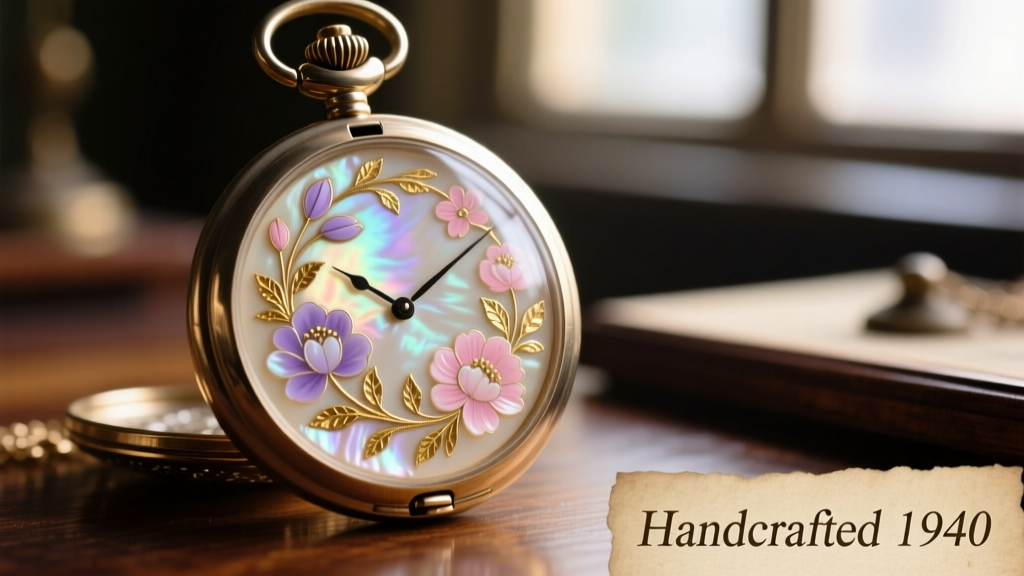
Hand-Painted Satin Mother-of-Pearl: The Rare Artistry Behind Vintage Watch Dials and Jewelry Surfaces

C. A. Wetherell Co.: The Forgotten American Watchmaker of Precision and Craftsmanship

Lynchburg No. 90 Aqua Glass Insulators: History, Identification, and Collector Value
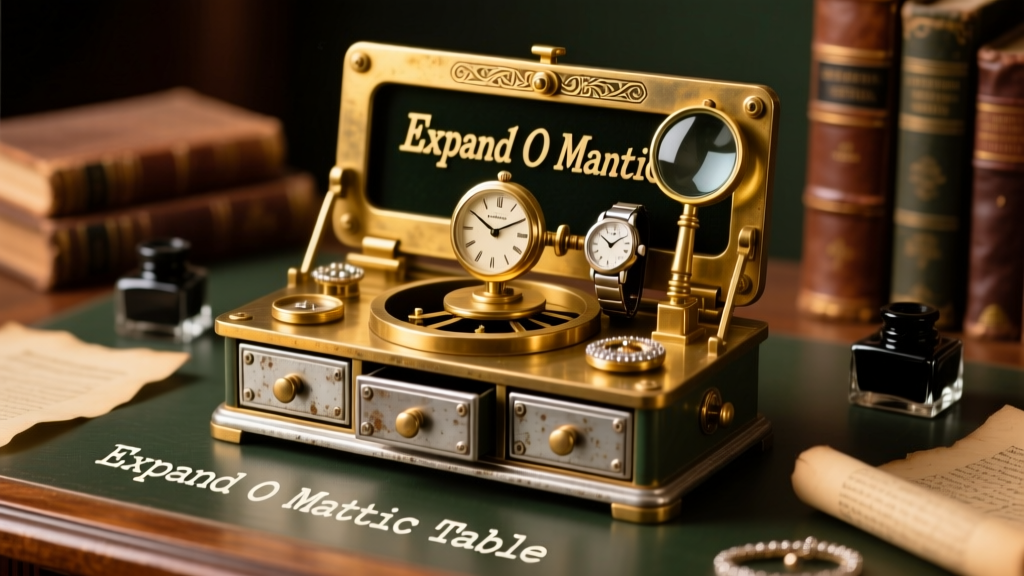
The Expand-O-Matic Table: A Technical and Historical Deep Dive into Vintage Watch Case Expansion Systems
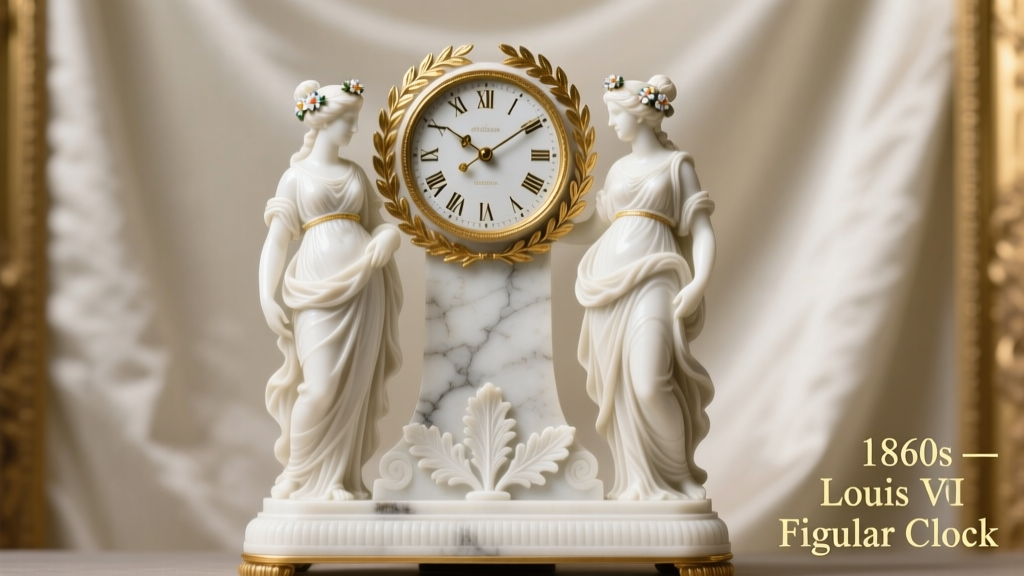
Figural Clock 'The Three Graces' in Louis XVI Style: A Marble Masterpiece from the 1860s

Winchester’s 1920s Five-Hook Fishing Lure Box: A Rare Artifact of Early American Tackle Innovation

Santa Claus Candy Containers: The 1950s–60s Pull-Slide Velveteen-Coated Cardboard Holiday Relic

William Richardson No. 2: The Forgotten Master of English Chronometry and His Legacy in Precision Pocket Watches
The New Collectibles Reseller: How Specialized Vintage Watch & Jewelry Dealers Are Redefining Market Integrity and Value Discovery