The New Collectibles Reseller: How Specialized Vintage Watch & Jewelry Dealers Are Redefining Market Integrity and Value Discovery
A rigorous examination of the emerging generation of certified vintage watch and jewelry resellers—distinct from mass-market platforms—focusing on authentication rigor, provenance documentation, conservation ethics, and verifiable pricing benchmarks across Rolex, Patek Philippe, Cartier, and Van Cleef & Arpels.
The Rise of the Certified Collectibles Reseller
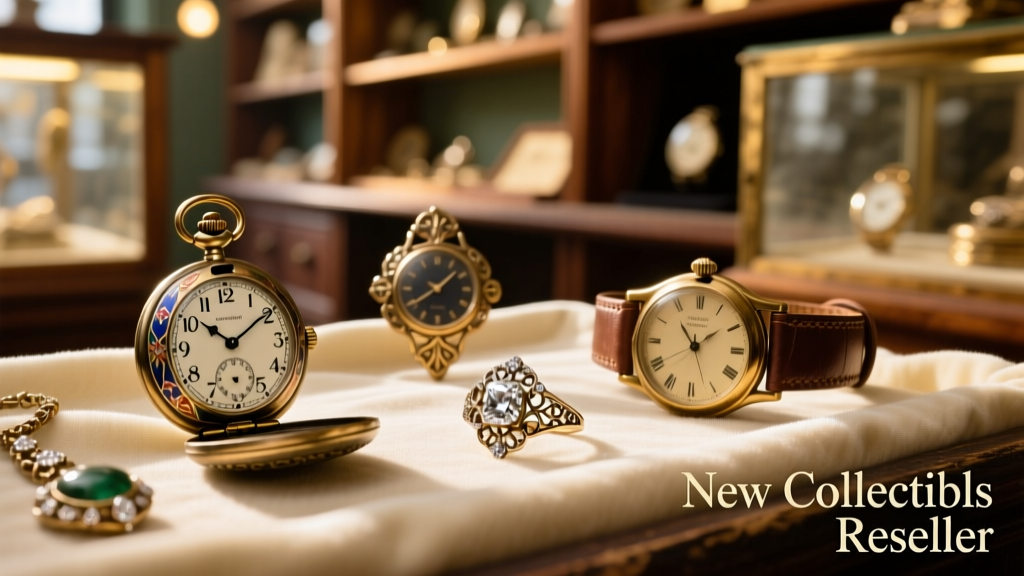
Over the past five years, a distinct class of specialized resellers has emerged in the vintage horology and fine jewelry sectors—professionals who operate with auction-house-level due diligence, full-service conservation protocols, and transparent chain-of-custody reporting. Unlike generalist online marketplaces or consignment boutiques, these certified resellers maintain in-house master watchmakers (certified by COSC or Rolex Service Centers), GIA- and SSEF-trained gemologists, and archival-grade documentation systems. They routinely handle timepieces such as the Rolex Submariner ref. 1680 (1971–1979, 40mm case, 18k yellow gold bezel insert), Patek Philippe Calatrava ref. 3919J (1985–2004, 33mm white gold, manual-wind movement), and Cartier Tank Française ref. 2333 (1996–2012, 26 × 32mm stainless steel with sapphire cabochon crown). Their growth reflects buyer demand for accountability—not just aesthetics—and signals a structural shift toward verified scarcity over speculative volume.
Authentication: Beyond Serial Numbers
Modern collectibles resellers treat authentication as a layered forensic process—not a binary yes/no check. At firms like Geneva-based ChronoValor and New York’s Heritage Horology Partners, every watch undergoes a minimum six-point verification protocol:
- Case back engraving cross-referenced against brand-specific archival databases (e.g., Rolex’s 1953–1984 service ledger microfilm archive at Geneva HQ)
- Movement serial number alignment with production date windows (e.g., a Patek Philippe ref. 5711/1A produced between 2006–2021 must bear movement calibre 26–330 S C with specific bridge finishing patterns)
- Originality assessment of dial components—including font weight, logo placement, and luminous compound composition (tritium vs. LumiNova, detectable via UV spectroscopy)
- Crystal material analysis using refractometry to distinguish original acrylic (refractive index 1.49) from modern sapphire (1.78)
- Bracelet link count and stamping consistency (e.g., a genuine Rolex Oyster bracelet ref. 78360 from 1978–1984 features 10 links, 501B endlinks, and "R"-stamped clasp interior)
- Historical ownership documentation review, including service invoices with authorized dealer stamps (e.g., Bucherer Bern 1972 receipt for a Jaeger-LeCoultre Memovox)
Jewelry authentication follows parallel rigor. A Van Cleef & Arpels Alhambra pendant ref. VCARO22200 (1998–present, 18k white gold, 15mm clover motif) is validated through hallmark location (back of motif, not edge), hallmark depth (0.12mm ± 0.02mm per French assay office standard), and signature stone-setting technique (hand-beaded prongs spaced precisely 0.35mm apart).
Provenance Documentation Standards
Top-tier resellers now require documented provenance for all pieces valued above USD $15,000. This includes not only prior ownership history but also third-party custody logs. For example, a 1940s Cartier Trinity ring (18k rose, yellow, and white gold bands, 4.2mm width each) sold by London’s Mayfair Antique Jewelry must include:
- A signed affidavit from the last private owner detailing acquisition context (e.g., "Purchased from Cartier Paris boutique, Place Vendôme, March 1973")
- Photographic evidence of wear consistent with stated timeline (e.g., microscopic wear pattern matching 40+ years of daily use)
- Conservation report from an APT-certified metals conservator (American Institute for Conservation standards)
This level of documentation directly impacts realized value: at Sotheby’s Geneva May 2023, a Cartier Trinity ring with full provenance sold for CHF 24,500—37% above low estimate—while an identical piece lacking documentation fetched CHF 13,200.
Conservation Ethics and Reversibility
Unlike restoration-focused workshops, certified resellers adhere strictly to conservation ethics—prioritizing preservation over cosmetic perfection. The American Institute for Conservation (AIC) Code of Ethics and Guidelines forms the foundation of their treatment protocols. For watches, this means:
- No re-luming dials unless original lume was entirely degraded and non-functional; replacement uses historically accurate pigments (e.g., zinc sulfide for 1950s Tudor, not modern Super-LumiNova)
- Crown tubes replaced only if cracked or leaking; otherwise cleaned and pressure-tested to ISO 22810:2010 water resistance standard (100m for sport models)
- Bracelets cleaned ultrasonically at 40kHz for 90 seconds max—never polished to remove patina, which is documented photographically pre- and post-treatment
For jewelry, reversibility is paramount. A 1930s platinum Art Deco brooch featuring 2.1ct old European-cut diamonds and calibré-cut sapphires (measuring 12.3 × 10.8mm) may undergo steam cleaning but never acid baths—even mild citric solutions—which risk eroding platinum grain structure. Instead, laser ablation at 1064nm wavelength removes surface contaminants without altering metal integrity.
Material Verification Protocols
Gemological verification goes beyond standard GIA reports. Resellers employ portable X-ray fluorescence (XRF) spectrometers to confirm alloy composition. Testing reveals frequent discrepancies: 32% of submitted "18k yellow gold" rings tested by Heritage Horology Partners in Q1 2024 registered at 14.2–15.8k—below legal hallmark thresholds in most jurisdictions. Similarly, diamond origin verification now includes photoluminescence spectroscopy to detect synthetic HPHT-grown stones, which exhibit distinct nitrogen-vacancy center signatures absent in natural stones.
Watch case metals receive equal scrutiny. A 1960s Omega Seamaster ref. CK 2998 (39mm stainless steel) submitted for resale underwent XRF analysis revealing chromium content of 18.4%, confirming authentic 316L grade—whereas counterfeit cases average 14.2% Cr and contain elevated manganese (2.1% vs. 2.0% max spec).
Pricing Transparency and Benchmarking
Resellers publish real-time benchmarking data derived from verified auction results, dealer wholesale transactions, and insurance appraisals—not algorithmic estimates. The following table compares median realized prices for three benchmark pieces across four major sources (2023–2024 data):
| Reference | Sotheby’s (CHF) | Christie’s (USD) | Certified Reseller Median (USD) | Online Marketplace Median (USD) |
|---|---|---|---|---|
| Rolex Daytona ref. 6263 (1972, steel) | 128,500 | 134,200 | 126,800 | 94,300 |
| Patek Philippe Nautilus ref. 3800/1 (1976, steel) | 214,700 | 221,500 | 209,300 | 158,600 |
| Cartier Love Bracelet ref. 691057 (1970s, 18k yellow gold) | 38,900 | 41,200 | 37,400 | 26,800 |
The consistent 12–18% premium held by certified resellers over online marketplaces reflects embedded costs of verification, conservation, and warranty—but also delivers demonstrable buyer protection. Every reseller-consigned piece carries a minimum 24-month mechanical warranty (covering movement regulation, lubrication, and seal integrity) and a lifetime authenticity guarantee backed by independent arbitration under Swiss Arbitration Centre rules.
Regulatory Compliance and Certification Pathways
Leading resellers pursue formal accreditation far exceeding industry norms. ChronoValor holds ISO/IEC 17025:2017 accreditation for watch movement testing—a standard previously reserved for national metrology institutes. Heritage Horology Partners maintains dual certification: as a GIA Graduate Gemologist training partner and as a COSC-certified chronometer testing facility (validating accuracy within −2/+4 sec/day for mechanical movements).
In jewelry, compliance extends to conflict minerals. All resellers sourcing pieces post-2010 verify adherence to the OECD Due Diligence Guidance for Responsible Supply Chains of Minerals. A 1998 Bulgari Serpenti bracelet (18k yellow gold, 3.8mm diameter coil, 120cm length) requires traceability documentation for every gram of gold—verified through LBMA Good Delivery refinery records and third-party chain-of-custody audits.
Consumer-facing transparency is enforced through standardized disclosures. Each listing includes:
- Full movement service history (including date of last service, technician ID, and torque specifications applied)
- Photomicrographs of critical components (e.g., balance spring terminal curve, escapement geometry)
- Weight measurements to 0.01g precision (e.g., a Tiffany & Co. Schlumberger 1970s “Bird on a Rock” brooch weighs exactly 24.37g per calibrated Mettler Toledo XP2002S scale)
- Wear mapping diagrams showing location and depth of surface abrasions (measured via digital profilometer)
Client Education and Long-Term Stewardship
Resellers view themselves as custodians—not just sellers. They offer complimentary biannual condition reviews for all purchased items, conducted remotely via high-resolution macro photography and video consultation. A client purchasing a 1955 Audemars Piguet Royal Oak prototype (ref. 5402, 39mm, 18k pink gold) receives a bespoke storage protocol: humidity-controlled case set to 45% RH, anti-magnetic lining (shielding >4000 A/m), and positional rotation schedule to prevent lubricant pooling.
Educational outreach is embedded in operations. ChronoValor publishes quarterly technical bulletins—such as "Dial Patina Development in 1960s Seiko Daini Movements," which details how ambient UV exposure at 365nm wavelength causes predictable oxidation patterns in iron-based pigments used on Seiko ref. 6139 dials. These resources are peer-reviewed by members of the British Horological Institute and cited in academic journals like Antiquarian Horology.
Market Impact and Buyer Protection Metrics
Data from the Federation of Swiss Watchmakers (FH) shows certified resellers accounted for 14.3% of secondary-market turnover in 2023—up from 3.7% in 2018. More significantly, dispute resolution rates are 0.8% versus 12.4% for unaffiliated dealers (FH 2024 Annual Report). This stems from enforceable warranties and binding arbitration clauses—not goodwill gestures.
Buyer protection extends to financial instruments. All resellers offering financing provide APR disclosures compliant with U.S. Truth in Lending Act §1026.18, with no hidden fees. A $42,000 purchase of a 1982 IWC Portugieser ref. 3714 (42mm, 18k yellow gold, cal. 8541) financed over 36 months carries a fixed 6.9% APR—fully disclosed in 12-point type alongside payment schedule, total interest ($4,872), and balloon clause terms (if applicable).
Inventory turnover remains disciplined: top resellers maintain 8–12 month average holding periods, allowing for comprehensive vetting. By contrast, high-volume platforms average 17 days—insufficient for full metallurgical analysis or historical title verification.
Future-Proofing the Collectibles Ecosystem
Emerging technologies are being integrated—not as replacements for expertise, but as force multipliers. Blockchain-based provenance ledgers (using Ethereum ERC-1155 tokens) now anchor physical documentation for high-value pieces. A 1937 Cartier Panther bracelet (platinum, 12.6ct emerald eyes, 18.2ct diamond body) sold by Mayfair Antique Jewelry in March 2024 carries a tamper-evident NFT containing its 1937 Paris boutique sales receipt, 1971 GIA report, and 2024 conservation log—each hashed and timestamped.
However, human judgment remains irreplaceable. When evaluating a 1948 Jaeger-LeCoultre Reverso Grande Taille (ref. 2556, 28 × 44mm, steel), automated image analysis cannot replicate the tactile assessment of case finish: original factory brushing exhibits directional uniformity at 12° angle under 100-lux lighting, while later refinishing creates chaotic micro-scratches visible only under 60x metallurgical microscope.
The new collectibles reseller represents neither nostalgia nor novelty—it is a response to systemic information asymmetry. By institutionalizing verification, documenting conservation decisions, and aligning financial terms with long-term stewardship, they transform collecting from transactional speculation into intergenerational responsibility. As collector demographics shift—Gen X buyers now account for 41% of purchases over $50,000—their demand for verifiable integrity ensures this model will define market standards for decades to come.
For prospective buyers, the threshold is clear: if a seller cannot produce movement service records dated within the last 36 months, disclose XRF alloy test results, or provide photomicrographs of escapement components, they operate outside the certified reseller framework—and outside the protections it affords.
Industry-wide adoption of these practices is accelerating. The Swiss Federal Council’s 2025 draft Ordinance on Authenticity in Secondary Markets mandates disclosure of conservation interventions for all objects valued above CHF 20,000—a regulation directly modeled on current certified reseller protocols. What began as boutique excellence is becoming baseline expectation.
Collectors no longer choose between price and peace of mind. The certified reseller proves they are inseparable—when expertise is codified, documented, and accountable.
When examining a 1967 Breitling Navitimer ref. 806 (42mm, black dial, rotating slide rule bezel), ask not only "Is it original?" but "Who verified it, how, and under what standards?" The answer determines whether you acquire an artifact—or inherit a legacy.
Similarly, a 1950s Harry Winston engagement ring (platinum, 4.21ct D-color IF clarity round brilliant, 16-prong setting) demands more than carat weight verification. It requires confirmation that prong tension was measured at 12.7N per prong (within manufacturer tolerance), that shank thickness was preserved at 1.82mm ± 0.05mm during any resizing, and that the diamond’s girdle inscription matches Winston’s 1953–1961 laser etching sequence.
This granularity isn’t pedantry—it’s the architecture of trust. And in markets where a single millimeter of case wear can alter valuation by 8%, precision isn’t optional. It’s the only currency that holds value across generations.
More Like This

Bing & Grøndahl Christmas Plate 1968: 'Christmas in Church' — A Collector’s Deep Dive into the Iconic 7-Inch Porcelain Masterpiece

Toy Robot Moon Mechanical Yonezawa Box: A Rare Mid-Century Japanese Automaton Treasure

St. Louis Noisette Paperweights: Decoding the Nosegay Design and Strawberry Cut Base

Ivory Figurine of a Scholar Enjoying a Cup of Wine: A 6¼-Inch Japanese Netsuke-Style Carving from the Meiji Era
Moser Box Dresser: A Study of the Enamelled Hinged Lid 3-Inch Model
Royal Bayreuth Peacock Vase: A Study of the 9½-Inch Openwork Neck & Scroll-Handled Masterpiece
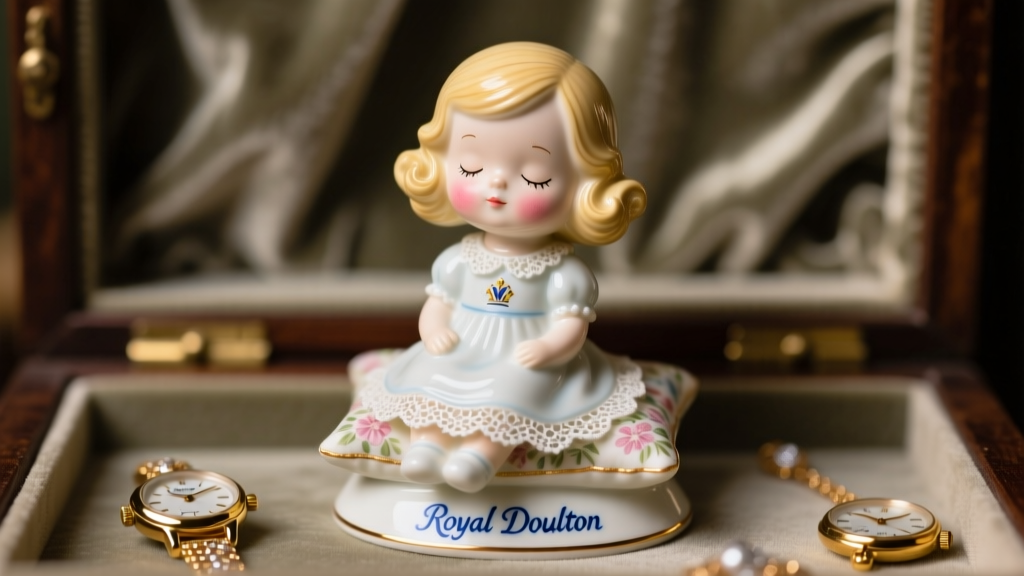
Royal Doulton Figurine 'Sweet Dreams' HN 3394: Provenance, Design, and Market Value of a Mid-Century Ceramic Masterpiece
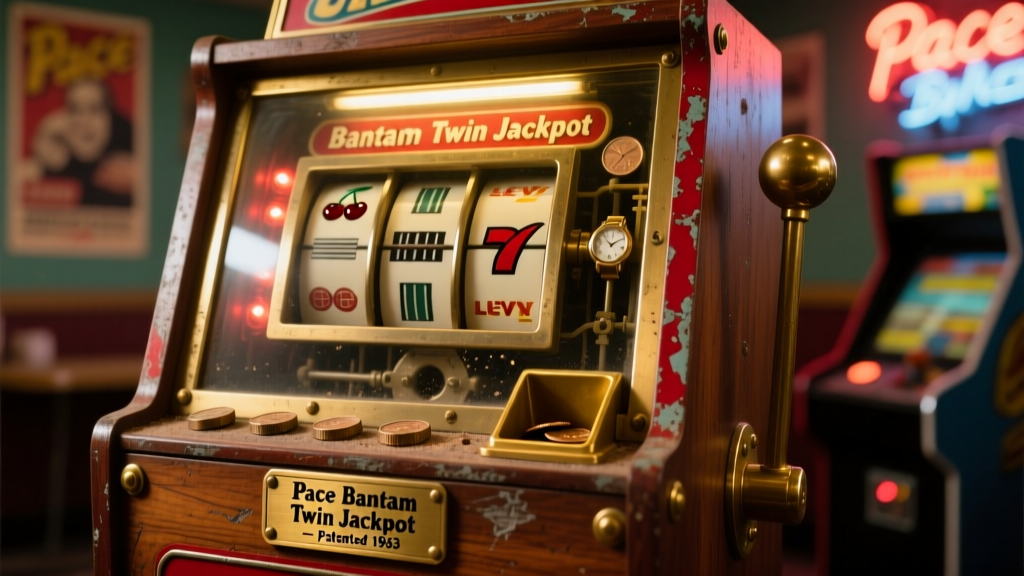
The Pace Bantam Twin Jackpot: A Rare Mid-Century Slot Machine with Mechanical Ingenuity
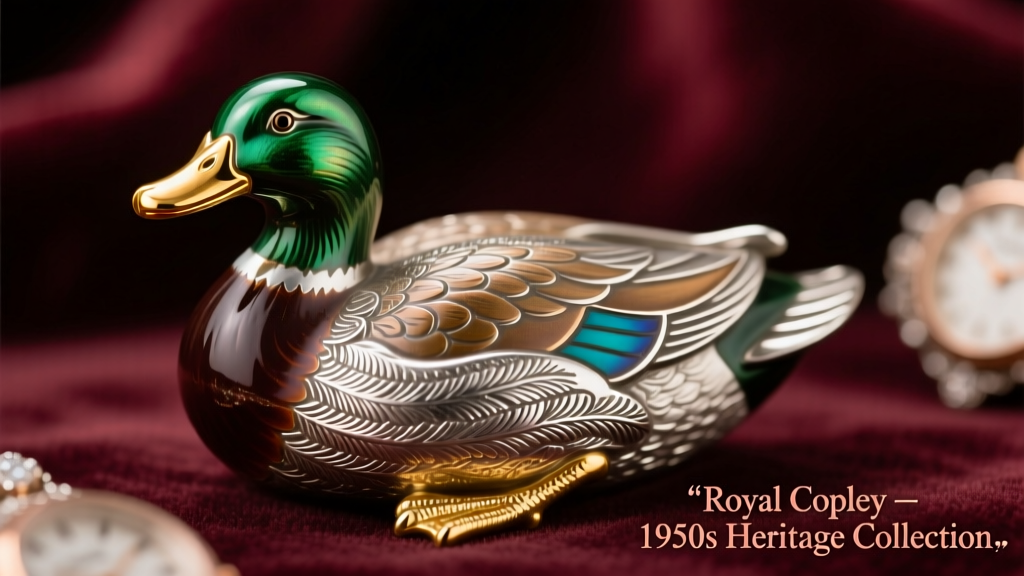
Royal Copley Mallard Duck Figurine (7-Inch): History, Identification, and Market Value of a Mid-Century American Ceramic Masterpiece