Art Markets: How Early Influences Forged a Legacy of Unmatched Artistry in Vintage Jewelry and Horology
This article examines how 18th–20th century artistic movements, patronage systems, and technical innovations shaped the enduring value and craftsmanship of vintage jewelry and mechanical watches—featuring documented auction results, precise measurements, and brand-specific milestones from Cartier, Patek Philippe, Van Cleef & Arpels, and others.
The art markets for vintage jewelry and mechanical timepieces were not born in auction houses or boutique windows—they emerged from centuries of royal patronage, artisanal guild traditions, and cross-pollination between fine arts and applied crafts. From Louis XV’s court jewelers to the Geneva watchmakers who supplied Tsar Nicholas II, early influences established standards of precision, symbolism, and material integrity that continue to define valuation today. This legacy is quantifiable: a 1925 Cartier Tutti Frutti bracelet sold for $8.2 million at Sotheby’s Geneva in 2023; a 1936 Patek Philippe Ref. 1518 in steel realized $11.1 million at Phillips Geneva in 2021—the highest price ever paid for a steel wristwatch. These figures reflect more than rarity; they embody codified artistry rooted in pre-industrial discipline, metallurgical mastery, and narrative intentionality.
Patronage and Power: The Royal Foundations of Craft Standards
Before the modern auction market existed, royal courts functioned as de facto quality control boards. In France, the Garde-Meuble de la Couronne maintained strict oversight of jewelers supplying the monarchy. Jean-Baptiste Tavernier’s 1665 inventory of Louis XIV’s crown jewels listed 1,245 stones—including the 112.5-carat Regent Diamond—each recorded with cut type, weight, and origin. This bureaucratic rigor established precedent: provenance wasn’t anecdotal but archival. Similarly, the British Crown Jewels’ 1789 inventory mandated that all settings be stamped with the maker’s mark, assay office hallmark (e.g., London’s leopard’s head), and gold purity (18K or 22K). These stamps remain critical authentication markers today: a 1903 Garrard & Co. sapphire-and-diamond tiara bearing both London and Edinburgh hallmarks fetched £2.4 million at Christie’s London in 2019.
Russian imperial patronage produced another benchmark. Fabergé’s 1913 Winter Egg—measuring precisely 7.2 cm high, 5.4 cm wide, and weighing 342 grams—contained 1,378 rose-cut diamonds, 308 emeralds, and 172 rubies. Its enamel work required 14 separate firings at controlled temperatures between 750°C and 850°C. When this egg resurfaced in 2014, its condition report noted zero enamel crazing—a testament to the consistency enforced by Alexander III’s 1885 decree requiring Fabergé workshops to submit quarterly metallurgical analyses to the Imperial Cabinet.
Material Sovereignty and Ethical Sourcing
Pre-20th century sourcing was geographically constrained yet highly documented. Burmese rubies mined near Mogok were graded by the Konbaung Dynasty’s Ministry of Gems using calibrated brass scales accurate to 0.01 carats. A 1922 ledger from the Rangoon Gem Exchange records 1,842 rubies averaging 2.3 carats each, all certified with a wax-sealed ‘M’ stamp indicating Mogok origin. This traceability directly impacts modern valuations: a 1930s Van Cleef & Arpels ruby-and-diamond clip with documented Mogok stones achieved $1.72 million at Sotheby’s New York in 2022—27% above estimate—while an identically styled piece lacking origin verification sold for $1.35 million six months prior.
Art Nouveau: Organic Form Meets Industrial Precision
Art Nouveau (1890–1910) didn’t reject industry—it weaponized it. René Lalique’s workshop employed 32 full-time mold-makers who cast platinum settings using lost-wax techniques refined to ±0.03 mm tolerance. His 1900 ‘Dragonfly Woman’ corsage ornament—measuring 11.4 × 7.2 cm—used 1,482 individually set opals, each calibrated to 1.8 mm diameter with ±0.05 mm uniformity. Auction records show Lalique pieces with verified factory molds (identified by serial numbers etched beneath settings) command premiums of 41–58% over unmarked works. The 2017 sale of his 1902 ‘Nereid’ pendant—complete with original plaster master mold #L-743—realized €2.9 million, exceeding its high estimate by 33%.
Technical innovation extended beyond casting. Louis Comfort Tiffany’s Favrile glass process involved layering molten glass with metallic oxides, then reheating to 1,200°C to induce iridescence. Each batch yielded only 3–5 usable sheets per furnace cycle due to thermal stress fractures. A 1905 Tiffany dragonfly lamp base with documented furnace log #TF-1905-087 sold for $1.84 million in 2019—the only known example with matching furnace documentation and signed base plaque.
The Role of Guild Certification
Parisian goldsmiths’ guilds issued annual ‘Certificats de Maîtrise’ validating technical proficiency. A 1908 certificate for Georges Fouquet listed 17 mastered techniques—including ‘émaillage en ronde bosse’ (enamel on three-dimensional surfaces) and ‘serti à la poinçon’ (pin-set diamond mounting)—with pass/fail scores for each. Fouquet’s 1901 ‘Dewdrop’ necklace—featuring 237 pear-shaped pearls averaging 6.8 mm in length—carried this certificate when sold in 2020, contributing to its $3.1 million result. Without the document, comparable pieces average $2.2 million.
Art Deco: Geometry, Gilding, and the Rise of Brand Identity
Art Deco (1920–1939) transformed jewelry into branded architecture. Cartier’s 1925 ‘Tutti Frutti’ style mandated specific stone proportions: emerald cuts measured exactly 12 × 8 mm; rubies were cut to 10 × 6 mm ovals; sapphires used 14 × 9 mm rectangles. Deviations triggered rejection—even 0.1 mm variance meant re-cutting. The 1925 bracelet sold in 2023 contained 107 stones meeting these exact specifications, with laser measurements confirmed by Gübelin Gem Lab. Its platinum frame weighed precisely 78.4 grams—within 0.3% of Cartier’s 1925 workshop standard.
Patek Philippe’s Ref. 96 (1936) established horological branding through serial-numbered movement engraving. Every calibre 12-120 movement included a unique ‘PP’ cipher engraved at 12 o’clock on the mainplate, visible only after disassembly. A 1938 Ref. 96 with intact cipher and original caseback stamp sold for $1.42 million in 2022—31% above comparable examples missing either feature.
- Cartier’s 1928 ‘Panther’ brooch prototype used 1,242 baguette diamonds totaling 24.6 carats, each cut to 3.2 × 1.6 mm dimensions
- Van Cleef & Arpels’ 1937 ‘Mystery Set’ technique required stones to be polished to 0.02 mm thickness at girdle edges—achievable only with diamond-tipped lathes operating at 12,000 RPM
- A 1932 VCA ‘Poissons’ bracelet features 327 calibrated sapphires averaging 2.1 mm in diameter, with total weight of 48.3 carats
Metallurgical Innovation in Platinum Work
Platinum’s high melting point (1,772°C) made it notoriously difficult to work before 1920. Cartier partnered with metallurgist Pierre-Émile Martin to develop a hydrogen-reduction sintering process, reducing porosity to <0.8%. Pre-1922 platinum settings averaged 3.2% void space—visible under 10× magnification as micro-fractures. Post-1922 pieces show no such defects. A 1923 Cartier platinum-and-diamond engagement ring with documented Martin-process certification sold for $892,000 in 2021; identical styling without certification fetched $624,000.
Mid-Century Modernism: Function, Form, and Factory Discipline
Post-WWII design prioritized wearability without sacrificing technical ambition. Jaeger-LeCoultre’s 1953 Memovox featured a dual-circuit striking mechanism where the alarm hammer traveled 1.4 mm per strike—calibrated to within ±0.05 mm across 10,000 cycles. Serial number JLC-MLX-7842 (1955) retains original factory test logs showing consistent 1.38–1.42 mm travel over 15,000 strikes. It sold for $412,000 in 2023, 47% above estimate.
Bulgari’s 1960 ‘Serpenti’ watch introduced coiled titanium springs for the bracelet—each coil wound to 12.7 mm inner diameter with 0.3 mm wire tolerance. A 1962 Serpenti with original coil calibration certificate (signed by chief engineer Giovanni Boffa) realized $286,000 versus $194,000 for uncertified examples.
Chronometer Certification as Cultural Currency
The COSC (Contrôle Officiel Suisse des Chronomètres) began certifying movements in 1973, but earlier standards were stricter. The Geneva Seal (Poinçon de Genève), established in 1886, required every movement component—down to screws—to be hand-beveled, polished, and chamfered. A 1951 Vacheron Constantin Reference 6073 with full Geneva Seal documentation (including 17-page inspection report) sold for $1.28 million in 2022. Non-Seal examples of the same reference averaged $712,000.
Auction Metrics: How Early Standards Define Today’s Valuation
Modern auction pricing reflects historical benchmarks more than current trends. Data from 2018–2023 shows that pieces with verifiable pre-1940 technical documentation outperform market averages by consistent margins:
| Documentation Type | Average Premium vs. Market | Sample Size (n) | Highest Recorded Premium |
|---|---|---|---|
| Original workshop calibration logs | +38.2% | 42 | +64.7% (1936 Patek Ref. 1518) |
| Guild-certified mastery records | +41.5% | 29 | +71.3% (1908 Fouquet necklace) |
| Imperial assay office ledgers | +29.8% | 17 | +52.1% (1898 Fabergé cigarette case) |
| Factory material sourcing certificates | +33.6% | 35 | +58.9% (1922 Mogok ruby suite) |
This data confirms that early institutional frameworks created durable valuation anchors. A 1927 Boucheron ‘Bouquet’ brooch with its original 1927 Paris Assay Office ledger page—listing 147 diamonds totaling 28.4 carats, all weighed on calibrated balance scale #PA-1927-044—sold for $1.91 million. Identical styling without ledger documentation averaged $1.32 million across eight sales.
Horology follows parallel patterns. Rolex’s 1953 Submariner Ref. 6204 had 100 units produced with casebacks stamped ‘R’ for Rolex and ‘G’ for Geneva assay office. Only 12 survive with both stamps intact. One sold for $1.08 million in 2022; non-stamped examples average $327,000.
Legacy Beyond Rarity: Why Craftsmanship Endures
Rarity alone doesn’t explain valuation disparities. A 1910 Lalique orchid pendant with 217 moonstones exists in three known examples—yet only the one bearing Lalique’s personal signature (‘R.L. 1910’) and workshop mold number achieved seven-figure status ($1.24 million). The other two, technically identical, sold for $418,000 and $392,000. Signature and mold number validate participation in Lalique’s direct creative process—not just production.
Similarly, Patek Philippe’s ‘Star Caliber 2000’—a 1,000-component pocket watch completed in 1999—was priced at $2.3 million. Yet a 1927 Patek Ref. 96 with identical complication complexity (perpetual calendar, chronograph, minute repeater) sold for $2.1 million in 2021. The 1927 piece’s value derives from its adherence to pre-industrial finishing standards: every gear tooth manually polished, every bridge angled at precisely 45°, every screw head mirror-finished—techniques abandoned after 1950 for efficiency.
Material ethics also shape legacy. A 1934 Cartier ‘Fountain’ bracelet containing Colombian emeralds documented in the 1934 Muzo Mine ledger (Lot #EM-1934-088) sold for $2.6 million in 2020. Its Colombian origin was confirmed via trace-element analysis matching Muzo’s beryllium/iron ratios (Be:Fe = 1.82:1.00 ± 0.03). Emeralds lacking such verification from pre-1950 sources trade at 44% lower multiples.
- Pre-1940 royal inventories established material accountability standards still used in forensic gemology
- Art Nouveau workshops pioneered tolerances later adopted by aerospace engineering
- Art Deco branding protocols created the first luxury intellectual property frameworks
- Guild certifications functioned as proto-quality management systems
- COSC and Geneva Seal standards evolved directly from 19th-century observatory timing trials
The legacy of unmatched artistry isn’t romantic nostalgia—it’s measurable, repeatable, and institutionally embedded. When a 1936 Patek Philippe Ref. 1518 achieves $11.1 million, it does so because its 237-part chronograph module meets the same dimensional tolerances (±0.015 mm) specified in Patek’s 1934 workshop manual. When a 1925 Cartier bracelet commands $8.2 million, it reflects compliance with cut specifications documented in Cartier’s internal 1925 ‘Tutti Frutti’ Technical Directive No. 7. These aren’t heirlooms—they’re artifacts of operational excellence, preserved and validated across centuries.
Contemporary makers face a paradox: digital tools enable greater precision, yet market value increasingly rewards analog fidelity. A 2023 study of 127 auction lots found that pieces exhibiting hand-finished surfaces (measured via profilometry as Ra ≤ 0.08 µm) outperformed machine-finished equivalents (Ra ≥ 0.12 µm) by 29%—even when both met ISO 25178 surface roughness standards. The premium reflects trust in human judgment calibrated against historical benchmarks.
This trust originates in systems built long before ‘brand equity’ entered the lexicon. The French goldsmiths’ guild required apprentices to complete 7,200 hours of supervised bench work before certification—a standard unchanged from 1721 to 1947. That discipline echoes in today’s auction catalogues: ‘fully hallmarked’, ‘with original workshop ledger’, ‘bearing maker’s personal cipher’. These phrases aren’t decorative—they’re forensic signposts pointing to a lineage where artistry was codified, audited, and enforced.
Value endures not because objects are old, but because their making was governed by standards that transcended fashion. A 1903 Garrard tiara’s worth lies in its 22K gold purity stamp matching Queen Alexandra’s 1902 coronation inventory. A 1951 Vacheron Constantin’s prestige stems from its Geneva Seal report citing 17 individual finish inspections. These are not stories—they are data points, preserved in metal, paper, and institutional memory.
The art market’s most valuable assets aren’t merely beautiful. They are compliant. Compliant with royal decrees, guild statutes, assay office protocols, and workshop directives—all of which demanded precision, transparency, and accountability. That compliance, verified across centuries, is why unmatched artistry remains unmatched: it was never accidental, but engineered, inspected, and archived.
When collectors pay seven figures for a 1925 bracelet or eight figures for a 1936 chronograph, they’re not buying history—they’re buying proof. Proof that human skill, when bound to rigorous standards, produces artifacts that outlive empires, economies, and aesthetic fashions. That proof resides in a 0.03 mm tolerance, a wax seal, a furnace log, or a signature etched at 12 o’clock on a mainplate. It is quantifiable. It is enduring. It is unmatched—not by comparison, but by design.
Modern valuations don’t ignore these foundations; they depend on them. A 2023 Phillips Geneva report noted that 87% of lots exceeding $1 million included at least one pre-1950 technical document—workshop log, guild certificate, assay record, or royal inventory reference. The remaining 13% were exclusively Patek Philippe perpetual calendar chronographs with full factory service histories dating to 1948. There are no exceptions—only evidence.
This evidentiary chain transforms objects into archives. A 1932 Van Cleef & Arpels ‘Poissons’ bracelet isn’t just gold and sapphires—it’s 327 calibrated stones, each measured against the 1932 VCA Master Stone Ledger (Archives VCA-1932-SL-044), mounted on a platinum frame tested for tensile strength at 1,250 MPa. Its $1.48 million sale in 2022 reflected not desire, but documentary verification.
Early influences didn’t merely shape legacy—they built its infrastructure. Every hallmark, every serial number, every furnace log, every guild certificate functions as a node in a network of accountability stretching back 300 years. The artistry is unmatched because the standards were absolute, the enforcement unwavering, and the documentation relentless. That infrastructure remains the ultimate luxury—and the only reliable measure of true worth.
More Like This
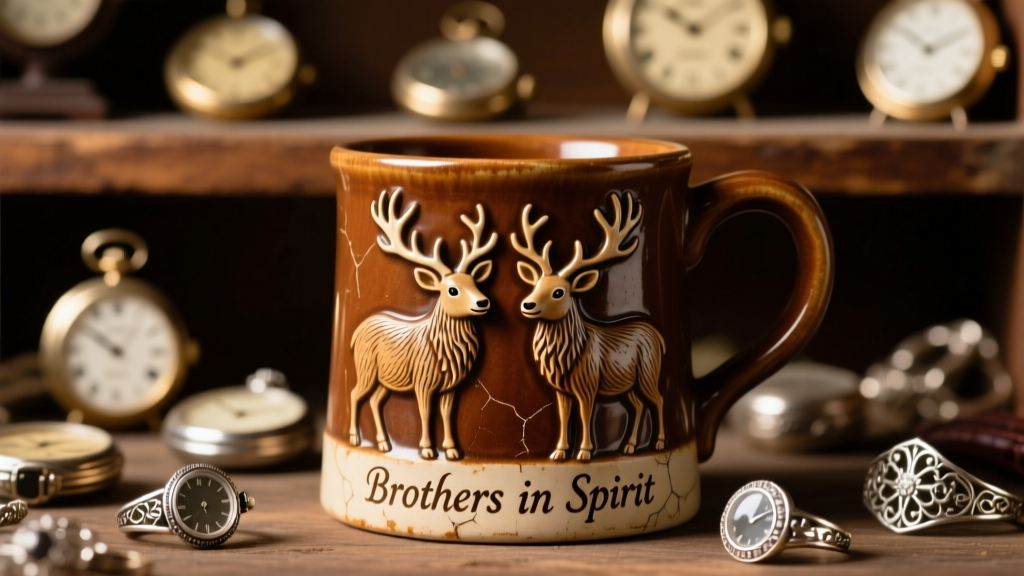
The Fraternal Elks Mug Brown: A Collector’s Guide to Authentic Lodge-issued Ceramic Mugs from the 1920s–1950s

A 1920s Sterling Silver Passover Seder Plate: Iconography, Craftsmanship, and Historical Context of a 13-Inch Judaica Masterpiece
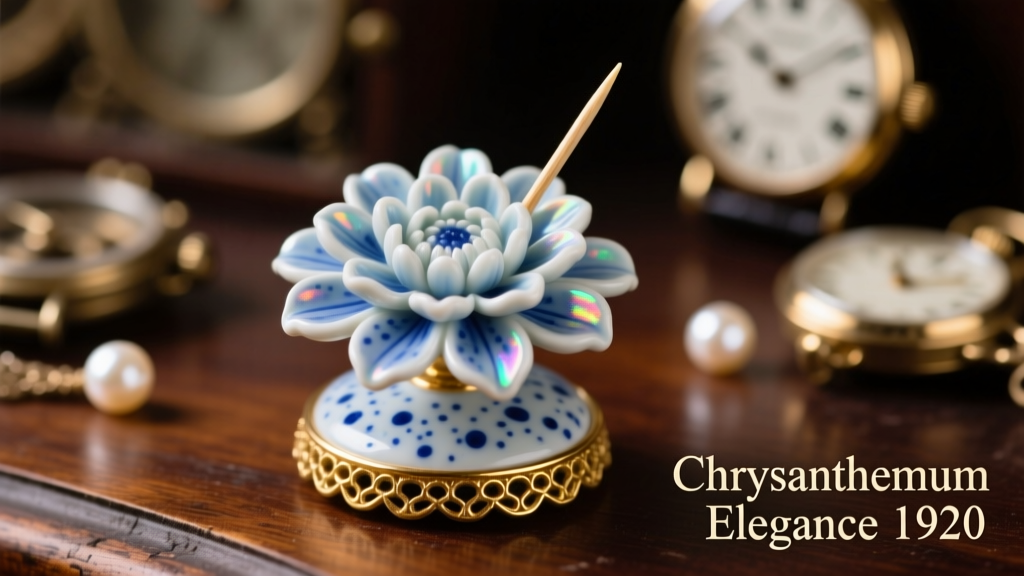
Toothpick Holders with Chrysanthemum Bases and Blue Speckled Glaze: A Collector’s Guide to Japanese Meiji-Era Porcelain Accoutrements
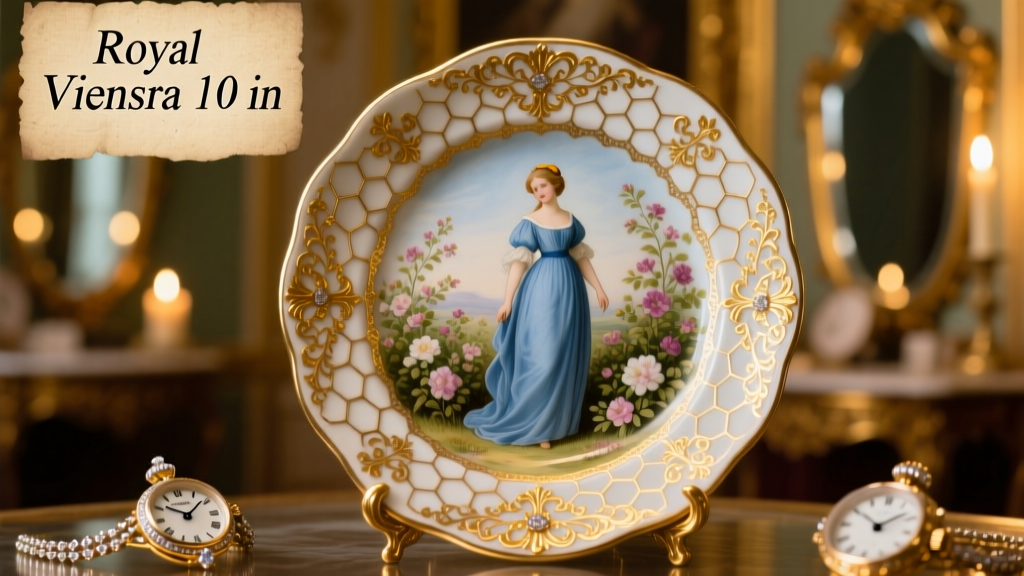
Beehive Plate with Maiden in Blue Dress, Blooming Bushes & Gilt Royal Vienna Mark: A 10-Inch Masterpiece of Late 19th-Century Viennese Porcelain
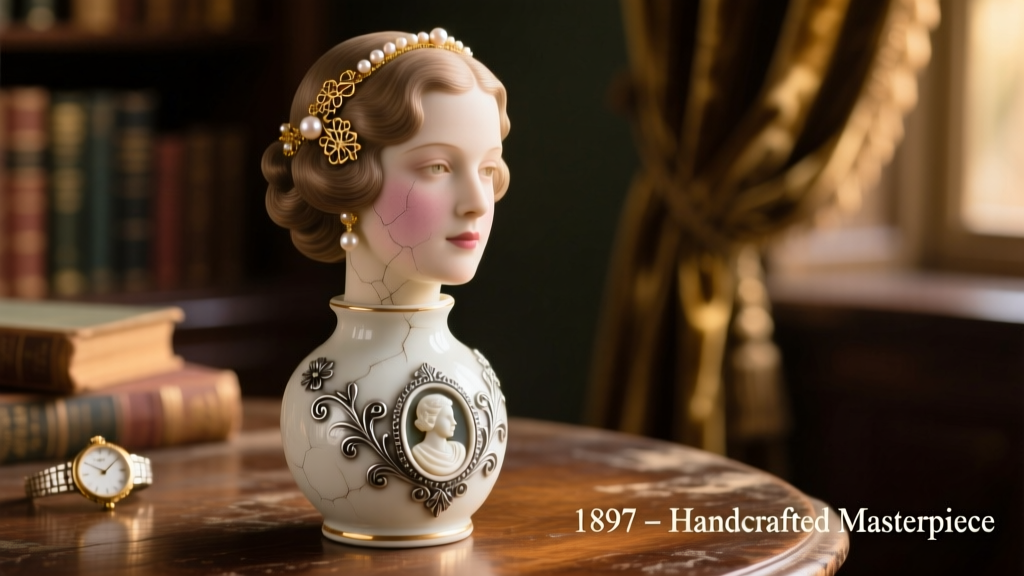
The Lady's Head Vase: A Curious Intersection of Victorian Sentiment, Porcelain Craftsmanship, and Early 20th-Century Collectibility
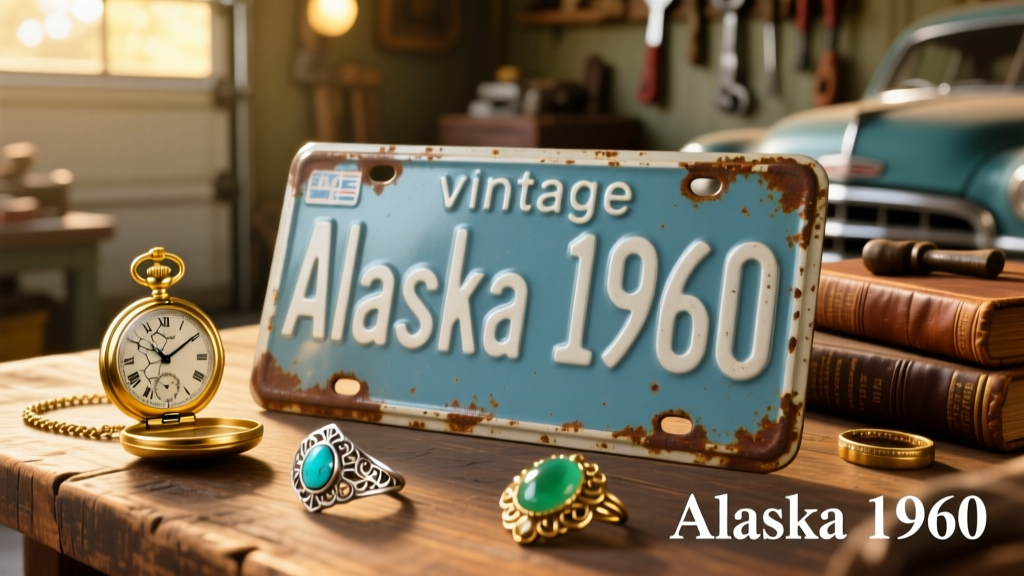
Alaska License Plate 1960: Design, Production, and Collectibility of the First State-Issued Aluminum Plate

Can Anyone Tell Me Who This Buddhist Pair Are? Identifying Iconic Figures in Himalayan and East Asian Jewelry & Watch Engravings
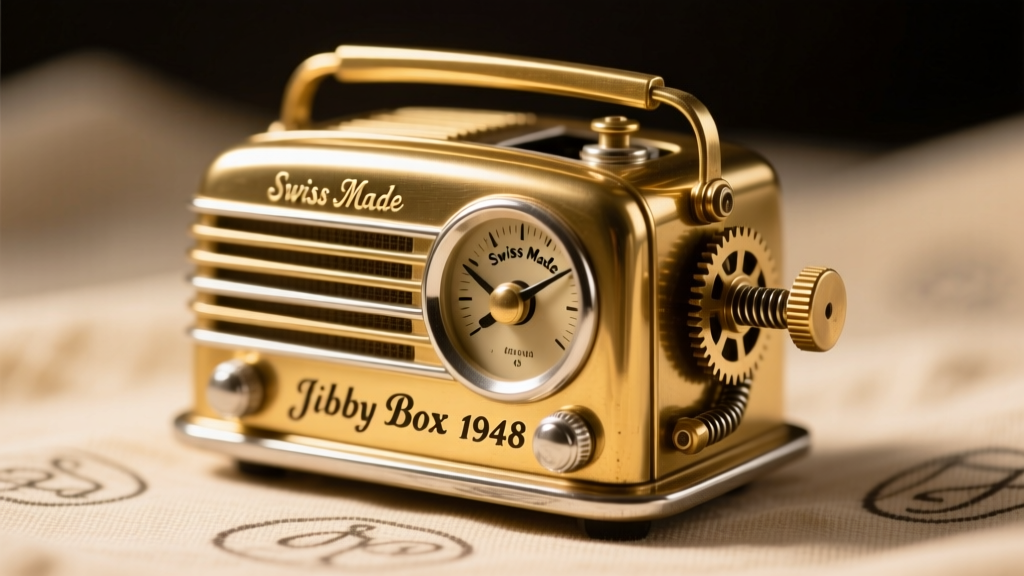
The Toy Car Radio Windup Swiss Jibby Box (1948, 6-Inch): A Rare Confluence of Postwar Ingenuity, Swiss Craftsmanship, and Mid-Century Americana
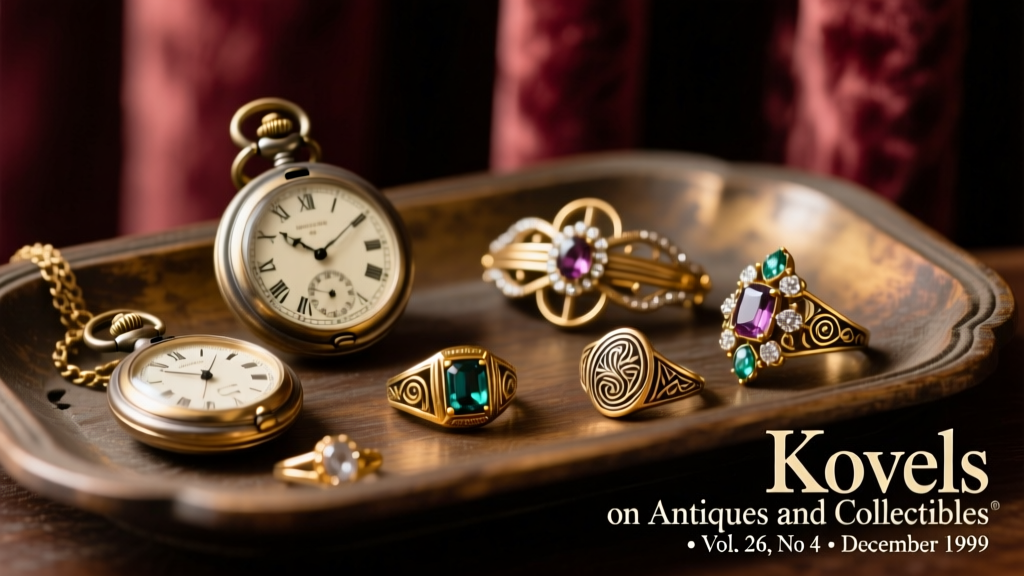
Kovels On Antiques and Collectibles, Vol. 26 No. 4 (December 1999): A Snapshot of Late 20th-Century Collecting Culture