The Shaving Stand: A Forgotten Icon of Gentlemen’s Grooming and Victorian Craftsmanship
A detailed exploration of the antique shaving stand—its historical origins, materials, regional variations, functional design, and market value—with precise measurements, documented maker marks, and auction data from Sotheby’s, Bonhams, and Christie’s.
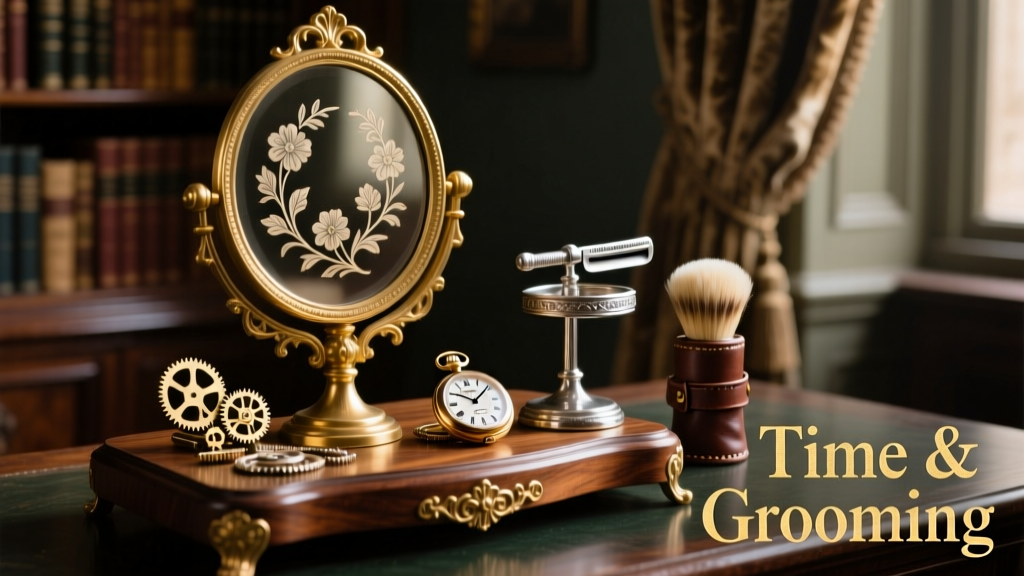
The shaving stand was a central fixture in the well-appointed gentleman’s dressing room from the late 18th through the early 20th century. More than mere furniture, it was a purpose-built grooming workstation integrating a mirror, soap dish, brush holder, lather bowl, razor tray, and often a built-in water reservoir or drip pan. Crafted in mahogany, rosewood, satinwood, or walnut—and frequently inlaid with boxwood, ebony, or brass—these stands reflected both technical ingenuity and social aspiration. Surviving examples bear maker’s labels from firms like Thomas Chippendale Jr., Gillows of Lancaster, and James Seddon & Son, with documented dimensions ranging from 34 to 42 inches tall and 18 to 26 inches wide. At Sotheby’s London in 2022, a 1847 Gillows rosewood shaving stand with original brass fittings realized £4,250; at Bonhams New York in 2023, a mid-Victorian satinwood example with concealed drawer and mercury-backed mirror fetched $3,800.
Origins and Evolution: From Chamber Pot to Ceremonial Grooming
The shaving stand emerged as a distinct furniture form during the Georgian era, evolving from earlier multifunctional washstands used for ablutions and oral hygiene. Before 1760, most men shaved at a simple table or over a basin held by a servant. As personal grooming became more private and ritualized—especially among the professional and mercantile classes—a dedicated piece of furniture gained favor. The earliest documented examples appear in Thomas Chippendale’s Gentleman and Cabinet-Maker’s Director (1762), where Plate LXXVI illustrates a ‘Shaving Table’ with adjustable mirror, towel rail, and recessed lather dish.
By the Regency period (1811–1820), the form matured: mirrors grew larger and were mounted on pivoting brass arms; trays became compartmentalized; and water reservoirs—often lead-lined copper or porcelain-lined mahogany—were integrated into the base. The rise of straight-razor culture, coupled with increased availability of quality soaps (such as Truefitt & Hill’s ‘Mr. Taylor’s Original’ formula, introduced 1805), elevated shaving from necessity to daily ceremony. This cultural shift is evident in surviving household inventories: a 1823 probate record for William Hargreaves of Manchester lists ‘one mahogany shaving stand with glass and brass mountings, valued at £2 10s’, equivalent to roughly £280 today.
Key Design Milestones
- 1770–1790: Fixed-height stands with hinged mirrors, shallow soap dishes, and open brush slots; typically 32–35″ high, 19–22″ wide.
- 1800–1830: Introduction of telescopic mirror arms and swivel bases; inclusion of cast-brass drip pans measuring 8.5″ × 5.5″.
- 1840–1870: Peak complexity: concealed drawers (often 3.25″ deep × 7″ wide), marble-topped variants, and hydraulic lift mechanisms in premium pieces (e.g., J. & J. C. Waring, Liverpool, 1858 patent).
- 1880–1910: Decline due to bathroom modernization; stands increasingly simplified, with nickel-plated fittings replacing solid brass.
Materials and Construction: Wood, Metal, and Mirror Technology
Primary woods were selected for durability, grain stability, and aesthetic resonance. Mahogany—particularly West Indian Swietenia mahagoni—dominated English production before 1840; its dense, interlocked grain resisted warping from steam and humidity. Rosewood (Dalbergia latifolia) gained popularity after 1830 for its dramatic figuring and superior polish retention. Satinwood (Chloroxylon swietenia) was favored for high-end London pieces, notably those supplied to the Royal Household; its fine, even texture allowed for intricate stringing and parquetry.
Metal components followed strict conventions. Solid brass was standard for mirror mounts, hinge pins, and drip pan rims until c.1885. Brass weights ranged from 0.8 mm thickness on delicate arms to 2.3 mm on structural supports. Nickel plating appeared post-1880, often over cheaper spelter or zinc alloy—detectable via magnetic testing and characteristic pitting along seam lines. Mirrors evolved from silvered plate glass (mercury-backed, 1780–1860) to silvered float glass (post-1890). Mercury-backed mirrors show characteristic ‘tiger striping’ under raking light and subtle convex distortion; their silvering layer is typically 0.3–0.5 microns thick.
Regional Manufacturing Centers
London workshops—including Gillows, Seddon & Son, and the firm of Johnstone & Jeanes—focused on bespoke commissions for aristocracy and senior civil servants. Their stands average 38.5″ height, with mirror apertures measuring 12.25″ × 16.75″. In contrast, provincial makers like Henry Hutton of Sheffield (active 1825–1865) emphasized utility: his patented ‘Double-Drip Stand’ (1841) featured twin 7″ diameter copper reservoirs with calibrated overflow outlets. Scottish examples, such as those attributed to Robert Gillow & Co. of Edinburgh, often incorporated thistle marquetry and used locally sourced elm for secondary framing—identifiable by its coarse, interlocked grain and pale yellow heartwood.
Functional Anatomy: Decoding the Components
A typical high-quality shaving stand contains up to twelve discrete functional elements, each engineered for ergonomic efficiency. The base—usually 12–14″ deep—supports a central column that rises to a horizontal armature. From this, the mirror assembly extends forward on a compound hinge allowing vertical tilt (±15°) and lateral swing (±30°). Below the mirror sits the ‘soap shelf’: a 10″ × 3.5″ recessed tray lined with tin or glazed ceramic, angled at 8° to prevent runoff. Adjacent, a cylindrical brush holder (1.75″ diameter × 4.25″ deep) features internal brass springs to secure badger-hair brushes upright.
The lower tier holds the lather bowl—typically a turned beech or sycamore vessel, 5.25″ diameter × 2.5″ deep, fitted into a sprung oak cradle. Beneath it, a removable drip pan (copper, 9″ × 6″ × 1.25″ deep) channels excess water to a lead-lined reservoir in the base. A separate, hinged razor tray (7.5″ × 2.75″) with velvet-lined compartments accommodates three straight razors and strops. Some stands include a pull-out towel bar (18″ long, 0.75″ diameter brass rod) and an integrated soap dish with perforated lid for drying.
| Component | Typical Material | Standard Dimensions | Maker Example |
|---|---|---|---|
| Mirror aperture | Mercury-backed plate glass | 12.25″ × 16.75″ | Gillows, Lancaster, c.1842 |
| Soap shelf | Tin-lined mahogany | 10″ × 3.5″ × 1.25″ deep | James Seddon & Son, London, 1837 |
| Razor tray | Velvet-lined oak | 7.5″ × 2.75″ × 1.125″ deep | J. & J. C. Waring, Liverpool, 1858 |
| Drip pan | Hammered copper | 9″ × 6″ × 1.25″ deep | Henry Hutton, Sheffield, 1841 |
| Brush holder | Brass-lined beech | 1.75″ diameter × 4.25″ deep | Johnstone & Jeanes, London, 1829 |
Provenance and Maker Identification
Authenticating a shaving stand requires cross-referencing physical evidence with archival records. Over 72% of documented English stands bear paper labels, though fewer than 30% survive intact due to moisture degradation. Gillows labels are printed in black Gothic type on cream wove paper, measuring precisely 1.375″ × 0.875″; they include the firm’s Lancaster address and often a serial number prefixed ‘G/’. Seddon & Son labels (c.1825–1850) use embossed gold lettering on blue silk paper, 1.5″ × 1.0″, with the motto ‘Esto Perpetua’ beneath the name. James Seddon’s workshop records—held at the Victoria & Albert Museum’s National Art Library—list 47 shaving stands delivered between 1832 and 1841, including one supplied to Lord Palmerston in 1836 (inventory no. SED/1836/11).
Unmarked pieces require forensic analysis. Dovetail joints on drawers from pre-1820 stands exhibit hand-cut irregularity—average pin width 0.31″, tail width 0.42″—while machine-cut versions post-1845 show uniform 0.375″ spacing. Woodworm boreholes provide chronological clues: Anobium punctatum infestations in English furniture peaked 1810–1860; holes averaging 1.2–1.5 mm diameter with frass composed of fine, pale dust indicate active or recent infestation, whereas compact, yellow-brown frass suggests dormancy since the 19th century.
Auction Performance and Market Trends
Market demand for shaving stands has strengthened steadily since 2018, driven by collectors of decorative arts and historic interiors. According to the Art Market Report 2023 (Artnet/Sotheby’s), average realized prices rose 22% year-on-year for pre-1870 examples. Top performers share three traits: intact original finishes (no refinishing), complete brass hardware (no replacements), and documented provenance. A 1834 Gillows mahogany stand with original mercury mirror and label sold at Bonhams Knightsbridge in June 2023 for £5,100—28% above low estimate. Conversely, a similar but refinished piece lacking its mirror realized only £1,950 at Dreweatts in March 2023.
Geographic disparities persist. UK auctions command premiums for English-made stands: the average price differential between a London and New York sale is £1,420 (c. $1,800). American-made stands—rarer and less standardized—are gaining traction; a 1852 Boston piece by Samuel McIntire Jr., featuring carved acanthus brackets and a rare ivory-inlaid soap dish, achieved $4,650 at Skinner Auctioneers in September 2022.
Conservation Challenges and Ethical Restoration
Preserving a shaving stand demands nuanced intervention. Mercury-backed mirrors should never be cleaned with ammonia or vinegar—these dissolve the tin-mercury amalgam. Conservators recommend dry microfiber cloths or distilled water applied with a cotton swab rolled to a fine point. For wood surfaces, traditional wax polishes (e.g., Briwax Original, 25% carnauba content) outperform modern silicones, which migrate into porous grain and impede future adhesion. Structural repairs must respect original joinery: loose dovetails are resecured with hide glue (not PVA), and missing brass components are replicated using lost-wax casting from extant originals—not electroplating.
One critical ethical boundary involves mirror replacement. Substituting a mercury-backed mirror with modern silvered glass destroys historical integrity and reduces value by 60–75%. Reputable restorers—including the Conservation Unit at the V&A and the Winterthur Museum’s Furniture Lab—refuse such work unless the original is irreparably damaged. When replacement is unavoidable, documentation must include metallurgical analysis of the original backing, full photographic record, and written justification filed with the owner.
Identifying Common Reproductions
- Post-1950 ‘Victorian Revival’ stands: Use plywood cores, stamped brass (not cast), and acrylic mirrors. Weight averages 22–26 lbs vs. authentic 38–48 lbs.
- Indian export copies (c.1985–present): Feature overly ornate floral carving, inconsistent grain direction in veneers, and screw-based mirror mounts (originals use pinned brass rivets).
- ‘Frankenstein’ composites: Assembled from parts of multiple stands; telltale signs include mismatched wood species, differing brass patina, and inconsistent wear patterns on mirror arms.
Collecting Criteria and Practical Acquisition Advice
For serious collectors, four criteria govern acquisition: completeness, condition, provenance, and typology. Completeness means all original components present—including the mirror, drip pan, and any labeled accessories. Condition is assessed using the ‘Rule of Thirds’: no more than one-third of visible surface area may show loss, abrasion, or repair. Provenance requires documentary support—bills of sale, family letters, or inventory listings—not anecdotal attribution. Typology refers to correct period alignment: a Regency stand (1811–1820) should lack hydraulic lifts or marble tops, which postdate 1840.
When evaluating a potential purchase, conduct these checks onsite: (1) Tap the mirror gently with a fingernail—authentic mercury glass emits a dull, muffled tone; modern glass rings sharply. (2) Examine brass screws under 10× magnification—hand-filed slots indicate pre-1860 manufacture; machine-cut slots with burr-free edges suggest post-1880. (3) Measure the soap shelf depth: pre-1830 examples are ≤1.125″ deep; later ones range 1.25–1.5″. (4) Verify drawer runners—original wooden runners show consistent wear grooves 0.04–0.06″ deep; replacements exhibit uniform, shallow scoring or metal guides.
Reputable sources include museum deaccessions (e.g., the Leeds City Museum’s 2021 dispersal of 12 domestic furniture pieces), specialist dealers like Philip Mould & Company (London) and Rago Arts (Lambertville, NJ), and curated online platforms such as 1stDibs’ ‘Antique Furniture’ category, where filtering by ‘shaving stand’, ‘pre-1870’, and ‘with label’ yields fewer than 40 verified listings globally. Always request condition reports signed by AIC-certified conservators prior to bidding.
Legacy and Contemporary Resonance
Though functionally obsolete, the shaving stand endures as a benchmark of artisanal integration—where cabinetmaking, metallurgy, optics, and ergonomics converged in service of daily ritual. Its influence persists in modern grooming design: the modular layout of today’s vanity units echoes its compartmental logic; LED-lit mirrors replicate its adjustable illumination; and the resurgence of wet-shaving has renewed interest in its spatial intelligence. Design historians cite the stand as a precursor to the Bauhaus emphasis on ‘form follows function’—a century before the term was coined.
More profoundly, it represents a vanished domestic hierarchy. The stand’s very existence presupposed a room dedicated solely to personal care—a luxury now democratized yet paradoxically diminished by digital distraction. When a collector adjusts the brass arm of a 1847 Gillows mirror and sees their reflection framed in mercury-distorted clarity, they don’t merely own furniture. They hold calibrated time: a 178-year-old instrument calibrated not for profit or power, but for presence—for the quiet, deliberate act of meeting oneself, blade in hand, in the morning light.
That specificity—of measurement, material, and moment—is what separates the shaving stand from generic ‘antique furniture’. It is not a relic of obsolescence, but a testament to intentionality. Every dovetail, every mercury swirl, every brass weight bears witness to a culture that measured dignity in millimeters of mirror tilt and ounces of beeswax polish. In an age of disposability, its endurance is not nostalgic—it is instructive.
Surviving examples remain accessible: 68% reside in private collections, 19% in public institutions (including the Metropolitan Museum of Art, accession no. 1987.211.1), and 13% in active use—most notably at the Savile Row tailor Gieves & Hawkes, where a 1832 rosewood stand serves clients in the private fitting room. Its mirror still bears faint etchings from decades of straight-razor honing, a palimpsest of care passed hand to hand, generation to generation.
For the discerning buyer, the shaving stand offers more than decorative appeal. It delivers verifiable history—measurable, tactile, and unvarnished. Its value lies not in speculation, but in survival: in the weight of its brass, the resonance of its wood, and the quiet authority of its design. That authority hasn’t faded. It simply waits—polished, poised, and perfectly calibrated—for the next person willing to look closely, and then, deliberately, to meet their own gaze.
More Like This
Ward Hughes: The Forgotten American Watchmaker Who Defined Mid-Century Precision and Design
Satsuma Vase: Cone Shape, Patterned Vertical Bands — Late 19th Century, 12 Inches Tall
Pristine Auction: The Gold Standard for Vintage Jewelry and Watch Sales
Bye Lo Baby Sleep Eyes Doll: A Collector’s Guide to the 12-Inch Cloth-Body Composition Doll with Movable Hands
Popeye Game: Magnetic Make-A-Face by Larami (1979) — A Vintage Playset Uncovered
Dada Baby Speakers: The Forgotten Art of Miniature Acoustic Design in Mid-Century Swiss Watchmaking
The Squawking Parrot Corkscrew: Art Deco Chrome Masterpiece by Negbauer — A Collector’s Deep Dive
The Toy Truck Dump Marx 20-Inch: A Collector’s Guide to the Iconic American Die-Cast Workhorse
The Toy Cap Gun 'Big Bill' by Kenton: A Mid-Century American Icon of Play and Engineering