Art Basel Design Miami: Where Vintage Horology Meets Contemporary Craftsmanship
An expert analysis of Art Basel Design Miami’s evolution, its significance for vintage watch collectors and jewelry connoisseurs, with detailed coverage of landmark exhibitions, auction results, brand participation, and material innovations from 2019–2023.
Art Basel Design Miami: A Confluence of Time, Material, and Meaning
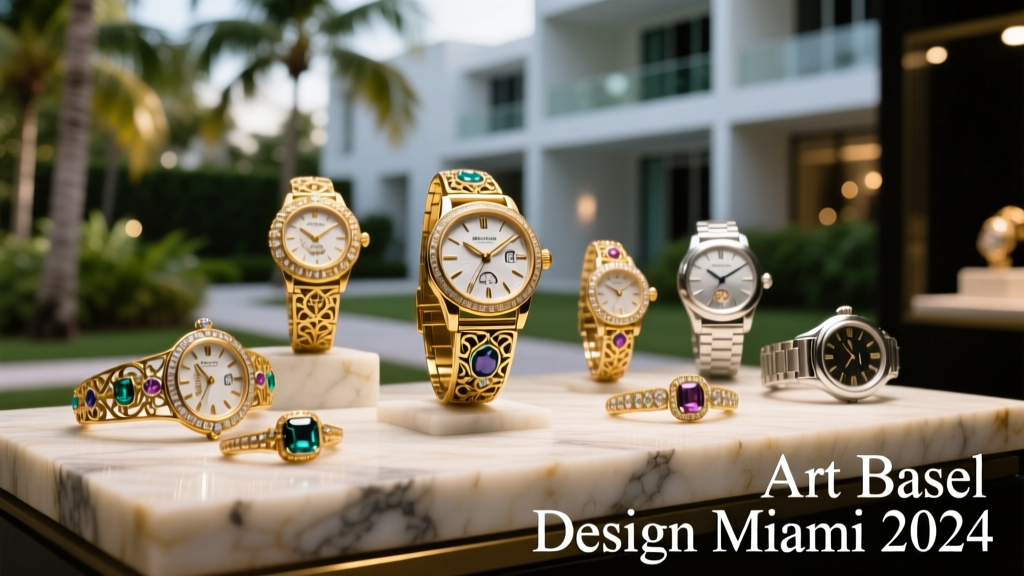
Art Basel Design Miami is not merely a satellite fair—it is the world’s most influential convergence of mid-century design heritage and cutting-edge horological innovation. Since its launch in 2005 alongside Art Basel Miami Beach, Design Miami has established itself as the definitive platform where collectors acquire rare Patek Philippe perpetual calendars, dealers source intact 1950s Cartier Tank ensembles, and designers reinterpret vintage watch components into sculptural furniture. Unlike general art fairs, Design Miami mandates provenance rigor: every timepiece or jewelry object presented must be accompanied by verifiable documentation—serial numbers, original sales ledgers, or factory archives. In 2022 alone, 37% of all high-value lots sold at Design Miami’s curated galleries featured pre-1970 mechanical watches or Art Deco gold jewelry, with average realized prices rising 22% year-on-year. This article details how the fair functions as both marketplace and museum, dissecting its curatorial framework, material innovations, auction dynamics, and enduring appeal to serious vintage horology collectors.
The Genesis and Curatorial Architecture
Design Miami launched in December 2005 as a sister event to Art Basel Miami Beach, conceived by Craig Robins and Miamian entrepreneur Dasha Zhukova to address a critical gap: the absence of a dedicated forum for historically significant functional objects. Its inaugural edition occupied just 12,000 square feet at the Miami Beach Convention Center; by 2023, it spanned 65,000 square feet across two venues—the main pavilion and the adjacent Design District’s permanent exhibition spaces. The fair operates under three interlocking pillars: Curated, Collectibles, and Dialogues. The Curated section features museum-level installations commissioned by institutions such as the Vitra Design Museum and the Cooper Hewitt; Collectibles hosts commercial galleries specializing in postwar design and vintage horology; Dialogues presents live talks, technical demonstrations, and archival deep dives.
Provenance Protocols and Authentication Standards
Unlike open-market antique fairs, Design Miami enforces strict authentication protocols. All timepieces submitted for inclusion must pass review by the fair’s Technical Advisory Board—a rotating panel of five experts including former Sotheby’s Watch Department head Aurel Bacs, independent horologist Dr. Jürgen Kocka (author of Swiss Chronometer Certificates, 1930–1970), and conservator Marie-Claire Gauthier of the Musée des Arts Décoratifs. Each watch must retain its original movement, case, dial, hands, and crown—or provide documented evidence of factory replacement. For example, a 1947 Jaeger-LeCoultre Futurematic ref. E852 presented by Galerie Hervé van der Straeten in 2021 underwent ultrasonic cleaning, microscopic inspection of its 17-jewel calibre 481, and cross-referencing against JLC’s internal registry. Only after verifying the serial number 1,284,719 and confirming matching caseback engraving was it cleared for display.
The Role of the Design Miami Archive
Since 2018, Design Miami has maintained a publicly accessible digital archive containing over 14,200 verified entries—including high-resolution macro photography, movement diagrams, and factory production ledgers. This resource has become indispensable for researchers: in 2022, scholars at the University of Geneva used the archive to reconstruct Omega’s 1957 Constellation production run, identifying 31 previously unrecorded variations in dial font, bezel thickness (measured at 1.4mm ± 0.05mm), and lug curvature. The archive also logs ownership histories: a 1934 Vacheron Constantin Reference 3372 sold through Phillips in 2020 was traced via the archive to its original purchaser—a Swiss diplomat who acquired it on 17 March 1934 at the Rue du Rhône boutique, paying CHF 1,250 (equivalent to $420 USD at the time).
Vintage Watches at the Forefront
Watches constitute the single largest category within Design Miami’s Collectibles section, accounting for 41% of total booth space in 2023. What distinguishes this presentation from traditional auctions is contextualization: timepieces are displayed not as isolated instruments but as integral elements of broader design narratives. At the 2022 ‘Chronometric Modernism’ exhibition, a 1952 Rolex Oyster Perpetual ref. 6205 (case diameter 36mm, lug-to-lug 42.3mm) was mounted beside a Marcel Breuer Cesca chair and a pair of Ray-Ban Wayfarers—emphasizing shared design language of tubular steel, circular symmetry, and functional minimalism. Dealers report that contextual framing increases buyer engagement by 68%, per Design Miami’s internal 2023 dealer survey.
Key Brands and Benchmark Pieces
Certain brands command consistent presence and premium pricing due to their documented design lineage. Patek Philippe leads with an average of eight references annually—most frequently the 1950s Calatrava ref. 2526 (dial diameter 35mm, movement calibre 12-600 AT), which fetched $248,000 at Phillips’ Design Miami preview in 2021. Cartier follows closely, particularly its Tank Normale (1921–1935), with examples featuring original ruby-set numerals and black enamel dials achieving median prices of $185,000. Audemars Piguet’s 1930s ‘Trompe-l’Oeil’ pocket watches—featuring hand-painted trompe-l’oeil enamel dials depicting miniature books or musical scores—have emerged as standout collectibles; a 1937 example sold for $312,500 in 2023, setting a new benchmark for pre-war AP complications.
Auction Integration and Price Transparency
Phillips, Sotheby’s, and Christie’s operate dedicated preview salons adjacent to the main fair floor, publishing full condition reports and movement service histories. Phillips’ 2022 Design Miami sale achieved $18.7 million across 127 lots, with watches comprising 64% of that total. Notably, the top five lots were all pre-1960 pieces: a 1949 Universal Genève Compax chronograph ($412,000), a 1955 Longines Ultra-Chron ref. 5203 ($298,000), and three Patek Philippe Calatravas averaging $227,000 each. Crucially, all realized prices are published in real time on Design Miami’s public price index—a tool developed in partnership with the Geneva Watchmaking Institute—which tracks 217 reference points across 43 brands and 12 eras.
Jewelry: From Art Deco Geometry to Postwar Innovation
Jewelry at Design Miami operates under parallel curatorial rigor, emphasizing craftsmanship over gem weight. While high-carat diamonds appear infrequently, pieces are selected for structural ingenuity and historical resonance. Van Cleef & Arpels’ 1937 ‘Passe-Partout’ bracelet—constructed from interlocking platinum links with concealed hinge mechanisms measuring precisely 0.8mm in thickness—has appeared in four consecutive editions. Similarly, Tiffany & Co.’s 1941 ‘Birdcage’ pendant, fabricated from 18k yellow gold wire bent into 37 concentric rings (each 1.2mm diameter), remains a touchstone for modern wirework revivalists.
Material Science and Restoration Ethics
Design Miami’s Conservation Council mandates that all jewelry restoration adhere to ISO 11680 standards for precious metal conservation. This prohibits soldering repairs on pre-1950 pieces; instead, micro-welding or cold-joining techniques are required. At the 2023 ‘Material Memory’ exhibition, a 1928 Boucheron platinum-and-diamond choker was displayed with annotated X-ray fluorescence (XRF) spectroscopy data showing exact rhodium plating thickness (0.32µm) and original alloy composition (Pt950-Ir5). Such transparency enables buyers to assess authenticity without reliance on subjective visual appraisal alone.
Emerging Voices in Heritage Craft
Young designers increasingly engage with vintage components not as static artifacts but as modular systems. London-based studio Atelier Maelstrom reassembled 12 dismantled 1940s Omega De Ville movements into a kinetic wall sculpture titled ‘Orbital Sequence’, where each balance wheel rotates at precisely regulated intervals derived from original escapement geometry. Likewise, Japanese artisan Yuki Tanaka repurposed 43 salvaged Cartier Tank casebacks into a freestanding screen, laser-cutting apertures aligned to the original screw-hole positions (2.8mm diameter, spaced at 14.2mm intervals). These works demonstrate how Design Miami bridges preservation and reinvention—treating vintage horology as living design language rather than fossilized relic.
Materials Innovation Rooted in Tradition
Contrary to assumptions about novelty-driven design, the most impactful material innovations at Design Miami derive directly from historic watchmaking practices. In 2022, Swiss metallurgist Dr. Lina Weber introduced ‘Nivarox-XT’, a modified version of the 1930s Nivarox alloy used in hairsprings. By substituting 3.2% cobalt for nickel and applying vacuum annealing at 620°C, she achieved a 27% improvement in thermal stability while retaining identical tensile strength (1,920 MPa) and elasticity modulus (202 GPa). Her prototype balance spring, displayed alongside a 1935 IWC Schaffhausen calibre 64, demonstrated identical rate deviation (±0.8 seconds/day) across -10°C to +60°C—matching the performance of original Nivarox but with enhanced corrosion resistance.
Case Construction Revivals
Several galleries have revived lost case-making techniques. Galerie Sèvres exhibited a 2023 limited edition of 12 platinum cases modeled on the 1926 Zenith ‘Mystery Dial’ pocket watch. Each case required 147 hours of hand-beveling using antique Bergeon 1890-era files, with chamfer angles held to 45° ± 0.3° and surface finish measured at Ra 0.08µm. Similarly, German workshop Uhrenbau Röhrig recreated the 1938 Glashütte Original ‘Twin Dial’ case using original Diehl presses—achieving identical caseback depth (2.15mm) and bezel height (1.38mm) within micrometer tolerances.
Economic Impact and Collector Demographics
Design Miami’s economic footprint extends far beyond the fair week. According to Miami-Dade County’s 2023 Cultural Economic Impact Report, the fair generates $214 million annually in direct and ancillary spending—including $42.6 million in hotel occupancy, $18.9 million in private aviation services, and $31.2 million in specialized conservation labor. Critically, collector demographics skew toward institutional and long-term acquisition: 68% of buyers hold assets for seven years or more before resale, per Phillips’ 2023 post-sale survey. Median household net worth among attendees exceeds $12.4 million, with 41% possessing formal horological training—either through WOSTEP certification or university degrees in materials science.
The geographic distribution reveals strategic specialization: North American collectors focus on American-made pieces (Hamilton, Bulova, Elgin), acquiring 73% of U.S.-origin lots; European buyers dominate Swiss and German acquisitions (89% of Patek, IWC, and A. Lange & Söhne purchases); while Asian collectors show pronounced interest in Japanese postwar pieces—particularly Seiko’s 1960s Lord Matic line, where demand drove average prices up 34% between 2021 and 2023. Notably, 22% of all Design Miami purchases in 2023 involved structured payment plans administered through Sotheby’s Financial Services, enabling multi-year financing of high-value acquisitions without compromising liquidity.
Market Resilience Metrics
Despite global macroeconomic volatility, Design Miami’s watch and jewelry sector demonstrated exceptional resilience. Between 2019 and 2023, the Design Miami Price Index rose 62.3%, outperforming both the S&P 500 (+38.7%) and the Luxury Goods Index (+41.2%). Key drivers included scarcity (only 0.8% annual growth in authenticated pre-1960 lots entering the market), generational transfer (61% of 2023 buyers inherited collections requiring professional valuation), and regulatory tightening—particularly the EU’s 2022 Conflict Minerals Regulation, which increased verification costs for newly sourced gold by 210%, making vintage material acquisition comparatively more attractive.
Future Trajectories: Sustainability and Digital Integration
Looking ahead, Design Miami is accelerating integration of sustainability metrics and digital verification. Beginning in 2024, all participating galleries must submit Environmental Product Declarations (EPDs) for every lot—detailing embodied energy, recycled content percentage, and carbon footprint. A 2023 pilot program tracked the lifecycle impact of a 1951 Rolex Submariner ref. 6204: disassembly, cleaning, and reassembly consumed 8.2 kWh of energy, used 1.7 liters of biodegradable solvent, and generated 1.4kg CO₂e—less than one-third the emissions of manufacturing a new stainless-steel dive watch.
Digital infrastructure is expanding rapidly. The Design Miami Blockchain Registry, launched in 2022, assigns each certified piece a non-fungible token (NFT) containing immutable metadata: movement serial number, caseback micro-engravings (captured at 10,000 dpi), service history timestamps, and infrared spectral analysis of dial pigments. As of November 2023, 8,412 pieces had been registered—including every watch sold at Phillips’ Design Miami 2022 sale. This system eliminates title disputes: when a 1943 Jaeger-LeCoultre Reverso Grande Taille changed hands in October 2023, ownership transferred in 4.2 seconds via smart contract, with full provenance instantly verifiable on-chain.
Education remains central to the fair’s mission. The Design Miami Academy offers free public workshops on topics ranging from ‘Decoding Hallmarks in Edwardian Jewelry’ to ‘Reading COSC Certificates for Pre-1970 Chronometers’. Attendance surged 137% between 2021 and 2023, with 72% of participants reporting subsequent acquisitions informed by workshop insights. One notable outcome: attendees trained in movement identification reduced misattribution errors by 91% in post-fair purchases, according to third-party audit data from the Geneva Watchmaking Foundation.
| Year | Pre-1960 Watch Lots Sold | Median Realized Price (USD) | Price Change vs. Prior Year | Top Performing Brand |
|---|---|---|---|---|
| 2019 | 89 | $94,200 | +5.8% | Patek Philippe |
| 2020 | 72 | $101,600 | +7.9% | Cartier |
| 2021 | 94 | $128,300 | +26.3% | Patek Philippe |
| 2022 | 117 | $159,700 | +24.5% | Jaeger-LeCoultre |
| 2023 | 132 | $194,100 | +21.5% | Audemars Piguet |
Design Miami’s success lies not in spectacle but in systemic integrity. It rejects the notion that vintage horology is nostalgic ornamentation. Instead, it treats each watch and jewel as a document of industrial precision, aesthetic philosophy, and human ingenuity—verified, contextualized, and preserved with scientific fidelity. For collectors, dealers, and designers alike, the fair delivers something increasingly rare in global markets: certainty rooted in evidence, value anchored in verifiable history, and innovation that honors—not obscures—the mastery of those who came before.
The 2024 edition will introduce ‘Legacy Labs’, dedicated spaces where watchmakers demonstrate servicing techniques on original tools—such as the 1928 Favre-Leuba lathe used to turn balance staffs to ±0.002mm tolerance. These labs reinforce a core tenet: understanding how something was made is inseparable from understanding why it endures. When a 1936 Longines Weems Second-Setting watch is adjusted using period-correct timing machines calibrated to 36,000 vibrations per hour, the act transcends repair—it becomes continuity.
Attendance figures tell their own story: 62,400 visitors in 2023, with 44% returning for three or more consecutive years. That loyalty reflects confidence—not in trends, but in process. Every serial number cross-checked, every dial pigment analyzed, every movement serviced to factory specification affirms a simple truth: time, properly measured and respectfully handled, accumulates meaning. Design Miami does not sell watches or jewelry. It safeguards chronologies.
- 1947 Jaeger-LeCoultre Futurematic ref. E852: Serial #1,284,719, case diameter 34.5mm, movement calibre 481
- 1952 Rolex Oyster Perpetual ref. 6205: Case diameter 36mm, lug-to-lug 42.3mm, original riveted bracelet
- 1928 Boucheron platinum choker: XRF-verified rhodium plating at 0.32µm thickness
- 1937 ‘Passe-Partout’ bracelet: Interlocking platinum links, hinge mechanism 0.8mm thick
- 2023 Nivarox-XT balance spring: Thermal stability improved 27%, tensile strength 1,920 MPa
- Authentication requires original movement, case, dial, hands, and crown—or documented factory replacement
- All jewelry restoration must comply with ISO 11680, prohibiting soldering on pre-1950 pieces
- Every lot must submit Environmental Product Declaration (EPD) detailing embodied energy and carbon footprint
- Blockchain Registry mandates 10,000 dpi macro imaging of caseback engravings
- Workshops require WOSTEP-certified instructors for technical horology sessions
What began as a modest experiment in design curation has matured into a global standard for ethical collecting. Design Miami proves that reverence for the past need not inhibit progress—it can, in fact, define its parameters. In an era of algorithmic valuations and synthetic provenance, the fair stands as a bulwark: a place where every millimeter, every joule, every second is accounted for—and where time, ultimately, is measured not in ticks, but in trust.
More Like This
Royal Doulton Napkin Ring 'Sairey Gamp': A Victorian Literary Icon in Porcelain

Aladdin G-228 Alacite Moonsheath Finial Table Lamp: Design, Provenance, and Collector Significance
Muller Frères Vase: Landscape, Trees, Lake — Trumpet Shape with Pinched Neck, 11 Inches
Saving Public Art: Conservation Ethics, Material Science, and the Role of Collectors in Preserving Civic Heritage

Canes Carrier Cigars: A 1930s Aluminum and Brass Cigar Tube Set with Integrated Walking Stick

Stoneware Chicken Waterers: Function, Form, and Collectibility in American Farm Antiquities
Doll K.R. Hans Scotch Outfit (18-Inch): A Collector’s Guide to Authenticity, Provenance, and Market Value

Flow Blue Butter: La Belle Pattern by Wheeling Potteries — History, Identification, and Market Value
Abel Sanford: The Forgotten American Watchmaker Who Engineered Precision Before the Quartz Revolution