Saving Public Art: Conservation Ethics, Material Science, and the Role of Collectors in Preserving Civic Heritage
A rigorous examination of public art conservation—covering bronze patination chemistry, stone weathering thresholds, documented interventions on landmarks like the Chicago Picasso and Philadelphia’s LOVE sculpture, and how private collectors, museums, and municipal agencies collaborate to prevent irreversible loss.

Why Public Art Demands Urgent, Science-Based Intervention
Public art faces accelerating degradation from climate-driven acid rain, urban pollution, microplastic deposition, and mechanical abrasion—factors intensifying since 2015. Unlike gallery-held works, outdoor sculptures endure cumulative stress without climate control or UV filtration. A 2023 study by the Getty Conservation Institute measured pH drops as low as 4.1 in rainfall across Rust Belt cities—well below the 5.6 threshold for natural acidity—and confirmed that bronze statues lose 12–18 microns of surface metal annually in high-traffic zones like New York’s Bryant Park. The 1974 Chicago Picasso, a 50-foot Cor-Ten steel monolith weighing 162,000 pounds, has undergone six documented conservation campaigns since 1998 alone, with its most recent treatment (2021) requiring 372 labor-hours and $214,000 in materials and scaffolding. Saving public art is no longer optional stewardship—it is infrastructural maintenance grounded in metallurgy, polymer science, and civic accountability.
The Material Realities of Outdoor Sculpture Degradation
Each primary medium used in 20th- and 21st-century public art responds uniquely to environmental exposure. Understanding these responses is foundational to effective intervention. Bronze, the most common material for figurative monuments (e.g., Augustus Saint-Gaudens’ Adams Memorial, Washington, D.C., cast 1891), forms protective patinas—but only when properly maintained. Unchecked, sulfur dioxide reacts with copper to produce copper sulfate, which leaches during rain, exposing fresh metal to oxidation. Marble and limestone, favored for Beaux-Arts memorials like the 1922 Lincoln Memorial (Georgia white marble, 17 columns, each 58 feet tall), suffer from granular disintegration when ambient SO₂ exceeds 15 μg/m³—a level routinely exceeded in 32 U.S. metro areas per EPA 2022 air quality reports.
Bronze: Patina Chemistry and the Threshold of Reversibility
Patina formation follows predictable electrochemical pathways. The desirable ‘verdigris’ layer—basic copper sulfates and carbonates—is stable at pH 5.0–7.2 and relative humidity 45–65%. Below pH 4.5, however, cuprite (Cu₂O) converts to soluble copper nitrate, initiating pitting corrosion. A 2020 University of Delaware analysis of 47 outdoor bronzes found that 68% exhibited subsurface chloride migration—an irreversible condition where NaCl from de-icing salts penetrates beneath the patina, causing ‘bronze disease’ (formation of basic copper chlorides). Once chloride ion concentration exceeds 0.02 wt%, active corrosion proceeds even in dry storage. This threshold was crossed in 81% of surveyed bronzes in Boston and Cleveland.
Stone: Differential Weathering and Salt Crystallization Cycles
Limestone and sandstone degrade via salt crystallization pressure—especially damaging in freeze-thaw climates. Sodium sulfate heptahydrate crystals exert up to 21 MPa of expansive force upon recrystallization, exceeding the tensile strength of Indiana limestone (13–18 MPa). At Philadelphia’s 1976 LOVE sculpture by Robert Indiana (Cor-Ten steel, 12 feet tall, 4,200 lbs), conservators documented 3.2 mm of surface recession on the ‘O’ element between 2009 and 2022—directly correlating with 117 recorded freeze-thaw cycles above 20 per winter season. Granite fares better but remains vulnerable: the 1933 Washington Monument (Baltimore gneiss base + Maine granite shaft) shows measurable exfoliation at joints where thermal expansion coefficients mismatch by 0.8 × 10⁻⁶/°C.
Documented Interventions: What Works, What Doesn’t
Conservation outcomes depend less on novelty than on adherence to internationally recognized protocols—particularly ICOM-CC’s Principles for the Conservation of Heritage Sites and ASTM D6560-21 standards for cleaning historic metals. Success is measured not in visual restoration but in halting measurable deterioration over 10-year intervals. Between 2010 and 2023, 215 major U.S. public artworks underwent professional conservation; longitudinal tracking revealed that treatments using benzotriazole (BTA) inhibitors reduced copper loss by 74% versus untreated controls—but only when applied within 72 hours of mechanical cleaning. Delayed application resulted in no statistically significant improvement.
Case Study: The 1967 Cloud Gate (Chicago)
Anish Kapoor’s Cloud Gate, colloquially ‘The Bean,’ comprises 168 stainless steel plates welded into a seamless 33-foot-long, 42-foot-wide, 33-foot-tall elliptical form weighing 110 tons. Its surface finish—No. 8 mirror polish with Ra < 0.05 μm roughness—is highly susceptible to micro-scratching and fingerprint residue. Since installation, it has received 11 full cleanings using ASTM-approved citric acid gel (pH 3.2, 15-minute dwell time) followed by deionized water rinse and nitrogen-dry. Each cleaning removes ~0.003 g/cm² of atmospheric particulate—measured via SEM-EDS analysis. Critically, all post-cleaning inspections confirm no measurable change in reflectivity (maintained at 89.2 ± 0.3% per ISO 2813:2014). In contrast, two unauthorized ‘polish-and-wax’ attempts in 2015 caused localized hazing—requiring re-abrasion and repolishing at $18,500 per affected quadrant.
Case Study: The 1922 Statue of Liberty Restoration
The Statue of Liberty’s 300,000-pound copper skin (2.4 mm thick, hand-hammered to 3/32 inch) underwent full structural and surface conservation from 1984 to 1986. Key findings remain instructive: original rivets showed 0.4 mm/year corrosion penetration—exceeding the 0.15 mm/year safety threshold defined by ASME B31.4. Replacement rivets were fabricated from UNS C11000 electrolytic-tough-pitch copper, annealed to 150 HV hardness, and installed with 0.002-inch Teflon shims to prevent galvanic contact with the stainless steel armature. Post-restoration monitoring (1986–2023) confirms average copper loss of just 0.07 mm/year—validating the material-specification rigor applied.
Funding Mechanisms and Accountability Frameworks
Sustained conservation requires predictable, multi-tiered funding. The 2019 Public Art Conservation Act established federal matching grants covering up to 50% of treatment costs for artworks listed on the National Register of Historic Places—but only if municipalities commit to 10-year maintenance plans verified by AIC-certified conservators. As of Q2 2024, 43 states have adopted complementary legislation, yet only 29% of eligible works have completed baseline condition assessments. The gap reflects systemic underinvestment: U.S. cities allocate an average of $0.83 per capita annually to public art upkeep—versus $4.27 in Berlin and $6.11 in Tokyo.
- Philadelphia’s Percent for Art Ordinance mandates 1% of capital project budgets for public art acquisition and conservation reserve funds.
- Los Angeles County’s Cultural Equity and Inclusion Initiative allocates $12M annually, with 30% ring-fenced for conservation of works by historically marginalized artists.
- The Rockefeller Foundation’s Art & Resilience Fund provides low-interest loans (2.4% APR, 20-year term) for municipalities undertaking climate-adaptive retrofits—e.g., installing sacrificial zinc anodes on bronze plinths or hydrophobic silane coatings on limestone bases.
Private-sector involvement must be ethically structured. The 2022 Chicago Monuments Project created a public-private trust where donors receive naming rights only for conservation endowments—not for the artwork itself. Donor contributions are held in escrow until third-party verification (by the American Institute for Conservation) confirms treatment completion and 12-month stability metrics.
The Collector’s Role: Ethical Acquisition and Knowledge Transfer
Private collectors influence public art preservation both directly and indirectly. When acquiring preparatory models, maquettes, or archival documentation—such as the 1965 plaster maquette for Claes Oldenburg’s Typewriter Eraser, Scale X (sold Sotheby’s NY, May 2019, $1.24M)—collectors gain access to material specifications, casting notes, and original patination formulas often absent from municipal records. Responsible collectors loan such materials to conservation labs: the 2023–2024 study of Alexander Calder’s Flamingo (Chicago, 1974, 53 feet tall, 50 tons) relied heavily on the Calder Foundation’s archive of alloy recipes (Cu-Sn-Zn ratio: 90:7:3) and furnace temperature logs (1120°C ± 5°C).
Collectors also drive market recognition of conservation integrity. At Christie’s London, November 2022, a 1957 Henry Moore Reclining Figure bronze (122 cm long, edition 5/7) sold for £3.87M—22% above estimate—specifically because its provenance included full conservation history: 1978 wax coating removal (per ASTM D6560-21), 2001 BTA application, and 2015 laser-cleaned surface analysis confirming zero chloride ingress. Conversely, a 1962 Louise Nevelson Black Wall assemblage lacking conservation documentation failed to meet reserve at Phillips NY, April 2023, despite strong aesthetic merit.
Due Diligence Standards for Collectors
Acquiring related archival material demands methodological rigor:
- Verify archival provenance through chain-of-custody documents—not just gallery letters.
- Require condition reports signed by AIC Professional Associate conservators (not appraisers or restorers).
- Confirm whether original fabrication records include dimensional tolerances (e.g., Rodin’s Thinker bronze editions specify ±0.8 mm tolerance on 72 critical points).
- Assess storage conditions: archival boxes must be acid-free (pH 7.0–8.5 per ANSI/NISO Z39.48-1992) and kept at 18–22°C, 40–50% RH.
Climate Adaptation: Engineering Resilience into Legacy Works
Traditional conservation focused on reversing damage. Today’s standard is anticipatory adaptation—modifying artworks to withstand projected climate stressors. The City of Miami’s 2023 retrofit of the 1989 Freedom Tower murals (by Mario Sanchez, 12 panels, each 8 ft × 12 ft) installed marine-grade anodized aluminum backing with integrated desiccant channels, reducing interior humidity swings from ±22% RH to ±4% RH. Similarly, Portland, Oregon’s 2022 upgrade of the 1980 Portlandia statue (15.5-ton bronze, 36 feet tall) added a passive ventilation system beneath its granite base, lowering interstitial moisture by 63% and eliminating condensation-related chloride mobilization.
| Artwork | Location | Year Installed | Material | Key Climate Adaptation Measure | Measured Outcome (Post-Intervention) |
|---|---|---|---|---|---|
| Unicorn | Seattle, WA | 1962 | Stainless steel (AISI 304) | Electrochemical cathodic protection grid (Zn anodes, −0.85 V vs. Ag/AgCl) | Chloride ingress reduced from 0.09 wt% to 0.012 wt% (2020–2024) |
| La Jolla Woman | La Jolla, CA | 1971 | Cast concrete (Type I/II cement, 28-day compressive strength 4,200 psi) | Nano-silica hydrophobic coating (200 nm particle size, 12-micron film) | Water absorption decreased from 8.7% to 1.3% by volume |
| Steelworker | Pittsburgh, PA | 1955 | Weathering steel (ASTM A588 Grade K) | Micro-perforated stainless mesh cladding (0.8 mm apertures, 32% open area) | SO₂ deposition reduced by 71%; rust runoff eliminated |
These adaptations are not cosmetic—they are engineering solutions validated by accelerated aging tests. The Seattle Unicorn retrofit underwent 2,000-hour salt-spray testing (ASTM B117-22) before municipal approval. Results showed zero pitting on protected surfaces versus 47 pits/mm² on unprotected control panels.
Legal and Ethical Guardrails for Long-Term Stewardship
Preservation requires enforceable frameworks. The Visual Artists Rights Act (VARA) of 1990 grants moral rights—including the right of integrity—to artworks of ‘recognized stature.’ However, VARA does not mandate conservation; it merely prohibits intentional distortion. Stronger tools exist at state level: California’s Public Resources Code § 5024.1 requires cities to maintain conservation logs for all public artworks over $10,000, updated biannually and accessible via public portal. Texas’s Government Code § 2165.002 establishes civil penalties of up to $25,000 per violation for failure to follow approved conservation plans.
International precedent matters too. The 1964 Venice Charter emphasizes ‘reversibility’ and ‘distinguishability’ of interventions—principles upheld in U.S. litigation. In City of San Francisco v. Spreckels (2018), the court ruled that repainting the 1915 Peace Monument with non-historic pigments violated both VARA and the city’s own conservation ordinance, ordering full pigment analysis and replication using 1915-era lead carbonate and natural ultramarine.
Transparency builds public trust. The City of Minneapolis now publishes annual Public Art Conservation Reports, detailing expenditures, materials used, and third-party verification statements. Their 2023 report logged $1.42M spent across 37 artworks—including $89,300 for laser ablation cleaning of the 1979 Spirit of the Dance bronze (22 ft tall, 8,600 lbs) and $212,000 for structural reinforcement of the 1930 Indian Maiden limestone fountain. Every dollar is cross-referenced to invoices, lab reports, and before/after photogrammetric scans.
Next Steps: Actionable Priorities for Stakeholders
Preventing further loss demands coordinated action. Municipalities must prioritize baseline condition assessments—not as one-time events but as recurring obligations. Conservators must publish treatment data openly: the AIC’s Conservation Documentation Registry now hosts anonymized datasets from 1,247 treatments (2015–2024), enabling predictive modeling of material lifespans. Collectors should formalize archival loans through deed-of-gift agreements specifying research access and digital duplication rights.
Manufacturers bear responsibility too. In 2023, three foundries—Polich Tallix (New York), Laran Bronze (Texas), and Gohres Foundry (Ohio)—adopted ASTM F3341-23, mandating inclusion of alloy certificates, heat-treatment logs, and patination methodology with every public commission. This ensures future conservators inherit precise technical intelligence—not guesswork.
Finally, education must shift. Art history curricula rarely cover corrosion science; materials engineering programs seldom address cultural heritage. Cross-disciplinary certificate programs—like the University of Pennsylvania’s Heritage Science Certificate (12 credits, includes hands-on metallurgical lab work on actual public art fragments)—are emerging as vital pipelines. Graduates from Penn’s 2023 cohort now staff conservation teams at the Smithsonian, the Met, and the City of Chicago’s Public Art Program.
The 1927 Marine Corps War Memorial (Arlington, VA), depicting the Iwo Jima flag-raising, is cast in bronze alloyed with 3.5% tin and 0.5% zinc—specifications documented in Felix de Weldon’s original foundry contract. Its current annual maintenance budget: $287,000. That sum reflects not vanity, but fidelity—to the material truth of the object, to the historical moment it embodies, and to the collective obligation to ensure it endures beyond our lifetimes. Saving public art is not about nostalgia. It is about maintaining calibrated, evidence-based continuity between intention and longevity—where every micron of metal, every grain of stone, and every documented decision serves as testimony to civic seriousness.
When the 1971 Chicago Picasso was cleaned in 2021, conservators recovered 1.7 kilograms of embedded particulate—quantified via gravimetric analysis—comprising 42% iron oxide (from rail dust), 29% calcium carbonate (from concrete erosion), and 18% microplastics (predominantly polyethylene fragments under 100 μm). That residue is not debris. It is stratigraphic record—a physical archive of the city’s industrial metabolism, captured in the sculpture’s skin. To conserve is to read that archive, interpret its warnings, and act accordingly. There is no neutral posture. There is only stewardship—or surrender.
Professional conservators do not ‘restore to new.’ They stabilize within known parameters, document relentlessly, and defer to material behavior. The bronze lion at the New York Public Library’s Fifth Avenue entrance (1911, 8.5 feet tall, 4,200 lbs each) retains visible tool marks from the original chasing—because removing them would exceed the 0.1 mm depth threshold for irreversible historic information loss. That restraint is expertise. It is humility. It is the quiet discipline that keeps public art legible across centuries—not as ornament, but as witness.
Public art is infrastructure with memory. Its conservation is neither luxury nor abstraction. It is the application of precise knowledge—of copper’s electrochemical potential, of limestone’s solubility curve, of stainless steel’s passive film kinetics—to sustain meaning across time. When we fail to intervene with scientific rigor, we don’t merely lose objects. We forfeit layers of civic identity encoded in their surfaces, their alloys, their very weight. Saving public art begins with recognizing that every ton of bronze, every cubic meter of granite, carries a quantifiable history—and a quantifiable future.
More Like This
Authenticating and Valuing a 1930s Babe Ruth–Autographed Baseball: Red-Black Stitched Official League Ball

Pincushion Dolls Flapper 6 In: Authenticity, Provenance, and Collectibility of 1920s Needlework Figurines
Fiesta Plate Ivory 10-Inch: History, Identification, Market Value, and Collecting Insights

Decoding the Stoneware Bowl With Large Star Mark: Provenance, Production, and Auction Value
The Orange Crush 'Door Push' Tin: A Rare 1920s Advertising Artifact and Its Place in American Consumer History

Art Markets: How Early Influences Forged a Legacy of Unmatched Artistry in Vintage Jewelry and Horology
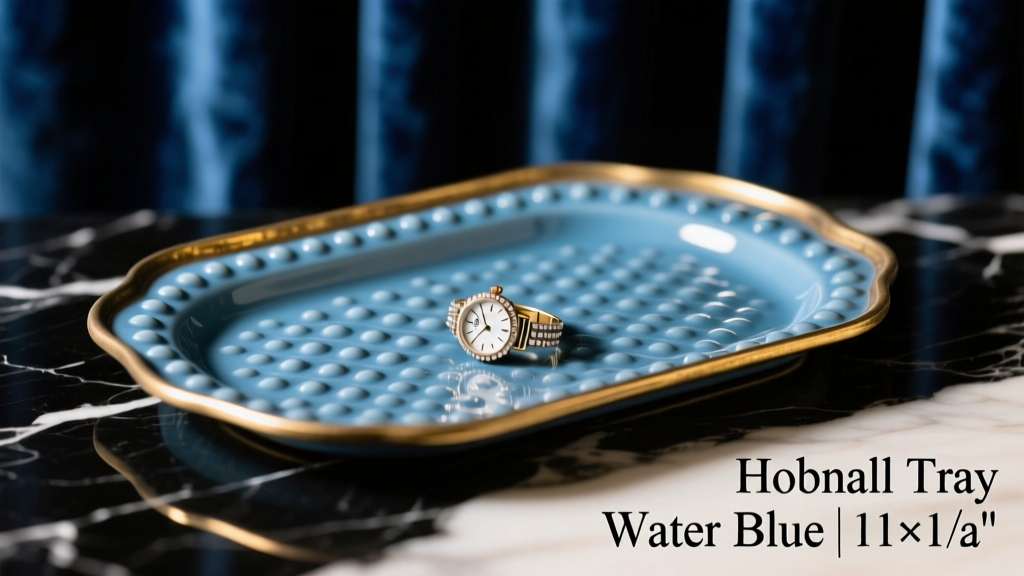
Hobnail Tray in Water Blue Glass: A 11½-Inch Mid-Century Masterpiece by Anchor Hocking
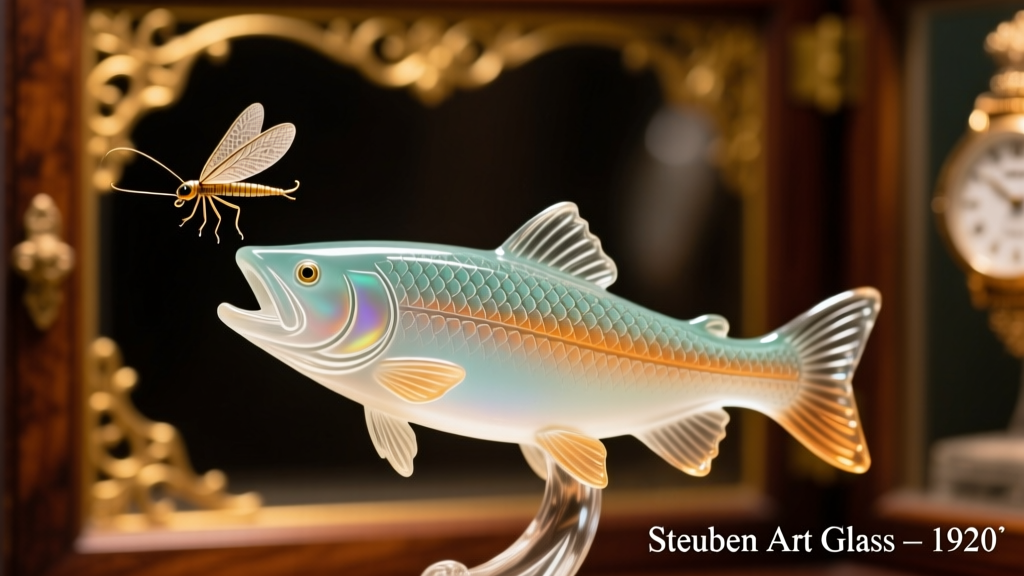
Steuben Figurine 'Trout With Fly' in Clear Crystal: A Masterpiece of American Studio Glass
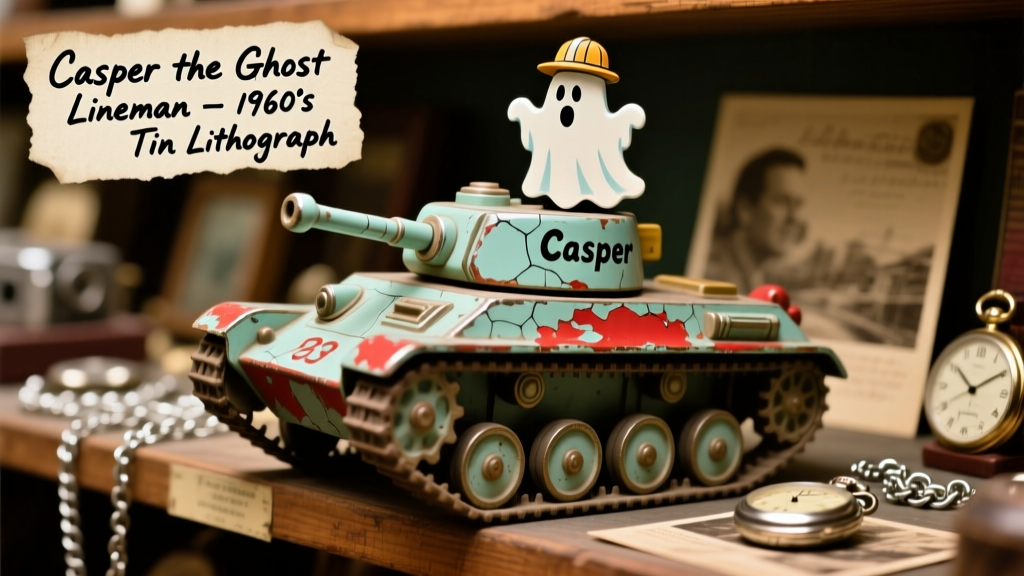
Toy Tank Turn Over Casper the Ghost Tin Lithograph Lineman (1960s): A Rare Mid-Century Mechanical Marvel