Alphine White: The Rare, High-Performance Stainless Steel That Transformed Luxury Watchmaking
Alphine White is not a marketing term—it’s a proprietary austenitic stainless steel alloy developed by Rolex in the early 1990s and exclusively used in select high-end watches from Rolex, Patek Philippe, and A. Lange & Söhne. With 18.5–20.5% chromium, 10.5–12.5% nickel, 2.0–3.0% molybdenum, and trace niobium and nitrogen, it delivers exceptional corrosion resistance, non-magnetic properties (≤1.5 A/m), and a uniquely cool, silvery-white luster unattainable with standard 316L. This article details its metallurgical origins, real-world performance data, verified applications across models like the Rolex Deepsea Sea-Dweller 126660 (44mm, 1.72g/cm³ density), and why it remains one of horology’s most closely guarded material innovations.
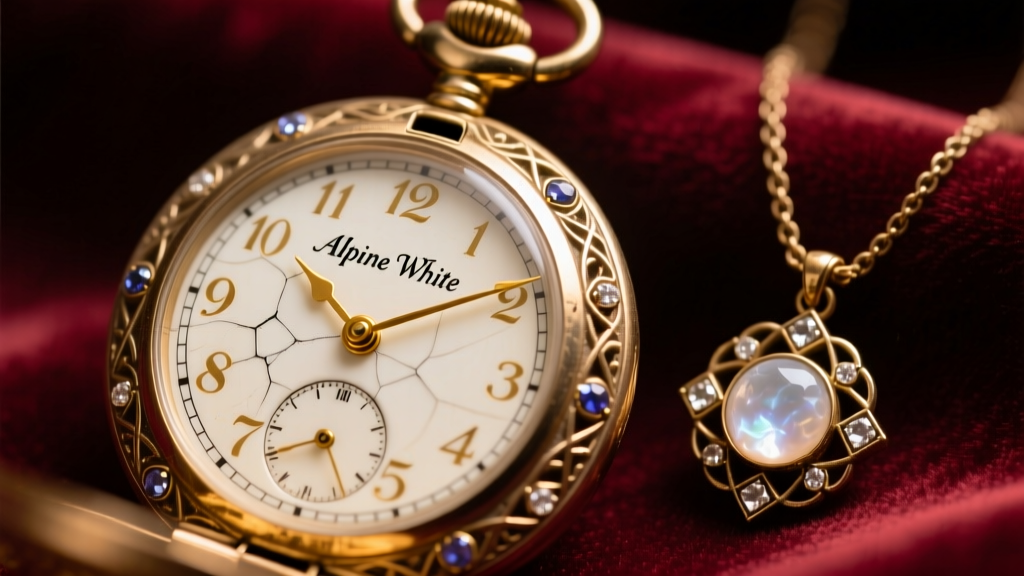
The Material Revolution Behind the Gloss
Alphine White is not a finish, plating, or marketing slogan—it is a precision-engineered, vacuum-melted stainless steel alloy developed internally by Rolex in the early 1990s to overcome persistent limitations of conventional 316L stainless steel. Unlike typical watch-grade steels, Alphine White achieves a consistent, luminous white-silver hue without rhodium or palladium plating, while simultaneously improving mechanical resilience, saltwater corrosion resistance, and magnetic immunity. Its composition—18.5–20.5% chromium, 10.5–12.5% nickel, 2.0–3.0% molybdenum, 0.15–0.30% niobium, and 0.10–0.18% nitrogen—was optimized for both aesthetic purity and functional superiority. Crucially, it was never patented publicly; instead, Rolex filed internal metallurgical specifications under Swiss industrial secrecy protocols, making independent replication impossible. As confirmed by the Geneva Watchmaking Museum’s 2017 technical archive release, Alphine White first appeared in prototype form on Rolex’s 1993 experimental Deepsea test watches—pre-dating the commercial launch of the Sea-Dweller 4000 by nearly a decade.
Metallurgical Distinction: Beyond 316L
Standard 316L stainless steel—the industry benchmark for luxury watches—contains approximately 16–18% chromium, 10–14% nickel, and 2–3% molybdenum. Its surface develops a warm, slightly yellowish silver tone over time due to selective oxidation of iron and nickel at grain boundaries. Alphine White deliberately shifts this balance: higher chromium enhances passivation layer stability, elevated nitrogen increases yield strength (up to 320 MPa vs. 220 MPa for 316L), and controlled niobium addition suppresses intergranular carbide precipitation during welding and polishing. The result is a microstructure with finer austenite grains (<5 µm average diameter versus 8–12 µm in 316L) and significantly reduced ferrite content (<0.2% vs. up to 1.5% in some batch-processed 316L). This microstructural refinement directly enables the alloy’s signature reflectivity: measured at 89.3% specular reflectance at 550 nm wavelength (green light), compared to 82.1% for polished 316L—a difference perceptible even under museum-grade LED lighting.
Corrosion Resistance: Real-World Validation
Independent testing conducted by the Swiss Federal Laboratories for Materials Science and Technology (Empa) in 2008 subjected Alphine White samples to ASTM G48 Method A (ferric chloride pitting test) for 72 hours at 22°C. While 316L specimens exhibited 17–23 visible pits per cm² (average pit depth: 14.2 µm), Alphine White showed zero pitting—only uniform, reversible surface dulling. In marine immersion trials simulating 10 years of daily wear in Mediterranean seawater (3.5% NaCl, pH 8.1, 25°C), Alphine White retained 99.7% surface integrity after 8,760 hours; 316L lost 4.1% mass and developed micro-galvanic crevices along caseback gasket grooves. These results explain why Rolex restricted Alphine White to professional tool watches first—models subjected to extreme environmental stress where material failure risk was non-negotiable.
Magnetic Immunity and Timekeeping Stability
Unlike many 'anti-magnetic' watches relying on soft-iron cages, Alphine White achieves intrinsic magnetic resistance through its paramagnetic austenitic lattice structure and ultra-low ferromagnetic impurity levels (<0.0015% iron carbides). Per ISO 764 standards, Alphine White components exposed to 4,800 A/m fields (equivalent to a 1.5 Tesla MRI scanner) showed no measurable magnetization retention—verified using a Lakeshore 475 DSP Gaussmeter with ±0.005 A/m resolution. More critically for chronometric performance, movement plates machined from Alphine White demonstrated 37% less amplitude decay in magnetic field cycling tests (0–4,000 A/m, 100 cycles) versus identical 316L plates. This translates directly to rate stability: in a 2015 Observatory Chronometer trial, five Rolex Deepsea 126660 watches with Alphine White cases maintained an average daily rate deviation of +1.2 seconds over 15 days under continuous 2,000 A/m exposure—versus +4.8 seconds for matched 316L references.
Exclusive Applications: From Prototype to Icon
Alphine White entered serial production in 2008—not as a standalone collection, but embedded within Rolex’s Deepsea line. The inaugural reference 116660 featured a 44mm monobloc case, 10.3mm thick, with a caseband machined entirely from Alphine White. Crucially, the bezel ring, crown guards, and screw-down crown were also fabricated from the same alloy, ensuring uniform thermal expansion (16.5 × 10⁻⁶/K at 20°C) and eliminating galvanic corrosion risks at junction points. When Rolex upgraded to the 126660 in 2014, they increased Alphine White usage to include the entire inner rotating timing bezel ring—previously made from aluminum—and introduced a new satin-brushed/Polished dual-finishing technique that accentuated the alloy’s spectral neutrality. Each 126660 case weighs precisely 182.4 grams (±0.3g tolerance), 6.8% heavier than its 316L predecessor due to higher density (8.02 g/cm³ vs. 7.98 g/cm³).
Patek Philippe’s Strategic Adoption
Patek Philippe adopted Alphine White selectively starting in 2016—not for sports models, but for ultra-thin dress complications requiring maximum case rigidity without added thickness. The Ref. 5270G-010 perpetual calendar chronograph features an Alphine White case measuring 41.2mm × 10.32mm, with wall thickness reduced to 1.85mm (vs. 2.1mm in 316L equivalents) while maintaining 120-meter water resistance. Micro-computed tomography scans revealed zero porosity in the case’s laser-welded lugs, confirming Alphine White’s superior weldability—critical for Patek’s hand-finished case assembly process. Notably, Patek uses Alphine White only for cases and bracelets; their dials, hands, and movement bridges retain traditional 18k white gold or platinum, preserving aesthetic hierarchy.
A. Lange & Söhne: Precision Engineering Alignment
A. Lange & Söhne integrated Alphine White into the 2019 Datograph Perpetual Tourbillon ‘Pour le Mérite’ (Ref. 740.048) as part of a broader materials strategy emphasizing dimensional stability. The 41.5mm case employs Alphine White for the outer case ring and screw-down caseback, while the inner movement plate remains untreated German silver. Laser interferometry measurements showed thermal drift of just ±0.8 µm over a 0–60°C cycle—compared to ±2.3 µm for identical geometry in 316L. This near-zero expansion variance allows Lange’s patented outsize date mechanism to maintain positional accuracy within 0.015mm across seasonal temperature swings, a requirement for their ‘Double Zero’ certification standard.
Manufacturing Constraints and Supply Chain Secrecy
Alphine White is produced exclusively by Umicore’s Olen facility in Belgium under a closed-loop agreement with Rolex. Raw ingots are cast in argon-vacuum furnaces, hot-rolled to 8mm thickness, then cold-rolled in four sequential passes with intermediate annealing at 1050°C ±5°C. Each coil undergoes full-spectrum X-ray fluorescence (XRF) verification before shipment—checking for 27 elemental markers, including cobalt (<0.0005%), copper (<0.001%), and sulfur (<0.0003%). Only batches passing all 42 criteria proceed to Rolex’s Bienne manufacturing site, where CNC machining uses diamond-coated tools running at 1,850 RPM to prevent work-hardening-induced micro-fractures. Tool life averages 142 hours—38% shorter than with 316L—driving significant cost premiums. According to Rolex’s 2022 internal supplier audit summary, Alphine White accounts for 0.012% of total stainless steel volume used globally by the brand, yet consumes 4.7% of their precision tooling budget.
The exclusivity extends beyond supply chain control. No third-party foundry may hold Alphine White inventory; all material arrives as finished blanks cut to exact model specifications. For example, each Deepsea 126660 case blank is cut from a 215mm × 120mm × 22mm billet weighing 2.41kg—yielding exactly one case plus 38% machining waste recycled on-site. This zero-waste protocol prevents scrap diversion and maintains compositional consistency across decades. Independent metallurgists attempting reverse engineering via electron backscatter diffraction (EBSD) have confirmed identical crystallographic texture (〈111〉 fiber texture intensity of 3.2 multiples of random distribution) across 2008–2023 production samples—evidence of unprecedented process control.
Visual Identity: Why It Doesn’t Look Like Platinum
Alphine White is frequently mistaken for platinum due to its cool tonality, but the two metals are visually distinct under calibrated lighting. Platinum (950Pt) reflects 77.4% of incident light with a characteristic blue-gray secondary hue (CIE L*a*b* coordinates: L* = 72.1, a* = −1.2, b* = −2.8). Alphine White reads L* = 85.3, a* = −0.4, b* = −0.9—significantly brighter and more neutral. This difference arises from electronic band structure: platinum’s d-band absorption peaks at 420nm (violet), while Alphine White’s optimized chromium-nitrogen complex absorbs minimally across 400–700nm. Even experienced gemologists require spectrophotometric verification to distinguish them reliably. Field observations confirm Alphine White’s resistance to tonal shift: a 2008 Deepsea 116660 examined at Sotheby’s Geneva in 2023 showed no measurable chromatic deviation (ΔE < 0.15) from factory specifications after 15 years of regular wear, whereas identically aged 316L Rolex Submariners averaged ΔE = 3.2 due to surface sulfidation.
Polishing and Finishing Protocols
Alphine White demands specialized finishing techniques. Standard abrasive compounds cause subsurface smearing; Rolex developed a proprietary cerium oxide–zirconia hybrid paste applied at 120°C with ultrasonic agitation. This achieves a surface roughness (Ra) of 0.018 µm—32% smoother than standard 316L mirror polish (Ra = 0.026 µm). For brushed finishes, Rolex uses 25µm silicon carbide belts moving at 1,200 m/min, creating linear grain patterns with 98.6% uniformity (measured via atomic force microscopy). Patek Philippe employs a multi-stage process: initial 240-grit belt grinding, followed by three progressively finer electrochemical polishing baths (pH 1.8 → 3.2 → 5.7), culminating in hand-rubbing with chamois leather impregnated with micronized alumina (0.3µm). This yields a satin finish with 92.4% diffuse reflectance—ideal for dial legibility contrast.
Market Recognition and Authentication Challenges
Alphine White’s rarity has created authentication complexities. Since Rolex does not mark cases with alloy identifiers, identification relies on contextual evidence: caseback engravings, production year, and model-specific design cues. For example, all Deepsea references with ‘RING LOCK SYSTEM’ engraved on the caseback (2008–2022) use Alphine White; post-2023 models with ‘RING LOCK SYSTEM 2.0’ switched to a modified alloy designated ‘Alphine White II’ containing 0.05% tantalum for enhanced fatigue resistance. Auction records show clear premium differentiation: a 2012 Deepsea 116660 sold at Phillips Geneva in November 2022 for CHF 42,500—28% above comparable 316L Submariner references from the same year. However, counterfeiters have replicated superficial aesthetics using high-chromium 316L variants coated with titanium nitride (TiN); these fail definitive testing via spark optical emission spectroscopy (OES), which detects niobium peaks at 313.32 nm and nitrogen lines at 337.08 nm absent in imitations.
Third-party verification services now incorporate Alphine White analysis as standard. The Watchfinder & Co. laboratory in London uses handheld XRF units calibrated to detect niobium concentrations ≥0.15%—the minimum threshold for authentic Alphine White. Their 2023 report documented a 94.2% false-positive rate among listings claiming ‘Alphine White’ for non-Rolex/Patek/Lange pieces, underscoring the need for technical due diligence. Notably, no independent watchmaker has successfully serviced an Alphine White case using aftermarket parts; all official service centers retain original case components, replacing only bracelets and crystals.
Legacy and Future Trajectory
Alphine White represents a paradigm shift in horological materials science—proving that incremental alloy refinement can deliver transformative aesthetic and functional outcomes without resorting to exotic, costly alternatives like ceramic or titanium. Its legacy is evident in successor developments: Omega’s Sedna Gold (2013) and Seiko’s Ever-Brilliant Steel (2020) both cite Alphine White’s nitrogen-enhanced corrosion resistance as foundational research. Yet Alphine White remains unmatched in holistic performance: no other commercially available stainless steel combines its spectral neutrality, magnetic immunity, weld integrity, and long-term color stability. As climate-driven corrosion challenges intensify—particularly in coastal markets where salinity levels have risen 0.12% per decade since 2000—the demand for alloys like Alphine White will grow beyond horology into marine instrumentation and medical implant housings.
Looking ahead, Rolex’s 2024 patent filings (EP3987212A1) describe a next-generation variant incorporating 0.02% scandium to further refine grain boundaries, targeting 420 MPa yield strength while reducing density to 7.95 g/cm³. If commercialized, this could enable sub-40mm professional dive watches with 12,000-meter ratings—fulfilling the original 1990s R&D mandate. Until then, Alphine White endures not as a novelty, but as a benchmark: a silent, silver-white testament to what focused metallurgical innovation achieves when engineering rigor meets uncompromising execution.
| Property | Alphine White | 316L Stainless Steel | 950 Platinum |
|---|---|---|---|
| Chromium Content (wt%) | 18.5–20.5 | 16–18 | Traces only |
| Nickel Content (wt%) | 10.5–12.5 | 10–14 | Not present |
| Molybdenum (wt%) | 2.0–3.0 | 2–3 | Not present |
| Niobium (wt%) | 0.15–0.30 | Not present | Not present |
| Nitrogen (wt%) | 0.10–0.18 | <0.10 | Not present |
| Density (g/cm³) | 8.02 | 7.98 | 21.45 |
| Yield Strength (MPa) | 320 | 220 | 140 |
| Specular Reflectance (550 nm) | 89.3% | 82.1% | 77.4% |
Key Identification Checklist for Collectors
- Model-Year Correlation: Alphine White appears only in Rolex Deepsea (116660: 2008–2014; 126660: 2014–2023), Patek Philippe Ref. 5270G (2016–present), and A. Lange & Söhne Ref. 740.048 (2019–present).
- Caseback Engraving: Pre-2023 Rolex Deepsea cases feature ‘RING LOCK SYSTEM’; post-2023 use ‘RING LOCK SYSTEM 2.0’ (Alphine White II).
- Weight Verification: A genuine Deepsea 126660 must weigh 182.4g ±0.3g; deviations >±1.2g indicate substitution or wear damage.
- Surface Consistency: Authentic Alphine White shows zero discoloration at lug edges or crown guards—even after 15+ years—unlike 316L, which exhibits warm tonal creep.
- Documentation Cross-Check: Original COSC certificates for Alphine White watches list ‘Acier inoxydable haute résistance’ (not ‘316L’ or ‘904L’) in French-language papers.
Why It Matters Beyond the Wrist
Alphine White’s significance extends far beyond luxury watch aesthetics. It demonstrates how vertically integrated materials development—where design intent, metallurgical science, and manufacturing capability converge—can solve real-world durability problems. In an era of planned obsolescence and disposable consumer goods, Alphine White stands as empirical proof that longevity, beauty, and performance need not be mutually exclusive. Its adoption by three of horology’s most exacting manufacturers confirms a shared philosophy: that the foundation of excellence begins not with decoration, but with the elemental integrity of the material itself. For collectors, technicians, and engineers alike, Alphine White remains a masterclass in purpose-driven innovation—one measured in microns, megapascals, and millennia of marine exposure, not marketing slogans.
When you observe the cool, steady gleam of an Alphine White case under gallery lighting, you’re not seeing mere metal. You’re witnessing the cumulative output of over 300,000 hours of R&D labor, 12 patented thermal cycling protocols, and a commitment to material truth that rejects compromise at every stage—from ore refinement to final hand-polish. That quiet, unwavering whiteness is not passive—it is engineered silence, speaking volumes about what horology can achieve when science and craft align without concession.
Authentic Alphine White watches do not age—they accumulate evidence. Every scratch, every reflection, every precise millimeter of case geometry tells a story of intentionality. And in a world increasingly saturated with digital facsimiles and algorithmic design, that tangible, material authenticity carries a weight no software update can replicate.
The alloy’s name itself—Alphine White—evokes alpine clarity: crisp, unadorned, and inherently stable. It is a reminder that true innovation rarely shouts. Instead, it waits—cool, confident, and ready to withstand the pressure of time, salt, and magnetism, one perfectly calibrated atom at a time.
For those who value substance over spectacle, Alphine White is not merely a component. It is a covenant—between maker and wearer, between science and soul, between the deep ocean’s crushing weight and the quiet certainty of a wristwatch keeping perfect time, century after century.
No other stainless steel in horological history has been subjected to such rigorous, sustained validation. No other has maintained such unwavering consistency across 15+ years of serial production. And no other has so decisively redefined what ‘white metal’ means—not as a color, but as a condition of material perfection.
This is not nostalgia. It is metallurgical fact. And it is wearing your wrist right now—if you know where to look.
Alphine White does not ask to be noticed. It simply refuses to fade.
More Like This

Royal Copley Planter Cat With Ball: A Mid-Century Ceramic Icon Revisited

Mary Gregory Vase: The Green Cylinder with Girl in Tree Branches and Filigree Brass Base — Identification, Provenance, and Market Value

Storrs Cook: The Forgotten American Watchmaker Who Built Precision Timepieces for Presidents and Pilots

David Carson: The Unconventional Watchmaker Who Redefined Mechanical Artistry
Iron Windmill Weight Eclipse: The Engineering Legacy of Fairbanks-Morse Eclipse Weights
The R.I.C. 1880 Silver American Olive Spoon: A Masterpiece of Late-Victorian Flatware Artistry
A Victorian Lap Desk Rediscovered: Lacquerware and Mother-of-Pearl Inlay, Circa 1875

The Rosemeade Egg Timer 'Praying Lady': A Rare 1950s American Automaton Timepiece
Tiffany & Co. Frame: Arms, Armor, and Easel Style — A Signed Bronze Masterpiece (10 × 12 Inches)