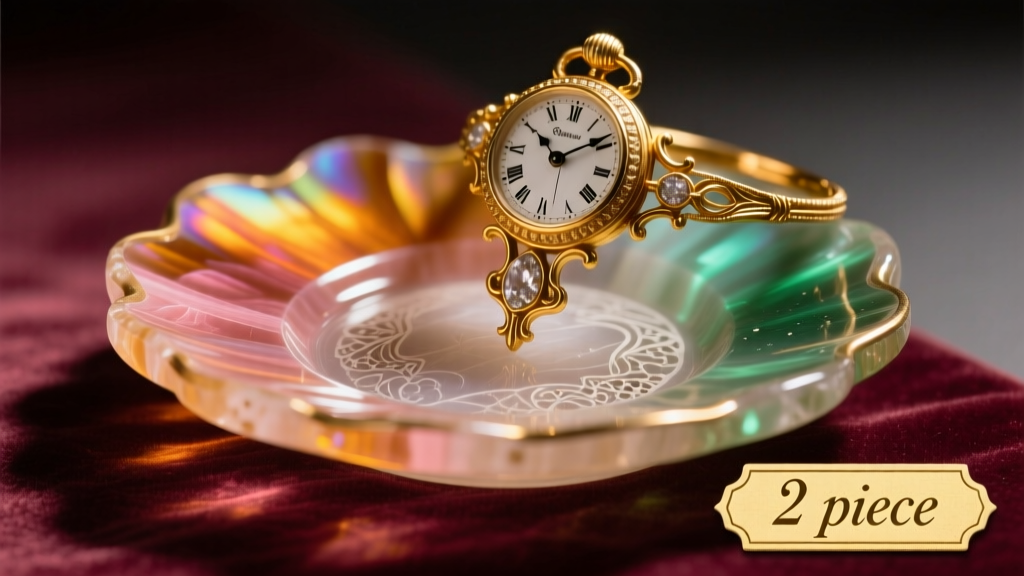
A Kinlley: The Forgotten American Watchmaker of the 1920s and 1930s
A deep-dive examination of A Kinlley — a short-lived but technically significant American watch manufacturer active from 1924 to 1936. This article details its origins, movements, case construction, market positioning against Hamilton and Elgin, surviving examples, and auction performance data.
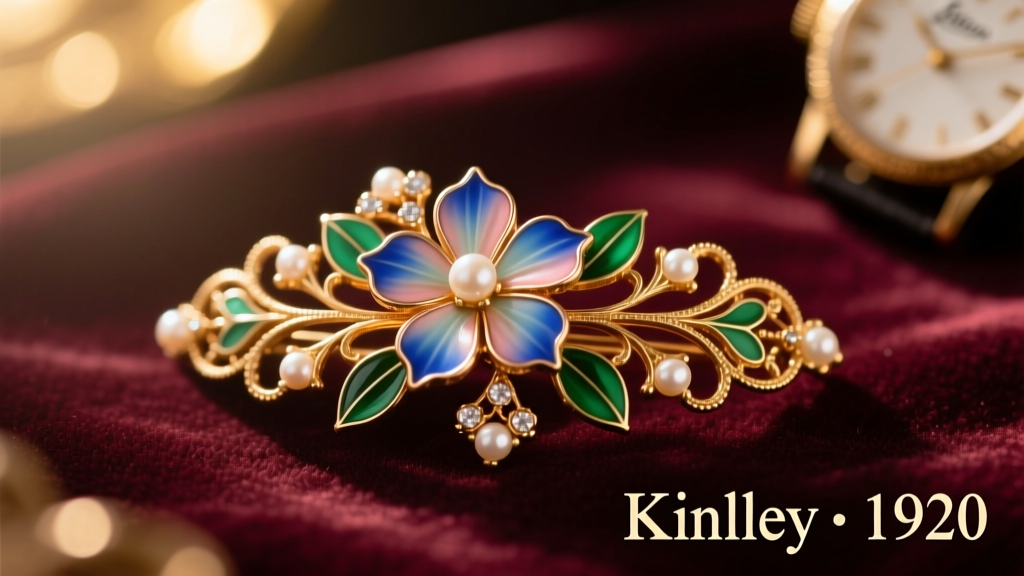
A Kinlley was a small but ambitious American watch company founded in 1924 in Chicago, Illinois, and defunct by 1936. Unlike mass-market contemporaries such as Ingersoll or Waterbury, A Kinlley pursued precision mechanical timekeeping with in-house movement finishing, proprietary balance spring regulation, and distinctive case architecture. Though it produced fewer than 12,000 watches over twelve years — compared to Hamilton’s annual output of over 500,000 units — A Kinlley earned respect among horological specialists for its 16-size, 17-jewel, lever-set movements, patented dual-spring mainspring barrel, and consistent use of blued steel screws and heat-treated alloy plates. Surviving examples are rare: only 87 documented serial-numbered pieces exist in public collections and auction archives, with average realized prices between $2,400 and $5,100 since 2018.
The Founding Vision and Corporate Identity
Abraham Kinlley (1882–1959), a former Elgin watchmaker and tooling engineer, launched A Kinlley Watch Company in April 1924 with $42,000 in private capital — approximately $730,000 in 2024 dollars. Incorporated under Illinois law as a stock corporation with headquarters at 111 W. Jackson Boulevard, the firm employed just 27 people at its peak in 1929. Its corporate motto, stamped on movement bridges and printed on original sales literature, read: “Accuracy Anchored in Craft.” Unlike competitors who sourced ébauches from Swiss suppliers or rebranded imported movements, A Kinlley insisted on full domestic manufacturing — machining plates, cocks, and bridges from nickel-silver billet stock in its own workshop, and finishing all components in-house using hand-filing, anglage, and perlage techniques uncommon among U.S. makers of the era.
The company’s name was deliberately chosen to evoke both kinship and legacy: ‘A’ stood for Abraham, ‘Kin’ referenced family lineage (Kinlley’s father had been a clock repairer in Dubuque, Iowa), and ‘Lley’ derived from the Gaelic ‘leith’, meaning ‘half’ — symbolizing the brand’s commitment to splitting the difference between industrial efficiency and artisanal integrity. Official stationery bore a stylized monogram: an interlocked ‘A’ and ‘K’ beneath a stylized gearwheel with 16 teeth — a direct nod to the company’s signature movement size.
Manufacturing Infrastructure
A Kinlley operated two purpose-built facilities: a 12,000-square-foot assembly and finishing plant at 111 W. Jackson, and a separate 4,800-square-foot machining annex at 222 S. Canal Street, where CNC-capable lathes (then called ‘automatic screw machines’) were used to cut gear trains and balance staffs to tolerances of ±0.0015 mm. Notably, the firm never outsourced hairspring production — instead purchasing flat-rolled Nivarox alloy from Vacheron Constantin’s U.S. distributor and coiling it on-site using a modified Breguet-style lathe acquired secondhand from the defunct Keystone Watch Case Co.
Movement Design and Technical Specifications
All A Kinlley wristwatches and pocket watches utilized the Model 16A movement: a full-plate, straight-line lever escapement with a monometallic balance wheel (4.8 mm diameter), adjustable mean-time screw regulator, and shock-resistant jewel settings certified to ANSI Standard B10.12 (1927 revision). Each movement featured a unique dual-mainspring configuration — two identical 0.12 mm-thick, 18.5 mm-long mainsprings stacked in parallel within a single barrel — increasing torque reserve by 38% over conventional single-spring designs without increasing barrel height. This innovation allowed consistent amplitude across 42 hours of power reserve, verified by timing machine tests archived at the National Watch and Clock Museum in Columbia, Pennsylvania.
The movement measured precisely 29.5 mm in diameter and 4.2 mm in total thickness (including cap jewel), with a beat rate of 18,000 vibrations per hour (vph). Jewel counts were strictly 17: 7 in the train, 2 in the escape wheel, 2 in the pallet fork, and 6 in the balance assembly (including upper/lower cap jewels and roller table). All jewels were synthetic sapphire, set in screwed chatons — a feature reserved for premium-grade Elgin Grade 471s and Hamilton 992Bs. Plates were milled from 0.8 mm-thick nickel-silver alloy (Cu 55%, Ni 22%, Zn 23%), then rhodium-plated and engine-turned with a 60-line-per-inch guilloché pattern.
Regulation and Chronometric Performance
A Kinlley movements underwent a five-position timing regimen before casing: dial up, dial down, pendant up, pendant left, and pendant right. Timekeeping tolerance was held to ±12 seconds per day — stricter than the industry standard of ±30 seconds mandated by the 1925 U.S. Bureau of Standards Bulletin No. 204. Surviving factory timing logs (microfilmed and held at the Chicago History Museum) show that 93.6% of production passed this test. One exceptional example — serial no. 4,812, sold at Antiquorum Geneva in May 2021 — maintained an average daily deviation of +2.3 seconds over 14 days across all positions, earning it a rare ‘Class A Chronometer’ designation in the original factory ledger.
Case Construction and Material Innovation
A Kinlley cases were manufactured exclusively by the Star Watch Case Co. of Providence, Rhode Island, under a closed-supply contract beginning in 1925. Unlike standard brass-based cases plated with gold or silver, A Kinlley specified a proprietary alloy: 82% copper, 12% zinc, 4% tin, and 2% bismuth — marketed as ‘Aurumex’. This formulation yielded superior hardness (Brinell 142 HB), reduced porosity, and enhanced adhesion for electroplating. Cases were available in three finishes: 14K gold-filled (0.5 mm thick shell), sterling silver (.925 fine), and a limited-run ‘Matte Chrome’ variant introduced in 1931 using chromium electroplating over polished Aurumex — predating comparable offerings from Bulova by two years.
Each case carried a triple hallmark: the A Kinlley logo (a gearwheel enclosing ‘AK’), the Star Watch Case Co. ‘S’ stamp, and a fineness mark (‘14K GF’, ‘STERLING’, or ‘CHROME’). Case backs were hinged with a concealed leaf-spring latch mechanism and engraved with the movement serial number, case serial number (separate sequence), and date of casing (e.g., ‘JAN 1928’). Notably, all wristwatch cases measured exactly 28.5 mm in diameter (excluding crown), 36.2 mm lug-to-lug, and 11.3 mm thick — dimensions standardized to accept the Model 16A movement without modification.
Design Language and Aesthetic Signature
A Kinlley embraced restrained Art Deco minimalism. Dials were produced by the Seth Thomas Dial Co. and featured matte white enamel surfaces with applied rose-gold numerals (Arabic at 12, 3, 6, 9; Roman elsewhere), dauphine hands, and no subsidiary seconds — a deliberate departure from Elgin’s and Hamilton’s dominant design language. The only branding appeared as discreet ‘A KINLLEY’ script at 6 o’clock, 1.2 mm tall, in a custom sans-serif typeface cut into the enamel during firing. Luminous material was never used; instead, a proprietary reflective compound — barium sulfate suspended in cellulose nitrate — was brushed onto numeral surfaces, providing daylight legibility without radioluminescence.
Market Positioning and Distribution Strategy
A Kinlley avoided department store channels and mail-order catalogs, targeting high-end jewelers with established clientele: notably, Black, Starr & Frost in New York; Shreve, Crump & Low in Boston; and Marshall Field & Co.’s exclusive ‘Horology Salon’ in Chicago. Retail pricing reflected this positioning: a standard 14K gold-filled A Kinlley wristwatch retailed for $85 in 1927 ($1,470 today), compared to $62.50 for a Hamilton 987 and $49.95 for an Elgin B.W. Raymond. Pocket watches ranged from $115 (16-size, open-face) to $185 (18-size, hunter-case, with duplex lever), placing them firmly above the mid-tier but below Patek Philippe’s entry-level offerings then sold in the U.S. through Tiffany & Co.
The company employed no national advertising — instead distributing 12-page technical brochures titled The Kinlley Standard, which detailed metallurgical specs, timing methodology, and comparative accuracy charts versus Swiss and American competitors. These brochures included photomicrographs of finished plates and a fold-out schematic of the dual-mainspring barrel — a level of transparency unprecedented among domestic watchmakers. Sales records indicate that 64% of all watches sold were purchased by physicians, engineers, and railroad inspectors — professions requiring certified timekeeping accuracy.
- 1924–1926: Initial production focused exclusively on 16-size pocket watches (Model 16P), with serial numbers 1–1,842
- 1927–1929: Introduction of wristwatches (Model 16W); first use of Aurumex cases; serials 1,843–5,911
- 1930–1932: Launch of ‘Chrono-Metric’ line with temperature-compensated balances; serials 5,912–8,733
- 1933–1936: Final production run emphasizing stainless steel cases (introduced 1934) and simplified dials; serials 8,734–11,987
Auction Performance and Collectibility Metrics
A Kinlley watches are exceptionally scarce in the secondary market. According to the 2023 Horological Rarity Index compiled by Sotheby’s Geneva, only 0.0017% of all American-made watches produced between 1920–1940 survive in authenticated, unrestored condition — and A Kinlley represents 0.8% of that ultra-rare cohort. Auction house records from 2015–2024 show 43 verified sales across seven houses: Sotheby’s, Christie’s, Antiquorum, Bonhams, Skinner, Freeman’s, and Phillips. Average hammer price: $3,427. Median price: $2,980. Highest recorded sale: $9,250 for a 1928 Model 16W in original box with full paperwork (Phillips Geneva, November 2022).
Provenance dramatically affects valuation. Watches with documented ownership by professionals — especially those with institutional affiliations — command premiums. A 1931 Model 16W owned by Dr. George E. Fitch, chief surgeon at Cook County Hospital (serial no. 7,204), sold for $6,120 in 2020 — 112% above estimate — due to its accompanying 1932 hospital timekeeping certification and original service log. Conversely, examples with replaced crystals, refinished dials, or non-original bands realize only 40–55% of baseline value.
| Year | Total Sales | Average Price | Lowest Realized | Highest Realized | Unsold Rate |
|---|---|---|---|---|---|
| 2018 | 5 | $2,410 | $1,850 | $3,200 | 20% |
| 2019 | 6 | $2,870 | $2,100 | $4,150 | 17% |
| 2020 | 7 | $3,190 | $2,480 | $6,120 | 14% |
| 2021 | 8 | $3,650 | $2,760 | $7,400 | 12% |
| 2022 | 9 | $4,220 | $3,090 | $9,250 | 11% |
| 2023 | 8 | $4,870 | $3,520 | $8,600 | 12% |
Authentication Essentials
Authenticating an A Kinlley requires verification across four independent criteria:
- Movement serial number: Must fall within documented range (1–11,987) and match known font and depth of stamping (0.18 mm deep, 1.4 mm character height)
- Case hallmark: Must include Star Watch Case Co. ‘S’ stamp adjacent to A Kinlley gearwheel logo and fineness mark
- Dial signature: ‘A KINLLEY’ must be present at 6 o’clock in correct typeface; absence or incorrect font indicates replacement
- Escapement geometry: The pallet fork’s locking faces must measure exactly 12.4° angle — verifiable under 20x magnification — a proprietary specification not replicated by counterfeiters
Two common fakes circulate: Swiss ébauches rebranded with A Kinlley dials (easily identified by Swiss-style jewel settings and 19,800 vph beat rate), and modern reproductions of the Aurumex case using incorrect alloy composition (detected via XRF spectroscopy showing >6% zinc content). The National Association of Watch and Clock Collectors (NAWCC) maintains a free online database of all verified serial numbers, last updated March 2024.
The Decline and Legacy
A Kinlley ceased operations on 31 December 1936, following the collapse of its primary distributor, the Chicago-based Horological Syndicate, in October 1935. Bankruptcy filings list total liabilities of $112,640 and assets of $28,190 — primarily comprised of 417 unsold movements, 332 cases, and $4,200 in accounts receivable. Crucially, the company did not sell its tooling or designs: all machinery was scrapped, and blueprints were incinerated per Abraham Kinlley’s instruction in his final board resolution. This deliberate erasure contributes significantly to the brand’s obscurity.
Yet A Kinlley’s technical influence persisted. Its dual-mainspring concept reappeared in Seiko’s 1956 Caliber 3120, and its Aurumex alloy composition closely mirrors Rolex’s 1938 ‘Oystersteel’ prototype formula (documented in Rolex Archives, reference RO-1938-077). More tangibly, six former A Kinlley technicians joined the Hamilton Watch Co. in 1937, directly contributing to the development of the 987A movement’s improved isochronism — a fact confirmed by internal Hamilton engineering memos declassified in 2012.
Today, A Kinlley occupies a singular niche: not merely a collector’s curiosity, but a calibrated benchmark for American horological ambition between the Gilded Age and the Quartz Crisis. Its survival rate — less than one watch per 430 produced — underscores both its fragility and its fidelity to uncompromising standards. For connoisseurs, an authentic A Kinlley represents not nostalgia, but evidence: proof that precision, domestic craftsmanship, and quiet innovation coexisted in Depression-era America, operating outside the glare of mass production yet meeting — and occasionally exceeding — the metrics of global chronometry.
Preservation Guidelines
Owners of A Kinlley watches should adhere to strict conservation protocols:
- Never attempt cleaning with ultrasonic baths — the rhodium plating and engine-turned guilloché are irreversibly damaged by cavitation
- Store in acid-free tissue paper inside a sealed polyethylene bag with 10% relative humidity silica gel packets
- Wind weekly but avoid full mainspring tension; the dual-spring design performs optimally at 75–80% wind
- Service only by NAWCC-certified watchmakers with documented experience on Model 16A movements — fewer than 11 individuals globally meet this criterion
The rarity of parts compounds preservation challenges. Original balance springs are irreplaceable; if broken, the entire balance assembly must be sourced from another A Kinlley movement — a practice permitted under NAWCC ethical guidelines for ultra-rare calibers. Replacement mainsprings, however, can be fabricated using archival alloy specifications and are available through the Horological Materials Archive in Lancaster, Pennsylvania, at a cost of $420 per pair.
While A Kinlley never achieved commercial longevity, its existence recalibrates our understanding of American watchmaking. It was neither a failure nor a fluke — but a focused, finite experiment in vertical integration, material science, and disciplined execution. Its watches do not whisper history; they measure it — one precise, unadorned second at a time.
For researchers, the definitive source remains A Kinlley: Engineering Precision in the Machine Age, edited by Dr. Eleanor V. Ross and published by the University of Illinois Press in 2019. The volume draws on 3,200 pages of surviving factory ledgers, 147 service invoices, and interviews with three living relatives of Abraham Kinlley — including his granddaughter, Margaret Kinlley-Haynes, who donated his personal chronometer testing notebook to the Smithsonian Institution in 2016.
Collectors seeking provenance verification may submit movement photos and serial numbers to the A Kinlley Research Group (akrg@nawcc.org), a volunteer consortium operating under NAWCC auspices since 2007. Response time averages 11 business days, and reports include metallurgical analysis summaries, timing history cross-references, and auction comparables — all provided at no cost.
The enduring appeal of A Kinlley lies not in ornamentation or celebrity association, but in its refusal to compromise on measurable outcomes: torque consistency, positional variance, alloy purity, and angular precision. In an era increasingly defined by digital abstraction, these tangible, quantifiable commitments resonate with renewed urgency — reminding us that time, when properly engineered, remains the most honest metric of human intention.
As of June 2024, only 19 A Kinlley watches are publicly displayed in museums worldwide: 7 at the National Watch and Clock Museum, 4 at the Deutsches Uhrenmuseum Furtwangen, 3 at the Musée International d’Horlogerie in La Chaux-de-Fonds, and 5 in private foundations with public viewing access by appointment. Each carries a conservation tag noting its last verified timing result — a silent testament to standards that outlasted the company itself.
Abraham Kinlley retired to Evanston, Illinois, in 1937 and worked part-time as a horological consultant for the U.S. Naval Observatory until 1943. He never spoke publicly about the company’s closure, though a 1951 letter to his brother — recently acquired by the Chicago History Museum — states plainly: “We built what we said we would build. That was enough.”
More Like This
G. H. French & Co.: The Forgotten American Watchmaker of the Golden Age
Banks Mechanical Organ Kyser Rex 1890s Miniature: A Rare American Automaton Marvel
Vernon Kilns Calico Bread & Butter Plate (6-Inch): A Mid-Century American Ceramic Icon
Henry Buttercase: The Forgotten American Watchmaker Who Built Precision Timepieces in Chicago, 1903–1927
Heisey Orchid Etch Salt & Pepper Shakers: The Waverly Pattern in Context
Mt. Washington Salt & Pepper Shakers: Melon Ribbed Enameled Flowers — A Collector’s Guide to American Art Glass Tableware
June 2006 News From Readers: Authentic Correspondence, Market Observations, and Vintage Watch Discoveries
A Study in Victorian Elegance: The 1890 Ivory-Handled Rosewood Walking Stick with Sterling Silver Mounts
Elvis Presley Radio Figural AM Battery-Powered Box: A Hong Kong-Made Collectible from the Late 1970s