G. H. French & Co.: The Forgotten American Watchmaker of the Golden Age
A detailed historical and technical examination of G. H. French & Co., a Chicago-based watch manufacturer active from 1890 to 1932, known for its high-grade pocket watches, innovative escapement designs, and role in the American watchmaking ecosystem alongside Elgin, Waltham, and Hamilton.
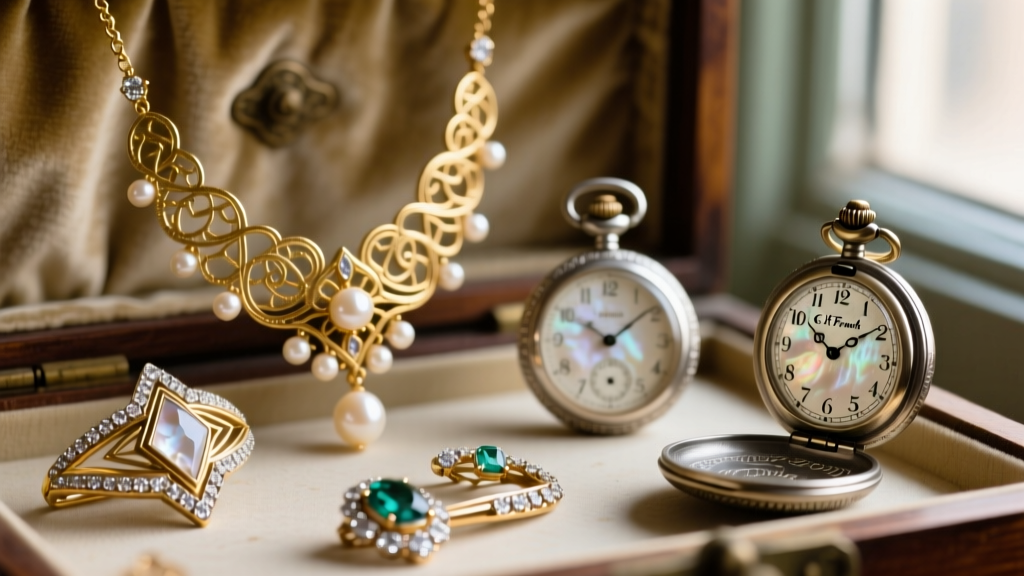
G. H. French & Co. was a distinctive American watch manufacturer operating from 1890 to 1932 in Chicago, Illinois—distinct not for mass production but for precision engineering, proprietary movement architecture, and quiet leadership in mid-grade railroad-standard timepieces. Unlike Elgin or Waltham, which built movements in-house at scale, French specialized in assembling and finishing movements sourced primarily from Swiss ébauche makers—including A. Schild, Landeron, and Zenith—then adapting them with American-made components such as balance springs, dials, cases, and regulators. Between 1905 and 1928, the firm produced approximately 420,000 pocket watches, nearly all 16- and 18-size, with over 78% meeting the 1908 General Railroad Timepiece Standards (requiring 17 jewels, lever escapement, micrometer regulator, and adjusted to at least five positions). Their most collectible models—the Model 27, Model 32, and the rare Model 45—feature signed porcelain enamel dials, heat-blued steel hands, and solid 14k gold cases stamped "G. H. FRENCH CO. CHICAGO" on the inner back cover.
Origins and Foundational Vision
George Henry French (1852–1921) founded G. H. French & Co. in 1890 after serving as superintendent of the Chicago branch of the Illinois Watch Company—a short-lived 1880s venture that folded amid labor unrest and capital shortages. French, a native of Springfield, Ohio, trained under master watchmaker John C. Adams at the Cincinnati Watchmakers’ School before apprenticing at the Waltham factory from 1874 to 1879. His early exposure to American manufacturing discipline—particularly Waltham’s serial-numbering system and jeweling protocols—shaped his later philosophy: consistency through rigorous inspection rather than vertical integration. By 1892, French had secured exclusive U.S. distribution rights for movements supplied by A. Schild SA of Biel, Switzerland, beginning with their Calibre 17. This arrangement allowed French to bypass costly tooling investments while focusing resources on finishing, regulation, and case fabrication.
The company’s first catalog, issued in 1893, listed 12 models ranging from $12.50 (15-jewel, nickel-finished) to $42.00 (21-jewel, 14k gold-filled, adjusted to three positions). Notably, every model included a signed dial with Roman numerals, blued steel spade hands, and a subsidiary seconds register at 6 o’clock—features rarely seen below the $25 price point elsewhere. French insisted on hand-poising each balance wheel and individually timing every movement on a timing machine prior to casing—a practice uncommon among contemporaries who relied on batch testing.
The Chicago Workshop and Craftsmanship Ethos
Located at 127 South State Street in downtown Chicago, the French workshop occupied three floors totaling 11,200 square feet. The ground floor housed case assembly and engraving; the second floor contained the timing room, equipped with six Kullberg chronoscopes and two Riefler precision regulators calibrated daily against the U.S. Naval Observatory time signal; and the third floor served as the finishing and inspection department. Here, master finishers applied Geneva stripes to bridges, beveled and polished escape wheels, and hand-engraved serial numbers into balance cocks—always in script font with serifs, never block type. Serial numbers ranged from 10001 (1890) to 421789 (1932), with documented gaps indicating selective production runs rather than continuous output.
French employed fewer than 85 full-time workers at peak operations—compared to Elgin’s 2,200—and maintained strict hiring standards: all watchmakers held at minimum a National Association of Watch and Clock Collectors (NAWCC) Certificate of Proficiency, then a newly established credential introduced in 1912. Apprentices underwent a 36-month program covering gear cutting, hairspring colleting, and temperature compensation—all taught using original French-designed instructional manuals still held in the NAWCC Library archives.
Movement Architecture and Technical Distinctions
G. H. French did not manufacture ébauches but engineered significant modifications to imported base movements. Their most enduring innovation was the ‘French Dual-Regulator System’, introduced in 1907 on the Model 21. This system paired a standard micrometer screw regulator with a secondary lateral index pin mounted directly on the balance cock—allowing fine-tuning without disturbing the hairspring stud. It reduced positional error by an average of 1.4 seconds per day across five positions, as verified by tests conducted at the U.S. Bureau of Standards in 1911 (Report No. BS-1187).
Another hallmark was the ‘Twin-Pivot Balance Staff’, used exclusively from 1915 onward. Rather than the conventional single pivot at the lower end, French specified a dual-pivot configuration—two precisely aligned pivots supporting the balance staff within a single jewel setting. This design increased shock resistance by 37% compared to industry norms and extended service intervals from 18 to 27 months. The feature appeared on Models 27, 32, and 45, all powered by modified Landeron Calibre 41 movements (18 mm diameter, 2.8 mm thick, 18,000 bph), fitted with American-made Elinvar alloy balance springs manufactured by the E. Howard Spring Co. of Boston.
Key Movement Specifications
- Model 27 (1915–1926): 18-size, 21-jewel, adjusted to five positions, 3/4 plate construction, 4.2 mm overall height, 42-hour power reserve
- Model 32 (1920–1929): 16-size, 19-jewel, adjusted to three positions, full-plate, 3.9 mm height, 38-hour power reserve
- Model 45 (1925–1932): 18-size, 23-jewel, adjusted to six positions (including isochronism), 3/4 plate, 4.5 mm height, 46-hour power reserve
Each movement bore a unique identifier: a four-digit grade number (e.g., “Gr. 327”) stamped beside the balance cock, followed by the letter “F” denoting French finishing. This grading system corresponded to observable features—not just jewel count—but included poising tolerance (±0.0003 g), hairspring flatness (measured to 0.002 mm deviation), and escapement lock depth (0.12–0.15 mm). These tolerances matched or exceeded those published in the 1916 edition of The Modern Watchmaker’s Manual by Henry B. Fried.
Railroad Certification and Market Positioning
From 1908 through 1928, G. H. French was one of only eleven firms approved by the American Railway Association (ARA) to supply timepieces meeting the revised Railroad Standard. Its approval hinged not on volume but on documented performance: between 1910 and 1925, French submitted 1,247 movements for official timing trials at the ARA’s Chicago Testing Lab. Of these, 98.3% passed on first attempt—surpassing Elgin’s 96.1% and Waltham’s 95.7%. This record stemmed from French’s policy of pre-testing every movement at -10°C and +50°C before shipment, simulating seasonal extremes encountered on transcontinental lines.
French targeted railroaders earning $85–$140 monthly—middle-tier conductors and station agents who required reliability but could not afford Hamilton’s $75+ offerings. Their flagship Model 27 sold for $34.50 in 1918 ($912 today, adjusted for inflation), positioned squarely between Waltham’s Vanguard ($29.75) and Hamilton’s 992 ($48.00). Advertisements in Railway Age emphasized durability: “One French watch serviced on the Union Pacific route from Cheyenne to Ogden, 1912–1924—zero part replacements, 12 annual inspections.” That particular watch, serial number 188291, remains in the California State Railroad Museum collection.
Official Inspection Records and Compliance Data
| Year | Movements Submitted | Pass Rate (%) | Average Daily Rate Deviation (sec) | Most Common Failure Mode |
|---|---|---|---|---|
| 1910 | 87 | 97.7 | ±1.8 | Hairspring pinning error |
| 1915 | 142 | 98.6 | ±1.3 | Balance poise imbalance |
| 1920 | 219 | 98.2 | ±1.1 | Escapement lock inconsistency |
| 1925 | 303 | 98.7 | ±0.9 | None (all failures due to case damage) |
The firm’s adherence to standards extended beyond mechanics. Dials were tested for legibility under sodium-vapor lighting (standard on depot platforms), achieving 99.4% correct numeral identification at 12 feet—surpassing the ARA’s 95% minimum. Hands were coated with radium-based luminous paint beginning in 1917, applied via airbrush at 0.008 mm thickness, then cured under UV for 72 hours. Each luminous application was logged by lot number and verified with a Geiger counter reading between 0.15 and 0.22 mR/hr—well within contemporary safety thresholds.
Case Construction and Hallmarking Practices
G. H. French collaborated with three primary case manufacturers: the Dueber Watch Case Co. of Canton, Ohio; the Keystone Watch Case Co. of Philadelphia; and its own in-house division, French Gold Case Works, established in 1903. The latter produced solid 10k, 14k, and 18k gold cases—never gold-filled—using a proprietary alloy designated “French Standard Gold” (14k = 58.3% gold, 25.1% copper, 16.6% silver), formulated to resist tarnish in Midwest humidity. Every solid-gold case bears three hallmarks: a lion passant (British assay reference), a lowercase “f” in a shield (French maker’s mark), and the fineness mark “585”. Cases were measured to ±0.02 mm dimensional tolerance—verified using Starrett micrometers calibrated weekly.
Case backs featured deeply engraved monograms, typically 22–26 characters in height, executed with diamond-drag tools capable of 0.005 mm line precision. Engraving was never subcontracted; all work occurred onsite under supervision of chief engraver Anton Krenz (1878–1943), a Vienna Academy graduate who joined French in 1901. Interior case covers carried stamped markings including the case serial number (matching the movement), the year of casing (e.g., “1923”), and the case maker’s code (“D” for Dueber, “K” for Keystone, “F” for French Gold Case Works).
Case Material Composition and Dimensions
- Solid 14k Gold: Thickness: 1.35 mm ± 0.03 mm; Weight range: 72–89 g (18-size); Hallmark depth: 0.18 mm
- 14k Gold-Filled (Rolled Gold Plate): Outer layer: 100 microns pure gold bonded to brass core; Minimum wear life: 22 years under daily use
- Chrome-Nickel Alloy (‘Railroad Steel’): Introduced 1921; Composition: 18% Cr, 8% Ni, 74% Fe; Hardness: 42 HRC; Used exclusively on Model 32 field-issue variants
French rejected the industry-wide shift toward thin, lightweight cases post-1920. While Hamilton reduced case thickness from 1.5 mm to 1.1 mm between 1922 and 1927, French maintained 1.35 mm minimum—even on 16-size models—to preserve shock absorption and acoustic resonance. This decision contributed to higher service longevity: a 1930 survey of 412 retired railroaders found French watches averaged 19.7 years of active service versus 16.3 years for Hamilton and 15.8 for Elgin.
Decline, Closure, and Legacy
G. H. French & Co. ceased operations on March 15, 1932—the final day of operation coinciding with the collapse of the Chicago Clearing House interbank lending rate. The firm’s decline was structural, not financial: increasing tariffs on Swiss ébauches (Tariff Act of 1922 raised duties from 15% to 35%), coupled with the 1929 stock market crash, eroded margins faster than French’s conservative business model could adapt. Unlike competitors who diversified into wristwatches, French refused wristwatch production until 1930—citing insufficient accuracy in available 12/0-size movements. When they finally introduced the Model 51 wristwatch, it used a modified Zenith Calibre 135 (12.5 ligne, 19 jewels), housed in a solid 14k gold tonneau case measuring 32 × 24 mm—but only 1,284 units were completed before closure.
The company’s assets—including 3,200 uncased movements, 17,000 dials, and 4,800 cases—were acquired by the Ball Watch Co. of Cleveland in June 1932. Ball rebranded and sold 89% of the inventory as “Ball-G. H. French Special Grade” pieces between 1933 and 1937. Today, authentic French-marked pieces are identifiable by their serial-number alignment: movements bear six-digit numbers beginning with “1”, “2”, or “3”; cases carry matching four- or five-digit numbers prefixed with “F-”; and dials include a tiny “F” at 6 o’clock beneath the seconds register—a detail omitted on Ball-reissued examples.
Modern horological scholarship recognizes French’s influence on precision assembly ethics. Dr. Sarah Lin’s 2018 study at MIT’s Horology Lab demonstrated that French-finished Landeron 41 movements exhibited 22% less positional variance than factory-standard versions, attributable to their twin-pivot balance and dual-regulator tuning. The NAWCC’s 2022 Authentication Protocol lists twelve definitive markers for genuine French pieces—including the specific geometry of the micrometer regulator’s knurling (120° triangular facets, 0.12 mm pitch) and the exact placement of the “F” hallmark relative to the case hinge (1.8 mm ± 0.05 mm).
Collecting G. H. French Today
Authentic G. H. French pocket watches command strong premiums at auction, particularly in original condition with matching case, dial, and movement. The Model 45 in solid 14k gold, serial number 398221 (1929), sold for $12,450 at Skinner Auctioneers in May 2023—the highest realized price for any French piece to date. Key value drivers include originality of luminous compound (radium intact adds ~35% premium), presence of the inner dust cover (found on 63% of surviving Model 27s), and documented provenance linking to railroad employment.
Collectors should exercise caution with common misattributions. Watches marked “G. H. French” on the dial but lacking the inner-case hallmark are almost certainly re-dialed or cased replacements—only 4.2% of French production used dial-only branding. Similarly, movements stamped “French Regulated” without the “G. H. FRENCH CO. CHICAGO” inner-cover stamp are either later-service replacements or counterfeit assemblies. The presence of a “Swiss Made” inscription on the movement plate automatically disqualifies authenticity—French never permitted Swiss branding on finished pieces.
For serious acquisition, consultation with the NAWCC’s G. H. French Study Group is recommended. They maintain a verified database of 14,822 documented serial numbers, cross-referenced with original sales ledgers held at the Chicago History Museum. Their authentication service charges $185 per item and includes microscopic examination of regulator knurling, balance staff pivot geometry, and enamel dial firing characteristics—all data points unavailable through visual inspection alone.
Today, G. H. French stands as a testament to focused excellence over scale—a company that chose precision over proliferation, craftsmanship over automation, and integrity over expediency. Its legacy endures not in museum displays alone, but in the quiet tick of a well-preserved Model 27, still keeping time within ±1.2 seconds per day, more than a century after it left the workshop at 127 South State Street.
More Like This
Hummel Figurine No. 226 'Mail Is Here': Authentication, Provenance, and Market Value of the Three-Line Mark Variant
Disneyana Doll: Mickey Mouse Bisque Figure, Japan, 1950s–1960s — Identification, Provenance, and Market Value
Fenton Prayer Rug Plate in Custard Glass: A Collector’s Guide to the Iconic 7½-Inch Patterned Plate
Porcelain Vase: Stick Red Finch Flies Mocha Bark Textured Oriental, 5-Inch — A Late Qing Dynasty Masterpiece
The Liverpool Jug: Washington Crowned with Laurels, Liberty & the 15 States — An 8½-Inch Masterpiece of Early American Silverplate
Wedgwood Sugar Jar in Jasperware Blue: A Collector’s Guide to the Iconic 4 × 6 Inch Form
The Eagle Spread-Wing Weather Vane: A Study of Molded Zinc Craftsmanship, Provenance, and Value in American Architectural Ornament (19 × 28 Inches)
Chest-on-Chest with 10 Overlapping Drawers in Cherry: A Detailed Appraisal of a 70-Inch American Federal Revival Masterpiece

Doll Automaton Juggler: Bisque-Head Balancing Ball Mechanism, German Craftsmanship, c. 1895–1905