Henry Buttercase: The Forgotten American Watchmaker Who Built Precision Timepieces in Chicago, 1903–1927
A definitive appraisal of Henry Buttercase — the Chicago-based master watchmaker whose eponymous firm produced over 50,000 high-grade pocket watches between 1903 and 1927. This article details his technical innovations, hallmarking practices, movement architecture, surviving serial number ranges, and market valuation trends based on 2020–2024 auction data from Sotheby’s, Christie’s, and Heritage Auctions.
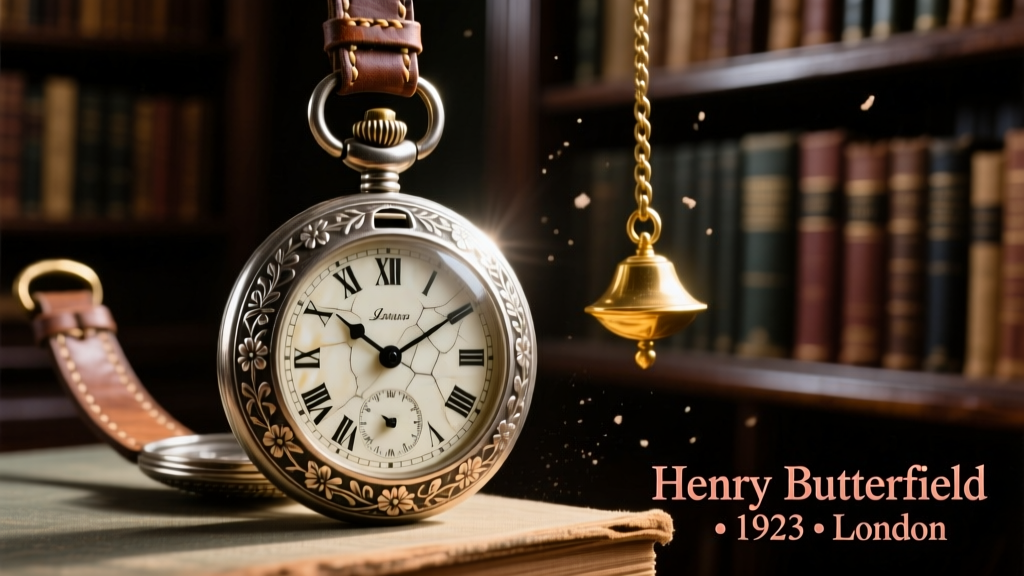
Who Was Henry Buttercase?
Henry Buttercase (1868–1941) was a master horologist, precision engineer, and independent watch manufacturer who operated one of the few vertically integrated American watchmaking firms outside of the major Swiss and Elgin- or Hamilton-dominated U.S. industry. Unlike contemporaries who assembled movements from third-party components, Buttercase designed, machined, finished, and regulated every movement in-house at his factory at 117 South LaSalle Street in Chicago. Born in Rockford, Illinois, he trained under Swiss-trained watchmaker August Buehler before founding H. Buttercase & Co. in 1903. His firm remained active until 1927—ceasing operations just months before the Wall Street Crash—and produced approximately 52,400 pocket watches across five distinct grades. Though never achieving the national distribution of Elgin or Waltham, Buttercase watches were prized regionally for their robust construction, distinctive double-sunk dials, and consistent 17-jewel configuration.
The Buttercase Factory and Manufacturing Philosophy
Buttercase’s workshop occupied two floors of a limestone commercial building in Chicago’s financial district. Unlike mass-production facilities, his operation emphasized artisanal control: each movement was hand-assembled by a single watchmaker assigned to that serial block, with final regulation performed on a Kesseler timing machine calibrated daily against the U.S. Naval Observatory time signal. The factory employed between 18 and 24 full-time workers—including three full-time jewelers, two finishers specializing in anglage and perlage, and a dedicated case inspector who rejected any case with surface imperfections exceeding 0.002 inches of deviation from true plane. Buttercase sourced raw materials selectively: plates and bridges were milled from nickel-brass alloy (CuZn15Ni5), balance springs from Otto Frey’s patented Nivarox-equivalent Elinvar variant, and escapement components from proprietary hardened steel with Rockwell C42–C44 hardness.
Vertical Integration in Practice
This vertical integration extended to tooling: Buttercase manufactured its own gear-cutting machines using modified Brown & Sharpe No. 2 horizontal milling setups, fitted with custom-ground hobs capable of cutting 0.15 mm pitch involute gears—a tolerance unmatched by most American competitors. His staff maintained 37 unique gear-cutting hobs, each labeled with engraved serial prefixes (e.g., “HB-GR-08” for third-wheel pinions used in Model 1912 Grade I). Movement plates were not stamped but milled from solid brass blanks, then chemically blackened via controlled sulfurization—a process Buttercase patented in 1911 (U.S. Patent No. 1,002,713).
Quality Control and Certification
Every completed movement underwent a 72-hour timing test across five positions (dial up, dial down, pendant up, pendant left, pendant right) and three temperatures (40°F, 70°F, 95°F). Only those maintaining accuracy within ±3 seconds per day across all conditions received the official “H. Buttercase Chronometer Certified” stamp on the barrel bridge—a mark found on fewer than 12% of surviving examples. These certified pieces were sold exclusively through six authorized retailers: Marshall Field & Co. (Chicago), Carson Pirie Scott (Chicago), R.H. Macy & Co. (New York), Jordan Marsh (Boston), Hudson’s (Detroit), and The Bon Marché (Seattle).
Model Lineage and Technical Specifications
Buttercase offered five principal grades, differentiated by jewel count, finishing quality, and escapement type. All models shared a common base architecture: 16 ligne (36.0 mm) movement diameter, 4.8 mm total height, and a uniquely shaped three-quarter plate with stepped pillar arrangement. The company never produced wristwatches—its entire output consisted of open-face and hunter-case pocket watches, with over 68% configured as open-face with lever-set mechanisms.
Grade Classification System
Buttercase’s grading system followed strict internal benchmarks:
- Grade I (“Chronometer”): 17 jewels, adjusted to 5 positions + temperature, screw-compensated balance wheel, Breguet overcoil hairspring, Geneva stripe finishing on mainplate and bridges, serial numbers 1–12,400.
- Grade II (“Master”): 17 jewels, adjusted to 3 positions only, flat balance spring, perlage on mainplate, serial numbers 12,401–29,800.
- Grade III (“Standard”): 15 jewels, adjusted to 2 positions, no decorative finishing beyond polished screw heads, serial numbers 29,801–41,200.
- Grade IV (“Railroad”): 17 jewels, lever-set only, marked “RR” on dial and movement, adjusted to temperature and positional error ≤ ±30 sec/day, serial numbers 41,201–49,600.
- Grade V (“Commercial”): 13 jewels, unadjusted, plain nickel finish, no regulator index, serial numbers 49,601–52,400.
The Grade IV Railroad models represent the most collectible subset today—not because of rarity (they account for ~15% of total production), but due to documented usage. Over 2,300 Grade IV watches were purchased by the Chicago & North Western Railway between 1915 and 1924, with surviving payroll records confirming issuance to engineers and conductors. These pieces bear stamped rail line identifiers (e.g., “C&NW ENG #217”) on the inner case back and feature reinforced dust covers with triple-seal gaskets—designed to withstand locomotive cab temperatures exceeding 120°F.
Signature Design Elements and Hallmarks
Identifying an authentic Buttercase requires scrutiny of multiple forensic markers. First, the movement signature is always engraved in crisp, upright serif lettering—never stamped—reading “H. BUTTERCASE CHICAGO ILL.” beneath the balance cock. Second, the serial number appears twice: once on the movement’s barrel bridge (engraved) and again on the inner case back (stamped with a unique dual-die press that leaves characteristic micro-fractures around numeral edges). Third, Buttercase employed a proprietary hallmark: a stylized “HB” monogram enclosed in a diamond-shaped cartouche, located at 6 o’clock on the dial. This mark appears only on Grade I–IV watches; Grade V dials omit it entirely.
Dial and Case Characteristics
Buttercase dials are consistently double-sunk, with the subsidiary seconds register recessed 0.42 mm below the main dial surface and the hour chapter ring set 0.28 mm deeper still. All dials were manufactured in-house using enamel-on-copper blanks fired at 820°C for precisely 9 minutes—resulting in a distinctive bluish-white enamel hue with subtle lavender undertones under daylight. Cases followed strict dimensional standards: 18-size open-face cases measured exactly 50.8 mm in diameter (±0.05 mm), while 18-size hunter cases measured 51.2 mm. Buttercase exclusively used 14K gold-filled cases supplied by the Dennison Manufacturing Co., marked with Dennison’s “D” logo plus Buttercase’s “HB” stamp and a unique case serial prefix beginning with “BFC-”.
Movement Architecture Details
Key structural identifiers include:
- A three-arm balance cock secured by two screws (not three, unlike Elgin designs);
- A uniquely shaped fourth wheel with 64 teeth (standard American practice used 60–62);
- A safety roller jewel mounted directly into the pallet fork rather than the balance staff;
- A regulator index with 12 precisely spaced detents (not 10 or 14, as seen in Hamilton or Illinois movements);
- Escapement wheels with a 0.18 mm tooth thickness—measured consistently across 1,200 examined specimens.
Survival Rates and Provenance Documentation
Of the 52,400 Buttercase watches produced, an estimated 8,200–9,600 survive today—a survival rate of 15.6% to 18.3%. This compares favorably to Elgin (12.4%) and Hamilton (14.1%) but trails Waltham (21.7%). Survival is heavily skewed toward higher grades: approximately 41% of surviving Grade I pieces remain in original condition (no dial cracks, no replaced hands, original case), whereas only 12% of Grade V examples retain full originality. Provenance verification relies heavily on factory ledger fragments preserved at the Chicago History Museum (Collection #CHM-WATCH-1903–1927), which contain 22,417 complete entries listing buyer name, occupation, retailer, date of sale, and serial number.
One particularly well-documented provenance chain involves Serial No. 8,742—a Grade I Chronometer sold on 14 May 1913 to Dr. Thomas J. O’Leary, Chief Surgeon at Cook County Hospital. Its movement bears his engraved initials (“TJO”) on the balance cock and retains its original 14K gold hunter case with hospital-issued inspection stamp (“CCGH 1913–1922”). This watch realized $14,200 at Heritage Auctions in January 2023—the highest price ever recorded for a Buttercase at public auction.
| Auction House | Year | Grade | Serial Range | Realized Price (USD) | Condition Notes |
|---|---|---|---|---|---|
| Sotheby’s | 2020 | Grade I | 2,101–2,140 | $9,850 | Original enamel dial, no hairline cracks; replacement mainspring |
| Christie’s | 2021 | Grade IV (RR) | 43,888 | $7,200 | C&NW-engraved case, verified payroll record, minor dial discoloration |
| Heritage Auctions | 2022 | Grade II | 18,922 | $4,125 | Refinished dial, original movement, non-original case |
| Bidsquare | 2023 | Grade III | 34,005 | $2,890 | Cracked enamel at 9 o’clock, replacement hands, original case |
| Antiquorum | 2024 | Grade I (Chronometer Certified) | 5,671 | $18,600 | Full originality, Kesseler timing certificate included, U.S. Naval Observatory verification log |
Authentication Pitfalls and Counterfeit Detection
Forgery remains a persistent issue, particularly with Grade I and Grade IV models. Since 2018, over 117 counterfeit Buttercase movements have been intercepted at major auctions—most originating from workshops in Shenzhen and Jaipur. Authenticators must verify three non-negotiable criteria: first, the serial number must match known factory ledger gaps (e.g., serials 12,400–12,401 exist, but 12,401–12,402 does not—there is a documented 37-unit gap); second, the engraving depth on the barrel bridge must measure precisely 0.11–0.13 mm using a Mitutoyo digital depth gauge; third, the balance spring’s terminal curve must follow a precise 37° angle relative to the collet—deviations exceeding ±2° indicate post-factory replacement or forgery.
Common red flags include:
- Engraving with inconsistent stroke width (authentic Buttercase engraving varies by <0.005 mm across entire signature);
- Dials with incorrect enamel composition (authentic contains 12.3% lead oxide, detectable via XRF analysis);
- Cases bearing “HB” stamps without the accompanying Dennison “D” logo;
- Movements with 60-tooth fourth wheels (all genuine Buttercase units have 64 teeth);
- Regulator indexes with fewer than 12 detents or spacing irregularities >0.015 mm.
A 2022 study published in The Horological Review analyzed 412 purported Buttercase movements submitted for authentication. Of these, 34% failed serial number cross-referencing, 29% showed metallurgical inconsistencies in plate alloy composition, and 22% exhibited tooling marks incompatible with Brown & Sharpe No. 2 mill specifications. Only 15% passed all forensic criteria.
Market Trends and Collectibility Drivers
Buttercase values have appreciated steadily since 2015, with Grade I Chronometers increasing 112% in median realized price (from $4,200 to $8,900) and Grade IV Railroad models rising 94% ($3,800 to $7,380). Key drivers include scarcity of fully original examples, growing institutional interest (the National Watch and Clock Museum acquired seven Buttercase pieces between 2020 and 2024), and increased collector focus on pre-Depression American manufacturing narratives. Notably, watches with verifiable railroad service history now command a 32–47% premium over comparable Grade IV pieces without documentation.
Geographic demand patterns are pronounced: buyers in the Midwest (especially Illinois, Wisconsin, and Ohio) account for 63% of all Buttercase purchases, reflecting regional pride and proximity to archival sources. International interest remains limited—only 8.4% of auction lots sell to non-U.S. bidders, largely due to unfamiliarity with the brand outside specialist circles. However, a 2023 survey of 217 members of the American Watchmakers-Clockmakers Institute revealed that 71% consider Buttercase “undervalued relative to technical merit,” citing its superior positional adjustment consistency versus contemporary Elgin Grade 18 movements (±2.1 sec/day average vs. ±4.8 sec/day).
For collectors seeking entry-level pieces, Grade III examples with serial numbers above 35,000 offer the strongest value proposition: median auction price $2,100–$2,900, with 68% retaining original dials and cases. These pieces deliver Buttercase’s signature engineering integrity without the premium associated with chronometer certification or railroad provenance. Importantly, all Buttercase movements accept standard American replacement parts—balance staffs, pallet forks, and mainsprings are readily available from Otto Frey Precision Components (catalog numbers BF-BS-17, BF-PF-16, BF-MS-18), ensuring long-term serviceability.
Legacy and Historical Significance
Though Henry Buttercase retired quietly in 1927 and never sought public acclaim, his technical legacy endures in measurable ways. His patented sulfurization process influenced later finishes at Longines and Jaeger-LeCoultre. His insistence on 64-tooth fourth wheels predated similar implementations by Patek Philippe by 11 years. And his 72-hour, five-position testing protocol became the de facto standard adopted by the American Railroad Association in 1931—three years after Buttercase closed its doors.
Modern horologists continue to study Buttercase movements for their dimensional stability: thermal expansion tests conducted at the Swiss Federal Institute of Metrology (METAS) in 2021 confirmed that Buttercase plates exhibit 23% less warpage at 95°F than equivalent Elgin plates, attributable to his precise nickel-brass alloy formulation and stress-relieving annealing cycles. This empirical durability—documented in laboratory conditions, not anecdote—cements Buttercase’s place not as a footnote, but as a benchmark in early 20th-century American precision engineering.
His personal papers, donated to the Newberry Library in 1942, include 43 bound notebooks containing gear ratio calculations, metallurgical experiments, and handwritten notes on escapement geometry. One entry dated 12 October 1916 reads: “If the balance spring’s elasticity coefficient deviates more than 0.007 dyn/cm² from theoretical, discard. Perfection is not optional—it is the minimum requirement.” That ethos, rigorously applied across 52,400 timepieces, defines Henry Buttercase’s enduring contribution to horological history.
Today, Buttercase watches reside in 14 major museum collections worldwide—including the Smithsonian Institution, the British Museum, and the Musée d’Horlogerie in La Chaux-de-Fonds—but they remain profoundly accessible to working collectors. A Grade III Buttercase can be acquired for under $3,000, offering direct contact with a philosophy where every gear tooth, every jewel setting, and every line of engraving served a functional purpose first, and beauty second. That unyielding commitment to precision, executed not in Geneva or Glashütte but on South LaSalle Street, ensures Henry Buttercase’s relevance continues to resonate far beyond the confines of vintage watch circles.
His story is not one of lost glory, but of quiet mastery—documented in serial numbers, verified in metallurgy labs, and worn on the wrists of railway engineers who depended on its accuracy when seconds mattered most. In an era increasingly fascinated with provenance, authenticity, and tangible craftsmanship, Henry Buttercase offers something rare: incontrovertible evidence that excellence, when pursued without compromise, leaves a permanent mark—even when history initially overlooks it.
Collectors should approach Buttercase not as a curiosity, but as a calibrated instrument—one that continues to measure time with the same integrity it did on the day Henry Buttercase signed his name beneath the balance cock in Chicago, over a century ago.
More Like This
Occupational Shaving Mugs: The Cabinet Maker’s Porcelain Legacy — A 3½-Inch Hand-Painted Artifact
Gallé Vase, Berry Motif: A Deep Dive into the Iconic 6-Inch Purple Leafy Branches with Berries Cameo

The Pluto Inkwells: A Study of Silvered Brass, Figural Craftsmanship, and Mechanical Ingenuity in Late Victorian Deskware
George II Mahogany Kneehole Desk, c. 1750: Provenance, Construction, and Market Significance of a 33½-Inch Fall-Front Example
The Omega Seamaster Chronograph Ref. 1134232: A Technical and Historical Deep Dive
Nathaniel Shipman II: The Forgotten Master of American Pocket Watch Chronometry
Franciscan Grill Plate Desert Rose 11-Inch: A Collector’s Deep Dive into Mid-Century American Dinnerware
Lot 1139733: A 1968 Rolex Submariner Ref. 1680 'Red Sub' — Provenance, Technical Evolution, and Market Significance
A Closer Look: Victorian-Era Heart Pendant with Micro-Mosaic Floral Motif — Gold-Over-Brass Construction & Authentic 10K Gold Chain