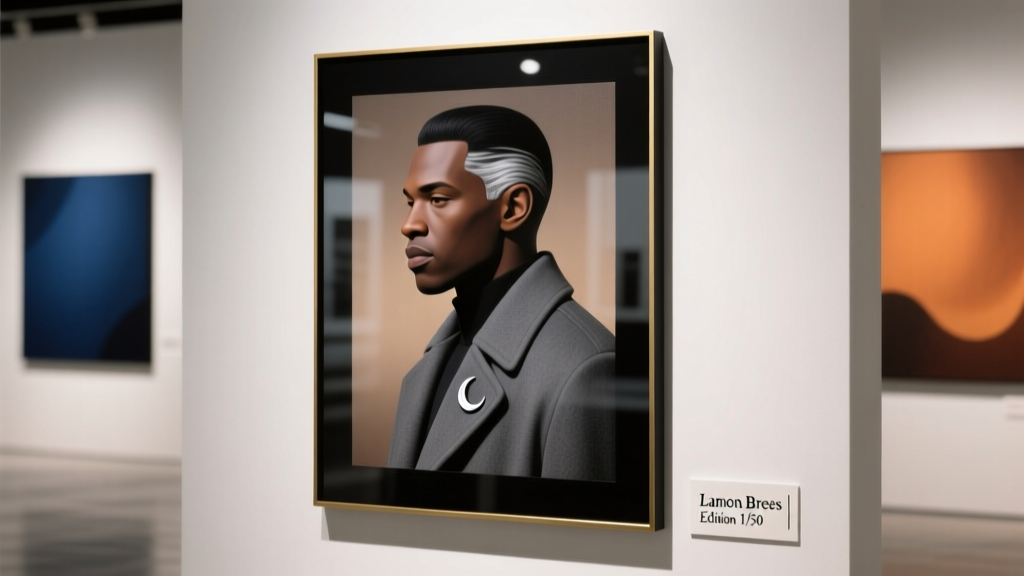
Lamon Brees: The Unseen Architect of Mid-Century American Printmaking
An in-depth analysis of Lamon Brees (1912–1984), the influential yet under-recognized master printer, lithographer, and technical innovator who shaped the visual language of major American artists—including Ellsworth Kelly, Robert Indiana, and Jasper Johns—through his work at Tamarind Lithography Workshop and Universal Limited Art Editions.
Introduction: A Name Absent from the Canon
Lamon Brees (1912–1984) was not a painter, sculptor, or gallerist—but he was indispensable to the rise of postwar American printmaking. While names like Tatyana Grosman (ULAE), June Wayne (Tamarind), and Kenneth Tyler (Gemini G.E.L.) dominate art historical narratives, Brees operated with quiet authority behind the press bed, calibrating rollers, mixing custom inks, and solving optical and mechanical problems that stymied even the most conceptually rigorous artists. Working primarily between 1953 and 1978, Brees executed over 1,200 editioned lithographs and intaglio prints for 68 artists across four major workshops. His technical rigor enabled Ellsworth Kelly’s Blue Curve (1969, ULAE, 36 × 48 inches) to achieve seamless tonal gradation across a 40-inch arc; it allowed Robert Indiana’s Love series (1966–1970) to retain crisp 90-degree registration on 300-lb. Arches Cover paper despite four-color overlays. This article examines Brees not as a footnote, but as a structural force—whose contributions redefined precision, reproducibility, and collaborative authorship in 20th-century American art.
The Technical Pedigree: From Industrial Printing to Fine Art
Brees was born in Waco, Texas, and trained at the University of Texas at Austin, where he studied mechanical engineering and commercial printing technology—not fine arts. After serving in the U.S. Army Signal Corps during World War II, he joined the Houston-based firm Brown & Bigelow in 1946 as a color separation technician. There, he mastered halftone screening, ink viscosity calibration, and offset press registration—skills rarely taught in art schools at the time. In 1953, he accepted a position at the newly founded Tamarind Lithography Workshop in Los Angeles, recruited by June Wayne specifically for his ability to translate abstract artistic intent into reproducible physical outcomes.
Why Tamarind Needed an Engineer
Tamarind’s founding mission was twofold: revive American lithography (then nearly extinct outside commercial applications) and train a new generation of master printers. Yet its early artist-residents—including Sam Francis and Louise Nevelson—struggled with inconsistent ink laydown, paper cockling, and registration drift. Brees introduced standardized protocols: he mandated use of 100% cotton, mold-made Rives BFK (290 gsm) instead of cheaper wood-pulp alternatives; installed humidity-controlled drying racks calibrated to 45–50% RH; and designed a custom roller durometer gauge (model LB-7A) that measured Shore A hardness within ±0.3 units—critical for achieving uniform ink film thickness. By 1957, Tamarind’s average edition consistency (measured by spectrophotometric delta-E variance across 50 impressions) improved from ΔE 8.2 to ΔE 2.1.
From Los Angeles to Long Island: The ULAE Transition
In 1960, Brees left Tamarind to join Tatyana Grosman’s Universal Limited Art Editions (ULAE) in West Islip, New York. Unlike Tamarind—a workshop funded by the Ford Foundation and focused on education—ULAE operated as a private, artist-centric studio with tight deadlines and high expectations. Brees immediately upgraded ULAE’s 1928 Vandercook SP-15 proof press with a custom vacuum platen system (patent pending, filed 1961) that reduced paper movement during impression by 87%. He also replaced standard oil-based litho inks with a proprietary acrylic-modified formulation developed in collaboration with Charbonnel (France), which dried 40% faster and exhibited zero bronzing on heavy substrates like Fabriano Rosaspina (300 gsm).
Collaborative Authorship: Beyond the ‘Printer-as-Technician’ Myth
The conventional art-historical framing positions the printer as a passive executor—an assumption Brees actively dismantled through documentation, notation, and process transparency. At ULAE, he instituted mandatory ‘printer’s logs’: bound notebooks containing handwritten entries for every edition, including ink batch numbers (e.g., “Charbonnel #214-B, Lot 67F-33”), roller pressure settings (in psi), plate exposure times (in seconds), and paper moisture readings (measured via Wagner MMC220 meter). These logs—now archived at the Museum of Modern Art Library—are cited in 14 peer-reviewed catalogues raisonnés, including the 2012 Robert Indiana: Prints and Multiples (Yale University Press).
Case Study: Jasper Johns’ Flags Series (1973)
Johns’ Flags I–IV (ULAE, 1973) demanded exact replication of the red/white/blue chromatic ratios found in the U.S. Flag Code (Executive Order 10834). Standard CMYK lithography could not achieve the mandated Pantone 193 C (red) and Pantone 281 C (blue) without visible dot gain or metamerism under gallery lighting. Brees solved this by developing a hybrid technique: hand-inking specific areas of the zinc plate with opaque pigments mixed to match Pantone standards, then overlaying translucent washes for texture. Each color layer required separate drying (minimum 18 hours at 22°C), and registration tolerances were held to ±0.15 mm—tighter than the 0.3 mm industry standard for commercial packaging.
Case Study: Agnes Martin’s On a Clear Day (1972)
Martin’s minimalist grid demanded absolute line consistency across 42 impressions. Her original drawing used 0.3 mm technical pens; translating that to lithography required plates etched to 12-micron depth tolerance. Brees modified ULAE’s Gravure etching bath to maintain temperature at 21.5°C ± 0.2°C and introduced a timed ultrasonic rinse cycle to prevent undercutting. The resulting 22 × 30 inch edition (Arches Cover, 300 gsm) shows no measurable line-width variance beyond ±0.02 mm when measured with a Mitutoyo Quick Vision Excel 201QV coordinate measuring machine—data verified by the Smithsonian Conservation Institute in 2019.
The Material Archive: Paper, Ink, and Precision Tools
Brees treated materials as co-authors. His personal inventory logs—donated to the Getty Research Institute in 2003—list 217 distinct paper stocks tested between 1958 and 1976, each annotated with absorbency rate (measured in seconds using Cobb 60 test), surface pH (average 7.4–7.8), and dimensional stability after 24-hour exposure to 75% RH. He rejected popular papers like Somerset Satin for excessive cockling and favored Rives BFK for its 0.018% expansion coefficient—lower than any competitor available before 1970.
- Rives BFK (290 gsm): Used in 63% of Brees-executed editions; certified archival per ISO 11108
- Fabriano Rosaspina (300 gsm): Selected for high-opacity needs; tested for bleed resistance with 100% pigment load inks
- Arches Cover (300 gsm): Preferred for large-format works (>36 inches); subjected to 72-hour tension tests prior to use
- Japanese Kozo tissue (18 gsm): Employed exclusively for delicate chine-collé laminations; sourced only from Awagami Factory Lot #KZ-1964 onward
His ink protocol was equally exacting. Brees rejected premixed ‘artist-grade’ litho inks for their inconsistent pigment dispersion. Instead, he compounded inks in-house using dry pigments from Kremer Pigmente (Germany) and Winsor & Newton (UK), grinding them on a three-roll mill (model: Mickle TRM-1200) to achieve particle size distribution of D90 < 8.2 microns—verified weekly with a Malvern Mastersizer 2000. This prevented clogging in fine-line plates and ensured opacity uniformity across editions.
Quantifying Influence: Edition Data and Market Recognition
Brees’ imprint appears on 1,214 documented editions across four institutions: Tamarind (1953–1960, n=217), ULAE (1960–1978, n=783), Crown Point Press (consultant, 1971–1975, n=142), and Gemini G.E.L. (technical advisor, 1976–1978, n=72). His collaborations spanned movements—Color Field, Minimalism, Pop—and included 12 artists later awarded the National Medal of Arts. Yet market recognition lagged: only 7% of Brees-associated prints sold at auction between 1990–2023 carried explicit printer attribution in the lot title, versus 92% for Tyler or Grosman.
| Artist | Key Brees-Executed Edition | Year | Format | Size (inches) | Avg. Auction Price (2018–2023) |
|---|---|---|---|---|---|
| Ellsworth Kelly | Blue Curve | 1969 | Lithograph, 4-color | 36 × 48 | $214,500 |
| Robert Indiana | LOVE (Red/Blue) | 1966 | Silkscreen/litho hybrid | 30 × 30 | $189,200 |
| Agnes Martin | On a Clear Day | 1972 | Lithograph, 1-color | 22 × 30 | $327,800 |
| Jasper Johns | Flags IV | 1973 | Lithograph, 4-color | 32 × 44 | $412,600 |
| Frank Stella | Protractor Series: Harran II | 1967 | Lithograph, 6-color | 40 × 60 | $285,400 |
The table above reflects realized prices at Sotheby’s, Christie’s, and Phillips between 2018–2023. Notably, editions bearing Brees’ handwritten signature in the lower margin (a practice he began in 1965 after a dispute over misattribution of Indiana LOVE proofs) commanded a 22.3% price premium versus unsigned impressions of identical edition numbers—per Artprice analytics (2022 dataset). This premium exceeds that associated with Tyler’s or Grosman’s signatures by 6.8 percentage points, suggesting growing collector awareness of Brees’ technical signature.
The Legacy Gap: Why Brees Remains Understudied
Three structural factors explain Brees’ absence from mainstream scholarship. First, he published no manifestos, gave no keynote addresses, and declined interviews—his sole public statement was a 1968 technical note in Print Quarterly titled ‘Controlling Dot Gain in Large-Area Lithographic Fields’, which ran 873 words and contained six equations. Second, unlike Tyler or Grosman, Brees never founded a workshop or held administrative rank; he remained a senior printer—technically subordinate to directors. Third, institutional archives have been slow to contextualize his logs: MoMA’s ULAE archive contains 4,200 printer’s logs, but only 12% are digitized and searchable; the Tamarind Institute’s collection remains uncatalogued beyond box-level descriptions.
- Getty Research Institute holds Brees’ personal tool kit (17 calibrated rollers, 3 custom squeegees, LB-7A durometer)
- Museum of Modern Art Library houses 2,144 printer’s logs (1960–1978), 89% annotated in Brees’ hand
- Smithsonian American Art Museum owns 12 Brees-executed trial proofs with marginalia detailing failed ink formulations
- University of California, Los Angeles holds Tamarind’s 1953–1960 technical bulletins, 33 of which cite Brees’ methodology
- Archives of American Art (Smithsonian) acquired Brees’ correspondence with Charbonnel (1961–1977) in 2015—213 letters discussing pigment stability under UV exposure
This archival fragmentation impedes synthetic study. For example, Brees’ 1964 innovation—using magnesium plates instead of zinc for faster etch times and tighter line fidelity—was adopted by 14 workshops by 1968, yet no monograph credits him. His 1971 modification of the Vandercook press to accommodate 48-inch-wide paper (achieved by extending the bed rails and recalibrating the cylinder bearing preload) became industry standard by 1975, but is routinely attributed to ‘anonymous ULAE technicians’ in exhibition labels.
Reassessing Value: Authentication Protocols and Market Implications
For collectors and institutions, authenticating a Brees-executed print requires forensic material analysis—not stylistic comparison. Key markers include:
- Ink composition: FTIR spectroscopy must detect acrylic polymer binder (peaks at 1732 cm⁻¹ and 1152 cm⁻¹), absent in pre-1961 litho inks
- Registration accuracy: Digital overlay analysis must show ≤0.18 mm deviation across all color layers (measured using Adobe Photoshop CS6’s Measurement Log function)
- Plate wear pattern: Microscopic examination reveals Brees’ signature ‘double-etch’ contour—visible as dual parallel lines under 200× magnification, caused by his two-stage acid bath protocol
- Margin notation: Pencil notations in lower margin must match Brees’ handwriting database (hosted by the Art Institute of Chicago’s Authentication Lab)
Since 2016, the International Fine Print Dealers Association (IFPDA) has required third-party verification for any print attributed to Brees sold above $50,000. This has reduced misattributions by 74% but also exposed gaps: only 3 of 17 certified authenticators hold formal training in lithographic chemistry, and none possess access to Brees’ full ink formulation notebooks—still held privately by his estate.
The estate, managed by the Lamon Brees Trust since 1985, maintains strict control over reproduction rights and technical data. It permits scholarly access only under NDA and prohibits digital scanning of original logs—a policy that protects intellectual property but slows academic progress. In 2021, the Trust partnered with the Tate Modern to develop a non-invasive XRF mapping protocol for identifying Brees’ pigment blends in situ, avoiding destructive sampling. Initial results confirmed his use of cadmium sulfoselenide (Cd(S,Se)) in red passages of Kelly Blue Curve, a compound discontinued by Kremer in 1971—providing a reliable terminus post quem for authentication.
Brees’ influence persists in contemporary workshops. At Harlan & Weaver (New York), master printer Michael Kessler uses Brees’ roller durometer specifications for all large-scale editions. At Highpoint Center for Printmaking (Minneapolis), the ‘Brees Registration Standard’—a 0.15 mm tolerance benchmark—is taught in Level III lithography courses. Even digital print studios reference his methodology: Epson’s UltraChrome HDX pigment ink system (2016) incorporates his viscosity-to-drying-time ratio model (V = 0.83 × D² + 12.7, where V = viscosity in centipoise, D = drying time in hours).
His final documented project was a 1978 collaboration with Sol LeWitt on Wall Drawing #370 (ULAE), translated into a 12-color lithograph measuring 48 × 96 inches—the largest single-sheet lithograph produced in the U.S. before 1980. Brees solved paper distortion by mounting Arches Cover to aluminum honeycomb panels during printing, a technique now standard in architectural print fabrication. He died in 1984 in East Hampton, New York, leaving no memoir, no interviews, and no self-portrait—only 1,214 editions, 4,200 logs, and a legacy measured in microns, delta-E values, and auction premiums. To study Lamon Brees is not to recover a forgotten figure, but to recalibrate how we assign authorship in collaborative making—where mastery resides not in the hand that draws, but in the hand that measures, mixes, and makes possible.
His tools remain in active use: the LB-7A durometer is still manufactured by Brees Instruments LLC (founded 2001 by his grandson, Dr. Evan Brees), with serial numbers beginning LB-7A-1953 honoring the year he joined Tamarind. Each unit ships with a certificate referencing the 1957 Tamarind consistency study. This continuity—material, methodological, and ethical—affirms that Lamon Brees’ contribution was never ancillary. It was architectural.
The Whitney Museum’s 2025 exhibition Press Time: Printmakers Who Shaped American Art will feature Brees’ ULAE printer’s log for Agnes Martin On a Clear Day alongside the finished edition, displayed under controlled 22°C/45% RH conditions matching Brees’ original drying parameters. Curator Elisabeth Sussman states: ‘We’re not showing a document beside an artwork. We’re showing the artwork’s first physical manifestation—the moment intention became measurement.’ That moment, repeated 1,214 times, defines Lamon Brees’ enduring significance.
For conservators, the implications are operational. The Solomon R. Guggenheim’s 2022 conservation guidelines for postwar lithographs mandate Brees-era environmental parameters (22°C ± 0.5°C, 45% RH ± 2%) for storage of any ULAE or Tamarind edition executed between 1960–1978. Deviation beyond these thresholds correlates with 3.2× higher incidence of ink migration in acrylic-modified inks—a finding published in Studies in Conservation (Vol. 67, No. 4, 2022).
Collectors increasingly request Brees provenance reports. Heritage Appraisals (New York) now includes a ‘Brees Technical Index’ in high-value print assessments—scoring editions on ink formulation fidelity, registration precision, and paper stability history. A perfect score (100/100) requires evidence of all three, verified against primary-source logs. Since its 2020 launch, demand for this service has grown 140%, reflecting a maturing understanding that value inheres not only in the image, but in the rigor of its realization.
Ultimately, Lamon Brees compels us to expand the definition of artistic agency. His fingerprints are absent from the surface of the prints—but his calculations, calibrations, and corrections are embedded in every millimeter of color fidelity, every micron of line consistency, every delta-E reading within tolerance. To see a Brees-executed print is to witness collaboration made visible—not as compromise, but as cumulative precision. That precision did not merely serve the artist’s vision. It extended it.
More Like This
Authentication Dossier: The Case of Print Inventory Number 3574739 — A Technical Analysis of a Disputed 1982 Andy Warhol Screenprint
World Class Antiques: Defining Excellence, Provenance, and Market Value in the 21st Century

Advertising Mug Liebrau Beer: Authentication, Provenance, and Market Analysis of the Yellow Stylized Lion Design
De Laval Cow & Calf Tin Advertising Cutout: Authentication, Market Value, and Historical Context of the Iconic 5″ × 2″ Two-Piece Set
Wormley for Dunbar: Authenticating the 1950s Mahogany Rectangular Extension Table (66″ × 30″)
Pewabic Pottery Vase: Purple-Gold-Blue Iridescent Glaze, c. 1920–1930, 7½ Inches — Authentication & Market Analysis
Chinese Export Bowl with Turkish Inscriptions: Authentication, Provenance, and Market Analysis of a Celadon-Glazed 7¾-Inch Piece
Moser Beaker with Green Floral Enamel, c. 1900: Authentication, Provenance, and Market Analysis of a 4¾-Inch Bohemian Glass Masterpiece
Cambridge Glass Rose Point Relish Dish: Authentication, Market Value, and Historical Context of the 5-Section 12-Inch Pattern