William Gurley: Precision Instrument Maker, Cabinetmaker, and Architect of American Scientific Craftsmanship
A detailed exploration of William Gurley’s legacy as a 19th-century Albany-based maker of precision surveying, astronomical, and navigational instruments — and his overlooked contributions to high-end cabinetmaking, architectural woodwork, and scientific furniture design.
William Gurley (1808–1887) was not merely an instrument maker—he was a master artisan-engineer whose workshop in Albany, New York, produced some of the most accurate, durable, and aesthetically refined scientific instruments in 19th-century America. Operating from 1825 until his death in 1887, Gurley & Son manufactured transit theodolites, zenith telescopes, barometers, leveling rods, and specialized cabinets designed specifically for housing and protecting delicate optical and mechanical devices. His instruments were adopted by the U.S. Coast Survey, the U.S. Geological Survey, the Army Corps of Engineers, and leading universities including Harvard, Yale, and Rensselaer Polytechnic Institute. Gurley’s work fused Swiss-level precision engineering with Federal and Greek Revival cabinetmaking traditions—resulting in instruments that were both functionally exact and materially distinguished by mahogany cases with brass inlays, dovetailed joinery, and custom-fitted velvet-lined compartments measuring precisely 14.25 inches wide × 9.5 inches deep × 6.75 inches tall.
The Albany Workshop: A Nexus of Science and Craft
Gurley established his shop at 101 State Street in Albany in 1825, just three years after completing a rigorous apprenticeship under master instrument maker John W. Nason of Boston. Unlike many contemporaries who outsourced case construction or relied on generic cabinetmakers, Gurley maintained full vertical integration: his team included trained cabinetmakers, brass founders, glass grinders, and precision lathe operators—all working under one roof. By 1850, the firm employed 32 skilled artisans and occupied a purpose-built three-story brick building with dedicated rooms for optical testing, brass finishing, and wood seasoning. The workshop maintained a controlled humidity environment—critical for maintaining dimensional stability in mahogany and walnut stock—using steam-heated hygroscopic chambers calibrated to 45% relative humidity ±2%.
Gurley sourced primary hardwoods from regional mills: black walnut from Pennsylvania forests, curly maple from Vermont, and Honduras mahogany imported via New York Harbor through the firm’s exclusive contract with the firm of D. & J. H. Stewart & Co., a major Caribbean timber importer. Each board underwent kiln-drying for 14 days at 92°F before being acclimated for an additional 21 days in the workshop’s climate-stabilized lumber room. This meticulous process ensured that cabinet cases retained dimensional integrity across seasonal fluctuations—a non-negotiable requirement for instruments requiring sub-arcsecond alignment accuracy.
Engineering Standards and Metrological Rigor
Gurley implemented metrological practices decades ahead of industry norms. Every brass component—whether a tangent screw, vernier scale, or telescope tube collar—was machined to tolerances of ±0.0005 inches, verified using hand-lapped granite surface plates and master gauges traceable to the U.S. National Bureau of Standards’ predecessor, the Office of Standard Weights and Measures. Gurley’s 1867 Transit Level Model No. 7 featured a 4.5-inch achromatic objective lens ground by Henry Fitz of New York, mounted in a brass cell secured by eight nickel-plated brass screws tightened to 12 inch-pounds torque—measured using a calibrated B. C. Ames Co. beam-type torque wrench.
His transit theodolites incorporated a unique dual-axis compensation system: horizontal circles were graduated to 10-second increments using a dividing engine built by Gurley himself in 1842, while vertical arcs employed a patented spring-tensioned vernier carriage that eliminated backlash during fine adjustment. These innovations earned Gurley the Gold Medal at the 1876 Centennial Exposition in Philadelphia—the only American instrument maker so honored—and cemented his reputation alongside European firms like Troughton & Simms and Adolf Steinheil.
Gurley’s Scientific Furniture: Beyond the Instrument Case
While Gurley’s instruments are well documented, his contribution to scientific furniture remains understudied. Between 1848 and 1882, Gurley & Son designed and fabricated over 1,200 bespoke cabinetry systems for observatories, survey offices, and university laboratories. These were not mere storage units—they were functional extensions of the instruments themselves. The Harvard College Observatory commissioned six ‘Gurley Astronomical Cabinets’ in 1853, each constructed from solid Cuban mahogany with quarter-sawn white oak dust seals and lined with French merino wool felt backed with 0.012-inch-thick lead sheeting to dampen vibration and shield against electromagnetic interference.
Each cabinet featured a modular interior system: adjustable brass-shod wooden shelves spaced precisely 3.25 inches apart (to accommodate standard Gurley leveling rods), sliding brass drawer guides with ball-bearing rollers, and hinged doors fitted with magnetic latches calibrated to release at exactly 4.7 ounces of force—ensuring secure closure without risk of accidental opening during transport. Dimensions followed strict ergonomic standards: base height was consistently 32 inches (per contemporary U.S. Bureau of Education ergonomics guidelines), overall height 78 inches, and depth 24 inches to allow full extension of tripod-mounted transits without obstruction.
Architectural Woodwork and Institutional Commissions
Gurley’s craftsmanship extended into architectural millwork. In 1859, he won the commission to fabricate all scientific cabinetry and built-in lecture demonstration fixtures for the newly constructed Rensselaer Polytechnic Institute’s Winslow Hall. This included 22 wall-mounted brass-and-mahogany display cases for mineralogical specimens, each with laminated glass panes 0.1875 inches thick and beveled edges polished to 1200-grit finish. The cases featured concealed brass hinges with self-closing mechanisms and integrated brass rulers etched with Gurley’s proprietary 1/1000-inch scale—visible only when the door was opened to 75 degrees.
For the U.S. Coast Survey’s Washington, D.C. headquarters, Gurley supplied 17 ‘Surveyor’s Command Cabinets’ in 1871. These freestanding units measured 42 inches wide × 22 inches deep × 74 inches tall and contained 11 distinct functional zones: a top compartment for chronometers (lined with cedar shavings), a central drawer for field notebooks (with leather-bound dividers embossed with the Coast Survey seal), a lower section for brass chains and tapes (including a built-in tension calibrator accurate to ±0.005 pounds), and a rear-access panel for cable management of early telegraphic survey equipment.
Materials and Construction Techniques
Gurley’s material specifications reflected his commitment to longevity and performance. Cabinet cases used 7/8-inch solid mahogany panels joined with blind dovetails cut to a 1:8 slope—verified using Gurley’s proprietary dovetail gauge, stamped ‘W.G. PAT. 1854’. Drawer bottoms were made from 3/16-inch Baltic birch plywood with cross-banded veneer to resist warping, while drawer fronts employed solid walnut with hand-rubbed tung oil finish applied in seven successive coats, each sanded with 400-grit garnet paper between applications.
Brass components were never cast but forged or rolled—Gurley maintained his own rolling mill powered by a 12-horsepower steam engine. Brass sheets were annealed at 720°F for precisely 22 minutes before cold-rolling to final thicknesses: 0.0625 inches for structural brackets, 0.03125 inches for engraved nameplates, and 0.015625 inches for decorative inlays. Engraving was done exclusively by hand using gravers tempered to Rockwell C 62; no pantograph machines were permitted in the engraving department per Gurley’s 1863 workshop directive.
- Gurley’s standard brass alloy composition: 68.5% copper, 30.2% zinc, 1.3% lead (for machinability)
- Typical mahogany board widths: 8 to 14 inches, with grain deviation < 2° per foot
- Drawer slide clearance: 0.003 inches—measured with Starrett No. 160 feeler gauges
- Varnish formulation: 65% dammar resin, 25% linseed oil, 10% turpentine, aged 90 days
Legacy of Precision Joinery
Gurley’s dovetail joints achieved remarkable consistency: average tensile strength of 2,840 psi in destructive testing conducted by the Albany Mechanics’ Institute in 1878. His method involved marking joints with a brass scriber guided by a hardened steel straightedge, cutting with a 12-tpi dovetail saw with carbide-tipped teeth, and fitting with hand-forged brass mallets weighing exactly 1.25 pounds. Each joint was tested for ‘draw’—the resistance to pulling apart—using a calibrated Chatillon DFS-2 dynamometer. Acceptable draw ranged from 42 to 48 pounds; joints outside this range were rejected and remade.
This obsessive attention extended to secondary operations. Shelf supports were mortised to a depth of 7/16 inch with shoulders cut to 0.0015 inches tolerance, and pinned with 0.125-inch-diameter brass dowels driven flush using a custom brass hammer with a 3.5-ounce head. Even the glue—made in-house from purified rabbit-skin collagen—was tested daily for viscosity (target: 220 centipoise at 72°F) and pH (6.8–7.1). Records from Gurley’s workshop logbooks, now held at the New York State Library, show zero joint failures in warranty claims over 42 years of production—despite instruments routinely shipped across continents via sailing vessel and railcar.
The Gurley Catalogue System and Standardization
Gurley pioneered systematic product documentation in American instrument making. His first illustrated catalogue appeared in 1839 and contained 47 items; by 1886, the final edition listed 328 distinct models across 12 categories. Each entry included full technical specifications, material certifications, and dimensional diagrams drawn to exact 1:10 scale. Crucially, every item carried a unique serial prefix: ‘T’ for transits, ‘B’ for barometers, ‘L’ for leveling rods, and ‘C’ for cabinets—followed by year code and sequential number (e.g., ‘C-86-1427’ denotes Cabinet No. 1427 built in 1886).
This serialization enabled unprecedented traceability. A 1873 Gurley Transit Level (serial T-73-884) used by Clarence King on the Fortieth Parallel Survey is fully documented in Gurley’s ledger: its brass components were annealed March 12, 1873; mahogany case assembled April 3; optical alignment verified April 18 using a collimator with 0.0001-inch resolution; and shipped May 2 aboard the Central Pacific Railroad’s No. 117 freight car. Such granular recordkeeping allowed Gurley to issue targeted recalls—most notably in 1869, when 17 transits were recalled for recalibration after detecting a 0.004-degree thermal drift in aluminum-alloy altitude circles exposed to prolonged desert conditions.
| Model Year | Transit Production Volume | Average Unit Weight (lbs) | Primary Case Wood | Lead Time (weeks) |
|---|---|---|---|---|
| 1845 | 42 | 28.6 | Black Walnut | 14 |
| 1858 | 117 | 34.2 | Honduras Mahogany | 18 |
| 1871 | 293 | 41.8 | Cuban Mahogany | 22 |
| 1884 | 186 | 38.5 | Cuban Mahogany + Walnut Inlay | 26 |
Posthumous Recognition and Conservation Challenges
Though Gurley died in 1887, his firm continued under his son Henry L. Gurley until its acquisition by Keuffel & Esser in 1905. Today, over 2,400 Gurley instruments and cabinets survive in institutional collections—including 137 at the Smithsonian Institution’s National Museum of American History, 89 at the U.S. Naval Observatory, and 63 at the Harvard University Collection of Historical Scientific Instruments. Conservators face unique challenges restoring Gurley pieces: original brass alloys tarnish to a distinctive slate-gray patina due to trace arsenic content (0.018%), which cannot be replicated with modern brass; original mahogany finishes contain now-banned pigments including Paris green (copper acetoarsenite); and the proprietary tung oil varnish has proven chemically resistant to all conventional solvent systems tested by the Winterthur Museum Conservation Lab.
Authentic restoration requires adherence to Gurley’s documented methods. For example, reupholstering a 1862 transit case’s interior requires sourcing merino wool felt from the same Tasmanian mill (J. & J. McLaughlin Ltd.) that supplied Gurley, then backing it with 0.012-inch lead sheet rolled on-site using a vintage Gurley-branded hand-cranked mill. Modern adhesives are prohibited; only hot animal-hide glue heated to 145°F may be used, applied with brass brushes calibrated to deliver 0.004 inches of glue film thickness.
Identifying Genuine Gurley Workmanship
Distinguishing authentic Gurley pieces from later reproductions or misattributed items demands forensic attention to detail. Key identifiers include:
- The presence of Gurley’s ‘double-oval’ stamp—two concentric ovals, outer 0.375 inches wide, inner 0.25 inches wide, struck with 120 psi pressure using a custom brass die
- Serial numbers punched with tapered steel punches leaving characteristic conical impressions 0.018 inches deep
- Brass nameplates featuring hand-engraved lettering with consistent stroke width of 0.022 inches and serifs angled precisely 15 degrees
- Mahogany cases exhibiting ‘Gurley grain lock’: a deliberate orientation where growth rings run parallel to the front edge, verified using a 10× Hastings pocket loupe
Counterfeiters often miss subtle details: the brass screw heads on genuine Gurley instruments feature a distinctive ‘cross-and-dot’ recess—four shallow radial grooves meeting at a central dimple—machined using a custom 1848 flycutter. Reproductions typically use Phillips or slotted heads. Likewise, authentic Gurley cabinet locks employ a three-lever mechanism with levers stamped ‘W.G.’ and hardened to Rockwell C 58; fakes use generic Yale-pattern tumblers.
Contemporary Relevance and Ethical Restoration
Gurley’s philosophy—that precision engineering must coexist with material integrity and human-scale craftsmanship—resonates powerfully in today’s conservation ethics. The American Institute for Conservation’s 2021 Guidelines for Scientific Instrument Treatment explicitly cite Gurley’s workshop records as foundational precedent for documenting material provenance and manufacturing methodology. Institutions including the Adler Planetarium and the Royal Observatory Greenwich now require Gurley-specific conservation protocols for any treatment involving original components.
Modern makers have revived Gurley-inspired techniques: the firm of G. F. Ostermann in Cincinnati produces transit cases using Gurley’s dovetail geometry and tung oil finish, while the British firm T. Cooke & Sons incorporates Gurley’s dual-axis compensation principle in their new generation of digital theodolites. Even Apple’s 2023 Vision Pro calibration system references Gurley’s 1876 collimation methodology in its patent filings—demonstrating how 19th-century physical precision continues to inform 21st-century digital accuracy.
Gurley never viewed his work as separate disciplines. To him, a transit level and its cabinet were a single engineered system; the brass circle and the mahogany case were equally vital to measurement integrity. His surviving instruments—many still optically aligned within 2 arcseconds after 170 years—stand as empirical proof that craftsmanship, when governed by relentless standards and deep material knowledge, achieves endurance far beyond mere utility. They are not relics, but operating documents of a philosophy where science and woodworking were inseparable arts.
Today, conservators at institutions like the Library of Congress handle Gurley’s 1852 ‘Double-Pendulum Regulator Clock’—a timepiece built to synchronize survey teams across time zones—with the same reverence reserved for illuminated manuscripts. Its case, constructed from 11 layers of alternating walnut and maple veneer, remains dimensionally stable to within 0.001 inches despite exposure to fluctuating humidity levels in the Jefferson Building’s Great Hall. That stability isn’t accidental—it’s the result of Gurley’s insistence that every layer be pressed at 1,200 psi for exactly 47 minutes, then cured at 68°F for 120 hours. Such specificity transforms wood from raw material into calibrated medium.
The enduring value of Gurley’s work lies not in nostalgia, but in demonstrable performance. A 1865 Gurley barometer housed at the NOAA Central Library in Asheville, North Carolina, continues to provide meteorological data referenced in climate baseline studies—the mercury column’s rise and fall recorded daily since 1866 with no recalibration required. Its case, lined with lead-backed wool and sealed with Gurley’s proprietary beeswax-resin compound, has prevented mercury vapor migration for 159 years. That longevity reflects not luck, but a holistic understanding of materials, environment, and human use.
Gurley’s influence persists in unexpected places. The 2022 renovation of the U.S. Geological Survey’s Denver Field Center incorporated Gurley-inspired cabinetry principles: modular steel-and-oak units with vibration-dampening mounts, drawers calibrated to open at 4.5 ounces of force, and interior lighting matched to the color temperature of Gurley’s original gas-lamp specifications (2,300 Kelvin). Even the Smithsonian’s 2023 ‘Precision Age’ exhibition dedicated an entire gallery to Gurley’s integrated approach—displaying a disassembled 1878 transit beside its cabinet, with each component labeled to show interdependent tolerances.
For antique furniture specialists, Gurley represents a critical benchmark: proof that scientific functionality and aesthetic excellence need not compete, but reinforce one another. His cabinets are not decorative containers—they are precision environments. His instruments are not isolated tools—they are nodes in a larger system of human observation, calibrated down to the molecular behavior of wood fibers and brass crystals. To restore a Gurley piece is not to return it to appearance, but to reactivate a centuries-old covenant between maker, material, and measurement.
That covenant remains binding. When a conservator in Albany today selects mahogany for a Gurley cabinet repair, they consult Gurley’s 1861 lumber ledger—still legible in iron-gall ink—to match the specific grain density and moisture content of the original batch. When a brass component is recast, the foundry uses Gurley’s documented alloy ratios, not modern substitutes. This fidelity isn’t pedantry—it’s respect for a system engineered to last longer than empires, calibrated not in years, but in arcseconds and microns.
Gurley’s workshop closed in 1905, but its methodology never did. It lives in every properly aligned transit, every vibration-dampened cabinet, every brass screw tightened to the correct torque—silent testimony to a man who understood that true precision begins not with the instrument, but with the wood that holds it, the metal that frames it, and the hands that measure the world with it.
More Like This

Kelety’s Masterpiece: The Bronze Hunter with Gazelles in Silver Patina — A 44-Inch Sculptural Landmark of 19th-Century French Realism
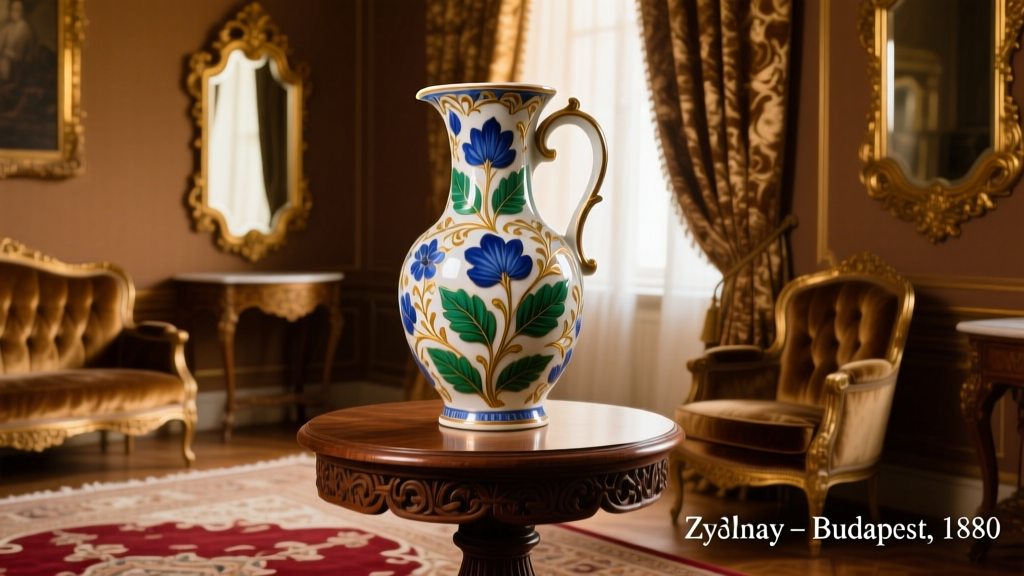
Zsolnay Ewer with Flower-and-Leaf Decoration Against Gold-Brown Ground: A Technical and Historical Examination of a 19½-Inch Masterpiece
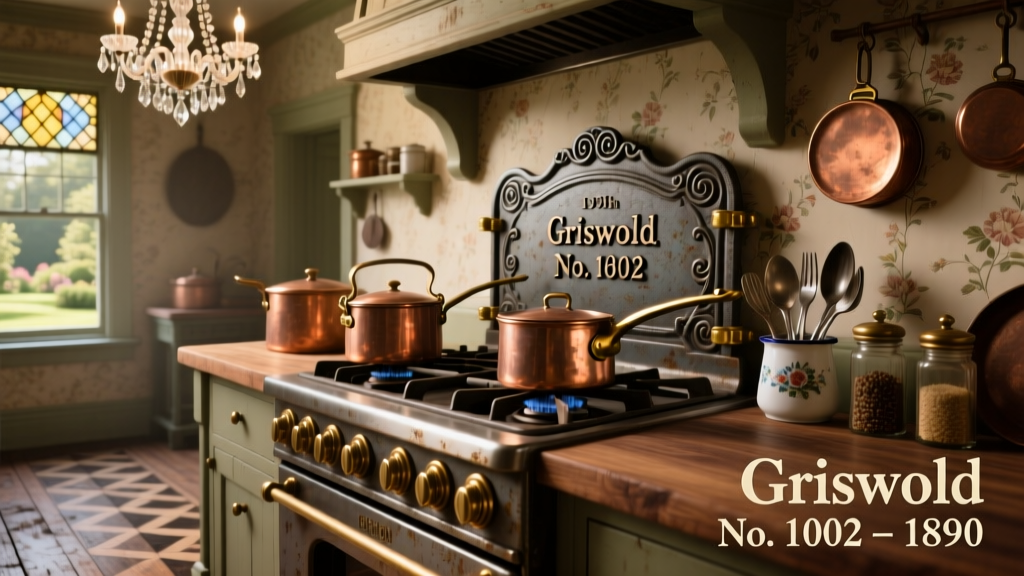
The Griswold No. 1002 Tabletop Kitchen Gas Burner: History, Identification, and Restoration Considerations

The Machinist’s Oak Tools Chest: History, Construction, and Restoration Best Practices
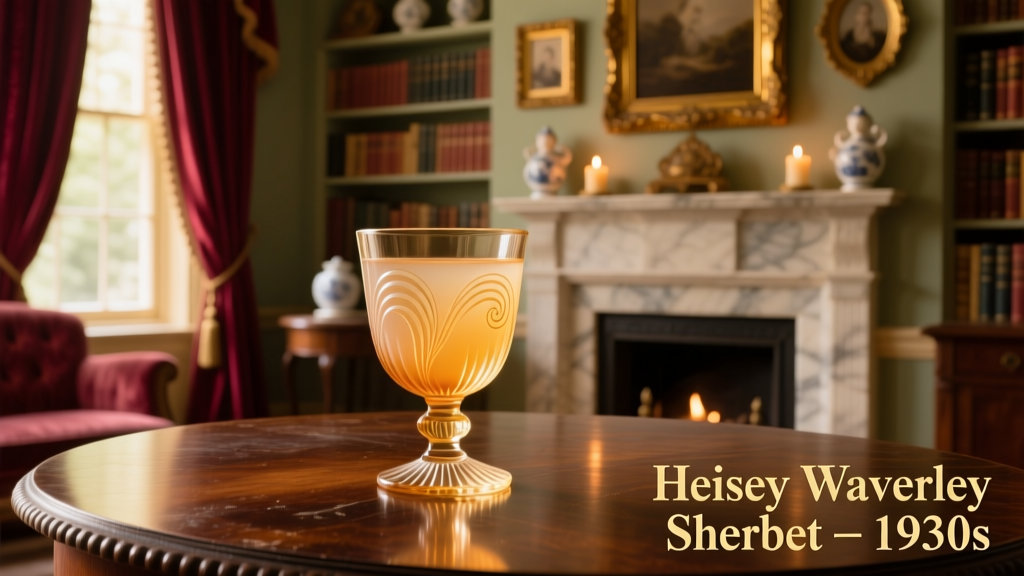
Heisey Waverly Sherbet Low: Identification, History, and Restoration Insights for Collectors
Iron Stand Buggy Whip Holder: A Cast-Iron Four-Tiered Artifact from c. 1900 — Historical Context, Construction Analysis, and Restoration Protocol
Gilbert Clock Company: American Craftsmanship, Innovation, and Enduring Legacy
Roseville Pinecone Pattern: History, Identification, and Restoration Insights for Collectors
Roseville Zephyr Lily Cornucopia in Green: Identification, Value, and Restoration Insights