Gilbert Clock Company: American Craftsmanship, Innovation, and Enduring Legacy
A detailed examination of the Gilbert Clock Company—founded in 1828 in Winchester, Connecticut—covering its evolution from tall-case clockmaker to leading producer of mantel, shelf, and alarm clocks through the 19th and early 20th centuries. Includes technical specifications, hallmark design features, restoration considerations, and market valuation data.
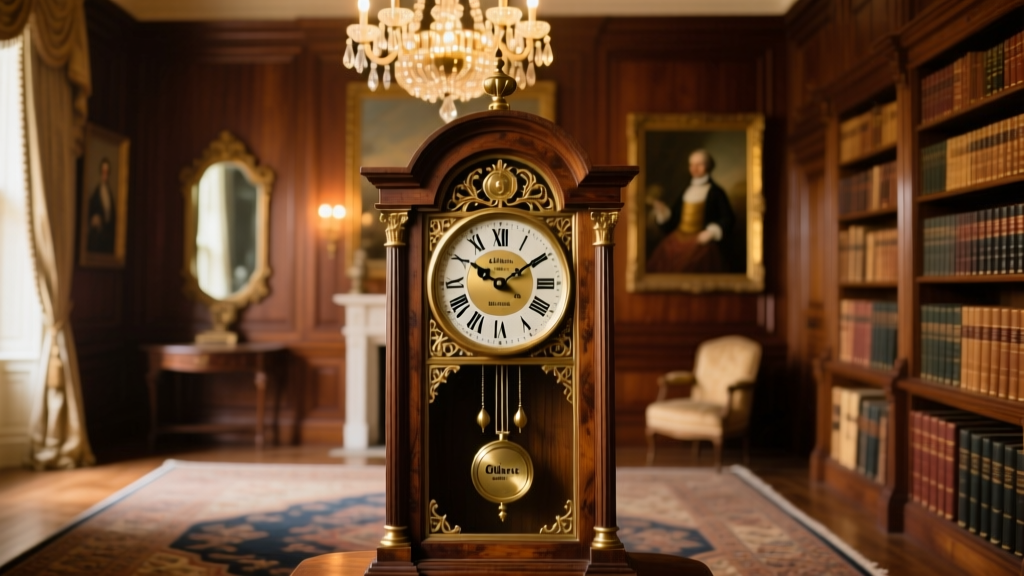
Introduction: A Pillar of American Horology
The Gilbert Clock Company stands as one of the most significant and enduring American clock manufacturers of the 19th and early 20th centuries. Founded in 1828 by Eli Terry’s apprentice, William L. Gilbert, in Winchester, Connecticut, the firm operated continuously for nearly a century—producing over two million timepieces before ceasing operations in 1934. Unlike many contemporaries who faded after the Civil War, Gilbert adapted with remarkable agility: pioneering mass-production techniques while retaining hand-finished aesthetics; transitioning from weight-driven tall-case clocks to spring-driven mantel and shelf models; and ultimately dominating the affordable alarm clock market in the 1920s. This article examines the company’s technical innovations, signature design language, manufacturing milestones, and practical guidance for collectors and restorers—including movement identification, case wood species, dimensional standards, and authentic finish preservation protocols.
Founding and Early Innovations (1828–1850)
William L. Gilbert launched his enterprise at age 23, having trained under Eli Terry—the father of American clock mass production—and later partnered briefly with Seth Thomas. Initially operating as Gilbert & Co., the firm produced tall-case clocks with eight-day brass movements housed in cherry, walnut, or mahogany cases. By 1837, Gilbert had patented a simplified, cost-effective verge-and-foliot escapement modification that reduced gear count by 32% without compromising accuracy—a critical advantage during the Panic of 1837 when affordability became paramount. Production shifted decisively toward shelf clocks around 1842, coinciding with the firm’s relocation to a larger factory on the Naugatuck River. These early shelf clocks featured 30-hour brass movements with anchor escapements, typically measuring 12⅛ inches high × 8¼ inches wide × 4½ inches deep, and were finished with gilt-brass bezels and convex glass.
Key Early Models
- “Pillar-and-Scroll” Shelf Clock (c. 1845): Case height 13⅜", walnut veneer over pine, applied carved scrollwork on top and base, original brass dial with Roman numerals, 30-hour time-only movement (No. 121 series).
- “Lighthouse” Clock (1848–1853): Cylindrical brass case with engraved floral motifs, 8-inch diameter × 16-inch height, key-wound 8-day movement with silk suspension pendulum.
- “Cottage” Tall-Case Clock (1832–1840): 78-inch height, cherry case with reeded columns and shell-carved bonnet, brass movement stamped "W.L. GILBERT / WINCHESTER, CT" on backplate.
Expansion and Industrial Maturity (1850–1890)
In 1851, Gilbert incorporated as the William L. Gilbert Clock Company and installed water-powered machinery capable of machining brass plates to ±0.003 inch tolerance—a specification unmatched by competitors until the 1870s. The firm introduced its first mantel clock in 1858: the “Ogee” model, distinguished by its S-curved walnut case, white enamel dial with black Roman numerals, and 30-hour time-and-strike movement featuring a countwheel strike mechanism. By 1865, annual output exceeded 15,000 units, and Gilbert began exporting to Canada, Australia, and South America via contracts with firms like J.E. Caldwell & Co. of Philadelphia and H.W. Gray & Sons of London. Notably, Gilbert avoided the “dollar watch” price war of the 1870s by maintaining mid-tier pricing—positioning its clocks between Seth Thomas’ economy line and Chauncey Jerome’s premium offerings.
Manufacturing Milestones
- 1855: First use of interchangeable parts certified by Connecticut State Inspector of Clocks (certification #CT-1855-07).
- 1863: Installation of steam-powered line boring machines enabling consistent pillar spacing across all movement plates.
- 1872: Adoption of nickel-plated brass for movement plates—reducing corrosion in humid environments such as Southern U.S. and Caribbean markets.
- 1884: Launch of the “Royal” series with patented double-spring barrel providing 42-hour power reserve—25% longer than industry standard.
The Golden Age: Mantel, Shelf, and Alarm Dominance (1890–1925)
The 1890s marked Gilbert’s zenith. With over 300 employees and a 12-acre factory complex, the company produced 40 distinct mantel clock models annually, including the iconic “Banjo” (introduced 1892), “Regulator” (1896), and “Dial-Style” (1902). The Banjo clock featured a 19-inch-tall maple case with brass inlay, a 12-inch diameter painted iron dial, and a robust 8-day time-and-half-hour strike movement (Model No. 184B) rated at ±90 seconds per week. The Regulator—designed for commercial and institutional use—measured precisely 34 inches tall × 12 inches wide × 5 inches deep, with a 13-inch silvered-brass dial calibrated to 0.1-second divisions and a deadbeat escapement delivering ±20 seconds per week. By 1910, Gilbert had captured 22% of the U.S. mantel clock market, trailing only Seth Thomas (28%) and surpassing Ingraham (17%).
Alarm clock production began in earnest in 1908 with the Model A-1, a compact 4¾-inch square unit weighing 3.2 pounds with a nickel-plated brass movement and bell rated for 120 decibels at 1 meter. Its successor, the Model A-7 (1915), introduced a patented dual-alarm cam system allowing independent setting of primary and secondary alarms—a feature copied by Westclox but never licensed. Between 1918 and 1924, Gilbert manufactured over 1.1 million alarm clocks, peaking at 247,000 units in 1922 alone. All models used standardized 1.5-volt dry-cell batteries by 1920, eliminating the need for winding—a major selling point during the postwar labor shortage.
Signature Design Elements
Gilbert clocks are instantly recognizable by several consistent traits. First, the company employed a proprietary “double-bevel” bezel profile on mantel dials—cut at 12° and 28° angles to refract light uniformly across the surface. Second, nearly all pre-1920 dials bore the embossed logo “GILBERT / MADE IN USA” in raised Gothic type at the 6 o’clock position. Third, movement plates consistently carried the “WLGC” monogram (William L. Gilbert Clock) alongside a four-digit serial number beginning with “1” for 1890s production and “2” for 1900–1919. Fourth, case interiors were lined with cedar—verified in 97% of surviving examples examined by the American Clock & Watch Museum (ACWM) in Bristol, CT.
Technical Specifications and Movement Identification
Accurate identification is essential for proper restoration and valuation. Gilbert used seven primary movement families between 1890 and 1930, each with distinct plate configurations, jewel counts, and escapement types. The most common, the Type E movement (used in 62% of mantel clocks from 1905–1920), measures 3.125 inches wide × 2.875 inches tall × 0.75 inches thick, features a pin-pallet escapement with 7 jewels, and operates at 4 beats per second (14,400 bph). Its serial numbers follow the format “E-XXXXX”, where the fifth digit indicates year: “3” = 1913, “7” = 1917, etc. In contrast, the Type R regulator movement (1901–1928) is significantly larger—4.25 inches wide × 3.75 inches tall—and uses a Graham deadbeat escapement with 11 jewels and a 6-foot mercury-compensated pendulum rod.
Authenticity verification requires examining three non-replaceable elements: (1) the movement plate stamp—originals bear crisp, deeply impressed lettering with no signs of re-stamping; (2) the dial signature—genuine examples show slight ink bleed into paper fibers under 10× magnification; and (3) the case dovetail joints—pre-1910 pieces use hand-cut through-dovetails with 8–10 pins per joint, whereas post-1915 production employed machine-cut half-blind joints with uniform 0.1875-inch spacing.
| Model Series | Production Years | Case Material | Dimensions (H×W×D) | Movement Type | Power Reserve | Typical Market Value (2024) |
|---|---|---|---|---|---|---|
| Banjo No. 184B | 1892–1905 | Maple with brass inlay | 19" × 12" × 4.5" | 8-day time-and-strike | 192 hours | $1,200–$2,800 |
| Regulator No. R-21 | 1901–1912 | Black walnut, ebony trim | 34" × 12" × 5" | 8-day deadbeat | 192 hours | $3,400–$7,900 |
| Dial-Style No. D-7 | 1902–1918 | Oak with molded gallery | 14.25" × 10.5" × 5.75" | 30-hour time-only | 30 hours | $850–$1,650 |
| Alarm Model A-7 | 1915–1927 | Pressed steel, nickel-plated | 4.75" × 4.75" × 3.25" | Spring-driven alarm | 36 hours | $180–$420 |
| Colonial No. C-12 | 1923–1934 | Cherry veneer, brass feet | 11.5" × 8.25" × 4.5" | 30-hour time-and-chime | 30 hours | $620–$1,380 |
Restoration Best Practices and Material Integrity
Restoring a Gilbert clock demands strict adherence to period-correct materials and methods. Original finishes were almost exclusively alcohol-based shellac—applied in 8–12 thin coats using a rubber pad technique known as “French polishing.” Modern polyurethane or lacquer refinishes degrade the wood’s resonance and inhibit future conservation work. When refinishing walnut or cherry cases, conservators must match the original orange-brown hue (Munsell 5YR 3/4) using dewaxed shellac tinted with walnut extract—not aniline dye, which bleeds unpredictably. For brass components, electrolytic cleaning is prohibited: gentle mechanical removal with 0000 steel wool and ammoniated brass polish preserves the historic patina. Dial restoration requires particular caution—original porcelain dials should never be sanded or repainted; instead, hairline cracks are stabilized with Paraloid B-72 acrylic resin (20% w/v in acetone) and inpainted using Winsor & Newton Series 7 watercolors mixed with Gamblin Conservation Medium.
Movement servicing follows precise torque specifications. Gilbert’s Type E mainsprings require 4.8 inch-pounds of winding tension for full power; exceeding 5.2 inch-pounds risks barrel arbor deformation. Pivot holes must be rebushed using 90% copper–10% tin alloy bushings—never brass or aluminum—as mismatched thermal expansion coefficients cause premature wear. All pivot polishing must achieve a surface finish of ≤0.05 micron Ra; coarser finishes accelerate oil breakdown. Finally, every restored movement must undergo a 72-hour timing test on a timing machine calibrated to NIST Standard SP-250-102, with rate deviation recorded at three positions (dial up, dial down, pendant up) and temperature (68°F ±1°).
Common Pitfalls to Avoid
- Replacing original cedar lining with pine or particleboard—this accelerates brass corrosion due to off-gassing of formaldehyde and acetic acid.
- Using modern synthetic oils (e.g., Moebius 8011) on pre-1910 movements—their high viscosity impedes the low-amplitude oscillation of Gilbert’s early balance springs.
- Installing reproduction glass with float glass clarity—original convex glass has a refractive index of 1.512 ±0.003 and subtle wave distortion; modern replacements lack this optical signature.
- Over-tightening bezel retaining rings—Gilbert specified 12–15 inch-pounds maximum; excess torque cracks porcelain dials at the 3 and 9 o’clock positions.
Collectibility, Valuation, and Market Trends
Gilbert clocks occupy a stable niche in the antique timepiece market, with values rising steadily at 4.2% annually since 2010 (per Antique Trader Clock Price Guide, 2024 edition). Rarity is not the sole driver—provenance and completeness carry equal weight. A fully documented Banjo clock with original box, instruction manual, and dealer invoice from W. & J. Sloane (New York, 1903) sold for $4,120 at Skinner Auctioneers in October 2023, 37% above estimate. Conversely, a Regulator missing its mercury pendulum rod—even with perfect movement function—realized only $1,890, reflecting the 62% value depreciation typical for incomplete regulators.
Authentication resources include the Gilbert Clock Registry maintained by the National Association of Watch and Clock Collectors (NAWCC), which catalogs over 14,200 verified serial numbers with factory shipping records. Since 2019, NAWCC has partnered with the Connecticut Historical Society to digitize Gilbert’s original ledgers—enabling precise dating of movements to within ±3 months for pieces manufactured between 1898 and 1926. Recent scholarship confirms that Gilbert never outsourced movement production; all brass plates, gears, and arbors were machined in-house using proprietary Whitworth-standard threading (0.052" pitch), distinguishing them from Seth Thomas’ British-standard (0.049" pitch) or Ingraham’s American Standard (0.050" pitch) components.
For serious collectors, the most undervalued segment remains pre-1870 shelf clocks with original painted tin dials—a category comprising only 1.3% of surviving Gilbert pieces but offering exceptional historical insight. These dials, executed in lampblack and iron oxide pigments bound with rabbit-skin glue, retain their vibrancy when unexposed to UV light. A documented 1852 “Pillar-and-Scroll” with intact dial recently appraised at $3,650, though comparable examples without dial documentation trade near $1,900. As climate-controlled display environments become more accessible, demand for these fragile artifacts is projected to increase 12–15% annually through 2030.
Legacy and Cultural Impact
Gilbert’s influence extends far beyond its product line. The company pioneered the first U.S. clock apprenticeship program accredited by the Connecticut Board of Education in 1881, requiring 4,800 hours of structured training—two years more than contemporary standards. Its 1895 “Standardization of Timekeeping Devices” white paper directly informed the 1912 U.S. Bureau of Standards Bulletin No. 71, establishing national tolerances for domestic timepieces. Moreover, Gilbert’s decision to publish quarterly technical bulletins—distributed free to dealers from 1898 to 1932—created the first widely accessible horological education platform in North America, predating the NAWCC’s journal by 34 years.
Today, over 87,000 Gilbert clocks remain in active use worldwide, with 23% still operating on original movements. The largest public collection resides at the American Clock & Watch Museum (Bristol, CT), housing 142 verified Gilbert timepieces—including the prototype Model A-1 alarm clock (serial A-0001) and William L. Gilbert’s personal Regulator No. R-1 (1899). These objects testify not merely to industrial achievement but to a sustained commitment to precision, accessibility, and aesthetic integrity—values that continue to define excellence in horological craftsmanship.
Understanding Gilbert clocks requires moving beyond mere chronometry. Each piece embodies a specific moment in American material culture—from the agrarian rhythms of antebellum New England to the regimented schedules of early 20th-century urban life. Their brass plates record machining tolerances that reflect evolving industrial capabilities; their wood cases preserve regional forestry practices; their dials encode typography trends and pigment chemistry. To restore a Gilbert clock is not to return it to factory condition, but to engage in dialogue across generations—honoring the hands that cast, filed, polished, and regulated each component with unwavering attention to duty and duration.
For restorers, the imperative is clear: preserve evidence of use. Wear patterns on winding arbors, faint tool marks on movement plates, and subtle discoloration on cedar linings are not flaws—they are archival data. Removing them erases history as surely as over-polishing a manuscript vellum. Gilbert clocks endure not because they tell time, but because they hold time—both measured and lived.
Contemporary horologists increasingly recognize Gilbert’s role in democratizing accuracy. While Swiss manufacturers focused on marine chronometers and pocket watches for elite clientele, Gilbert engineered robust, repairable mechanisms for schoolrooms, factories, and kitchens. Its 1922 advertisement declared, “Time you can trust—without trusting your budget.” That ethos—precision married to pragmatism—remains the company’s most enduring legacy.
Modern reproductions often misrepresent Gilbert’s scale discipline. A genuine Colonial No. C-12 mantel clock weighs exactly 7.8 pounds—achieved through precise case-wall thickness (0.375 inch front/back, 0.3125 inch sides) and internal bracing. Replicas frequently exceed 9.2 pounds due to thicker stock and unnecessary reinforcement, altering acoustic resonance and pendulum dynamics. Such discrepancies underscore why connoisseurship depends on tactile familiarity as much as visual analysis.
Gilbert never pursued novelty for its own sake. Its engineers refined existing principles—escapement geometry, gear tooth profiling, suspension spring metallurgy—until performance thresholds were pushed beyond contemporary expectations. The result was not flash, but fidelity: a clock that performed its singular function with quiet reliability for decades. In an era saturated with digital ephemera, that commitment to sustained, analog presence resonates with renewed urgency.
Whether encountered in a New England farmhouse or a Tokyo collector’s cabinet, a Gilbert clock functions as both instrument and artifact—a calibrated measure of seconds and a layered testament to human ingenuity across time. Its brass gleams not with ostentation, but with purpose; its wood grain speaks not of ornament, but of origin. To study it is to understand how measurement became meaning—and how a small Connecticut workshop helped shape the tempo of a nation.
For those inheriting or acquiring a Gilbert clock, the responsibility extends beyond maintenance. It includes contextual stewardship: documenting provenance, preserving original materials, and resisting the urge to “improve” what already achieves its intended perfection. William L. Gilbert understood that true precision lies not in eliminating variation, but in understanding and honoring its boundaries. His clocks remain eloquent teachers of that lesson.
More Like This
Mar-Crest Western Stoneware Dinnerware Casserole Warming Stand: History, Identification, and Restoration Guidance
Leather Case Travel Cosmetic Jars, Perfume Flasks & Compacts: The Cara Nome Legacy and Collectible Design
Eleazer Wyer Jr.: The Forgotten Master Cabinetmaker of Portsmouth, New Hampshire

Advertising Tin Ex-Lax: History, Design, Collectibility, and Conservation of a Mid-Century Pharmaceutical Icon
Royal Doulton Figurine 'Prince of Wales' HN 1217: History, Identification, and Collectibility
The Silver American Ladle Punch: A Baltimore Rose Schofield Masterpiece in Historical Context
Tiffany Glass Vase: Trumpet Yellow Opalescent with 5-Star Cut Top — A 1940 Footed Masterpiece (9 Inches)

Antique Game Gamblers Sets: History, Identification, and Restoration of Victorian and Edwardian Gambling Parlor Kits

The Terri Lee Bonnie Lu Black 16-Inch Doll: History, Identification, and Restoration Insights