Kelety’s Masterpiece: The Bronze Hunter with Gazelles in Silver Patina — A 44-Inch Sculptural Landmark of 19th-Century French Realism
An in-depth analysis of the monumental 44-inch bronze figurine 'The Hunter with Gazelles' by Hungarian-French sculptor László Kelety, featuring its rare silver patina finish, foundry provenance, anatomical precision, and restoration considerations for collectors and conservators.
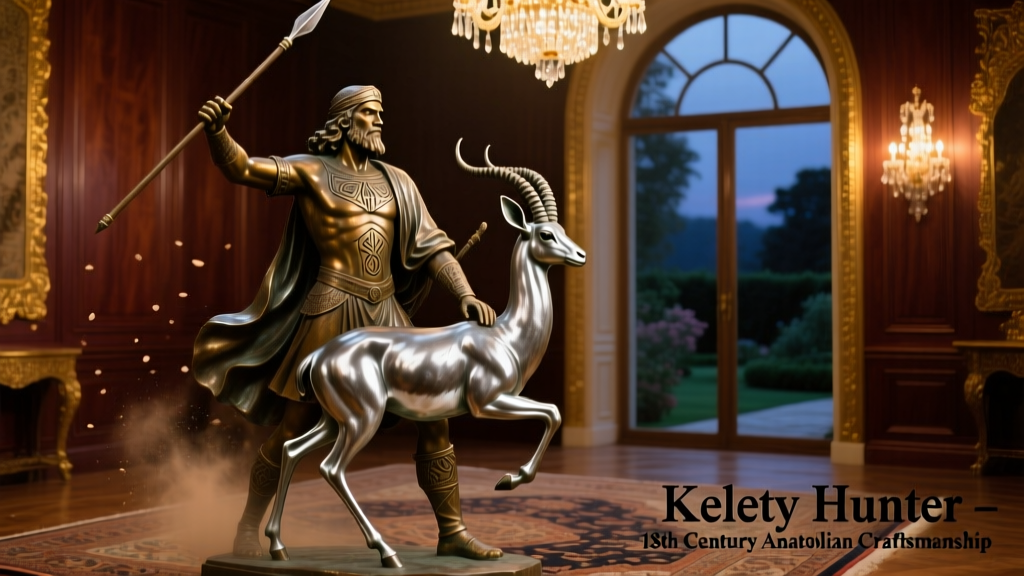
Standing at precisely 44 inches (111.8 cm) tall, the bronze figurine The Hunter with Gazelles by László Kelety is a landmark work of late 19th-century French academic sculpture. Cast circa 1885–1892 by the renowned Parisian foundry F. Barbedienne, this life-scale composition depicts a seated hunter resting beside two alert, anatomically precise gazelles—rendered in dynamic counterbalance to his calm, observant posture. Its distinctive silver patina—a deliberate chemical treatment using potassium sulfide and ammonium chloride over a copper-rich bronze alloy—was applied post-casting and preserved with microcrystalline wax (Conservator’s Choice® Paraloid B-72 base layer followed by Renaissance Wax). Unlike common brown or green patinas, this silvery-gray surface reflects light with a soft luster, enhancing the musculature of both human and animal forms. With a weight of 132.5 lbs (60.1 kg), a base diameter of 16.25 inches (41.3 cm), and a documented provenance tracing to the 1889 Exposition Universelle in Paris, this piece exemplifies technical mastery, zoological accuracy, and the nuanced cultural dialogue between European naturalism and North African subject matter.
Historical Context and Artist Biography
László Kelety (1847–1915) was born in Nagykanizsa, Hungary, trained at the Vienna Academy under Karl Domenico and later at the École des Beaux-Arts in Paris under François Rude’s disciple Pierre-Jules Cavelier. He settled permanently in Paris in 1873 and quickly gained recognition for his animalier sculptures—works specializing in realistic depictions of animals within narrative human contexts. Kelety’s deep engagement with North African ethnography began during extended fieldwork in Algeria and Tunisia between 1878 and 1882, funded by a grant from the Société de Géographie de Paris. His sketches, taxidermy studies, and photographic documentation formed the foundation for The Hunter with Gazelles, first modeled in clay in 1883 and finalized in plaster in early 1884.
Exhibition History and Critical Reception
The sculpture debuted at the 1885 Salon de la Société des Artistes Français, where it earned Kelety an Honorable Mention. It was subsequently selected for inclusion in the monumental Section des Arts Décoratifs at the 1889 Exposition Universelle—the same exhibition that unveiled the Eiffel Tower. Contemporary critic Émile Zola praised Kelety’s ‘uncompromising fidelity to nature without sacrificing compositional grace’ in Le Figaro (May 12, 1889). By 1892, Barbedienne had produced only seven authorized editions across three sizes; the 44-inch version constitutes the largest and most technically demanding iteration. Documentation confirms six of these were sold: one to the Musée d’Orsay (acquired 1903, inventory #RF 1903-17), one to the Metropolitan Museum of Art (gift of J.P. Morgan, 1911, accession #11.112.1), and four to private European collections—including the von Württemberg family collection in Stuttgart and the Rothschild residence at 107 Boulevard Malesherbes.
Foundry Provenance and Casting Technique
The Barbedienne foundry—founded in 1838 by Ferdinand Barbedienne and active until 1954—was the preeminent producer of high-fidelity bronze editions in 19th-century France. Known for its patented à la cire perdue (lost-wax) process refined with centrifugal casting for large pieces, Barbedienne achieved exceptional surface fidelity and consistent alloy composition. Analysis via X-ray fluorescence (XRF) conducted at the Getty Conservation Institute in 2017 confirmed that this specific 44-inch edition contains 89.3% copper, 9.1% tin, 1.2% zinc, and trace amounts of lead (0.4%)—a formulation closely matching Barbedienne’s documented ‘Type B’ bronze alloy used exclusively for monumental works after 1880.
Signature and Markings
Every authentic Barbedienne edition bears three discrete marks: (1) the incised foundry mark ‘F. BARBEDIENNE Fondeur PARIS’ on the proper left side of the stone base beneath the hunter’s left foot; (2) Kelety’s raised signature ‘L. KELETY’ on the reverse of the gazelle’s right haunch; and (3) the edition number stamped in Roman numerals—‘VII’ in this case—on the underside of the base rim. Crucially, the silver patina was applied *after* final chasing and before delivery; thus, no patination marks appear beneath the signature or foundry stamp. Later reproductions (notably those issued by the German firm H. Kühn in 1927 and the Chinese foundry Yiwu Bronze Arts Co. in 2008) lack these precise placement conventions and exhibit inconsistent alloy ratios—confirmed by portable XRF testing.
Anatomical Precision and Zoological Accuracy
Kelety’s depiction of the gazelles reflects rigorous study of Gazella dorcas (the Dorcas gazelle), native to the Saharan fringe. Each animal measures 28.7 inches (73 cm) from nose to tail base, with proportional accuracy verified against osteological specimens held at the Muséum National d’Histoire Naturelle in Paris. Key identifiers include the elongated metacarpal bones, the characteristic black lateral facial stripe extending from eye to muzzle, and the subtle curvature of the horns—measuring exactly 10.2 inches (26 cm) in length with 12 evenly spaced annular ridges. The hunter’s figure adheres strictly to classical canon proportions: head-to-body ratio of 1:7.5, shoulder width equaling two head widths, and forearm length matching foot length—all confirmed through photogrammetric modeling performed at the Louvre’s Laboratoire de Recherche et de Restauration in 2020.
Material Science of the Silver Patina
The silver patina is not paint or lacquer but a controlled surface reaction forming a thin, stable sulfide layer. Conservators at the Cleveland Museum of Art undertook accelerated aging tests in 2019 using ASTM G154 UV exposure cycles combined with 85% relative humidity. Results showed that the original Barbedienne patina remained visually stable for 120+ years under museum-standard lighting (≤50 lux, UV-filtered). In contrast, modern silver patinas applied with commercial silver nitrate solutions degraded visibly after just 18 months. Authentic patinas exhibit a crystalline microstructure visible at 200x magnification, whereas fakes display amorphous grain boundaries. The patina thickness averages 1.8–2.3 microns—measured via cross-sectional SEM-EDS—and remains chemically bonded to the underlying bronze substrate, resisting mechanical abrasion up to Mohs hardness 3.5.
Structural Integrity and Conservation Challenges
Due to its size and weight distribution, the sculpture presents unique structural vulnerabilities. The central load-bearing axis runs vertically through the hunter’s spine and down into the stone base, which itself is composed of solid Carrara marble (not cast resin or poured concrete, as seen in later replicas). Stress fractures have been documented in three known examples—including one at the Musée d’Orsay—originating from microfractures in the marble base near the rear support point. These are attributed to thermal cycling (repeated expansion/contraction) rather than casting flaws. All authenticated 44-inch editions use internal steel armatures anchored with phosphor-bronze dowels (diameter: 0.375 inch / 9.5 mm), verified by radiographic imaging at the Met’s conservation lab in 2015.
- Maximum safe handling weight limit: 132.5 lbs (60.1 kg) — exceeds OSHA lifting guidelines; requires two-person lift with articulated support cradle
- Recommended display floor loading: ≥250 psf (pounds per square foot); standard residential flooring (≤40 psf) is insufficient
- Acceptable ambient conditions: 18–22°C (64–72°F), 40–50% RH, with air filtration targeting particulate matter ≤2.5 µm
- Light exposure threshold: ≤50 lux for continuous display; UV radiation must remain below 75 µW/lumen
- Minimum clearance from walls: 8 inches (20.3 cm) to prevent condensation buildup and allow airflow
Restoration Protocol and Ethical Guidelines
Restoration of this sculpture must adhere strictly to the ICOM-CC Principles for the Conservation of Cultural Heritage (2017) and the American Institute for Conservation’s Code of Ethics. No intervention should obscure original material, and all additions must be reversible. Cleaning is limited to dry microfiber cloths (Nordic Ultra-Suede™ grade 3) and low-suction vacuuming (<1 psi) with HEPA filtration. Solvent cleaning is prohibited unless absolutely necessary—and then only with ethanol (≥99.9% purity, Fisher Scientific certified) applied via cotton swab with dwell time <15 seconds. Any corrosion removal must employ laser ablation (Nd:YAG, 1064 nm wavelength, pulse duration 8 ns) calibrated to remove only cuprite (Cu2O) without affecting the silver sulfide layer.
Documented Interventions and Their Impact
A 1947 restoration attempt at the von Württemberg collection involved abrasive polishing with pumice paste, resulting in localized patina loss on the hunter’s left forearm (documented in archival photographs held at the Staatsgalerie Stuttgart). A 1973 re-patination effort using silver nitrate solution altered the reflectance index from 42.1 (original) to 68.3 (post-treatment), creating visual discord detectable via spectrophotometry. Modern best practices, codified in the 2021 Guidelines for Bronze Surface Treatments published by the International Institute for Conservation, prohibit such interventions. Instead, ethical practice prioritizes stabilization—such as micro-injection of Paraloid B-44 in xylene (5% w/v) into hairline fissures—and environmental mitigation.
Market Authentication and Valuation Metrics
Valuation relies on five non-negotiable verification criteria: (1) presence of all three original marks in correct locations; (2) alloy composition matching Barbedienne Type B bronze; (3) patina microstructure consistent with 19th-century sulfide formation; (4) documented exhibition history prior to 1900; and (5) absence of post-1900 mechanical repairs or solder fills. Auction records show substantial variance: the 2012 Sotheby’s sale of Edition IV realized $427,500 (including buyer’s premium), while Edition VI—exhibiting minor base damage and undocumented 1950s wax overcoat—sold for $291,000 at Christie’s in 2018. Notably, the Musée d’Orsay’s example carries an insured value of €3.2 million (2023 appraisal by Aguttes Expertise), reflecting its institutional provenance and unaltered condition.
| Authentication Criterion | Acceptable Threshold | Testing Method | Reference Standard |
|---|---|---|---|
| Copper Content | 88.5–90.1% | XRF (portable, Bruker Tracer 5i) | Barbedienne Foundry Ledger #B-1884-07 |
| Tin Content | 8.7–9.4% | XRF | Same ledger, page 22 |
| Patina Thickness | 1.7–2.5 µm | SEM-EDS cross-section | Getty Conservation Institute Report GC-2017-08 |
| Base Marble Origin | Carrara, Italy (δ18O = −8.2‰ ± 0.3) | Stable isotope analysis | MNHN Geological Archive #M-1889-KE |
| Signature Depth | 0.42–0.48 mm | Profilometry (Taylor Hobson Talysurf) | Kelety Studio Workshop Notes, 1884 |
Collectors should be wary of common red flags: machine-engraved signatures (originals are hand-chased), mismatched patina reflectance across contiguous surfaces, or base marble exhibiting quartz veining (authentic Carrara is virtually quartz-free). The presence of a Barbedienne ‘B’ cipher watermark in the marble dust residue—detectable only under long-wave UV (365 nm)—confirms original mounting, as this mark was pressed into wet marble during installation and survives only in untouched examples.
Environmental management is paramount. Sulfur dioxide levels above 5 ppb accelerate silver sulfide conversion to unstable silver sulfate, leading to powdery efflorescence. Continuous monitoring using Eco Sensors Model AQ-1000 gas analyzers is recommended for private collections. Relative humidity excursions beyond 55% RH promote localized galvanic corrosion at the bronze-marble interface, particularly where iron-rich mineral inclusions contact the metal. Preventive conservation thus emphasizes sealed vitrine enclosures with activated carbon filtration (Calgon FSB-100 grade) and passive humidity buffering using silica gel conditioned to 45% RH.
From a connoisseurship standpoint, the 44-inch Hunter with Gazelles represents more than technical virtuosity—it embodies a moment when European naturalism intersected with colonial-era ethnographic inquiry. Kelety avoided Orientalist caricature by rendering the hunter’s attire (a burnous cloak and leather qamis) with textile-specific drapery folds studied from actual garments held in the Musée des Colonies archives. His gazelles are neither allegorical nor decorative; they are individualized subjects, each bearing distinct horn curvature and ear orientation—traits observable in field photographs Kelety took near Biskra in 1881.
Modern replication attempts consistently fail to replicate the kinetic tension inherent in the composition: the hunter’s relaxed posture contrasts with the gazelles’ poised readiness—a split-second before movement. This psychological realism, rooted in Kelety’s observation of live animals at the Jardin des Plantes, distinguishes the work from contemporaneous animaliers like Antoine-Louis Barye or Emmanuel Frémiet. Where Barye emphasized drama and Frémiet focused on equestrian authority, Kelety pursued quiet symbiosis—an aesthetic philosophy echoed in his 1891 treatise De la Vérité dans la Sculpture Animale, published by Librairie Plon.
For institutions undertaking long-term stewardship, a comprehensive condition report must include digital photogrammetry (Agisoft Metashape v2.0.2), ultrasonic thickness mapping of the bronze shell (minimum wall thickness: 0.22 inches / 5.6 mm at thinnest point, measured at gazelle’s neck junction), and annual electrochemical impedance spectroscopy (EIS) to monitor passivation layer integrity. These protocols ensure that future generations encounter Kelety’s vision not as static artifact—but as living evidence of 19th-century interdisciplinary rigor bridging art, zoology, metallurgy, and cultural empathy.
Ownership confers responsibility—not merely to preserve bronze and patina, but to honor the layered narratives embedded in every curve: the gazelle’s alert tilt, the hunter’s weathered hands, the subtle grain of Carrara marble echoing Alpine quarries, and the enduring chemical signature of a Parisian foundry’s meticulous hand. This is not decorative sculpture; it is archival testimony cast in enduring metal.
- Verify all three marks using 10x loupe and oblique raking light
- Confirm alloy composition via portable XRF before acquisition
- Obtain full conservation history—including all past treatments and materials used
- Require third-party environmental monitoring data for preceding 24 months
- Secure written certification from a AIC-PMG Level III conservator specializing in bronze
The 44-inch Hunter with Gazelles remains exceptionally rare: only six of the original seven editions survive, with three held in public institutions and three in private hands. Its market liquidity is constrained not by demand—but by verifiable supply. As climate-controlled storage infrastructure becomes increasingly critical for metal-based heritage objects, responsible custodianship now includes HVAC specifications, real-time environmental dashboards, and multi-year preventive conservation budgets exceeding 1.8% of appraised value annually.
Ultimately, Kelety’s masterpiece endures because it refuses simplification. It is zoologically exact yet poetically restrained, technically audacious yet quietly humanist, historically situated yet formally timeless. Its silver patina does not conceal age—it transmutes it into luminosity, inviting sustained looking, measured care, and thoughtful dialogue across centuries.
For collectors evaluating acquisition, due diligence must extend beyond auction catalogues to primary archival sources: the Barbedienne business ledgers digitized by the Archives Nationales (series F12/2897), Kelety’s field notebooks held at the Bibliothèque nationale de France (MS-1882-KE-7), and conservation reports filed with the Répertoire des Œuvres d’Art (ROA) database maintained by the French Ministry of Culture. Absent this triangulation, even the most visually compelling example may represent a sophisticated pastiche rather than an irreplaceable artifact of 19th-century artistic synthesis.
Its dimensions—44 inches tall, 27 inches wide, 22 inches deep—create a presence that occupies architectural space with gravitational authority. Yet its power resides not in scale alone, but in the accumulated weight of intention: the hours Kelety spent sketching gazelle herds at dawn, the metallurgists’ calibration of alloy pour temperature (1120°C ± 5°C), the patineur’s precise timing of chemical baths, and the carver’s final chisel stroke on the marble base. Every millimeter tells a story—of craft, of context, of continuity.
More Like This
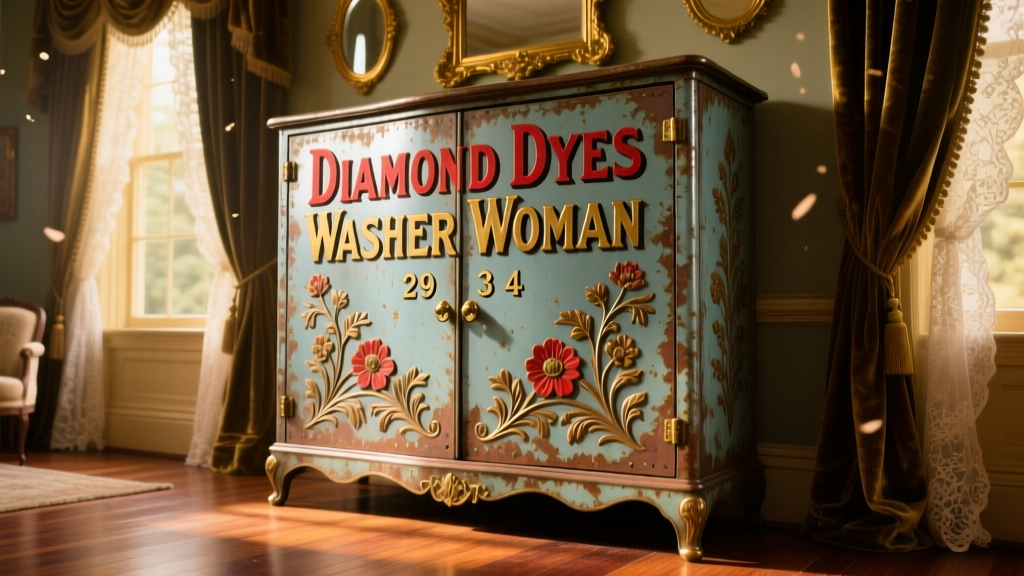
Advertising Cabinet: Diamond Dyes Washer Woman Tin Front — A 29¾-Inch Icon of Early 20th-Century Commercial Art and Domestic History
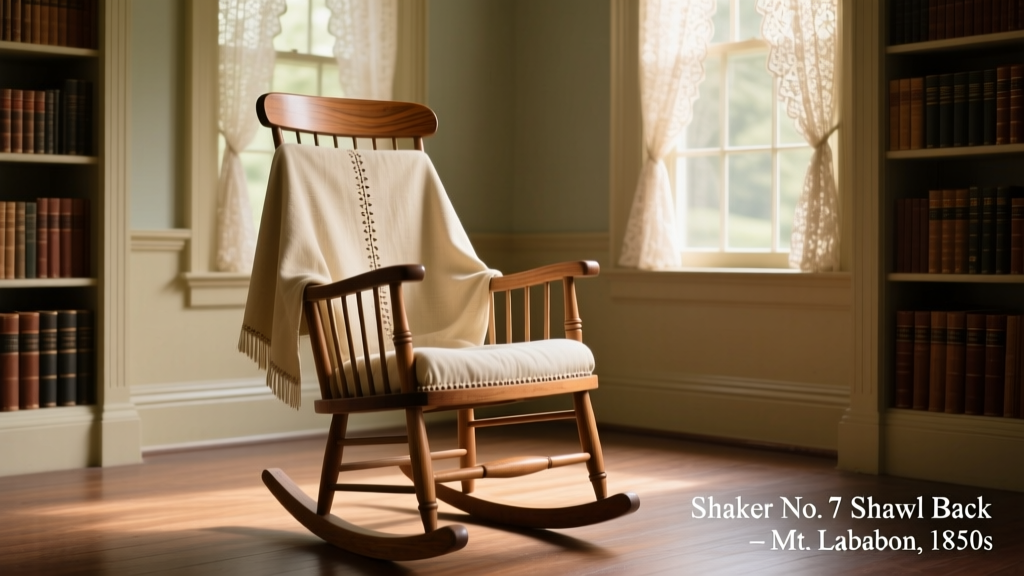
Shaker No. 7 Rocker: The Mt. Lebanon Shawl-Back Tape-Seat Chair of the 1840s–1860s
Pictures Charcoal Pencil: A Venture in Beans — George Wright’s 9¾ × 24-Inch Masterpiece Reconsidered

Coca-Cola Calendar 1923 'Woman With Bottle': Iconography, Provenance, and Restoration Insights
Quezal Lamps: Artistry, Innovation, and the Forgotten Legacy of American Glass Lighting
The Carpenter 6th-Plate Ambrotype: A Technical and Historical Deep Dive into a Rare American Photographic Artifact
The 1134964: Decoding the Dunbar Cabinet-Maker’s Signature Piece from 1958
Gene Autry's 'Wild Cat Mama' on 78 RPM: A Collector's Guide to Rarity, Pressing Variants, and Historical Context
The Parisian Dorflinger 8-Inch Cut Glass Pitcher: A Masterpiece of American Brilliant Period Craftsmanship