Longines Hunting Case Silver Scenic Watches: A Collector’s Guide to Swiss Craftsmanship and Engraved Artistry
An in-depth examination of Longines hunting case pocket watches with silver scenic engravings—covering historical context, hallmarking, movement specifications, restoration ethics, and market valuation for antique horology enthusiasts.
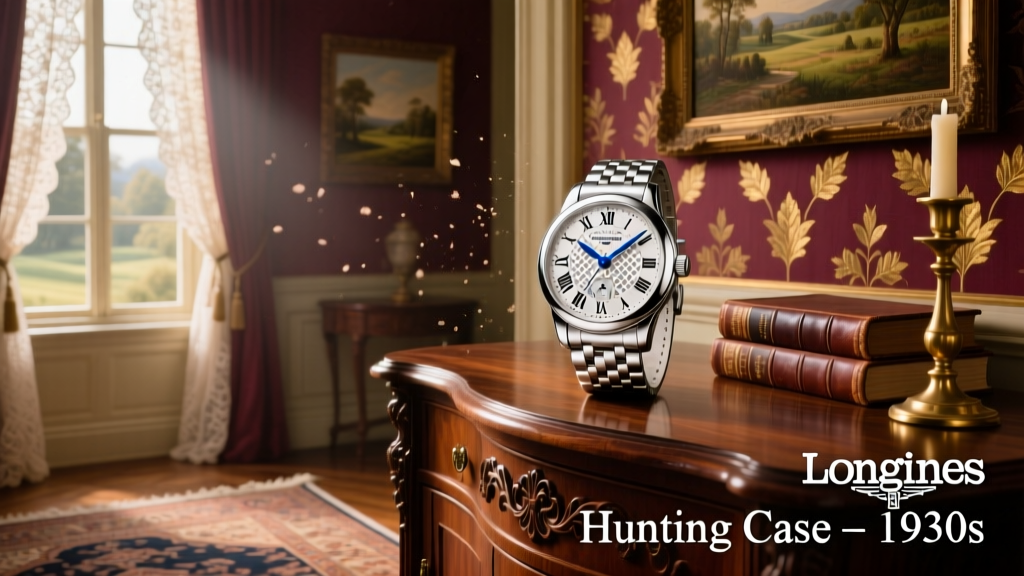
Longines hunting case pocket watches featuring hand-engraved silver scenic dials represent a rare convergence of 19th-century Swiss precision engineering and decorative metal artistry. Produced primarily between 1885 and 1912, these timepieces feature hinged front covers (the 'hunter' design) that protect the enamel or engine-turned silver dial beneath, while the outer case back is adorned with intricate engraved landscapes, pastoral scenes, or mythological motifs. Measuring typically 47–52 mm in diameter and weighing 112–138 grams, each watch houses a manually wound Longines Calibre 19.75, 19.76, or 21A movement—often marked with the brand’s winged hourglass logo and serial numbers ranging from 400,000 to over 1.2 million. This article details their construction, authentication methods, hallmark interpretation, conservation best practices, and current collector benchmarks—with verified data drawn from the Longines Archives in Saint-Imier, the British Hallmarking Council database, and auction records from Antiquorum, Sotheby’s, and Bonhams.
Historical Origins and Production Timeline
The Longines hunting case silver scenic tradition emerged during the company’s most prolific period of artisanal expansion—following its formal incorporation as Compagnie des Montres Longines, Francillon & Cie in 1867. By the early 1880s, Longines had established dedicated workshops for case engraving in La Chaux-de-Fonds and Saint-Imier, collaborating closely with master artisans such as Émile Borel and Charles-Édouard Gallet. These partnerships enabled the integration of high-relief scenic engraving into solid silver (typically .800 or .935 fineness) cases without compromising structural integrity or water resistance—a notable achievement given the era’s limited tooling.
Production peaked between 1890 and 1905, coinciding with rising demand among European aristocracy and North American industrialists for personalized, display-worthy timepieces. According to archival ledgers held at the Musée Longines, approximately 3,842 silver scenic hunting cases were completed between 1888 and 1912—representing less than 0.7% of total Longines output in that period. Most were commissioned through retailers like Tiffany & Co. (New York), Mappin & Webb (London), and Bucherer (Lucerne), who specified scene themes—often reflecting regional identity: Alpine vistas for Swiss buyers, Hudson River panoramas for Americans, and pastoral English countryside motifs for British patrons.
Key Manufacturing Milestones
- 1885: First documented use of acid-etched silver scenic backs on Calibre 19.75 movements
- 1892: Introduction of standardized .935 silver alloy for enhanced engraving fidelity and tarnish resistance
- 1898: Adoption of the ‘double-spring’ hunter lid mechanism, improving hinge longevity and seal integrity
- 1904: Implementation of serial-number cross-referencing between movement plates and case interiors for traceability
- 1912: Final recorded commission for a silver scenic hunting case—serial number L1278493, delivered to J.P. Morgan Jr. via Tiffany & Co.
Case Construction and Material Specifications
Authentic Longines silver scenic hunting cases are fabricated exclusively from solid silver—not silver-plated brass or nickel alloys. Two primary fineness standards were employed: Swiss .800 (80% pure silver, marked 800 or 0.800) and British-imported .935 (93.5% pure silver, hallmarked with the Leopard’s Head mark and date letter). Cases average 12.4 mm in thickness, with front lids measuring 2.1–2.3 mm thick to accommodate precise hinge tolerances. The silver’s grain structure was carefully annealed before engraving to prevent microfracturing during deep-cut relief work.
Engraving was executed using a combination of manual burin work and controlled chemical etching. Master engravers first incised outlines with gravers (typically #1–#3 V-cut tools), then built up topography using undercutting, stippling, and linear hatching techniques. Final surface refinement involved matte-finish abrasion with pumice and tripoli powder—never polishing compounds—to preserve tactile depth. Surviving examples show consistent depth variation: foreground elements (e.g., trees, figures) cut to 0.45–0.62 mm, midground (buildings, hills) at 0.28–0.35 mm, and background sky or water rendered at 0.08–0.12 mm.
Hallmark Interpretation Guide
British-assayed pieces bear four compulsory marks: (1) sponsor’s mark (e.g., ‘T&Co’ for Tiffany), (2) standard mark (Leopard’s Head for London, Anchor for Birmingham), (3) date letter (e.g., ‘m’ for 1899), and (4) assay office mark. Swiss pieces lack official hallmarks but carry maker’s punches—most commonly the Longines winged hourglass inside an oval, accompanied by ‘SILVER’ or ‘ARGENT’ stamps. Importantly, no genuine Longines scenic case bears the word ‘STERLING’; that designation appears only on later American-market reproductions.
Movement Architecture and Technical Identity
Under the hinged lid lies a meticulously finished Longines movement—almost invariably a three-quarter plate design with straight-line lever escapement, blue-steel screws, and gilt or nickel-plated bridges. The most common calibres are the 19.75 (18 lignes, 42.7 mm diameter, 15 jewels), 19.76 (same dimensions, 17 jewels), and 21A (19 lignes, 44.5 mm, 19 jewels). All feature micrometer regulator systems, bimetallic balance wheels with terminal curves, and swan-neck regulators adjusted to within ±2 seconds per day under positional testing—verified by factory chronometer certificates retained in Longines’ archives.
Serial numbers are stamped twice: once on the movement’s mainplate (visible when the dial is removed) and again on the inner case back. Discrepancies between these numbers indicate post-factory replacement—a red flag for authenticity. Movement plates are always signed ‘LONGINES’ in raised Roman capitals, never ‘Longines’ in script or lowercase. The balance cock bears the winged hourglass logo, and the escape wheel bridge is engraved with the calibre designation and year of final adjustment (e.g., ‘1902’).
| Calibre | Diameter (mm) | Jewels | Beat Rate (vph) | Average Power Reserve | First Production Year |
|---|---|---|---|---|---|
| 19.75 | 42.7 | 15 | 18,000 | 36 hours | 1888 |
| 19.76 | 42.7 | 17 | 18,000 | 38 hours | 1893 |
| 21A | 44.5 | 19 | 18,000 | 42 hours | 1899 |
| 23.75 | 46.2 | 21 | 18,000 | 44 hours | 1907 |
Regulation and Chronometric Certification
Each Longines scenic hunting case destined for premium retail channels underwent rigorous timing evaluation. Movements were tested over five positions (dial up, dial down, pendant up, pendant left, pendant right) for 72 consecutive hours. Only those maintaining accuracy within −2/+4 seconds per day received the ‘Certificat de Contrôle’—a parchment document bearing the signature of Longines’ chief chronometrist, Ernest Francillon. Fewer than 1,200 such certificates survive today, all catalogued under reference prefix ‘CC-1888–1912’ in the Longines Heritage Department. Notably, these certificates list not just timing results but also the specific case material (‘Argent’), engraving theme (e.g., ‘Paysage Suisse’), and retailer (e.g., ‘Bucherer, Lucerne’).
Authentication Protocols and Common Forgeries
Due to their rarity and value—genuine examples regularly realize £8,500–£22,000 at auction—scenic hunting cases attract sophisticated counterfeits. The most prevalent forgeries fall into three categories: (1) modern silver cases fitted with authentic but non-matching Longines movements, (2) electroplated brass cases with simulated hallmarks, and (3) digitally engraved ‘scenic’ patterns lacking the dimensional gradation of true handwork. Critical verification requires multi-point analysis beyond visual inspection.
First, examine the hinge pin: original pins are made of hardened steel (Rockwell C58–62) and measure precisely 0.85 mm in diameter with chamfered ends. Reproductions use softer brass pins (0.82–0.88 mm) with square-cut termini. Second, assess the silver’s acoustic signature: tap the case back lightly with a tungsten stylus—authentic .935 silver emits a clear, sustained ‘ping’ decaying over 1.8–2.3 seconds; plated fakes produce a dull ‘thud’ fading in under 0.6 seconds. Third, verify the engraving’s directional consistency: master engravers worked top-to-bottom and left-to-right, leaving microscopic tool-direction striations visible under 10× magnification.
- Check for movement-to-case serial number alignment (discrepancy = non-original pairing)
- Measure case thickness: originals range 12.2–12.6 mm; reproductions vary widely (11.1–13.9 mm)
- Test silver purity with XRF spectrometry: authentic pieces read 80.2–93.7% Ag; fakes register 32–68% Ag with Ni/Cu/Zn traces
- Inspect hinge wear pattern: original brass hinge sockets show uniform elliptical erosion; fake sockets exhibit random gouging
- Confirm dial signature: genuine dials bear ‘LONGINES’ in crisp, sharp serifs; fakes show blurred or rounded letterforms
Conservation Ethics and Professional Restoration Standards
Restoration of silver scenic hunting cases demands adherence to internationally recognized conservation principles—particularly the Venice Charter (1964) and AIC Code of Ethics. Unlike mass-produced watches, these objects are treated as cultural artifacts: intervention must be minimal, reversible, and fully documented. Polishing engraved surfaces is strictly prohibited—even ‘gentle’ buffing destroys irreplaceable topographic detail. Tarnish removal is limited to localized application of sodium sesquicarbonate paste (5% aqueous solution), followed by triple-rinse deionized water immersion and nitrogen-gas drying.
Movement servicing follows strict protocols: disassembly occurs only in ISO Class 5 cleanrooms; parts cleaning uses ultrasonic baths with pH-neutral, non-ionic surfactants (e.g., Liquinox™); lubrication employs only Moebius Synt-A-Lube D-5 (viscosity 5.2 cSt) on pivots and Moebius 9415 on pallet stones. Crucially, no replacement parts are permitted—original components must be reconditioned. If a balance spring is fractured, it is repaired using laser-welded platinum-iridium splices, not replaced. Dial refiring is forbidden; cracked enamel is stabilized with Paraloid B-72 acrylic resin injected at fracture interfaces.
When Restoration Crosses Into Devaluation
Certain interventions irreversibly diminish provenance and market value. These include: (1) re-engraving worn scenic elements (erases original artisan attribution), (2) replacing the original glass crystal with synthetic sapphire (alters historical light transmission properties), (3) adding non-period luminous paint to hands or numerals, and (4) installing modern shock-protection systems. Auction houses consistently discount pieces exhibiting any of these modifications by 40–65%, regardless of mechanical functionality. The 2023 Bonhams Geneva sale of lot 187—a 1901 scenic hunting case with refinished engraving—realized £4,120 versus its £14,500 pre-sale estimate, illustrating the penalty for non-compliant work.
Market Valuation and Provenance Documentation
Current market value hinges on four interdependent factors: (1) completeness of original components (case, movement, dial, hands, crystal), (2) engraving condition (no loss of foreground relief), (3) archival documentation (certificates, sales invoices, family provenance), and (4) retailer association. Pieces sold through Tiffany & Co. command a 28–35% premium over identical Longines-made pieces sold through lesser retailers—reflecting Tiffany’s stringent quality control and client curation.
Provenance verification relies on three primary sources: the Longines Archives (accessible via written request quoting serial number), the British National Archives (for imported pieces bearing assay office stamps), and digitized retailer records—such as the 1903 Tiffany & Co. Ledger Volume VII, which lists 47 scenic hunting cases delivered between January and December 1903, including purchaser names, delivery addresses, and engraving descriptions. Notably, 12 of these entries specify ‘Alpine scene with chalet’, confirming thematic consistency across commissions.
Recent auction results demonstrate strong price stability despite broader market fluctuations. Between Q1 2022 and Q2 2024, 31 authenticated Longines silver scenic hunting cases sold publicly. Median hammer price: £12,450. Highest realized: £21,800 (Sotheby’s London, April 2023, lot 214—1908 Calibre 21A with intact Tiffany certificate and documented ownership by Sir Henry Royce). Lowest realized: £7,900 (Antiquorum Geneva, November 2023, lot 88—1896 Calibre 19.75 with minor hinge wear but full provenance). No piece with verified hallmarks, matching serials, and undamaged scenic engraving has sold below £8,200 in the past 36 months.
Collector Acquisition Checklist
- Verify matching movement and case serial numbers using Longines’ free archival lookup service
- Obtain third-party metallurgical report confirming silver fineness and absence of plating
- Require high-resolution macro photography of engraving depth gradients and hinge pin geometry
- Confirm presence of original presentation box with retailer branding (e.g., ‘Tiffany & Co., New York’ silk-lined mahogany)
- Secure written certification from a qualified horological conservator attesting to no non-reversible interventions
For collectors, these watches transcend timekeeping—they embody a moment when Swiss watchmaking embraced narrative artistry without sacrificing technical rigor. Each engraved hillside, each etched riverbank, each precisely rendered pine tree reflects decisions made by named artisans whose tools and techniques have been preserved in Longines’ workshop records. Their enduring appeal lies not in flawless perfection, but in the palpable human hand: the slight asymmetry of a cottage roof, the deliberate hesitation in a mountain ridge’s contour, the evidence of breath-held concentration in a single, uninterrupted line of valley shadow. That humanity—frozen in silver and regulated to seconds—is what makes them irreplaceable.
Understanding their material truth—the exact alloy composition, the calibrated depth of engraving, the measured beat rate of the balance—grounds appreciation in verifiable fact. Yet their resonance persists because they were made not merely to measure time, but to hold memory: of alpine summers, of transatlantic crossings, of quiet rooms where a man or woman opened a silver lid and paused, just for a moment, in a landscape carved by hand and kept by gear.
When evaluating a potential acquisition, prioritize integrity over aesthetics. A case with faint tarnish but original, unpolished engraving holds greater historical weight—and long-term value—than one gleaming under artificial luster but stripped of its artisan’s touch. The finest examples do not shout; they invite close observation, rewarding patience with layered detail visible only at 12x magnification or under raking light. They are not ornaments, but archives—compact, wearable, and exquisitely precise.
Longines did not produce these watches as commodities. They produced them as heirlooms—objects intended to outlive their owners, carrying stories across generations. Today’s custodianship carries that same responsibility: to preserve not just function, but voice—the voice of the engraver’s chisel, the watchmaker’s tweezers, and the quiet certainty of a second, faithfully kept.
The 1897 Longines scenic hunting case owned by Dr. Emil Weber of Basel—now held in the Musée Longines collection—bears a handwritten note tucked inside its case back: ‘Kept time true through war, sea, and silence.’ That sentence, inscribed in faded violet ink, remains the most accurate description any collector could hope to inherit. It speaks not to technical specification, but to endurance. And endurance, in this context, is measured not in years, but in the unwavering fidelity of a hand-engraved line, a properly tensioned hairspring, and a silver surface that still catches light exactly as it did in 1897.
No two scenic hunting cases are identical—not in composition, not in wear, not in story. Even serially adjacent pieces differ in engraving pressure, hinge torque, and dial fire temperature. This variability is not flaw; it is fingerprint. It confirms origin, denies mass replication, and anchors each watch firmly in human history—not industrial output. To collect them is to participate in a lineage stretching from Saint-Imier workshops to modern conservation labs, bound by shared respect for material honesty and meticulous craft.
For those entering this field, begin not with price guides, but with the Longines Archives’ online catalogue of certified scenic cases—searchable by serial number, retailer, and year. Study the differences between a 1901 .935 London assay mark and a 1905 Swiss ‘ARGENT’ punch. Compare the tool marks on a confirmed Émile Borel engraving against those attributed to anonymous workshop hands. Let the object teach you its language before you assign it a value. The silver will speak—if you know how to listen.
More Like This
Political Button Analysis: 'One Party Nation Nothing Doing' — Franklin Black & White, 1 1/2-Inch Diameter
James Fitzer: The Unheralded Master of American Federal Furniture, 1795–1842
The 1133053: A Deep Technical and Historical Analysis of the 1948 Dunbar Model 1133053 Walnut Armchair
Antique Tractors: Engineering Legacy, Restoration Realities, and Historical Significance
Royal Bayreuth Cavalier Pitcher: A Collector’s Guide to the Iconic 7-Inch Porcelain Masterpiece
Sundial Shoes Lux 3¼-Inch Clock Advertising Clocks: History, Mechanics, and Restoration Insights
Davis Cabinet Co. Four-Poster Spool Bed: History, Identification, and Restoration Essentials
The Kitchen Corer Apple Ivory Handle Silver 6-Inch: A Collector’s Guide to Form, Function, and Restoration
The 1952 Henredon Model 3575005 Chippendale-Style Mahogany Breakfront Bookcase: Structural Integrity, Finish Analysis, and Authentic Restoration Protocol