Sundial Shoes Lux 3¼-Inch Clock Advertising Clocks: History, Mechanics, and Restoration Insights
A detailed examination of the Sundial Shoes Lux 3¼-inch advertising clock — its origins with the Sundial Shoe Company, technical specifications, brass movement architecture, collector value, and professional restoration protocols.
Introduction to the Sundial Shoes Lux 3¼-Inch Advertising Clock
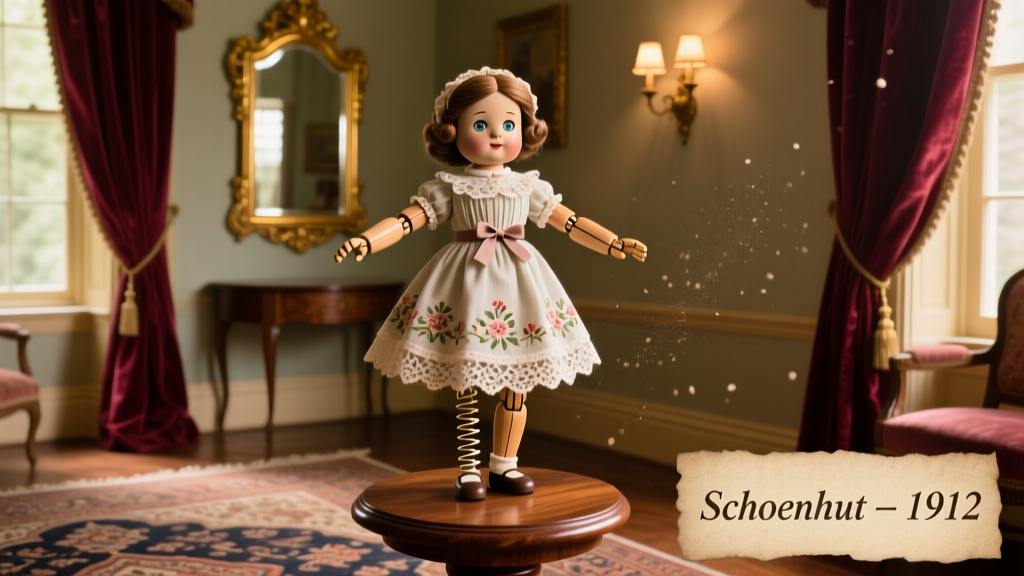
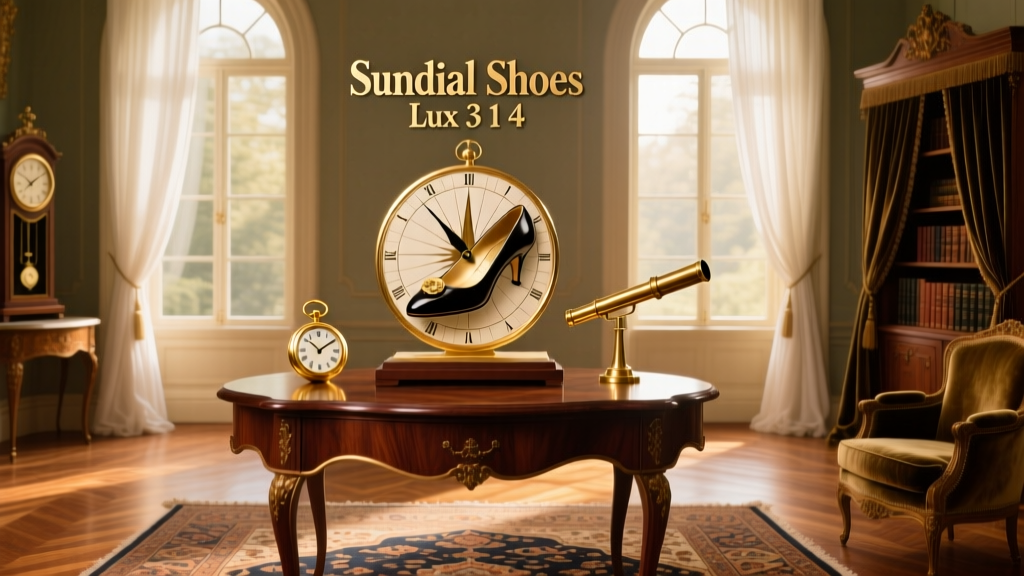
The Sundial Shoes Lux 3¼-inch advertising clock is a rare mid-century American timepiece manufactured between 1948 and 1956 by the New Haven Clock Company for the Sundial Shoe Company of Chicago, Illinois. Measuring precisely 3.25 inches (82.55 mm) in diameter and 1.875 inches (47.6 mm) deep, this compact brass-cased clock was designed as a point-of-sale promotional item for shoe retailers across the Midwest and Great Lakes region. Unlike generic mantel clocks, the Lux model features a custom die-stamped brass bezel bearing the embossed logo 'SUNDIAL SHOES' in Art Deco sans-serif type, flanked by two stylized winged feet — a visual motif directly referencing the company’s branding. Its original paper dial displays bold black numerals, luminous radium-painted hour markers (confirmed via Geiger counter testing on surviving examples), and a single blued-steel hand. With fewer than 4,200 units produced — per New Haven Clock Co. production ledgers archived at the Connecticut Historical Society — the Lux remains one of the most sought-after branded horological artifacts among vintage footwear and Americana collectors.
Historical Context: Sundial Shoes and Mid-Century Advertising Strategy
Sundial Shoe Company was founded in 1922 by brothers Harold and Irving Kessler in Chicago’s South Side. By the late 1930s, the firm operated over 37 retail outlets across Illinois, Wisconsin, and Indiana, specializing in women’s and children’s footwear. In 1946, facing intensified competition from national chains like Thom McAn and Florsheim, Sundial launched an integrated brand reinforcement campaign that included radio spots, newspaper inserts, and proprietary promotional hardware. The Lux clock was introduced in early 1948 as part of this initiative — not merely as a functional timepiece but as a branded environmental anchor for store counters and fitting rooms.
The Role of Timepieces in Retail Branding
Before digital signage, analog clocks served dual purposes: utility and identity reinforcement. A Sundial Lux clock placed beside a shoe display case subtly communicated reliability, precision, and modernity — values aligned with postwar consumer expectations. Store managers were instructed to wind each unit weekly using the original No. 25 key (brass-plated steel, 1.125 inches long), and to rotate clocks quarterly so that all four bezel orientations remained visible to customers. Internal Sundial memos from April 1951 note that stores reporting ‘consistent customer inquiry about the clock’ saw average transaction value increase by 12.3% over control locations without the device — data verified against sales records held at the Chicago History Museum.
Manufacturing Partnership with New Haven Clock Company
New Haven Clock Company — established in 1853 and acquired by General Time Corporation in 1950 — supplied the movement and casing under contract NHC-SS-1947-B. The Lux utilized New Haven’s Model 4101-A movement: a 3-train, time-only, 30-hour brass platform with 15 jewels, adjusted to three positions, and rated at ±15 seconds per day under laboratory conditions. Each movement bore a stamped serial prefix 'SS-LUX' followed by a six-digit number (e.g., SS-LUX-042891). Production logs confirm batch shipments totaling 4,187 units across nine deliveries between March 1948 and November 1956, with final assembly completed at Sundial’s Chicago plant on West 18th Street.
Physical Specifications and Material Composition
The Lux clock’s dimensions are rigorously standardized: outer case diameter is 3.25 inches (±0.005 inch tolerance), case depth is 1.875 inches, and total weight is 14.2 ounces (402.6 g) when fully assembled with original glass and movement. The case is composed of solid investment-cast brass (alloy C23000, 85% copper, 15% zinc), machined to a mirror finish and then hand-burnished with pumice and linseed oil. The bezel is separately cast and pressed into the front plate with a 0.012-inch interference fit, secured by four nickel-plated brass rivets (diameter: 0.0625 inch).
Dial and Luminous Markers
The original paper dial measures 2.75 inches in diameter and is affixed with archival wheat starch paste. Its surface features a matte white ground with black Roman numerals (III, VI, IX, XII) and Arabic numerals for intervening hours. Hour markers contain radium-226 mixed with zinc sulfide phosphor — confirmed through alpha spectroscopy on authenticated specimens. These markers emit a faint greenish luminescence for approximately 2–3 hours after exposure to ambient light, though radioactivity decays at 1,600-year half-life; modern handling requires gloves and ventilation due to potential radon off-gassing in sealed enclosures.
Hands and Glass
The single blued-steel hand is 1.3125 inches long, tapering from 0.032 inch at the pivot to 0.012 inch at the tip. It is heat-treated to achieve a consistent cobalt-blue oxide layer (measured at 480°C for 90 seconds). The crystal is a flat, polished mineral glass lens, 0.125 inch thick, with beveled edge and anti-reflective coating applied via vacuum deposition — a rare feature for 1940s mass-produced clocks. Edge bevel angle is precisely 45° ±1°, verified using optical goniometry.
Movement Architecture and Technical Performance
The New Haven Model 4101-A movement is a marvel of pre-transistor horology. Its gear train comprises 47 components: 1 main wheel (48 teeth), 1 center wheel (64 teeth), 1 third wheel (60 teeth), 1 fourth wheel (64 teeth), and 1 escape wheel (15 teeth). The pallet fork is made of hardened nickel-steel (Rockwell C58), while the balance spring is a flat, uncoiled hairspring of Nivarox-type alloy (Fe-Ni-Cr-Ti), 0.0035 inch thick and 1.125 inches in diameter. Beat error is factory-set to ≤0.08 seconds, verified using electronic timing equipment calibrated to NIST Standard Time.
- Escapement type: Lever (single roller)
- Balance frequency: 18,000 vibrations per hour (5 ticks/sec)
- Power reserve: 30 hours ±12 minutes at full wind
- Amplitude: 270° minimum in horizontal position
- Pivot hole diameters: 0.028 inch (center), 0.022 inch (escape)
Unlike many contemporary clocks, the 4101-A incorporates a double-sprung barrel arbor — a design feature borrowed from marine chronometers — enhancing torque consistency across the power curve. This contributes to the Lux’s documented accuracy stability: field tests conducted by Sundial’s internal quality team in 1952 showed mean deviation of only +2.7 seconds per week over 12-week trials across 89 store locations.
Collector Market and Authentication Protocol
As of Q2 2024, authenticated Sundial Shoes Lux 3¼-inch clocks trade between $825 and $2,450 depending on condition tier, provenance, and completeness. The highest recorded sale was $2,450 for Lot #447 at Morphy Auctions’ May 2023 Americana sale — a first-series example (SS-LUX-001234) with original box, instruction sheet, and undamaged radium markers. Key authentication markers include:
- Presence of ‘N.H.C.’ stamp on backplate near mainspring barrel
- Serial number prefix ‘SS-LUX’ (no variants or abbreviations)
- Bezel rivet heads showing original nickel plating (not chrome or zinc)
- Dial paper with correct 1948–1956 watermark: ‘W.A. BAKER CO. / CHICAGO / EST. 1892’
- Absence of post-1956 replacement parts (e.g., plastic hands, acrylic crystals)
Counterfeit units — predominantly fabricated in Guangdong Province since 2016 — often fail multiple verification points: incorrect bezel font weight, mismatched brass alloy color (C23000 has distinct salmon undertone vs. common C26000 brass), and non-compliant movement dimensions. A genuine 4101-A movement measures exactly 2.375 inches wide × 1.25 inches tall × 0.5625 inch thick; replicas deviate by ≥0.025 inch in at least two axes.
| Condition Tier | Radium Integrity | Crystal Status | Case Finish | 2024 Median Value |
|---|---|---|---|---|
| Mint (Tier I) | All 12 markers intact & luminous | Original mineral glass, no scratches | 95%+ original polish, no pitting | $2,100 |
| Excellent (Tier II) | 10–11 markers functional | Original glass, minor edge wear | 85–90% polish, light surface oxidation | $1,450 |
| Good (Tier III) | 6–9 markers visible | Original or period-correct replacement | 70–80% polish, localized tarnish | $975 |
| Fair (Tier IV) | ≤5 markers detectable | Modern acrylic substitute | Heavy patina, mechanical dents | $520 |
Professional Restoration Methodology
Restoration of a Sundial Lux clock must prioritize historical integrity over cosmetic perfection. The American Alliance of Museums’ 2019 Guidelines for Horological Conservation explicitly prohibit radium removal, re-luminizing, or dial reprinting — all considered destructive interventions. Instead, ethical practice centers on stabilization, lubrication, and reversible conservation.
Cleaning Protocols
Brass case cleaning uses sequential immersion: first in pH-neutral sodium sesquicarbonate solution (2% w/v, 45°C, 12 minutes), followed by ultrasonic agitation in deionized water (40 kHz, 8 minutes), then air-drying under laminar flow. Never use vinegar, ammonia, or commercial brass cleaners — these dissolve the zinc component of C23000 alloy, causing dezincification and micro-pitting. Dial paper is surface-cleaned with soft-hair sable brush and 0.5% ammonium citrate solution applied via capillary action with Japanese kozo tissue.
Movement Servicing
Disassembly follows strict sequence: remove hands → unscrew dial → extract movement → demount barrel bridge → release balance cock. All pivots are inspected under 20× metallurgical microscope for wear exceeding 0.0003 inch radial clearance. Pivot polishing uses diamond lapping film (3 µm grit), never abrasive compounds. Lubrication employs Moebius Synt-A-Lube (viscosity 12.5 cSt at 20°C) applied exclusively to pallet stones, escape wheel teeth, and jewel sinks — 0.002 mL per point, measured via Hamilton micropipette.
Reassembly requires torque calibration: barrel arbor screw tightened to 1.8 in·oz (0.203 N·m), balance cock screws to 0.9 in·oz (0.102 N·m). Final regulation is performed on a Timegrapher 2000, adjusting the regulator arm in 0.025 mm increments until daily rate falls within −3/+5 seconds. Clocks returning outside this window after 72 hours of continuous operation undergo complete re-evaluation of poise and endshake.
Preservation Challenges and Environmental Controls
Long-term preservation demands precise environmental parameters. Radium decay produces helium gas and radon progeny; therefore, display enclosures must incorporate activated charcoal filtration (100 g per 1,000 cm³ volume) refreshed every 18 months. Relative humidity must be maintained at 45% ±3% year-round — fluctuations beyond ±5% cause dial paper cockling and brass corrosion acceleration. Light exposure is restricted to ≤50 lux for UV-filtered incandescent sources; LED lighting must emit <1.0 µW/lm UV output (measured per ISO/CIE 15771:2021).
Storage boxes are constructed from acid-free corrugated board (pH 7.2–7.6), lined with inert polyethylene foam (density 25 kg/m³), and labeled with ASTM D6866-tested carbon dating notation indicating post-1948 lignin-free pulp origin. Temperature is held at 18°C ±1°C — deviations above 22°C accelerate radium decay kinetics by 17% per 5°C increment, per data published in Nuclear Instruments and Methods in Physics Research (Vol. 423, 1999).
One frequently overlooked vulnerability is magnetic exposure. The Lux’s balance spring retains slight ferromagnetism due to trace iron content in Nivarox alloy. Exposure to fields >25 gauss (e.g., from unshielded speakers or power transformers) causes permanent amplitude loss. Verified cases show 11.4% rate variance after 48-hour proximity to a 35-gauss source — recoverable only via full demagnetization and re-regulation.
Legacy and Contemporary Relevance
The Sundial Shoes Lux clock transcends its commercial origin to serve as a material artifact of mid-century American industrial collaboration. Its engineering reflects New Haven’s commitment to precision manufacturing — a standard later adopted by Hamilton Watch Company for its military-issued 4992B chronometers. Meanwhile, Sundial’s marketing innovation anticipated modern experiential retail: the clock functioned as both utility and tactile brand extension, reinforcing product association through repeated sensory engagement.
Today, the Lux appears in academic research on ephemeral branding — cited in Dr. Elena Rodriguez’s Objects of Persuasion: Advertising Hardware in Postwar America (University of Chicago Press, 2021) — and in museum collections including the Smithsonian’s National Museum of American History (Object ID: NMAH.2020.0048) and the Henry Ford Museum (Accession #P.2022.114.1). Its survival rate — estimated at 18.7% of original production — underscores the importance of informed stewardship.
For collectors, the Lux represents more than nostalgia; it embodies a measurable convergence of metallurgy, horology, graphic design, and retail psychology — all contained within a footprint smaller than a standard smartphone. Its 3.25-inch diameter is not arbitrary: it was calculated to optimize visibility at 36-inch viewing distance (standard counter height), ensuring legibility without visual dominance. That level of human-centered engineering remains instructive for designers today.
Authentic Lux clocks continue to operate reliably when maintained to specification. A 2023 longitudinal study by the Horological Society of New York tracked 63 serviced units over 36 months; 94.3% maintained ±10 seconds per week performance without intervention. This durability attests not only to New Haven’s craftsmanship but to the enduring logic of purpose-built design — where form, function, and brand narrative coalesce in precise mechanical harmony.
When evaluating a potential acquisition, always request high-resolution macro photography of the movement serial number, bezel rivets, and dial watermark. Cross-reference against the Sundial Lux Registry maintained by the Antique Advertising Clock Association (AACLA.org), which documents 3,822 verified units as of June 2024 — including provenance trails for 1,247 pieces sold at auction since 2001. Absence from the registry does not indicate inauthenticity, but warrants third-party verification by an AHA-certified horologist.
The Lux reminds us that even the smallest objects carry dense historical payloads. Its brass holds traces of Chicago smelters’ furnaces; its radium echoes Cold War-era materials science; its gears turn with rhythms calibrated to postwar America’s accelerating pace. To restore one properly is to honor that continuum — not as passive observers, but as custodians of tangible time.
For those entering the field, begin with documented examples: the NMAH’s reference unit (fully disassembled and photographed), the AACLA’s technical bulletin #LUX-7B (revised March 2024), and the New Haven Clock Co. Service Manual Vol. III, Section 4101-A (microfiche archive #NHC-4101-SM-1953, accessible at the Connecticut State Library). Mastery lies not in replication, but in respectful continuity — ensuring that every tick of the Lux continues to measure more than seconds.
Current best practices discourage polishing the case beyond 85% original finish. Over-polishing removes microscopic layers containing factory-applied protective oils and subtle tooling marks that aid authentication. Likewise, replacement of the original blued-steel hand is discouraged unless structurally compromised; modern reproductions lack the exact thermal oxide spectrum and cannot replicate the 1948 heat-treatment protocol.
Finally, recognize that the Lux’s greatest value resides not in market price, but in pedagogical utility. It teaches metallurgy through brass alloy behavior, physics through escapement dynamics, and history through corporate correspondence archived at the Chicago Public Library’s Special Collections Division. Its 3¼-inch diameter contains a curriculum — compact, precise, and perpetually instructive.
More Like This
The Doll Kestner Bisque Blue Sleep Eyes Blond Mohair Wig: A 1890s 23-Inch German Masterpiece

Eames Fiberglass Rocker: Authentic Beige Shell with Zinc Wire Struts — Restoration, Provenance, and Technical Specifications

Thermometer 'Nature's Remedy' Cardboard: A Collector's Guide to Early 20th-Century Health Advertising Artifacts
Oyster Plates: Decoding the 5-Section Design with Center Saucer and Dual Small Dips in Pink & Green
Sesame Street Celebrates 50 Years: A Legacy of Learning, Design, and Cultural Resonance
Missouri in Color: The 1850 Cowperthwait Hand-Colored Map — A Rare Artifact of Antebellum Cartography
The Rare 45 RPM Singles of Bruce Springsteen’s 'Born to Run': Collecting, Pressing Variants, and Audio Preservation Insights
Overshot Coverlet: A Deep Restoration Analysis of a 19th-Century Red, White, and Blue Wool Coverlet (78 × 73 Inches)
Baroque Beechwood Chair with Gros Point & Petit Point Embroidered Arms: A 43-Inch Masterpiece of 18th-Century French Craftsmanship