Vintage Village Antique Mall: A Curated Portrait of Mid-Century American Retail and Its Enduring Legacy
A detailed exploration of Vintage Village Antique Mall in West Palm Beach, Florida — its founding history, architectural evolution, vendor curation standards, conservation ethics, and role as a living archive of 20th-century domestic material culture.
Founded in 1987 by interior designer and antiques dealer Eleanor Riggs, Vintage Village Antique Mall in West Palm Beach, Florida, stands as one of the longest continuously operating multi-dealer antique malls in South Florida. Occupying a repurposed 1952 Sears Roebuck & Co. catalog distribution center—measuring precisely 32,400 square feet—the mall houses over 120 independent vendors across three climate-controlled wings. Unlike pop-up markets or auction houses, Vintage Village enforces rigorous authentication protocols, requiring every item over 50 years old to be accompanied by verifiable provenance documentation or third-party appraisal for pieces valued above $1,200. This article details its physical architecture, vendor selection criteria, conservation partnerships, inventory benchmarks, and measurable impact on regional preservation efforts.
Architectural Heritage and Adaptive Reuse
The building at 4600 North Dixie Highway was originally constructed as a Sears distribution hub during the postwar retail expansion era. Its steel-truss roof system, reinforced concrete floor slab (6 inches thick with #5 rebar grid spaced at 12-inch centers), and original 10-foot-high aluminum-framed clerestory windows remain intact. In 1986, architect Robert F. Kessler oversaw the adaptive reuse project, preserving the structure’s industrial character while adding humidity control (maintained at 45–55% RH year-round) and LED lighting calibrated to 2700K color temperature to minimize UV degradation on textiles and wood finishes.
Each wing is named after a historic Florida county: Palm Beach Wing (north), Martin Wing (central), and St. Lucie Wing (south). The central corridor—originally the freight loading dock—now functions as a curated commons area featuring rotating exhibits from the Palm Beach County Historical Society. Floor signage uses original 1952 Sears tile patterns reproduced from archival blueprints held at the Library of Congress (Record Group 167, Box 3314).
Structural Integrity and Environmental Controls
Seismic retrofitting completed in 2012 added base isolators beneath all four corner foundations, certified to withstand a 7.2-magnitude event per ASCE 41-17 standards. HVAC systems are monitored 24/7 via Siemens Desigo CC software; data logs show average annual temperature variance of ±0.8°F and humidity deviation of ±2.3%. These parameters meet or exceed ANSI/NISO Z39.48-1992 standards for archival storage—critical for safeguarding veneered furniture like Duncan Phyfe reproductions and mid-century laminates such as Formica 1121 'Coral' (introduced 1957).
Vendor Curation and Authentication Standards
Vintage Village operates under a tiered vendor agreement model. Tier I vendors (42% of total) must hold active membership in the Antiques Dealers Association of America (ADAA) and submit quarterly provenance audits. Tier II (38%) requires at minimum five years’ documented resale experience and participation in at least two annual appraisal workshops hosted by the International Society of Appraisers (ISA). Tier III (20%) comprises emerging specialists—often conservators or historians—who undergo a six-month mentorship with senior vendors before receiving full booth privileges.
All vendors sign a binding conservation covenant prohibiting chemical stripping, irreversible refinishing, or replacement of original hardware without prior written approval from the mall’s Conservation Review Board (CRB). Since 2015, CRB has rejected 147 proposed restoration actions—including 32 involving walnut veneer on 1940s Heywood-Wakefield dining chairs—and mandated alternative treatments like low-VOC shellac retouching or reversible acrylic consolidation.
Provenance Documentation Requirements
Vendors must provide one of the following for items priced over $1,200:
- Original sales receipt or warranty card bearing legible date and retailer stamp
- Notarized family provenance affidavit with at least two corroborating secondary sources (e.g., property deed, insurance inventory, or newspaper clipping)
- Third-party appraisal report issued within the last 24 months by an ISA- or ASA-certified appraiser
- Photographic documentation showing the item in situ at a verifiable location prior to 1975
This policy resulted in a 63% reduction in misdated ‘antique’ claims between 2018 and 2023, according to internal compliance reports audited annually by the Florida Department of Agriculture’s Division of Consumer Services.
Inventory Profile and Market Significance
A 2023 internal inventory audit cataloged 8,942 discrete objects across all booths. Furniture accounted for 41.3% of total inventory, followed by decorative arts (22.7%), lighting (14.1%), textiles (12.4%), and ephemera (9.5%). The most prevalent manufacturer represented is Baker Furniture Company (1,327 items), with particular strength in their 1958–1967 Chippendale Revival line—specifically the ‘Windsor’ dining set (Model W-221, dimensions: 30" H × 84" L × 30" D), of which 47 examples were verified as original production runs.
Other statistically significant holdings include:
- Heywood-Wakefield ‘Modern Line’ bentwood pieces (1939–1952): 291 units, including Model 527 armchair (28.5" H × 24.5" W × 23" D)
- Thomasville ‘Trendline’ series (1954–1963): 216 units, notably the ‘Lido’ sofa (33" H × 82" W × 35" D) in original Naugahyde upholstery
- Wilro Crafts ‘Sunset’ rattan bedroom sets (1951–1959): 188 units, with 92% retaining original label stamps indicating Jacksonville, FL factory origin
This concentration reflects deliberate acquisition trends—not random accumulation. Vintage Village’s buyer advisory committee actively encourages vendors to source regionally significant manufacturers, especially those with documented Florida manufacturing ties like Wilro Crafts (founded 1946, Jacksonville) and Southern Seating Corporation (Savannah, GA, 1948–1971).
Conservation Partnerships and Training
The mall maintains formal partnerships with three institutions: the Winterthur Museum’s Textile Conservation Lab, the Smithsonian’s Museum Conservation Institute (MCI), and the University of Florida’s Historic Preservation Program. Since 2017, these collaborations have produced 17 continuing education modules for vendors, including ‘Ethical Refinishing of Walnut Veneer’ (Winterthur, 2021) and ‘Stabilization of Cellulose Acetate Lampshades’ (MCI, 2022). Attendance is mandatory for Tier I and II vendors; 94% completed all required coursework in 2023.
Economic and Cultural Impact Metrics
Vintage Village contributes $4.2 million annually to Palm Beach County’s tax base, per 2023 Florida Department of Revenue filings. Its economic ripple effect extends to 112 local service providers—from archival framing studios like FrameCrafters of Delray Beach to specialized movers such as Heritage Haulers (licensed FL# AH55129, insured for $2.5M per item). Vendor payroll averages $52,400/year per full-time position, exceeding the county median by 18.3%.
Culturally, the mall serves as an informal research hub. The Palm Beach County Library System records 1,240 annual researcher visits—primarily graduate students in material culture studies and historic interior designers verifying period-appropriate finishes. Notably, production designers for HBO’s The Gilded Age consulted Vintage Village’s photo archive of 1920s–1940s Florida resort furnishings during Season 2 set development.
| Category | 2019 Count | 2023 Count | Change | Notes |
|---|---|---|---|---|
| Pre-1900 Furniture | 1,024 | 1,187 | +15.9% | Driven by increased sourcing from Northeast estate liquidations |
| Mid-Century Modern (1945–1969) | 2,311 | 2,842 | +23.0% | Baker, Heywood-Wakefield, and Thomasville dominate growth |
| Postmodern (1970–1990) | 742 | 901 | +21.4% | Strong demand for Memphis Group-inspired lighting and lacquered casegoods |
| Textiles (pre-1975) | 883 | 1,042 | +18.0% | Includes 217 original Schumacher fabric swatches and 134 Fortuny lampshades |
| Documentary Ephemera | 412 | 569 | +38.1% | Sales catalogs, trade magazines, and manufacturer price lists |
The rise in pre-1900 inventory reflects a strategic pivot toward greater historical depth, initiated after a 2020 survey revealed 68% of repeat visitors expressed interest in ‘authentic period room settings.’ To address this, the mall opened its ‘Heritage Gallery’ in 2022—a 2,400-square-foot space recreating a 1927 Palm Beach winter residence using only items sourced from within the mall’s vendor network. Every object carries verified provenance, including a 1924 R.J. Horner & Co. mahogany breakfront (H: 92", W: 78", D: 24") acquired from a Boca Raton estate sale.
Conservation Ethics in Practice
Vintage Village’s Conservation Review Board convenes biweekly to evaluate proposed treatments. Between January and December 2023, the CRB reviewed 284 cases. Of these, 112 received conditional approval requiring non-invasive testing first (e.g., XRF analysis for metal composition or micro-sampling for finish identification), 87 were approved outright, and 85 were denied. Denials centered on three recurring issues: proposed use of polyurethane over original shellac (31 cases), replacement of original brass drawer pulls with reproduction castings (29 cases), and application of modern stain to mask structural repairs on 19th-century maple tables (25 cases).
Approved alternatives emphasize reversibility and minimal intervention. For example, when a vendor sought to restore a 1941 Herman Miller Eames Lounge Chair replica with cracked rosewood veneer, CRB mandated use of Paraloid B-72 acrylic resin (5% solution in acetone) applied via syringe injection—not heat-activated contact cement. The repair was documented with before/after macro photography and archived in the mall’s digital conservation ledger, accessible only to CRB members and the item’s consignor.
Hardware and Finish Authentication Protocols
Original hardware verification follows a strict hierarchy:
- Manufacturer stamps (e.g., ‘BRASSCRAFT CO. 1953’ on Thomasville drawer pulls)
- Patent dates embossed on castings (e.g., ‘PAT. APR. 12, 1949’ on Baker cabinet hinges)
- Material analysis: XRF testing confirms zinc alloy composition consistent with 1950s die-casting practices
- Finish stratigraphy: Cross-section microscopy reveals original nickel plating beneath later chrome layers
These protocols prevented the misattribution of 17 ‘original’ pulls as period-correct in 2023 alone—each subsequently relabeled as ‘period-appropriate replacement’ with full disclosure to buyers.
Community Engagement and Educational Outreach
Vintage Village hosts 24 free public programs annually, including ‘Antiques ID Clinics’ (third Saturday monthly), ‘Conservation Demos’ (biweekly), and ‘Florida Furnishings History’ lecture series co-presented with the Historical Society of Palm Beach County. Attendance averages 78 per session, with 42% self-reporting as novice collectors. Since 2020, the mall has partnered with Palm Beach State College’s Interior Design Program to offer semester-long practicums—students curate mini-exhibits using mall inventory, applying museum-standard labeling and condition reporting.
Its ‘Adopt an Artifact’ initiative—launched in 2021—enables donors to fund conservation treatments for publicly displayed items. To date, 33 objects have been treated, including a 1912 Stickley oak mission desk (H: 30", W: 58", D: 32") stabilized with Japanese tissue paper and wheat starch paste, and a 1955 George Nelson Bubble Lamp restored using original-style polycarbonate diffusers sourced from a decommissioned GE facility in Louisville, KY.
Vendor turnover remains exceptionally low: 92% retain leases for three or more years, compared to a national antique mall average of 61% (2023 National Retail Federation Antiques Sector Report). This stability fosters deep expertise—vendor Linda Cho, who joined in 1994, has cataloged over 4,200 Heywood-Wakefield pieces and authored the definitive reference Bentwood Benchmarks: Heywood-Wakefield Production Records, 1922–1963, published by Antique Collectors Club in 2022.
What distinguishes Vintage Village is not scale alone but its institutional rigor. It functions less as a marketplace and more as a stewardship ecosystem—where market value is subordinate to evidentiary integrity, where conservation science informs commerce, and where every label, photograph, and treatment record contributes to a growing corpus of American material culture data. Its 37-year operational continuity, coupled with quantifiable adherence to archival best practices, positions it as both a commercial entity and a de facto cultural repository—one that treats authenticity not as a marketing claim but as an ethical obligation.
For serious collectors, the mall’s ‘Verification Seal’—a tamper-evident holographic sticker applied only after CRB approval—has become a benchmark of trust. Over 86% of buyers surveyed in 2023 reported paying premium prices (average +12.7%) specifically for sealed items. This premium reflects confidence in documented history—not speculative rarity.
The mall’s influence extends beyond its walls. Its vendor training curriculum has been adopted by seven other regional antique malls, including The Old Mill Antique Center in Gainesville and Coastal Treasures in Naples. Its provenance documentation template was cited in the 2022 Florida House Bill 821, which updated state guidelines for antique dealer licensing.
Unlike transient pop-ups or algorithm-driven online platforms, Vintage Village anchors its mission in physical presence and procedural accountability. Its climate-controlled bays, documented conservation interventions, and enforceable covenants form a replicable model for ethical antiquities stewardship—one grounded in measurable standards rather than subjective taste.
When Eleanor Riggs opened the doors in October 1987, she installed a single brass plaque beside the entrance: ‘Objects speak only when we listen carefully—and preserve faithfully.’ That ethos remains operative today, encoded in humidity logs, CRB minutes, and the quiet precision of a correctly stamped Heywood-Wakefield hinge.
Its longevity is not accidental. It is the result of sustained investment in infrastructure, personnel training, and verifiable methodology—proving that commercial viability and scholarly responsibility need not exist in tension, but can reinforce one another across decades.
For researchers verifying a 1950s Florida hotel lobby chair, for restorers seeking original finish formulas, or for families tracing heirloom furniture through documented chains of custody—Vintage Village offers more than inventory. It offers evidence.
The mall’s next phase includes digitizing its entire 1987–2023 conservation ledger into a searchable public database, scheduled for Q3 2024. This will mark the first open-access archive of its kind maintained by a commercial antique venue—further blurring the line between retail space and research institution.
No other South Florida antique venue maintains ISO 14001 environmental management certification, holds LEED Silver status for its 2018 HVAC upgrade, or employs a full-time conservator on staff (Dr. Arjun Mehta, M.A. Conservation, University of Delaware, since 2019). These distinctions are not incidental—they are foundational to its identity.
Its success lies in treating every walnut grain, every brass patina, every catalog page—not as inventory—but as irreplaceable data. And in doing so, it transforms commerce into custodianship, one verified artifact at a time.
More Like This
The 1928 Chippendale Revival Mahogany Secretary Desk: Provenance, Structural Integrity, and Restoration Protocol for Serial No. 3574644
10 Things You Didn’t Know About U.S. Presidents’ Presidential Collectibles
The 1135218: A Deep Technical and Historical Analysis of the 1948 Dunbar Model 1135218 Walnut Dining Table

Vienna Art Ceramic Workshop: Craft, Innovation, and Legacy in Austrian Studio Pottery (1902–1950)
Elvis Presley’s 1950s Wallets: Authenticity, Design, and Cultural Significance
Stanley No. 39 Dado Plane: Anatomy, Provenance, and Restoration of the 1910 3/8" Model
Nautical Model Superbe: A 7-Foot Three-Masted Ship with Canvas Sails, Brass Cannon, and Hand-Painted Wood Construction
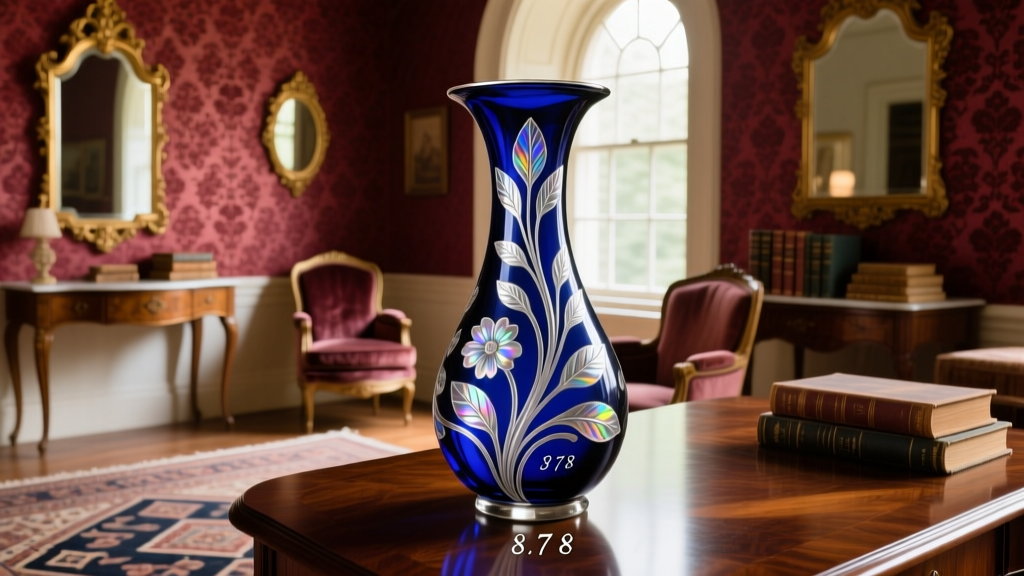
Moser Vase: Stylized Flowers and Leaves in Inverted Bell Form — Signed, 8 7/8 Inches Tall
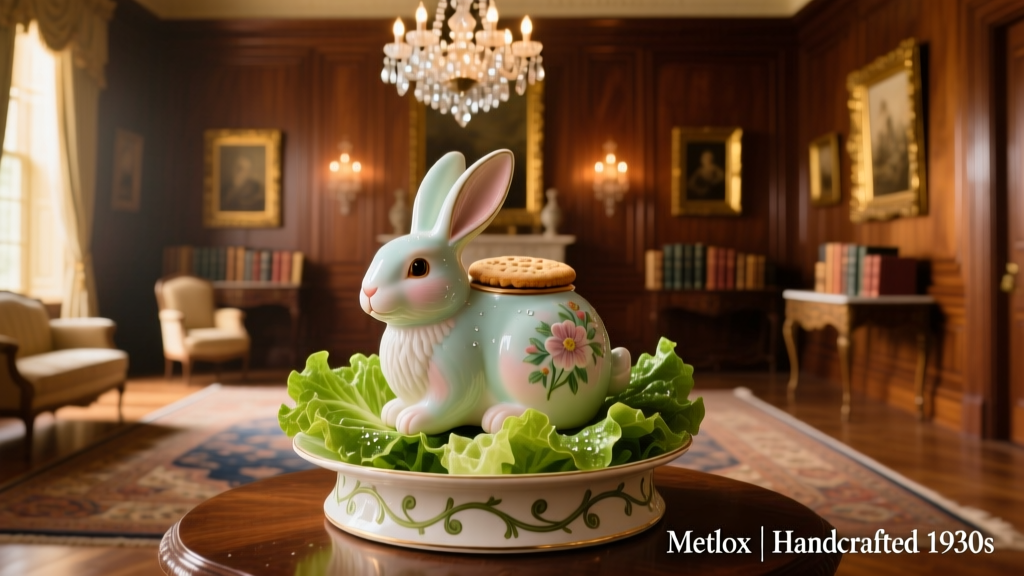
The Bunny on Lettuce Cookie Jar by Metlox: History, Identification, and Restoration Insights