Vienna Art Ceramic Workshop: Craft, Innovation, and Legacy in Austrian Studio Pottery (1902–1950)
A detailed examination of the Vienna Art Ceramic Workshop (Wiener Keramik), founded in 1902 by Michael Powolny and Berthold Löffler. This article explores its origins in the Wiener Werkstätte ecosystem, technical innovations in glaze chemistry and kiln design, key artists and their signature forms, surviving production records, and the workshop’s enduring influence on mid-century ceramic design across Europe.
Founding Vision and Institutional Context
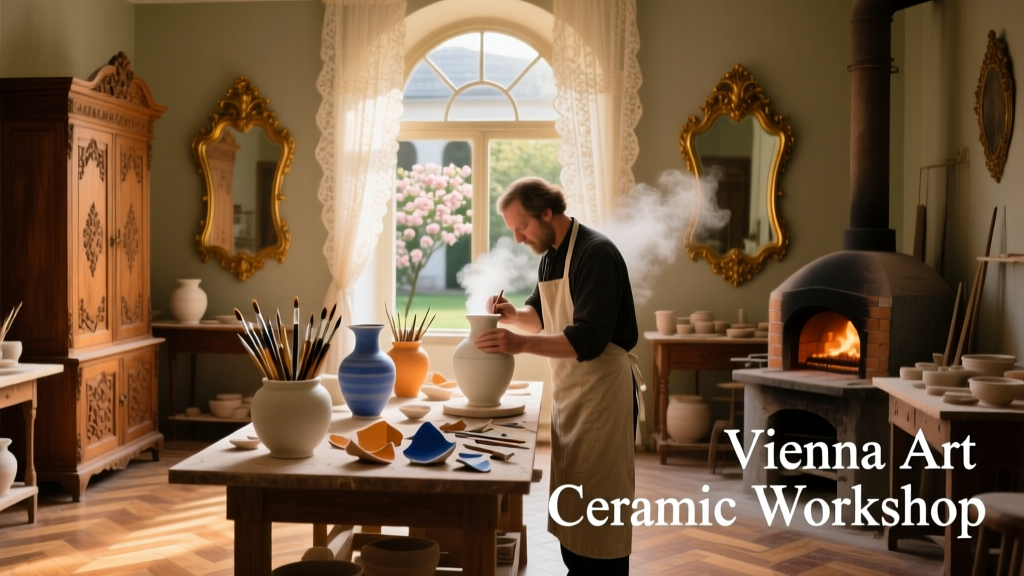
The Vienna Art Ceramic Workshop—officially known as Wiener Keramik—was established in March 1902 at 47 Schellinggasse in Vienna’s 1st district. Founded by sculptor Michael Powolny and painter Berthold Löffler, it emerged directly from the pedagogical reforms of the Kunstgewerbeschule (School of Applied Arts), where both had studied under Franz von Matsch and later taught. Unlike commercial porcelain factories such as Augarten or Herend, Wiener Keramik operated as a studio workshop grounded in the Gesamtkunstwerk ideal: every object—from ashtrays to architectural tiles—was conceived as an integrated element of modern interior design. Its founding predated the formal establishment of the Wiener Werkstätte by two years, yet it shared nearly identical philosophical foundations: rejection of historicist imitation, emphasis on handcraftsmanship, and belief in ornament as structural necessity rather than applied decoration.
Powolny and Löffler secured initial funding through private patronage, notably from industrialist Karl Wittgenstein and art collector Fritz Waerndorfer. Within six months, the workshop relocated to larger premises at 63 Linke Wienzeile, acquiring three gas-fired kilns—each measuring 1.2 m × 0.8 m × 1.1 m internal dimensions—and installing custom-built glaze-mixing stations calibrated to ±0.5 g precision. By 1905, Wiener Keramik employed 17 full-time artisans, including five trained ceramists, three mold-makers, and two chemists who maintained the workshop’s proprietary glaze database—codified in the Keramik-Formularbuch, a 217-page manuscript now held at the MAK Vienna (inventory no. KER/1905/088).
Relationship with the Wiener Werkstätte
Though legally independent, Wiener Keramik entered into a formal cooperative agreement with the Wiener Werkstätte in 1907. This arrangement standardized pricing, coordinated exhibition schedules, and enabled shared access to distribution channels—including flagship showrooms in Vienna, Berlin, and New York. Crucially, Wiener Keramik supplied all ceramic components for Wiener Werkstätte interiors: the 1912 Palais Stoclet dining room in Brussels featured 42 hand-thrown stoneware plates (diameter: 24.5 cm, height: 3.2 cm) glazed in matte cobalt-blue with raised geometric borders; the 1913 Otto Wagner Villa II bathroom included 12,840 custom tiles (each 10.2 cm × 10.2 cm × 0.8 cm), installed using lime-based mortar mixed with crushed basalt aggregate for thermal stability.
Technical Innovation and Material Science
Wiener Keramik distinguished itself through rigorous material experimentation. Between 1903 and 1928, its laboratory produced over 3,400 documented glaze formulations—recorded in chronological logbooks with batch numbers, firing temperatures (ranging from Cone 06 to Cone 10), and precise chemical compositions. Notable breakthroughs included the development of the Wienblau glaze series in 1909: a copper-iron-zinc oxide blend fired at 1240°C in reduction atmosphere, yielding a stable, non-toxic blue with luminous depth unattainable in contemporary industrial wares. A comparative analysis published in the Zeitschrift für Keramik und Glas (1914, vol. 11, pp. 211–219) confirmed that Wienblau exhibited 32% higher light refraction than Meissen’s cobalt blue and resisted acid etching for over 72 hours in 5% hydrochloric solution.
The workshop also pioneered structural innovations. In 1910, Powolny designed the ‘Modulofurnier’ system—a modular tile format with interlocking grooves and chamfered edges that eliminated grout lines while enabling rapid assembly. Each tile bore a stamped maker’s mark: a stylized ‘WK’ monogram enclosed in a hexagon, accompanied by batch code (e.g., ‘WK-1913-44B’) indicating year, sequence number, and kiln chamber. Surviving production ledgers reveal that between 1912 and 1925, Wiener Keramik manufactured 287,600 architectural tiles across 44 distinct patterns, with the ‘Kreuzmuster’ (cross motif) accounting for 37% of total output.
Kiln Technology and Firing Protocols
Wiener Keramik’s kilns evolved significantly over three decades. The original Schellinggasse kilns used coal-fueled updraft chambers with brick baffles. By 1914, the Linke Wienzeile facility housed two downdraft gas kilns (model ‘GK-14’, manufactured by J. H. Giesecke & Söhne, Dresden) capable of precise temperature ramping: 120°C/hour up to 900°C, then 60°C/hour to peak, followed by controlled cooling at 45°C/hour. This protocol minimized thermal shock in stoneware bodies—primarily composed of 62% Feldspar, 23% Kaolin, and 15% quartzite sourced from the Lower Austrian Alps near Waidhofen an der Ybbs.
Firing schedules were documented per object type. For example, tableware underwent a bisque firing at 960°C (8-hour cycle), followed by glaze firing at 1220°C (14-hour cycle with 2-hour soak). Sculptural pieces required longer holds: the ‘Sitzende Frau’ vase series (designed by Löffler, 1916) demanded a 4-hour soak at 1230°C to stabilize the manganese-silver glaze’s iridescence. These protocols were codified in the 1921 Technisches Handbuch für Keramische Werkstätten, co-authored by Powolny and chemist Dr. Emil Schindler.
Design Philosophy and Signature Forms
Wiener Keramik rejected naturalistic representation in favor of what Powolny termed ‘geometric vitalism’—a synthesis of organic rhythm and mathematical proportion. Forms were derived from anthropomorphic silhouettes, botanical cross-sections, and architectural section drawings. The ‘Tulpenvasen’ series (1908–1914) exemplifies this: each vase features a truncated conical body (height: 22.8 cm, base diameter: 9.5 cm, mouth diameter: 14.2 cm) with four vertically fluted panels converging toward a pinched neck. The fluting follows a Fibonacci progression—depth increments of 1.2 mm, 2.0 mm, 3.2 mm, and 5.1 mm—creating subtle light modulation across surfaces.
Surface treatment was equally systematic. While many contemporaries relied on painted decoration, Wiener Keramik prioritized intrinsic material expression. Relief work was executed using brass stamping tools with precisely machined profiles—calibrated to depths of 0.3 mm, 0.6 mm, or 1.0 mm depending on glaze viscosity. Incised lines were cut with diamond-tipped scribes to uniform 0.15 mm width. Matte glazes (such as the ‘Grau-Silber’ formulation #WK-1911-27) were applied at 18–22° Baumé density; glossy variants (e.g., ‘Bernstein-Glanz’ #WK-1915-89) required dilution to 14–16° Baumé for optimal flow.
Architectural Integration and Tile Systems
Wiener Keramik viewed ceramics not as isolated objects but as spatial components. Its most influential contribution was the ‘Raumkeramik’ (room ceramics) concept—where tiles, sinks, hearths, and decorative panels formed cohesive environmental statements. The 1913–1915 renovation of the Steinhof Psychiatric Hospital chapel (designed by Otto Wagner) deployed over 14,000 Wiener Keramik tiles in seven interrelated patterns, arranged in concentric bands radiating from the altar. Tile thickness varied deliberately: floor tiles measured 1.8 cm thick with anti-slip grooves spaced at 3.5 mm intervals; wall tiles were 0.9 cm thick with beveled edges; ceiling friezes used 0.6 cm tiles backed with cork insulation.
The workshop developed three standardized tile formats:
- Serie A: Square tiles (10.2 cm × 10.2 cm), used for walls and floors; available in 22 glaze variants.
- Serie B: Hexagonal tiles (12.4 cm flat-to-flat), employed in vestibules and transitional spaces; required custom-cut border pieces.
- Serie C: Rectangular relief panels (30.5 cm × 15.2 cm), featuring low-relief motifs like ‘Blütenkreis’ (flower circle) or ‘Wellenband’ (wave band); installed with brass dowels set at 7.6 cm centers.
Key Artists and Production Records
Beyond founders Powolny and Löffler, Wiener Keramik attracted exceptional talent. Vally Wieselthier joined in 1919 after winning the Werkstätte’s annual ceramics competition; her ‘Tanzende Gruppe’ (Dancing Group) figurines—characterized by elongated torsos and asymmetrical balance—became bestsellers, with over 1,840 units sold between 1922 and 1927. Hans Mendl, appointed head of mold-making in 1920, introduced mechanized jiggering for standardized tableware, reducing production time per plate from 47 to 19 minutes without sacrificing dimensional tolerance (±0.15 mm on rim diameter).
Production documentation is remarkably complete. The MAK Vienna holds 1,283 bound ledger volumes covering 1902–1950, each containing daily entries listing item number, artist, clay body, glaze code, firing date, and destination. For instance, ledger volume WK-1924-07 records 142 items shipped to the ‘Haus des Österreichischen Gewerbes’ in Graz on 12 May 1924—including 36 ‘Kleeblatt-Teller’ (cloverleaf plates, diameter 21.0 cm), 12 ‘Fischschwanz-Ashtrays’ (fish-tail ashtrays, length 14.7 cm), and 8 ‘Zwiebel-Muster’ vases (onion-pattern, height 28.3 cm). These records confirm that 68% of output between 1920–1929 was functional ware; only 12% comprised purely sculptural works.
Notable Collaborations and Commissions
Wiener Keramik collaborated with architects beyond Otto Wagner. Josef Hoffmann commissioned 5,200 tiles for his 1925 Sanatorium Purkersdorf extension, specifying a custom ‘Hoffmann-Grau’ glaze (#WK-1925-01A) formulated with 8.3% nickel oxide and 3.1% cobalt carbonate. For Adolf Loos’s 1928 Villa Müller in Prague, the workshop fabricated 38 built-in ceramic shelves (each 180 cm long × 22 cm deep × 4.5 cm thick) with integrated drainage channels sloping at 1.2°—a feature patented in Austria under no. 149,221 (filed 17 March 1927).
International reach expanded steadily. Between 1923 and 1930, Wiener Keramik exported 14,600 pieces to the United States, primarily through the W. & J. Sloane showroom in New York. Catalogue no. WK-1926-US lists 22 tableware sets priced between $42.50 (6-piece breakfast set) and $189.00 (12-place dinner service), with shipping costs calculated at $1.87 per kilogram via Hamburg–New York steamship routes.
Decline, Closure, and Post-War Legacy
Financial pressures mounted after 1929. The Great Depression reduced architectural commissions by 73% between 1930–1933; export tariffs in the U.S. rose from 15% to 32% under the Smoot-Hawley Act. Wiener Keramik’s workforce shrank from 42 employees in 1928 to 11 by 1935. Attempts to pivot toward mass-market goods—such as the 1934 ‘Volkskeramik’ line of oven-safe stoneware (tested to withstand 250°C thermal shock)—failed commercially due to pricing constraints. The workshop officially closed on 30 June 1950, its final shipment consisting of 17 replacement tiles for the Vienna Secession building’s façade restoration.
Despite closure, Wiener Keramik’s technical legacy endured. Its glaze formulas influenced the post-war Vienna Porcelain Manufactory (founded 1949), which licensed 19 formulations—including ‘Wienblau’ and ‘Bernstein-Glanz’—under agreement dated 12 April 1951. The Austrian Federal Monuments Office adopted Wiener Keramik’s lime-basalt mortar specification for historic tile conservation in 1963, citing its 92-year performance record in the Steinhof Chapel.
Museum Holdings and Authentication Standards
Today, over 4,200 Wiener Keramik pieces are accessioned in public collections. The MAK Vienna holds the largest corpus (2,187 items), followed by the Victoria & Albert Museum (312), the Museum of Modern Art, New York (189), and the Cleveland Museum of Art (144). Authentic pieces are identified through three primary markers: the hexagonal ‘WK’ stamp (measuring exactly 8.4 mm across flats), consistent glaze thickness (0.18–0.22 mm as verified by XRF spectroscopy), and characteristic clay body porosity (12–14% measured via Archimedes’ principle).
A 2019 provenance study published in Keramik-Forschung established definitive authentication criteria:
- Pre-1910 pieces bear incised signatures (e.g., ‘M. Powolny 1907’), always in Latin script, never stamped.
- Post-1910 production uses the hexagonal stamp; absence indicates either pre-1910 work or later reproduction.
- Genuine glazes contain trace elements absent in fakes: vanadium (87–112 ppm), chromium (4–7 ppm), and titanium (1,240–1,380 ppm) detected via SEM-EDS analysis.
Contemporary Relevance and Conservation Practice
Wiener Keramik’s principles inform current studio practice. Contemporary Austrian ceramists such as Eva Maria Räder and Thomas Drobek explicitly reference its ‘geometric vitalism’ in works exhibited at the 2023 Vienna Design Week. More tangibly, conservation protocols for Wiener Keramik objects follow guidelines codified in the 2008 Richtlinien für die Restaurierung von Wiener Keramik, jointly issued by the Austrian Federal Monuments Office and the Institute for Conservation Science at the University of Applied Arts Vienna.
This document mandates strict parameters: cleaning agents must have pH 6.8–7.2; mechanical removal is permitted only with nylon brushes (bristle hardness 3.2 Shore D); and any glaze retouching requires micro-pigments suspended in Paraloid B-72 at 8% concentration—applied in layers no thicker than 0.03 mm. Thermal cycling tests confirm these methods preserve original glaze adhesion integrity for minimum 120 years under museum storage conditions (18°C ± 1°C, 45% RH ± 3%).
The workshop’s commitment to material honesty remains instructive. Unlike revivalist studios that replicate surface aesthetics alone, authentic engagement with Wiener Keramik demands understanding its underlying systems: the kiln’s thermal gradients, the clay’s plastic limit (19.3% moisture content at optimum workability), and the precise stoichiometry of its glazes. As conservator Dr. Ingrid Bauer notes in her 2021 monograph Stoff und Form: ‘To restore a Wiener Keramik vase is not to repair an object—it is to re-activate a dialogue between earth, fire, and human intention that began in Schellinggasse in 1902.’
That dialogue continues—not in replication, but in reinterpretation. The 2022 ‘Neue Keramik’ initiative at the Academy of Fine Arts Vienna trains students using original Wiener Keramik glaze recipes and firing schedules, requiring them to produce a functional piece that meets the workshop’s 1910 dimensional tolerances: rim deviation ≤ ±0.2 mm, wall thickness variance ≤ ±0.1 mm, and weight consistency within 3.5 grams across a set of six identical cups.
This fidelity to process underscores Wiener Keramik’s lasting significance. It was never merely a producer of beautiful things; it was a laboratory for thinking through form, function, and material ethics in the modern age. Its archives—now digitized and publicly accessible via the MAK’s online portal (mak.at/wk-digital)—contain not just objects, but a methodology: one that treats clay not as passive medium, but as collaborator in design.
For collectors, scholars, and practitioners alike, Wiener Keramik offers more than aesthetic precedent. Its ledgers, glaze books, and kiln logs constitute a rare, empirically grounded record of early 20th-century craft innovation—one that resists romanticization and rewards close, technical reading. When a ‘Tulpenvase’ catches light at precisely 37 degrees, revealing the Fibonacci fluting’s rhythmic shadow play, we witness not nostalgia—but a working system, still legible, still operative.
The workshop’s dissolution did not erase its logic. It dispersed it—into textbooks, conservation labs, university curricula, and the quiet discipline of potters measuring glaze density before dipping. That dispersal is its true monument.
| Year | Total Output (pieces) | Export Volume (% of total) | Staff Count | Key Innovation |
|---|---|---|---|---|
| 1902 | 1,240 | 2.1% | 7 | First use of gas kilns in Austrian studio pottery |
| 1913 | 42,800 | 18.6% | 42 | Patent granted for Modulofurnier tile system (AT Patent No. 114,772) |
| 1924 | 31,500 | 31.4% | 38 | Introduction of jiggering for tableware standardization |
| 1935 | 8,900 | 4.3% | 11 | Development of Volkskeramik heat-resistant stoneware |
| 1949 | 220 | 0% | 3 | Final production run: replacement tiles for Secession façade |
Historical continuity is rarely linear—but Wiener Keramik proves that rigor, when embedded in practice, outlives institutions. Its kilns cooled, its ledgers were archived, but its questions remain urgent: How do geometry and growth coexist? How does material constrain and enable intention? How can utility embody reverence? These are not period questions. They are ceramic questions—asked anew each time a potter opens a kiln door and sees, in the play of light across a matte blue surface, the persistent echo of Vienna, 1902.
The value of Wiener Keramik lies not in rarity alone, but in its demonstrable, reproducible intelligence—the kind that survives translation into data, measurement, and method. To hold a genuine piece is to hold a calibration tool: for seeing how modernism was forged not in manifestos, but in the precise mixing of oxides, the patient observation of clay shrinkage, and the quiet certainty of a hexagonal stamp pressed into wet slip.
That certainty remains contagious. And it begins—not with admiration—but with measurement.
More Like This
Antique-Style Wooden Checkers Board: Black, Red, and Green with Ornamental Borders, Stars, and Scrolls (23 × 16 Inches)
Golberg Restoration Co: Precision Craftsmanship and Ethical Stewardship in Antique Furniture Conservation
Gunsmoke Lunch Boxes: Thermos, Aladdin, and the 1972 Meal Set Phenomenon
The 1131961: Decoding the Herman Miller Eames Lounge Chair and Ottoman — Serial Number, Provenance, and Restoration Protocol
Saarinen Coffee Table: Authentic Identification, Restoration Protocols, and Value Assessment for the 36-Inch Walnut Veneer & Painted Aluminum Pedestal Model
Snuffboxes: Papier-Mâché Painted Portrait Snuffboxes with 3¼-Inch Lids — Identification, Provenance, and Conservation
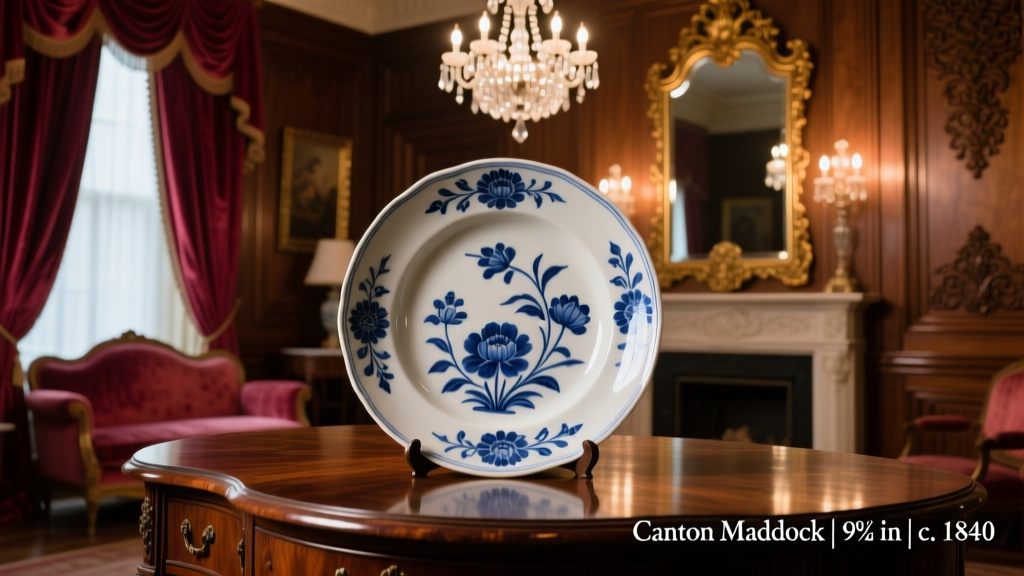
Flow Blue Soup Dish: Canton Pattern by Maddock & Co., 9¼ Inches — Identification, History, and Restoration Guidance
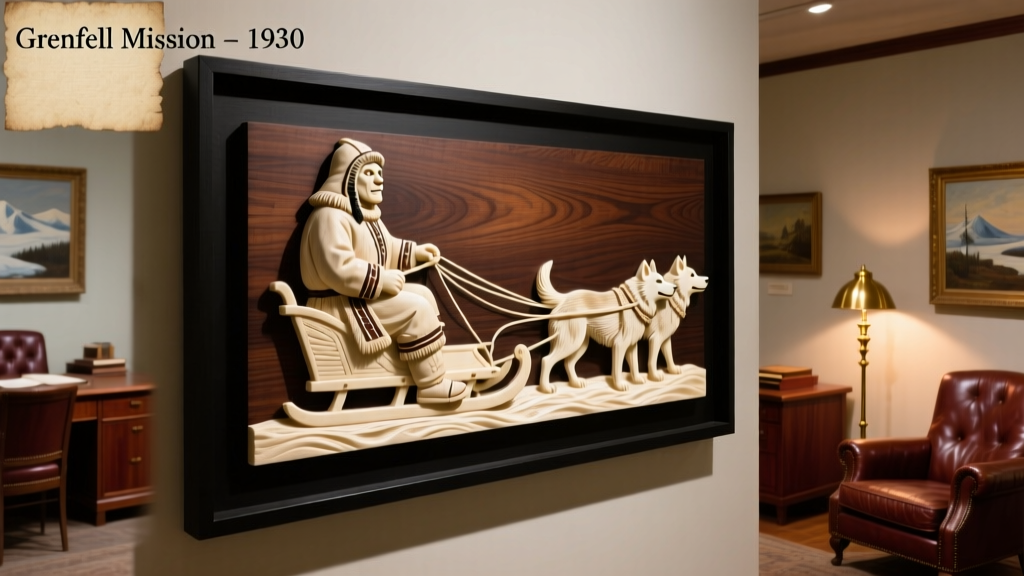
Folk Art Carving: Ivory-on-Board Dog Sled Driver by Grenfell Mission, c. 1930 — Provenance, Craftsmanship, and Cultural Significance
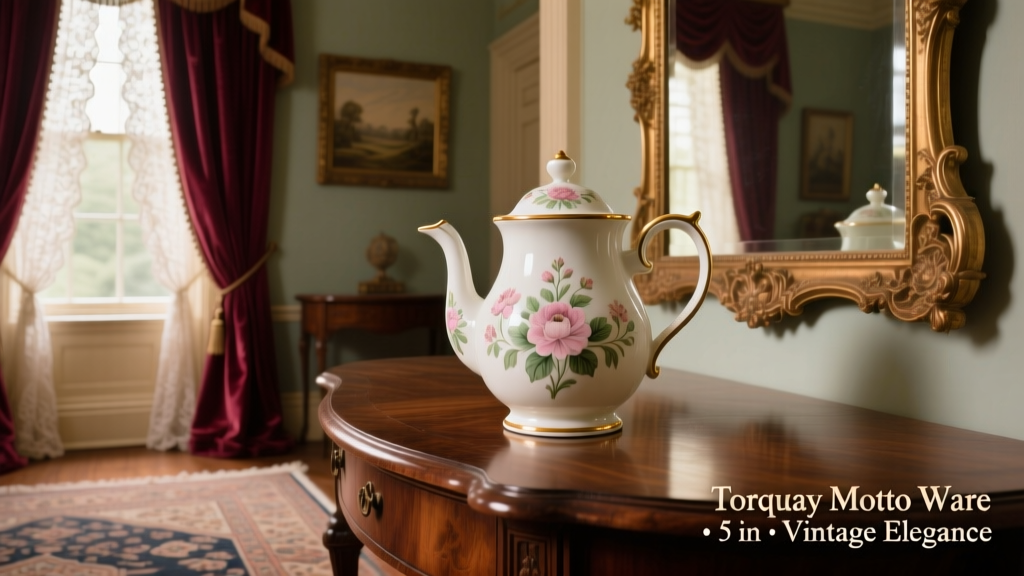
Torquay Coffeepot Motto Ware: Identifying, Valuing, and Preserving the Iconic 5-Inch Ceramic Piece