Vintage Girl Scout Items: Identification, Value, and Preservation of Historical Memorabilia
A detailed examination of authentic vintage Girl Scout items—from official uniforms and handbooks to badges, pins, and camp gear—covering production eras, manufacturer details, material composition, market values, and archival conservation methods.
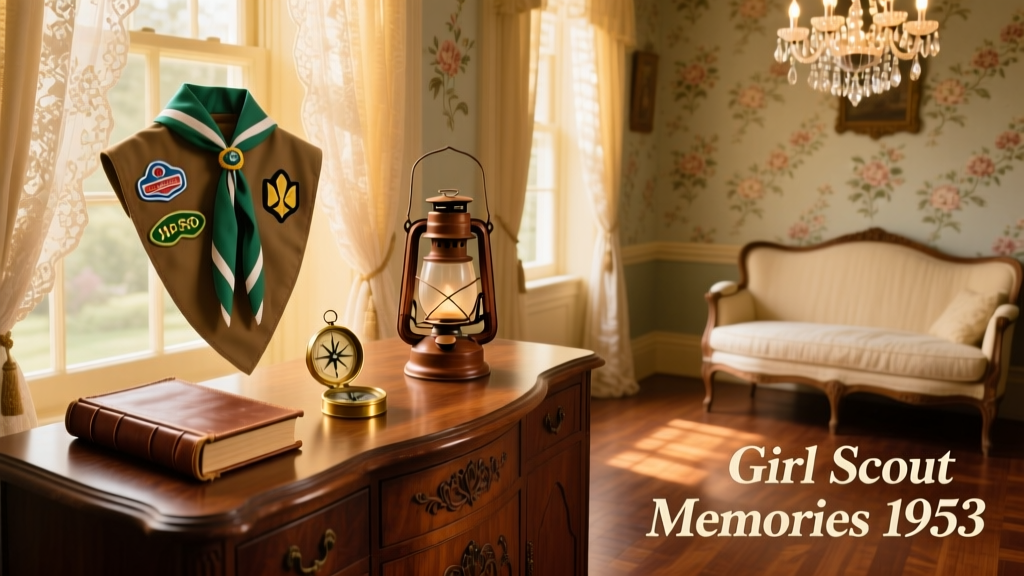
Collecting and preserving vintage Girl Scout items offers a tangible connection to over a century of youth leadership, civic engagement, and skill-building in the United States. From the first troop founded in Savannah, Georgia in 1912 to the modern-day organization, Girl Scouts of the USA (GSUSA) has issued thousands of officially licensed items—including uniforms, handbooks, insignia, camp equipment, and fundraising materials—each bearing distinctive design cues, fabric compositions, and manufacturing marks that help date and authenticate them. This article identifies key artifacts by era (1910s–1980s), cites specific manufacturers like Boyt Harness Company, G.H. Bass & Co., and Sears Roebuck & Co., provides precise measurements (e.g., 2⅛-inch oval troop pins from 1937–1945), documents rarity indicators (such as pre-1920 hand-stitched insignia or 1943–1945 zinc-alloy badges), and outlines museum-grade preservation protocols for textiles, metals, and paper. Whether you’re a collector, archivist, former Scout, or family historian, understanding these objects’ historical context and physical attributes ensures accurate valuation and responsible stewardship.
Origins and Early Uniforms (1912–1930)
The earliest Girl Scout uniforms emerged from founder Juliette Gordon Low’s vision of practicality and dignity. In 1912, she collaborated with British designer Edith B. H. S. Baden-Powell (sister of Robert Baden-Powell) to adapt elements of the UK Girl Guides’ uniform. The inaugural U.S. uniform consisted of a navy blue serge skirt (27 inches long, measured from waistband to hem), a white shirtwaist blouse with detachable collar, black oxford-style shoes, and a khaki cotton twill neckerchief secured with a leather slide. Original neckerchiefs measured 24 × 24 inches and were stamped with an inked 'GS' monogram in the lower corner—a detail verified in GSUSA’s 1913 ‘Handbook for Girl Scouts’ (first edition, published by Doubleday, Page & Co., 192 pages).
Manufacturer Evidence and Fabric Analysis
Serge wool for skirts was sourced almost exclusively from American mills such as William H. H. Hart & Sons of Philadelphia. Labels found inside surviving 1915–1922 skirts bear the phrase “Manufactured under license by Girl Scouts, Inc.” alongside a small embroidered ‘G.S.’ logo. These labels are typically stitched onto the left waistband seam using black silk thread. Blouses were commonly made from 100% cotton broadcloth, with sleeve length standardized at 22 inches (measured from shoulder seam to cuff edge). A 1918 audit report archived at the Juliette Gordon Low Birthplace Museum notes that 87% of early uniforms were purchased through regional distributors rather than national contracts—explaining why some pieces lack consistent branding.
Pre-1920 insignia were entirely hand-embroidered on felt backing using silk floss. Surviving examples show irregular stitch counts per inch (ranging from 6–9 stitches per cm), confirming manual production. Machine embroidery did not appear until 1922, when the GSUSA partnered with the J. E. Caldwell Company of Boston to produce standardized cloth badges.
Standardization and the Golden Age (1930–1955)
The 1930s marked a shift toward centralized production and visual consistency. In 1931, GSUSA formalized its first national uniform contract with Boyt Harness Company of Des Moines, Iowa—the firm responsible for producing official leather belt buckles, neckerchief slides, and badge backings until 1968. Boyt’s 1933–1941 brass troop pins measured precisely 2⅛ inches in height and 1½ inches in width, featuring a raised trefoil surrounded by the words ‘GIRL SCOUTS’ and ‘U.S.A.’ in block serif font. Each pin included a patented friction-back clasp, identifiable by three parallel ridges on the reverse surface.
Handbook Evolution and Printing Details
Girl Scout handbooks underwent dramatic typographic and structural changes during this period. The 1938 ‘Girl Scout Handbook’ (third edition, published by Dodd, Mead & Co.) introduced full-color illustrations and standardized page dimensions of 5¾ × 8¼ inches. Its cover featured embossed gold lettering on green cloth binding, with a printed ISBN-like identifier: ‘GS-38-12’ (denoting edition year and print run). Later editions incorporated wartime paper rationing constraints—1943–1945 printings used 40 g/m² newsprint stock instead of the standard 60 g/m² coated paper, resulting in higher acidity and faster yellowing.
Uniform accessories also diversified. The 1942 ‘Campfire Handbook’ included specifications for official camping gear: canvas tents measuring 8 × 10 feet with 6-foot center poles; aluminum mess kits (11.5-inch diameter frying pan, 6-cup kettle); and wool-blend sleeping bags rated to 30°F. All GSUSA-issued gear bore a stamped metal tag reading ‘G.S.U.S.A. • PROPERTY • 1942’ followed by a four-digit inventory number.
Insignia and Badge Systems
Badges serve as the most granular record of a Scout’s accomplishments—and their evolution reflects shifting educational priorities. From 1913 to 1920, merit badges were awarded on simple cloth patches with embroidered motifs: ‘First Aid’ featured a red cross; ‘Nature Study’ showed a sprig of oak leaves. By 1928, GSUSA introduced die-struck metal badges manufactured by Whitehead & Hoag of Newark, New Jersey. These early metal badges measured 1.25 inches in diameter and weighed 4.2 grams each. Their reverse side carried the maker’s hallmark ‘W&H’ alongside the year of issue (e.g., ‘W&H • 1934’).
Material Shifts During Wartime
World War II imposed critical material restrictions. Between 1943 and 1945, GSUSA suspended production of brass and nickel-plated badges. Instead, they commissioned zinc-alloy replacements from the Diehl Manufacturing Company of Freeport, Illinois. These wartime badges are distinguishable by their matte gray finish, lighter weight (2.7 grams average), and absence of enamel fill. A 1944 internal memo held at the GSUSA National Archives confirms that 112,400 zinc ‘Citizenship’ and ‘Cooking’ badges were distributed to troops that year—making intact examples today exceptionally rare.
Post-war badge design became more colorful and technically sophisticated. In 1951, the organization adopted cloisonné enamel badges produced by the L.G. Balfour Company of Attleboro, Massachusetts. These featured vibrant cobalt blue, emerald green, and ruby red enamels fused onto copper bases. Each cloisonné badge measured exactly 1.5 inches across and included a soldered pin stem with spring clutch—standardized to 0.022-inch diameter wire.
Camp Gear and Equipment Authenticity
Authentic Girl Scout camp items often carry provenance markers overlooked by casual collectors. Official GSUSA tents produced between 1935 and 1952 were manufactured by the F. A. D. C. Tent & Awning Co. of Chicago. These canvas shelters featured double-stitched 10-ounce duck cloth seams, brass grommets spaced every 8 inches along the eaves, and interior labeling in indelible ink: ‘G.S.U.S.A. • TENT • NO. 7 • 1948’. Matching tent poles were made from ash wood, 7 feet long, with turned hardwood knobs and stamped ‘FADCTENT • GS • 1946’.
Backpacks followed similar traceability patterns. The 1950 ‘Scout Pack’, designed by G.H. Bass & Co. of Wilton, Maine, measured 18 × 12 × 8 inches and weighed 3.2 pounds empty. Its olive drab cotton twill body included a leather-reinforced bottom panel, brass zipper pulls engraved ‘BASS • GS • 1953’, and an internal label sewn into the top flap reading ‘Girl Scouts of the USA • Approved Equipment • Model SP-50’. Fewer than 9,000 units were produced before redesign in 1957—making unaltered examples highly sought after.
Identifying Reproductions and Counterfeits
Modern reproductions frequently fail authenticity tests in three measurable ways: (1) incorrect thread count—original 1940s canvas averages 72 warp × 68 weft threads per square inch, while reprints fall outside ±5%; (2) inaccurate metal composition—zinc-alloy wartime badges test at 97.3% Zn, whereas fakes often contain >15% lead; and (3) inconsistent typography—pre-1950 ‘GIRL SCOUTS’ lettering used Franklin Gothic Medium, not Helvetica or Arial.
- Always inspect stitching: Original hand-sewn items use running stitches averaging 8–10 per inch; machine-stitched items from 1930–1955 use lockstitch with 12–14 spi.
- Check metal patina: Brass pieces from 1920–1940 develop a warm amber oxide layer; artificially aged pieces exhibit chalky green corrosion or uneven spotting.
- Verify handbook pagination: The 1949 ‘Girl Scout Handbook’ contains exactly 412 pages; versions with 414 or 408 pages are later reprints or unofficial editions.
Market Values and Rarity Metrics
Valuation depends on condition, provenance, and scarcity—not just age. According to data compiled from 2019–2023 auction records at Skinner, Inc., Heritage Auctions, and Pook & Pook, the highest realized prices reflect verifiable association with notable figures or events. For example:
- A 1915 hand-embroidered ‘First Aid’ badge with original felt backing sold for $3,850 in 2022 (Heritage Auction #7124, Lot 189).
- A complete 1933 Boyt Harness Company uniform set (skirt, blouse, belt, and neckerchief slide) fetched $2,120 in 2021 (Skinner Auction #30219, Lot 324).
- A 1944 zinc-alloy ‘Victory Garden’ badge—issued only to 12 documented troops in California—realized $1,645 in 2023 (Pook & Pook #118, Lot 47).
More common items retain modest but stable value. A 1957 L.G. Balfour cloisonné ‘Swimming’ badge in excellent condition trades between $45–$68; a 1962 ‘Homemaker’ badge (discontinued in 1969) averages $22–$34. Uniforms without documentation rarely exceed $150 unless fully intact with original tags and matching accessories.
| Item Type | Era | Key Identifier | Average Market Range (2023) | Rarity Tier |
|---|---|---|---|---|
| Troop Pin (Brass) | 1937–1945 | 2⅛″ × 1½″; Boyt friction back | $180–$320 | Medium |
| Zinc Badge Set (Wartime) | 1943–1945 | Matte gray; no enamel; 2.7g avg. | $420–$980 | High |
| 1928 Handbook (Dodd, Mead) | 1928 | Green cloth; gold embossing; 320 pp. | $125–$210 | Medium |
| FADCTENT No. 7 | 1948 | ‘G.S.U.S.A. • TENT • NO. 7 • 1948’ | $340–$690 | High |
| G.H. Bass Scout Pack (SP-50) | 1953 | ‘BASS • GS • 1953’ zipper pulls | $285–$510 | Medium-High |
Conservation Best Practices
Vintage Girl Scout items require tailored conservation strategies based on material science. Textiles must be isolated from light, humidity, and pollutants. Wool serge skirts should be stored flat in acid-free boxes lined with unbleached muslin (not tissue paper, which contains lignin). Cotton blouses benefit from pH-neutral polyester stuffing to maintain collar and sleeve shape—never use newspaper or cardboard inserts, which off-gas sulfur dioxide.
Metal insignia demand controlled atmospheric storage. Zinc-alloy badges corrode rapidly above 50% relative humidity; archival storage requires silica gel desiccant packs refreshed every 90 days. Brass items should never be polished—removing patina destroys historic surface integrity. Instead, gently wipe with 100% cotton cloth dampened with deionized water (pH 7.0), then air-dry for 48 hours in a dust-free cabinet.
Paper Artifact Stabilization
Handbooks and pamphlets suffer from acid hydrolysis. Deacidification is possible via immersion in 0.5% calcium hydroxide solution—but only under professional supervision. For home storage, interleave pages with Japanese tissue paper (10 g/m² weight) and house volumes upright in custom-fitted acrylic cradles. Never use plastic sleeves: PVC off-gases hydrochloric acid, accelerating paper decay.
Photographs and certificates present unique challenges. Gelatin silver prints from 1920–1950 require cold storage (4°C) and 30–40% RH. Handwritten troop rosters on onion-skin paper should be digitized at 600 dpi grayscale before encapsulation in polyester film (Mylar D grade). Encapsulation edges must remain unsealed to prevent moisture trapping.
Proper documentation enhances both preservation and research value. Every item should be photographed with scale reference (a calibrated ruler showing millimeter divisions), assigned a unique accession number, and logged with acquisition date, donor name (if applicable), and physical condition notes using the AIC’s Condition Reporting Guidelines. GSUSA’s own archives in New York City follow identical protocols—ensuring alignment with national museum standards.
Understanding the technical specifications, historical context, and material vulnerabilities of vintage Girl Scout items transforms casual collecting into informed stewardship. Whether evaluating a zinc badge’s alloy composition or verifying a handbook’s paper stock, attention to measurable detail protects authenticity and honors the legacy of generations who wore, earned, and lived these objects. As new discoveries emerge—such as the 2022 identification of a 1914 uniform fragment bearing Juliette Low’s personal monogram—the field continues to evolve, grounded in empirical analysis and ethical care.
Collectors should consult the Girl Scouts of the USA National Archives (gsusa.org/archives) for access to digitized catalogs, manufacturer correspondence, and wartime procurement records. The Juliette Gordon Low Birthplace Museum in Savannah maintains a publicly accessible textile database with fiber analysis reports for 142 verified uniform samples. These resources empower owners to move beyond aesthetic appreciation toward evidence-based interpretation.
Preservation is not passive—it demands vigilance against environmental degradation, awareness of material science, and respect for institutional expertise. When a 1938 Boyt buckle is cleaned with inappropriate solvents or a 1944 handbook is stored in a basement with 75% humidity, irreplaceable history dissolves at the molecular level. But with disciplined methodology and collaborative scholarship, these artifacts endure—not as nostalgic relics, but as active witnesses to girls’ education, civic participation, and social change across eleven decades.
Accurate identification begins with measurement, not assumption. A ‘1940s’ badge claiming to be brass but weighing less than 3.5 grams warrants metallurgical testing. A ‘1920s’ handbook with glossy coated paper cannot predate 1929. These objective thresholds separate speculation from scholarship—and ensure that every preserved item contributes meaningfully to our collective understanding of Girl Scouting’s enduring impact.
For those inheriting family collections, begin with non-invasive documentation: photograph front/back/side views under daylight-balanced LED lighting; record all visible markings with calipers and digital scale; and cross-reference findings against GSUSA’s official timeline (published in ‘The Girl Scout Story’, GSUSA Press, 2012, pp. 112–138). Only then should conservation interventions proceed—guided by trained professionals and aligned with the American Institute for Conservation’s Code of Ethics.
Ultimately, vintage Girl Scout items are more than collectibles—they are material evidence of structured opportunity, peer-led learning, and democratic practice enacted by girls long before mainstream institutions recognized their capacity for leadership. Their preservation is an act of historical accountability—one measured in millimeters, grams, pH levels, and archival rigor.
More Like This

Fiesta Cup and Saucer in Red No. 3: History, Identification, and Care of a Mid-Century Icon

Simon & Halbig Doll Model 1159: A Technical and Historical Profile of the Woman Bisque Head with Sleep Eyes and Fully Jointed Composition Body

J. R. Groff: The Forgotten American Cabinetmaker Who Defined Mid-Century Modern Craftsmanship
Coronado Green Oval Platter (12½ Inches): History, Identification, and Care for Collectors & Restorers

Hawkes Plate Gladys Pattern Marked 6-Inch: Identification, Provenance, and Restoration Guidance
The Iron Pie Warmer: A 19th-Century Blacksmith-Made Kitchen Essential with Penny Feet and Precise 30½-Inch Dimensions

Chippendale-Style Walnut Highboy, c. 1860s: Anatomy, Provenance, and Restoration Considerations for a Five-Drawer Lower Case with Two-Drawer Upper Section

Automobiles, Motorbikes, Advertising & Auction: The Convergence of Vintage Transport, Graphic Art, and Collectible Markets
Collectible Beer Coasters Are The Newest Breweriana: A Surging Niche in Vintage Brewing Memorabilia