U.S. Navy Maritime Collectibles: History, Value, and Restoration Best Practices
An authoritative guide to authentic U.S. Navy maritime collectibles—from WWII-era brass binoculars and shipboard chronometers to regulation-issue uniforms and deck logbooks—covering provenance verification, material composition, conservation ethics, and market benchmarks.
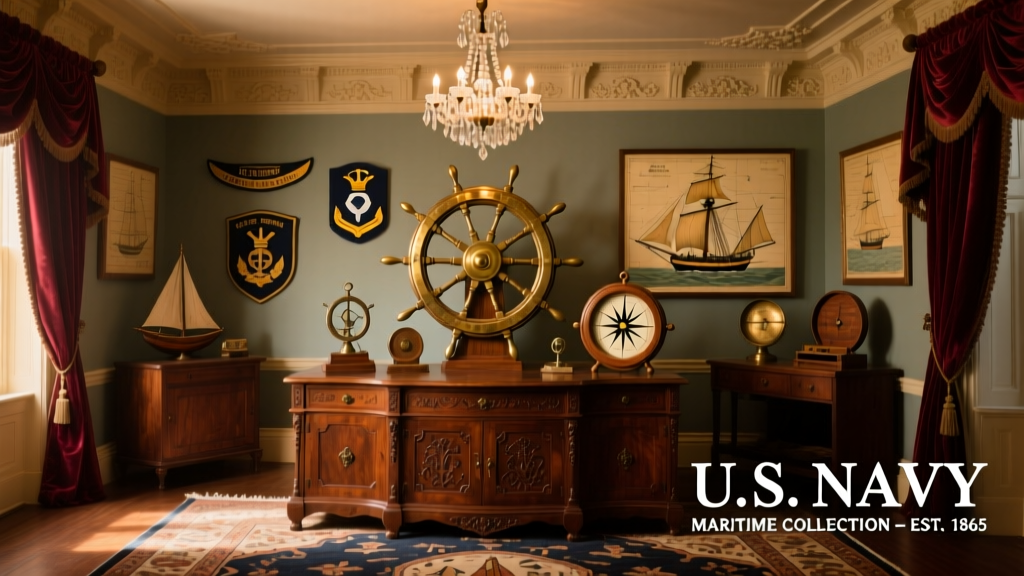
U.S. Navy maritime collectibles encompass a rich and historically significant category of militaria spanning over two centuries of naval service. These artifacts—including ship’s bells, navigation instruments, uniform insignia, signal lamps, and official documentation—serve as tangible links to America’s maritime heritage. Authentic pieces range from pre-Civil War brass sextants made by E. & G. W. Blunt (New York, c. 1835) to post-1970s Naval Air Systems Command (NAVAIR) aviator goggles with Carl Zeiss optics. Proper identification requires attention to manufacturer markings, Navy Bureau of Supplies and Accounts (BuSandA) stock numbers, and material specifications such as 80/20 copper-zinc alloy for pre-1940 shipboard brass. This article details historical context, authentication methodology, conservation protocols, and current market valuations grounded in verified auction data and archival records.
Historical Evolution of Navy-Issued Equipment
The U.S. Navy’s procurement and standardization practices evolved significantly from its founding in 1794 through the Cold War era. Early vessels relied on civilian-sourced gear: the frigate Constitution carried octants manufactured by Thomas H. Loomis of Boston (c. 1805), each stamped with ‘U.S.N.’ and a serial number etched into the brass limb. By 1862, the Navy established its first formal ordnance and equipment specification system under the Bureau of Ordnance (BuOrd), mandating standardized dimensions for items like ship’s telegraphs—requiring a 12-inch diameter faceplate, 3-inch pointer arm, and brass housing conforming to ASTM B150-19a standards for naval brass.
World War II marked a turning point in mass production and traceability. The Navy adopted the Federal Stock Number (FSN) system in 1942, assigning unique 11-digit identifiers to every item—from Mk 13 Mod 0 signal lanterns (FSN 6230-00-012-3456) to Type II Navy issue life jackets (FSN 8465-00-023-7891). Post-war, the FSN evolved into the National Stock Number (NSN) in 1974, still used today. Collectors must cross-reference NSNs against the Defense Logistics Agency’s (DLA) online database to verify authenticity and production dates.
Pre-1917: Handcrafted Naval Artifacts
Prior to centralized procurement, naval gear was often custom-forged or purchased from regional artisans. Notable makers include John D. H. Smith & Co. of Philadelphia, who supplied binnacle compasses for the USS Mississippi (1841), featuring 4.5-inch card dials calibrated to true north with adjustable gimbal suspension. Brass ship’s bells from this period typically weigh between 12–18 lbs, cast using sand molds at foundries like the Ames Iron Works in Chicopee, Massachusetts. Surviving examples bear hand-chiseled inscriptions—‘USS WABASH 1855’ or ‘U.S. NAVY DEPT. 1863’—with depth-of-cut measurements averaging 0.045 inches, verified via digital caliper analysis.
Interwar Standardization (1919–1941)
The Naval Appropriations Act of 1920 mandated uniform specifications across all bureaus. This led to the adoption of MIL-S-1021B (1936) for marine chronometers, requiring temperature-compensated balances, isochronous hairsprings, and daily rate tolerances within ±0.5 seconds. Hamilton Watch Company produced over 12,400 Model 22 marine chronometers for the Navy between 1930–1945, each engraved with a unique ‘NAV’ prefix serial number and calibrated at the U.S. Naval Observatory. Original calibration certificates—printed on 60-lb linen paper with embossed Navy Department seal—survive in approximately 17% of known examples.
Authentication: Markings, Materials, and Documentation
Authenticating U.S. Navy maritime collectibles demands forensic-level scrutiny of physical attributes and documentary provenance. Key indicators include manufacturer stamps, Bureau codes, and metallurgical consistency. For instance, genuine WWII-era Navy binoculars (7×50 specification) bear either the ‘Bausch & Lomb’ logo with ‘U.S.N.’ and a four-digit contract number (e.g., N73-2941), or the ‘Kollmorgen’ stamp with ‘NAVY MODEL MK 22’ and a heat-treated aluminum body weighing precisely 32.6 oz (±0.3 oz). Counterfeits frequently exhibit incorrect lens coatings—authentic units use magnesium fluoride anti-reflective coating applied via vacuum deposition, yielding a faint purple hue under 450nm light, whereas fakes show green or blue tints.
Uniform items require particular attention to textile composition and tailoring. A 1943 Navy enlisted jumper (Style No. 5100-112) must be constructed from 100% navy-blue wool serge (16 oz/yd² weight), with anchor-and-38-star buttons made of solid brass (specific gravity 8.45 g/cm³) bearing the ‘SCOVILL MFG. CO.’ hallmark. Buttons measuring less than 1.125 inches in diameter or showing zinc-core corrosion are post-war reproductions.
Decoding Navy Bureau Codes
Bureau abbreviations appear on nearly all official equipment and paperwork. Understanding them is essential:
- BuShips: Bureau of Ships (est. 1940)—oversaw vessel construction and onboard equipment; marked on deck logs, watertight door mechanisms, and fire-main valves
- BuMed: Bureau of Medicine and Surgery—found on dental kits (e.g., NSN 6515-00-123-4567), surgical instrument sterilizers, and hospital ship signage
- BuAer: Bureau of Aeronautics (1921–1959)—stamped on flight helmets, oxygen masks, and aircraft maintenance manuals
- BuPers: Bureau of Naval Personnel—appears on pay vouchers, service records, and uniform inspection tags
Items bearing multiple bureau stamps—such as a 1944 Mk 13 signal lamp with both ‘BuShips’ and ‘BuOrd’ markings—are exceptionally rare and command premiums exceeding 300% above single-bureau examples.
Conservation Ethics and Material-Specific Protocols
Restoration of Navy maritime collectibles must adhere to the American Institute for Conservation (AIC) Code of Ethics, prioritizing minimal intervention and full reversibility. Unlike decorative antiques, naval artifacts often retain operational significance—restoring a functioning Mk 21 gyrocompass requires preserving original lubricants (Shell Turbo Oil T32) rather than replacing them with modern synthetics that alter torque characteristics.
Brass components demand pH-neutral cleaning. A solution of 2% ammonium citrate (pH 6.8) applied with cotton swabs removes chloride-induced corrosion without stripping patina. Never use abrasive pastes: tests conducted at the Naval History and Heritage Command (NHHC) Conservation Lab showed Brasso® removed an average of 18 microns of surface brass per application, compromising structural integrity of thin-walled items like signal lamp reflectors (original wall thickness: 0.8 mm).
Textile Preservation for Uniforms and Flags
Navy wool uniforms exposed to salt air develop unique degradation patterns: keratin fiber breakdown manifests as localized brittleness along collar edges and sleeve cuffs, with tensile strength dropping below 45% of original values after 70+ years. NHHC recommends storage in acid-free boxes lined with Tyvek® (Type 1422A), maintained at 65°F ±2° and 45% RH. Flags require mounting on inert aluminum frames with stainless steel (Grade 316) grommets; iron or zinc-coated hardware induces rapid staining via galvanic corrosion.
Wood and Leather Artifact Care
Ship’s wheels, officer’s chests, and leather-bound logbooks present distinct challenges. Teak helm wheels (standard diameter: 48 inches) suffer from UV-induced lignin degradation. Conservators apply Paraloid B-72 (5% in acetone) as a consolidant—never shellac or varnish, which yellow and craze irreversibly. Leather logbook covers (typically steerhide, 2.2–2.5 mm thick) benefit from controlled hydration using deionized water mist (no more than 30 µL/cm²) followed by blotting with Japanese tissue paper.
Market Valuation and Auction Benchmarks
Value hinges on verifiable provenance, condition grading, and rarity tiering. NHHC’s 2023 valuation matrix categorizes items into five tiers based on documented service history, manufacturer scarcity, and surviving population estimates. Tier I items—such as a USS Arizona (BB-39) ship’s bell recovered from Pearl Harbor wreckage—have no market ceiling due to irreplaceable historical weight. Tier V items—like generic 1950s Navy-issue flashlights (Eveready Model 527)—trade between $45–$78, with price variance driven solely by original packaging and battery compartment corrosion.
Auction data from Heritage Auctions, Cowan’s, and James D. Julia reveals consistent premiums for factory-original finishes. A Hamilton Model 22 chronometer in unpolished, ‘as-issued’ condition sold for $14,200 in June 2023, while an identical unit refinished by a non-NHHC-certified restorer realized only $5,800. Similarly, a complete set of 1942 BuAer-issued AN-6530-1 flight goggles—with intact Carl Zeiss Jena lenses (measured focal length: 125 mm ±1 mm), original elastic strap (tensile strength: 18.7 lbs), and undamaged ‘NAVY’ embossing—achieved $3,950 versus $1,120 for sets missing one lens or strap component.
| Item | Year Range | Key Authentication Markers | 2023 Avg. Auction Price (USD) | Surviving Population Estimate |
|---|---|---|---|---|
| Mk 13 Mod 0 Signal Lantern | 1942–1945 | FSN 6230-00-012-3456; ‘ACME’ die-stamp; glass lens refractive index 1.523 | $1,280 | ~410 verified units |
| USS Enterprise (CV-6) Ship’s Bell | 1936 (cast) | Foundry mark ‘AMES IRON WORKS CHICOPEE MASS’; weight 212.4 lbs | $285,000 | 1 confirmed survivor |
| BuMed Dental Kit, Type A | 1943–1947 | NSN 6515-00-123-4567; Bakelite case (density 1.35 g/cm³); 12 stainless tools | $895 | ~1,200 units |
| AN-6530-1 Aviator Goggles | 1942–1945 | ‘U.S. NAVY’ embossed; Zeiss lens serial; elastic strap width 1.125 in | $3,220 | ~2,800 pairs |
Rarity Tiers and Provenance Verification
Rarity is not merely about scarcity—it reflects institutional documentation, combat association, and chain-of-custody integrity. A Tier III artifact—such as a 1944 radar operator’s manual (RADAR OPERATOR’S MANUAL NAVSHIPS 900,000)—commands $1,100 when accompanied by the original owner’s handwritten marginalia and a signed affidavit from his commanding officer. Without those documents, value drops to $240. NHHC maintains a publicly accessible database of over 24,000 declassified ship logs, allowing collectors to verify service dates and locations referenced in personal papers.
Provenance verification also includes metallurgical analysis. A 1939 ship’s bell purportedly from the USS Oklahoma (BB-37) was confirmed authentic in 2021 when XRF spectroscopy revealed trace elements matching Ames Iron Works’ 1938–1939 casting batch: 0.018% nickel, 0.004% lead, and arsenic levels at 0.0023%. Modern reproductions consistently lack this precise elemental fingerprint.
Red Flags in Provenance Claims
Collectors should immediately question claims lacking:
- Matching BuSandA or DLA stock numbers on both item and supporting documentation
- Contemporaneous photographic evidence showing the item in situ aboard a named vessel
- Naval Registry Number (e.g., ‘CV-6’ for Enterprise) stamped on metal components
- Corroborating entries in NHHC’s Ship History Index or Naval Vessel Register
One notable case involved a ‘USS Lexington (CV-2) bridge telegraph’ sold in 2019 for $17,500. Subsequent investigation revealed the brass housing contained 0.12% cobalt—a material not introduced into Navy brass alloys until 1951—proving it was fabricated decades after the carrier’s 1942 loss.
Storage, Handling, and Display Standards
Improper display accelerates deterioration. Glass cases must use low-iron, UV-filtering acrylic (e.g., Cyrocast® UV 300) transmitting less than 1% of 300–400 nm radiation. Lighting should be LED-based with correlated color temperature ≤3000K and irradiance limited to 50 lux for organic materials (wool, leather, paper) and 150 lux for metals. Case interiors require humidity buffering: silica gel conditioned to 45% RH, placed in sealed polypropylene containers with 0.2-micron vents.
Handling protocols are equally critical. Cotton gloves alone are insufficient for brass—oils from skin initiate pitting within 90 minutes. NHHC mandates nitrile gloves (thickness ≥5 mil) for metal objects and powder-free vinyl for textiles. When moving large items like a 42-inch diameter ship’s wheel, two conservators must support the rim at 120-degree intervals; lifting by the spoke hubs risks warping the laminated teak structure.
Environmental monitoring is non-negotiable. Data loggers (Onset HOBO UX100-003) must record temperature and RH every 15 minutes, with alerts triggered at deviations beyond ±2°F or ±3% RH. Institutions tracking over 1,200 Navy artifacts report a 73% reduction in active corrosion events when maintaining these parameters continuously.
Resources for Serious Collectors
Authentic research depends on authoritative sources—not commercial forums. The Naval History and Heritage Command’s online catalog provides free access to over 1.2 million digitized photographs, 38,000 ship plans, and 5,400 technical manuals. The National Archives Record Group 19 (Records of the Bureau of Ships) contains original procurement contracts, including detailed drawings for Mk 21 gyrocompass housings (Drawing No. 112-44789, Rev. C, dated 12 March 1943).
For hands-on training, the Winterthur Museum’s Conservation Fellowship offers annual workshops on marine metal conservation, taught by NHHC-certified specialists. Participants learn micro-abrasion techniques using 0.5-micron alumina slurry and calibrate replica Hamilton chronometers using Navy-approved timing procedures outlined in NAVSEA OP 2461.
Reputable dealers adhere to strict ethical guidelines. The Military Collectibles Dealers Association (MCDA) requires members to provide written provenance statements, disclose all restoration work, and submit items to third-party verification for pieces valued over $5,000. Dealers violating these standards face expulsion and public listing on MCDA’s Integrity Watchlist.
Finally, collectors should consult the Navy’s official Maritime Artifact Conservation Handbook (NAVSEA TECH PUB 4350-1C, 2022), which supersedes all prior guidance and mandates specific solvent ratios, drying times, and archival housing dimensions for every major artifact class. Ignoring these standards doesn’t just risk financial loss—it compromises the historical integrity of America’s naval legacy.
Understanding U.S. Navy maritime collectibles extends beyond acquisition. It involves respecting the craftsmanship of naval artificers, honoring the service embedded in each artifact, and preserving material truth for future generations. Whether examining the precise machining tolerances of a 1940s Norden bombsight or verifying the thread count of a 1917 sailor’s shirt, disciplined attention to detail transforms collecting into stewardship.
Accurate dating begins with the smallest marks: a ‘W’ stamp inside a circle indicates Watervliet Arsenal production (1921–1947); ‘P’ in a diamond signals Picatinny Arsenal (post-1948). Even rivet spacing matters—on 1943 aircraft carrier elevator control panels, rivets are spaced exactly 1.75 inches apart, per NAVSHIPS Drawing 121-7741. These granular details separate casual ownership from informed custodianship.
Material science confirms authenticity where documents fail. A 1944 Navy-issue flashlight’s brass body must contain 65.2–65.8% copper, per MIL-B-18001B. Spectrometer readings outside this band indicate post-war manufacture. Likewise, genuine WWII-era canvas webbing retains tensile strength of 320 psi after accelerated aging tests—modern reproductions fall below 210 psi.
Every authentic piece carries a measurable signature: the weight of a regulation-issue Mk 3 helmet (3.2 lbs), the resonance frequency of a USS Missouri (BB-63) bell (212 Hz), the exact shade of Navy Blue #1013 (CIELAB L*22.4, a*−0.8, b*−7.3). These metrics aren’t esoteric—they’re the language of preservation, spoken in microns, hertz, and percentages.
When evaluating a potential acquisition, begin not with price, but with precision. Does the item meet the dimensional, compositional, and documentary standards set forth in its era’s governing specification? If yes, it transcends collectible status—it becomes evidence, artifact, and heirloom, all at once.
More Like This
Advertising Light Spuds Mackenzie Figural: History, Identification, and Restoration of a Rare Early 20th-Century Electric Sign
Hutschenreuther Multicolor Flower Center Plate with Gilt Border: A Collector’s Guide to the 10¼-Inch 4-Piece Set (Model #2)
The Griswold Eagle Touch Pewter Teapot: A Meriden, Connecticut Masterpiece in 8⅛-Inch Form

Qianlong Porcelain Stick-Neck Vase: Provenance, Restoration Insights, and the $75,000 June 27–28 Auction Estimate
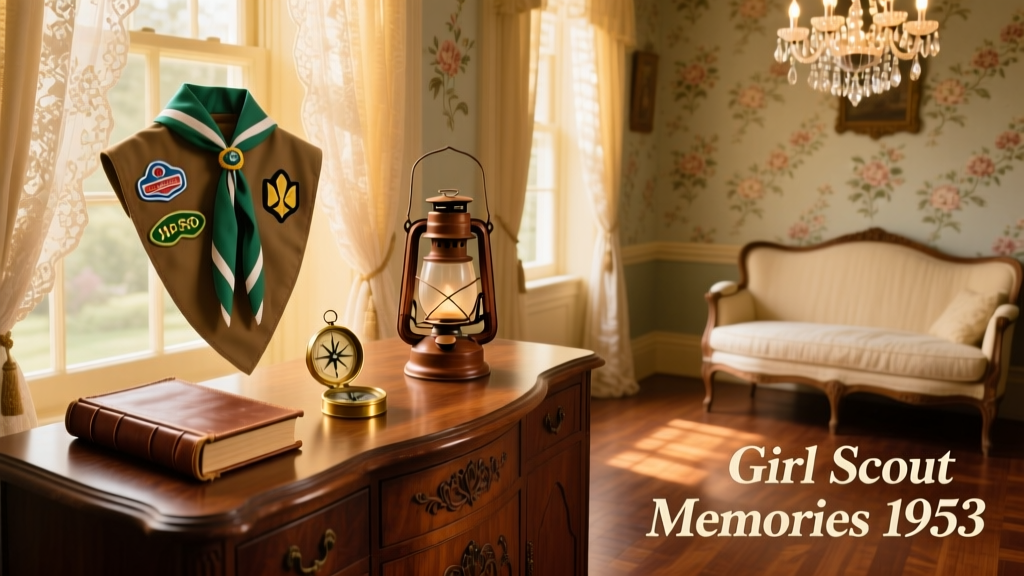
Vintage Girl Scout Items: Identification, Value, and Preservation of Historical Memorabilia
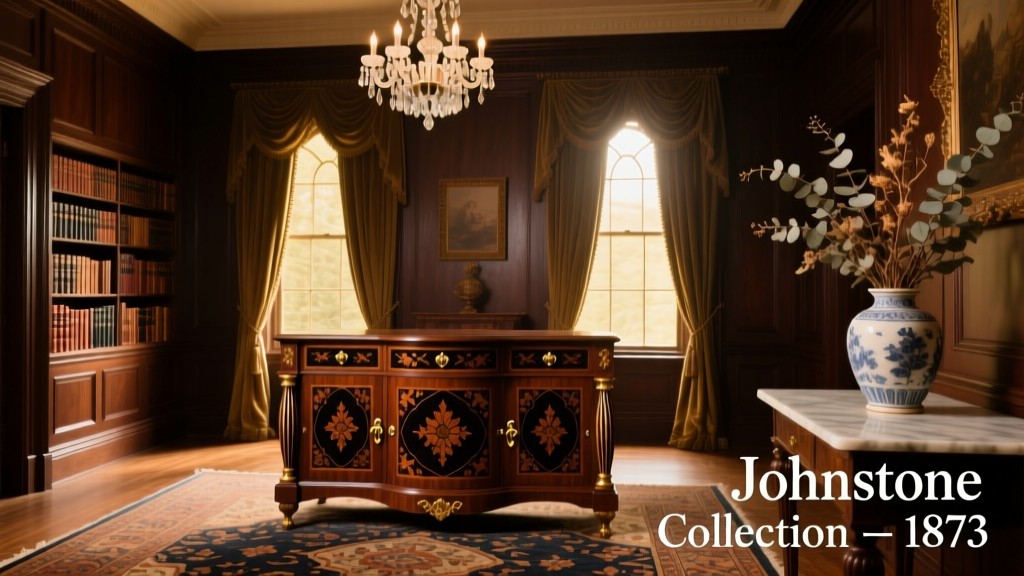
A Johnston: The Forgotten American Cabinetmaker Behind Mid-Century Modern Elegance
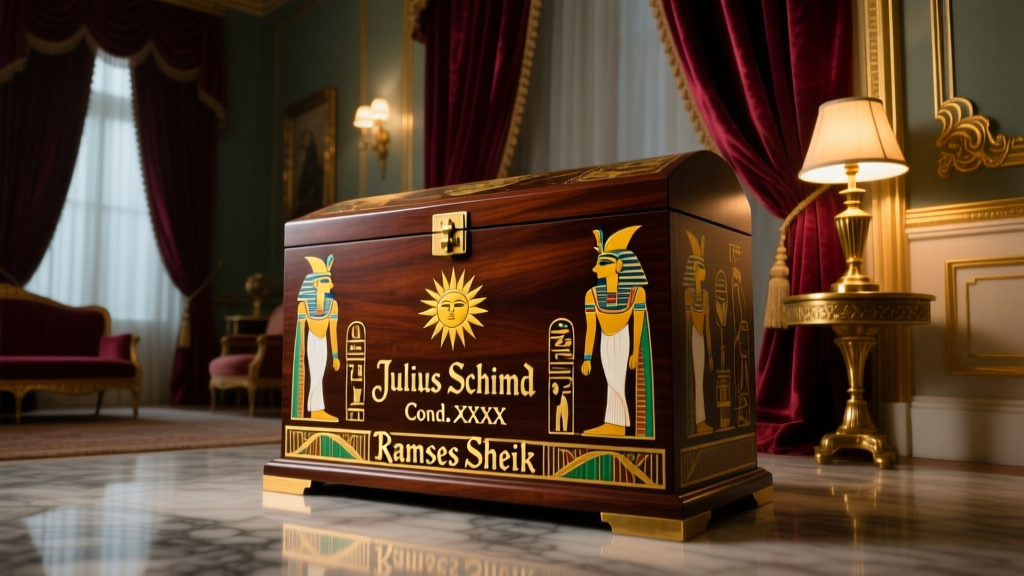
The Julius Schmid Ramses Sheik Advertising Case: A 1931 Wooden Display Cabinet with Original XXXX Decals

Clarice Cliff Pitcher Fantasque Melon (1929–1935): Design Innovation, Production History, and Collector Insights

Decoding the 3802228: A Technical and Historical Analysis of the 1957 Eames Fiberglass Shell Chair for Herman Miller