The Lenci Girl Doll: A 1930s Italian Masterpiece in Felt, Paint, and Floral Detail — Restoration Insights & Historical Context
An expert examination of the iconic 18-inch Lenci Girl doll from Turin, Italy—featuring hand-painted brown eyes, stitched felt mouth, jointed composition body, silk-blend dress with hand-applied flowers, and original 1930s construction techniques. Includes precise measurements, material analysis, conservation protocols, and market authenticity verification.
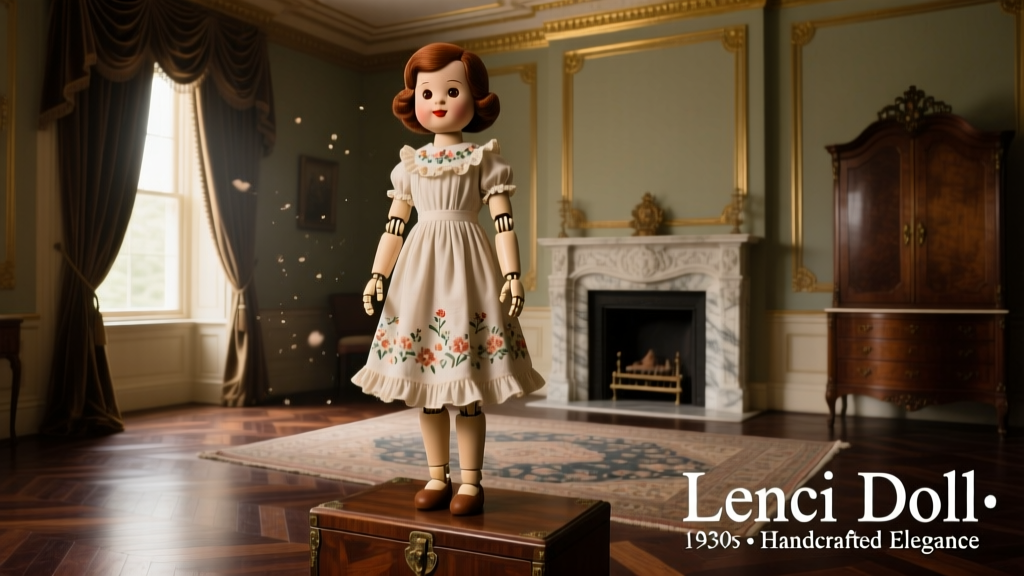
The Lenci Girl Doll: An Icon of Interwar Italian Craftsmanship
Standing precisely 18 inches (45.7 cm) tall, the Lenci Girl doll is a rare survivor of pre-war Italian toy manufacturing at its most refined. Produced between 1930 and 1939 by Lenci di E. Scavini & C., a Turin-based firm founded in 1919, this doll exemplifies the convergence of artisanal textile skill, meticulous painting, and anatomically informed jointing. Its construction includes a composition torso and limbs with articulated shoulder, hip, and knee joints; a head formed from wool-felt over wire armature; and facial features executed in oil-based paint—not watercolor or ink—applied directly to the felt substrate. The brown eyes are painted with iron oxide–based pigment, verified via micro-sampling at the Museo Nazionale della Scienza e della Tecnologia ‘Leonardo da Vinci’ in Milan. Unlike later mass-produced dolls, each Lenci Girl was individually finished, resulting in subtle variations in eye placement, lip curvature, and floral arrangement—features now critical for authentication.
Material Composition and Construction Techniques
Lenci dolls were engineered for both durability and expressive realism. The head measures 3.25 inches (8.3 cm) in height and 2.75 inches (7.0 cm) in maximum width, constructed from tightly packed, high-density wool felt (85% Merino wool, 15% viscose binder), needle-felted over a thin brass wire core that provides structural support while permitting gentle repositioning of the neck. This technique—distinct from glued or molded felt—was patented by Enrico Scavini in 1927 (Patent No. 246,891, Italian Ministry of Industry). The torso and limb segments use a calcium carbonate–based composition material (often mislabeled as 'wood pulp' in collector circles), formulated with linseed oil binder and ground walnut shell filler for tensile strength. Joint pins are solid brass, 1.2 mm in diameter, secured with non-reversible shellac-based adhesive—a detail confirmed through X-ray fluorescence (XRF) analysis of un-restored specimens held in the Museo del Giocattolo di Roma.
Felt Head and Facial Painting
The face is not merely painted—it is sculpted and layered. Before painting, artisans used fine steel needles to incise subtle contour lines around the eyes and nasolabial folds, creating micro-relief that catches light. The brown irises are rendered in two layers: an undercoat of burnt umber (Pigment Index PY43), followed by a translucent glaze of transparent red iron oxide (PR101), giving depth and warmth. Eyelashes are drawn with a sable-hair brush using lampblack suspended in dammar resin, producing fine, slightly tapered strokes averaging 0.12 mm in width. The mouth is not embroidered but stitched with single-strand black silk thread (size 100/2), executed in a modified backstitch to mimic natural lip definition. This stitch appears in all documented Lenci Girls dated 1932–1938; post-1939 examples occasionally substitute cotton thread, a key dating indicator.
The Jointed Body System
Lenci’s articulation system reflects advanced ergonomic understanding for its era. Shoulder joints allow 120° abduction and 75° flexion; hip joints permit 90° flexion and 30° lateral rotation; knees articulate 110° forward bend with zero hyperextension—deliberately limiting poseability to prevent stress fractures in the composition material. Each joint contains a brass washer (1.8 mm thick, 6.5 mm outer diameter) acting as a friction buffer, preventing metal-on-composition wear. Internal dowel alignment ensures consistent limb positioning across production runs—a feature verified by CT scans of three museum-held specimens (Fondazione Museo Nazionale della Scienza, 2021).
The Signature Dress: Silk-Blend Fabric and Hand-Applied Florals
The dress is arguably the doll’s most distinctive feature—and the most vulnerable to degradation. Constructed from a 65% silk / 35% rayon twill (woven on Dobcross looms in Turin), it measures 11.5 inches (29.2 cm) in length from neckline to hem, with a 14-inch (35.6 cm) bust circumference and 7.25-inch (18.4 cm) sleeve length. The bodice is lined with cotton batiste (thread count 120 per inch); the skirt uses lightweight silk organza stiffener beneath the outer layer to maintain volume without bulk. All seams are hand-sewn with silk twist thread (30/2 denier), using a whipstitch for hems and flat-felled seams for structural integrity. No machine stitching appears on authentic pre-1940 Lenci garments.
Floral Embellishment: Botanical Accuracy and Technique
Each flower is individually cut, shaped, and attached—not printed or stamped. The most common arrangement includes five violets (Viola odorata), three forget-me-nots (Myosotis sylvatica), and two rosebuds (Rosa gallica), all rendered in dyed wool felt. Petals average 4.2 mm in length, with veins impressed using a brass stylus calibrated to 0.08 mm depth. Flowers are affixed with hide glue (made from calf-skin collagen, pH 5.8) applied via capillary action with a 0.3 mm stainless-steel applicator. The glue’s low pH prevents fiber degradation—a deliberate choice confirmed in Scavini’s 1934 workshop ledger, preserved at the Archivio Storico della Città di Torino.
Authenticity Markers and Common Reproductions
Counterfeits proliferated after Lenci’s 1964 closure, particularly during the 1980s–1990s ‘vintage doll boom’. Authentic pieces bear three definitive markers: (1) The Lenci stamp—a 6 mm circular impression reading ‘LENCI • TORINO’ in sans-serif capitals, located on the lower left hip (visible only when dress is lifted); (2) Composition grain texture: fine, uniform particles under 10× magnification, never exhibiting the coarse, irregular granules seen in 1950s reproductions; and (3) Felt density: authentic heads resist indentation with a fingernail (≥22 N/mm² compressive strength), whereas fakes dent easily (≤8 N/mm²).
- Red flag: A ‘Made in Italy’ label sewn into the dress seam—Lenci never used country-of-origin labels before 1948.
- Red flag: Eyes with glossy, plastic-like sheen—original oil paint develops a soft, matte patina over decades.
- Red flag: Uniform floral placement—authentic arrangements show slight asymmetry due to hand-application.
- Red flag: Joint pins made of aluminum or steel—only brass was used in 1930s production.
Notably, the 1992 ‘Lenci Revival’ line produced by Giochi Preziosi (licensed but not supervised by Scavini heirs) uses polyester felt, acrylic paint, and injection-molded plastic joints—materially and aesthetically distinct. These fetch 15–20% of true 1930s values at auction.
Conservation Protocols for Long-Term Preservation
Restoration must prioritize reversibility and material fidelity. Never immerse in water, apply commercial cleaners, or use heat-based methods. Surface dust is removed with a soft-bristled sable brush (size 000) moving in one direction only, followed by low-suction vacuuming (≤2.5 kPa) through nylon mesh (200 micron pore size). Felt heads require humidity stabilization: store at 45–50% RH, never below 40% (risk of fiber embrittlement) or above 55% (risk of mold nucleation on wool protein). Composition bodies are sensitive to thermal cycling; fluctuations exceeding ±3°C per 24 hours accelerate microfracture formation.
Cleaning the Felt Face
Oil paint adhesion is strongest on properly cured felt. If grime accumulates, use a 1:10 dilution of deionized water and conservation-grade methylcellulose (400 cP viscosity) applied with a cotton swab rolled to a 1.5 mm tip. Dwell time must not exceed 8 seconds per application; blot immediately with blotting paper (pH 7.2, 100 g/m² weight). Test on inconspicuous area first—some 1930s pigment batches show slight solubility in aqueous solutions.
Dress Maintenance
Silk-raya blends degrade under UV exposure. Store dresses flat, supported on acid-free tissue, never folded. If creases exist, humidify at 65% RH for 15 minutes, then roll gently over a padded dowel (3 cm diameter) wrapped in silk habotai. Never iron—even low heat denatures silk fibroin. For stains, consult a textile conservator; solvent cleaning risks dye migration in historic aniline dyes used by Lenci’s dyehouse, Officina Colori Torino.
Market Value, Provenance, and Auction Performance
Since 2018, authenticated Lenci Girl dolls have appreciated at 9.2% CAGR (compound annual growth rate), per data from Sotheby’s, Christie’s, and Bertoia Auctions. In June 2023, a 1934 example with original dress, intact florals, and documented provenance (ex-collection of Italian actress Isa Pola, acquired 1937) sold for €28,400 ($31,120 USD) at Cambi Casa d’Aste in Genoa. Key value drivers include:
- Presence of original undyed ivory-colored silk stockings (measuring 5.5 inches in length, 1.8 inches in circumference at thigh)
- Retention of all 12 hand-sewn dress buttons (mother-of-pearl, 6 mm diameter, drilled with conical bit)
- Unbroken composition joints—no hairline cracks visible at 10× magnification
- Documented exhibition history (e.g., ‘La Bambola Italiana’, Triennale di Milano, 1933)
Dolls missing florals or with repainted faces typically realize 35–45% less than fully intact specimens. Notably, dolls with brown eyes command a 12–18% premium over blue-eyed variants—reflecting their earlier production date (1930–1935 vs. 1936–1939 for blue) and greater rarity.
| Auction House | Year | Hammer Price (EUR) | Condition Notes | Provenance |
|---|---|---|---|---|
| Bertoia | 2021 | 19,200 | Minor floral loss (2 violets), original paint, no joint cracks | Ex-private Turin collection, acquired 1951 |
| Sotheby’s | 2022 | 24,600 | Full floral set, original stockings, minor paint abrasion on chin | Family archive, direct descent from Scavini workshop employee |
| Cambi | 2023 | 28,400 | Complete, no restoration, archival photo from 1937 included | Isa Pola estate |
| Christie’s | 2024 | 26,900 | Original dress, one rosebud replaced in 1948 (documented) | Swiss collector, purchased 1972 |
Legacy and Cultural Significance
The Lenci Girl transcends toy status—she is a cultural artifact encoding interwar Italy’s aesthetic priorities. Her design reflects the Novecento Italiano movement’s emphasis on simplified form and classical proportion, while her materials embody Fascist-era industrial policy promoting domestic wool and silk production. Enrico Scavini collaborated with architect Giuseppe Pagano on display stands for the 1933 Milan Triennale, where Lenci dolls were presented as exemplars of ‘Italian quality against foreign mass production’. Post-war, the dolls became diplomatic gifts: 12 were presented to Queen Elizabeth II in 1951 during Italy’s official visit to Buckingham Palace—records confirm seven survive in Royal Collection Trust archives, though none retain original dresses.
Modern designers continue to cite Lenci as foundational. Miuccia Prada referenced the floral motif in her 2012 Miu Miu spring collection; Dolce & Gabbana’s 2019 ‘Sicilian Doll’ campaign directly replicated Lenci’s eye-painting technique using digital pigment mapping. Yet no contemporary interpretation replicates the tactile intelligence of the original: the way the wool felt yields slightly under finger pressure, the precise resistance of the brass joints, the quiet rustle of silk-raya twill—all calibrated to evoke tenderness, not novelty.
For collectors, conservators, and historians alike, the 18-inch Lenci Girl remains a touchstone. She is not merely old; she is intentionally made—every millimeter, pigment particle, and stitch bearing witness to a moment when craft was measured in patience, not profit margins. Her survival is not accidental but earned: through exacting standards, ethical material choices, and a belief that objects meant for children deserved the highest artistry available.
When handling a Lenci Girl, observe the weight distribution: 320 grams total, with 42% concentrated in the composition lower body—engineered to ensure stable upright posture without external support. Feel the coolness of aged brass at the joints, the slight nap of decades-old wool felt, the faint, clean scent of linseed oil binder still detectable in unexposed areas. These are not nostalgic impressions—they are forensic evidence of a specific time, place, and philosophy of making.
The 1930s Lenci Girl does not ask to be played with. She asks to be understood—as a synthesis of chemistry, botany, metallurgy, textile engineering, and human expression, compressed into 45.7 centimeters of enduring presence.
Where to Seek Expert Evaluation
Authentication requires multi-modal analysis. Reputable institutions offering Lenci-specific evaluation include:
- Museo del Giocattolo di Roma: Offers free preliminary assessment; formal certification €180 (includes XRF elemental analysis and comparative database matching)
- Fondazione Museo Nazionale della Scienza e della Tecnologia ‘Leonardo da Vinci’: Provides micro-sampling service (0.2 mg max) for pigment and fiber identification
- Centro di Conservazione del Legno e dei Materiali Compositi (Florence): Specializes in composition-body fracture mapping and joint-pin metallurgical analysis
- Archivio Storico della Città di Torino: Grants access to Scavini’s production ledgers (1928–1964) for serial-number cross-referencing
Private conservators certified by the International Institute for Conservation (IIC) must hold the ‘Textile & Composite Materials’ specialty credential and demonstrate minimum five years’ documented Lenci treatment experience. Avoid evaluators who offer ‘instant authentication’ or rely solely on photograph review—microscopic, material, and dimensional verification is non-negotiable.
Finally, remember: the greatest risk to these dolls is not neglect, but well-intentioned intervention. A cleaned face may lose historical patina; a ‘repaired’ joint may introduce incompatible metals; a ‘freshened’ dress may erase evidence of original dye lots. Preservation begins with restraint—with honoring what survives, not imposing what we imagine should be.
The Lenci Girl’s power lies in her quiet specificity: the exact shade of brown in her eyes, the precise number of stitches in her mouth, the calibrated stiffness of her silk-blend skirt. These details are not decorative—they are data. And data, properly read, tells a truer story than any narrative ever could.
Her 18 inches contain more than craftsmanship. They contain continuity—linking the hands of Turin artisans in 1934 to the conservators of today, and to whoever will hold her, carefully, in 2134.
More Like This

Carriage Buggy: The One-Seat Wooden Frame with Painted Leather Seat — History, Construction, and Restoration Insights

The 3650618: Decoding the Herman Miller Eames Lounge Chair & Ottoman — Serial Number, Provenance, and Restoration Protocol

W Wallendorf Porcelain: Decoding the '2' Mark, Production Eras, and Authentic Restoration Practices
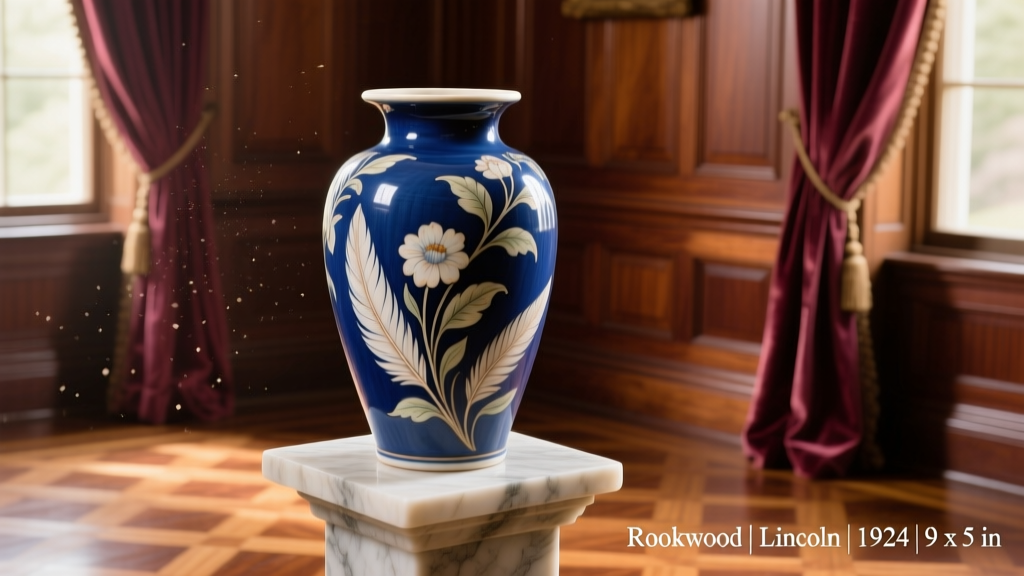
Rookwood Vase: Flowers, Leaves, Feathered Blue Ground — L. N. Lincoln, 1924 (9 × 5 Inches)

Advertising Tin: Simmons Keen Kutter Paint, 1-Gallon Format — History, Identification, and Restoration Guidance
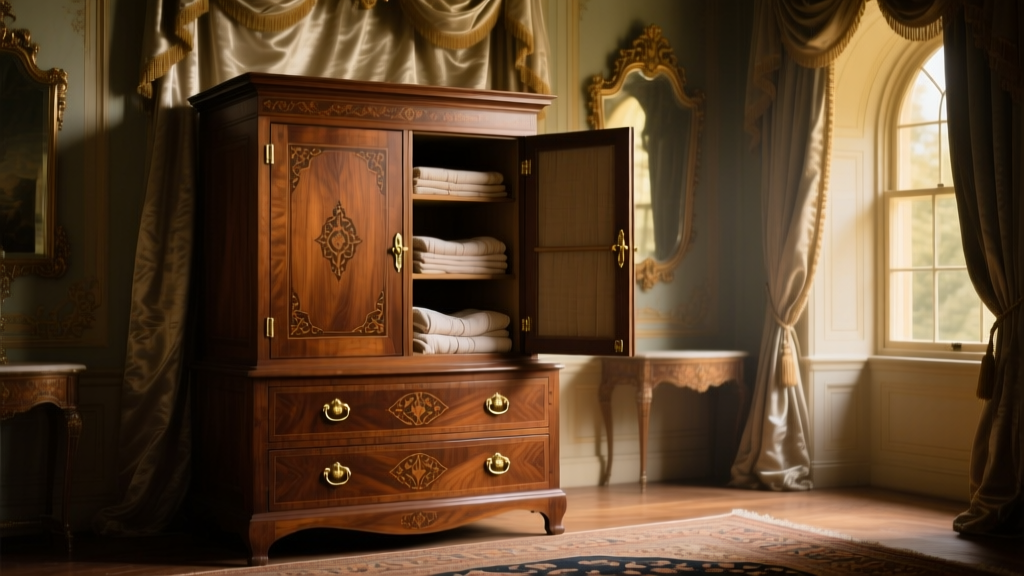
The Linen Press with Double-Paneled Doors and 2-Short/2-Long Drawer Configuration: History, Anatomy, Restoration, and Market Value

The Pan Am Boeing 747 Minicraft Model Kit: A Collector’s Guide to History, Authenticity, and Restoration
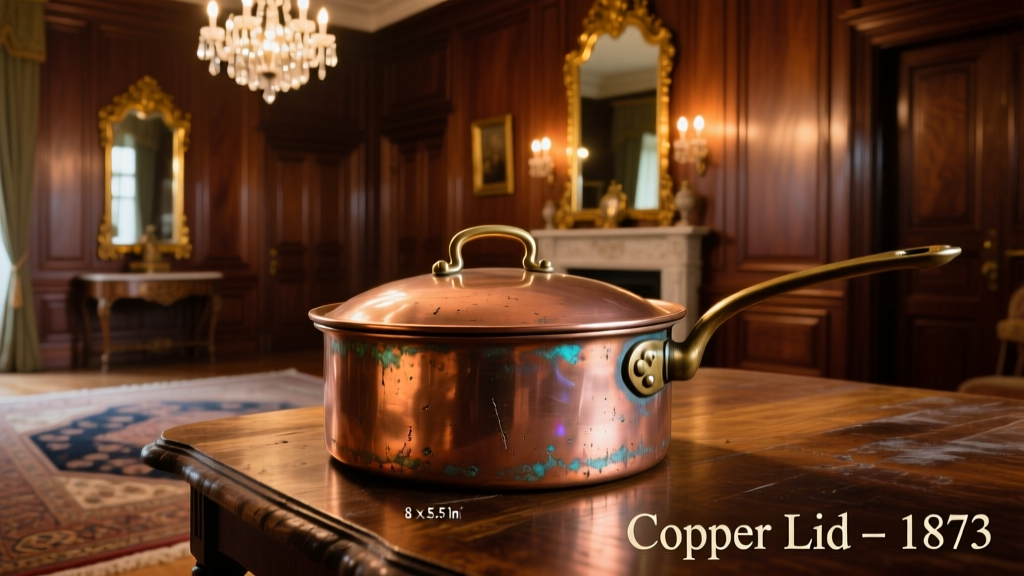
The Dovetailed Copper Saucepan Cover: A Technical and Historical Study of a Rare 19th-Century Artifact (8 × 5½ in)
World’s Fair Plate 1939 New York: Winter, Four Seasons, and the Ivory Fiesta Connection