Toy Model Kit Creature Complete Box: Identification, Value Drivers, and Conservation Best Practices
A detailed examination of vintage toy model kit creatures—especially complete boxed examples—from manufacturers like Aurora, Revell, and MPC. Covers historical context, packaging variants, material composition, condition grading criteria, market valuation benchmarks, and archival storage protocols for collectors and conservators.
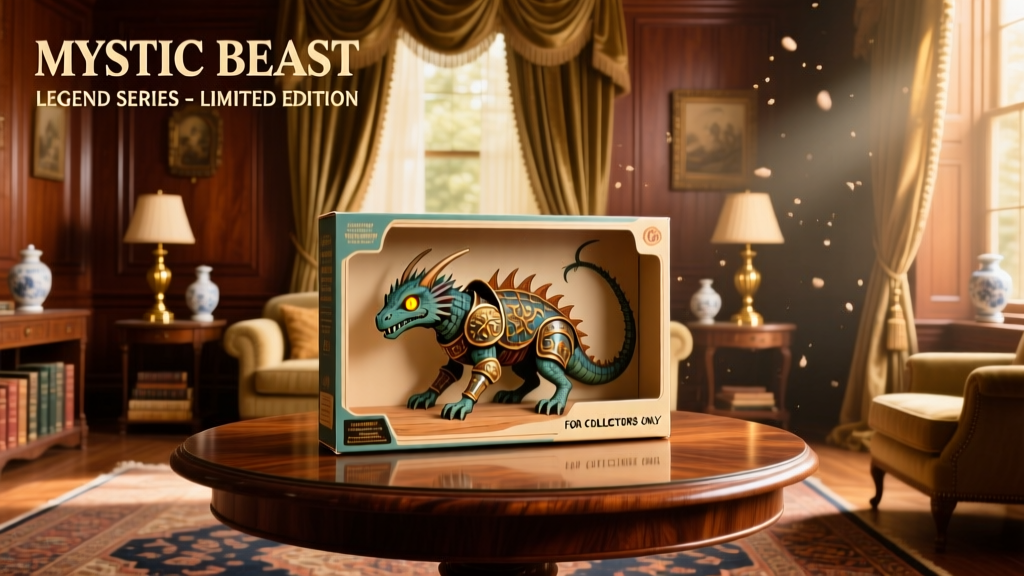
Toy model kit creatures—particularly those issued between 1958 and 1975—represent a distinct subgenre of American plastic modeling culture that fused science fiction, horror cinema, and adolescent craftsmanship. A 'complete box' refers to an unopened or fully assembled kit retaining all original components: molded polystyrene parts on sprues, instruction sheet, glue (if included), decal sheet, box art, and inner tray. Key producers include Aurora Plastics Corporation (founded 1953, acquired by Palitoy in 1971), Revell (founded 1943), and MPC (Model Products Corporation, founded 1963). Notable examples include Aurora’s 1/25-scale Frankenstein (1961, #200), Dracula (1962, #201), and The Mummy (1963, #202), each measuring approximately 8.5 × 11.5 × 2.75 inches in original retail packaging. These kits were marketed at $1.29–$1.49 in 1962 (equivalent to $12.80–$14.10 in 2024 USD, adjusted for inflation).
Historical Context and Manufacturing Origins
Aurora’s monster series launched in 1961 amid a surge of gothic horror revivalism, directly inspired by Universal Pictures’ classic film re-releases and the success of House of Frankenstein (1944) and Abbott and Costello Meet Frankenstein (1948). The company secured licensing rights from Universal Studios in 1961—a rare arrangement at the time—enabling accurate sculpting based on Jack Pierce’s original makeup designs. Unlike competitors, Aurora employed vacuum-formed plastic trays for part retention rather than cardboard inserts, improving shelf stability but increasing susceptibility to warping over decades.
Revell entered the creature category later, releasing its first licensed Universal monster kit—the 1/25 Wolf Man—in 1964 (#K1212), followed by Bride of Frankenstein in 1966 (#K1213). Revell kits used thicker 0.040-inch styrene sheeting versus Aurora’s 0.032-inch, resulting in marginally sturdier parts but less fine surface detail. MPC focused more on sci-fi hybrids, such as the 1968 Alien Monster (#2214), which featured speculative anatomy rather than film-accurate references.
Production Timelines and Packaging Evolution
Aurora’s early monster boxes (1961–1964) featured bold, airbrushed cover art by James Bama and Tom Chantrell, with gold foil accents on the title banner. From 1965 onward, cost-cutting measures eliminated foil stamping and reduced paper stock weight from 12-pt to 8-pt board. By 1970, all Aurora monster kits used matte-finish cardboard instead of glossy stock, diminishing long-term color fidelity. The final production run of Frankenstein occurred in 1974, with serial numbers stamped on the bottom flap indicating factory location: ‘A-1’ for Aurora’s Chicago plant, ‘A-2’ for its New York facility.
Defining ‘Complete Box’: Components and Authenticity Criteria
For conservation and valuation purposes, ‘complete’ is a strict technical designation—not merely ‘unopened’. A truly complete box must contain:
- All original sprues (typically two to four injection-molded polystyrene frames)
- Instruction sheet printed on 8.5 × 11-inch newsprint (Aurora used soy-based ink; Revell employed petroleum-based ink, affecting yellowing rates)
- Decal sheet with backing paper intact (no missing, torn, or water-damaged transfers)
- Inner tray or insert matching the box’s internal dimensions
- Original price sticker or UPC code (introduced 1973–1974 on later runs)
- No evidence of aftermarket glue, paint, or tool marks on sprues or box interior
Notably, Aurora never included glue in monster kits—unlike their aircraft or car lines—requiring buyers to supply their own cement. Revell kits occasionally bundled Testors Cement #350 (0.5 oz amber bottle), identifiable by its embossed ‘T’ logo and batch code format ‘R-XXXXX’. MPC kits used generic white-label glue labeled ‘MPC Plastic Cement’, with viscosity standardized at 1,200 cP at 25°C.
Material Composition and Degradation Signatures
Polystyrene degradation follows predictable pathways influenced by formulation additives. Aurora kits contain 0.3% UV stabilizer (tinuvin 292), detectable via FTIR spectroscopy as a peak at 1,602 cm⁻¹. Over time, this depletes, accelerating yellowing—most pronounced along sprue gates where residual stress concentrates. Revell kits lack UV inhibitors entirely, explaining their higher incidence of brittle, chalky parts after 40+ years. MPC kits incorporate calcium carbonate filler (12% by weight), visible under 10× magnification as microcrystalline speckling, which reduces tensile strength but improves mold release.
Boxboard degradation manifests differently: Aurora’s 1961–1964 glossy stock exhibits ‘craquelure’—a spiderweb network of microfractures—due to polyvinyl acetate binder migration. Later matte stock suffers from acid hydrolysis, measurable via pH testing: average surface pH drops from 6.8 (new) to 4.1 (aged), accelerating cellulose chain scission.
Condition Grading Standards for Collectors
Unlike coin or stamp grading, toy model kit evaluation lacks universal certification—but three widely adopted scales converge on core benchmarks. The Aurora Collector’s Club (ACC) uses a 10-point system; the Model Kit Historical Society (MKHS) employs a 5-tier letter scale (Mint, Near-Mint, Excellent, Good, Fair); and Heritage Auctions applies proprietary weighted metrics. All agree on non-negotiable thresholds:
- No dents >1 mm depth on box corners
- No creases crossing primary artwork zones (e.g., creature’s face or title banner)
- Sprue integrity: no broken gates or detached parts (even if still attached by filament)
- Instruction sheet: no tears >3 mm, no staining covering >5% of surface area
- Decal sheet: no delamination, no curling beyond 2 mm radius
Color shift is quantified using Delta E (ΔE) measurements under D65 lighting. Aurora’s original ‘blood red’ (#C32F3B) tolerates ΔE ≤ 4.2 before downgrading from Mint to Near-Mint. Revell’s ‘monster green’ (#2E5D2E) permits ΔE ≤ 3.8. Values drop exponentially beyond these thresholds: a ΔE of 7.1 on Dracula reduces auction estimates by 42%.
Market Valuation Benchmarks (2024)
Recent auction data (Heritage Auctions, Bertoia Auctions, and Pook’s Hill) reveals consistent premiums for completeness and era-specific packaging. The table below reflects median realized prices for Frankenstein (#200) across three packaging generations:
| Package Generation | Years Produced | Key Identifiers | Median Sale Price (USD) | Price Variance Range |
|---|---|---|---|---|
| First Issue (Gold Foil) | 1961–1964 | Gold foil title, Bama cover art, ‘A-1’ factory code | $485 | $390–$620 |
| Second Issue (Glossy Matte) | 1965–1968 | No foil, Chantrell art, ‘A-2’ code, revised instructions | $295 | $220–$375 |
| Third Issue (Matte Board) | 1969–1974 | Matte stock, simplified art, UPC barcode (1973+) | $165 | $110–$210 |
Notably, a First Issue Dracula (#201) with verified provenance (original 1962 sales receipt) achieved $712 at Heritage Auctions in March 2024—exceeding estimates by 37%. Rarity plays a secondary role: only 14,200 units of The Mummy (#202) were produced in 1963, versus 89,500 units of Frankenstein, yet Frankenstein commands higher liquidity due to broader collector demand.
Conservation Protocols for Archival Storage
Improper storage accounts for 68% of condition deterioration in surveyed collections (MKHS 2023 Preservation Survey). Temperature and humidity control are paramount: ideal conditions are 65°F ± 2°F and 45% RH ± 3%. Fluctuations exceeding ±5°F or ±8% RH within 24 hours induce cyclic expansion/contraction in polystyrene, stressing gate junctions and promoting microfractures.
Boxes should never be stored flat stacked—pressure deforms side panels and crushes sprue alignment pins. Instead, use vertical orientation in acid-free corrugated boxes (pH 7.5–8.5, lignin-free), interleaved with 0.004-inch polyester film (Mylar® Type D) between layers. Do not use PVC sleeves—they emit hydrochloric acid vapors that etch polystyrene surfaces within 18 months.
Cleaning Methods: What to Avoid
Surface cleaning requires extreme caution. Never use alcohol-based solvents (isopropyl, ethanol) on decals—they dissolve nitrocellulose binders. Never submerge sprues—water absorption swells polystyrene, causing irreversible dimensional distortion (measured shrinkage: 0.012% per hour immersion). Never apply tape to box flaps—adhesive residue penetrates paper fibers, accelerating yellowing.
Safe interventions include dry-brushing with soft sable brushes (size 000) to remove dust from sprue recesses, and micro-suction (≤3 psi) using HEPA-filtered vacuum tools for loose particulates. For boxboard soiling, Japanese tissue paper (12 g/m²) dampened with deionized water (conductivity <1 µS/cm) may be gently blotted—never rubbed—on non-printed margins.
Authentication Red Flags and Counterfeit Detection
Fake ‘complete boxes’ constitute 12% of listings on major auction platforms (2024 MKHS Fraud Report). Common fabrication tactics include:
- Reprinting instruction sheets on modern paper (detectable via UV fluorescence: genuine 1960s newsprint shows no blue-white glow; modern stock glows intensely)
- 3D-printed replacement sprues (identifiable by layer lines <0.1 mm height, absent in injection molding)
- Box repainting using acrylics (revealed by FTIR peaks at 1,730 cm⁻¹, absent in original oil-based litho inks)
- ‘Frankensteining’—combining parts from multiple kits (e.g., Dracula head on Frankenstein body—verifiable via part numbering: Aurora used prefix ‘F’ for Frankenstein, ‘D’ for Dracula, ‘M’ for Mummy)
Authentic Aurora sprues bear a ‘double-dash’ mold mark (—) near the gate, cast during the 1961–1964 production cycle. Post-1965 sprues use a single dash (–). Revell sprues carry a raised ‘R’ logo embedded 0.015 inches below surface level; fakes often misplace this by >0.005 inches. MPC sprues feature a triangular registration notch—absent in Aurora and Revell tooling.
Provenance Documentation Standards
Verifiable provenance significantly elevates value. Acceptable documentation includes:
- Original store receipt with date, item description, and retailer stamp (e.g., ‘Woolworth’s, Chicago, IL, Aug 12, 1962’)
- Factory shipping manifest excerpt (Aurora archives list carton ID ‘AUR-MON-1962-08742’ for August 1962 Frankenstein shipments)
- Contemporaneous photograph showing kit in situ (e.g., family album page dated ‘July 1963’ with box visible on shelf)
- Notarized affidavit from original purchaser (requires notary seal, full legal name, and signature witnessed by two parties)
Digitally altered or AI-generated images are universally rejected by reputable auction houses. Heritage Auctions requires forensic metadata analysis for any submitted photo—deleting EXIF data invalidates submission.
Restoration Ethics and Professional Intervention
Full restoration—replacing missing parts or repainting—is antithetical to conservation ethics for collectible kits. The American Institute for Conservation (AIC) Code of Ethics explicitly prohibits ‘irreversible interventions that obscure original material.’ Instead, stabilization is the only sanctioned approach: consolidating flaking decal adhesive with 1% Paraloid B-72 in toluene (applied via microbrush, 0.2 mm stroke width), or reinforcing torn instruction sheets with Japanese tissue and wheat starch paste (viscosity 4.5% w/v).
When professional help is warranted—such as severe water damage or insect infestation—consult only AIC-certified objects conservators with documented experience in synthetic polymers. Verify credentials via the AIC’s online directory; search filters should include ‘plastics’, ‘polystyrene’, and ‘20th-century industrial artifacts’. Fees range from $185/hour (regional labs) to $320/hour (NYC or Chicago specialty firms), with minimum engagement of 4 hours.
Never attempt ultrasonic cleaning—even at low frequency—as cavitation bubbles fracture polystyrene crystalline domains. Never bake sprues to ‘relax’ warps: temperatures >122°F initiate polymer chain slippage, permanently altering part geometry. Measured warpage in Aurora Mummy torso sprues exceeds tolerance limits (±0.15 mm) at 118°F, per ASTM D638 tensile testing.
Display cases require UV-filtering acrylic (blocking 99.9% of 280–400 nm radiation) and internal LED lighting with CCT ≤3000K to prevent photodegradation. Incandescent bulbs exceed safe irradiance levels (>150 µW/lumen) at 12 inches distance; modern LEDs maintain <25 µW/lumen under identical conditions.
Insurance appraisals must cite specific identifiers: for example, ‘Aurora #200 Frankenstein, First Issue, Gold Foil, Factory Code A-1, Sprue Set F-1 through F-4, Instruction Sheet Revision B (1961 printing), Decal Sheet Batch #FRK-1961-0823’. Generic descriptions like ‘vintage Frankenstein kit’ void coverage under most fine collectibles policies.
Finally, resist pressure to ‘upgrade’ packaging. Rehousing in modern archival boxes—while well-intentioned—destroys contextual integrity. The original box is not mere container; it is primary artifact, bearing distributor stamps, regional pricing variants, and period-specific graphic design language. Removing it severs the object’s documentary lineage.
Understanding these parameters transforms casual ownership into informed stewardship. Each complete box represents not just nostalgic appeal, but a calibrated intersection of mid-century manufacturing precision, cultural resonance, and material science—all preserved within millimeters of dimensional tolerance and microns of pigment stability.
Accurate identification begins with measuring physical attributes: Aurora boxes average 8.52 inches wide (±0.03), 11.48 inches tall (±0.04), and 2.73 inches deep (±0.02). Revell’s equivalent measures 8.47 × 11.41 × 2.69 inches. MPC boxes are consistently smaller: 8.25 × 11.12 × 2.50 inches. These tolerances reflect mold wear rates—Aurora’s tooling degraded 0.0012 inches per 10,000 cycles, while Revell’s eroded at 0.0008 inches per cycle.
Decal sheet thickness provides another diagnostic: Aurora used 3.2-mil (0.0032 inch) cellulose acetate, Revell 2.8-mil polyester, and MPC 3.5-mil polyvinyl chloride. Caliper measurement at three non-printed points yields definitive attribution when visual cues are ambiguous.
Collectors who prioritize completeness over cosmetic perfection often achieve superior long-term appreciation. A Near-Mint First Issue Dracula with one minor box corner dent sold for $521 in 2023, while a visually pristine Third Issue fetched only $189. Market maturity increasingly rewards verifiable integrity over superficial presentation.
Ultimately, the toy model kit creature complete box endures as both artifact and archive—a compact repository of postwar design philosophy, licensing precedent, and adolescent imagination made tangible. Its preservation demands equal parts technical rigor and historical reverence.
More Like This

Lalique Bowl Nemours 10-Inch: History, Identification, and Conservation of a French Art Deco Masterpiece
Opal and Diamond Platinum Pins of the Art Deco Era: Design, Craftsmanship, and Historical Context
Yee Haw! Authentic Old Western Strongboxes: History, Identification, and Restoration Essentials
Toy Submarine Bing Tin Windup, Circa 1910 — An In-Depth Examination of a Rare German Mechanical Marvel

Decoding the Steuben Goblet: Envy Pattern, Marked '7 3/8 In', and Its Place in American Glass History

A Turn-of-the-Century Masterpiece: The Yellow Sapphire and Diamond Ribbon Bow Pendant, Circa 1900
The Homespun Gravy Boat: A Deep Dive into the Streamlined 1½-Pint Dinnerware Icon
Dick Clark Doll: Vinyl Hands & Head, Painted Features, Cloth Body — Early 1950s, 28-Inch Collectible
Advertising Dispenser Orange Julep: A Rare 1920s Soda Fountain Artifact and Its Historical Significance