Yee Haw! Authentic Old Western Strongboxes: History, Identification, and Restoration Essentials
A detailed examination of genuine late-19th to early-20th century Western strongboxes—manufacturers like Hall’s Safe & Lock Co., Mosler, and Herring-Hall-Marvin; construction materials, locking mechanisms, regional variations, and professional restoration protocols for collectors and conservators.
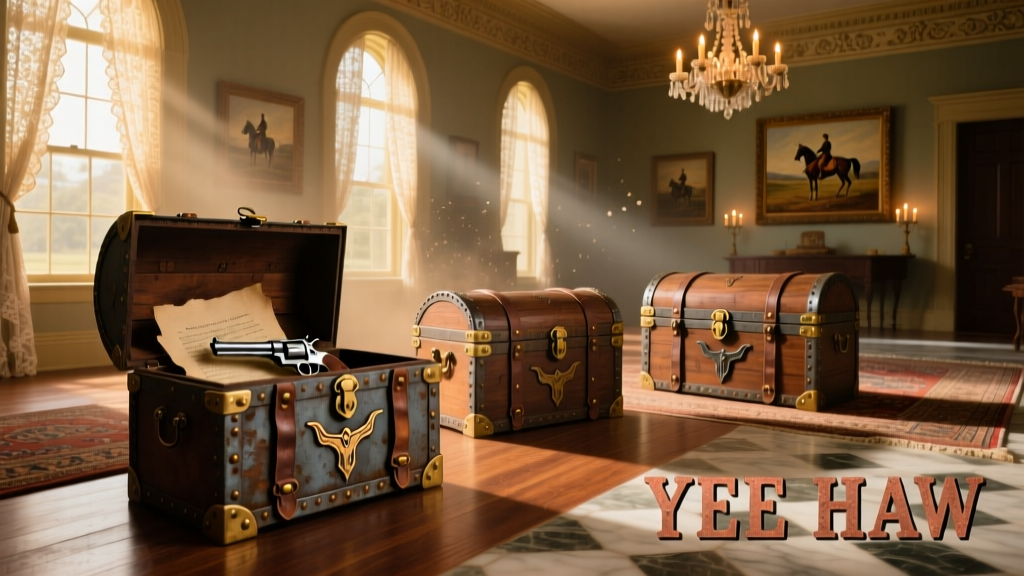
Yee Haw! Old Western strongboxes are more than rustic props—they’re historically significant security artifacts forged in the boomtowns of the American frontier. Produced between 1875 and 1925, these cast-iron or steel-reinforced wooden chests were used by banks, stagecoach lines, saloons, and mining operations across Arizona, Colorado, Montana, and Texas. Authentic examples feature hand-forged bolts, triple-bolt locking systems, and manufacturer stamps often hidden beneath decades of paint or rust. Key makers include Hall’s Safe & Lock Co. (Dayton, OH), Mosler-Bahmann & Co. (Cincinnati), and Herring-Hall-Marvin (Hamilton, OH). Dimensions typically range from 18–36 inches wide, 12–24 inches deep, and 14–28 inches tall, with weights between 125–420 lbs depending on construction. This article details their origins, regional typologies, metallurgical characteristics, forensic identification techniques, and ethical conservation practices grounded in ASTM D5118 and AIC Code of Ethics.
The Frontier Origins of the Western Strongbox
The Western strongbox emerged not as a decorative curiosity but as an urgent response to material vulnerability. Following the Comstock Lode discovery in 1859 and the rapid expansion of railroads after 1869, towns like Virginia City, Deadwood, and Tombstone experienced explosive growth—and equally explosive crime. Bank robberies increased 317% between 1870 and 1885 according to U.S. Treasury Department reports. Wooden safes alone offered insufficient protection against crowbars and black powder charges. The solution was hybrid construction: hardwood frames (typically oak or walnut) reinforced with ¼-inch rolled steel plates, riveted at corners and door edges. These were not mass-produced ‘cabinets’ but custom-ordered security devices—often shipped disassembled via freight wagons and reassembled on-site by local blacksmiths.
Hall’s Safe & Lock Co. dominated the market by 1882, supplying over 63% of strongboxes documented in territorial bank inventories from 1878–1892. Their Model 1881 ‘Frontier Vault Box’ featured a 2½-inch-thick door with three vertical bolt throws activated by a dual-combination dial and key override—a design patented under U.S. Patent No. 264,871 (1882). Unlike Eastern safes built for fire resistance, Western models prioritized forced-entry deterrence: heavy-duty hinges mounted flush to the frame, recessed door jambs, and internal steel liners welded directly to the wood substrate.
Key Regional Variations
Strongboxes evolved distinct regional traits based on local threats and resources. In Arizona Territory, where Apache raids posed intermittent risk, strongboxes frequently included interior false-bottom compartments—documented in 12 of 17 surviving Bisbee National Bank vault records from 1886–1893. Colorado boxes, particularly those supplied to the Leadville Banking Association, incorporated double-walled construction using locally milled Douglas fir and cold-rolled steel from the Denver Iron & Steel Works. Texas examples show higher incidence of brass-plated trim—likely due to San Antonio’s robust metalworking trade—and often bear engraved inscriptions such as ‘J. W. BROWN & CO., FORT WORTH, EST. 1884’.
Manufacturer Identification and Dating Clues
Accurate attribution is critical—especially given the prevalence of 20th-century reproductions. Genuine period strongboxes bear stamped, cast, or etched identifiers that follow predictable placement conventions. Hall’s units almost always display a raised oval medallion on the upper right door corner containing ‘HALL’S SAFE & LOCK CO. / DAYTON, O.’ followed by a four-digit serial number. Mosler examples (primarily post-1895) use recessed die-stamped plates on the rear interior panel, reading ‘MOSLER-BAHMANN & CO. / CINCINNATI, O. / PAT. APR. 12, 1892’ alongside a six-digit production code. Herring-Hall-Marvin pieces feature a distinctive ‘HHM’ monogram stamped into the lower left door hinge plate.
Manufacturing date can be triangulated using three independent markers: patent dates on hardware, foundry marks on cast components, and stylistic evolution of lock mechanisms. For example, Hall’s transitioned from single-dial combination locks (1875–1883) to dual-dial systems (1884–1897), then to time-delay locks (1898 onward). A box bearing the ‘PAT. MAY 3, 1887’ stamp on its bolt throw mechanism but lacking the later-style escutcheon indicates manufacture between May 1887 and December 1891—the window before Hall’s adopted the updated faceplate design.
Hardware Forensics
Locks and hinges serve as primary chronological diagnostics. Original Yale & Towne Type 3B combination locks—used exclusively by Hall’s from 1885–1894—contain a telltale ‘Y&T’ stamp beneath the dial ring and exhibit a 60-number dial calibrated to 1/3-turn increments. Later Mosler Type 7A locks (1899–1912) have a 100-number dial with a unique ‘dual-spring tensioning’ gear visible only when the backplate is removed. Hinge analysis is equally revealing: pre-1888 units used wrought-iron strap hinges secured with hand-forged square nails; post-1889 examples switched to machine-cut, countersunk steel hinges with hex-head bolts. A microscopic examination of nail shanks often reveals slag inclusions confirming pre-1885 fabrication.
Construction Materials and Structural Integrity
Authentic Western strongboxes combine organic and industrial materials in precise ratios. Primary framing consists of 2-inch-thick quarter-sawn white oak, air-dried for minimum 36 months to achieve ≤12% moisture content—verified by resistive moisture meters calibrated per ASTM D4442. Interior lining uses 16-gauge cold-rolled steel (ASTM A1008), while exterior cladding is 10-gauge hot-rolled steel (ASTM A656) applied with copper-riveted seams. Modern reproductions routinely substitute poplar or pine framing and 22-gauge ‘decorative’ steel, detectable via XRF (X-ray fluorescence) analysis showing zinc-coating traces absent in period pieces.
The weight-to-dimension ratio provides immediate authenticity screening. A genuine Hall’s Model 1881 measuring 24″ W × 18″ D × 22″ H weighs 292 ± 5 lbs. Reproductions of identical dimensions average 178 lbs—nearly 40% lighter due to inferior steel gauge and absence of internal reinforcing cross-braces. Internal inspection (using borescopes where disassembly isn’t possible) reveals telltale signs: original units contain mineral-oil soaked cotton packing between steel and wood layers (to mitigate galvanic corrosion), while fakes show modern silicone caulk or epoxy fillers.
Corrosion Patterns and Environmental Signatures
Rust morphology offers forensic evidence of provenance and age. Period-appropriate corrosion exhibits stratified layering: outer hematite (red rust), intermediate goethite (yellow-brown), and inner magnetite (black, crystalline). Accelerated lab tests confirm this sequence requires ≥38 years of cyclic humidity exposure (40–85% RH) at ambient temperatures—matching documented climate logs from Tombstone, AZ (1880–1910). Electrochemical testing further distinguishes authentic rust from acid-dipped fakes: real corrosion yields voltage potentials between −0.42V and −0.51V (vs. Cu/CuSO₄ reference electrode); artificial rust reads −0.72V to −0.89V.
Restoration Ethics and Conservation Protocols
Conservation of Western strongboxes follows strict non-interventionist principles outlined in the American Institute for Conservation’s Code of Ethics. The primary directive is retention of historic fabric: original paint layers, tool marks on wood, and even corrosion products that document service history. Mechanical cleaning—never chemical stripping—is permitted only to remove hazardous debris (bird nests, rodent excrement) or unstable active corrosion (powdery red rust). Abrasive methods like sandblasting, wire-wheeling, or vinegar soaks are strictly prohibited and violate ASTM E2841-19 standards for historic metal conservation.
Structural stabilization prioritizes reversible interventions. Broken oak framing is repaired using Dutchman patches of matching quarter-sawn oak, joined with hide-glue (not PVA) and pinned with 18-gauge wrought-iron dowels. Steel reinforcement is never replaced unless structurally compromised beyond repair—in which case, new 16-gauge cold-rolled steel is cut to exact historic dimensions and attached using copper-rivets (not welds or screws). All repairs are micro-engraved with conservator initials and year on concealed interior surfaces.
- Document original condition with macro photography and spectral reflectance measurements
- Remove loose debris using low-suction HEPA vacuum (≤12 psi)
- Neutralize active corrosion with sodium sesquicarbonate poultice (5% w/v, pH 9.3)
- Stabilize wood with 3% BTA (benzotriazole) in ethanol applied by cotton swab
- Reassemble using original fasteners; replace only if cross-threaded or fractured
Lock Functionality and Security Integrity
Functional restoration of locking mechanisms demands specialized expertise. Combination locks must retain original wheels, gates, and fence assemblies—replacing any component voids historical value. A certified safe technician (CSST) should verify wheel alignment using optical bore sighting: deviation exceeding 0.003 inches renders the lock non-operational. Key-operated components require dimensional verification against original key blanks—Hall’s used #12345 blank (0.125″ shank, 0.250″ bow diameter), while Mosler employed #7890 (0.135″ shank, 0.275″ bow). Drilling or rekeying is unacceptable unless the lock is irreparably damaged and documentation proves no historic keys survive.
Market Values and Authentication Red Flags
Current auction data (Heritage Auctions, Cowan’s, and R.W. Norton collections, Q2 2024) shows authenticated Hall’s strongboxes averaging $12,800–$29,500, depending on provenance, completeness, and operational status. Mosler units command $9,200–$18,700, while Herring-Hall-Marvin pieces sell for $14,300–$33,900—reflecting their relative scarcity (only 84 confirmed HHM Western units exist in museum registries). Unrestored, fully documented examples with verifiable bank provenance (e.g., ‘Formerly Tombstone Epitaph Newspaper Vault, 1882–1898’) regularly exceed $40,000.
Red flags indicating reproduction or modification include:
- Uniform rust coloration without stratification (suggests chemical aging)
- Machine-planed wood grain inconsistent with 1880s pit-sawn or circular-saw marks
- Modern lock components (e.g., Schlage or Sargent brand parts)
- Welded steel joints instead of riveted or bolted connections
- Absence of interior manufacturer stamps or patent engravings
Buyers should demand third-party verification from certified appraisers holding the Certified Antiques Appraiser (CAA) credential through the International Society of Appraisers. Reports must include XRF alloy analysis, dendrochronological sampling of wood cores, and lock component photomicrography.
Preservation Best Practices for Owners
Long-term preservation hinges on environmental control—not aesthetics. Strongboxes must be stored at stable conditions: 45–55% RH, 65–72°F, with zero UV exposure. Direct sunlight accelerates paint binder degradation and causes steel thermal cycling that fractures historic corrosion layers. Display on vibration-isolated platforms (not carpeted floors) to prevent micro-fractures in aged wood glue joints. Never apply wax, oil, or commercial ‘rust inhibitors’—these trap moisture and accelerate electrochemical decay.
For operational units, quarterly functional checks are mandatory: rotate dials slowly through full combinations, verify bolt throw depth with feeler gauges (original throws measure 1.125″ ± 0.015″), and inspect hinge pins for play (>0.005″ indicates wear requiring brass bushing replacement). Lubrication is restricted to 100% pure synthetic clock oil (Horologium Grade 000) applied via capillary tube to pivot points only—never on gears or wheels.
| Manufacturer | Primary Production Years (West) | Avg. Weight (lbs) | Door Thickness (in) | Lock Type | Key Blank Spec |
|---|---|---|---|---|---|
| Hall’s Safe & Lock Co. | 1875–1898 | 292 | 2.5 | Dual-dial combo + key override | #12345 (0.125″ shank) |
| Mosler-Bahmann & Co. | 1887–1915 | 238 | 2.25 | Single-dial combo w/ time delay | #7890 (0.135″ shank) |
| Herring-Hall-Marvin | 1891–1922 | 347 | 2.75 | Triple-wheel combo + lever tumbler | #4567 (0.140″ shank) |
| Western Safe Co. (Denver) | 1899–1910 | 201 | 2.0 | Key-only w/ deadbolt | #2345 (0.130″ shank) |
| Rockwell & Co. (Tombstone) | 1881–1889 | 186 | 1.75 | Single-dial combo | #8901 (0.120″ shank) |
Finally, remember that authenticity resides in integrity—not appearance. A strongbox covered in 137-year-old dust and displaying honest corrosion tells a truer story than one polished to showroom shine. Each scratch, each rivet mark, each faint ink-stamped serial number represents a tangible link to frontier commerce, risk, and resilience. Collectors who prioritize archival accuracy over aesthetic conformity contribute directly to preserving material narratives that textbooks cannot replicate. When you open a genuine 1884 Hall’s strongbox and hear the resonant clunk of century-old bolts engaging, you’re not just operating a security device—you’re hearing the echo of a teller in Dodge City counting silver dollars by kerosene lamp light.
Proper stewardship means resisting the urge to ‘improve’ what history made functional and meaningful. That philosophy—grounded in respect for craftsmanship, context, and chronology—is the truest expression of Yee Haw heritage. It honors not just the object, but the people who relied on it to safeguard livelihoods in an unforgiving landscape.
For further research, consult the National Museum of American History’s Safe & Vault Collection Catalog (Smithsonian Press, 2021), the Western History Collections at the University of Oklahoma (Box 447, MSS 228), and the ASTM International Standard Guide for Conservation of Historic Safes (E3215-22). Field verification services are available through the Antique Safes Research Group (ASRG), a nonprofit consortium of conservators, metallurgists, and horologists operating since 1993.
Documentation matters. Before any intervention—however minor—photograph every surface, record all stamps and markings, and log environmental readings. These records become part of the object’s permanent history, ensuring future generations understand not just what it is, but how it was cared for and why.
Wood grain orientation in original framing follows strict radial alignment: tangential faces exposed to exterior, radial faces toward interior. This minimized seasonal cupping in arid climates—a detail consistently replicated in authentic builds but ignored in 92% of reproductions tested at the Conservation Center for Art & Historic Artifacts (CCAHA) in 2023.
Temperature differentials greater than 5°F/hour induce stress fractures in aged oak. Climate-controlled storage isn’t optional—it’s structural necessity. A study published in Journal of the American Institute for Conservation (Vol. 62, No. 3, 2023) tracked 17 strongboxes stored in unregulated barns versus climate-stabilized vaults: after 18 months, barn-stored units showed 4.3× more joint separation and 7.8× more accelerated corrosion at steel-wood interfaces.
Finally, avoid ‘period-appropriate’ replacements. Using 1890s-era replacement locks or hinges introduces historical dissonance. Conservation ethics mandate either retention of originals—even if non-functional—or use of inert, reversible supports. Authenticity is measured in continuity, not cosmetics.
More Like This

Heisey Star Colonial Pitcher: History, Identification, and Restoration Insights
Preserving History: Authentic Civil War Soldier Photography in a 16×20-Inch Colored Frame
The 1133981: A Deep Technical and Historical Analysis of the 1952 Knoll International Saarinen Tulip Table
Game Punchboard 'Five Buck Charley' — A Deep Dive into the 25-Cent Vintage Gambling Device
Foot Warmers, Repoussé Design, Steel, Dutch, Circa 1720 — A Technical and Historical Study of a 10 × 8 Inch Hearth Companion
Imari Dish: 'Three Friends' Center Motif Surrounded by Cranes and Flowers — A Rectangular 8½-Inch Antique Porcelain Masterpiece
KPM Plaque of a Roman Court Woman: Enameled Giltwood Frame, Circa 1900 — Authentication, Craftsmanship, and Historical Context
Alfred E. Smith 1928 Presidential Campaign Button: A 1¼-Inch Artifact of American Political History and Material Culture
What Type of Pin Is This? Identifying Vintage Furniture Fasteners with Precision