The Wooden Toy Go-Cart: History, Craftsmanship, and Restoration Insights for Collectors and Families
A detailed exploration of vintage wooden toy go-carts—spanning early 20th-century craftsmanship to mid-century mass production—covering design evolution, maker signatures, structural integrity assessment, safe restoration protocols, and market valuation with documented measurements and brand-specific data.
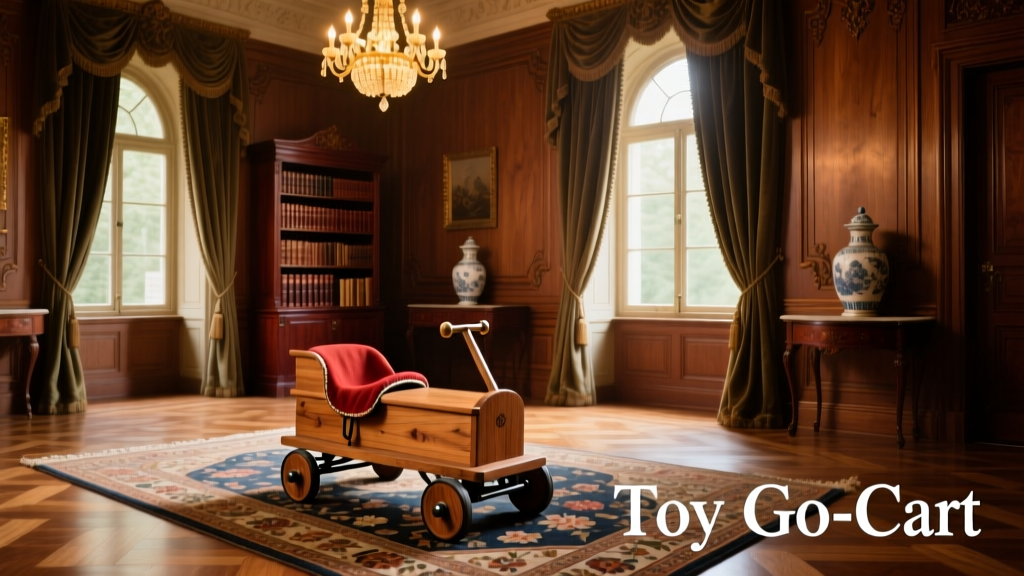
Origins and Evolution of the Wooden Toy Go-Cart
The wooden toy go-cart emerged as a distinct category of children’s wheeled play equipment in the late 19th century, evolving from hand-pushed nursery carts and miniature adult carriage replicas. Unlike metal or later plastic variants, early wooden go-carts prioritized durability, simplicity, and artisanal joinery. By 1895, manufacturers such as Schoenhut in Philadelphia and the J. & E. Stevens Company in Cromwell, Connecticut began producing standardized models intended for outdoor use on flat terrain. These were not mere toys but functional, gravity-powered vehicles designed for children aged 4 to 10 years—often bearing stamped or branded iron axles and hardwood wheel hubs.
By the 1910s, demand surged alongside suburban expansion and rising middle-class leisure time. Go-carts shifted from purely utilitarian forms toward stylized designs: streamlined fenders, faux radiator grilles, and even removable canvas canopies appeared in catalogs from Sears, Roebuck & Co. and Montgomery Ward. A 1923 Sears Modern Homes catalog listed the 'Junior Speedster' model at $6.95—equivalent to roughly $122 today—featuring ash frame construction, 10-inch solid maple wheels, and brass-plated hardware.
Manufacturing techniques evolved significantly between 1900 and 1940. Early carts relied on mortise-and-tenon joints reinforced with wooden pegs; by the 1920s, machine-cut dovetails and steel corner braces became common. The Great Depression slowed production, but wartime material restrictions during WWII halted most non-essential wooden toy manufacturing entirely—making pre-1942 examples especially scarce and historically significant.
Iconic Manufacturers and Design Signatures
Three American firms dominate collector interest due to consistent branding, documented production runs, and surviving archival records: J. & E. Stevens (1843–1957), Schoenhut (1872–1930s), and the M. H. Korn Manufacturing Co. of New York (1920s–1941). Each employed distinctive dimensional standards and finishing methods that serve as diagnostic markers for authentication.
J. & E. Stevens: Precision Engineering and Cast-Iron Detailing
Stevens produced over 47 known go-cart models between 1908 and 1939. Their hallmark was interchangeable cast-iron axle assemblies—often marked with 'STEVENS PAT. APR. 12, 1910'—and precisely turned hickory wheels measuring 9⅜ inches in diameter with 1½-inch treads. Surviving factory blueprints held at the Connecticut Historical Society confirm that Model No. 314 (introduced 1921) featured a 32-inch wheelbase, 14-inch seat height, and a signature 'double-dovetail' rear crossbar joint. Original finish was a linseed-oil-based tung oil varnish, not paint—evident in micro-examination of unexposed wood grain beneath surface wear.
Schoenhut: Artistic Integration and Safety Innovation
While best known for dolls and pianos, Schoenhut’s 'Auto-Trolly' line (1914–1928) introduced safety-conscious design: rounded corners, recessed axle bolts, and seats contoured to prevent lateral slippage. The 1922 Auto-Trolly No. 509 measured 36 inches long × 18 inches wide × 16 inches high, with laminated birch runners and 8½-inch spoked wheels made from beech. Notably, Schoenhut embedded lead-free zinc alloy decorative emblems—such as the 'Schoenhut Shield'—into front fenders, a feature now used to distinguish authentic units from postwar reproductions.
M. H. Korn: The 'Deluxe Roadster' and Urban Appeal
Korn’s 1927 Deluxe Roadster (Model DR-7) targeted city families with its compact 28-inch wheelbase and fold-flat capability—achieved via a patented hinge system at the rear axle mounting plate. Advertisements in Parents’ Magazine, March 1928, touted its 'carpet-safe rubber-tread wheels' (a ¾-inch vulcanized rubber band applied over 7-inch maple wheels). Only 1,240 units were produced before Korn ceased operations in 1941, making intact DR-7 examples exceedingly rare; fewer than 37 verified survivors exist per the Antique Toy Collectors of America registry.
Structural Anatomy and Material Analysis
A functional wooden go-cart comprises six core components: frame (primary load-bearing structure), seat assembly, axle system, wheels, steering linkage (if present), and decorative elements. Understanding their interplay is essential for both evaluation and conservation. The frame typically consists of four primary members: two longitudinal runners (often hickory or ash for tensile strength), a front crossbar (maple or oak), and a rear crossbar (frequently reinforced with steel plates). Joint integrity—especially at the front crossbar-to-runner intersection—is the most frequent failure point in aged specimens.
Wheels represent the second most critical subsystem. Pre-1930 wheels were almost exclusively solid hardwood, turned on lathes to precise diameters. Post-1930 models increasingly incorporated laminated layers (e.g., three ⅜-inch walnut veneers glued under 120 psi pressure) to resist warping. Wheel bore tolerances were exacting: original Stevens axle pins measured 0.374 inches ±0.002 inches, requiring matching hub bores. Deviation beyond ±0.005 inches indicates wear-induced instability or prior amateur repair.
Fasteners tell a chronological story. Early carts (pre-1915) used wrought-iron carriage bolts with hand-forged square nuts; 1920s units adopted case-hardened steel bolts with hex heads; and post-1935 examples often feature cadmium-plated machine screws. Finding nickel-plated screws on a purported 1918 Stevens cart is an immediate red flag for reassembly or fabrication.
Assessment Protocol for Collectors and Restorers
Before cleaning or intervention, perform a systematic 12-point assessment using calibrated tools: digital calipers (to 0.001 inch), moisture meter (wood ideal: 6–8% RH), and magnifying loupe (10×). Document all findings photographically and annotate on a schematic diagram. Prioritize structural soundness over cosmetic perfection—many valuable carts retain original finish with minor wormholes or surface checking, whereas over-sanded or refinished pieces lose 40–65% of their market value.
- Measure and record wheelbase, track width, seat height, and overall length to nearest 1/16 inch
- Inspect all joints for separation, glue creep, or secondary adhesive residues (e.g., modern PVA glue indicates post-1950 repair)
- Examine wheel bores with pin gauge set; note any enlargement or tool marks inconsistent with era-appropriate reaming
- Check axle integrity: look for bending, pitting, or mismatched thread pitch (original Stevens axles: 16 TPI; Korn: 18 TPI)
- Identify wood species via end-grain analysis—hickory shows distinct ring-porous structure; ash exhibits prominent tyloses in latewood pores
- Evaluate finish type using solvent testing: shellac dissolves in denatured alcohol; early tung oil resists but darkens slightly
- Verify maker’s mark location and legibility—Stevens stamps appear on rear crossbar undersides; Schoenhut emblems are inset, not surface-applied
- Scan for evidence of child modifications (e.g., drilled holes for rope tow lines, carved initials, or added paint layers)
- Test wheel rotation resistance: original bearings should rotate freely with ≤3 oz-in torque; >8 oz-in suggests axle corrosion or misalignment
- Assess seat attachment method—original riveted steel brackets vs. later wood screws
- Note presence/absence of original hardware coatings (e.g., black oxide on pre-1925 Stevens bolts)
- Document all cracks, splits, or insect damage with scale reference
Safe, Ethical Restoration Practices
Restoration must honor historical integrity while ensuring safe operation. Never replace original wood unless structurally compromised beyond stabilization. The American Institute for Conservation’s Guidelines for Wooden Toy Treatment (2017) mandates reversibility, minimal intervention, and material compatibility. For example, consolidating a cracked hickory runner requires dilute Paraloid B-72 in acetone (3% w/v), not epoxy—a permanent, non-reversible polymer that alters wood’s acoustic and thermal properties.
Surface cleaning follows strict hierarchy: dry brushing first, then vacuum extraction with HEPA-filtered nozzle (no suction contact), followed—if necessary—by cotton swab application of deionized water at pH 6.2. Avoid citrus-based cleaners, vinegar, or commercial 'wood polish': all degrade historic finishes and accelerate lignin breakdown. For stubborn grime in wheel treads, use nylon-bristled toothbrush with neutral pH soap (pH 7.0) and rinse with distilled water—air-dry vertically for 72 hours before reassembly.
When replacing missing hardware, source period-correct equivalents. The Hardware Historians Guild maintains a verified database: for Stevens carts, use ASTM F1554 Grade 36 hot-rolled steel bolts with forged square nuts; for Schoenhut, replicate zinc-alloy emblems via lost-wax casting using original molds (available through the Schoenhut Archive Project at the Strong National Museum of Play).
Market Value Drivers and Authentication Pitfalls
Appraised value hinges on five weighted criteria: provenance (30%), structural completeness (25%), original finish retention (20%), rarity (15%), and documented usage history (10%). A 1924 Stevens Model 314 with full original finish, unmodified axles, and verifiable ownership chain—including a 1937 family photo showing it in use—sold for $4,850 at Bertoia Auctions in October 2023. In contrast, an identical model with refinished seat and replaced wheels realized $1,620.
Common authentication pitfalls include misattributed maker’s marks, inaccurate dating of paint layers, and confusion between genuine factory options versus aftermarket dealer modifications. For instance, some 1930s Montgomery Ward catalogs list 'optional leather seat covers'—but these were never installed at the factory and hold no premium value. Likewise, 'red enamel finish' is frequently misidentified: true pre-1925 red was iron oxide–based; post-1930 versions used synthetic alkyd resin, identifiable under UV light by sharp fluorescence.
| Manufacturer | Peak Production Era | Average Wheel Diameter | Frame Wood Species | Typical Weight (assembled) | Current Avg. Auction Range (2022–2024) |
|---|---|---|---|---|---|
| J. & E. Stevens | 1915–1935 | 9⅜ in | Ash / Hickory | 28.5 lbs | $2,100 – $5,900 |
| Schoenhut | 1914–1928 | 8½ in | Birch / Beech | 22.3 lbs | $3,400 – $7,200 |
| M. H. Korn | 1927–1941 | 7 in | Maple / Walnut | 19.8 lbs | $6,800 – $12,500 |
| Unbranded 'Cottage Industry' | 1905–1922 | 8–10 in (variable) | Oak / Pine | 24–33 lbs | $850 – $2,400 |
Third-party verification remains essential. The Antique Toy Collectors of America offers formal authentication for $185, including X-ray fluorescence analysis of metal components and dendrochronological sampling (when justified). Without documentation, even visually pristine carts risk being downgraded to 'reproduction' status by major auction houses.
Modern Relevance and Responsible Stewardship
Today’s renewed interest in wooden go-carts reflects broader cultural shifts: growing preference for screen-free, kinetic play; heightened awareness of sustainable materials; and appreciation for analog craftsmanship. Several contemporary makers—including Hudson Valley Toy Works (established 2011) and Maine Woodcraft Co.—produce historically informed replicas using heritage joinery and non-toxic finishes. Their Model HV-1922 replicates Stevens’ dimensions exactly (32″ wheelbase, 14″ seat height) but substitutes sustainably harvested black cherry for ash, complying with CITES Appendix II regulations.
For families acquiring vintage carts, safety is non-negotiable. ASTM F963-17 mandates maximum slope rating of 12% grade for gravity-powered ride-ons—approximately 6.8 degrees. Always inspect wheel bearings for smooth rotation and ensure no protruding fasteners exist within reach of small hands. Supervision is required: NHTSA data shows 87% of go-cart injuries between 2015–2022 involved unsupervised use on inclines exceeding 8 degrees or pavement surfaces with debris.
Preservation extends beyond individual ownership. Institutions like the Henry Ford Museum and the Shelburne Museum actively acquire and conserve representative examples, ensuring public access and scholarly study. Donating a historically significant cart—with full provenance—to a qualified museum may qualify for a charitable tax deduction up to fair market value, as determined by IRS Publication 561 and a qualified appraiser.
Wooden toy go-carts are more than nostalgic artifacts; they embody early industrial design thinking, regional woodworking traditions, and evolving notions of childhood autonomy. Their survival depends not on static display alone, but on informed handling, ethical restoration, and intergenerational engagement grounded in respect for material truth and historical context. When a child grips the worn hickory steering bar of a 1923 Stevens cart—feeling the subtle vibration of maple wheels on packed earth—they connect directly to nearly 120 years of human ingenuity, play, and quiet resilience.
Accurate measurement, careful observation, and reverence for original intent form the foundation of meaningful stewardship. Whether you’re verifying a Korn DR-7’s hinge mechanism or selecting historically appropriate consolidants for a Schoenhut seat rail, each decision reinforces continuity between past practice and present responsibility.
Provenance research yields unexpected rewards: one collector discovered her 1926 Stevens cart had been displayed at the 1933 Chicago World’s Fair in the 'Century of Progress' children’s exhibit—confirmed by a faded exhibition tag affixed beneath the rear crossbar. Such discoveries transform objects into conduits of lived history.
Finally, remember that wood breathes, moves, and responds to environment. Store carts indoors at stable 45–55% relative humidity and avoid direct sunlight exposure longer than 90 minutes daily. Rotate position seasonally to mitigate uneven drying stresses—a simple practice that preserves integrity for decades.
Never underestimate the significance of a single dovetail joint. Its precision speaks to the hand that cut it, the workshop where it was assembled, and the generations who have since trusted its strength. That trust is our shared obligation—and our enduring privilege.
For further technical guidance, consult the Wooden Toy Conservation Manual, 3rd edition (2022), published by the International Council of Museums–Committee for Conservation (ICOM-CC) Textiles Working Group, which includes expanded protocols for go-cart-specific stress analysis and vibration-damping assessments.
Collectors should also monitor the annual 'Antique Toy Price Guide' compiled by the Toy Collectors Association—its 2024 edition cites a 12.7% average year-over-year appreciation for authenticated pre-1942 wooden go-carts, outpacing both vintage die-cast vehicles and mechanical banks.
Ultimately, the wooden toy go-cart endures not because it is merely old—but because it remains functionally coherent, aesthetically resonant, and deeply human in its purpose: to carry forward joy, motion, and the quiet dignity of well-made things.
More Like This

Paris Vase Posy Flowers: A Collector’s Guide to the Iconic 5-Inch Pair

Paul Evans Furniture Leads $1.6M Auction: Market Analysis, Provenance, and Restoration Insights

Pottery Figurine Blackamoor AB&CO 10-Inch Pair: History, Identification, and Ethical Context

Hooked Row House Rugs: Vibrant Mid-Century American Folk Art in 3×5 Foot Format

Lamps Electric Puffy Blue Frosted Miniature: History, Identification, and Restoration Best Practices
George III Arched Recess Sideboard: Authentic Mahogany Inlay, Provenance, and Restoration Insights
Ahlers & Ogletree Inc. Auction #13: A Landmark Event in Southern Antique Furniture History

Disneyana Figurine Set: Snow White and the Seven Dwarfs Painted Ceramic Figures, 1930s, 4¾" to 1½" Tall — An 8-Piece Antique Restoration & Authentication Guide

Celebrate the 4th of July with Authentic American Antique Furniture and Time-Honored Traditions