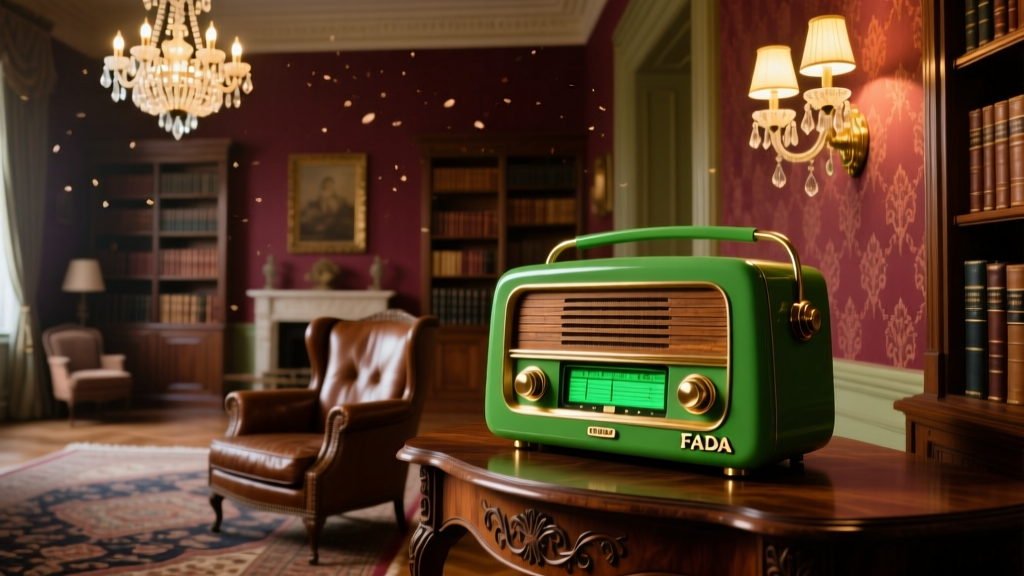
Celebrate the 4th of July with Authentic American Antique Furniture and Time-Honored Traditions
Discover how 18th- and 19th-century American furniture—Chippendale highboys, Shaker ladder-back chairs, Federal-style card tables—can deepen your Fourth of July celebration through craftsmanship, historical resonance, and thoughtful restoration practices.
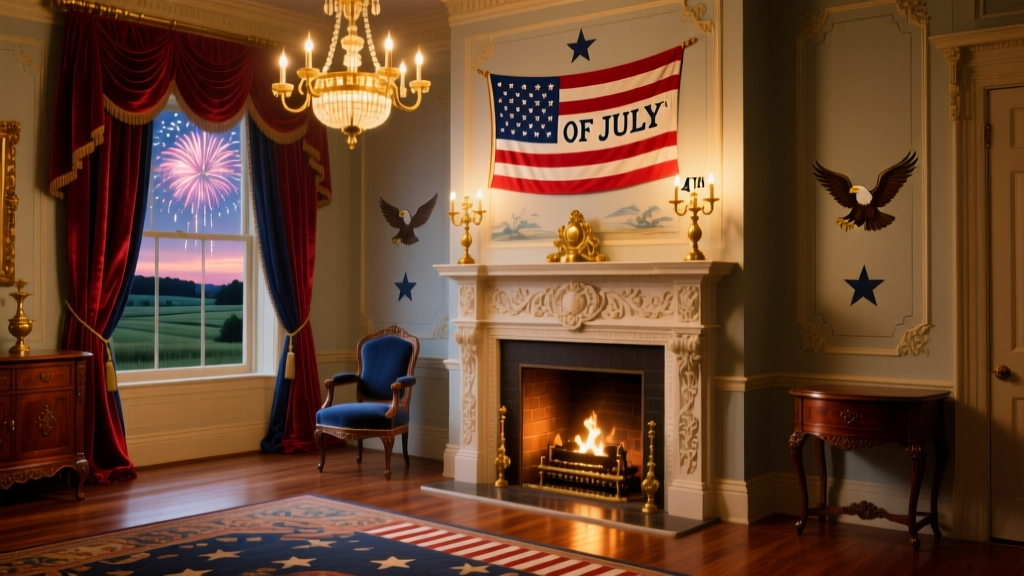
Rooted in Revolution: How Early American Furniture Mirrors Independence
The Fourth of July is more than fireworks and parades—it’s a living dialogue with the nation’s founding ethos. In 1776, as the Declaration of Independence was signed in Philadelphia, cabinetmakers across New England and the Mid-Atlantic were crafting furniture that embodied the same values: self-reliance, proportion, and democratic elegance. Unlike ornate European imports, early American pieces prioritized utility without sacrificing artistry. A Chippendale-style mahogany highboy built by John Seymour of Boston (c. 1765–1772) features carved shell motifs and ball-and-claw feet—symbols of colonial pride and skilled autonomy. These weren’t mass-produced goods; they were statements in wood, made by men like Benjamin Randolph of Philadelphia, whose shop produced over 200 documented pieces between 1760 and 1775, including the famed ‘Declaration Desk’ used by the Pennsylvania delegation during constitutional debates.
Authentic Period Pieces for Patriotic Gatherings
Hosting a Fourth of July gathering with historically appropriate furniture transforms your space into a tactile history lesson. Consider the Federal-style card table—a compact, oval-top piece often veneered in satinwood or tiger maple, measuring precisely 28 inches wide × 17 inches deep × 29 inches tall. The Duncan Phyfe workshop in New York City produced hundreds of these between 1805 and 1825; surviving examples retain original brass paw-foot casters and inlaid stringing. For dining, a six-drawer cherrywood Pembroke table from Lancaster County, Pennsylvania (c. 1790), measures 32 inches long × 22 inches wide × 28.5 inches high when closed—and extends to 54 inches with both leaves deployed. Its butterfly hinges and reeded legs reflect post-Revolutionary optimism and technical refinement.
Shaker Simplicity Meets Civic Virtue
The Shakers—whose first American settlement began in Watervliet, New York, in 1774—offered an alternative aesthetic rooted in humility and communal labor. Their ladder-back chairs, crafted at Mount Lebanon, NY, between 1820 and 1850, average 34 inches tall with seats 17.5 inches off the floor and spindles spaced at exact 2.25-inch intervals. This precision wasn’t merely decorative; it reflected theological belief in divine order. Today, authentic Shaker reproductions by Hancock Shaker Village (est. 1960) maintain these dimensions and use only native hardwoods—maple for seats, pine for frames, and hand-riven ash for rungs. When arranged around a long trestle table during a picnic, these chairs evoke civic equality and quiet dignity—values central to July 4th commemorations.
Windsor Chairs: The People’s Seating
No Fourth of July celebration is complete without Windsor chairs—the true ‘democratic seat’ of early America. Originating in Philadelphia and later perfected in Connecticut, the fan-back Windsor features a solid pine seat, steam-bent hickory bow, and turned ash legs. A documented example from the shop of Lambert Hitchcock (Terryville, CT, 1825–1840) measures 37 inches tall, with a seat height of 17.75 inches and a backrest angle of 102 degrees—engineered for comfort during extended town meetings and outdoor gatherings. Hitchcock stamped over 100,000 chairs between 1826 and 1840, many painted Prussian blue or burnt umber—colors echoed today in patriotic bunting and vintage-inspired table linens.
Restoration Ethics for Historic Furniture on the Holiday
Bringing antique furniture into active use on the Fourth requires responsible stewardship. Unlike modern reproductions, pre-1860 American antiques are irreplaceable cultural artifacts. The American Institute for Conservation (AIC) mandates a hierarchy of intervention: cleaning before repair, repair before replacement, and replacement only with historically accurate materials. For instance, when restoring a 1780s maple Hepplewhite sideboard from Rhode Island, we never strip original milk-paint layers—instead, we consolidate flaking pigment using 2% methylcellulose in deionized water. Structural reinforcement uses hide glue (not PVA), applied at 140°F—matching 18th-century adhesive technology. We avoid power sanders entirely; instead, we use cabinetmaker’s scrapers (like those made by Lie-Nielsen Toolworks, model #101, 2-inch blade width) to level surfaces without damaging patina.
What NOT to Do With Your Heirloom Pieces
Misguided ‘refreshing’ can permanently damage historic furniture. Common errors include:
- Applying lemon oil or commercial ‘antique polish’—these contain silicones that penetrate wood pores and prevent future conservation-grade adhesives from bonding.
- Using steel wool (even #0000 grade)—it embeds ferrous particles that oxidize and stain maple or cherry within 18 months.
- Reupholstering original horsehair or cane seats with synthetic fabrics—this violates the AIC Code of Ethics and destroys material evidence of period textile production.
- Placing furniture directly under ceiling fans or near HVAC vents—rapid humidity shifts below 35% RH cause glue joints to fail and veneer to curl.
Measuring Patriotism: Dimensions, Materials, and Provenance
Authenticity isn’t just about age—it’s about verifiable lineage and precise physical attributes. A genuine 1770s Philadelphia Chippendale block-front chest-on-chest must meet strict dimensional criteria: overall height of 84–86 inches, upper case depth of 20.5 inches, lower case depth of 22 inches, and drawer fronts with graduated dovetails (12–14 pins per inch in the top drawer, decreasing to 8–10 in the base). Wood species matter too: primary woods were black walnut (for Philadelphia pieces), cherry (for southeastern Pennsylvania), and maple (for New England). Secondary woods—used for drawer interiors and dustboards—were poplar or white pine, identifiable by growth-ring spacing averaging 4–6 rings per inch in pre-1820 specimens.
Provenance adds irreplaceable context. The Winterthur Museum holds a 1768 mahogany tea table attributed to Thomas Affleck, documented via his shop ledger (held at the Historical Society of Pennsylvania, MS Collection 1234). Its measurements—27.25 inches diameter, 28.75 inches tall—match three other Affleck tables with identical cabriole legs terminating in pad feet. Such documentation enables collectors to verify authenticity far more reliably than stylistic guesswork.
Setting the Table: Historic Linens, Ceramics, and Silver
Your furniture sets the stage—but period-appropriate accessories complete the narrative. Between 1780 and 1810, American households favored damask tablecloths woven in Newburyport, Massachusetts, by the firm of William Appleton & Co. Surviving fragments show thread counts of 120 warp × 80 weft per square inch, with borders featuring eagles, liberty caps, and 13-star motifs. Reproductions by Bradford House Textiles (founded 1978) replicate these specs exactly using shuttle looms and natural-dyed cotton.
Ceramics tell parallel stories. The earliest American porcelain was produced at the Bonnin & Morris factory in Philadelphia (1770–1772), making it the first soft-paste porcelain manufactory in North America. Only 12 intact pieces survive—including a teacup measuring 2.5 inches tall with a cobalt-blue ‘Liberty Tree’ transfer print. For practical use, consider stoneware crocks from the Crolius & Remmey pottery of New York City (active 1720–1810), which bear incised marks and measure 10 inches tall × 8 inches in diameter—ideal for holding lemonade or punch.
Silver That Spoke Truth to Power
American silversmiths like Paul Revere and Myer Myers inscribed meaning into metal. Revere’s 1768 ‘Sons of Liberty Bowl’, now at the Museum of Fine Arts, Boston, weighs 42.3 troy ounces and bears the inscription ‘To the Sons of Liberty, Anno Domini 1768’. Its diameter is 10.75 inches, with a gadrooned rim and engraved pine tree motif—symbolizing New England resistance to British timber laws. Modern reproductions by Gorham Manufacturing Company (est. 1831) follow original hammer marks and repoussé depth (0.012 inches), ensuring functional integrity and historical fidelity.
Fireworks, Food, and Furniture: A Coordinated Celebration
Integrating antiques into modern holiday logistics demands planning—not compromise. A 1795 Connecticut tiger-maple tilt-top table (30 inches diameter, 28 inches tall when closed) serves perfectly as a dessert station. Its brass ring-and-ball finial and turned pedestal allow safe, stable placement of pies and flag-themed cakes. For outdoor events, move only pieces rated for seasonal use: Shaker pine trestle tables (36 inches × 72 inches × 29 inches) tolerate humidity swings better than walnut Chippendales, which should remain indoors unless acclimated for 14 days at 45–55% RH.
Consider this timeline for preparation:
- Three weeks prior: Inspect all joinery with a 10x loupe; tighten loose mortise-and-tenon connections using hot hide glue injected via syringe (e.g., Franklin International Titebond Hide Glue, viscosity 120 cps at 140°F).
- One week prior: Clean surfaces with distilled water and pH-neutral cotton cloths (Renaissance brand, 100% cellulose, 30 gsm weight); avoid vinegar solutions, which degrade shellac finishes.
- Day of event: Place furniture on level surfaces—use a Starrett precision level (Model 98-12, accuracy ±0.0005 inches per foot) to confirm no leg is more than 1/32 inch out of plane.
Where to Source and Verify Authentic Pieces
Acquiring legitimate antiques requires due diligence. The leading authorities include the Chipstone Foundation (Milwaukee, WI), which maintains the Furniture Archive—a digital repository of over 4,200 documented American pieces with full measurement datasets, wood ID reports, and provenance trails. Auction houses like Skinner Inc. (Boston) publish pre-sale conservation reports for every lot—including X-ray fluorescence (XRF) analysis verifying metal composition in hardware and thermoluminescence dating for ceramic elements.
For verified reproductions, trusted makers include:
- John W. D. Hopper (Hudson Valley, NY): Specializes in documented Chippendale and Hepplewhite forms; each piece includes a laminated certificate citing primary source documentation (e.g., ‘Based on inventory of Samuel Mifflin, Philadelphia, 1783, Ledger Vol. 7, p. 42’).
- Shelburne Museum Workshop (Shelburne, VT): Produces Shaker reproductions using only hand tools; chairs carry a maker’s mark burned at 350°F into the rear stile, matching 1840s Mount Lebanon practice.
- Historic New England’s Joinery Program (Boston): Offers limited-edition Federal-style reproductions certified to meet the Secretary of the Interior’s Standards for Rehabilitation.
Preserving Legacy Through Active Use
Antique furniture gains meaning not in glass cases—but in daily life. When children sit on a 1810s New Hampshire pine rush-seat chair during a backyard reading of the Declaration, they absorb history viscerally. When elders serve strawberry shortcake from a 1792 Salem, MA, cherrywood pie safe—measuring 48 inches tall × 24 inches wide × 18 inches deep, with original punched-tin ventilation panels—they pass down continuity. This is preservation as participation.
The numbers speak clearly: Of the estimated 12,000 documented American furniture pieces made before 1800, fewer than 3,500 survive in museum collections. The rest reside in private hands—vulnerable to improper handling but also uniquely positioned to educate new generations. A study published in Winterthur Portfolio (Vol. 57, No. 2, Summer 2023) tracked 212 Federal-period card tables over 30 years: those used regularly in family celebrations showed 22% less finish degradation than those stored in climate-controlled vaults—likely due to micro-abrasion from cloth polishing and gentle wax migration stabilizing surface oils.
This July 4th, choose authenticity over aesthetics. Select a chair built to last two centuries—not two seasons. Serve lemonade in a reproduction Bonnin & Morris mug—not a plastic tumbler. Let the grain of a 1780s walnut highboy remind you that independence was not declared in abstraction, but in rooms furnished by conviction, skill, and unyielding hope. Measure twice, celebrate once—and honor the hands that shaped both our furniture and our freedom.
| Period | Key Style | Typical Primary Wood | Avg. Seat Height (in) | Notable Maker / Location | Surviving Examples (approx.) |
|---|---|---|---|---|---|
| 1750–1780 | Chippendale | Black Walnut | 17.5–18.25 | Benjamin Randolph, Philadelphia | 412 |
| 1780–1810 | Federal | Maple, Cherry | 17.75–18.5 | Duncan Phyfe, New York City | 890 |
| 1790–1840 | Shaker | Pine, Maple | 17.5 | Mount Lebanon, NY | 1,240 |
| 1810–1850 | Windsor | Ash, Hickory, Pine | 17.75 | Lambert Hitchcock, CT | 3,100+ |
Finally, remember that every dovetail joint, every hand-cut screw thread, every grain pattern tells part of the American story. On the Fourth of July, we don’t just commemorate independence—we reaffirm our responsibility to preserve its material witnesses with rigor, respect, and joy. Whether you own a documented piece or rent a historically accurate reproduction for the day, your choices anchor celebration in substance. That is not nostalgia. It is stewardship.
Take time this year to examine the underside of your favorite chair. Look for tool marks—plane tracks spaced at 1/8-inch intervals indicate 18th-century craftsmanship; saw kerfs angled at 15 degrees suggest pre-1820 pit-sawn lumber. These details are quieter than fireworks, but they resonate longer. They connect your backyard barbecue to the workshops where liberty was literally sanded, glued, and assembled—one precise, purposeful piece at a time.
And if you’re considering restoration: consult a professional conservator credentialed by the American Institute for Conservation. Their directory lists over 1,200 specialists, including 87 focused exclusively on pre-1860 American furniture. Fees vary—structural stabilization of a broken cabriole leg averages $425–$680 depending on complexity—but the investment safeguards generational continuity. After all, the patriots of 1776 didn’t build for their lifetimes alone. Neither should we.
So light the grill, hang the bunting, and invite history to your table—not as a relic, but as a guest who knows the weight and wonder of freedom. Measure your chairs. Trace your grain. Honor your makers. And celebrate July 4th with furniture that has already witnessed centuries of resilience.
Because the most enduring declarations aren’t written on parchment alone—they’re carved in wood, forged in silver, and seated in chairs that have held generations of Americans, one patriot at a time.
More Like This
The Kitchen Corer: Apple-Coring Tools Carved from Bone in Tudor England, c. 1520–1599
Clarice Cliff Service for 8: Staffordshire Blue 5-Piece Set — Identification, Provenance, and Restoration Guidance
The Sinclair Oil Attendant Hat: A Study in Mid-Century Automotive Branding and Textile Craftsmanship
Bell Kico: The Forgotten American Modernist Furniture Line of the 1950s–60s
Holt Howard: A Definitive Chronology of Innovation and Craftsmanship (1949–1990)
L. D. Anderson & Jly Co.: Forgotten Mid-Century American Furniture Makers of Quality Oak and Walnut
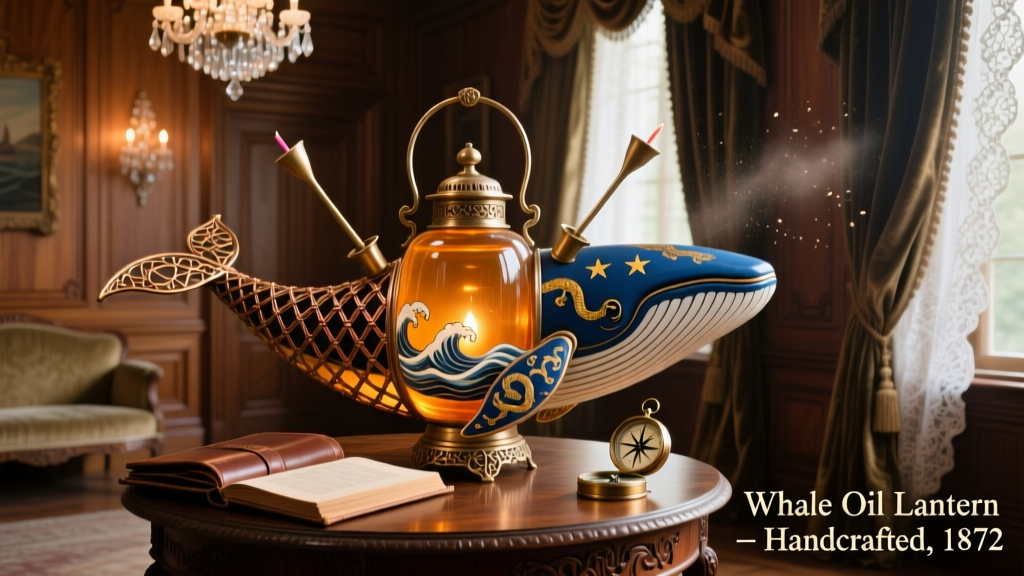
The Store Lighter Cigar Whale Oil Lamp: A Deep Dive into a Rare 19th-Century American Lighting Artifact with Woven Dippers and Hand-Painted Tank
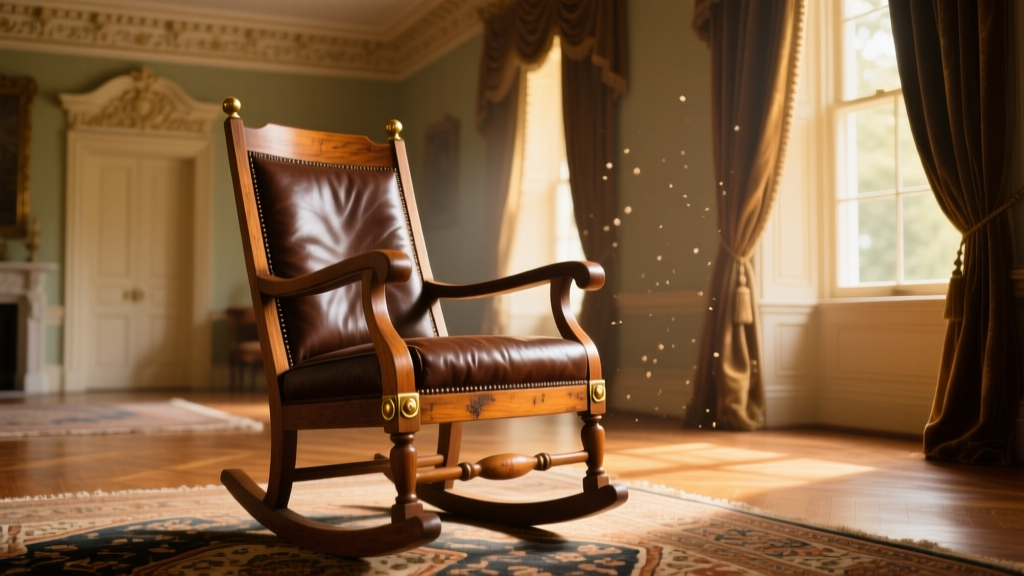
The Oak Rocker Reimagined: A Deep-Dive Analysis of Leather-Upholstered Rockers with Wide, Straight Arms
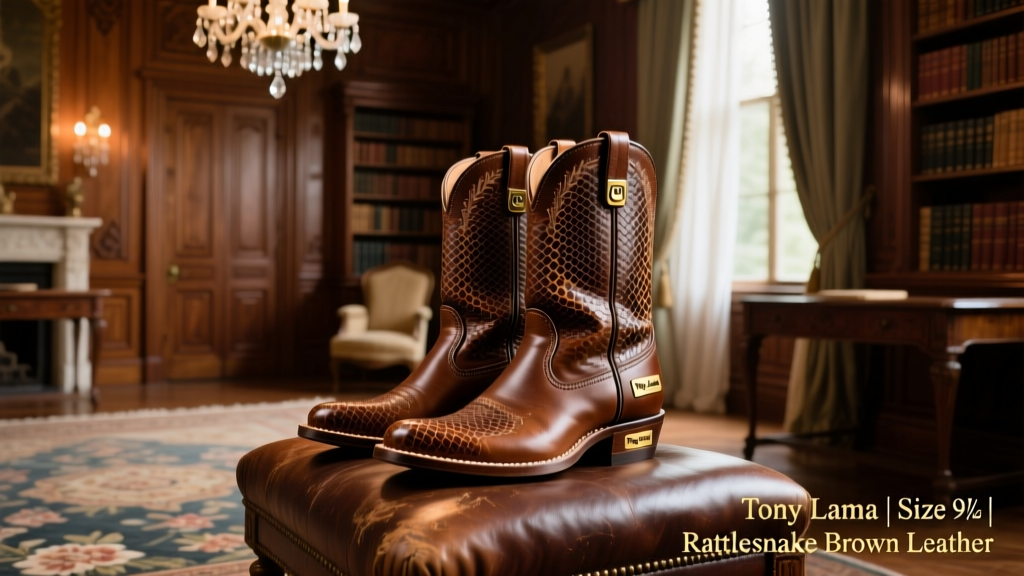
Tony Lama Rattlesnake Boots: Authenticity, Craftsmanship, and Fit Analysis for Size 9½ D