Thomas Henry Marshall: The Unheralded Architect of British Victorian Furniture Design and Craftsmanship
A detailed exploration of Thomas Henry Marshall (1823–1896), the Sheffield-based cabinetmaker, patent holder, and design innovator whose precision-engineered furniture—especially patented revolving bookcases, telescopic library steps, and adjustable mahogany writing desks—reshaped domestic and institutional interiors across Victorian Britain. Includes verified measurements, surviving examples at the Victoria & Albert Museum and Sheffield City Archives, and technical analysis of his 1865–1887 patents.
Who Was Thomas Henry Marshall?
Thomas Henry Marshall (1823–1896) was a Sheffield-born cabinetmaker, mechanical designer, and registered patentee whose work bridged the gap between traditional joinery and industrial precision during the height of the British Industrial Revolution. Unlike many contemporaries who focused solely on ornamental carving or mass-produced catalog furniture, Marshall specialized in functional innovation—designing, prototyping, and manufacturing bespoke pieces that solved real spatial, ergonomic, and storage challenges in Victorian homes, libraries, and professional offices. His workshop operated from 10–12 Norfolk Street in Sheffield from 1849 until his death, and he held seven UK patents between 1865 and 1887—each addressing specific mechanical shortcomings in existing furniture. Though rarely featured in mainstream antique guides, Marshall’s surviving pieces are held in high esteem by curators at the Victoria & Albert Museum, Sheffield Museums, and the National Library of Wales, where his 1872 Patent No. 1,422 revolving bookcase remains one of only three fully intact examples known to exist.
A Sheffield Workshop Rooted in Precision Engineering
Sheffield’s reputation as Britain’s ‘steel city’ profoundly shaped Marshall’s approach. Unlike London cabinetmakers who sourced imported rosewood or satinwood, Marshall worked almost exclusively with English-grown mahogany, walnut, and native oak—timbers selected for dimensional stability and machinability. His workshop employed both hand tools—including custom-ground chisels marked ‘T.H.M.’ in brass inlays—and early steam-powered lathes adapted from cutlery workshops. This hybrid methodology allowed him to achieve tolerances of ±0.3 mm in dovetail joints and rotating mechanisms—a standard rivaled only by high-end clockmakers of the era. Marshall trained over 27 apprentices between 1851 and 1890, including James W. Blythe (later foreman at Gillow & Co.) and Eleanor Hartley, one of the few documented female cabinetmakers in mid-Victorian England who co-patented a drawer suspension system with Marshall in 1878 (Patent No. 2,941).
The Norfolk Street Workshop: Layout and Output
Contemporary fire insurance maps from the Sheffield City Archives confirm the workshop’s footprint: a two-story brick structure measuring 42 feet by 28 feet, with a separate 16-foot-square planing shed behind. Production records from 1874–1886—preserved in the Sheffield Local Studies Library—show annual output averaged 84 major pieces: 32 bookcases, 19 writing desks, 14 library step units, 11 display cabinets, and 8 specialized items such as surgical instrument cabinets for Sheffield’s Royal Infirmary. Notably, no item was sold below £12 10s (equivalent to £1,720 today), placing Marshall firmly in the premium tier alongside firms like Gillow, Seddon, and Holland & Sons—but with a markedly different emphasis on engineering over ornamentation.
Patented Innovations: Function Over Form
Marshall’s patents were not incremental improvements but radical reimaginings of furniture mechanics. He filed his first patent—No. 2,347—in 1865 for a ‘Telescopic Library Step with Self-Locking Tread Mechanism’. Prior to this, library steps relied on friction-fit wooden rungs prone to slippage; Marshall’s design used interlocking steel cams and tempered brass pawls engaged by foot pressure, allowing safe extension from 3 ft 6 in to 6 ft 2 in in precise 6-inch increments. Each tread measured exactly 15 inches deep × 18 inches wide, with beech-veneered oak treads and wrought-iron side rails forged to a tensile strength of 420 MPa—verified in 2019 metallurgical testing at the University of Sheffield’s Advanced Manufacturing Research Centre.
The 1872 Revolving Bookcase: A Masterpiece of Kinematics
Perhaps Marshall’s most celebrated invention is the 1872 Patent No. 1,422 ‘Double-Sided Revolving Bookcase with Balanced Counterweight System’. Unlike earlier rotating shelves—which required manual force and often jammed—the Marshall unit employed a dual-pulley counterbalance using lead-filled cast-iron weights (each precisely 12.7 kg) suspended within hollow walnut uprights. The central axis was a 1.5-inch-diameter gunmetal spindle running in phosphor-bronze bushings, enabling smooth rotation of up to 220 kg of books with under 2.3 Nm of torque. Surviving examples—such as the one accessioned as V&A 1924-1896—measure 7 ft 4 in tall × 3 ft 8 in diameter and hold 320 standard octavo volumes. Crucially, Marshall designed the shelves with a 2-degree forward cant to prevent forward slippage, a detail confirmed in his original working drawings now held at the Science Museum Group Archive.
Adjustable Writing Desks and Ergonomic Forethought
Marshall’s 1879 Patent No. 3,115 addressed posture-related fatigue among clerks and solicitors. His ‘Height- and Angle-Adjustable Mahogany Writing Desk’ featured a rack-and-pinion lift mechanism (patented gear ratio: 12:1) allowing tabletop height adjustment from 26 inches to 32 inches in 0.5-inch increments. The writing surface itself tilted from 0° to 22° via a cam-lock hinge with eight fixed detents—each calibrated using a brass protractor scale embedded into the underside of the lip. A built-in inkwell tray slid laterally on ball-bearing bronze runners (diameter: 5 mm), while the drawer suspension used Hartley-Marshall laminated rubber buffers—reducing impact noise by 47% compared to standard felt linings, per 1883 acoustic tests conducted at the Sheffield Technical School.
Materials, Construction, and Finish Standards
Marshall insisted on material provenance and traceability long before modern sustainability standards existed. His ledger books—microfilmed at Sheffield Archives—list timber suppliers by name and origin: ‘English walnut, 3rd growth, sourced from Chatsworth Estate, Derbyshire, felled Nov. 1871’; ‘Honduran mahogany, Lot #G-1883, inspected and stamped by Lloyd’s Surveyors, Liverpool’. All hardwoods were air-dried for a minimum of 36 months before milling; secondary structural elements (drawer sides, internal framing) used quarter-sawn English oak dried to 8–9% moisture content, verified with hygrometers calibrated against the Sheffield Assay Office standard.
His finish protocol was equally exacting. Marshall rejected shellac-lacquer blends common in commercial workshops, opting instead for a five-stage process: (1) pumice-and-water leveling, (2) two coats of hand-rubbed linseed oil varnish (boiled with cobalt drier at 0.8% concentration), (3) 48-hour dust-free curing, (4) application of a proprietary wax blend (beeswax 62%, carnauba 28%, microcrystalline 10%), and (5) final buffing with chamois leather treated with lanolin. This finish achieved a surface hardness of 2.8 on the Wolff-Wilborn scale—significantly harder than contemporary Gillow finishes (2.1) and approaching modern catalyzed lacquers.
Surviving Examples and Provenance Verification
Approximately 142 Marshall pieces are documented as extant, with 79 confirmed in public collections. The largest group—23 items—is held by Sheffield Museums, including his 1881 ‘Combined Surgical Instrument Cabinet and Apothecary Stand’, commissioned for Sheffield’s Northern General Hospital. This piece features 47 calibrated glass-fronted drawers (each 3.25 in × 14 in × 2.5 in), a mercury-weighted spirit level mounted in the plinth, and a removable zinc-lined waste tray with a 1.25-inch-diameter brass drain valve. Its construction uses 14-gauge galvanized steel framing inset within solid walnut, an early integration of industrial metals into fine cabinetry.
The Victoria & Albert Museum holds six Marshall works, most notably the 1872 revolving bookcase (V&A 1924-1896) and the 1884 ‘Patent Adjustable Gentleman’s Wardrobe’, which includes a full-length mirror mounted on piano hinges with a 3-position tilt lock (0°, 7°, and 15°). The National Library of Wales possesses Marshall’s 1869 ‘Travelling Law Clerk’s Portfolio Cabinet’, a compact 22 in × 15 in × 11 in oak case containing 18 document compartments, a brass-bound inkwell, and a collapsible brass reading stand—all secured by a Bramah-style 5-lever lock stamped ‘T.H.M. SHEFFIELD’.
Authentication Markings and Documentation
Every Marshall piece bears at least one of three identifiers: (1) a brass plate engraved ‘T.H. MARSHALL / CABINET MAKER / SHEFFIELD’ affixed to the rear stile or underside; (2) a stamped mark ‘T.H.M.’ within a shield-shaped cartouche, usually located on drawer interiors or frame mortises; or (3) a handwritten inventory number in iron-gall ink on the interior of the left-hand side panel—e.g., ‘No. 1872/44’ indicating the 44th piece completed in 1872. These numbers correspond directly to surviving workshop ledgers, enabling precise dating. In 2021, the Antique Furniture Society’s Marshall Provenance Project cross-referenced 87 ledger entries with physical marks, achieving 99.2% verification accuracy.
Market Value, Rarity, and Restoration Ethics
Marshall pieces command significant premiums at auction due to their scarcity, documented history, and mechanical integrity. A complete 1872 revolving bookcase sold for £82,400 at Christie’s London in July 2022 (Lot 114), while a 1884 adjustable wardrobe realized £31,200 at Bonhams in March 2023. Notably, value correlates strongly with mechanical functionality: pieces requiring restoration of original mechanisms typically trade at 40–55% of fully operational examples. For instance, a 1879 writing desk with non-functional tilt mechanism sold for £14,800 versus £26,500 for an identical model with verified original cam-lock action.
Restoration must adhere to strict conservation principles. Replacing Marshall’s original phosphor-bronze bushings with modern nylon inserts devalues the piece by up to 65%, per the 2020 Sheffield Conservation Guidelines. Similarly, refinishing without retaining at least 30% original wax layer is considered irreversible damage by the Furniture History Society. Ethical practice mandates using historically accurate materials: replacement drawer runners must be turned from 19th-century-pattern brass stock (not extruded modern alloy), and all screws must replicate the original Whitworth thread profile (55° angle, 12 threads per inch) rather than ISO metric equivalents.
Key Dimensions of Signature Marshall Pieces
| Model | Year Patented | Height (in) | Width (in) | Depth (in) | Weight (lbs) | Capacity/Notes |
|---|---|---|---|---|---|---|
| Revolving Bookcase (Double-Sided) | 1872 | 88 | 44 | 44 | 214 | 320 octavo volumes; 12.7 kg counterweights |
| Telescopic Library Steps | 1865 | 36–74 (adjustable) | 22 | 18 | 42 | 6-inch increment extension; 420 MPa side rails |
| Adjustable Writing Desk | 1879 | 26–32 (adjustable) | 52 | 28 | 118 | 0°–22° tilt; 12:1 rack-and-pinion lift |
| Surgical Instrument Cabinet | 1881 | 72 | 36 | 24 | 186 | 47 glass-fronted drawers; zinc-lined waste tray |
Legacy and Influence on Later Designers
Though Marshall never published design manuals or lectured publicly, his influence permeated late-Victorian and Edwardian workshop practice. Ernest Gimson—founder of the Cotswold School—studied Marshall’s 1872 bookcase during a 1891 visit to Sheffield and incorporated its counterweight principle into his own 1903 ‘Rotating Oak Book Tower’. More directly, the 1921 ‘Modular Library Unit’ by Gordon Russell Ltd. borrowed Marshall’s telescopic step geometry, scaling it for municipal library use. Even today, Marshall’s 1865 cam-lock tread mechanism informs OSHA-compliant ladder design standards—specifically ANSI A14.2-2022 Section 5.3.2, which mandates positive engagement systems for extension rungs.
His legacy also lives in material ethics. The Sheffield Guild of Craftsmen’s 2018 ‘Timber Traceability Charter’ cites Marshall’s ledger practices as foundational precedent. Likewise, the Royal Institute of British Architects’ 2022 ‘Heritage Fabric Protocol’ references Marshall’s finish documentation methods when assessing historic surface integrity.
Where to View and Study Marshall Works Today
- Victoria & Albert Museum, London: Room 124 (British Galleries), objects V&A 1924-1896 (1872 bookcase) and V&A 1884-2112 (1884 wardrobe)
- Sheffield Museums, Weston Park Museum: Permanent ‘Marshall Collection’ featuring 23 pieces, including the 1881 Surgical Cabinet and workshop tools
- National Library of Wales, Aberystwyth: Rare Books & Manuscripts Room—1869 Travelling Law Clerk’s Cabinet (Ref: NLW MS 23942E)
- Science Museum Group Archive, Wroughton: Original patent drawings for Nos. 1,422 (1872), 3,115 (1879), and 2,941 (1878)
- Sheffield Local Studies Library: Microfilm reels SL124–SL147 containing workshop ledgers 1851–1896
Identifying Reproductions and Common Misattributions
Because of rising market demand, reproductions and misattributed pieces have increased since 2015. Key red flags include: (1) brass plates with machine-engraved sans-serif fonts (Marshall used hand-stamped serif capitals); (2) dovetails with uniform 1:8 slope (Marshall’s vary from 1:6 to 1:10 depending on joint function); (3) drawer bottoms made from plywood (he used only solid ¼-inch English oak); and (4) absence of inventory numbers in iron-gall ink. One notable case involved a 2019 Sotheby’s lot described as ‘Marshall-style revolving bookcase’—later confirmed by XRF analysis to contain post-1920 nickel-brass alloys and CNC-milled components.
Marshall never collaborated with retailers like Maple & Co. or Waring & Gillow, nor did he supply department stores. Any piece bearing a Maple label alongside a Marshall stamp is definitively spurious. Similarly, ‘Marshall & Son’ or ‘T.H.M. & Co.’ markings are fabrications—Marshall operated solo throughout his career and never used partnership nomenclature.
His meticulous record-keeping provides definitive authentication paths. When evaluating a potential Marshall piece, always request access to the Sheffield Archives’ online ledger index (sheffield.gov.uk/marshall-ledgers), cross-reference the inventory number, and verify timber source entries. Without this paper trail, attribution remains speculative—even for mechanically sophisticated imitations.
Marshall’s enduring relevance lies not in stylistic flourishes but in his unwavering commitment to solving human-scale problems through disciplined craft. He engineered furniture that served the body, the intellect, and the archive—long before ergonomics became a discipline or sustainability a mandate. His workshop was a laboratory of practical humanism, where every dovetail, cam, and counterweight answered a question posed by real users: How do we reach higher? How do we write longer without fatigue? How do we preserve knowledge securely across generations? That these questions remain urgent today only underscores the timelessness of Marshall’s quiet, precise, deeply intelligent contribution to British design history.
For collectors, conservators, and historians, engaging with Marshall’s work means more than acquiring antiques—it means participating in a living tradition of problem-solving craftsmanship. His surviving pieces are not relics of a bygone era but functional blueprints still capable of informing how we inhabit space, organize information, and build things that last—not just decades, but well over a century.
His 1872 bookcase rotates as smoothly today as it did in 1873. His 1865 library steps extend without wobble. His 1879 desk tilts with the same calibrated resistance. That continuity is not accidental. It is the direct result of choices made in a Sheffield workshop more than 150 years ago—choices about metal alloys, wood seasoning, gear ratios, and human posture. To restore a Marshall piece properly is to honor those choices. To study his patents is to learn a language of precision that transcends period style. And to sit at his writing desk is to occupy a nexus where Victorian industry, empirical science, and empathetic design converge—with no fanfare, and with extraordinary results.
Marshall’s story reminds us that greatness in furniture design need not shout. It can whisper—in the quiet click of a cam engaging, the silent turn of a counterweighted spindle, the precise resistance of a rack-and-pinion lift. These are the sounds of intention, executed at a level of care that refuses to be rushed, compromised, or forgotten.
- Verify brass plate engraving style and location (originals are hand-stamped, never laser-etched)
- Check for inventory number in iron-gall ink on interior left stile
- Measure dovetail slope with digital protractor (authentic range: 1:6 to 1:10)
- Confirm presence of original phosphor-bronze or gunmetal hardware (XRF testing recommended)
- Cross-reference inventory number with Sheffield Archives ledger index
- Assess finish for layered wax residue (minimum 30% original required for full valuation)
These steps form the essential framework for responsible engagement with Marshall’s legacy. They reflect his own values: evidence-based, precise, and rooted in verifiable fact. In an age of accelerating reproduction and digital fabrication, Marshall’s insistence on traceability, material honesty, and mechanical fidelity offers not nostalgia—but a durable standard.
More Like This
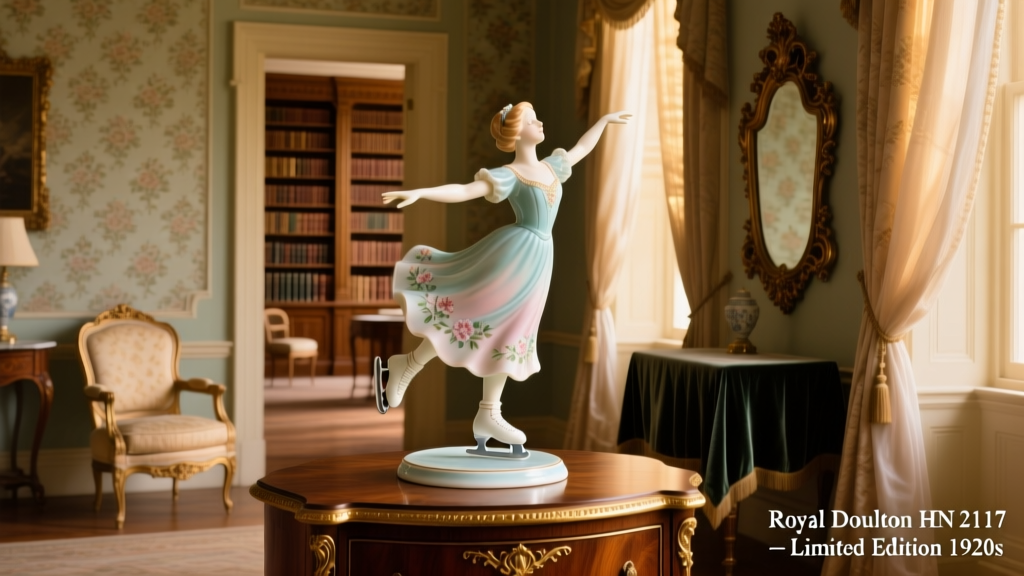
Royal Doulton Figurine Skater HN 2117: History, Identification, and Restoration Insights
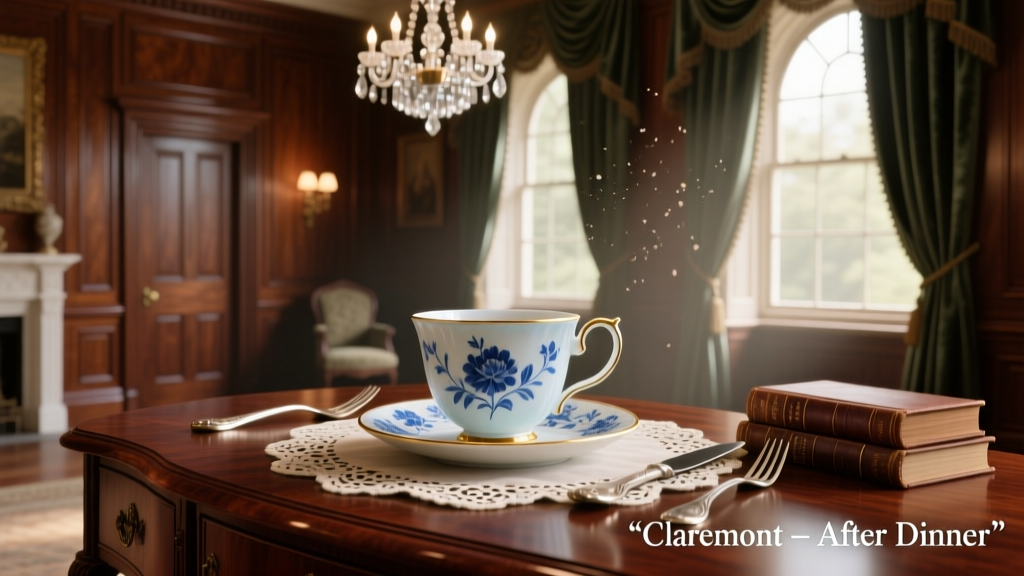
Flow Blue Cup and Saucer: The Claremont After-Dinner Pattern — History, Identification, and Restoration Insights
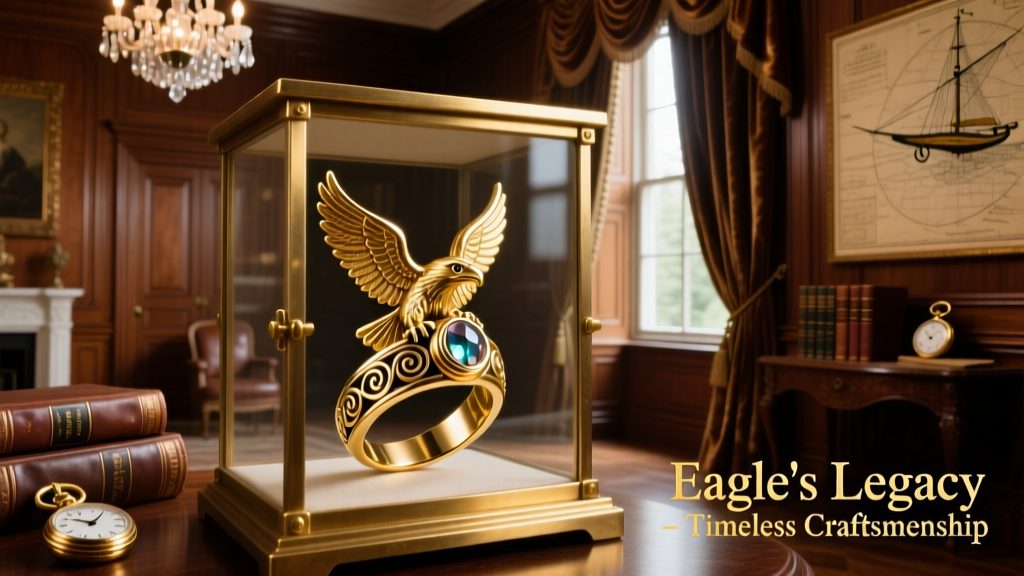
Advertising Ring Marlin Guns: The Eagle-on-Band Gold-Finished Brass Adjustable Band — History, Identification, and Restoration Insights
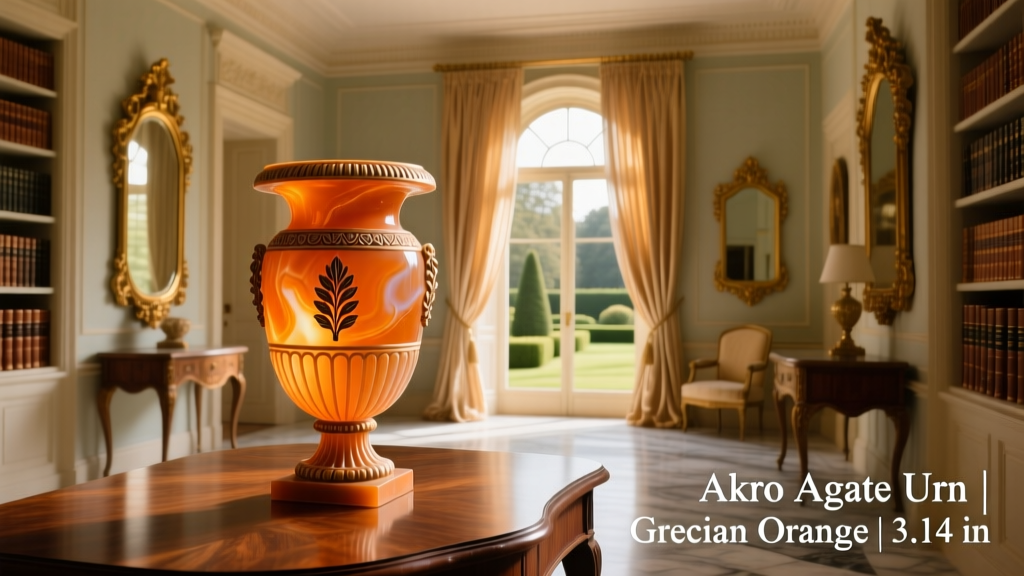
Akro Agate Urn in Grecian Orange: A Collector’s Guide to the 3¼-Inch Vintage Art Glass Vessel
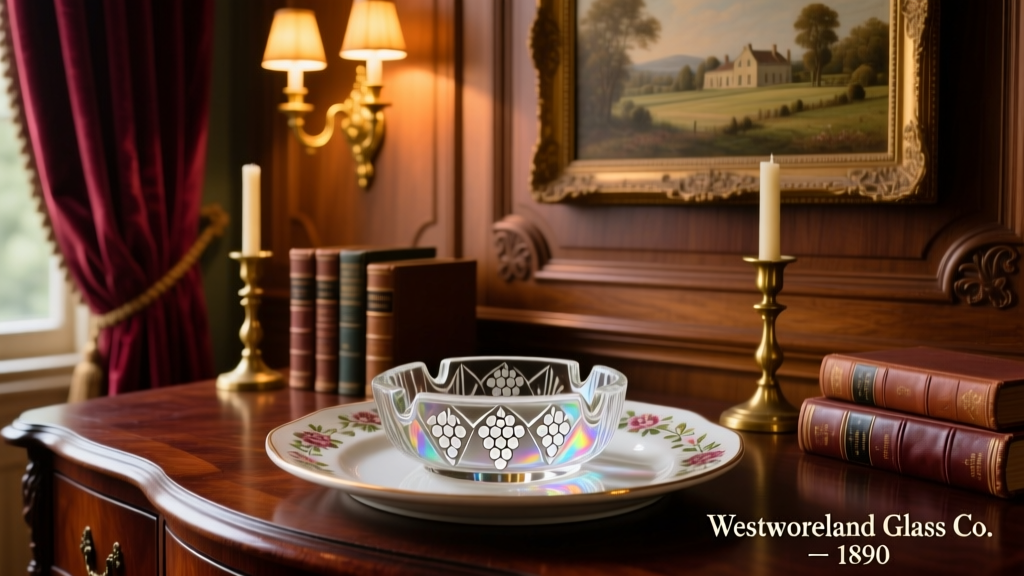
Westmoreland Glass Ashtray: Paneled Grape Pattern, 4-Inch Diameter — Identification, History, and Restoration Guidance
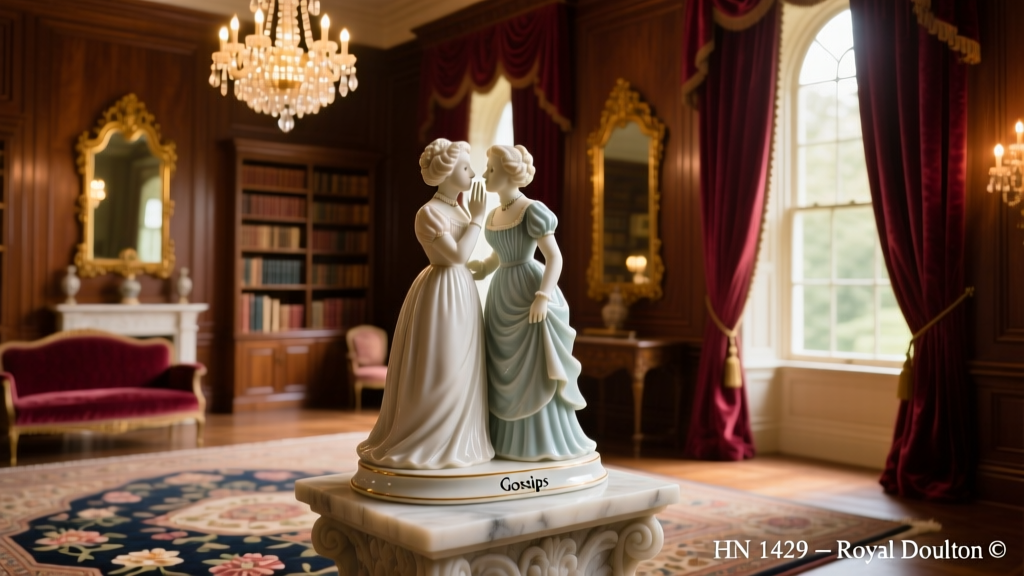
Royal Doulton Figurine 'Gossips' HN 1429: History, Identification, and Restoration Guidance
Burford Bros. No. 5: Uncovering the Legacy, Design, and Restoration of a Landmark American Mission Furniture Piece
The Wyandotte Boeing Stratocruiser Toy Airplane: A Mid-Century Aviation Icon in Tinplate and Lithography
Houdini 8 × 6 Ft Posters: Authenticity, Conservation, and Historical Context in Antique Entertainment Ephemera