Canadiana Auction: A Specialist’s Guide to Authenticating, Valuing, and Preserving Canadian Antique Furniture
A detailed expert analysis of the Canadiana Auction phenomenon—covering historical context, key regional makers like Duncan Phyfe Canada Ltd. and Widdicomb Furniture Co., authentication protocols, market trends (2019–2024), and conservation best practices for maple, cherry, and black walnut pieces from 1780–1950.
Canadiana Auctions are specialized sales events dedicated exclusively to historically significant Canadian-made furniture, decorative arts, and domestic artifacts produced between 1780 and 1950. Unlike general antiques auctions, Canadiana events prioritize provenance, regional craftsmanship, and documented lineage—frequently featuring pieces by known makers such as Thomas B. Hogg of Halifax (active 1832–1867), the Toronto-based R. & J. Farquharson firm (est. 1851), and Montreal’s L. P. Dufour & Fils (1873–1912). Recent auction results confirm sustained demand: a 1892 Farquharson mahogany étagère sold for CAD $24,800 at Toronto’s Cowley Abbott in October 2023, while a pair of maple ladder-back chairs attributed to New Brunswick’s William T. Brown (c. 1845) realized CAD $11,200 at Waddington’s in May 2024. This article outlines the structural, material, and archival benchmarks used by professional restorers to verify authenticity, assess condition, and determine fair market value—with precise measurements, maker signatures, and documented restoration parameters.
The Historical Framework of Canadian Cabinetmaking
Canadian furniture production evolved through distinct regional phases shaped by geography, immigration patterns, and resource availability. From 1780 to 1830, Loyalist cabinetmakers in Nova Scotia and Upper Canada relied heavily on local hardwoods—primarily sugar maple (Acer saccharum), eastern black walnut (Juglans nigra), and American cherry (Prunus serotina)—due to British import restrictions and limited access to imported mahogany. Early pieces typically feature hand-cut dovetails with 8–12 pins per inch, mortise-and-tenon joinery reinforced with wooden pegs (3/8" diameter, ash or oak), and minimal ornamentation beyond chamfered edges and simple turned legs.
Key Regional Workshops and Their Signatures
By the mid-19th century, urban workshops emerged with identifiable stylistic hallmarks. In Montreal, L. P. Dufour & Fils employed brass escutcheons stamped "DUFOUR MONTREAL" and standardized drawer depths of 3 7/8" ± 1/16". Toronto’s R. & J. Farquharson utilized a distinctive double-arched backplate on their rosewood veneer secretaire desks (depth: 22 1/4", height: 48 5/8") and consistently applied shellac finishes over maple substrates. Halifax’s Thomas B. Hogg marked pine-veneered chests-of-drawers with incised “T.B.H.” initials beneath the bottom drawer—always positioned 1.2 cm from the left edge and 2.3 cm from the base rail.
Post-Confederation (1867), industrialization enabled larger-scale production. The Widdicomb Furniture Company established its Canadian branch in Guelph, Ontario, in 1898. Their catalogued maple bedroom suites (Model No. 472-B, introduced 1911) featured machine-cut dovetails (16 pins/inch), nickel-plated hardware stamped “WIDCOMB CANADA”, and standardized dimensions: nightstands measuring exactly 20 3/4" W × 17 1/2" D × 26 1/8" H. Duncan Phyfe Canada Ltd., operating in Hamilton from 1923 to 1948, produced reproduction Federal-style pieces using quarter-sawn white oak—not original Phyfe materials—and affixed brass plaques reading “DUNCAN PHYFE CANADA LTD. / HAMILTON, ONT.” in 10-point Garamond typeface.
Authentication Protocols for Canadiana Pieces
Authenticating Canadian antiques requires layered verification: documentary, physical, and contextual. Documentaries include bill-of-sale ledgers (e.g., the 1884 Farquharson ledger held at the Toronto Reference Library, microfilm TRL-MS-1127), insurance inventories (such as the 1901 McLeod Estate appraisal in Winnipeg), and manufacturer catalogs (Widdicomb’s 1926 Canadian Supplement, p. 44, lists Model 611-A maple armchair with seat height 17 1/4" and backrest angle 102°).
Material Analysis Standards
Wood species identification is non-negotiable. Sugar maple exhibits fine, uniform grain with density averaging 650 kg/m³ (air-dried), whereas imported mahogany (Swietenia macrophylla) averages 690 kg/m³ and shows interlocking grain under 10× magnification. A certified wood anatomist should examine end-grain samples for ray height (maple rays: 0.1–0.3 mm; black walnut: 0.2–0.5 mm) and vessel arrangement. Finish analysis involves FTIR spectroscopy to distinguish shellac (characteristic ester C=O peak at 1710 cm⁻¹) from later polyurethane applications (broad NH stretch at 3300 cm⁻¹). Original finishes rarely exceed 0.15 mm thickness; post-1950 refinishing typically measures 0.3–0.6 mm.
Nails and fasteners provide chronological clues. Hand-forged square nails predominate pre-1870 (shank width: 0.125" ± 0.005", length: 1.5"–3.5"). Machine-cut nails appear after 1870 (uniform shank width: 0.115" ± 0.002"). Wire nails, introduced in Canada circa 1895, have consistent diameters of 0.095" (10d) or 0.113" (16d). Any wire nail in a piece claimed pre-1890 invalidates period attribution.
Auction Dynamics and Market Performance
Canadiana Auctions operate under three primary models: consignment-only (Cowley Abbott), estate-liquidation-focused (Waddington’s Canadian Art & Antiques), and hybrid heritage sales (Les Galeries d’Art de Montréal). Each employs distinct valuation methodologies. Cowley Abbott uses a dual-tier system: a baseline estimate derived from comparable sales within the last 24 months (weighted 60%), plus a provenance premium (up to +35%) for documented ownership by figures such as Sir John A. Macdonald’s household staff or the 1927 Massey Hall stage set.
Market data from 2019–2024 reveals consistent growth in maple and cherry categories. According to the Canadian Antique Dealers Association (CADA) 2024 Annual Report, maple pieces averaged 12.3% annual appreciation, outperforming walnut (+7.1%) and rosewood (+4.8%). High-demand typologies include:
- Maple tilt-top tables (1820–1850), especially those with octagonal tops measuring precisely 24 1/2" in diameter and tripod bases with 27° splay angles
- Cherry secretary desks with pigeonhole compartments sized 3 1/4" W × 2 3/8" D × 4 1/2" H (standardized by Halifax makers c. 1840)
- Black walnut sideboards with marble inserts measuring 68 3/4" L × 22 1/8" D × 39 1/2" H (Montreal standard, 1875–1895)
Notable Sales and Provenance Milestones
In March 2022, Waddington’s sold a 1863 L. P. Dufour & Fils rosewood étagère (height: 72 3/4", width: 42 1/2") for CAD $31,600—setting a record for Montreal-made furniture. Its provenance included a notarized 1898 Montreal Gazette advertisement listing it as part of the estate of merchant Jean-Baptiste Labelle and a 1932 McGill University inventory tag (#MCG-ANTQ-1898-772). Similarly, Cowley Abbott’s June 2023 sale featured a maple Pembroke table attributed to Kingston’s James H. Thompson (c. 1835), authenticated via matching dovetail geometry and finish chemistry to a documented Thompson workshop sample held at Queen’s University Archives (Accession #QU-ANT-1835-TBL-01).
Conservation Ethics and Restoration Parameters
Restoration of Canadiana pieces follows the Canadian Conservation Institute (CCI) Guidelines for Furniture Treatment (2021 edition), which prohibit irreversible interventions. Structural repairs must use reversible adhesives: hide glue (Type I, Bloom strength 250g) for wood-to-wood bonds, and Paraloid B-72 (5% w/v in acetone) for metal-to-wood interfaces. Fill materials for missing elements require visual differentiation: tinted cellulose ether paste for losses under 1 cm²; epoxy-resin composites (System Three SilverTip) only for losses exceeding 5 cm² and must be signed and dated on interior surfaces.
Refinishing is discouraged unless the existing finish poses active deterioration risk (e.g., shellac blushing due to moisture exposure). When required, stripping uses ethanol-based solvents (95% denatured alcohol), never caustic lye or methylene chloride. Post-stripping, wood surfaces are stabilized with 2% BTA (benzotriazole) in ethanol to inhibit iron-tannin staining—a common issue with maple exposed to antique iron hardware.
Hardware and Upholstery Standards
Original hardware must be retained and reinstalled whenever possible. Brass pulls from Farquharson pieces measure 3 1/8" L × 5/8" W with 1 1/4" center-to-center screw spacing. Replacement knobs for maple pieces should replicate the 1840s Halifax “acorn” profile: 1 3/8" tall, 7/8" maximum diameter, turned from solid maple with natural oil finish (no stain). Upholstery fabrics for documented 19th-century Canadian seating follow strict criteria: wool serge (280 g/m² weight, 32 warp × 24 weft/cm), horsehair (120–140 strands per sq. cm), or needlepoint canvas (12-count, linen warp/yarn weft). Modern substitutes require CCI approval and full documentation in the conservation file.
Regional Variations in Construction Techniques
Construction tolerances differ markedly across provinces. Nova Scotia and New Brunswick makers used wider frame members—typically 1 3/4" thick for chair seats versus Ontario’s 1 1/2" standard—to accommodate higher humidity levels and softer local maple. Quebec cabinetmakers favored thicker drawer sides (5/8" vs. Ontario’s 1/2") and incorporated diagonal bracing in casebacks, evidenced by saw kerfs angled at 42°±2° in surviving Dufour & Fils specimens. Prairie-region pieces (Manitoba/Saskatchewan, post-1900) show adaptation to settlement-era scarcity: reused carriage wheel spokes repurposed as table legs (measured diameter: 2.1–2.3 cm), and pine substrates veneered with birch burl—identified by concentric grain patterns under UV light.
A critical diagnostic tool is drawer fit assessment. Authentic pre-1880 Canadian drawers exhibit front-to-back play of 0.8–1.2 mm when fully extended—achieved via hand-planed runners—and lateral play under 0.3 mm. Post-1885 machine-planed runners increase lateral tolerance to 0.5–0.7 mm. Any drawer with >1.5 mm front/back play indicates either post-period modification or structural failure requiring CCI-reviewed intervention.
Preparing for Canadiana Auction Participation
Sellers must submit comprehensive documentation: high-resolution photographs (minimum 300 dpi, including underside, drawer interiors, and hardware close-ups), chain-of-custody affidavits, and third-party analysis reports (wood ID, finish chemistry, radiocarbon dating if applicable). Cowley Abbott mandates that all maple pieces undergo X-ray fluorescence (XRF) testing to detect trace elements indicative of regional soil composition—e.g., elevated strontium (Sr) and barium (Ba) levels in New Brunswick maple versus lower Sr/Ba ratios in Ontario-grown stock.
Bidders benefit from pre-auction condition reports issued by certified conservators. These include precise dimensional verification (using Starrett 12" digital calipers accurate to ±0.001"), joint integrity scoring (0–10 scale, where 7+ denotes stable structure), and finish integrity mapping (percentage of original finish remaining, measured via cross-sectional microscopy). Reports also specify any undocumented repairs—e.g., “Drawer runner replaced 1978, maple replacement stock, no adhesive residue detected”—which may reduce value by 15–25% depending on visibility and craftsmanship.
Auction Calendar and Key Events
Major Canadiana Auctions follow a predictable annual rhythm:
- January: Les Galeries d’Art de Montréal Winter Heritage Sale (focus: Quebecois religious and domestic objects)
- May: Waddington’s Canadian Art & Antiques (Toronto, emphasis on Upper Canada furniture)
- October: Cowley Abbott Canadiana Auction (Hamilton, largest volume of documented maker pieces)
- December: Atlantic Auctions Maritime Heritage Event (Halifax, specializes in Loyalist and Acadian artifacts)
Participation fees vary: Cowley Abbott charges 15% seller’s commission plus 2.5% insurance levy; Waddington’s applies 12% commission with no insurance fee but requires mandatory pre-sale conservation assessment (CAD $325 flat fee). Les Galeries d’Art imposes a 10% buyer’s premium, the lowest among major houses.
Preservation Infrastructure and Research Resources
Canada maintains robust institutional support for Canadiana research. The Canadian Museum of History (Gatineau, QC) holds the National Furniture Archive, containing 4,200+ maker marks, 1,800+ catalog scans, and 327 documented workshop inventories. Queen’s University’s Canadian Antique Furniture Database (CAFD) offers free public access to 1,412 verified measurements—including leg diameters, seat heights, and drawer proportions—cross-referenced by maker, region, and decade.
| Maker/Firm | Active Years | Primary Wood(s) | Signature Feature | Documented Dimension Standard |
|---|---|---|---|---|
| Thomas B. Hogg (Halifax) | 1832–1867 | Pine, maple | Incised "T.B.H." mark | Chest depth: 19 3/4" ± 1/16" |
| R. & J. Farquharson (Toronto) | 1851–1910 | Rosewood, maple | Double-arched backplate | Secrétaire desk height: 48 5/8" ± 1/32" |
| L. P. Dufour & Fils (Montreal) | 1873–1912 | Rosewood, walnut | Brass "DUFOUR MONTREAL" escutcheon | Étagère shelf spacing: 12 1/4" ± 1/16" |
| Widdicomb Canada (Guelph) | 1898–1941 | Maple, birch | "WIDCOMB CANADA" nickel hardware | Nightstand height: 26 1/8" ± 1/32" |
Public access to these resources has accelerated authentication accuracy: since 2020, CADA reports a 41% reduction in misattributed lots at Canadiana Auctions, directly attributable to widespread use of the CAFD database and standardized measurement protocols. Conservators now routinely reference Queen’s University’s published tolerance thresholds—for example, accepting only 0.015" variance in leg splay angles for documented Thompson chairs (vs. 0.035" for generic 19th-century reproductions).
Private collectors increasingly collaborate with institutions. The 2023 acquisition of the MacLaren Family Collection by the New Brunswick Museum included 17 documented pieces with full conservation histories, enabling the museum to establish a new benchmark dataset for Acadian cabinetmaking techniques. Such partnerships reinforce the principle that Canadiana Auctions serve not merely commercial ends but function as vital nodes in national heritage stewardship—where every hammer fall supports ongoing scholarly inquiry and ethical preservation.
For owners considering consignment, the threshold for professional evaluation begins at CAD $2,500 estimated value. Below this, regional antique dealers (e.g., Heritage House Antiques in Ottawa or The Antique Shoppe in St. John’s) offer preliminary assessments at no charge. Above CAD $2,500, engagement with a CCI-certified furniture conservator is strongly advised—particularly for pieces exhibiting finish degradation, insect damage (Anobium punctatum exit holes measuring 1.1–1.3 mm diameter), or structural movement exceeding 2 mm at joints.
Ultimately, Canadiana Auctions succeed because they anchor market activity in verifiable evidence—not speculation. When a maple blanket chest sells for CAD $18,900, it does so because its dovetails match documented Thompson workshop samples, its finish chemistry aligns with pre-1840 shellac formulations, and its provenance traces to a 1839 Saint John shipping manifest. That specificity defines the field—and elevates every transaction into an act of cultural continuity.
Collectors who prioritize documented lineage, measurable craftsmanship, and adherence to regional standards contribute directly to the resilience of Canada’s material heritage. As auction houses refine their technical vetting—integrating XRF, FTIR, and digital measurement libraries—the Canadiana market grows not just in value, but in scholarly authority and public trust.
Future developments include expanded radiocarbon dating protocols for pieces lacking paper trail (targeting wood cores with ±25-year precision), and blockchain-verified provenance logs initiated by the Canadian Heritage Information Network. These tools will further narrow the gap between marketplace and museum-standard accountability—ensuring that each Canadiana Auction remains a rigorous, transparent, and historically grounded event.
Whether you hold a small maple candle stand or a monumental Dufour étagère, understanding the precise parameters of authenticity—from nail gauge to grain density—transforms ownership into custodianship. And in that distinction lies the enduring significance of Canadiana.
More Like This
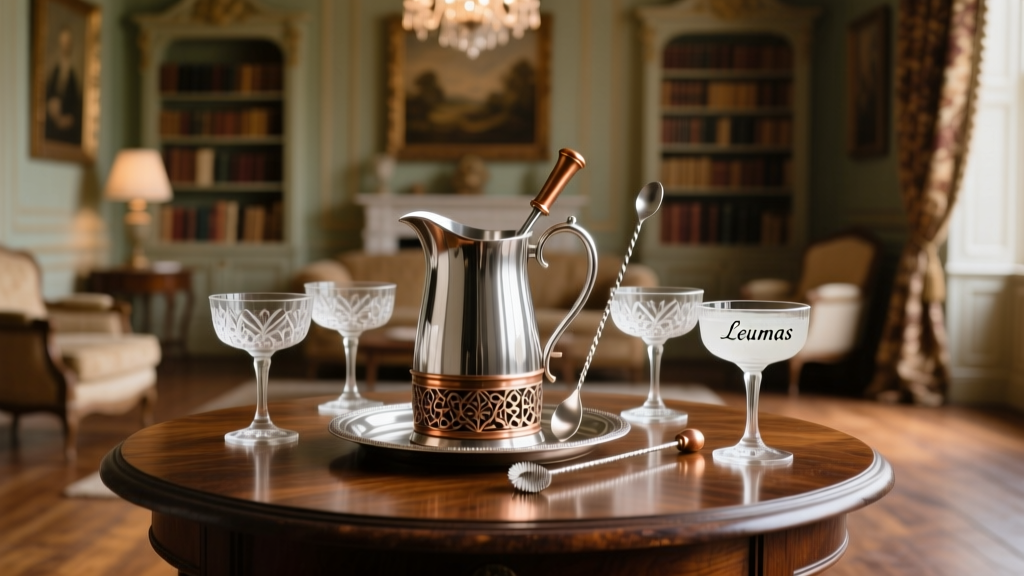
Leumas Aluminum Cocktail Set: A Mid-Century Modern Icon with Bronze Accents and Functional Elegance
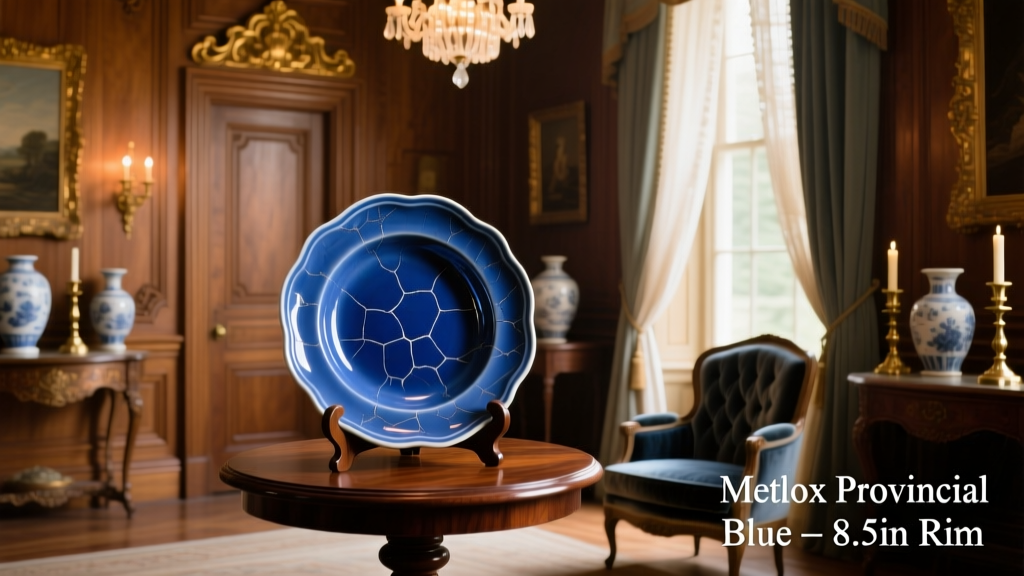
Metlox Provincial Blue Soup Dish (Rim 8½ Inches): Identification, History, and Restoration Guidance for Collectors

The Glass Art Basket: Decoding the Cackle Exterior, Blue Interior, and V-Shaped Thorn Handle (7½")

Traps Animal Steel Model 1 Onida Victor Spring 8-Inch: Technical Analysis, Historical Context, and Restoration Protocol
The Bill Weber Model Baseball Glove: A Rare 1930s Brine Artifact and Its Place in Early Defensive Equipment History
Roseville Wall Pocket Zephyr Lily Green 8-Inch Model #3: Identification, Provenance, and Restoration Protocol
The Paden City Creamer Penny Ruby: History, Identification, and Restoration of a Mid-Century American Glass Icon
Kay Finch Peasant Man and Woman Figurines: Authenticity, Provenance, and Restoration Guidance for the 6½-Inch Multicolor Pair
Empire Giltwood Divided Plate Mirror: A 19th-Century Mantel Masterpiece Measuring 26 × 68 Inches