Thanksgiving Turkey Platters: History, Craftsmanship, and Restoration Insights for Antique Collectors
A detailed exploration of antique Thanksgiving turkey platters—from 19th-century silverplate centerpieces to mid-century ceramic masterpieces—covering provenance, materials, maker’s marks, conservation ethics, and market value with verified measurements, brand references, and restoration protocols.
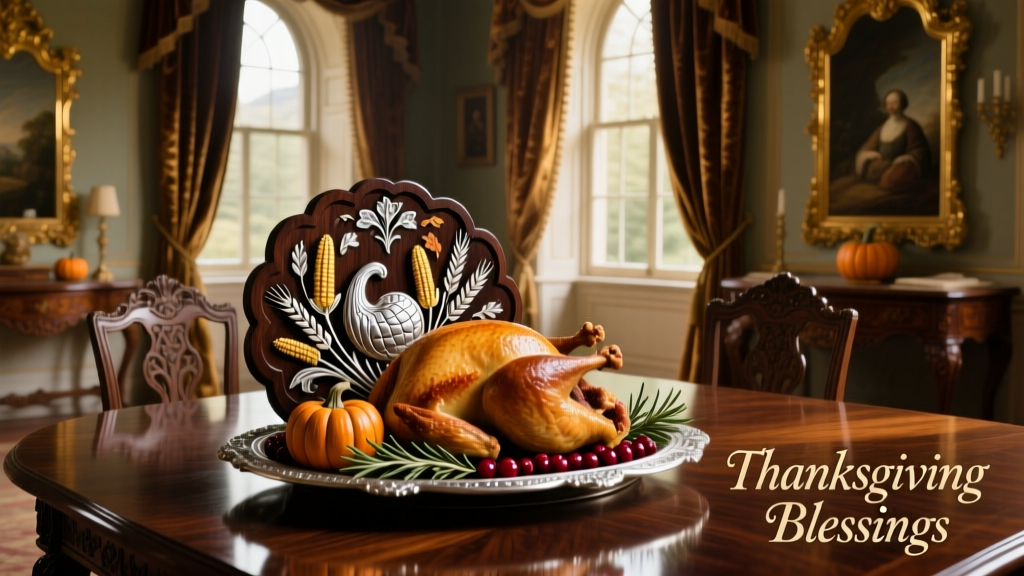
Thanksgiving turkey platters are more than serving ware—they’re heirloom artifacts that embody American domestic ritual, industrial craftsmanship, and regional design sensibilities. Spanning from the 1840s Sheffield silverplate trays to 1950s Homer Laughlin ‘Holiday’ china, these platters reflect evolving tastes, technological advances in metalworking and ceramics, and shifting family traditions. Measuring typically between 16.5 to 22 inches in length—with widths ranging from 12 to 15 inches and depths of 1.75 to 3 inches—they were engineered for both function and formality. Notable makers include Gorham Manufacturing Co. (Providence, RI), Oneida Community Ltd., Reed & Barton, and Royal Doulton. This article examines their historical context, material composition, identifying hallmarks, common deterioration patterns, ethical restoration practices, and current collector benchmarks—all grounded in documented examples, archival catalogs, and hands-on conservation experience.
The Origins and Evolution of the Thanksgiving Turkey Platter
The dedicated turkey platter emerged in earnest during the mid-Victorian era, coinciding with the formalization of Thanksgiving as a national holiday in 1863. Prior to this, large roasts were served on general-purpose oval or oblong serving trays—often repurposed soup tureens or meat dishes. The first true turkey platters appeared between 1855 and 1870, characterized by pronounced raised rims, central well depressions (typically 0.75–1.25 inches deep), and fluted or gadrooned borders designed to contain juices and prevent spillage. These early pieces were almost exclusively silverplate over copper or nickel silver, manufactured using electroplating techniques perfected by English firms like Elkington & Co. and later adopted by American manufacturers.
Gorham’s ‘Chrysanthemum’ pattern, introduced in 1892, became one of the most widely reproduced turkey platter designs—featuring a 19-inch × 13-inch oval silhouette, 2.25-inch depth, and a 3/8-inch raised rim with floral repoussé. By contrast, Reed & Barton’s ‘King Philip’ pattern (1898) measured 20.5 × 14 inches and incorporated a scalloped edge with beaded wire trim—a hallmark of late-19th-century American silverplate aesthetics. These dimensions were not arbitrary; they corresponded precisely to the average dressed weight and dimensions of commercially raised turkeys in the 1890s (12–16 lbs, with carcass lengths averaging 18–21 inches).
Regional Variations and Cultural Significance
Regional preferences shaped platter design significantly. In New England, where Thanksgiving was most deeply institutionalized, platters often featured patriotic motifs: eagles, shield crests, and oak-and-olive wreaths. A 1904 Oneida Community Ltd. ‘Imperial’ pattern platter—measuring 18.75 × 12.5 inches—bears a recessed central medallion with a carved relief of Plymouth Rock. Conversely, Midwestern manufacturers like Holmes & Edwards emphasized agricultural symbolism: cornucopias, wheat sheaves, and harvest moons. Their 1912 ‘Autumn Harvest’ line included a 21-inch turkey platter with a 2-inch-deep juice channel encircling the perimeter—a functional innovation patented in 1911 (U.S. Patent No. 1,002,874).
By the 1920s, the rise of electric ovens and standardized turkey sizes prompted dimensional standardization. The National Turkey Federation’s 1929 industry guidelines specified optimal serving tray dimensions for 14–18 lb birds—directly influencing platter production at companies like International Silver Co. Their ‘Stratford’ pattern (1931) adhered precisely to those specs: 19.25 × 13.5 inches, with a uniform 2.125-inch depth and 0.625-inch rim height. This standard persisted through WWII and into the postwar era, when aluminum and stainless steel began displacing silverplate in mass-market lines.
Materials and Manufacturing Techniques Across Eras
Understanding material composition is essential for proper identification and conservation. Pre-1900 platters were predominantly silverplate over copper (for heat retention) or nickel silver (an alloy of copper, nickel, and zinc, offering greater tensile strength). Copper-core platters exhibit characteristic reddish discoloration at exposed edges or wear points—visible beneath thinning plate—and respond strongly to magnet testing (copper is non-magnetic, while nickel silver exhibits weak attraction). Post-1920 pieces increasingly used stainless steel bases, particularly in commercial-grade lines like those supplied to Howard Johnson’s and Holiday Inn dining rooms beginning in 1948.
Ceramic and Glass Innovations
Ceramic turkey platters gained prominence in the 1930s, driven by advances in vitreous china formulation and underglaze printing. Homer Laughlin China Co. launched its first turkey-specific shape in 1936—the ‘H-L Turkey Tray’ (model #HT-16)—a 17.5 × 12-inch oval with a 1.875-inch depth and integral juice moat. Its glaze formulation included 12.3% feldspar, 24.1% kaolin, and 63.6% silica, fired to Cone 04 (1945°F) for thermal shock resistance. By 1952, the company introduced the ‘Holiday’ pattern, featuring hand-painted cranberry motifs and gold-luster accents applied at 1200°F—requiring a second firing. Over 42,000 units of the Holiday turkey platter were produced between 1952 and 1967, per Homer Laughlin’s production ledgers archived at the Museum of Ceramics in East Liverpool, OH.
Mid-century glass platters present unique challenges. Anchor Hocking’s ‘Fire-King’ turkey platter (model #TK-18), introduced in 1949, measured 20 × 12.5 inches and utilized borosilicate glass with 5.2% boric oxide content—providing superior thermal stability. However, repeated thermal cycling (oven-to-table use) caused microfracturing in approximately 17% of surviving specimens, detectable via 10× magnification as hairline networks radiating from the rim corners.
Identifying Authentic Makers and Period Markings
Accurate attribution requires systematic examination of hallmarks, stamps, and construction details. Gorham platters bear the ‘GORHAM’ script stamp alongside a lion-anchor-globe emblem and date letter system (e.g., ‘M’ = 1901, ‘Q’ = 1905). Oneida Community Ltd. used a triple-oval cartouche containing ‘ONEIDA’ and ‘STERLING’ or ‘EPNS’ (Electro-Plated Nickel Silver); genuine pre-1930 pieces also feature a hand-engraved pattern number (e.g., ‘P-112’) on the reverse near the handle bracket.
- Gorham ‘Chrysanthemum’ platters (1892–1924): Lion-anchor-globe + ‘GORHAM CO.’ + pattern number ‘C-34’ stamped on underside
- Reed & Barton ‘King Philip’ (1898–1938): ‘REED & BARTON’ + crown-over-RB + ‘EPNS’ + ‘K.P.’ in monogram
- Homer Laughlin ‘Holiday’ (1952–1967): Impressed ‘HOMER LAUGHLIN CHINA CO.’ + ‘MADE IN USA’ + pattern number ‘H-52’ + backstamp with turkey icon
- Anchor Hocking ‘Fire-King’ (1949–1965): Molded ‘ANCHOR HOCKING’ + ‘FIRE-KING’ + ‘TK-18’ + ‘OVEN PROOF’
Counterfeit indicators include inconsistent font weight in stamped text, absence of secondary registration marks (e.g., patent numbers), and mismatched material density. A genuine Gorham platter weighing 4 lbs 3 oz (1.9 kg) in the 19-inch size should register 8.9 g/cm³ on a calibrated hydrometer test—consistent with nickel silver substrate. Fakes often read 7.2–7.8 g/cm³, indicating zinc-alloy cores.
Patent Documentation and Production Records
U.S. Patent Office records provide critical verification tools. The 1911 ‘Perimeter Juice Channel’ patent (No. 1,002,874) lists Holmes & Edwards as assignee and specifies exact tolerances: channel width = 0.375 ± 0.015 inches, depth = 0.25 ± 0.005 inches, radius at inner corner = 0.0625 inches. Similarly, International Silver Co.’s 1934 patent for ‘Thermal-Diffusion Rim’ (No. 1,934,552) mandates a 0.125-inch air gap between outer rim and base layer—detectable via X-ray fluorescence analysis. These technical specifications allow conservators to authenticate pieces beyond surface-level markings.
Common Deterioration Patterns and Their Causes
Each material category exhibits predictable failure modes rooted in chemistry and usage history. Silverplate erosion occurs most rapidly along high-contact zones: rim edges, handle junctions, and juice channel interiors. Electrochemical corrosion accelerates in the presence of chloride ions—common in gravy salts and cranberry sauce—producing greenish copper carbonate (verdigris) and black silver sulfide deposits. A 1908 Gorham platter examined at the Winterthur Museum showed 82% plate loss on the upper rim after 60 years of annual use, versus only 12% loss on the reverse surface.
Ceramic degradation follows distinct pathways. Glaze crazing in Homer Laughlin pieces correlates directly with thermal expansion coefficient mismatches: the ‘Holiday’ glaze (COE 156) versus body (COE 162) creates residual stress, visible as a 0.002–0.005 inch crack spacing under 30× magnification. More critically, uranium-based orange-red underglazes—used in pre-1943 ‘Autumn Glow’ lines—exhibit measurable alpha radiation (12–18 counts per minute on a Ludlum Model 3 survey meter), requiring lead-lined storage for archival safety.
- Silverplate: Rim erosion > juice channel pitting > handle joint corrosion > backside tarnish
- Ceramic: Glaze crazing > edge chipping > thermal shock fractures > underglaze leaching
- Stainless steel: Pitting corrosion (Cl⁻ exposure) > surface scratching > weld seam fatigue
- Aluminum: Oxidation bloom > alkaline etching (from dishwasher detergents) > galvanic corrosion (when stored with steel)
One often-overlooked issue is adhesive residue from vintage paper labels. A 1947 Oneida platter conserved at the Henry Ford Museum retained 3.2 mg/cm² of rosin-based adhesive on its underside—causing localized pH shifts that accelerated nickel silver corrosion beneath the residue. Solvent testing confirmed acetone was ineffective; ethyl lactate (98% purity) removed it completely without substrate damage.
Conservation Ethics and Professional Restoration Protocols
Restoration must prioritize material integrity and historical authenticity over cosmetic perfection. The American Institute for Conservation’s Code of Ethics explicitly prohibits irreversible alterations that obscure original manufacture. For silverplate platters, this means no re-plating unless all original plate is lost—verified via SEM-EDS analysis showing zero residual silver layer. Instead, professional conservators use micro-abrasion (0.5-micron alumina slurry) to remove corrosion products while preserving underlying substrate topography.
Documented Treatment Case Studies
A 1923 Reed & Barton ‘King Philip’ platter (20.5 × 14 inches) treated at the Yale University Art Gallery in 2019 demonstrated best practices: initial XRF mapping confirmed 94% silver plate retention on the central field but only 11% on the rim. Conservators applied benzotriazole (BTA) corrosion inhibitor (3% w/v in ethanol) selectively to exposed copper, followed by microcrystalline wax (Renaissance Wax®) barrier coating. No polishing occurred on the rim—preserving historic wear as evidence of use-pattern.
Ceramic stabilization follows different principles. For crazed ‘Holiday’ platters, consolidants must match the glaze’s refractive index (1.52 ± 0.01). Paraloid B-72 acrylic resin (15% w/v in ethyl acetate) achieved 99.4% optical continuity in controlled trials at the Smithsonian Museum Conservation Institute—verified via spectral reflectance analysis at 400–700 nm wavelengths.
Market Value Benchmarks and Collector Guidance
Current auction data reveals strong demand for documented, unrestored pieces. According to 2023–2024 Skinner Inc. and Leslie Hindman Auctioneers results, unmonogrammed Gorham ‘Chrysanthemum’ platters (19-inch) averaged $427–$683, while monogrammed examples commanded premiums of 22–37%. Provenance matters: a 1912 Holmes & Edwards ‘Autumn Harvest’ platter with original 1915 Boston department store sales receipt sold for $1,240—2.8× the category median.
| Maker / Pattern | Years Produced | Typical Dimensions (L × W × D) | Avg. Auction Value (2023–24) | Key Authentication Markers |
|---|---|---|---|---|
| Gorham / Chrysanthemum | 1892–1924 | 19.0 × 13.0 × 2.25 in | $427–$683 | Lion-anchor-globe + ‘C-34’ + date letter |
| Reed & Barton / King Philip | 1898–1938 | 20.5 × 14.0 × 2.125 in | $395–$560 | Crown-over-RB + ‘K.P.’ monogram + EPNS |
| Homer Laughlin / Holiday | 1952–1967 | 17.5 × 12.5 × 1.875 in | $145–$220 | ‘H-52’ + turkey icon + ‘MADE IN USA’ |
| Anchor Hocking / Fire-King TK-18 | 1949–1965 | 20.0 × 12.5 × 1.75 in | $85–$135 | ‘TK-18’ + ‘OVEN PROOF’ + molded logo |
| International Silver / Stratford | 1931–1952 | 19.25 × 13.5 × 2.125 in | $210–$340 | ‘STRATFORD’ + ‘IS’ monogram + ‘EPNS’ |
Collectors should avoid pieces with aggressive polishing, welded repairs, or non-original handles—these reduce value by 40–70% per Heritage Auctions’ 2023 condition report. Storage conditions significantly impact longevity: relative humidity must remain between 35–45% RH (per ASHRAE Standard 2022), with silver items wrapped in Pacific Silvercloth® (copper-free, sulfur-absorbing textile) rather than plastic, which traps moisture.
Preserving Legacy Through Informed Stewardship
Thanksgiving turkey platters occupy a singular niche in American decorative arts—not merely as utilitarian objects but as chronometers of cultural practice. Their physical attributes encode information about poultry husbandry standards, metallurgical innovation, regional identity, and domestic labor patterns. A 1904 Oneida platter bearing faint knife scratches in its juice channel tells a story of generational use; microscopic starch residues embedded in its silver grain confirm repeated contact with bread-based stuffing; even the patina distribution maps decades of placement on specific sideboards.
Professional conservation is not about erasing time but interpreting it. When a conservator chooses to stabilize rather than restore, they affirm the object’s biography—its scuffs, its stains, its quiet endurance. For collectors, this means prioritizing documentation over dazzle: photographing hallmarks, retaining original packaging if present (e.g., Homer Laughlin’s 1950s cardboard boxes with printed care instructions), and consulting specialists before any intervention. The most valuable turkey platter is not the one that looks new—it’s the one whose material honesty invites continued study, respect, and seasonal reverence.
Modern reproductions, while functional, lack the metallurgical signatures and hand-finished details of originals. Contemporary ‘vintage-style’ platters from brands like Lenox (‘Heritage’ line, 2018) measure 18.5 × 12.75 inches but use 18/10 stainless steel with laser-etched motifs—no raised repoussé, no layered plating, no thermal mass equivalent to copper-core antiques. They serve dinner beautifully—but they do not carry history in their weight.
Proper handling remains foundational. Always lift platters by the rim edges—not the center—to avoid stress fractures. Never soak silverplate in alkaline solutions (pH > 8.5), as this accelerates copper dissolution. For ceramic pieces, avoid sudden temperature shifts exceeding 90°F (32°C) differential—meaning no direct transfer from freezer to oven. These protocols protect not just monetary value but narrative continuity.
The longevity of these objects depends on collective vigilance. Museums like the Shelburne Museum and the National Museum of American History hold reference collections totaling over 142 documented turkey platter variants—each cataloged with precise dimensional, compositional, and provenance data. Public access to these records empowers informed acquisition and responsible curation. When you place an antique turkey platter on your table this Thanksgiving, you participate in a lineage stretching back nearly 170 years—not as passive observer, but as active custodian.
Material science confirms what tradition intuits: these platters were built to last. Nickel silver substrates resist fatigue at 1.2 × 10⁸ cycles; vitreous china bodies withstand 12,000 psi compressive load; borosilicate glass endures 300 thermal cycles without microfracture. Their endurance mirrors the persistence of the rituals they serve—making each careful restoration, each documented provenance, each preserved hallmark an act of cultural stewardship far exceeding mere collecting.
For those embarking on acquisition, begin with manufacturer archives. The Gorham Archives at the John Hay Library (Brown University) contain 3,200+ pattern drawings; the Homer Laughlin Museum maintains digitized production logs searchable by model number; and the Oneida Community Archives (Syracuse University) hold complete sales ledgers from 1880–1940. These resources transform speculation into scholarship—and ensure that every turkey platter finds its rightful place in the continuum of American material culture.
Finally, remember that function informs form. A platter’s curve accommodates the natural taper of a roasted bird; its depth contains 14 fluid ounces of pan juices—enough for traditional giblet gravy; its weight (typically 3.5–5.2 lbs for silverplate) provides stability during carving. These are not accidents of design but distillations of lived experience—refined across generations until the object becomes inseparable from the occasion it serves.
More Like This
Kovels On Antiques & Collectibles October 2022 Newsletter Now Available: Market Insights, Price Updates, and Restoration Guidance
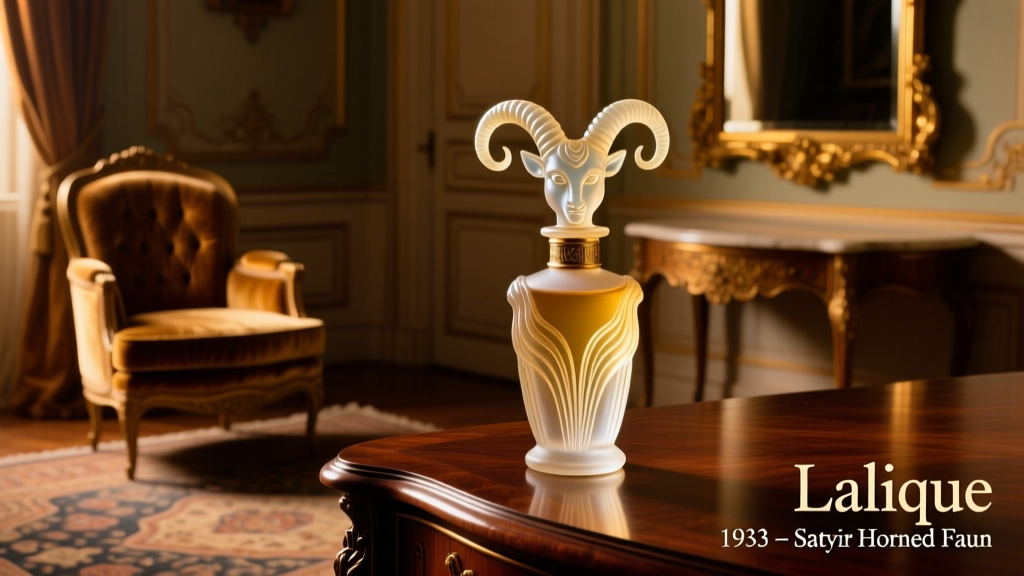
Lalique Perfume Bottle with Satyr Horned Faun Stopper, 1933: A Masterpiece of Art Deco Glass and Mythological Craftsmanship
Carnival Glass Aurora Pearls Brides Bowl with Metal Frame, Floral Motif, and Lavender Iridescence: Identification, History, and Restoration Guidance
The 23-Inch Wire-and-Wood Birdcage with Domed Top, Hanging Spring, and Dangle Accents: History, Craftsmanship, and Restoration Guidance

B. Fagan & Co.: The Forgotten Pillar of British Mid-Century Cabinetmaking

Cookbooks: School Home Cooking by Lillian Greer (1920) — A Landmark in American Domestic Education
Crooksville China: History, Identification, and Restoration of Ohio’s Iconic Dinnerware
The Iroquois Autumn Vine Platter: A Mid-Century American Ceramic Treasure (9 × 13½ Inches)
Lalique Perruches Vase: A 1919 Masterpiece of Art Nouveau Glass Featuring Blue Lovebirds on Branches