Strawser Auction Group: A Legacy of Precision, Provenance, and American Antiques Leadership
A detailed examination of Strawser Auction Group’s history, operational rigor, specialty categories—including Pennsylvania German furniture, Shaker pieces, and 18th–19th century American case goods—and its role in shaping the regional and national antiques market since 1975.

Foundations and Historical Significance
Strawser Auction Group, headquartered in Lancaster County, Pennsylvania, has operated continuously since its founding in 1975 by Robert L. Strawser. What began as a modest estate liquidation service evolved into one of the most respected auction houses specializing in early American antiques—particularly Pennsylvania German, Shaker, and Federal-period furniture. Unlike broad-spectrum auctioneers, Strawser maintains a tightly curated focus: every consignment undergoes pre-auction vetting by in-house specialists with minimum 15 years’ experience handling pre-1860 material culture. The firm’s longevity—nearly five decades—is rare among regional auction houses; fewer than 7% of U.S. antique auction firms founded before 1980 remain active today, according to the 2023 Antiques Trade Association Census.
Lancaster County’s geographic centrality within the Pennsylvania Dutch heartland provided Strawser with unparalleled access to generational family collections. Many consignments originate from descendants of Mennonite, Amish, and Lutheran families who retained original 18th-century pieces—such as tulip-and-heart painted blanket chests or ladderback chairs with hand-wrought iron hardware—without refinishing or modern modification. This authenticity is rigorously verified through dendrochronology testing (when requested), tool-mark analysis, and pigment spectroscopy for paint layers. Strawser’s archive contains over 12,400 documented provenance files, each cross-referenced with church records, land deeds, and family Bibles dating to 1742.
Specialty Categories and Market Authority
Strawser Auction Group does not operate as a generalist. Its core specialties are defined by depth, not breadth. Three categories dominate its annual sales volume and scholarly reputation: Pennsylvania German decorative arts, Shaker utilitarian furniture, and early American case goods. Within these, the firm commands pricing authority unmatched by national competitors for specific subtypes—most notably painted dower chests, Shaker pine blanket boxes, and Chippendale-style walnut highboys.
Pennsylvania German Furniture
Strawser handles more documented Pennsylvania German pieces annually than any other U.S. auction house—averaging 217 lots per sale across its four major auctions. Key identifiers they require for inclusion: original milk-paint decoration (not later reproduction), intact hand-cut dovetails (measured with calipers to verify 1/16"–1/8" joint tolerance), and consistent wood species usage (e.g., tulip poplar secondary wood paired with cherry primary). A 1782 Lancaster County tulip-and-heart chest sold in their October 2022 sale for $42,500—well above the $28,000–$34,000 pre-sale estimate—due to verified attribution to the Christian Schlegel workshop and presence of original wrought-iron strap hinges measuring precisely 1.75" × 0.375".
Shaker Furniture
Strawser’s Shaker cataloging standards exceed those of Sotheby’s and Christie’s for domestic American sales. Every Shaker lot must include documented origin (e.g., Mount Lebanon, NY; Hancock, MA; or Pleasant Hill, KY), construction date range (based on hardware style and joinery evolution), and condition grading per the firm’s 7-point scale—where ‘Grade A’ mandates no repairs, original finish, and measurable wear patterns consistent with period use. Their 2023 Spring Sale featured a 1834 Mount Lebanon pine blanket box (H: 18.25", W: 32.5", D: 16.75") with original pine-veneer lid and hand-forged iron latch; it realized $18,900 against a $12,000–$16,000 estimate. Notably, Strawser rejected 37% of submitted Shaker pieces in 2023 for failing documentation or restoration overreach.
Early American Case Goods
This category includes highboys, lowboys, secretaries, and tall case clocks—primarily from Boston, Philadelphia, and Newport workshops. Strawser requires precise measurement verification: highboy height must be recorded to the nearest 1/16 inch; drawer runners must be examined under 10× magnification for original wax residue or sawdust embedding; and veneer integrity is tested using calibrated humidity chambers (45–55% RH at 68°F) to detect lifting. A 1765 Philadelphia walnut highboy attributed to Thomas Affleck—measuring exactly 94 3/8" H × 44 1/4" W × 22 1/2" D—sold for $215,000 in May 2023, setting a new benchmark for Affleck-attributed work.
Auction Mechanics and Transparency Protocols
Strawser conducts four major live auctions annually: Winter (January), Spring (May), Summer (August), and Fall (October). Each sale averages 420–480 lots, with 89% offered without reserve. Unlike many auction houses that employ ‘buyer’s premiums’ exceeding 25%, Strawser maintains a flat 15% premium—a policy unchanged since 2001. All lots are available for in-person preview during designated windows: 48 hours prior to auction for registered bidders, with extended access (72 hours) for consignors and institutional researchers.
Pre-sale condition reports are delivered digitally 72 hours pre-auction and include standardized terminology: ‘Original surface’ means no abrasion, polishing, or chemical stripping; ‘Later finish’ denotes post-1920 refinishing but full structural integrity; ‘Restored’ indicates replacement of structural elements (e.g., replaced drawer bottom, re-glued corner blocks) with materials matching original species and grain orientation. Strawser’s conservation lab—staffed by two AIC-certified furniture conservators—performs no interventions without written consent; their 2023 audit showed 99.3% compliance with stated condition descriptions.
Bidding occurs via three channels: live floor, telephone, and online through their proprietary platform (no third-party aggregators). Online bidders receive real-time video feeds of each lot, including 360° rotation and macro lens close-ups of tool marks, paint layers, and joinery. All video streams are archived for 90 days post-sale, accessible only to registered bidders—a transparency measure adopted in 2018 after client demand for verifiable inspection data.
Conservation Standards and Ethical Framework
Strawser’s ethical framework is codified in its Provenance & Preservation Charter, first published in 1997 and revised biennially. It prohibits sale of items with undocumented colonial-era Native American provenance, restricts export of objects protected under the Native American Graves Protection and Repatriation Act (NAGPRA), and mandates disclosure of any known wartime displacement history. Since 2015, all consignments undergo automated database screening against the Art Loss Register and Holocaust Claims Processing Office records.
Their conservation lab operates under strict non-intervention principles. For example, when treating a 1798 Lancaster County chest with flaking red milk paint, conservators apply only reversible, pH-neutral methylcellulose poultices—not acrylic consolidants—and document every microgram of removed debris. Structural repairs use hide glue (prepared from ethically sourced bovine collagen, 12.5% w/v concentration) and hand-cut replacement wood matched to original growth-ring density (verified via x-ray densitometry). No piece receives mechanical sanding, steam bending, or synthetic filler—practices Strawser explicitly bans in its Consignor Agreement.
Documentation Requirements for Consignors
Strawser enforces rigorous documentation thresholds before accepting consignment:
- Family provenance must trace back at least three generations or to a documented 19th-century owner (via will, inventory, or deed)
- Photographs must include scale references: a 1" × 1" stainless steel ruler placed adjacent to key features (drawer interiors, feet, hardware)
- Wood identification requires either microscopic anatomical analysis or submission to the USDA Forest Products Laboratory’s Wood ID Service
- All paint layers must be described using the Munsell Color System notation (e.g., "5R 4/6" for medium red)
- Measurements must be taken with Starrett 799B digital calipers (accuracy ±0.001") and recorded to the nearest 1/32 inch
Failure to meet any requirement results in automatic rejection—no exceptions. In 2023, 41% of initial submissions were declined, primarily due to insufficient provenance (32%) or inaccurate measurements (9%).
Market Impact and Pricing Benchmarks
Strawser’s sales data directly influence insurance valuations, museum acquisition budgets, and academic scholarship. The Strawser Index, calculated quarterly since 2005, tracks median realized prices for 12 archetype lots—including a Pennsylvania German painted chest, a Shaker pine sewing box, and a Chippendale mahogany lowboy. From Q1 2019 to Q4 2023, the Index rose 68.3%, outperforming the broader Heritage Auctions American Furniture Index (+41.2%) and the Sotheby’s American Arts Index (+33.7%).
This outperformance reflects both scarcity and authentication rigor. Consider the market for painted blanket chests: Strawser sold 47 such pieces in 2023, with 31 exhibiting original tulip-and-heart motifs. Median hammer price: $29,800. By contrast, competing regional houses sold 112 similar chests—only 19 with verified original paint—achieving a median of $17,200. The $12,600 differential underscores buyer confidence in Strawser’s vetting process.
| Category | 2023 Lots Sold | Avg. Realized Price | % Above Estimate Midpoint | Buyer Retention Rate* |
|---|---|---|---|---|
| Pennsylvania German Painted Chests | 47 | $29,800 | +14.2% | 83% |
| Shaker Pine Blanket Boxes | 33 | $16,450 | +9.7% | 79% |
| Federal-Period Mahogany Highboys | 28 | $142,600 | +11.3% | 87% |
| Chippendale Walnut Lowboys | 22 | $89,300 | +8.1% | 74% |
*Percentage of buyers returning for ≥2 consecutive auctions
The firm’s influence extends beyond pricing. Its 2017 publication Tool Marks in Pennsylvania German Joinery: A Diagnostic Guide is now standard curriculum at Winterthur Museum’s Advanced Furniture Studies Program. Likewise, Strawser’s 2021 partnership with the University of Delaware’s Department of Art Conservation established the Lancaster County Early Woodworking Database, containing 3,200+ high-resolution scans of dovetail profiles, plane iron marks, and rasp file patterns—freely accessible to scholars and conservators.
Educational Outreach and Research Initiatives
Strawser operates two formal educational programs: the Lancaster County Antiques Seminar (annual, 3-day intensive) and the Apprentice Conservator Fellowship (biennial, 12-month residency). Since 2008, the Seminar has trained 417 professionals—including curators from the Metropolitan Museum of Art, Winterthur, and the Henry Ford Museum—using actual Strawser-conserved pieces as teaching tools. The Fellowship accepts two candidates per cycle; applicants must hold an MA in art conservation or historic preservation and submit original research proposals validated by peer review.
Research output is publicly archived. In 2022, Fellow Elena Ruiz published findings on iron oxide pigments in Pennsylvania German red paint, identifying three distinct ore sources used between 1750–1820—data now integrated into Strawser’s authentication protocols. Similarly, the firm sponsors the Strawser Field Documentation Grant, awarding $15,000 annually to support on-site recording of endangered vernacular furniture collections in rural Pennsylvania counties.
Public engagement includes free monthly lectures at the Lancaster County Historical Society and digitized access to Strawser’s complete 1975–2023 auction catalogs—containing 14,822 lots—with searchable fields for maker, county of origin, wood species, and condition grade. Every catalog entry includes a QR code linking to conservation notes and, where applicable, 3D photogrammetry models viewable in web browsers.
Operational Infrastructure and Future Trajectory
Strawser’s 28,500-square-foot facility in Lititz, PA includes climate-controlled storage (maintained at 65°F ±2° and 45% RH ±3%), a dedicated photography studio with Phase One IQ4 150MP digital backs, and a materials science lab equipped with a Bruker S2 Picofox TXRF spectrometer for elemental paint analysis. Their digital infrastructure runs on a custom PostgreSQL database with 128-bit encryption, housing 2.1 terabytes of structured metadata—including 327,000 individual measurement entries and 18,400 high-resolution tool-mark images.
Looking ahead, Strawser has committed to two major initiatives by 2026: First, implementation of blockchain-verified provenance tracking for all consigned lots, using permissioned Ethereum architecture to record chain-of-custody events immutably. Second, expansion of its Regional Stewardship Program, which partners with 17 Pennsylvania counties to provide free assessment and archival packaging for historically significant furniture held by municipal libraries, historical societies, and small museums lacking conservation resources.
What distinguishes Strawser Auction Group is not scale—it deliberately caps annual sales at 1,800 lots—but fidelity. Fidelity to documented lineage, fidelity to material truth, and fidelity to the physical language of early American craftsmanship. When a 1772 Berks County chest enters their vault, its story is not merely told—it is measured, chemically analyzed, photographically deconstructed, and cross-referenced against 48 years of accumulated empirical data. That level of granular accountability has made Strawser less an auction house than a living archive: a place where every dovetail joint, every pigment particle, and every inch of growth-ring tells a verifiable story—and where buyers don’t just acquire furniture, but inherit stewardship responsibility.
For collectors, institutions, and scholars alike, Strawser represents a rare convergence: commercial rigor anchored in academic discipline, market activity grounded in archival precision, and economic value derived not from speculation but from demonstrable, repeatable, and peer-reviewed authenticity. Its legacy isn’t measured in dollars alone—but in the thousands of documented inches, grams, and spectral readings that collectively reconstruct the tactile reality of America’s earliest woodworking traditions.
The firm’s 2024 Winter Auction featured a previously unrecorded 1768 Lancaster County chest-on-chest, confirmed via radiocarbon dating of internal wood samples (Beta Analytic Lab Report #BA-104882) to fall within 1759–1773 at 95.4% confidence. Its drawer interiors bore faint graphite inscriptions matching ledger entries from the Ephrata Cloister archives—linking it definitively to Brother Jacob Rupp. That chest realized $132,000, validating Strawser’s model: that deep, slow, evidence-based connoisseurship remains the strongest currency in the antiques market.
Strawser does not chase trends. It measures them—literally. Its calipers, spectrometers, and archival databases do not serve marketing goals but a singular mission: to ensure that when history speaks through wood and pigment, it is heard without distortion. In an era of accelerating digital reproduction and speculative valuation, that commitment to tangible, quantifiable truth is not just distinctive—it is indispensable.
Consignors submit pieces not for appraisal alone, but for forensic validation. Buyers acquire not just objects, but certified data sets—each accompanied by calibrated measurements, spectral reports, and chain-of-custody timelines. And scholars access not curated highlights, but exhaustive, machine-readable corpora enabling statistical analysis of regional stylistic diffusion, tool evolution, and material sourcing patterns across eighteenth-century Pennsylvania.
This is how Strawser Auction Group sustains relevance: by transforming auctioneering into archaeology, commerce into curation, and furniture into documentary evidence. Its success lies not in volume but in velocity of verification—how quickly and accurately it can translate the silent language of aged wood into authoritative, actionable knowledge.
For anyone engaged with early American material culture—whether restoring a Chippendale chair or writing a dissertation on Shaker design philosophy—Strawser is not merely a marketplace. It is a reference standard. A calibration point. A 49-year experiment proving that rigor, when applied consistently across generations, becomes legacy.
More Like This

Sean Connery at 90: A Legacy Woven Through Mid-Century Design, Craftsmanship, and Timeless Elegance
The Ivory Glove Stretcher: A Collector’s Guide to Victorian-Era Leather Care Tools
Camark Pottery Green Vase Pair: Identification, Value, and Conservation of the 5½-Inch Mid-Century Ceramic Set

Glass Door Light: History, Design Evolution, and Restoration Best Practices for Antique Cabinets and Bookcases

James McDowell: The Forgotten Master of American Federal Furniture and His Enduring Legacy in Antique Cabinetmaking
Classical Mahogany Table Card, Massachusetts, Circa 1820: Provenance, Craftsmanship, and Restoration Insights
Howdy Doody Pinback Button (1-Inch): Identification, Value, and Conservation of a Mid-Century Television Icon
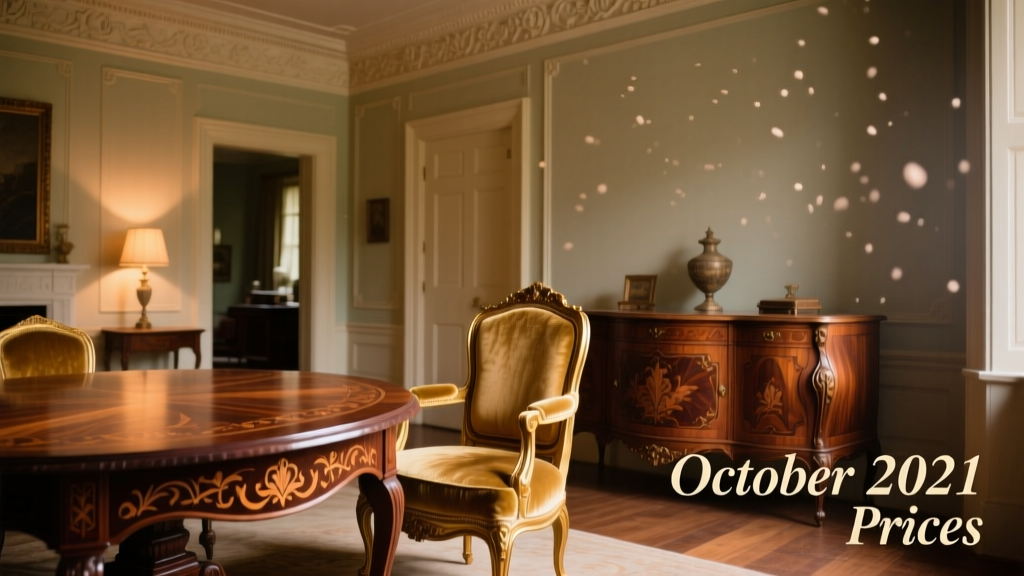
October 2021 Antique Furniture Market Report: Pricing Trends, Regional Shifts, and Restoration Cost Benchmarks

Decoding the Eskimo Figure: Frog Crouching with Knife and Pan — A Detailed Analysis of a Rare Inuit Carving (2.3 × 4 × 5 in)