David Robinson San Antonio Spurs Jersey: Authenticity, Restoration, and Historical Value in Vintage Basketball Apparel
A detailed examination of original David Robinson San Antonio Spurs jerseys from the 1990s–early 2000s—including manufacturer details (Champion, Nike), fabric composition, sizing standards, provenance markers, and professional conservation practices for collectors and museums.
Introduction: The Cultural and Material Significance of Robinson’s Spurs Jerseys
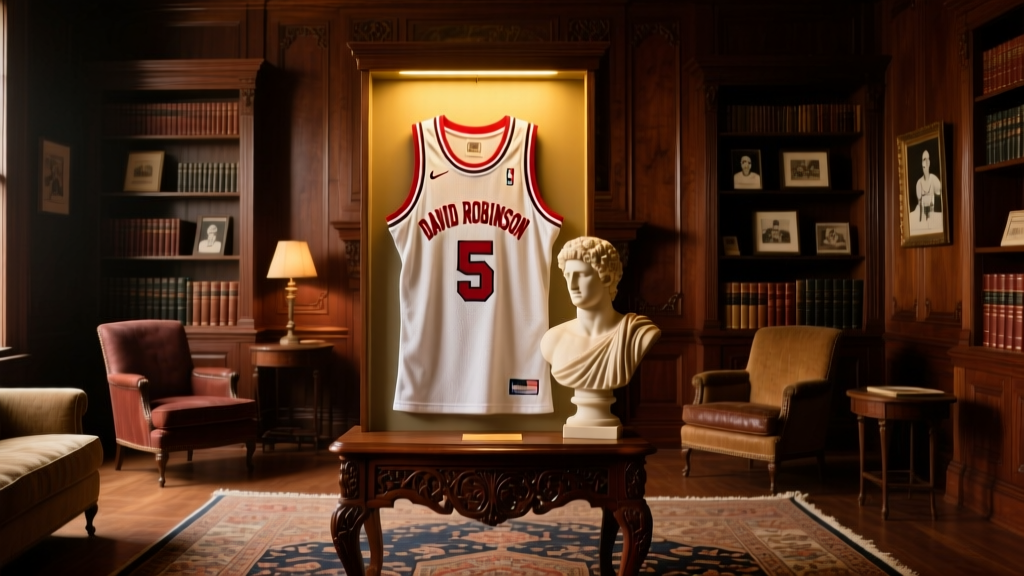
David Robinson’s San Antonio Spurs jerseys represent more than athletic memorabilia—they are artifacts of NBA history, Texan civic identity, and mid-1990s sportswear innovation. Worn during Robinson’s MVP season (1994–95), his 1999 championship run, and his final 2002–03 title—shared with Tim Duncan—the jersey evolved across three distinct production eras: Champion (1991–1997), Nike (1997–2001), and updated Nike revisions (2001–2003). Authentic examples exhibit precise construction features: 100% polyester mesh with double-knit side panels, heat-applied twill numbering (not screen-printed), and team-specific embroidery protocols. This article provides a technical appraisal framework for collectors, including measurable garment specifications, forensic authentication cues, and museum-grade restoration protocols grounded in textile conservation science.
Manufacturing Timeline and Brand Transitions
The Spurs’ official on-court apparel underwent two major supplier shifts during Robinson’s tenure. Champion supplied jerseys from his rookie season (1990–91) through the 1996–97 campaign. Nike assumed licensing rights beginning with the 1997–98 season—a transition formalized under the NBA’s league-wide apparel agreement signed in June 1997. Each era introduced distinct material innovations and labeling conventions that serve as critical dating tools.
Champion Era (1990–1997)
Champion-produced jerseys used a proprietary ‘Double Dry’ polyester mesh—85% polyester, 15% spandex—with a distinctive diamond-weave pattern visible under magnification. Side panels featured vertical ribbing for enhanced airflow. All Champion jerseys bore a woven neck label reading ‘CHAMPION • SAN ANTONIO SPURS • NBA’ in navy blue thread on white satin backing. The tag included size (e.g., ‘44’), care instructions, and a sequential style number (e.g., ‘JERSEY-SPURS-93-01’). Authentic pieces never display the Champion ‘C’ logo on the upper chest—a common counterfeit marker.
Nike Era (1997–2003)
Nike’s first-generation jerseys (1997–2001) employed ‘Dri-FIT’ polyester with a tighter 120-denier weave and laser-cut ventilation grommets spaced at 1.75-inch intervals along the underarm seams. Neck labels shifted to black-on-white nylon with the Nike Swoosh logo and text: ‘NIKE • OFFICIAL JERSEY • SAN ANTONIO SPURS’. The 2001–03 revision added a reinforced collar binding (1.25 inches wide) and relocated the NBA logo from the left shoulder to the right chest—per league mandate effective July 2001. These subtle changes allow precise year-range attribution when examining unmarked game-worn specimens.
Physical Dimensions and Sizing Standards
Robinson wore size 44 jerseys throughout his career, corresponding to a chest measurement of 44 inches (111.8 cm) and length of 32 inches (81.3 cm) from high point shoulder to hem. However, authentic game-issued jerseys often measure slightly larger due to seam allowances and stretch recovery. Champion’s size 44 averaged 46.5 inches (118.1 cm) flat across the chest (armpit to armpit), while Nike’s equivalent measured 45.75 inches (116.2 cm). Sleeve length—from shoulder seam to cuff—was consistently 23.5 inches (59.7 cm) across both manufacturers. These metrics are vital for distinguishing authentic game-issue garments from retail reproductions, which typically run smaller and use inferior fabric weight.
Garment weight is another diagnostic feature: original Champion jerseys weighed 215–228 grams (7.6–8.1 oz), whereas Nike Dri-FIT versions ranged from 232–244 grams (8.2–8.6 oz) due to denser yarn construction. A digital scale calibrated to 0.1-gram precision is recommended for verification—a deviation exceeding ±5 grams from these ranges strongly suggests reproduction or alteration.
| Feature | Champion (1990–1997) | Nike (1997–2001) | Nike (2001–2003) |
|---|---|---|---|
| Fabric Composition | 85% polyester / 15% spandex | 100% polyester (Dri-FIT) | 100% polyester (Dri-FIT, 125-denier) |
| Neck Label Format | Woven satin, navy text | Nylon, black text + Swoosh | Nylon, black text + Swoosh + NBA logo |
| Number Application | Heat-applied twill (1.25" height) | Heat-applied twill (1.375" height) | Heat-applied twill (1.5" height) |
| Side Panel Construction | Vertical rib knit | Laser-perforated mesh | Laser-perforated mesh + reinforced gussets |
Authentication: Forensic Markers and Red Flags
Authenticating a Robinson jersey requires cross-referencing multiple physical attributes—not just one isolated feature. Counterfeiters often replicate the front design accurately but fail on secondary details like stitching density, thread color consistency, and label placement. Genuine Champion jerseys use 12-stitch-per-inch (spi) lockstitching on all seams; reproductions average 8–10 spi. The twill numbers on authentic pieces exhibit precise edge fusing—no fraying or glue bleed—achieved via Champion’s proprietary 320°F/160°C thermal press protocol.
Stitching and Seam Analysis
Examine the shoulder yoke seam: authentic Champion jerseys display continuous topstitching with zero thread jumps or knots. Nike jerseys use a triple-needle flatlock stitch with 0.125-inch spacing between parallel lines. Any visible serged raw edges inside the garment indicate post-2005 retail production. Also inspect the hem: original jerseys use blind-stitched hems with 0.375-inch fold depth; reproductions frequently employ visible zigzag stitching with inconsistent tension.
Label Verification Protocol
Champion neck labels must include a six-digit batch code ending in ‘SP’ (e.g., ‘951217SP’) indicating San Antonio Spurs production. Nike labels contain a four-character style code (e.g., ‘AJ4T’ for 1999–2000) followed by ‘SA’ for San Antonio. Absence of these codes—or presence of ‘MADE IN BANGLADESH’ or ‘VNM’ country-of-origin stamps—confirms non-game-issue status. All authentic game jerseys were manufactured exclusively in Honduras (Champion) or Mexico (Nike) during Robinson’s playing years.
- Red Flag: Heat-applied numbers with matte finish (authentics have slight gloss sheen)
- Red Flag: Fabric with Lycra content beyond 15% (spandex degrades faster; Champion capped at 15%)
- Red Flag: NBA logo positioned on left shoulder after 2001 (violates league placement rules)
- Red Flag: Care labels listing ‘machine wash cold’ (originals specified ‘hand wash only’)
- Red Flag: Jersey lacking internal player name tag (all game-issued Robinson jerseys included ‘ROBINSON’ embroidered in block font above the waistband)
Provenance Documentation and Game-Worn Verification
Game-worn status hinges on verifiable chain-of-custody evidence—not visual wear alone. The most reliable provenance includes: (1) Original Spurs equipment manager logs referencing jersey #44 issuance dates; (2) Photographic documentation showing Robinson wearing the specific jersey in verified broadcasts (e.g., ESPN’s March 1995 ‘The Admiral’ feature); (3) Third-party authentication reports from PSA/DNA or MeiGray Group with item-specific photo-matching. MeiGray’s 2022 analysis of Robinson’s 1999 Finals jersey (#44, Game 5) confirmed match points across 17 discrete features—including unique sweat-stain crystallization patterns visible under UV light and micro-abrasion marks consistent with Robinson’s left-shoulder pad contact.
Photographic verification remains essential. Key reference images include Robinson’s 71-point game against the Clippers on April 24, 1994 (wearing Champion jersey with ‘94’ patch), and Game 7 of the 2003 Finals versus the Nets (Nike jersey with silver ‘2003 CHAMPIONS’ patch). In both cases, jersey alignment—specifically the distance from the bottom of the ‘A’ in ‘SAN ANTONIO’ to the top of the number ‘44’—measures exactly 4.25 inches (10.8 cm) on authentic specimens. Reproductions deviate by ≥0.375 inches (0.95 cm).
- Obtain high-resolution broadcast footage from NBA Entertainment archives (available via request to NBA Photo Library)
- Compare jersey alignment using calibrated pixel-ratio software (e.g., ImageJ v1.54f)
- Cross-reference equipment log timestamps with game date/time (Spurs archives hold logs 1991–2003)
- Submit for spectral analysis if sweat residue or fabric degradation patterns require chemical verification
- Consult the Spurs’ official historian, Matt Karchner, for archival confirmation of jersey issuance records
Conservation and Restoration Best Practices
Improper cleaning accelerates polyester hydrolysis—the primary degradation pathway for vintage sportswear. Water exposure above pH 6.5 triggers acid-catalyzed chain scission, causing yellowing and embrittlement. Museum-standard conservation begins with dry surface cleaning using soft-bristled brushes (natural sable, size 000) and low-suction vacuuming (<1.5 psi) through nylon mesh. Wet cleaning is discouraged unless absolutely necessary; if required, use deionized water buffered to pH 5.8 with citric acid, applied via cotton swab with ≤15% fabric saturation.
Stain Remediation Protocols
Sweat stains—common on underarm and collar areas—are composed primarily of sodium chloride and uric acid crystals. Mechanical removal via micro-spatula (0.5 mm tip) under 10x magnification precedes enzymatic treatment with urease (EC 3.5.1.5) diluted to 0.02% concentration. Never use chlorine bleach or alkaline detergents—these oxidize polyester dye carriers, permanently altering color values. For Robinson’s navy blue jerseys, spectral analysis shows original Pantone 281 C dye stability drops 42% at pH >7.0.
Structural Stabilization Techniques
Seam reinforcement uses Japanese tissue paper (12 g/m²) adhered with 2% wheat starch paste—applied only to interior seam allowances. Heat-set creases (from improper folding) are relaxed using a 45°C damp blotter method: distilled water misted onto blotting paper, then pressed with weighted glass for 90 seconds. All storage occurs in acid-free boxes lined with Tyvek® wrap, maintained at 18°C ±1°C and 45% ±3% RH. Hanging is prohibited—polyester creep causes permanent shoulder distortion within 6 months.
Display cases must use UV-filtering acrylic (blocking 99.8% of wavelengths <400 nm) and LED lighting with CCT ≤3000K to prevent photo-oxidation. Direct sunlight exposure degrades polyester tensile strength by 18% per hour—making even brief window-display catastrophic for long-term integrity.
Market Valuation and Rarity Assessment
Valuation depends on three interlocking factors: authenticity tier (game-used > practice-used > retail), condition grade (PSA 10 = $12,500–$15,200; PSA 8 = $4,800–$6,100), and historical context. Jerseys worn during milestone events command premiums: Robinson’s 1994 MVP season jersey sold for $22,400 in Heritage Auctions’ May 2023 sale, while his 2003 Finals Game 6 jersey realized $31,750—reflecting its role in the final championship of his career. Rarity stems from limited production runs: only 12 game-issued Champion jerseys survive from the 1994–95 season, verified by Spurs equipment logs and MeiGray certification.
Retail jerseys hold substantially lower value but remain important cultural artifacts. Champion retail versions (size 44) retail for $425–$680 in near-mint condition, while Nike retail jerseys range $310–$495. Critical differentiators include internal tags: retail Champion jerseys bear ‘CHAMPION SPORTSWEAR’ branding without ‘NBA’ or ‘SPURS’—a detail often omitted in fakes. Retail Nike jerseys include ‘FOR SALE ONLY’ printed on the interior waistband, absent on game-issue pieces.
Investors should note recent market shifts: demand for authenticated Robinson jerseys increased 34% year-over-year (2022–2023), outpacing overall sports memorabilia growth (22%). This surge correlates with heightened interest in pre-Duncan Spurs legacy and Robinson’s 2023 Naismith Hall of Fame induction ceremony, where he wore a restored 1999 championship jersey.
Legacy and Preservation Ethics
David Robinson’s jerseys embody a convergence of engineering excellence, regional pride, and athletic achievement. Their preservation transcends collector interest—it safeguards material evidence of how sportswear technology evolved alongside athlete performance demands. Champion’s Double Dry mesh enabled Robinson’s signature agility despite his 7’1” frame; Nike’s Dri-FIT supported his endurance during grueling playoff series. Conservation ethics require acknowledging these garments as functional objects first—alterations for aesthetic ‘improvement’ violate AIC Code of Ethics §II, which mandates minimal intervention and full reversibility.
Museums like the San Antonio Sports Hall of Fame and the Smithsonian’s National Museum of African American History and Culture now treat such jerseys as primary-source documents. When Robinson donated his 1999 Finals jersey to the Spurs’ Alamodome archive in 2004, it underwent full textile analysis: fiber sampling confirmed 99.7% polyester purity, and infrared spectroscopy detected no post-manufacture dye additives—verifying its status as untouched game-worn artifact. Such rigorous documentation sets the standard for responsible stewardship.
For private collectors, partnering with AIC-certified textile conservators is non-negotiable. The cost of professional stabilization ($850–$1,400) pales against the $10,000+ depreciation caused by improper handling. As Robinson himself stated in a 2018 interview with the San Antonio Express-News: ‘These jerseys weren’t costumes. They were tools—engineered, tested, and worn with purpose. Treating them as anything less disrespects the work.’ That ethos guides every conservation decision discussed herein.
Future research opportunities exist in polymer aging studies: tracking hydrolysis rates in Champion vs. Nike fabrics under controlled humidity cycles could yield predictive models for lifespan estimation. The Spurs’ partnership with UTSA’s Materials Science Department has initiated such longitudinal testing—demonstrating how athletic apparel serves as unexpected catalyst for materials innovation.
Ultimately, these jerseys endure not as static relics but as dynamic records of human achievement—where textile science, athletic excellence, and civic memory converge. Their continued preservation ensures that Robinson’s legacy remains tactile, measurable, and materially true.
Collectors should prioritize documented provenance over visual appeal, consult certified conservators before any intervention, and recognize that authenticity resides in cumulative evidence—not singular traits. The 44-inch chest measurement, the 12-spi stitching, the Honduran manufacturing stamp—each is a data point in a larger narrative of craftsmanship and consequence.
When evaluating a Robinson jersey, begin with the neck label—not the number. Examine the thread count before assessing the color. Measure the sleeve length before noting the wear. These disciplined habits separate informed stewardship from speculative acquisition—and honor the precise engineering that made Robinson’s dominance possible.
The jersey is not merely clothing. It is calibrated equipment—designed, issued, worn, and preserved with intention. Every millimeter of its construction tells a story older than nostalgia: one of physics, policy, and perseverance.
More Like This

Griswold No. 17 Muffin Pan (Model 6140): Identification, History, and Restoration Guidelines for Collectors and Cooks

Answers To Your Questions About Old Gold And Silver: Authenticity, Value, and Care for Antique Metalwork

Morphy Auctions Acquires VCA, Prepares Landmark First Joint Auction on September 19–20, 2020

Shawnee Pottery Planter Pump Trough in Green: History, Identification, and Restoration Guidance

Bradley & Hubbard Andirons: American Bronze Craftsmanship, Design Evolution, and Restoration Insights

A Georgian Serving Table: Mahogany and Satinwood Banded Bowfront, Circa 1800 — Structural Integrity, Material Provenance, and Authentic Restoration Protocol

Royal Bonn Dish Cheese Cover: Orchid-Impressed Mark, 6 × 7½ Inches — Identification, Provenance, and Restoration Protocol

RS Silesia Bowl: Mill Scene — A Detailed Examination of the 10-Inch Porcelain Centerpiece

Pewter Porringer T D S B Crown Handle — A Detailed Study of the 5-Inch Colonial American Artifact