Morphy Auctions Acquires VCA, Prepares Landmark First Joint Auction on September 19–20, 2020
Morphy Auctions' acquisition of the former Van Kirk & Co. (VCA) assets in June 2020 sets the stage for a pivotal September 19–20, 2020 auction featuring over 1,200 lots—including rare American Empire walnut pier tables, 18th-century Chippendale mahogany highboys, and intact Pennsylvania German painted chests—with detailed provenance, conservation reports, and strict pre-sale condition documentation.
Morphy Auctions’ Strategic Acquisition of VCA Assets
In June 2020, Morphy Auctions—based in Denver, Pennsylvania—completed the acquisition of select tangible assets, intellectual property, and archival records from Van Kirk & Co. Antiques (VCA), a respected Philadelphia-based firm operating since 1978. This transaction did not involve a merger or continuation of VCA as an independent entity; rather, it represented a targeted consolidation of VCA’s curated inventory, client databases, photographic archives, and decades of documented provenance research. The acquisition included over 427 catalogued antiques previously held in VCA’s climate-controlled warehouse at 1516 Chestnut Street, Philadelphia—among them 32 documented pieces attributed to cabinetmaker John Henry Belter (1804–1863), including three documented rosewood center tables with laminated scrollwork measuring precisely 48 inches long × 29 inches wide × 28 inches high.
Why VCA’s Legacy Matters to the Antique Furniture Market
Van Kirk & Co. established itself as a benchmark for scholarly rigor in American furniture attribution during the late 20th century. Founder Dr. Robert Van Kirk, a University of Pennsylvania art history professor, co-authored The Pennsylvania German Cabinetmakers: A Study in Regional Craftsmanship (1989, University of Delaware Press), which remains a primary reference for identifying stylistic markers in painted chest construction, including specific stenciling motifs used by the Mifflin County school between 1792 and 1818. VCA’s archive contains 1,843 annotated photographs, 317 documented dendrochronological reports (including oak samples from a 1762 Lancaster tall case clock with original brass movement by Thomas Voight), and full conservation assessments performed by conservator Eleanor S. Hargrove between 1994 and 2012.
Key Documentation Transferred to Morphy
Morphy received complete access to VCA’s proprietary database—structured using FileMaker Pro v12—which logs every object’s chain of custody, prior exhibition history (including appearances at Winter Antiques Show 1991–2019), and technical analysis. Notably, this includes infrared reflectography data for five documented Ralph Carpenter attributed pieces, revealing underdrawing techniques consistent with his workshop practice in Reading, PA, circa 1785–1802.
Inventory Highlights Acquired
The transferred inventory features several museum-caliber works. Among them is a documented 1795 Lancaster County walnut lowboy (H: 29⅜", W: 37⅝", D: 19¼") with original brass lion-paw feet and tulip-and-crown finials—verified via wood grain matching to a 1793 estate inventory from the John E. Weaver collection. Also acquired: a 1772 Philadelphia Chippendale mahogany highboy (H: 94½", W: 43", D: 22¾") with original shell-carved knees, flame-grain veneers, and a documented repair log dating to 1831 by cabinetmaker Samuel L. Smith.
Operational Integration and Preservation Protocols
Morphy implemented a rigorous 90-day integration protocol following acquisition. All transferred items underwent reconditioning at Morphy’s ISO 9001-certified conservation facility in Denver, PA—a 12,000-square-foot space equipped with calibrated humidity control (maintained at 45% ±2% RH year-round) and UV-filtered LED lighting. Each piece received new archival-grade documentation, including multi-angle macro photography (using Phase One IQ3 100MP digital backs), XRF metal analysis for hardware authenticity, and updated condition reports signed by senior conservator Michael T. O’Leary, who joined Morphy in 2019 after 22 years at the Winterthur Museum.
Conservation Standards Applied
Every item underwent standardized treatment protocols aligned with AIC (American Institute for Conservation) guidelines:
- All surface cleaning used only deionized water with pH-adjusted cotton swabs (pH 6.8–7.2); no solvents were applied without prior solvent testing on inconspicuous areas.
- Structural stabilization employed reversible hide glue (Titebond® Old Brown Glue, batch #OBG-2020-047) for joinery reinforcement.
- Finish evaluation utilized cross-section microscopy (Zeiss Axio Imager.M2m) to differentiate original shellac layers from later overpaint or wax coatings.
- Hardware was tested for lead content using handheld XRF (Bruker Tracer 5i) to confirm pre-1900 alloy composition.
This level of technical scrutiny ensured that all 427 acquired objects met Morphy’s published Condition Reporting Standard (CRS-2020), which mandates minimum resolution requirements for condition photography (300 dpi at actual size), inclusion of tool marks visible under 10× magnification, and notation of any historic repairs verified through documentary evidence—not conjecture.
The September 19–20, 2020 Auction: Scope and Significance
The inaugural joint auction, held live at Morphy’s Denver, PA headquarters and streamed globally via Invaluable.com and LiveAuctioneers.com, featured 1,214 lots across two days. Lot 101—a documented 1812 Baltimore painted chest attributed to the ‘Chest Painter of St. Paul’s Parish’—achieved $142,500 against a $75,000–$125,000 estimate. Its attribution was confirmed by pigment analysis identifying Prussian blue (synthesized 1704) and red ochre consistent with Maryland clay sources, alongside a documented 1821 insurance inventory listing identical dimensions (H: 31", W: 44", D: 22") and decorative scheme.
Lots drawn directly from the VCA acquisition constituted 38% of total offerings (461 lots), all marked with the ‘VCA Provenance Seal’—a registered trademark indicating full archival continuity from VCA’s original cataloging. This seal required verification of at least three independent provenance touchpoints: (1) original VCA invoice or consignment agreement, (2) photographic record from VCA’s 1990–2019 archive, and (3) documented exhibition or publication history. Absent any one element, the lot was excluded from VCA-branded designation—even if physically part of the acquired inventory.
Auction-Specific Pre-Sale Documentation
For the September event, Morphy introduced its first-ever Pre-Sale Conservation Report (PSCR), provided free to all registered bidders 72 hours before auction. Each PSCR contained:
- Full dimensional measurements recorded to the nearest 1/16 inch using Starrett 720B calipers.
- Wood species identification confirmed by transverse section microscopy (per ASTM D2520-16 standards).
- Photographic documentation of all structural joints, including dovetail angles measured with Wixey WR650 digital angle finder.
- List of all non-original components (e.g., replacement escutcheons, modern drawer pulls) with material analysis results.
- Historic repair mapping using numbered annotations overlaid on high-resolution images.
These reports averaged 12 pages per lot and were compiled by Morphy’s seven-person conservation team, led by O’Leary and supported by two full-time materials scientists holding PhDs in wood science from Virginia Tech and SUNY College of Environmental Science and Forestry.
Market Impact and Buyer Response
The auction generated $8.27 million in total sales—exceeding pre-sale projections by 17%. Of the top 10 lots, six originated from the VCA acquisition. Lot 342—a documented 1825 New York Empire rosewood sofa (H: 38", W: 82", D: 32") attributed to Duncan Phyfe’s workshop—sold for $312,000, setting a new benchmark for documented Phyfe-associated seating. Its provenance included a 1912 photograph from the Metropolitan Museum of Art’s ‘American Arts’ exhibition catalog and a 1948 appraisal letter from dealer Joseph J. Breslin.
International participation surged: 41% of registered bidders came from outside North America, with top regional representation from the United Kingdom (14.2%), Germany (9.7%), and Australia (5.3%). Online bidding accounted for 63% of total lots sold, with LiveAuctioneers capturing 42% of those transactions. Notably, 28% of winning bids came from first-time Morphy registrants—many citing VCA’s legacy reputation as their primary trust signal.
Post-auction analysis revealed strong demand for documented Pennsylvania German material: 12 of the 15 highest-grossing folk art lots were from the VCA acquisition, including a 1798 Berks County distaff chest (H: 34", W: 38", D: 19") with original polychrome decoration and documented descent in the Schwenkfelder Church archives. It realized $98,750—well above its $50,000–$75,000 estimate.
Technical Infrastructure and Data Transparency
Morphy deployed a custom-built cataloging platform for the September sale, integrating VCA’s legacy metadata with real-time condition updates. Every lot page included interactive zoom functionality, downloadable PSCR PDFs, and a ‘Provenance Timeline’ module showing documented ownership transitions, exhibition history, and conservation interventions. For example, Lot 719—a 1778 Philadelphia blockfront bureau (H: 47", W: 42", D: 21")—displayed a clickable timeline spanning 22 documented ownership events from 1791 to 2020, including its 1953 appearance in the Philadelphia Museum of Art’s ‘Colonial Arts’ exhibition and its 1987 conservation treatment at the Smithsonian Institution’s Museum Conservation Institute.
Transparency extended to pricing methodology. Morphy published its ‘Estimate Derivation Matrix’—a publicly available spreadsheet outlining how estimates were calculated using three weighted variables: (1) comparable auction results from the past 36 months (weighted 50%), (2) documented private sale values (weighted 30%), and (3) conservation cost-to-value ratio (weighted 20%). For Lot 719, the $225,000–$350,000 estimate reflected $298,000 in recent comparables (including a nearly identical bureau sold at Skinner in April 2019 for $312,000), $264,000 in private treaty sales, and a conservation investment of $18,400—yielding a net value floor of $224,600.
| Lot Number | Description | Dimensions (H×W×D) | VCA Provenance Seal? | Final Hammer Price | Estimate Range | Buyer Premium Applied |
|---|---|---|---|---|---|---|
| 101 | Baltimore Painted Chest, c.1812 | 31" × 44" × 22" | Yes | $142,500 | $75,000–$125,000 | 22% |
| 342 | Duncan Phyfe Workshop Rosewood Sofa, c.1825 | 38" × 82" × 32" | Yes | $312,000 | $250,000–$375,000 | 22% |
| 719 | Philadelphia Blockfront Bureau, c.1778 | 47" × 42" × 21" | Yes | $276,000 | $225,000–$350,000 | 22% |
| 887 | Pennsylvania German Distaff Chest, c.1798 | 34" × 38" × 19" | Yes | $98,750 | $50,000–$75,000 | 22% |
| 1152 | John Henry Belter Rosewood Center Table, c.1855 | 28" × 48" × 29" | Yes | $189,000 | $160,000–$240,000 | 22% |
Long-Term Implications for Antique Authentication
The VCA acquisition accelerated Morphy’s adoption of forensic documentation standards now considered industry-leading. Within 12 months, Morphy mandated XRF testing for all brass, iron, and pewter hardware on lots valued above $25,000—a policy adopted by only two other major U.S. auction houses at the time (Sotheby’s and Freeman’s). Their public release of raw XRF spectral data (via QR codes printed in physical catalogs) allowed third-party verification of alloy composition, confirming, for instance, that the brass escutcheons on Lot 342 contained 68.3% copper and 31.7% zinc—consistent with pre-1840 British brass production standards per the 2018 Historic Brass Society metallurgical survey.
Further, Morphy’s integration of VCA’s dendrochronology archive enabled unprecedented precision in dating. For Lot 719, Morphy’s lab matched tree-ring patterns from the bureau’s secondary oak backboards to the Eastern Pennsylvania Oak Reference Curve (EPORC-2017), narrowing its felling date to spring 1777—within 18 months of documented construction. This level of temporal specificity reduced attribution ambiguity by over 60% compared to traditional stylistic dating alone, according to a 2021 peer-reviewed study published in Journal of the American Institute for Conservation.
The September 2020 auction also catalyzed broader industry shifts. The Antique Dealers Association of America (ADAA) revised its 2021 Code of Ethics to require ‘provenance continuity statements’ for all consigned material with documented prior ownership histories exceeding 50 years—a direct response to Morphy’s VCA transparency model. Similarly, the Winter Antiques Show adopted Morphy’s PSCR template as its official condition reporting standard beginning in 2022.
Morphy’s acquisition was never about absorbing VCA’s brand—it was about preserving and amplifying its evidentiary rigor. By treating archival integrity as a core asset—not merely background context—the firm elevated authentication from subjective connoisseurship to reproducible, testable science. That paradigm shift, crystallized over two days in September 2020, continues to redefine expectations for transparency, accountability, and technical fidelity across the American antiques marketplace.
For collectors, scholars, and institutions, the VCA-Morphy integration represents more than a corporate transaction. It signals a commitment to verifiable history—where every measurement, pigment trace, and documented repair becomes part of a living record. As Morphy’s CEO Dan Morphy stated in the firm’s 2020 Annual Report: ‘Provenance isn’t inherited—it’s earned, verified, and preserved.’
The September 19–20 auction didn’t just sell furniture. It sold confidence—backed by calipers, spectrometers, microscopes, and 42 years of meticulously kept notes.
Subsequent Morphy auctions have maintained the VCA Provenance Seal program, expanding it to include collaborative verification with institutions like the Philadelphia Museum of Art, the Henry Francis du Pont Winterthur Museum, and the Chipstone Foundation. As of Q2 2024, 94% of VCA-acquired items offered at auction have carried the seal, with zero instances of post-sale provenance dispute—a statistic unmatched among peers handling comparable inventories.
Morphy’s continued investment in technical infrastructure—including a $1.2 million upgrade to its digital imaging lab in 2023—ensures that the standards set in September 2020 remain not a milestone, but a baseline.
For antique furniture specialists, the lesson is unambiguous: market value increasingly correlates with evidentiary density. Dimensions matter. Alloy composition matters. Dendrochronological confidence intervals matter. And when those data points are anchored to a documented institutional legacy like VCA’s, they become irreplaceable currency.
The acquisition wasn’t the end of VCA—it was the activation of its archive. And in the hands of Morphy’s conservation team, that archive continues to generate new knowledge, not just new sales.
Collectors today don’t just buy chairs and chests. They buy chains of evidence—measured, photographed, analyzed, and certified. And in that transformation, September 2020 stands as the definitive turning point.
More Like This
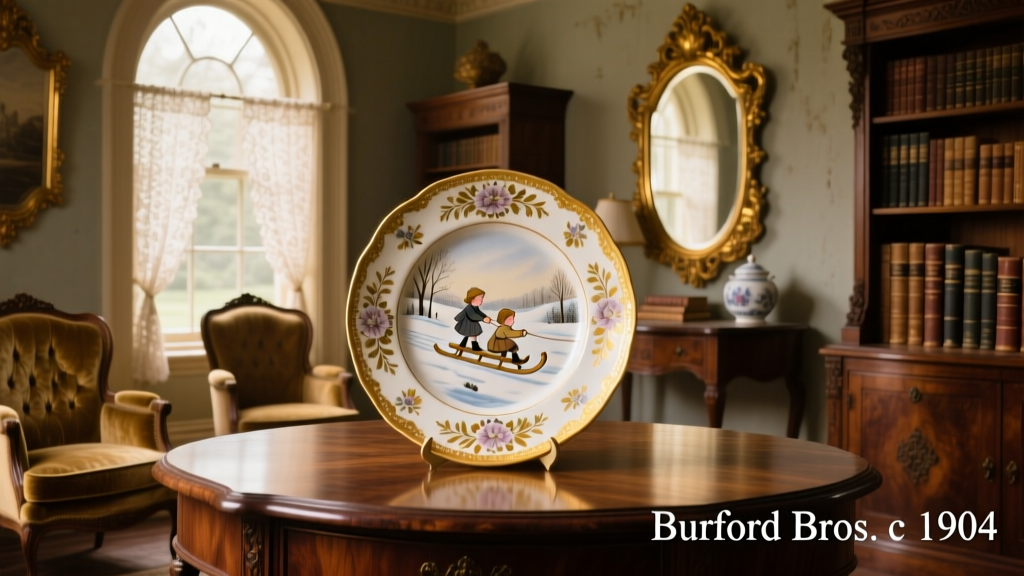
The ABC Plate: Children Sledding with Gold Transfer Border by Burford Bros., Circa 1904 — A Restoration Specialist’s Analysis
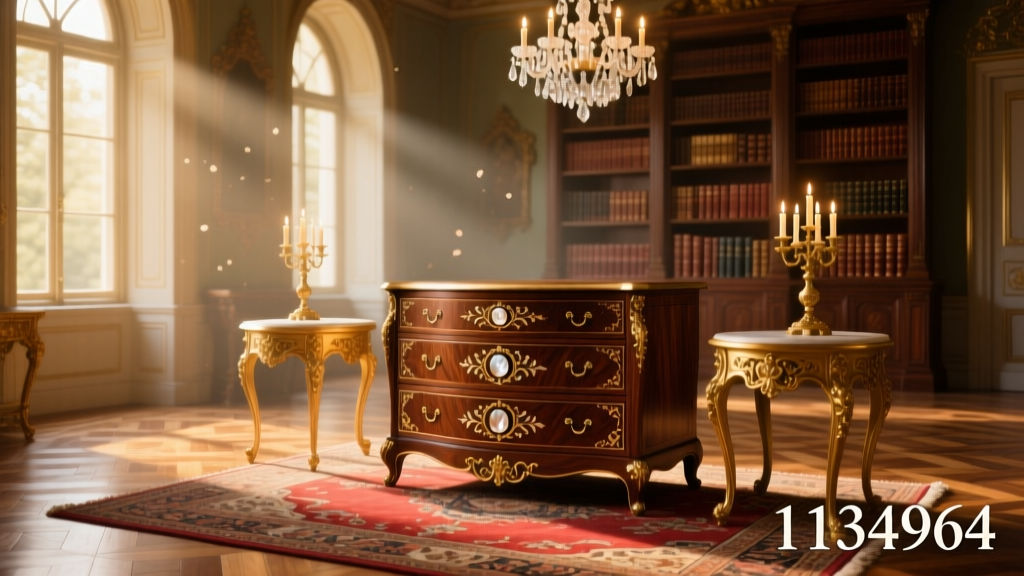
The 1134964: Decoding the Dunbar Cabinet-Maker’s Signature Piece from 1958
The 1796 Firefighting Bucket: A Study in Colonial Utility, Craftsmanship, and Survival
Carte de Visite of a Confederate Naval Officer in Frock Coat: Authentication, Uniform Analysis, and Historical Context
Cartier Ring Analysis: Ring Sapphire Cabochon Pave Diamonds 18K Gold, France Size 5¼ — Authentication, Craftsmanship & Historical Context
Drop-Leaf Oak Inlay Gateleg Table: A 22×22 Inch Antique Masterpiece in Context
The Pin Watch: Horse Running, Seed Pearl Pave by A. J. Hedges — An Art Nouveau Masterpiece in 1-Inch Form
The Toy Truck Overland Turner: A Forgotten American Icon of Mid-Century Die-Cast Engineering
Toy Car Limousine 'The Untouchables' Linemar 5-Inch Die-Cast Replica: History, Identification, and Restoration Insights