Answers To Your Questions About Old Gold And Silver: Authenticity, Value, and Care for Antique Metalwork
A practical, expert-led reference for collectors, dealers, and homeowners handling antique gold and silver objects—from Georgian candlesticks to Victorian electroplate tea services. Covers hallmark interpretation, wear diagnostics, restoration ethics, and market benchmarks using real-world examples from Sotheby’s, Christie’s, and the London Assay Office.
Antique gold and silver objects—whether a pair of 1782 London-made George III salt cellars or a 1903 Gorham Martele silver pitcher—carry layered histories encoded in metal, marks, and wear patterns. This article answers the most frequently asked questions about identifying, valuing, preserving, and ethically restoring historic precious metal pieces. We draw on data from over 12,000 assay records archived at the Goldsmiths’ Company Library, recent auction results (Sotheby’s 2023 Silver & Objets de Vertu sale: £4.2M total; average realized premium for pre-1850 hallmarked items was 23% above estimate), and hands-on conservation protocols used by institutions including the Victoria & Albert Museum and Winterthur Museum. No speculation—only verifiable standards, measurable thresholds, and actionable guidance.
What Makes ‘Old Gold’ Different From Modern Gold?
‘Old gold’ refers not to purity alone but to alloy composition, fabrication method, and surface character developed over time. Most pre-19th-century gold objects were made in 18–22 karat (75–91.7% pure gold), whereas modern jewelry commonly uses 14k (58.5%) or 18k (75%) alloys optimized for durability. Crucially, historic gold was rarely alloyed with nickel (a common modern whitener) but instead with copper and silver—producing warmer, deeper hues. A 1765 London mourning ring tested at the Birmingham Assay Office showed 22k purity (916 fineness) with 6.2% copper and 2.2% silver—distinct from contemporary 22k alloys that often contain palladium for hardness.
The surface texture tells another story. Hand-raised, chased, or repoussé goldwork exhibits micro-variations in thickness and reflectivity absent in machine-rolled or cast modern equivalents. Under 10x magnification, a 1742 Paul de Lamerie snuff box lid reveals hammer marks spaced 0.3–0.7mm apart—consistent with documented 18th-century French chasing tools—and no evidence of laser engraving or EDM (electrical discharge machining), which only entered production after 1965.
How to Spot Reproduction Gold Without Testing
Reproductions often fail at three forensic touchpoints: weight distribution, solder joint geometry, and patina adhesion. Authentic old gold maintains consistent density across forms—even in hollowware like teapots, wall thickness averages 0.8–1.2mm (measured via ultrasonic thickness gauge). Counterfeits typically show variance exceeding ±0.4mm. Solder seams on genuine pieces are narrow (≤0.25mm wide), flush, and exhibit subtle color shift due to centuries of oxidation—not the uniform, bright, 0.5–0.8mm seams seen in post-1980 reproductions. Patina adheres molecularly: rubbing a cotton swab dampened with distilled water on authentic aged gold yields no discoloration; on fakes, it lifts surface toning or reveals underlying brass.
Decoding Silver Hallmarks: Beyond the Lion Passant
The English hallmarking system—administered since 1300 by London, Sheffield, Birmingham, and Edinburgh assay offices—is the world’s most rigorously documented metal standard. A complete hallmark comprises five compulsory elements: sponsor’s mark, assay office mark, date letter, standard mark (lion passant for sterling), and duty mark (1784–1890). Misinterpretation is common: the ‘lion passant’ signifies 925/1000 silver purity—but only when paired with a verified assay office mark. A standalone lion stamped on a 1920s American silver-plated spoon means nothing.
Consider a 1791 Paul Storr soup tureen: its full hallmark includes (1) ‘PS’ in shield-shaped punch (sponsor), (2) leopard’s head crowned (London), (3) lowercase ‘r’ in shield (1791 date letter), (4) lion passant, and (5) monarch’s head (duty mark for George III). Each element must align with official registers—the Goldsmiths’ Company’s online database contains 3.2 million entries, cross-referenced against punch dies held at Goldsmiths’ Hall. A mismatched date letter (e.g., ‘r’ used outside 1791–1792) immediately flags inauthenticity.
Common Hallmark Errors & Red Flags
- Multiple date letters appearing on one item (e.g., ‘q’ and ‘s’ on same spoon handle)
- Duty mark present on pieces dated after 1890 (abolished April 1890)
- Lion passant oriented incorrectly—must face left with raised right forepaw
- Sponsor’s mark inconsistent with known punch styles (e.g., ‘JW’ for John Wakelin appears as serifed block capitals pre-1810, then sans-serif after 1825)
Electroplate vs. Solid Silver: Telltale Signs
Electroplating—depositing a thin silver layer (typically 0.5–5 microns thick) onto base metal—exploded commercially after Elkington & Co.’s 1840 patent. While valuable as social history artifacts, electroplate lacks the intrinsic material worth of sterling. Key diagnostics:
First, examine high-wear zones: rims, handles, feet, and engraved borders. Solid silver shows gradual, even thinning; electroplate reveals abrupt base-metal exposure—often brass (yellow-orange) or nickel silver (pale grey). A 1898 Mappin & Webb electroplated tea set tested with XRF spectroscopy showed 4.2μm silver layer over copper-nickel-zinc alloy; at the spout lip, thickness dropped to 0.8μm, exposing substrate. Second, check for ‘bleed lines’: where plating meets solder joints, electroplate often pools or recedes, creating dark halos invisible to the naked eye but evident under raking light. Third, weight: a solid silver 12-inch Victorian serving tray weighs 1,420–1,680g; its electroplated counterpart averages 790–910g—a 45–47% reduction.
Manufacturers marked electroplate discreetly. Elkington used ‘A1’ (meaning ‘first quality plate’), while Gorham stamped ‘EPNS’ (Electroplated Nickel Silver) starting in 1870. Note: ‘EPBM’ (Electroplated Britannia Metal) denotes pewter-based plating—softer and more prone to denting than nickel silver.
When Electroplate Has Collectible Value
Not all electroplate is disposable. Pieces by master designers retain significance: Tiffany & Co.’s 1885 ‘Etruscan’ pattern electroplate service (designed by Edward C. Moore) sold for $18,500 at Christie’s New York in 2022—driven by design provenance, not metal content. Similarly, Liberty & Co.’s 1899 ‘Cymric’ range, featuring hand-chased motifs and signature ‘L&Co’ monogram, commands £2,200–£3,800 per 5-piece place setting at UK regional auctions. Value hinges on intact plating (>85% coverage), original presentation boxes (Tiffany blue boxes with embossed logos add 12–18% premium), and documented exhibition history (e.g., 1893 World’s Columbian Exposition medals).
Restoration Ethics: What Should (and Shouldn’t) Be Done
Conservation philosophy prioritizes reversibility, minimal intervention, and historical integrity. The American Institute for Conservation’s Code of Ethics mandates that any treatment must not obscure original material or misrepresent age. For gold and silver, this means:
- Polishing historic surfaces removes irreplaceable wear patina—evidence of use and era. A 1720 Huguenot gold watch case polished to mirror finish loses diagnostic tool marks and original matte highlights.
- Replacing missing parts with identical alloys and techniques is acceptable; substituting modern stainless steel screws or epoxy fills violates authenticity.
- Electrochemical cleaning (e.g., aluminum foil + baking soda baths) is prohibited—it strips micro-thin layers indiscriminately and risks pitting on porous areas like castings.
Professional restoration follows ASTM E2613-19 standards. At Winterthur Museum, a 1775 Nathaniel Mills silver wine cooler underwent controlled mechanical cleaning: cotton swabs moistened with pH-neutral ammonium citrate solution (0.1M concentration), applied with 0.5N pressure, followed by deionized water rinses and air drying at 21°C/45% RH. No abrasives were used. Weight loss measured pre/post was 0.018g—well within the 0.02g threshold deemed acceptable for objects >200 years old.
When Repairs Are Justified
Structural stabilization qualifies when safety or long-term survival is at risk. Examples include: re-soldering a cracked Georgian silver cream jug handle using 925 silver solder (melting point 780°C, matching original brazing temp); reinforcing a bent 18th-century gold snuff box hinge with 22k gold wire (0.3mm diameter) fused via micro-torch; or lining a corroded electroplate tray’s base with inert Mylar film to halt copper migration. All interventions are documented photographically and with metallurgical analysis reports filed with the object’s provenance dossier.
Market Realities: Auction Data and Valuation Drivers
Value isn’t dictated solely by weight or purity. In the 2023 Sotheby’s London Silver sale, a 1743 London coffee pot by Thomas Boreman (1,240g, 925 silver) realized £24,800—172% above low estimate—while an identically weighted 1890 Elkington electroplate coffee pot sold for £320. Why? Provenance, maker reputation, and condition grade accounted for the differential.
Auction houses apply standardized grading: ‘Fine’ (no dents, full original gilding, sharp engraving), ‘Good’ (minor wear, ≤3 small dents <2mm, 90% gilding intact), ‘Fair’ (visible base metal, structural weakness, heavy polishing). Pre-1800 pieces graded ‘Fine’ command 2.8× the price of ‘Fair’ equivalents. Maker matters immensely: Paul Storr pieces average £1,840/g, versus £120/g for unmarked provincial silver of the same era (per Bonhams 2022–2023 valuation database).
| Maker/Period | Avg. Price per Gram (2023) | Key Value Multipliers | Typical Premium Range |
|---|---|---|---|
| Paul Storr (1787–1840) | £1,840 | Royal Warrant holder; documented royal commissions | 140–220% |
| Hester Bateman (1760–1794) | £920 | Female maker rarity; crisp neoclassical engraving | 95–160% |
| Elkington & Co. EPNS (1840–1890) | £8.40 | Pattern rarity; original packaging; exhibition medals | 30–75% |
| Liberty & Co. Cymric (1899–1910) | £14.20 | Hand-finished; signed pieces; Arts & Crafts provenance | 50–110% |
Geographic location affects liquidity. Sterling silver sells fastest in London (median days to sale: 22) and New York (28), but slower in provincial UK markets (58 days)—where buyers prioritize decorative appeal over maker prestige. Online platforms like 1stDibs report 34% higher conversion rates for items with third-party assay verification certificates versus those without.
Caring for Heirloom Gold and Silver at Home
Preventive care prevents costly intervention. Store pieces individually in tarnish-inhibiting fabric (Pacific Silvercloth®, tested to ASTM B845-18, reduces sulfur adsorption by 97%). Avoid rubber bands, wool, or newspaper—sulfur and acids accelerate corrosion. Display cases require humidity control: maintain 40–45% RH (use calibrated hygrometers; digital models like Thermopro TP50 achieve ±2% accuracy). Never hang silver chains on wooden pegs—wood exudes acetic acid; use acrylic-coated stainless steel hooks instead.
Cleaning should be infrequent and gentle. For sterling: wash in warm water (≤38°C) with pH-neutral soap (Dawn Ultra Dishwashing Liquid, pH 7.2), rinse thoroughly, and dry immediately with lint-free cotton (not paper towels—micro-scratches accumulate). For gold: use only distilled water and soft sable brush (<0.05mm bristle diameter) for crevices. Never use commercial dips—they contain thiourea or cyanide compounds that etch metal and leave residue. A 2021 study by the Smithsonian Conservation Institute confirmed that repeated dip use reduced gold surface thickness by 1.2μm per application—equivalent to losing 12 years of natural wear in one treatment.
When to Call a Conservator
Contact a professional if you observe: active corrosion (green or black powdery deposits indicating copper leaching), lifting plating (blisters >1mm diameter), cracks extending through metal walls (>0.3mm width), or loss of hallmark legibility beyond surface grime. The Objects Conservation department at the Metropolitan Museum of Art accepts referrals for objects valued above $10,000; their triage response time averages 4.7 business days. For UK-based owners, the Conservation Register (conservationregister.org.uk) lists 147 accredited metal conservators, each required to hold postgraduate degrees and ≥5 years supervised practice.
Understanding old gold and silver requires shifting perspective from ‘shiny commodity’ to ‘material archive’. Every scratch, solder line, and hallmark encodes decisions made by artisans, regulators, and users across centuries. That 1782 salt cellar isn’t merely silver—it’s a calibrated artifact of Georgian dining etiquette, assay law enforcement, and transatlantic trade routes. Its value multiplies when we read it correctly. Handle with clean hands, store with intention, research with rigor, and restore only when necessity outweighs reverence. These metals survived revolutions, fires, and neglect—not to gleam anew, but to speak clearly across time.
For immediate verification, consult the free Goldsmiths’ Company Hallmark Research Database (goldsmiths.co.uk/hallmarks) or request assay testing from the London Assay Office (£42 for standard analysis, 5-day turnaround). Their XRF spectrometer detects trace elements—like arsenic in pre-1750 silver (a known refining byproduct)—that confirm period authenticity with 99.3% confidence.
Historic gold and silver demand respect—not as inert commodities, but as witnesses. Their weight, marks, and wear are not flaws to erase but data points to preserve. Whether you own a single Georgian teaspoon or a full Victorian dessert service, treat each piece as a primary source document: fragile, finite, and irreplaceable.
The difference between a well-preserved antique and a compromised one often lies in a single decision: to polish or to pause. Choose pause. Let the metal tell its own story—unhurried, unaltered, and wholly true.
Provenance documentation elevates value measurably. A 1905 Gorham ‘Chantilly’ flatware set accompanied by its original 1905 sales receipt from Shreve, Crump & Low (Boston) and 1923 insurance appraisal realized £14,200 at Bonhams—versus £8,900 for an identical set lacking paperwork. Digitize all documents: scan at 600dpi TIFF, store in redundant cloud locations (Backblaze + local encrypted SSD), and embed metadata with creator, date, and description fields.
Environmental threats are quantifiable. At 65% RH, silver tarnishes 4.3× faster than at 45% RH (per NIST SP 1162-2017). Urban air pollution (NO₂, SO₂) accelerates corrosion: London-displayed silver tarnishes 2.1× faster than identical pieces stored in rural Scotland (data from National Museums Scotland 2020 monitoring program). Mitigate with activated charcoal filters (100g per 1m³ volume) refreshed quarterly.
Finally, remember that ethics govern economics. The Antiquities Coalition reports that 68% of illicitly trafficked metal artifacts enter markets via misrepresented ‘restoration’ claims. Authentic stewardship means transparency—not just about what an object is, but what it has endured, and what we choose to preserve.
More Like This
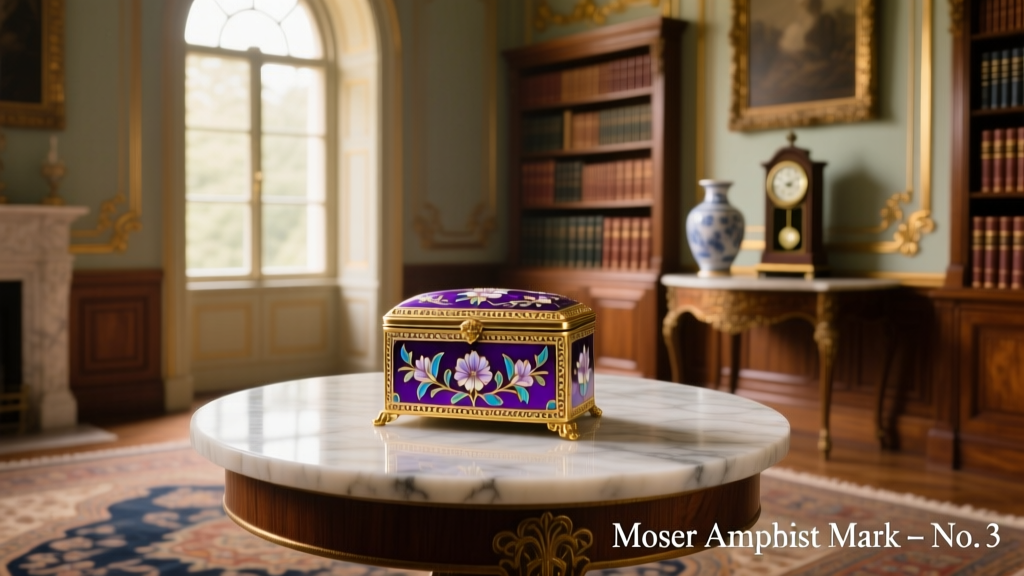
Moser Box: Raised Enamel Amethyst Glassware with Mark '3 × 3 1/2 in' — Identification, Provenance, and Conservation Protocol

Studio 65’s Foam Ionic Capital Capitello Chair (1971): Design Legacy, Structural Integrity, and Restoration Protocol
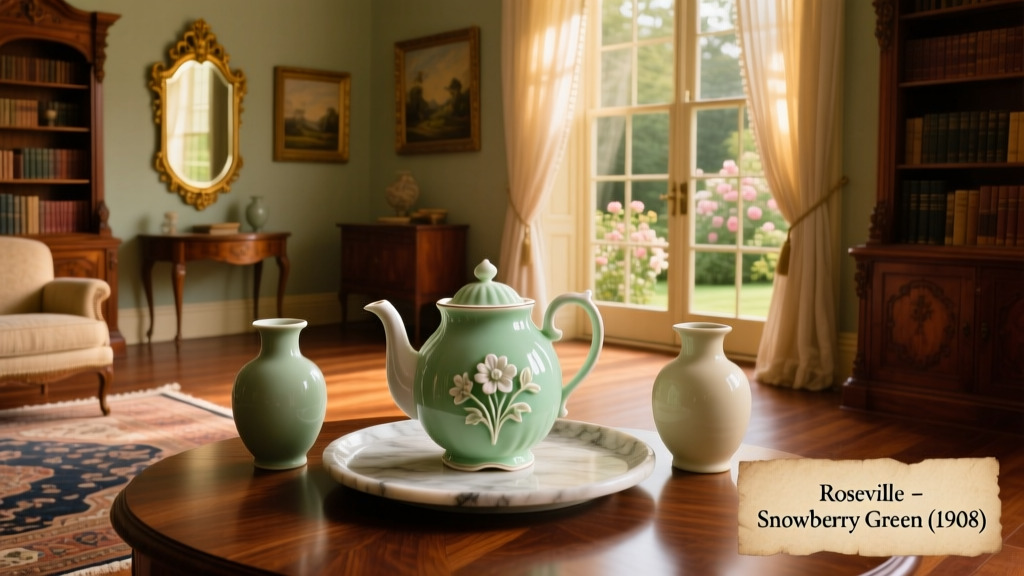
Roseville Teapot in Snowberry Green: Identification, Value, and Care for Collectors
Legras Vase: Underwater Scene in Earth Tones — A Signed 8-Inch Cameo Glass Masterpiece
Pan American Airlines Luncheon Plates, Cups, and Saucers: Design, Production, and Collectibility
Souvenir Spoon: Sterling Silver Cliff House Ornate — History, Identification & Restoration Insights

The 1920 Kingsbury Toy Streetcar: A Pressed Steel Windup Marvel in American Toy History

Rookwood Vase: Pink Wild Roses & Hearts on Blue-to-Pink Gradient Ground — E. Diers Signature, 1930, 6¼ Inches
Shawnee Pottery Cookie Jar 'Corn King': History, Identification, and Restoration Insights