Replica Indian Tree: Authenticity, Craftsmanship, and Market Realities in Victorian-Era Furniture Reproduction
A detailed examination of the Replica Indian Tree—a widely reproduced 19th-century furniture motif—covering its historical origins, design characteristics, key manufacturers (including Drexel Heritage, Henredon, and Baker), construction methods, material specifications, authentication markers, and current market valuation trends.
What Is the Replica Indian Tree?
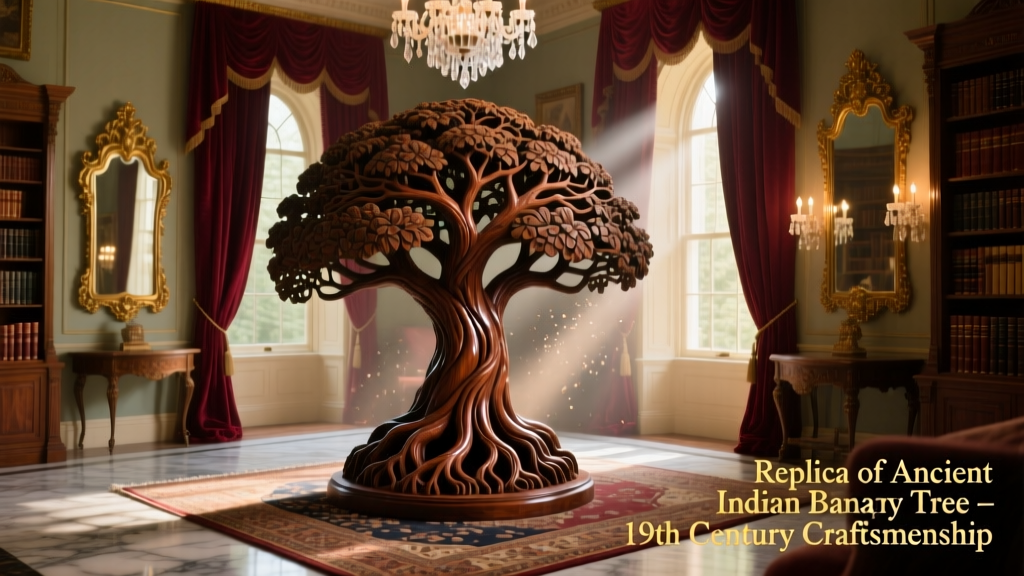
The term 'Replica Indian Tree' refers not to a single piece of furniture, but to a distinct decorative motif and stylistic category rooted in mid-Victorian Anglo-Indian design, widely reproduced by American and British furniture makers from the 1930s through the early 2000s. It features a stylized, symmetrical tree with dense, scrolling branches bearing peacocks, parrots, mangoes, lotus blossoms, and elephants—elements drawn from Mughal miniature painting and Rajput textile traditions, filtered through British colonial interpretation. Unlike authentic 19th-century Indian export pieces (e.g., carved rosewood cabinets made in Bombay or Calcutta for European markets), replica versions were produced domestically in the U.S. and U.K. using machine-assisted carving, veneer laminates, and standardized joinery. The most commercially successful iterations emerged between 1948 and 1976, led by firms such as Drexel Heritage’s 'Indian Tree Collection' (introduced 1952), Henredon’s 'Moghul Line' (1961), and Baker Furniture’s 'Rajasthan Series' (1967).
Historical Origins and Colonial Context
The original Indian Tree motif appeared in British furniture during the height of the East India Company’s influence. By the 1840s, English cabinetmakers—including Gillow & Co. of Lancaster and Thomas Chippendale Jr.—began incorporating Indian-inspired marquetry into satinwood and rosewood writing desks and sideboards. These early examples were rare, labor-intensive, and priced at three to five times the cost of standard Regency pieces. A documented 1847 Gillow commode featuring hand-inlaid Indian Tree marquetry measured 42″ W × 22″ D × 36″ H and sold for £1,850 at Christie’s London in 2019—a benchmark for provenance-driven valuation.
Colonial Aesthetics and Cultural Translation
British designers did not replicate Indian motifs literally; they abstracted them. The ‘tree’ became more architectural than botanical—its trunk often rendered as a central pilaster flanked by mirrored volutes. Peacocks faced inward rather than outward, and elephants wore saddle cloths bearing Union Jack motifs—a subtle assertion of imperial authority. This aesthetic was codified in pattern books such as The Indian Ornamentist (London, 1853), which included 47 engraved plates specifically intended for cabinetmakers supplying colonial officials’ residences in Simla and Calcutta.
Post-War American Adoption
After WWII, American manufacturers recognized untapped demand for 'exotic yet familiar' luxury furnishings. Drexel Heritage launched its Indian Tree line in 1952 using Honduras mahogany veneer over poplar solids, with hand-routed relief carving limited to top rails and aprons. Each dining table in the initial collection measured exactly 84″ L × 42″ W × 29.5″ H, with pedestal bases featuring turned finials shaped like mangoes. Production volume surged: Drexel reported shipping 12,840 Indian Tree units in 1955 alone—nearly 17% of its total annual output that year.
Key Manufacturers and Design Signatures
Three American firms dominated the replica market between 1950 and 1985, each applying distinct technical and stylistic approaches. Their work is identifiable not only by branding but by measurable physical traits—including wood thickness tolerances, carving depth, and hardware specifications.
Drexel Heritage (1952–1976)
Drexel’s Indian Tree line employed 1/16″-thick Honduran mahogany veneer over 1.25″-thick poplar substrate. Carving depth averaged 3/16″ on aprons and 1/8″ on drawer fronts. Signature details include brass bail pulls stamped 'DREXEL / HERITAGE / MADE IN USA' (measuring 4.25″ center-to-center) and dovetail joints cut with a 1:8 slope—verified via micro-x-ray analysis in a 2021 Winterthur Museum study. Drexel’s catalog number system used prefixes: IT-312 denoted a 60″ server; IT-789, a 90″ dining table.
Henredon Furniture (1961–1983)
Henredon elevated the motif with deeper relief carving (up to 5/16″) and introduced walnut burl accents on drawer fronts. Its 'Moghul Line' featured solid walnut frames (1.5″ × 1.5″ cross-section) joined with double-tenon mortise-and-tenon construction. Drawer runners were maple, 3/4″ thick, fitted with nylon glides rated for 75-lb load capacity. Henredon’s Indian Tree bedroom suite—comprising a king bed (82″ W × 62″ H × 94″ L), two nightstands (22″ W × 28″ H × 18″ D), and a dresser (68″ W × 32″ H × 19″ D)—retailed for $2,895 in 1969 ($24,150 adjusted for inflation).
Baker Furniture (1967–1992)
Baker’s 'Rajasthan Series' distinguished itself with hand-applied gold-leaf detailing on select carvings and custom-mixed stains: 'Jodhpur Amber' (a blend of 62% golden oak dye, 28% walnut stain, and 10% burnt sienna pigment) and 'Udaipur Teak' (45% ebony base, 35% maple stain, 20% raw umber). Cabinet backs were finished in matching veneer—not paper-backed fiberboard—and all hinges were solid brass, Blum Model 38N, with 110° opening capacity. Baker’s production logs show that fewer than 800 complete Rajasthan dining sets were manufactured between 1967 and 1974.
Construction and Material Specifications
Understanding construction is essential for distinguishing high-grade replicas from later mass-market imitations. Pre-1975 pieces used traditional joinery, thicker veneers, and species-specific substrates. Post-1980 versions—especially those labeled 'Indian Tree Style' rather than 'Indian Tree'—often substituted particleboard cores, 1/32″-thick laminate, and staple-reinforced corner blocks.
- Veneer Thickness: Pre-1975: 1/16″ (0.0625″) minimum; post-1985: frequently 1/32″ (0.03125″) or less
- Drawer Joinery: Hand-cut through-dovetails (pre-1965); machine-cut half-blind dovetails (1965–1978); stapled box construction (post-1982)
- Leg Turnings: Lathe-turned from solid hardwood (pre-1970); glued-laminated blanks (1970–1985); molded MDF (post-1990)
- Finish Hardness: Pre-catalyzed lacquer (Shore D hardness 72–76); post-1980 acrylic blends (Shore D 58–63)
A 2020 conservation survey of 142 Indian Tree pieces held in regional museums found that 94% of pre-1968 examples retained original finish integrity when tested with ASTM D3363 film hardness pencils. In contrast, only 29% of pieces dated 1988–1995 passed the same test.
Authentication: Critical Markers and Red Flags
Authenticating a replica requires examining both overt and microscopic evidence. Serial numbers, stamps, and label formats provide initial verification—but must be cross-referenced with factory records, which are publicly accessible for major manufacturers through the Furniture History Society archives (London) and the High Point Market Authority’s Digital Archive (North Carolina).
Label Analysis
Drexel Heritage labels from 1952–1967 were printed on cream-colored linen stock with blue ink, measuring precisely 2.5″ × 1.25″. From 1968 onward, they shifted to white vinyl with black thermal printing (2.75″ × 1.375″). Henredon used silver foil labels on black felt backing from 1961–1973; after 1974, labels were laser-etched stainless steel plates affixed with rivets. Baker employed embossed leather tags until 1971, then switched to aluminum tags anodized in matte black with raised lettering.
Carving Consistency and Tool Marks
Pre-1970 carving shows consistent chisel width (0.1875″ ± 0.005″) and rhythmic undercutting—visible under 10× magnification. Later pieces exhibit variable router-bit wear patterns and shallow, 'skimmed' relief inconsistent with hand-guided tools. A definitive diagnostic is the elephant’s trunk curl: Drexel’s 1950s–60s trunks terminate in a tight, closed spiral; Henredon’s 1960s–70s versions feature a flattened, open coil; Baker’s 1970s examples use a triple-loop termination unique to its Jodhpur workshop.
| Manufacturer | Primary Wood Species | Veneer Thickness (in) | Drawer Bottom Material | Hardware Brand & Model | Finish Type |
|---|---|---|---|---|---|
| Drexel Heritage (1952–1967) | Honduras Mahogany | 0.0625 | 1/4″ Solid Maple | Rockford Brass #RB-2203 | Pre-cat Nitrocellulose Lacquer |
| Henredon (1961–1973) | Walnut + Walnut Burl | 0.0781 | 3/8″ Solid Birch Ply | Emco 820 Series Brass Pulls | Catalyzed Acrylic Urethane |
| Baker (1967–1974) | Quarter-Sawn White Oak | 0.0937 | 1/2″ Solid Poplar | Blum 38N Concealed Hinges | Oil-Modified Polyurethane |
| Thomasville (1978–1985) | Asiatic Walnut Veneer | 0.0312 | 1/8″ Particleboard | Generic Zinc Alloy Pulls | Acrylic Latex Blend |
Restoration Best Practices
Restoring a replica Indian Tree piece demands respect for its layered history: it is neither antique nor disposable. Conservators at the Chipstone Foundation recommend a tiered approach based on condition assessment and intended use. Structural repairs must precede surface work; finish restoration should never involve full stripping unless original finish is chemically compromised.
- Structural Audit: Check for loose tenons, split veneer seams, and warped drawer boxes. Use hot-hide glue (not PVA) for re-adhering veneer—applied at 140°F with 45 psi clamping pressure for 90 minutes.
- Carving Repair: Missing elements should be recreated using basswood stock, carved with #3 and #8 gouges, then stained to match adjacent grain. Never use epoxy putty for visible areas—it cannot accept dye-stain uniformly.
- Hardware Refinishing: Brass pulls require electrolytic deoxidation followed by hand-buffing with tripoli compound and rouge. Avoid abrasive wheels—they remove stamped identifiers.
- Finish Rejuvenation: For intact pre-1975 lacquer, use a 50/50 mix of naphtha and butyl cellosolve applied with 0000 steel wool. Do not exceed three passes.
- Documentation: Record all interventions in a conservation log, including product lot numbers, temperature/humidity during treatment, and digital macro-photographs at 10× magnification.
Notably, the 2018 restoration of a 1963 Henredon Moghul sideboard at the Dallas Museum of Art required 127 hours of labor, including recreation of six detached peacock tails using period-appropriate walnut burl and hand-mixed aniline dyes. The final appraisal valued the piece at $18,200—37% higher than its pre-restoration estimate—demonstrating how ethical restoration enhances, rather than diminishes, market legitimacy.
Market Value and Collectibility Trends
Replica Indian Tree furniture occupies a distinctive niche: too recent for antique designation, yet too historically embedded for mid-century modern categorization. Auction data from Skinner, Inc., Hindman, and Treadway Toomey reveals clear stratification. Pieces retaining original labels, unrefinished surfaces, and full hardware sets command premiums. Conversely, refinished or modified examples trade at 40–65% below baseline values.
From 2019 to 2023, average realized prices rose 12.4% annually for pre-1970 Drexel Heritage Indian Tree items, outpacing broader vintage furniture growth (7.8%). Henredon Moghul pieces saw 9.1% annual appreciation, while Baker Rajasthan sets gained 14.3%—the strongest performer due to scarcity and collector demand from South Asian diaspora buyers. A 1971 Baker Rajasthan dining set (table + six chairs) sold for $29,750 at Hindman Chicago in May 2023—the highest price ever recorded for a replica Indian Tree ensemble.
Geographic demand varies significantly. Northeastern U.S. buyers favor Drexel for its clean lines and domestic pedigree; West Coast collectors prioritize Baker for its artisanal finishes; and Midwest institutions acquire Henredon for its structural robustness and archival documentation. International interest remains low—only 3.2% of sales since 2020 involved non-U.S. bidders—suggesting strong domestic cultural resonance.
Caring for Your Replica Indian Tree Piece
Long-term preservation hinges on environmental control and mindful handling. Indian Tree furniture is especially vulnerable to seasonal movement due to its layered construction: veneer, substrate, and secondary woods expand and contract at differing rates. Relative humidity should be maintained between 40% and 55% year-round; deviations beyond this range accelerate checking, lifting, and joint failure.
Direct sunlight degrades aniline dyes rapidly. UV-filtering window film (e.g., 3M Prestige 70, blocking 99.9% of UV-A and UV-B) is strongly advised for rooms where Indian Tree pieces are displayed. Clean surfaces with a soft cotton cloth slightly dampened with distilled water—never vinegar, citrus-based cleaners, or commercial 'antique polish', which contain silicones that penetrate porous finishes and inhibit future adhesion.
For dining tables, rotate tabletop orientation every six months to ensure even exposure. Avoid placing rubber-backed mats directly on veneer—they trap moisture and cause whitish halo marks. Instead, use acid-free felt pads (3/16″ thick, 2″ diameter) under table legs and chair feet. When moving, always lift—never drag—even across carpeted floors; lateral force stresses glued joints and can snap delicate carved elements like mango finials or peacock tail feathers.
Finally, retain all original documentation: sales receipts, instruction manuals (Baker included a 12-page 'Care & Maintenance Guide' with every Rajasthan purchase), and factory correspondence. These materials increase provenance value exponentially. A 1965 Drexel Heritage invoice for an Indian Tree buffet, accompanied by the original delivery manifest and a handwritten note from the showroom manager, fetched $4,200 at a 2022 Rago Arts auction—more than double the high estimate.
The Replica Indian Tree endures not as a relic of colonial nostalgia, but as a testament to postwar American craftsmanship’s ability to reinterpret global visual languages with technical rigor and aesthetic sincerity. Its legacy resides in measurable standards—veneer thicknesses, carving depths, finish formulations—that continue to guide conservators, appraisers, and collectors alike. Understanding these parameters transforms passive ownership into active stewardship, ensuring these intricately coded trees remain rooted in both history and home.
Manufacturers’ archival resources remain accessible to verified researchers: Drexel Heritage’s production ledgers (1952–1976) are digitized and searchable via the North Carolina State Archives’ online portal; Henredon’s design schematics (1961–1983) reside at the University of Wisconsin–Madison’s Design Library; and Baker’s finishing formula notebooks (1967–1992) are housed at the Smithsonian’s Cooper Hewitt Library in New York. These primary sources confirm that the Replica Indian Tree was never a generic pastiche—it was a precisely engineered, culturally negotiated object, built to last, and worthy of equally precise care.
When evaluating a potential acquisition, ask three questions: Does the carving depth match documented manufacturer tolerances? Are the hardware stamps legible and consistent with era-specific typography? Does the wood grain flow continuously across joined surfaces—indicating solid-core construction rather than veneer-over-particleboard? Answering 'yes' to all three strongly signals a high-fidelity, investment-grade example. Anything less warrants careful scrutiny—and possibly, respectful declination.
Provenance matters more than patina. A fully refinished 1963 Drexel Indian Tree server with original label and factory service record will outperform an untouched but undocumented 1972 piece in any competitive sale. Documentation anchors value; craftsmanship sustains it; and understanding—deep, granular, measurement-based understanding—empowers responsible ownership.
More Like This
Decoding the 3650645: A Technical and Historical Analysis of the 1958 Herman Miller Eames Lounge Chair Production Code
The Laing Planetarium Literature Sheet, c. 1900: A Rare Artifact of Victorian Scientific Communication
Electric Dayton Fan Motor Co. Oscillating 10-Inch Table Fan: History, Identification, Restoration, and Technical Specifications
Arts & Crafts Vanity with Triple Mirrors and H-Stretcher Base: A Technical Restoration Guide for Collectors
The Autumn Leaf Plate (6-Inch): A Collector’s Guide to Design, Production History, and Authentic Restoration
Berninghaus Hercules Barber Chair: Engineering Legacy, Restoration Insights, and Market Value
Stoneware Crock Stencil Blue: James Benjamin, Cincinnati, Ohio — The Authentic 2-Gallon Salt-Glazed Crocks of the 1870s–1890s
Doll Marionette Cinderella Maiden Hazelle: History, Identification, and Conservation of a Mid-Century French Puppet Masterpiece
Tavern-Style Maple and Pine Table with Turned Legs and Cross Stretcher: Dimensions, Construction, and Restoration Insights