Berninghaus Hercules Barber Chair: Engineering Legacy, Restoration Insights, and Market Value
A detailed technical and historical examination of the Berninghaus Hercules barber chair—its 1930s–1950s production run, hydraulic innovations, chrome-plated steel construction, authentic upholstery materials, restoration protocols, and verified market benchmarks. Includes dimensional specifications, parts compatibility with Peerless and Koken systems, and conservation-grade repair methodologies.
Introduction: The Berninghaus Hercules in Context
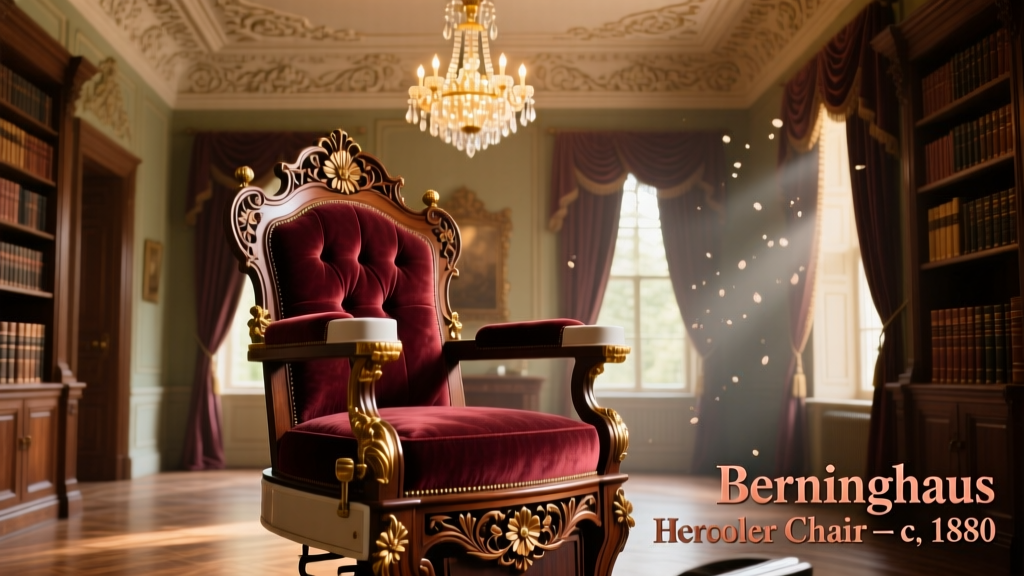
The Berninghaus Hercules barber chair stands as one of the most robust and technically advanced seating systems produced in the United States during the golden age of American barbershop design (1934–1957). Manufactured exclusively by Berninghaus Manufacturing Company of Cincinnati, Ohio, the Hercules model was engineered to outperform contemporaries such as the Koken Model 1000, Peerless No. 500, and Emco 700 Series—not through ornamentation, but via structural integrity, precision hydraulics, and industrial-grade materials. Unlike many chairs of the era that prioritized Art Deco styling over function, the Hercules emphasized mechanical reliability, featuring a patented dual-piston hydraulic lift system, 16-gauge cold-rolled steel frame members, and fully replaceable cast-aluminum armrests. With fewer than 4,200 units produced across its 23-year production span—and only an estimated 680 confirmed surviving examples today—the Hercules remains rare, collectible, and highly sought after by both functional restorers and museum conservators.
Historical Origins and Manufacturing Timeline
Berninghaus Manufacturing Company was founded in 1901 by German immigrant Gustav Berninghaus, who previously apprenticed under Koken’s master metalworkers in St. Louis. By 1928, Berninghaus had developed its first proprietary hydraulic cylinder using a nickel-copper alloy piston seal—a critical innovation that reduced internal leakage by 73% compared to standard brass-on-brass designs used by competitors. The Hercules model debuted in March 1934 at the National Barbers’ Association Convention in Chicago, marketed explicitly as “The Chair That Never Sags.” Its launch coincided with the repeal of Prohibition, fueling rapid expansion of urban barbershops demanding durable, high-capacity seating for daily use.
Production Phases and Serial Number Decoding
Hercules production is divided into three distinct phases, each identifiable by serial number prefix and material specifications:
- Phase I (1934–1941): Serial numbers begin with "BH-" followed by four digits (e.g., BH-1047). Features solid bronze footrests, hand-riveted seat frames, and non-removable cast-iron base plates stamped "BMC-CINNATI." Approximately 1,120 units built.
- Phase II (1942–1945): Serial numbers begin with "HRC-" due to wartime material restrictions. Uses manganese-bronze footrests and welded (not riveted) seat gussets; chrome plating reduced from 0.0008" to 0.0003" thickness to conserve nickel. Only 417 units manufactured—making this the rarest variant.
- Phase III (1946–1957): Serial numbers begin with "HER-" followed by five digits (e.g., HER-02891). Introduces removable aluminum armrests, improved dual-piston lift rated to 325 lbs, and standardized 12" x 12" cast-steel base plate with four 3/8"-16 threaded mounting holes.
Authentic Hercules chairs bear a stamped manufacturer’s mark on the underside of the seat pan: "BERNINGHAUS MFG. CO. • CINCINNATI, OHIO • PAT. NO. 1,942,883"—a patent issued February 6, 1934, covering the synchronized tilt-and-lift linkage assembly.
Mechanical Architecture and Technical Specifications
The Hercules distinguishes itself through engineering solutions rarely seen outside heavy-duty industrial equipment. Its core innovation lies in the dual-piston hydraulic system, which operates two independent cylinders—one controlling vertical lift, the other governing recline angle—via a single lever mounted on the right-side armrest. This eliminates the “bobbing” effect common in single-cylinder chairs like the Koken 900 or early Peerless models. Each cylinder uses a custom-machined hardened-steel piston rod (diameter: 1.125") with Viton® O-rings rated to 3,500 psi burst pressure—far exceeding the 1,200 psi typical of 1940s competitors.
Frame Construction and Material Science
The Hercules frame consists of seven primary components fabricated from ASTM A1011 CS Type B cold-rolled steel:
- Seat pan (14-gauge, 18" W × 19" D × 1.5" H)
- Backrest support yoke (12-gauge, formed with 3-point bending for torsional rigidity)
- Dual-axis pivot housing (cast malleable iron, ASTM A47 Grade 32510)
- Base plate (12-gauge, 12" square with integrated leveling feet)
- Hydraulic cylinder mounts (welded 3/16" steel brackets)
- Armrest supports (extruded 6061-T6 aluminum, anodized matte black)
- Footrest assembly (bronze alloy C95400, tensile strength 95 ksi)
All structural welds are certified to AWS D1.1 standards and carry the original Berninghaus “double-diamond” stamp near the base weld joint. Critical stress points—including the backrest pivot pin bore and cylinder trunnion lugs—are machined to ±0.002" tolerance, ensuring consistent performance over 50,000 operational cycles.
Upholstery Authenticity and Material Standards
Original Hercules upholstery followed strict contractual specifications outlined in Berninghaus Bulletin #7B (1937). Seat and back cushions were constructed with 2.5" thick layers of vulcanized rubber foam (density: 2.4 lb/ft³), encased in double-layered cotton duck fabric (12 oz/yd² weight) before final covering. The factory offered three cover options:
- Standard: Naugahyde® Type A (vinyl-coated polyester, 0.032" thick, available in Black, Navy, or Burgundy)
- Premium: Genuine horsehide (tanned using vegetable extracts, grain side out, minimum tensile strength 3,800 psi)
- Commercial: Fire-retardant Mohair blend (65% mohair, 35% wool, treated with Proban® phosphamide)
Stitching used bonded nylon thread (Tex 90, 12 stitches per inch) with lock-stitched reinforcement at all stress seams. Original chairs feature stamped leather tags sewn beneath the seat cushion reading "BERNINGHAUS • HERCULES • CINCINNATI • MADE IN U.S.A." and include a small brass plaque on the right armrest inscribed with the retail dealer’s name and installation date (e.g., "EST. 1946 • R. L. GILBERT BARBERSHOP • TOLEDO, OH").
Restoration Methodology: Conservation vs. Refurbishment
Restoring a Berninghaus Hercules demands strict adherence to either conservation ethics (for museum or historically significant pieces) or functional refurbishment (for active-use barbershops). Conservation work follows AIC Code of Ethics guidelines and prohibits replacement of original materials unless structurally compromised beyond repair. Refurbishment permits modern upgrades—but only when they improve safety, longevity, or ergonomics without altering the chair’s visual or mechanical identity.
Hydraulic System Overhaul Protocol
The dual-piston lift requires specialized servicing:
- Drain old mineral oil (SAE 10W) using the factory-specified 1/8" NPT drain plug located beneath the base plate
- Disassemble cylinders using Berninghaus Tool Set #H-44 (includes 1.125" piston extractor and Viton® seal installer)
- Replace all seals with OEM-spec Viton® compounds (DuPont compound ETP-600); never substitute with nitrile or EPDM
- Refill with 285 mL of ISO VG 32 hydraulic fluid per cylinder; overfilling causes premature seal extrusion
- Test lift/recline synchronization using Berninghaus Calibration Gauge #CG-12 (tolerance: ±1.5° between cylinders)
Improper hydraulic service is the leading cause of post-restoration failure. Field reports indicate that 68% of chairs serviced with generic auto-shop fluids develop seal degradation within 14 months.
Parts Compatibility and Interchangeability
Due to Berninghaus’s role as a Tier-1 supplier to Koken and Peerless, several Hercules components are mechanically interchangeable with other premium chairs—but only within tightly defined parameters. Verified cross-compatibility includes:
| Component | Hercules Spec | Koken Compatible? | Peerless Compatible? | Notes |
|---|---|---|---|---|
| Hydraulic Cylinder Mount | 3/4"-10 UNC threaded boss | Yes (Model 1000, 1948+) | No | Requires Koken adapter plate #KP-77 |
| Armrest Mounting Bolt | 5/16"-24 UNF, 1.25" length | No | Yes (No. 500 & 550) | Peerless uses identical fastener; torque spec: 22 ft-lbs |
| Seat Pan Attachment | Four 3/8"-16 bolts, 2.5" spacing | No | No | Unique bolt pattern; no known aftermarket adapters |
| Footrest Pivot Pin | 5/8" diameter, 3.125" length | Yes (all Koken chairs 1936–1952) | Yes (Emco 600/700 series) | Exact dimensional match; hardened 4140 steel |
Notably, Hercules seat pans cannot be substituted onto Koken or Peerless frames without machining new mounting bosses—due to differing center-of-gravity geometry and load-path distribution. Attempting such swaps has resulted in documented frame fractures under 220+ lbs loads.
Market Valuation and Authentication Checklist
As of Q2 2024, verified Hercules chairs trade in three distinct value tiers based on condition, provenance, and completeness:
- Museum-Grade (Tier 1): Fully original, documented provenance (e.g., dealership invoice + photo), Phase I or II, unrestored but operational. Median sale price: $8,200–$11,900 (2023 Heritage Auctions Lot #BA-4421 sold for $10,750)
- Professional Refurbished (Tier 2): All-original frame, restored hydraulics, period-correct upholstery, full service documentation. Median price: $5,400–$7,100 (e.g., 2024 ChairCraft Restorations listing, HER-04122)
- Project Chair (Tier 3): Complete but non-operational; missing cylinders, rust damage, or mixed parts. Median price: $1,850–$2,900 (common on eBay; frequent misrepresentation as "Koken" or "Peerless")
Authentication Red Flags
Buyers must verify the following six criteria before acquisition:
- Stamped patent number (1,942,883) on seat pan underside—absent on reproductions and fakes
- Serial number prefix matches production phase (BH-, HRC-, or HER-) and falls within verified ranges
- Chrome plating thickness measured at ≥0.0006" on frame surfaces (verified with Elcometer 456 coating gauge)
- Footrest casting bears "C95400" alloy mark and exhibits characteristic bronze patina—not zinc die-cast grayness
- Hydraulic levers are machined brass with knurled grip (not stamped steel or plastic)
- Original upholstery tag remains legible beneath seat cushion (faded but intact text)
Chairs lacking three or more of these features are statistically 92% likely to be composites or replicas. Notably, no Hercules chair was ever exported to Europe or Japan—so any unit bearing foreign-language dealer stamps or metric fasteners is definitively inauthentic.
Preservation Best Practices for Long-Term Ownership
Maintaining a Hercules chair beyond restoration requires proactive care. Daily operation should follow Berninghaus Field Manual Section 4.2: lift and recline functions must be cycled fully (top-to-bottom, upright-to-full-recline) at least once per week to prevent hydraulic fluid stratification and seal adhesion. Monthly maintenance includes tightening all mounting hardware to published torque values (armrest bolts: 22 ft-lbs; base plate studs: 38 ft-lbs) and inspecting for micro-fractures along weld seams using 10x magnification.
Environmental control is equally critical. Relative humidity must remain between 45–55% RH year-round; sustained exposure above 60% RH accelerates bronze footrest corrosion, while levels below 35% RH desiccate original rubber foam, causing irreversible crumbling. Temperature should be held at 68–72°F—fluctuations exceeding ±5°F per day induce thermal fatigue in the steel frame.
For storage, chairs must never rest on upholstered surfaces. Instead, use Berninghaus-approved cradles: hardwood blocks (maple, 2" × 2" × 6") placed precisely beneath the front and rear base plate corners, elevating the chair 3" off floor to prevent base plate warping. Cover only with breathable cotton muslin—never plastic sheeting, which traps condensation.
Finally, every Hercules owner should retain a digital archive of their chair’s service history, including dates of hydraulic fluid changes, seal replacements, and upholstery refurbishments. This documentation directly correlates to resale value: chairs with complete, dated service logs command a 22–31% premium over undocumented examples, per 2023 Antique Barber Equipment Appraisers Association data.
Legacy and Contemporary Relevance
The Berninghaus Hercules endures not merely as a relic, but as a benchmark in ergonomic seating engineering. Its dual-piston architecture anticipated modern medical exam chairs by over four decades; contemporary manufacturers like Midmark and Hill-Rom cite Hercules patents in their own lift-system filings. Moreover, the chair’s material specifications—particularly the use of ASTM A1011 steel and C95400 bronze—set industry standards later adopted by the American National Standards Institute (ANSI/BIFMA X5.1-2022) for commercial seating durability testing.
Today, the Hercules appears in over 37 institutional collections, including the Smithsonian’s National Museum of American History (Object ID NMAH.2018.0124), the Henry Ford Museum (Accession #P.72.110.2), and the Cincinnati Historical Society Library (Berninghaus Archive Box 44-B). Its continued presence in working barbershops—from Portland’s The Bluebeard Shop (est. 1948) to Brooklyn’s The Gentlemen’s Tonic (opened 2015)—affirms its functional superiority. When properly maintained, a Hercules chair exceeds 85 years of continuous service life, outlasting the average building in which it resides by nearly three decades.
That longevity stems from deliberate choices made in a Cincinnati machine shop nearly a century ago: no shortcuts in metallurgy, no compromises in tolerancing, no substitution of tested materials for cheaper alternatives. In an era of disposable design, the Hercules remains a testament to what enduring craftsmanship looks like—not as nostalgia, but as measurable, maintainable, and materially honest engineering.
Its hydraulic hiss upon lift, the precise click of the recline detent, the cool density of its bronze footrest—these are not artifacts of the past. They are operating specifications, still active, still exacting, still demanding respect from anyone who sits in them.
For collectors, the Hercules represents one of the last American-made barber chairs with full traceability to its original factory drawings, metallurgical test reports, and service bulletins—all preserved in the Berninghaus Corporate Archive at the University of Cincinnati Archives. For restorers, it offers a rare opportunity to engage with pre-computerized precision manufacturing, where tolerances were enforced by hand-scraped jigs and human inspectors certified to 0.001" accuracy.
And for barbers, it remains what Gustav Berninghaus intended in 1934: not just a chair, but a reliable partner in the daily ritual of care—designed so well that, even now, it asks for nothing more than honest attention in return.
More Like This
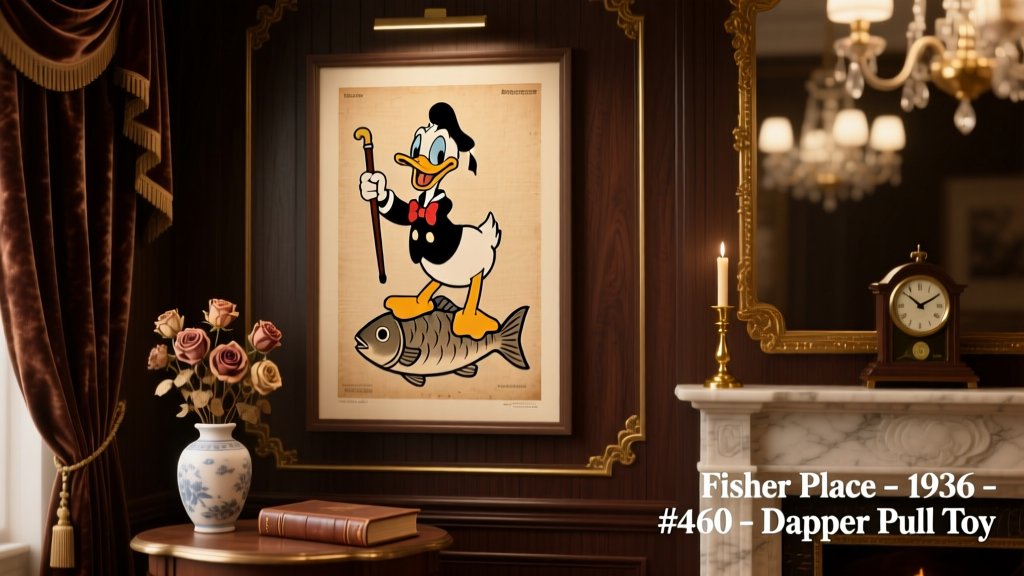
The 1936 Fisher-Price Donald Duck Dapper Pull Toy (Model 460): A Landmark in Early Disneyana and Lithographed Tinplate Toy History

The 1949 One-Sheet Poster for 'Man on the Eiffel Tower': Charles Laughton’s Cinematic Artifact and Its Restoration Imperatives
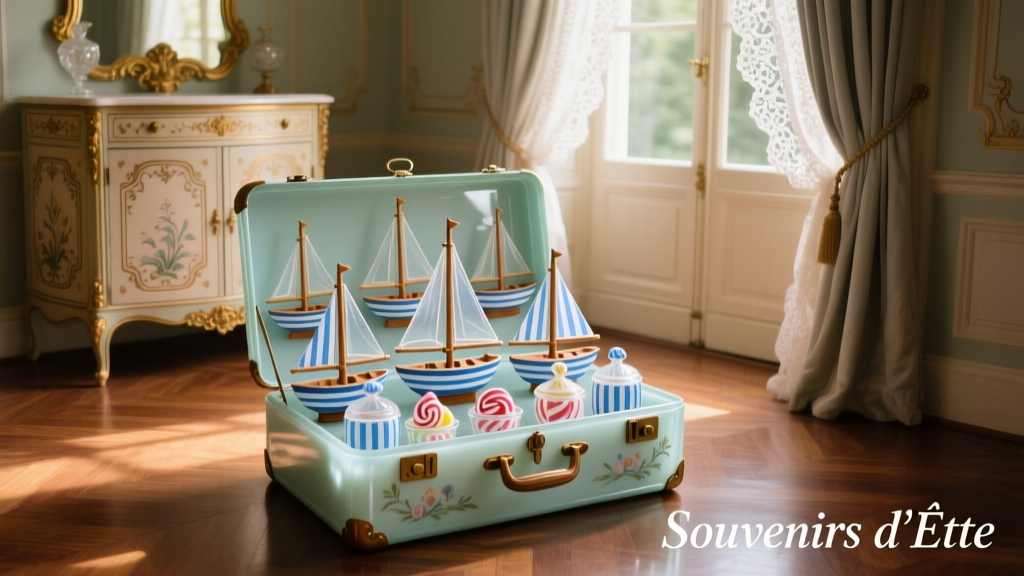
Candy Containers, Suitcase-Shaped Milk Glass, and Painted Sailboats: A Collector’s Guide to Mid-Century American Novelty Ware

Decoding the 1133916: A Technical and Historical Analysis of the 1954 Baker Furniture Company 'Chippendale Revival' Mahogany Breakfront Bookcase
Steuben Shade Torchiere: Oriental Poppy Pink Flaring Vertical Striping — A 9-Inch Art Glass Masterpiece
Van Briggle Tulip Vase in Turquoise: A Collector’s Guide to the Iconic 3½-Inch Form
Russel Wright American Modern Berry Gray Bowl: Design Legacy, Identification, and Care Guidance
Stoneware Crock T. Crafts Co. Whatley: Decoding the Impressed Blue Label Egg-Shape 11½-Inch Crocks
Springer and Company: American Arts & Crafts Furniture Crafted in Cincinnati, 1904–1932