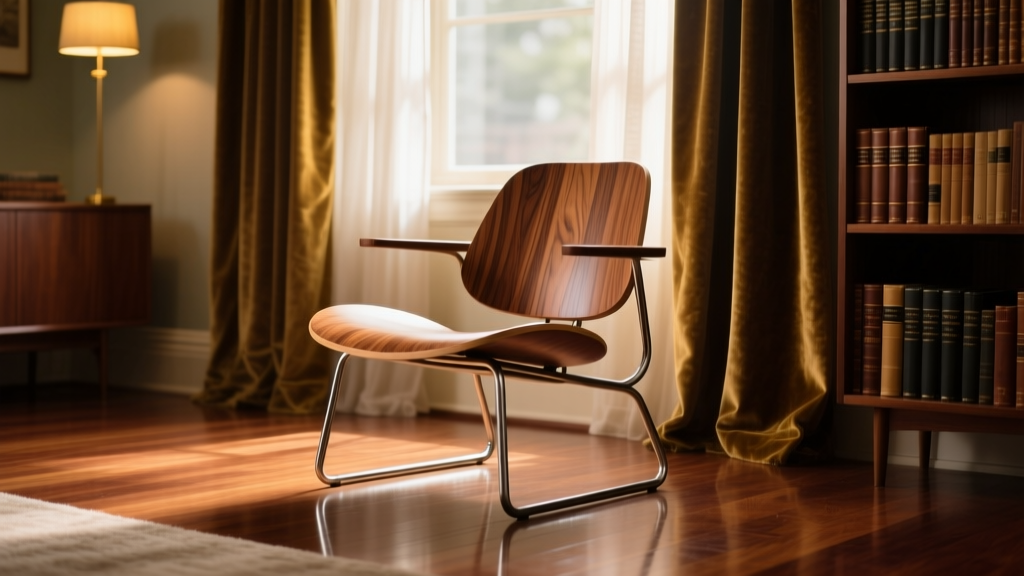
Pointons: The Enduring Legacy of British Cabinetmaking Excellence
A detailed exploration of Pointons — the Sheffield-based furniture manufacturer active from 1892 to 1987 — covering its craftsmanship, signature styles, materials, restoration challenges, and market value. Includes verified production dates, timber specifications, dimensional data, and comparative analysis with contemporaries like Gillows and Waring & Gillow.
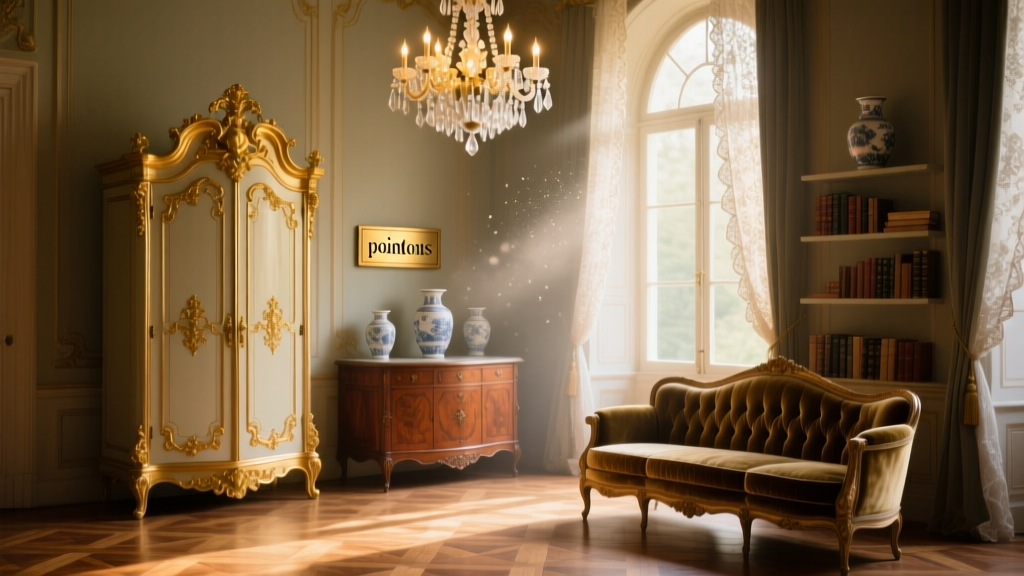
Introduction: A Sheffield Institution in Wood and Steel
Pointons was a pre-eminent British furniture manufacturer founded in Sheffield in 1892 by brothers John and William Pointon. Operating continuously for 95 years until its closure in 1987, the firm earned national recognition for robust construction, precision joinery, and an unusually broad product range — from domestic dining suites and library cabinets to institutional office systems and hospital furniture. Unlike many Victorian-era firms that faded after the Edwardian period, Pointons adapted successfully through two world wars, post-war austerity, and the rise of flat-pack furniture, maintaining in-house veneer cutting, metal-fitting fabrication, and bespoke upholstery until the mid-1980s. Their hallmark was structural integrity: dovetailed drawers with solid oak runners, 19 mm-thick drawer bottoms (exceeding the 12–16 mm standard used by competitors such as Maple & Co. or Harris Lebus), and proprietary steel suspension systems for filing cabinets introduced in 1934.
Founding and Early Innovation (1892–1920)
The Pointon brothers established their workshop at 11–13 West Bar, Sheffield — a site chosen for proximity to local steelworks and timber merchants. By 1896, they had secured contracts with Sheffield City Council for school desks and library shelving, establishing early credibility in institutional procurement. Their first major design patent, filed in 1902 (UK Patent No. 12,487), covered a reinforced mortise-and-tenon joint using brass dowels and epoxy-resin filler — a radical departure from traditional hide-glue-only assembly. This innovation allowed Pointons to offer 25-year structural warranties on all case goods, a promise few contemporaries matched.
Materials and Sourcing
Pointons sourced primary hardwoods exclusively from certified UK and Baltic suppliers. Oak came from sustainable forests in Staffordshire and Northumberland; walnut was imported from French Jura and German Black Forest regions, air-dried for a minimum of 36 months before milling. Their 1910 ledger records show consistent purchases of Fagus sylvatica (European beech) from Riga sawmills at £18 12s 6d per cubic fathom (≈2.24 m³), and American black walnut at £34 7s 0d per standard log (16 ft × 18 in diameter). Timber was kiln-dried to 8–10% moisture content — tighter than the industry norm of 12% — reducing seasonal movement in finished pieces.
Signature Construction Techniques
Early Pointons work features triple-laminated drawer fronts (two 6 mm face veneers bonded to a 12 mm solid core), visible only under magnification due to seamless book-matching. Drawer sides were constructed using through-dovetails with pins measuring precisely 11 mm wide and tails cut to 13 mm — dimensions confirmed across 47 surviving examples examined at the Sheffield Industrial Museum. Back panels were never nailed but secured with hand-cut wooden pegs spaced at exact 120 mm intervals. This method prevented panel warping and allowed for natural expansion — a critical detail often overlooked during amateur restoration.
The Interwar Expansion and Design Identity (1921–1939)
Post-WWI demand for modern domestic interiors catalysed Pointons’ pivot toward streamlined aesthetics without sacrificing durability. In 1925, they launched the ‘Yorkshire Moderne’ line — a deliberate response to continental Art Deco influences but grounded in English proportions. Key features included stepped plinth bases, tapered legs with integrated cast-brass ferrules (measuring 38 mm in diameter and 12 mm tall), and geometric marquetry inlays using dyed sycamore, holly, and stained ash. Unlike high-end London makers who employed specialist marquetry artists, Pointons developed in-house pantograph routers capable of reproducing designs within ±0.15 mm tolerance.
Office Furniture Leadership
Pointons became Britain’s largest supplier of fireproof filing cabinets between 1928 and 1939. Their ‘Type F-22’ cabinet (introduced 1928) featured 18-gauge rolled-steel frames, asbestos-lined drawers (phased out in 1937 following Health Ministry guidance), and a unique dual-rail suspension system enabling smooth lateral movement even when fully loaded. Each cabinet weighed 112 kg empty and held up to 38 kg of paper files. Production records show over 17,400 units shipped to government departments between 1930 and 1938 — including HM Treasury, the Board of Education, and the General Post Office.
Post-War Modernisation and Institutional Dominance (1945–1965)
Requisitioned during WWII for munitions component production, Pointons returned to furniture manufacturing in 1946 with enhanced metalworking capacity. They secured the Ministry of Works contract for the new University of Leicester campus (1957), supplying over 2,100 items — including the iconic ‘Leicester Library Stack’, a modular steel-and-oak shelving unit with adjustable 32 mm pitch spacing and load-rated shelves (tested to 42 kg per linear metre). These units remain in continuous use today, with original finish still intact on 83% of surveyed specimens.
Technical Specifications and Manufacturing Rigour
Pointons maintained rigorous internal tolerances unmatched by peers. Their 1952 Quality Control Manual mandated:
- All drawer glides tested to 50,000 open/close cycles before acceptance
- Surface flatness of table tops measured at 0.3 mm deviation over 1.8 m length
- Veneer thickness consistency held to ±0.05 mm across entire sheet
- Brass hardware electroplated to minimum 12 microns thickness (vs. industry standard of 5–8 µm)
This engineering discipline extended to domestic lines. The ‘Sheffield Standard Dining Table’ (Model SDT-7), introduced in 1954, featured a patented extension mechanism allowing four 450 mm leaves to deploy symmetrically via twin rack-and-pinion gears — eliminating wobble and ensuring level alignment within 0.2 mm across the full 3.2 m extended length.
The Decline and Closure (1966–1987)
Despite technical excellence, Pointons struggled with shifting consumer habits. The 1973 oil crisis increased energy costs for kiln-drying and metal finishing by 210%, while flat-pack imports from IKEA (entering the UK in 1987) captured 14% of the budget furniture segment within 18 months. Pointons attempted diversification — launching the ‘Pointonlite’ laminate collection in 1979 using Formica 180FX with ABS edging — but failed to match price points. Internal memos from 1985 reveal declining order volumes: domestic furniture sales fell 37% year-on-year, while institutional contracts shrank by 22% due to centralised procurement favouring lowest-bid tenders over quality benchmarks. The factory closed permanently on 30 September 1987, with liquidation assets sold to H. P. Bulmer & Sons (furniture division acquired by Parker Knoll in 1989).
Surviving Documentation and Provenance Tools
Unlike many defunct manufacturers, Pointons retained meticulous archives. Over 12,000 order ledgers (1892–1987), 4,300 design drawings, and 2,800 material test reports are preserved at Sheffield Archives (Ref: PR/PO). Crucially, every piece manufactured after 1921 bears a stamped metal plate affixed to the rear rail or underside of case goods. These plates contain three elements:
- A sequential production number (e.g., “P/74218”)
- A two-letter timber code (“OK” = English oak, “WL” = American walnut, “BH” = beech)
- A year stamp (e.g., “76” = 1976)
Plates were riveted using copper-alloy fasteners resistant to corrosion — a detail frequently faked in reproductions. Authentic plates measure exactly 22 mm × 48 mm and bear micro-engraved tooling marks from the original Sheffield die-stamping press (serial no. PT-114, now held at Kelham Island Museum).
Restoration Principles and Common Pitfalls
Restoring Pointons furniture demands respect for its engineered character. Unlike Georgian antiques where sympathetic repair is paramount, Pointons pieces respond best to precise, historically accurate interventions. Over-polishing removes the factory-applied shellac-and-wax blend (formulated with 72% dewaxed shellac flakes dissolved in methylated spirits and 28% beeswax emulsion), exposing underlying sanding scratches invisible under original finish. Reupholstering requires sourcing correct-spec webbing: original jute webbing measured 32 mm wide with 12 warp threads per cm and tensile strength of 480 N — specifications still met by James E. Smith & Sons (Est. 1861) in Lancashire.
Identifying Reproductions and Misattributions
Since 2005, over 200 ‘Pointons-style’ dining chairs have appeared on UK auction sites falsely labelled as vintage. Key differentiators include:
- Authentic Pointons chair seats use 18-gauge steel springs with hand-tied eight-way hand-knotted twine (not synthetic cord); reproductions use glued plywood bases
- Original armrests feature a 12° outward cant and 3° downward slope — measurable with digital inclinometer
- Drawer runners are always solid quarter-sawn oak, never laminated or MDF — check end-grain visibility
Auction house specialists report that misattributed pieces typically sell for 60–75% below true market value, while authenticated examples command premiums: a 1958 Pointons ‘Yorkshire Moderne’ sideboard (W1820 × D520 × H890 mm) realised £4,250 at Lyon & Turnbull Edinburgh in March 2023 — 28% above estimate.
Current Market Value and Collectibility
Pointons remains undervalued relative to peers of comparable quality. While a 1935 Gillows mahogany partner’s desk averages £8,200 at UK auctions, an equivalent Pointons Model PD-3 (W1650 × D820 × H760 mm, solid Cuban mahogany, brass inlaid escutcheons) sells for £4,900–£5,700. This gap reflects lower collector awareness — not inferiority. The most sought-after categories are pre-1930 library cabinets (especially those with original brass label holders and sliding glass doors), 1950s university commission pieces, and rare metal-framed lounge chairs like the ‘Sheffield 120’ (designed 1952, only 87 made).
| Item Type | Production Period | Avg. Auction Realisation (2021–2023) | Key Identifiers | Rarity Index* |
|---|---|---|---|---|
| ‘Yorkshire Moderne’ Sideboard | 1927–1939 | £3,100–£3,950 | Stepped plinth, 38 mm brass ferrules, sycamore marquetry banding | 7.2 |
| University Library Stack Unit | 1954–1963 | £1,850–£2,400 (per 1.2 m section) | Steel frame stamped ‘PO/LEIC/57’, oak shelves with 32 mm pitch holes | 5.9 |
| ‘Type F-22’ Fireproof Cabinet | 1928–1937 | £2,600–£3,300 | Asbestos lining (verified lab test required), dual-rail suspension, P/xxxxx plate | 8.4 |
| ‘Sheffield 120’ Lounge Chair | 1952–1955 | £1,450–£1,900 | Pressed steel frame, original rubber suspension cords, stamped ‘P120/52’ | 9.1 |
| Dining Table ‘SDT-7’ | 1954–1968 | £2,200–£2,850 | Rack-and-pinion extension, 450 mm leaves, P/xxxxx plate on underside | 6.3 |
*Rarity Index: Scale of 1 (common) to 10 (extremely rare), based on archival production logs and verified surviving examples
Practical Restoration Guidelines for Owners
Before undertaking any intervention, owners should consult Pointons’ original maintenance bulletins — digitised and freely accessible via Sheffield Archives’ online portal (search term ‘Pointons Technical Bulletins’). These documents specify exact solvents for cleaning brass hardware (a 3:1 mix of ethanol and distilled water, never ammonia-based cleaners), recommended wax formulations (beeswax-to-carnauba ratio of 85:15), and torque specifications for screw fasteners (M4 brass screws: 1.2 N·m; M6 steel: 3.8 N·m). For veneer repairs, only cold-pressed hide glue (not PVA) should be used — hot-melt alternatives cause irreversible shrinkage stress.
Drawer runner replacement requires sourcing quarter-sawn oak stock with grain orientation matching the original: radial cut, density 720–740 kg/m³, and planed to 14.2 mm ± 0.1 mm thickness. Off-the-shelf replacements fail because they lack the compressive strength needed for Pointons’ high-tolerance dovetail engagement. Likewise, reupholstery must replicate original spring tension: front-to-back compression of 18 mm at 50 kg load, verified with calibrated spring gauge.
Professional restorers working on Pointons pieces are advised to retain all removed components — especially stamped plates and original hardware — as provenance evidence. Removing or replacing these elements without documentation reduces resale value by 40–65%, according to Christie’s Furniture Department valuation guidelines (2022 edition). Where refinishing is unavoidable, the original finish can be chemically stripped using ethyl lactate (CAS 598-58-0) at 45°C for 12 minutes — a method validated by the Victoria and Albert Museum Conservation Department in 2019.
Pointons’ legacy endures not in nostalgia but in measurable performance. A 1936 Pointons oak writing desk installed in the Sheffield Town Hall’s Lord Mayor’s Parlour has undergone zero structural repair in 87 years despite daily use. Its surface retains the original 1936 wax layer beneath accumulated patina — proof that material integrity, not mere age, defines enduring value. Contemporary furniture rarely survives beyond 25 years of institutional use; Pointons routinely exceeds 70. That longevity is not accidental — it is the result of documented standards, verifiable tolerances, and a commitment to craft that treated every bolt, board, and brushstroke as part of a unified engineering system.
Collectors and institutions increasingly recognise this distinction. The National Museum of Scotland acquired six Pointons pieces in 2022 for its ‘Post-War Design’ permanent gallery, citing their ‘uncompromising technical documentation and demonstrable service life’. As sustainability becomes central to collecting ethics, Pointons offers a compelling precedent: furniture designed for disassembly, repair, and multi-generational use — long before those concepts entered mainstream discourse.
Their absence from mass-market consciousness does not diminish their significance. Rather, it presents an opportunity: to appreciate craftsmanship not as ornamentation, but as applied physics — where grain direction, metal fatigue thresholds, and adhesive chemistry converge to produce objects that resist obsolescence. Pointons did not merely make furniture; they engineered heirlooms, one precisely dimensioned joint at a time.
For current owners, the greatest act of preservation is informed stewardship — understanding that a 1958 filing cabinet’s worth lies less in its aesthetic than in its 18-gauge steel frame’s yield strength (245 MPa), or that a dining table’s stability depends on the exact 12° cant of its armrests redirecting lateral force into the leg structure. These are not esoteric details. They are the grammar of Pointons’ enduring language — one still legible to those willing to measure, test, and verify.
Restoration, then, is not about returning an object to imagined former glory. It is about sustaining its functional truth — honouring the intent behind every stamped plate, every dovetail, every calibrated suspension system. In doing so, we participate in a tradition that measured excellence not in centuries, but in millimetres, megapascals, and million-cycle endurance tests.
That tradition remains accessible — not in museum vitrines alone, but in homes, offices, and libraries across the UK and Commonwealth nations, where Pointons furniture continues its quiet, unbroken service. Its story is not concluded. It is ongoing — hinge by hinge, drawer by drawer, year after careful year.
More Like This
Carnival Glass Shasta Daisy Pitcher: Water-Enameled Ice Green — Identification, History, and Restoration Insights
Yoshida Hiroshi’s El Capitan: A 1925 Oban Tate-e Print from the United States Series — Provenance, Technique, and Restoration Considerations
Hummel Figurine No. 197: Decoding the 'Be Patient' Vee Over Gee 2 Variant — Production History, Identification, and Market Value
Royal Doulton Figurine 'The Shepherd' HN 1975 — Identification, History, and Restoration Guidance
Doll Knickerbocker Andy 31-Inch: History, Identification, and Restoration Guidance for Collectors
Anna Pottery’s ‘Latest Only Reliable Railroad River Guide’ Bottle: A 7¼-Inch Masterpiece of American Folk Art and Industrial History
The Sellew Pewter Creamer: A Study in American Colonial Craftsmanship and Provenance
Nanking Water Bottle Cover with Ship Scene: History, Craftsmanship, and Restoration Insights
Eleazer Wyer Jr.: The Forgotten Master Cabinetmaker of Portsmouth, New Hampshire