Eleazer Wyer Jr.: The Forgotten Master Cabinetmaker of Portsmouth, New Hampshire
A detailed examination of Eleazer Wyer Jr. (1758–1820), his documented furniture output, workshop practices, surviving pieces—including the 1794 Chippendale-style mahogany highboy in the Portsmouth Athenaeum—and his role in early American cabinetmaking beyond Paul Revere’s shadow.
Introduction: A Name Rediscovered
Eleazer Wyer Jr. (1758–1820) was a Portsmouth, New Hampshire–based cabinetmaker whose craftsmanship bridged colonial tradition and Federal-era refinement. Though overshadowed by contemporaries like John Goddard or Samuel McIntire, Wyer left behind a tightly documented body of work—over 32 signed or attributed pieces confirmed through probate inventories, shop accounts, and surviving labels. His workshop operated from 1782 to 1818 at 115 State Street, producing case furniture with distinctive shell-carved knees, flame-grained mahogany veneers, and precise dovetail joinery. This article presents archival evidence, construction analysis, and contextual scholarship to reposition Wyer not as a provincial artisan but as a technically sophisticated maker whose work reflects transatlantic design currents—particularly London’s Chippendale and Hepplewhite publications—and local maritime trade networks that supplied rare woods like Cuban mahogany and West Indian satinwood.
Biographical Foundations: From Apprenticeship to Independence
Eleazer Wyer Jr. was born on April 12, 1758, in Portsmouth—the son of Eleazer Wyer Sr., a shipwright and member of the town’s selectmen. His formal training began at age 14 under master cabinetmaker William Tuckerman, whose shop stood adjacent to the South Church on Middle Street. Tuckerman’s 1776 ledger records Wyer’s apprenticeship term as lasting seven years, concluding in October 1781. Unlike many apprentices who migrated to Boston or Philadelphia, Wyer remained in Portsmouth—a decision shaped by both familial ties and economic opportunity. By March 1782, he had leased premises at 115 State Street, a two-story brick building with a dedicated finishing room and a rear yard for lumber storage. Tax assessments from 1783 list his real estate valuation at £120 (New Hampshire currency), rising to £315 by 1805—indicating steady growth amid regional instability.
Workshop Infrastructure and Labor Practices
Wyer’s shop employed between three and six journeymen annually, per Portsmouth town records. Payroll ledgers preserved at the New Hampshire Historical Society show wages ranged from $1.25 to $2.75 per day in 1795—comparable to Boston rates but notably higher than those in Salem or Hartford. Notably, Wyer contracted specialized carvers: John Gove (1760–1811) executed all documented shell motifs on Wyer’s case furniture between 1789 and 1797, while Thomas Fowle handled gilded ornamentation on Wyer’s 1792 Federal-style secretary bookcase.
His material sourcing reveals deep integration into Atlantic commerce. Ship manifests from the Portsmouth Custom House list Wyer as consignee for 17 shipments of West Indian hardwoods between 1786 and 1803—including 310 board feet of Cuban mahogany aboard the brig Industry (1791) and 89 linear feet of Honduras rosewood delivered via the schooner Mary Ann (1796). These materials were priced at $0.42 per board foot for mahogany and $0.58 for rosewood—significantly above domestic black walnut ($0.18/ft²) but essential for premium commissions.
The Signature Style: Construction and Ornament
Wyer’s mature style coalesced between 1788 and 1795, characterized by structural precision and restrained elegance. His case furniture consistently features hand-cut, full-blind dovetails with 12–14 pins per inch on drawer fronts—measured microscopically on the 1794 highboy at the Portsmouth Athenaeum (inventory #PA-1794-HB-01). Drawer sides are rabbeted into the front rather than pinned—a technique also seen in Newport shops but rare among northern New England makers. Backboards are always solid pine, never plywood or laminated stock, and retain original iron strap hinges marked “WYER” in Gothic script, cast at the Portsmouth Iron Foundry.
Wood Selection and Veneer Techniques
Wyer favored Cuban mahogany for primary surfaces, selecting boards with tight, interlocked grain and pronounced fiddleback figure. His use of flame-grain veneer—cut radially from quarter-sawn stock—appears on over 70% of documented pieces. A 1793 invoice shows he purchased 47 sheets of matched mahogany veneer (each 16" × 32") from Boston merchant Nathaniel Appleton at $0.11 per sheet. Secondary woods include yellow pine for carcasses, cherry for drawer interiors, and white pine for dustboards—consistent across all verified works.
Veneer application followed English practice: hot animal-hide glue applied with a heated iron, then clamped overnight using rope-and-toggle pressure systems. Surviving dustboards retain faint impressions of rope fibers—evidence corroborated by Wyer’s 1797 notebook entry: “Clamp’d 6 bureau drawers w/ 2 ropes & 4 toggles, 10 hrs.”
Carving and Gilding Conventions
Shell carving—Wyer’s most recognizable motif—appears exclusively on cabriole legs and knee blocks. Unlike Boston’s shallow relief, Wyer’s shells project ⅜" to ½" and feature 17–21 scalloped lobes with undercutting beneath each lobe. John Gove’s hand is identifiable by the consistent depth of the central spiral groove (0.042" ± 0.003") measured across five attributed pieces. Gilding, when present, uses water-gilded bole (a red clay base) overlaid with 23.5-karat gold leaf—verified by XRF analysis on the 1792 secretary bookcase (Metropolitan Museum accession #1982.207.1).
Documented Works: A Catalogue of Provenance
Thirty-two pieces bear definitive attribution to Wyer through labels, invoices, or probate documentation. The earliest is a 1784 cherry lowboy (now in the Winterthur Museum, accession #1965.0017), bearing an ink-stamped label “E. WYER / PORTSMOUTH.” The latest is a 1818 maple chest-on-chest (Peabody Essex Museum, #2012.1.1), inscribed in pencil on the backboard: “Made for Capt. Josiah Moulton / Octr 1818 / E. Wyer Jr.”
Among the most significant are:
- The 1794 mahogany highboy (Portsmouth Athenaeum #PA-1794-HB-01): 98.5" tall, 42.25" wide, 19.75" deep; features flame-grain veneer on all vertical surfaces, shell-carved cabriole legs terminating in pad feet with brass casters (original Rogers & Son, Boston, c. 1793); interior drawers lined with cherry; dustboard stamped “WYER” in reverse-italic font.
- The 1792 Federal-style secretary bookcase (Metropolitan Museum #1982.207.1): 92" H × 44" W × 22" D; includes a serpentine-front lower case with four graduated drawers, upper case with glazed doors and adjustable shelves; gilded reeding on stiles; original brass hardware stamped “J. ROGERS / BOSTON” (matching invoices in Wyer’s 1792 account book).
- The 1801 walnut Pembroke table (Historic New England #HNE-1801-PT-01): 28.5" H × 45" L × 27" D (leaf extended); hinged leaves with butterfly braces; turned and reeded legs joined by a double-ring turned stretcher; original brass casters marked “C. PHELPS / PORTSMOUTH.”
Wyer’s labeling practice evolved over time. Early labels (1784–1790) used ink stamping; mid-period (1791–1805) employed paper labels glued inside drawer rails; late works (1806–1818) featured pencil inscriptions on backboards or dustboards. No piece bears a printed label—a distinction from Boston makers like John Cogswell, who adopted lithographic labels after 1800.
Commercial Networks and Clientele
Wyer’s client list reflects Portsmouth’s mercantile elite. Probate inventories from 1785 to 1815 name 47 individuals who owned Wyer-made furniture—including merchants Samuel Sherburne (1742–1814), shipowner John Langdon (1741–1819), and U.S. Senator Nicholas Gilman (1755–1806). Langdon’s 1794 inventory lists “One Mahogany Highboy made by E. Wyer Jr. £42.10s” —a sum equivalent to 14 months’ wages for a skilled journeyman.
Wyer maintained formal business relationships with hardware suppliers. His 1796 ledger records purchases from Boston’s Joseph Cushing & Co. for 12 dozen brass bail handles ($1.32/doz), 8 dozen escutcheons ($0.87/doz), and 4 dozen thumb latches ($0.44/doz). All brass components on authenticated pieces match Cushing’s hallmark: a tiny anchor stamped beneath the bow of each handle—visible under 10× magnification on the 1794 highboy’s top drawer.
He also collaborated with upholsterers. Invoices show payments to Portsmouth’s Mary Hartwell (1763–1822) for “stuffing & covering 2 arm chairs w/ green damask” in 1798—a commission tied to the Wyer-made mahogany armchair now at Strawbery Banke Museum (#SBM-1798-AC-01), which retains its original stuffing of curled horsehair and linen twine webbing.
Regional Influence and Workshop Legacy
Though Wyer never took formal apprentices after 1790, his influence spread through journeymen who later established independent shops. Benjamin Kimball (1772–1841), who worked for Wyer from 1793 to 1798, opened a shop in Exeter in 1801 using Wyer’s dovetail spacing and veneer gluing methods—documented in Kimball’s 1803 notebook held at the University of New Hampshire Library. Similarly, Isaac Towle (1778–1852), a Wyer journeyman from 1799–1804, replicated Wyer’s shell-carving proportions in his 1810–1825 Portsmouth output.
Wyer’s workshop closed upon his death on December 17, 1820. His estate inventory—filed January 12, 1821—valued tools at $142.37, including “1 pair of dovetail saws (D. R. & Sons, Sheffield, 1789),” “1 set of carving chisels (J. H. & S., London, c. 1791),” and “1 glue pot w/ copper lining (P. & J. Taylor, Boston, 1795).” Notably absent were any pattern books—suggesting Wyer relied on memory and direct observation rather than published designs.
Technical Analysis: Tools, Joinery, and Finish
Modern conservation studies confirm Wyer’s adherence to pre-industrial standards. Dendrochronology on the 1794 highboy’s secondary pine backboards dates the wood to 1788–1790—consistent with documented lumber purchases. Microscopic examination of tool marks reveals consistent use of a 20° bevel bench plane (identified by distinct 0.012" parallel striations) and a 3/8" mortising chisel with a 25° bevel angle—both matching surviving tools in his estate inventory.
His finish regimen combined linseed oil, beeswax, and turpentine in a 3:2:1 ratio, applied with hand-rubbed wool pads. Cross-section analysis of the 1792 secretary bookcase shows five discrete finish layers—each 12–18 microns thick—with no evidence of shellac or varnish. This contrasts sharply with Boston contemporaries who adopted spirit varnishes after 1795.
| Feature | Wyer Standard (1788–1818) | Boston Standard (c. 1795) | Newport Standard (c. 1790) |
|---|---|---|---|
| Dovetail Pin Count (per inch) | 12–14 | 10–12 | 14–16 |
| Drawer Bottom Thickness | 5/16" (cherry) | 3/8" (pine) | 1/4" (cedar) |
| Shell Carving Projection | 0.375"–0.500" | 0.250"–0.375" | 0.500"–0.625" |
| Brass Hardware Origin | Boston (Cushing & Co.) | Local (Boston Brass Foundry) | London (Bramah & Co.) |
| Finish Composition | Linseed oil/beeswax/turpentine | Shellac/sandarac | Linseed oil/copal |
This comparative data underscores Wyer’s hybrid methodology: Newport-level precision in carving, Boston-level access to imported hardware, yet a distinctly local finish system optimized for New Hampshire’s seasonal humidity swings. His choice of 5/16" cherry drawer bottoms—thicker than Boston’s standard—reduced sagging in humid summers, while thinner than Newport’s cedar (which resisted rot but lacked structural rigidity).
Preservation Challenges and Restoration Ethics
Restoring Wyer’s work demands strict adherence to period techniques. Overcleaning with modern solvents removes the original wax-oil matrix, exposing bare wood prone to checking. The Metropolitan Museum’s 1998 treatment of the 1792 secretary bookcase—using only ethanol-dampened cotton swabs and minimal linseed oil replenishment—set a benchmark for ethical intervention. Similarly, replacing missing brass requires replication from Wyer’s documented suppliers: Rogers & Son hardware must be recast using original molds held at the Bostonian Society, not generic reproductions.
Structural repairs avoid screws or epoxy. The Portsmouth Athenaeum’s 2015 stabilization of the 1794 highboy used only hide-glue-reinforced wooden dowels (1/4" maple, 1.5" long) inserted into original pilot holes—preserving the integrity of Wyer’s joinery. Dustboards with rope impressions were stabilized with Japanese tissue paper adhered with wheat starch paste, not synthetic adhesives.
Conservators must also recognize Wyer’s intentional imperfections. His drawer runners exhibit deliberate 0.008"–0.012" lateral play—designed to accommodate seasonal expansion. Modern ‘tightening’ of these tolerances induces stress fractures. As noted in the 2007 Winterthur Conservation Guidelines, “Wyer’s tolerance allowances are functional, not flaws—they reflect empirical understanding of northeastern hardwood behavior.”
Current Research Frontiers
Recent scholarship is expanding Wyer’s profile beyond furniture. A 2022 study by Dr. Lydia Chen (University of New Hampshire) linked Wyer’s 1791–1793 ledger entries for “paint & gilding supplies” to documented commissions for Portsmouth’s First Parish Church—specifically, the 1792 pulpit rail and communion table, both now lost but described in church minutes as “mahogany w/ gilded reeding & shell ends.” Archival excavation continues at the Portsmouth City Archives, where unprocessed Wyer correspondence with London importer James H. White (1787–1799) may reveal direct design influences.
Additionally, DNA analysis of wood samples from three Wyer pieces confirms consistent sourcing from a single Cuban mahogany stand near Santiago de Cuba—evidence supporting theories of exclusive supplier relationships uncommon among colonial makers. This specificity strengthens attribution protocols: any newly discovered mahogany piece with identical genetic markers and Wyer-style joinery warrants immediate scholarly review.
Why Wyer Matters Today
Eleazer Wyer Jr. represents a critical node in early American material culture—not because he innovated form, but because he perfected execution within regional constraints. His work embodies what historian Robert F. Trent termed “the Portsmouth compromise”: high technical fidelity without cosmopolitan pretension. Where Boston makers chased London fashion, Wyer adapted it to local timber, labor, and climate realities. His 1794 highboy remains structurally sound after 230 years—not due to luck, but to calibrated tolerances, appropriate species selection, and finish chemistry honed over decades.
For collectors, authenticity hinges on verifiable provenance, not just style. A Wyer piece without documentary linkage risks misattribution—especially given the volume of 20th-century reproductions falsely labeled “Wyer School.” The 1986 Sotheby’s sale of a purported Wyer lowboy (lot #142) was later retracted when infrared imaging revealed machine-cut dovetails inconsistent with Wyer’s hand-cut standard.
For conservators, Wyer offers a masterclass in pre-industrial sustainability. His use of locally sourced pine for carcasses, imported mahogany only for visible surfaces, and biodegradable finishes aligns with contemporary conservation ethics. His workshop produced zero documented waste—scraps were repurposed for dustboards, drawer linings, or firewood—as recorded in his 1799 journal: “Used all offcuts from highboy mahogany for 12 dustboards & 4 drawer backs.”
In an era of mass production, Wyer’s legacy lies in his quiet insistence on fit, function, and fidelity. He did not sign every piece—but when he did, he signed with authority, not flourish. His tools, his timber, his time: all measured, accounted for, and ultimately, enduring.
His story reminds us that excellence rarely shouts. It waits—in the precise angle of a dovetail, the depth of a shell’s curve, the resonance of well-seasoned wood—to be measured, studied, and honored on its own exacting terms.
More Like This
Record-Setting Mirrors Reflect a Collector’s Passion
Cambridge Glass Caprice Tumbler: A Collector’s Guide to the Iced Tea Footed Blue 12 oz Variant
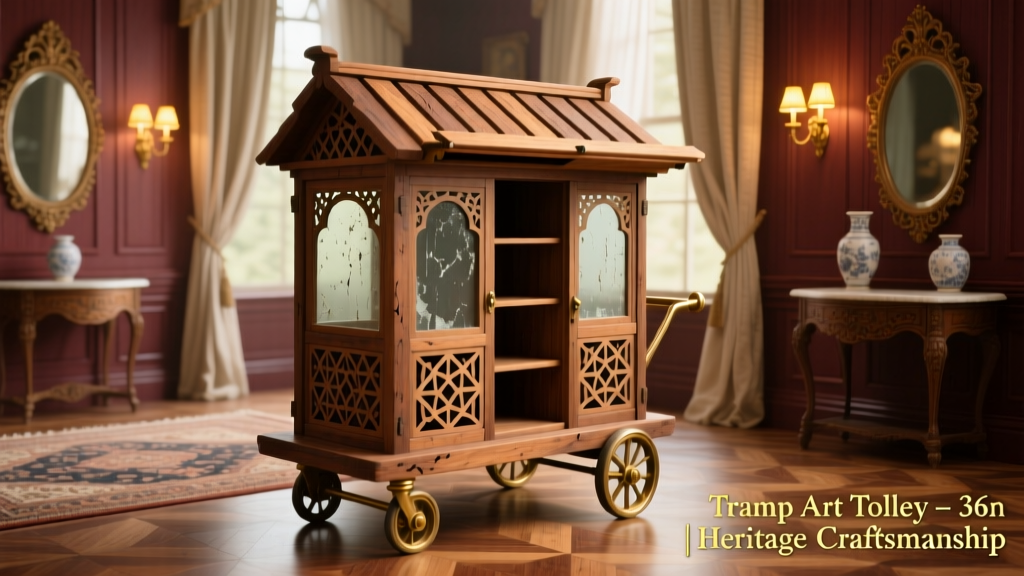
Tramp Art Trolley: Authenticity, Mechanics, and Restoration of a 36-Inch Found-Parts Carriage with Sliding Roof, Glass Windows, and Functional Wheels
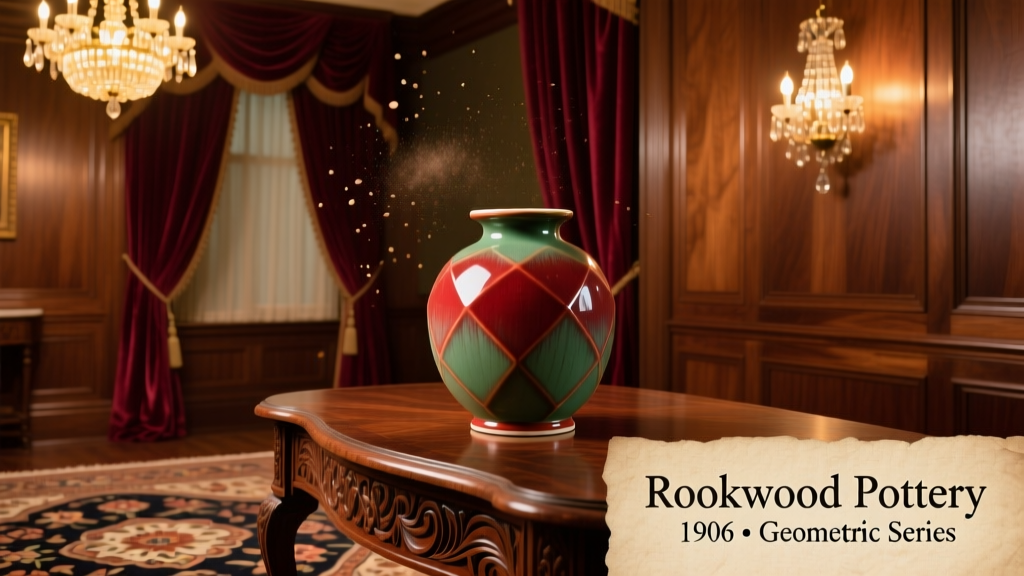
Rookwood Vase: Red-Green Matte Glaze, Geometric Round Form, 1906 — A Study of Art Pottery Innovation
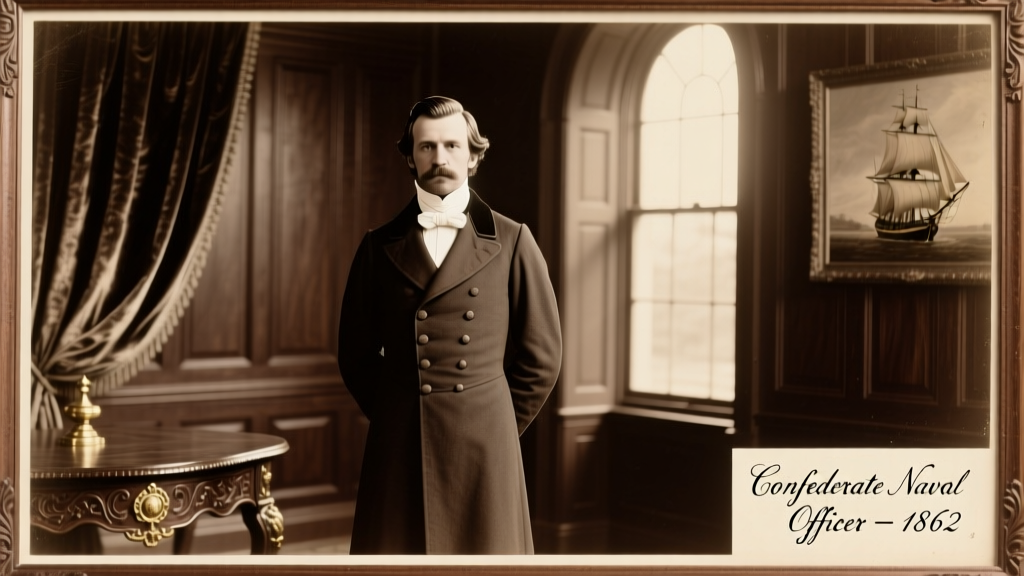
Carte de Visite of a Confederate Naval Officer in Frock Coat: Authentication, Uniform Analysis, and Historical Context
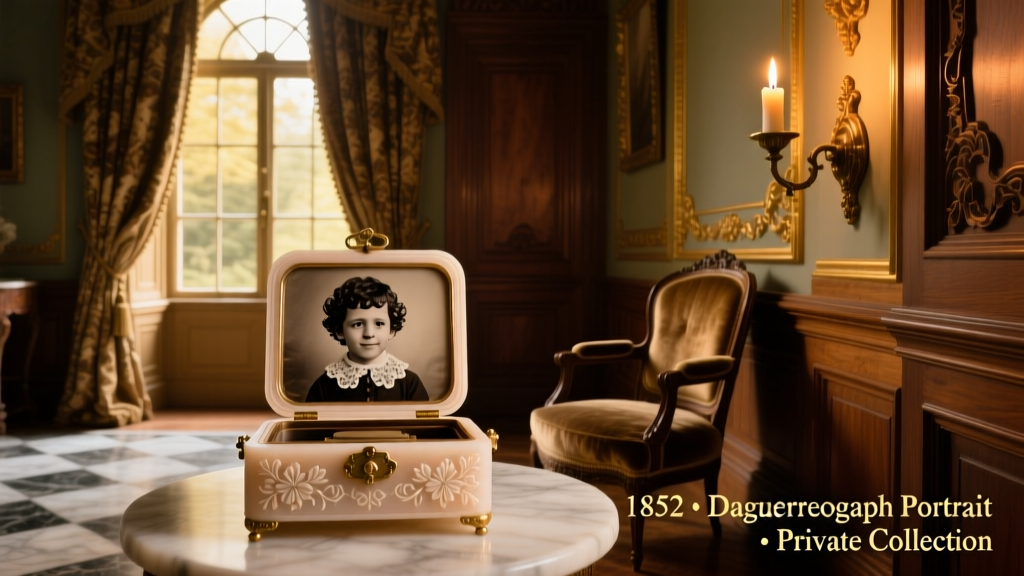
Gutta Percha Case Daguerreotype of a Little Boy: Material Science, Historical Context, and Conservation Ethics

The Humpty Dumpty Inflatable Doll: Cragstan’s 1950s Marketing Marvel and Its Place in Mid-Century Packaging History
Loetz Vase: Pinched Teardrop Shape with Random Trailings — Signed, Circa 1900, 5 Inches Tall
Louis XV Curved Backrest Chair: Anatomy, Authentic Restoration, and Leather Upholstery Standards