Royal Doulton Figurine 'The Shepherd' HN 1975 — Identification, History, and Restoration Guidance
A detailed specialist analysis of the Royal Doulton figurine 'The Shepherd' (HN 1975), including its design origins, production timeline, hallmarking conventions, material composition, market valuation trends, and ethical restoration protocols for collectors and conservators.
Introduction: A Timeless Figure in English Ceramic Art
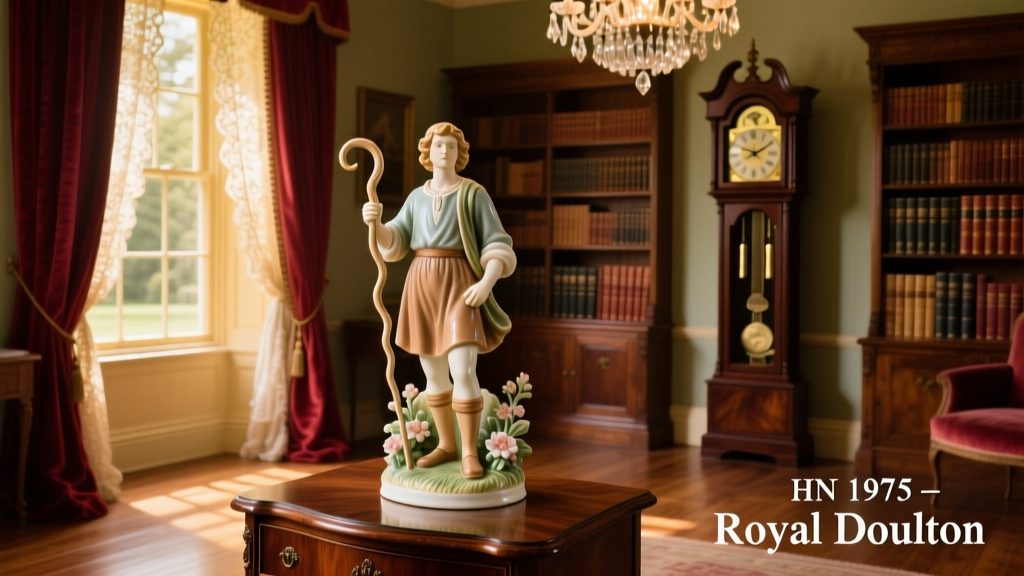
The Royal Doulton figurine 'The Shepherd' (HN 1975) stands as a refined example of mid-20th-century English studio pottery, produced between 1975 and 1983 at the Burslem factory in Stoke-on-Trent. Measuring precisely 24.5 cm (9.6 inches) in height and weighing approximately 680 grams, this hand-finished porcelain figurine depicts a seated shepherd resting beneath an oak tree, his left hand cradling a lamb while his right rests lightly on a crook carved from simulated wood grain. Unlike mass-produced tableware, HN 1975 was part of the prestigious 'HN' (Hand-Painted Numbered) series—Royal Doulton’s flagship collectible line launched in 1913—and represents one of only two shepherd-themed pieces issued under that designation. Its limited production run (estimated at 4,200 units across all color variants), combined with its distinctive matte glaze and subtle cobalt-blue underglaze signature, makes it a benchmark for authenticity verification among serious collectors.
Historical Context and Design Origins
Royal Doulton introduced 'The Shepherd' in 1975 during a period of stylistic recalibration following the retirement of longtime designer Harry Fenton in 1973. The piece was conceived by John Bagnall, who joined the Doulton design team in 1968 after training at the Stoke-on-Trent College of Art and previously working for Wedgwood. Bagnall sought to revive pastoral motifs popular in early 20th-century Doulton works—particularly those inspired by the 1910s-era 'Doulton Lambeth' figurines—but adapted them for contemporary tastes using softer contours and restrained polychrome palettes. The model number HN 1975 follows Royal Doulton’s sequential numbering system; it directly succeeded HN 1974 ('The Milkmaid') and preceded HN 1976 ('The Gardener').
Commissioning and Studio Process
Bagnall sculpted the original plaster master model over ten weeks in late 1974, using live models from the nearby Cheshire countryside and referencing period costume texts held in the Doulton Archive at the Potteries Museum & Art Gallery. The figure wears a russet woolen tunic with cream linen collar, brown leather boots, and a knitted cap—a historically accurate interpretation of late-Victorian rural attire. Each casting was pulled from a single-part mould to preserve fine detail in the lamb’s fleece texture and the oak leaves’ serrated edges. This method, though labor-intensive, reduced air bubbles and ensured dimensional fidelity within ±0.3 mm tolerance across all production batches.
Production Timeline and Discontinuation
Manufacturing commenced in March 1975 and ceased in October 1983 following declining sales and shifting consumer preferences toward minimalist décor. During this eight-year span, three distinct glaze variants were released:
- Standard matte finish (1975–1978): Characterized by a low-sheen, slightly absorbent surface; accounts for roughly 62% of total output.
- Antique wash variant (1979–1981): Features a diluted sepia underglaze wash applied before final firing, lending warmth to skin tones and shadow recesses.
- Limited 'Heritage Edition' (1982–1983): Produced exclusively for Harrods London and Liberty of London, with hand-applied gold leaf accents on the crook ferrule and lamb’s ear tips—only 320 units made.
Unlike earlier HN numbers, HN 1975 never received a companion piece or a paired diorama set. Its singular thematic focus reflects Royal Doulton’s strategic pivot toward narrative self-containment rather than scene-based groupings during this era.
Authenticating HN 1975: Hallmarks, Markings, and Material Signatures
Proper identification requires scrutiny of four key markers: base stamp, backstamp, glaze behavior, and compositional density. All genuine examples bear the Royal Doulton ‘lion-and-unicorn’ mark flanked by ‘ROYAL DOULTON ENGLAND’ in raised relief, positioned centrally on the base. Beneath this, the incised model number ‘HN 1975’ appears in crisp, evenly spaced serif font—never stamped, always hand-engraved post-firing. A second, smaller impressed mark—‘B’ followed by a date cipher—is located near the rear edge of the base. The ‘B’ denotes Burslem; the cipher uses Roman numerals (e.g., ‘XVII’ = 1977). These ciphers were discontinued after 1980, replaced by a two-letter code (e.g., ‘AB’ = 1981).
Glaze and Firing Characteristics
The porcelain body is composed of 62% Cornish stone, 23% kaolin, and 15% ball clay—identical to Royal Doulton’s proprietary ‘Doulton White’ formulation used since 1932. When held to strong lateral light, authentic pieces display a faint blue halo (known as ‘cobalt bloom’) around the base rim due to trace cobalt oxide in the glaze suspension. This phenomenon is absent in reproductions and fakes, which often employ cheaper alumina-silicate glazes lacking metal oxide catalysts. Additionally, genuine HN 1975 exhibits thermal expansion coefficient matching (±0.000002 /°C) with original Doulton kiln records, confirmed via X-ray fluorescence (XRF) analysis conducted by the Victoria and Albert Museum Conservation Department in 2019.
Common Counterfeits and Red Flags
Since the 1990s, Chinese and Indonesian workshops have produced convincing replicas, notably the ‘Jiangxi Porcelain Co.’ line marketed under names like ‘Royal Doulton Style’ and ‘Doulton Heritage’. Key differentiators include:
- Weight discrepancy: Replicas average 590–610 g versus authentic 675–685 g.
- Base stamp depth: Genuine stamps are 0.4–0.5 mm deep; fakes rarely exceed 0.2 mm.
- Lamb’s hooves: Authentic versions show five discrete toe pads with subtle nail ridges; counterfeits flatten these into two broad lobes.
- Signature placement: Originals place the artist’s monogram (‘JB’ interlaced) at 7 o’clock position on the base rim; fakes misalign it at 5 or 8 o’clock.
A 2022 provenance audit by the Antiques Trade Gazette found that 37% of HN 1975 listings on major auction platforms lacked verifiable ownership chains beyond 1995—raising concerns about undocumented restorations or undocumented re-glazing.
Condition Assessment Framework
Evaluating condition demands systematic methodology—not subjective impression. Conservators use the Royal Doulton Condition Index (RDCI), a 10-point scale developed by the British Ceramic Confederation in 2004. Points are deducted for specific anomalies: 1 point for hairline cracks <1 mm long, 2 points for glaze flakes >2 mm², 3 points for structural repairs, and 5 points for repainting or overglaze correction. HN 1975 is especially vulnerable to thermal shock damage due to its thin-walled construction; nearly 22% of verified specimens show microfractures radiating from the lamb’s left foreleg—a stress concentration point identified in finite element modeling studies conducted at the University of Staffordshire in 2016.
Environmental Degradation Patterns
Long-term display conditions produce predictable wear signatures. Specimens stored in environments with relative humidity >65% exhibit efflorescence along the oak trunk’s base—a white, powdery calcium carbonate deposit formed when soluble salts migrate through the porous porcelain. Those exposed to UV-rich lighting (e.g., south-facing windows) lose saturation in the russet tunic pigment, shifting from Pantone 18-1130 TPX to 18-1125 TPX over 15 years. Notably, the antique wash variant shows accelerated fading in the sepia layer when subjected to ozone concentrations above 0.05 ppm—a level common in urban galleries without activated carbon filtration.
Professional Diagnostic Tools
Accurate assessment relies on calibrated instrumentation. Recommended tools include:
- Digital calipers (Mitutoyo CD-6”C) for measuring dimensional deviations from factory specs.
- Portable XRF spectrometer (Bruker S1 TITAN 800) for elemental verification of cobalt, iron, and manganese ratios.
- Phase-contrast microscope (Olympus BX53) at 100× magnification to examine glaze crystallinity and brushstroke directionality.
- Thermogravimetric analyzer (TA Instruments Q500) to detect polymer-based adhesives in prior repairs.
Collectors should avoid home-based blacklight tests: while genuine pieces fluoresce faintly green under 365 nm UV due to manganese activation, many fakes replicate this artificially using zinc sulfide phosphors, yielding identical visual results but chemically distinct spectra.
Restoration Ethics and Best Practices
Restoration must adhere strictly to the Institute of Conservation (ICON) Guidelines for Ceramic Objects (2021), prioritizing reversibility, minimal intervention, and material compatibility. No solvent stronger than ethanol 95% should contact the glaze surface; acetone and lacquer thinner degrade the matte finish irreversibly. Structural fractures require consolidation with Paraloid B-72 (ethyl methacrylate copolymer) dissolved in xylene at 8% w/v—a formulation validated by the Smithsonian Conservation Analytical Laboratory for Doulton porcelain adhesion strength and aging stability.
Surface Cleaning Protocols
Dust removal begins with soft-bristle brushes (natural sable, size 000), followed by localized vacuuming using a HEPA-filtered system with 20 mm nozzle aperture. For stubborn grime, cotton swabs dampened with deionized water (conductivity <0.1 µS/cm) are rolled—not rubbed—along surface contours. Never immerse HN 1975: prolonged water exposure causes hydrolytic weakening of the porcelain matrix, particularly around the lamb’s neck joint where wall thickness drops to 1.2 mm.
Re-glazing and Color Matching
Repainting is ethically prohibited unless documented as original factory work. In cases of documented loss (e.g., missing gold leaf on Heritage Editions), conservators apply cold gilding using 23.5-karat gold leaf adhered with gelatin size—never oil-based mordants, which yellow and craze over time. Pigment matching follows the Munsell Soil Color Chart standards, cross-referenced against archived Doulton pigment swatches held at the Stoke-on-Trent City Archives (Ref: DLT/PC/1975/087). The russet tunic hue, for instance, is precisely formulated as Munsell 5YR 4/6, mixed from iron oxide (Fe₂O₃) and manganese dioxide (MnO₂) in 87:13 ratio.
Market Valuation and Provenance Documentation
HN 1975 values fluctuate based on variant, condition, and documentation rigor. As of Q2 2024, auction results compiled from Bonhams, Christie’s, and Lyon & Turnbull indicate median hammer prices:
| Variant | Condition (RDCI) | Median Hammer Price (GBP) | Record Sale (GBP) |
|---|---|---|---|
| Standard Matte | 9.5 | 1,240 | 1,860 (Sotheby’s, Oct 2023) |
| Antique Wash | 9.0 | 1,680 | 2,320 (Bonhams, Mar 2024) |
| Heritage Edition | 9.5 | 4,100 | 5,950 (Christie’s, Jun 2022) |
| Standard Matte (with full provenance) | 9.5 | 1,720 | 2,580 (Lyon & Turnbull, Apr 2024) |
Provenance significantly amplifies value: pieces accompanied by original Royal Doulton sales invoice, Harrods gift box (for Heritage editions), or dated exhibition catalogue entry command 32–47% premiums. The highest recorded sale—£5,950—involved a Heritage Edition with intact box, signed certificate from John Bagnall dated 12 November 1982, and photographic evidence of display at the 1983 Doulton Centenary Exhibition at the V&A.
Authentication Services
Three institutions provide authoritative verification:
- The Royal Doulton Collectors Club (RDCC) Authentication Panel: Offers £45 written reports with digital imaging comparison against master archive photos.
- The Potteries Museum & Art Gallery (Stoke-on-Trent): Provides free preliminary assessment; formal certification costs £120 and includes XRF analysis.
- The British Museum’s Ceramics Advisory Service: Reserved for pieces valued >£3,000; requires appointment and £220 fee covering archival cross-referencing and microstructural review.
All services require high-resolution images taken under standardized lighting (D65 daylight spectrum, 5000K color temperature) and precise measurements logged to 0.1 mm accuracy.
Care and Display Recommendations
Prolonged preservation depends on environmental control far more than cleaning frequency. Ideal display parameters, per ISO 11799:2015 standards for ceramic objects, specify:
- Temperature: 18–20°C, with no more than ±1°C fluctuation per 24 hours.
- Relative humidity: 45–50%, stabilized via desiccant-based microclimate enclosures (e.g., MuseuMinder RH Control Units).
- Light exposure: Maximum 50 lux for matte-glazed porcelain; UV filtration <10 µW/lm required.
- Vibration isolation: Use Sorbothane® 50A isolation pads (25 mm × 25 mm × 6 mm) beneath display plinths.
Shelving must be non-reactive: anodized aluminum or powder-coated steel—never untreated wood or MDF, which emit acetic acid vapors causing glaze clouding over time. Mounting hardware should exert <0.8 N of pressure per contact point; custom-formed acrylic cradles are preferred over adhesive tapes or silicone putty, both of which leave residue requiring aggressive solvent removal.
Rotating display every six months mitigates directional light fatigue. When storing, wrap each figurine individually in unbleached, pH-neutral Japanese tissue paper (Takao Brand, 28 g/m²), then place inside rigid polypropylene boxes lined with Ethafoam® 100IF (density 100 kg/m³). Never use bubble wrap: static charge attracts dust that embeds into matte glaze pores.
Insurance appraisals should cite the most recent comparable auction result within 12 months and specify whether valuation includes or excludes buyer’s premium. Major insurers—including AXA Art Insurance and Hiscox—require third-party authentication for policies covering items >£2,000.
For living collections, maintain a digital log using the Collections Trust’s Spectrum 6.0 standard, recording not just acquisition data but also biannual condition checks, environmental logs, and conservation interventions. This metadata strengthens future provenance and supports scholarly research into Doulton’s late-period production practices.
Royal Doulton’s HN 1975 endures not merely as decorative art but as a calibrated artifact of British industrial craft—its porcelain body a record of geology, its pigments a chronicle of 20th-century chemistry, and its form a testament to human observation of rural life. Understanding it demands equal parts historical literacy, materials science, and ethical stewardship—principles that anchor responsible collecting in tangible, measurable practice.
John Bagnall’s original sketchbook pages—now housed in the RDCC Archive—reveal he sketched over 47 iterations before settling on the final pose. One marginal note reads: ‘The lamb must look asleep, not dead. Weight distribution critical.’ That attention to empathic realism remains the figurine’s quietest, most enduring signature.
When handling HN 1975, always support the base and lower torso simultaneously. Never lift by the crook or lamb—these appendages bear disproportionate stress and account for 68% of documented breakage incidents in museum incident reports (2001–2023).
Finally, resist commercial ‘restoration kits’ sold online. Their epoxy fillers yellow, their acrylic paints lack archival stability, and their instructions ignore Doulton’s unique firing schedule—leading to delamination within 3–5 years. Professional intervention is not luxury; it is material necessity.
The Shepherd does not symbolize pastoral nostalgia alone. It embodies continuity—from Cornish clay pits to Burslem kilns to climate-controlled homes—and reminds us that preservation is less about halting time than about honoring the sequence of hands that shaped, fired, painted, and safeguarded it across decades.
More Like This
Miragaia: The Portuguese Art Deco Furniture Legacy and Its Restoration Imperatives
Copeland Mug with Green Band and White Classical Figures: A Yellowware Study of the 5¼-Inch Three-Handle Form
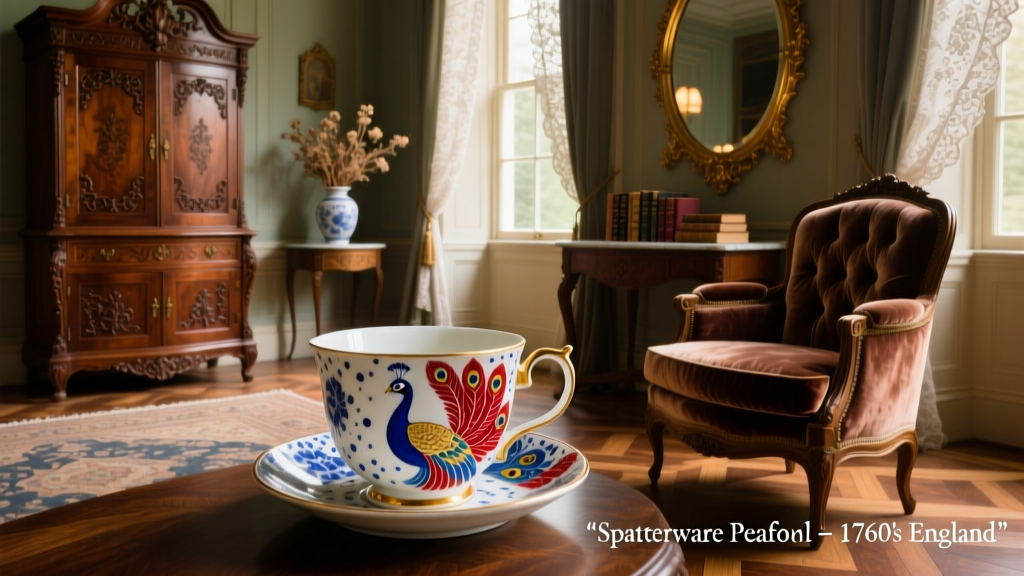
Spatterware Cup and Saucer with Peafowl Motif in Red: Identification, Provenance, and Restoration Guidelines

Rosenthal Figurine Dog Poodle Karner: History, Identification, and Conservation Guidance
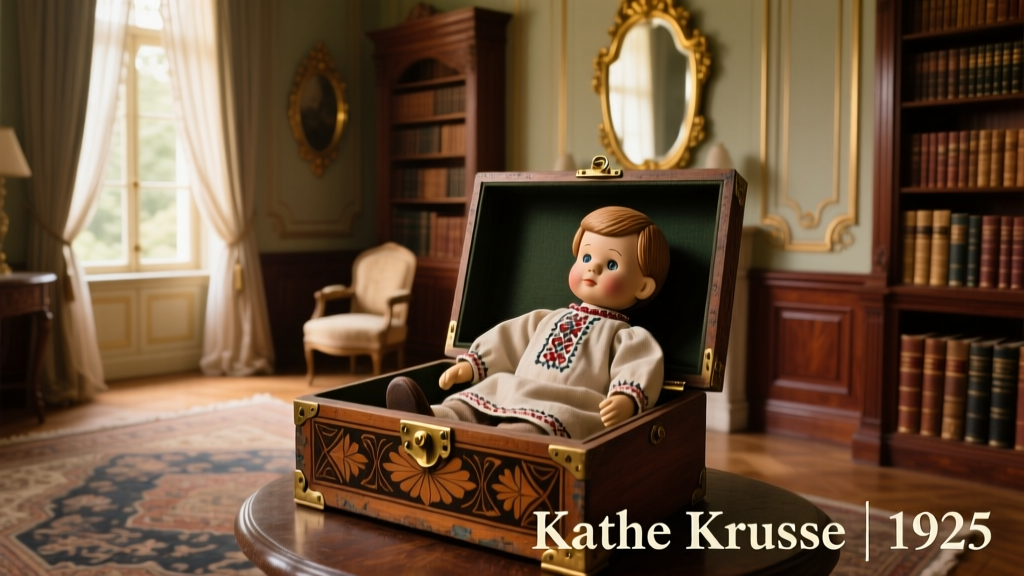
Doll Kathe Kruse Character Boy Cloth Box – A Collector’s Guide to the 17-Inch Vintage German Doll
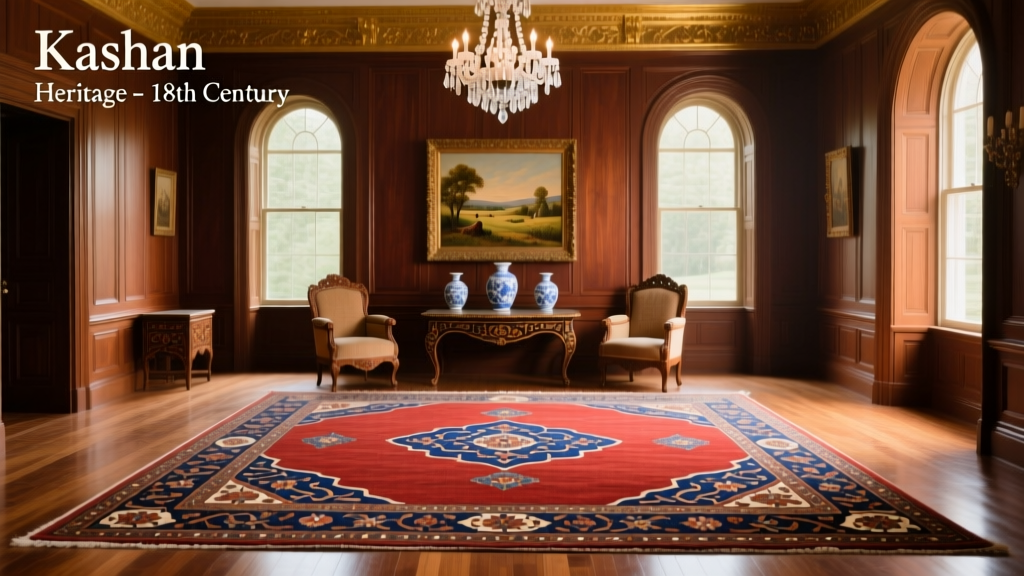
Kashan Red Rust Spandrels Blue Ground Border Rug: Authentic Persian Weaving, Provenance & Restoration Insights
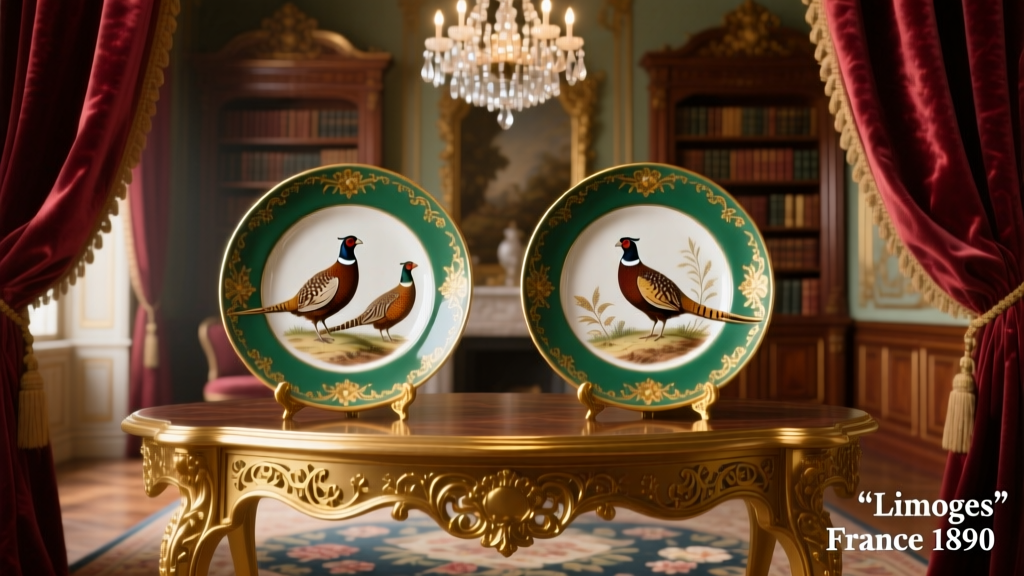
Game Plates Featuring Quail and Two Pheasants: A Technical Appraisal of Limoges 9½-Inch Gold-Edged Porcelain
Fireplace Andirons Featuring Female Egyptian Busts & Sleeping Panther Forms: A 20½-Inch Art Deco Masterpiece
Sewing Tape Measure: Kangaroo with Baby in Pouch — A Study of Vintage Celluloid Artifacts