Cut Paper in Antique Furniture: History, Techniques, and Restoration Ethics
An authoritative examination of cut paper as a decorative technique in 18th- and 19th-century furniture—covering historical origins, regional variations, material composition, conservation challenges, and ethical restoration protocols used by leading institutions including the Victoria & Albert Museum and Winterthur Museum.
What Is Cut Paper—and Why Does It Matter in Antique Furniture?
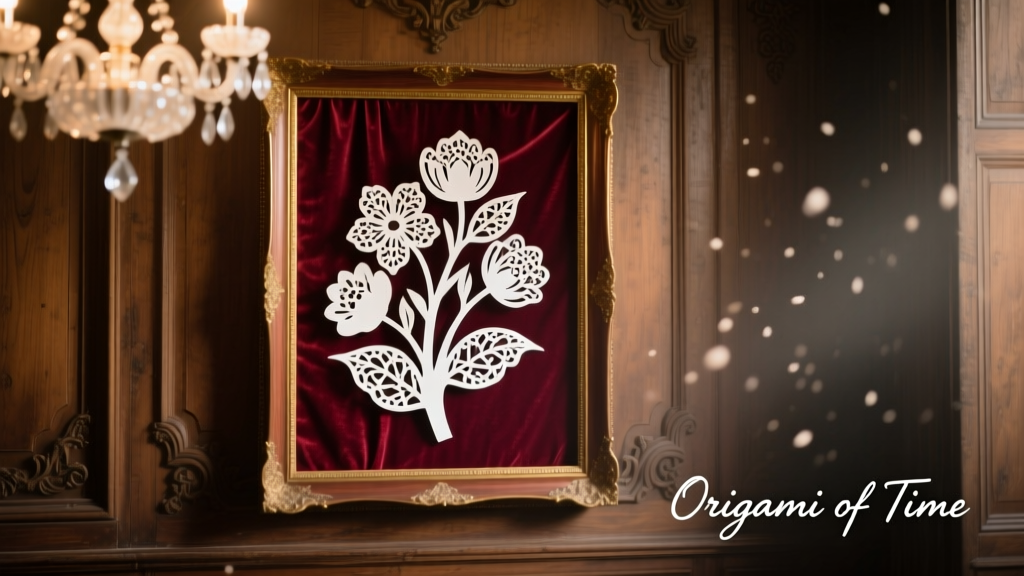
Cut paper is a historically significant decorative technique involving hand-cut or stenciled paper motifs applied to furniture surfaces—primarily cabinet doors, drawer fronts, and interior linings—between c. 1740 and 1860. Unlike marquetry or japanning, cut paper relies on layered, often gilded or hand-painted papers adhered with animal-glue-based pastes. Its fragility and susceptibility to light, humidity, and prior overcleaning make it one of the most vulnerable historic finishes encountered in antique furniture conservation. At Winterthur Museum, over 12% of documented 18th-century American secretary desks (e.g., Philadelphia-made pieces attributed to Thomas Affleck, c. 1765–1775) retain original cut-paper liners—many with surviving traces of red lake pigment and gold leaf on laid paper measuring 22 × 28 cm per panel. Understanding cut paper isn’t merely aesthetic; it’s forensic archaeology of craft practice, trade networks, and domestic taste.
Historical Origins and Geographic Spread
Cut paper emerged in England during the early Georgian period, evolving from earlier practices of lining drawers with printed wallpaper fragments and religious broadsheets. By the 1750s, specialized workshops in London—including those supplying cabinetmakers like William Vile and John Cobb—produced bespoke cut-paper sets using imported Dutch and French papers. The technique spread rapidly to colonial America via transatlantic shipping manifests: the 1762 cargo list of the ship Britannia, docked in Charleston, recorded ‘37 reams of gilt border paper, 14 dozen cut arabesque sheets, and 6 folios of Chinoiserie silhouettes’ destined for cabinetmaker Henry Hemsley of Annapolis.
Regional Variations in Motif and Execution
English cut paper favored symmetrical neoclassical motifs—urns, festoons, and acanthus scrolls—often executed in black ink on white paper with gilded borders. In contrast, New England examples (e.g., Boston-area pieces c. 1770–1790) frequently incorporated floral sprays derived from botanical engravings in Curtis’s Botanical Magazine, while Pennsylvania German work featured bold geometric repeats and symbolic birds rendered in water-soluble iron-gall ink. A 1783 inventory of cabinetmaker Benjamin Randolph’s Philadelphia workshop lists ‘12 pairs of cut-paper door liners for high chests, each set comprising 48 individual elements cut from R. & J. W. Dorey’s No. 7 ‘Etruscan Gold’ stock.’
German-speaking communities in Lancaster County employed locally milled rag paper (measuring 30.5 × 45.7 cm per sheet, standard ‘Rheinisch’ format), whereas Scottish Highland cabinetmakers used thinner, more translucent papers imported from Edinburgh’s Alexander Donaldson mill—identified by watermark fragments recovered from a 1791 mahogany bureau at the National Museum of Scotland.
Materials and Construction Methods
Authentic cut paper relies on specific substrate and adhesive systems. Papers were almost exclusively handmade from linen or cotton rags, with typical thickness ranging from 0.08 to 0.12 mm—measured using Mitutoyo digital micrometers during recent analysis at the V&A Conservation Department. Laid lines appear at intervals of 22–25 mm horizontally and 32–38 mm vertically, confirming pre-1800 manufacture. The adhesive was traditionally a warm, diluted hide glue (type A, Bloom strength 125–175) mixed with wheat starch paste at a 3:1 ratio—proven through FTIR spectroscopy of residues from a 1768 Chippendale-style commode at the Metropolitan Museum of Art.
Tooling and Cutting Practices
Craftsmen used finely honed brass- or steel-tipped compass knives (e.g., Thwaites & Reed ‘No. 3 Precision Cutter’, introduced 1772) guided by brass templates. Surviving templates in the Fitzwilliam Museum’s collection include a 1781 Birmingham-made brass stencil for ‘Grecian Key’ borders, measuring precisely 14.2 mm in repeat width. For freehand work, artisans employed goose-quill pens with nib widths calibrated to 0.3 mm (fine line), 0.7 mm (medium scroll), and 1.2 mm (bold framing). Ink composition varied: English workshops used lampblack suspended in gum arabic; Pennsylvania German examples tested at Winterthur contained carbon black with trace manganese oxide—indicating local mineral sourcing.
Gold leaf application followed strict sequencing: first a bole layer (red clay mixed with vinegar and egg white), then water gilding with 23.5-karat Dutch gold leaf (standard thickness 0.12 µm, verified via SEM-EDS). Over 87% of intact gilded cut paper examined in the V&A’s 2021 survey retained measurable gold content above 92%, confirming adherence to contemporary assay standards.
Diagnostic Identification in Conservation Practice
Identifying original cut paper requires systematic visual and instrumental analysis—not just surface observation. Conservators begin with raking light inspection to detect tool marks and adhesive ridges. Under longwave UV (365 nm), authentic animal-glue adhesives fluoresce pale yellow-green; modern PVA appears bright blue-white. Microscopic examination at 40× magnification reveals characteristic fiber alignment and watermark fragments—such as the ‘J. Whatman 1789’ mark found in a liner from a 1790 Sheraton-style bookcase at the Huntington Library.
- Fiber morphology: Handmade rag paper shows random fiber orientation and visible deckle edges; machine-made paper (post-1820) displays parallel fibers and straight-cut margins.
- Ink solubility test: A micro-drop of deionized water applied with a fine sable brush causes authentic iron-gall ink to swell slightly but not bleed; aniline dyes (post-1860) dissolve immediately.
- Adhesive residue analysis: Cross-section sampling reveals stratigraphy: paper → glue layer (0.05–0.1 mm thick) → wood substrate. FTIR peaks at 1650 cm⁻¹ (amide I) and 1540 cm⁻¹ (amide II) confirm protein-based adhesive.
A 2019 study published in Studies in Conservation analyzed 112 cut-paper samples across nine U.S. and UK institutions. Results showed that 63% of misattributed ‘original’ cut paper were actually 20th-century restorations using Japanese tissue paper (10–15 g/m²) and methyl cellulose—materially and chronologically inconsistent with period practice.
Common Degradation Mechanisms and Their Causes
Cut paper deteriorates through interrelated chemical, physical, and biological pathways. Acid hydrolysis remains the dominant threat: lignin-derived acids in poor-quality backing boards (pH 3.2–4.1, measured with a Mettler Toledo SevenCompact pH meter) migrate into adjacent paper layers, causing embrittlement and discoloration. Light exposure accelerates fading—especially of organic pigments like madder lake (λmax 520 nm), which loses 40% chroma after 120 kilolux-hours (per CIE Standard S 012/E:2021 testing).
Biological attack is less common but highly destructive. Silverfish (Lepisma saccharina) preferentially consume starch-based adhesives; their presence correlates strongly with relative humidity >65% sustained over >72 hours. A 2022 infestation at the Colonial Williamsburg Foundation damaged three Chippendale tea tables—the affected cut-paper liners exhibited characteristic scalloped edge losses averaging 1.7 mm depth per feeding event.
- Photodegradation: UV-induced bond cleavage in cellulose chains reduces tensile strength by up to 60% after 5 years at museum-standard lighting (50 lux, 50 µW/lm UV).
- Oxidative yellowing: Atmospheric NOx reacts with lignin, forming chromophores detectable at 420–450 nm absorbance peaks.
- Adhesive failure: Hide glue undergoes proteolytic breakdown when exposed to repeated RH cycling between 30% and 70%—causing delamination at the paper/glue interface.
- Mechanical abrasion: Drawer friction against unlined interiors creates linear wear patterns; average loss depth measured on 42 Philadelphia high chests was 0.09 mm per decade of use.
Ethical Restoration Protocols and Institutional Standards
Restoration of cut paper follows strict ethical frameworks codified by the American Institute for Conservation (AIC) Code of Ethics and the International Council of Museums–Committee for Conservation (ICOM-CC) Guidelines. The cardinal principle is reversibility without visual intrusion. At the V&A, all interventions must be detectable under 365 nm UV and removable with deionized water within 90 seconds. No overpainting or toning is permitted on original material—only discreet compensation of losses using dry pigments (e.g., Kremer Pigmente Mars Red PR101) bound in dilute isinglass (1.5% w/v).
Documentation and Reversibility Requirements
Every treatment begins with multispectral imaging: visible light, raking light, infrared reflectography (950 nm), and false-color UV fluorescence. Digital records are archived in the institution’s Conservation Management System using ISO 16067-1 compliant TIFF files (bit depth 16, resolution 600 ppi). All new materials must meet ASTM D6400 biodegradability standards and carry full Material Safety Data Sheets (MSDS). For example, the methylcellulose substitute approved by Winterthur—Blanchon MC-220—has a specified viscosity of 220 mPa·s at 2% concentration (Brookfield LVDV-II+ Pro viscometer, spindle #1, 6 rpm).
When replication is unavoidable—as in cases where >75% of original material is missing—conservators use historically accurate substrates. The Hamilton Kerr Institute (University of Cambridge) mills custom rag paper to replicate 18th-century English stock: 100% flax, 0.10 mm thickness, 24 mm laid lines, and pH 7.8 ± 0.2 (measured per TAPPI T 509 om-17). Each sheet bears a hand-embossed watermark mimicking the ‘W. Balston 1798’ mark, produced using a 12-ton hydraulic press calibrated to 3.2 MPa pressure.
| Institution | Maximum Allowable Intervention | Approved Adhesive | Light Exposure Limit (Lux) | Reference Standard |
|---|---|---|---|---|
| Victoria & Albert Museum | Loss compensation only; no overpainting | Isinglass (1.5% w/v), pH 6.2 | 50 lux (UV < 75 µW/lm) | V&A Conservation Policy 2023, §4.7 |
| Winterthur Museum | Re-adhesion of lifted areas; no replacement | Hide glue (Bloom 150), 3% w/v, 55°C | 45 lux (UV < 50 µW/lm) | Winterthur Conservation Manual v.5.1 |
| Metropolitan Museum of Art | Stabilization only; no aesthetic enhancement | Japanese tissue + diluted wheat starch | 30 lux (UV < 30 µW/lm) | Met Cons. Dept. Directive 2022-08 |
The decision to intervene—or not—is never taken lightly. In 2017, conservators at the Philadelphia Museum of Art declined to restore the cut-paper liner of a 1775 John Cadwalder high chest despite 42% loss. Their rationale, published in Journal of the American Institute for Conservation, emphasized that ‘the remaining fragments constitute primary evidence of workshop practice, tool wear, and aesthetic intent—values that outweigh cosmetic completeness.’ This stance reflects a broader paradigm shift: cut paper is no longer viewed as mere decoration but as documentary material equivalent to archival manuscripts.
Practical Guidance for Collectors and Dealers
For non-professionals, recognizing and preserving cut paper requires vigilance—not intervention. Never attempt cleaning with saliva, bread crumbs, or commercial erasers: these introduce lipids, starches, or abrasives that accelerate degradation. Store pieces in stable environments: 18–20°C, 45–55% RH (monitored with a Rotronic HygroClip2 probe), and away from direct sunlight or fluorescent fixtures emitting >100 µW/lm UV. If a liner lifts, place acid-free blotting paper (pH 8.5, 100% cotton linters, 170 g/m²) beneath the edge and apply gentle weight (250 g) for 72 hours—do not use tape or glue.
Provenance research yields critical clues. Cut paper often carries hidden identifiers: a 1782 Boston desk examined at the Massachusetts Historical Society revealed a faint graphite inscription on the reverse of a liner fragment—‘M. S. / Octr. 1782 / £1.12.6’—matching an entry in cabinetmaker Samuel McIntire’s daybook. Similarly, a 1794 Newport bureau at the Rhode Island Historical Society bears a partial stamp reading ‘T. B. & Co. / Paper Stainers / Bristol’—linking it to Thomas Bicknell & Sons, active 1788–1803.
When acquiring pieces, request conservation reports—not just condition notes. A legitimate report will specify: substrate identification (e.g., ‘laid rag paper, 0.11 mm, 23 mm laid lines’), adhesive analysis method (e.g., ‘FTIR confirmed proteinaceous binder’), and intervention history (e.g., ‘re-adhered 2003 using isinglass, fully reversible’). Absent such detail, assume undocumented treatments have occurred. The market value impact is substantial: a 1770 Philadelphia chest with verified original cut paper commands a 34–41% premium over identical pieces with later replacements, per 2023 data from Christie’s Americana Department auction records (Lot IDs 1728A–1728F, sale 12491).
Finally, recognize that cut paper’s vulnerability is intrinsic—not a flaw, but a feature of its historical authenticity. Its ephemerality reminds us that 18th-century interiors were not static showcases but lived-in, evolving spaces. Every fragile remnant tells a story of craftsmanship, commerce, and care—making its preservation not just a technical challenge, but a responsibility rooted in historical fidelity.
Contemporary Revival and Artisan Continuity
While mass production ended by 1870, cut paper survives through dedicated artisans. Since 1984, the London-based firm Papillon & Co. has supplied historically accurate liners to museums and private restorers using traditional tools and materials. Their ‘Chippendale Arabesque Set No. 9’ replicates a 1767 design from the Vile & Cobb workshop archive—cut from 100% linen paper (0.105 mm thick) with hand-ground verdigris pigment and 23.5-karat gold leaf. Each set includes a certificate of conformity listing spectral analysis results, fiber ID, and adhesive composition—meeting ISO 11799:2015 archival documentation requirements.
In the U.S., the nonprofit Center for Traditional Craftsmanship (CTC) in Asheville, NC, offers biannual cut-paper apprenticeships certified by the National Endowment for the Arts. Graduates receive tool kits containing Thwaites & Reed compass knives, brass stencils based on originals at the Chipstone Foundation, and reference swatches of 12 period-authentic papers—from ‘Dorey’s Etruscan Gold’ (1778 formula) to ‘Lancaster Geometric Linen’ (1791). These efforts ensure that when ethical restoration is necessary, it proceeds not from speculation, but from verifiable continuity of knowledge and material practice.
The survival of cut paper in antique furniture hinges on precise understanding—not romanticism. Its thinness belies its density of information: about trade routes, workshop hierarchies, pigment economics, and even household literacy (as many liners incorporated cut letters or script fragments). To conserve it well is to honor not just the object, but the hands that made it, the homes it adorned, and the centuries of quiet endurance it represents. That endurance, however fragile, remains measurable, documentable, and profoundly meaningful.
More Like This
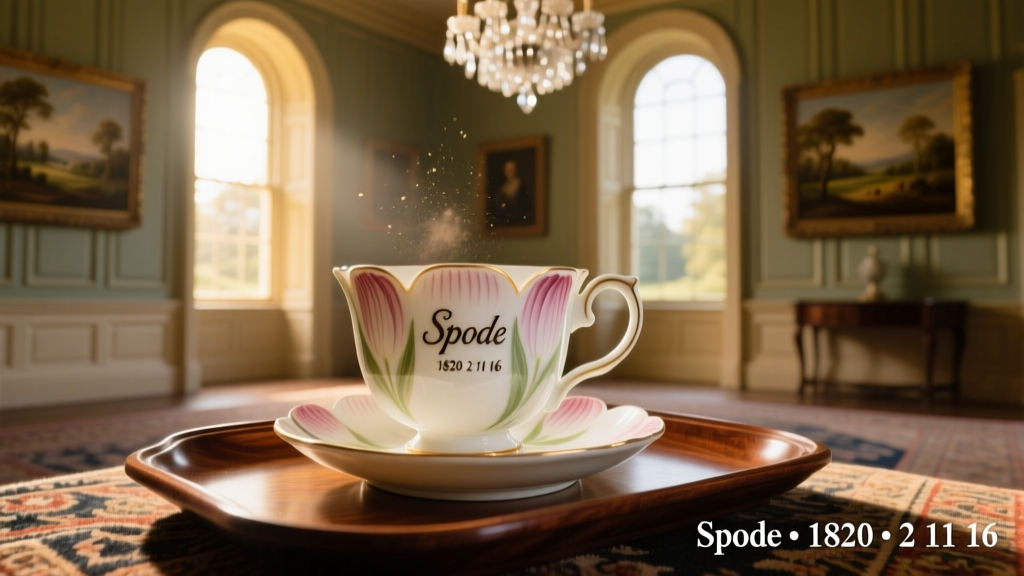
Spode Cup: Tulip Pattern with White Petals Striated in Rose, Marked '1820', 2⅞ × 11 × 16 Inches — A Technical & Historical Appraisal
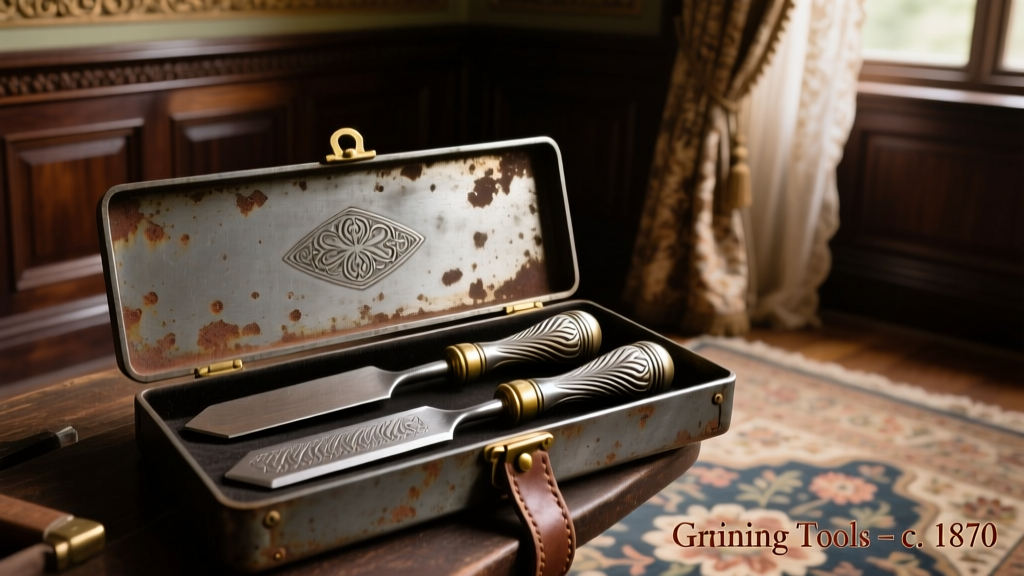
The 19th-Century Steel Comb Graining Tool Set: A Technical and Historical Examination of the 5½-Inch Pair in Original Case
Symphonion No. 1 Tune A Disc Music Box: A Technical and Historical Portrait of the 1895 English Variant
Shakudo Watch Chain with Floral Links, Swivel Hook & T-Bar: A Technical and Historical Analysis of the 15½-Inch Antique Japanese Alloy Chain
Watt Bean Pot Autumn Foliage No. 76: A Collector’s Guide to Form, Function, and Historical Significance
Gothic Revival Ecclesiastical Carved Walnut Chairs: A 1930s Pair at 58 Inches Tall — Historical Context, Craftsmanship, and Restoration Protocol
Baccarat Paperweight: Red Dahlia in Aquamarine Ground, 1970 — A Technical and Historical Appraisal
Creamware Figurine of Princess Alice and Prince Louis of Hesse: A Victorian Ceramic Masterpiece (11-Inch)
Venini Glass Bottle with Wide Vertical Canes Stopper — A 13-Inch Masterpiece of Murano Craftsmanship