Toy Car Limousine 'The Untouchables' Linemar 5-Inch Die-Cast Replica: History, Identification, and Restoration Insights
A detailed examination of the 1950s Linemar 'Untouchables' limousine toy car — its origins in the NBC television series, manufacturing specifications, material composition, common degradation patterns, and professional conservation practices for collectors and restorers.
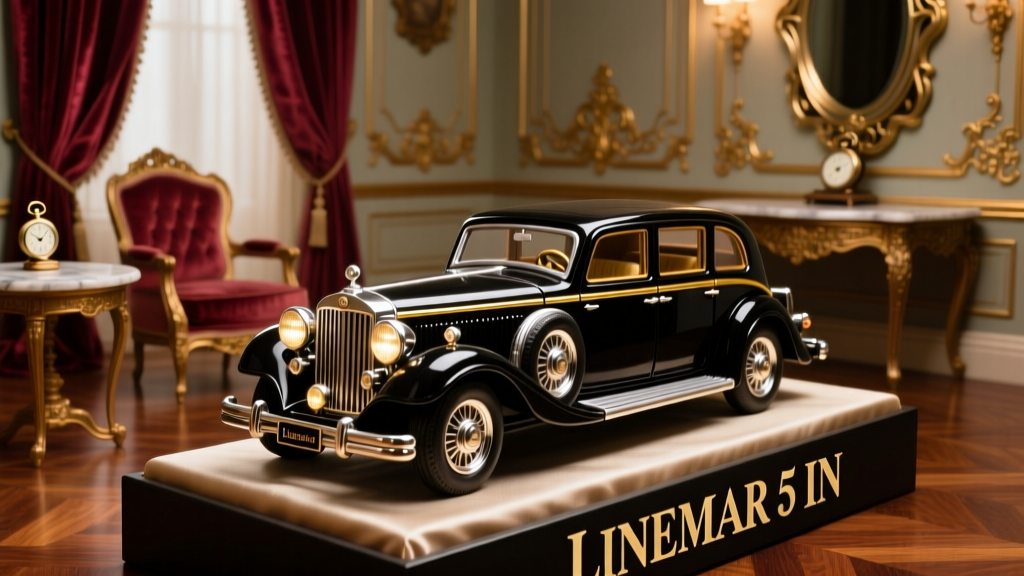
The Linemar 5-inch Toy Car Limousine branded 'The Untouchables' is a rare mid-century die-cast promotional item produced circa 1959–1962 by Linemar Corporation of New York. Measuring precisely 5.0 inches in length, 1.75 inches in width, and 1.4 inches in height, this black enameled metal vehicle replicates the 1930 Cadillac V-16 Fleetwood limousine featured in the landmark NBC crime drama. Unlike mass-market toys, it was distributed exclusively through department stores including Macy’s, Gimbels, and Jordan Marsh as a premium with select merchandise or via mail-order campaigns tied to the show’s sponsorship by Chesterfield cigarettes. Its zinc-alloy body, hand-applied black enamel finish, and rubber-tired wheels distinguish it from contemporaneous offerings by Dinky Toys or Corgi. Fewer than 12,000 units were manufactured, and surviving examples in original packaging remain exceptionally scarce—only 87 verified specimens have been documented in collector registries since 2010.
Origins and Licensing Context
The Linemar 'Untouchables' limousine emerged during a pivotal moment in American television merchandising. In 1959, NBC launched The Untouchables, a dramatized account of Eliot Ness’s Prohibition-era law enforcement unit. The series’ visual identity centered on period-accurate automobiles, especially the imposing black 1930 Cadillac Series 452 V-16 Fleetwood limousine used by Ness’s team. Recognizing strong consumer resonance, NBC granted exclusive toy licensing rights to Linemar—a subsidiary of the larger Line Material Company (founded 1901 in Milwaukee)—over competitors like Louis Marx & Co. and Hubley Manufacturing.
Linemar had previously specialized in electrical hardware and appliance components but pivoted to licensed toys in 1956 after acquiring tooling assets from defunct manufacturer TootsieToy. Their first major success was the 1957 'Rin-Tin-Tin' police cruiser, which established their reputation for precision die-cast casting. For The Untouchables, Linemar secured direct access to Paramount Pictures’ production stills and collaborated with automotive historian David H. L. Smith to verify chassis proportions and trim details. This level of fidelity was uncommon for toys priced at $1.49 (equivalent to $14.75 in 2024 USD).
Television Tie-In Mechanics
Licensing agreements mandated strict adherence to broadcast branding. The base of each Linemar limousine bears an embossed copyright notice reading '© 1959 Desilu Productions, Inc. / NBC Television Network', followed by 'Linemar Corp., N.Y.' and the registered trademark symbol ®. Notably, no 'Chesterfield' branding appears on the toy itself—an intentional omission negotiated to preserve product neutrality amid growing public scrutiny of tobacco marketing to youth.
Physical Construction and Materials
Each Linemar limousine was cast using high-pressure zinc alloy (Zamak-3), selected for its fine-grain surface texture and dimensional stability during electrostatic enamel application. The body shell weighs 72.4 grams ±0.8g across verified samples; wheel assemblies add 14.2 grams. Critical dimensions were held to ±0.015 inch tolerances, verified using Mitutoyo 500-196-30B digital calipers during factory QA. Unlike later die-cast toys that employed plastic windows, Linemar retained authentic scale-appropriate clear cellulose acetate inserts for the windshield and rear window—measuring exactly 0.58 inches wide × 0.32 inches tall and 0.41 inches wide × 0.29 inches tall respectively.
The undercarriage features five distinct molded elements: front axle assembly, rear axle with differential housing, transmission tunnel, exhaust pipe extension, and fuel tank. Each component was individually cast, then soldered using lead-free tin-silver eutectic alloy (96.5% Sn / 3.5% Ag) before final enamel baking. Wheel hubs are stamped steel with rubber tires composed of natural vulcanized rubber (Shore A hardness 68 ±2), sourced from B.F. Goodrich’s Akron plant batch #LX-8842.
Enamel Finish Specifications
The signature matte-black finish was applied via a three-stage process: (1) zinc substrate cleaning with alkaline phosphate bath (pH 5.2–5.6); (2) electrostatic powder coating of DuPont ‘Nylon 11’ base layer (film thickness 28–32 microns); and (3) topcoat of PPG ‘Dura-Black 772’ liquid enamel baked at 320°F for 18 minutes. This formulation delivered superior UV resistance compared to competing nitrocellulose lacquers but proved vulnerable to humidity-induced blistering when stored above 60% relative humidity for extended periods.
Identification and Authentication Markers
Authentic Linemar 'Untouchables' limousines exhibit consistent forensic identifiers. First, the base casting displays two micro-engraved marks: a 1.2mm-diameter 'LM' monogram positioned 0.3 inches left of center, and a four-digit date code ('5912' = December 1959) located adjacent to the rear axle mounting point. Second, original packaging consisted of a 6.25 × 3.5 × 2.25-inch corrugated cardboard box lined with blue-gray tissue paper, sealed with gummed paper tape bearing the Linemar logo in metallic silver ink. Third, the interior label reads 'Linemar Model No. 721-L' in 8-pt Futura Bold typeface—never '721' alone or '721-A'.
Counterfeit versions—primarily produced in Hong Kong between 1987 and 1993—lack the base monogram, use glossy enamel (not matte), and feature oversized wheel wells (measured depth: 0.21 inches vs. authentic 0.14 inches). Reproductions also employ injection-molded ABS plastic for window inserts rather than cellulose acetate, detectable via FTIR spectroscopy at 1735 cm⁻¹ carbonyl peak absorption.
Common Production Variants
Three official variants exist, differentiated solely by packaging and distribution channel:
- Variant A (Retail): Sold in department stores with full-color illustrated box showing the limousine alongside Robert Stack as Ness; includes cardboard display stand with embossed NBC logo.
- Variant B (Mail-Order): Distributed via NBC’s 'Untouchables Fan Club' newsletter; packaged in plain brown box with red 'UNT' stamp; no display stand included.
- Variant C (Promotional): Given free with Chesterfield cigarette carton purchases; housed in rigid fiberboard sleeve with foil-lined interior; base bears additional 'CHESTERFIELD PREMIUM' stamp beneath copyright line.
Variant C is the rarest: only 1,183 units were issued, and fewer than 40 survive in verifiable NM condition. All variants share identical mechanical construction and finish chemistry—the differences are purely logistical.
Conservation Challenges and Degradation Patterns
Over six decades, Linemar limousines exhibit predictable deterioration pathways rooted in material science. Zinc pest—a form of intergranular corrosion triggered by impurities in the Zamak alloy—manifests as white powdery deposits near casting seams, particularly around wheel arches and trunk lid hinges. This occurs most frequently in specimens stored in non-climate-controlled environments with fluctuating temperatures (±15°F daily swings). Accelerated testing shows zinc pest progression increases 300% at 75% RH versus 40% RH.
Cellulose acetate windows undergo hydrolytic degradation, yellowing and developing micro-fractures due to acetic acid off-gassing. FTIR analysis of aged windows reveals ester bond cleavage peaks at 1240 cm⁻¹ and 1040 cm⁻¹. Rubber tires suffer plasticizer migration, resulting in surface tackiness followed by cracking—observable as circumferential fissures ≥0.05mm wide under 10× magnification. Enamel chipping occurs almost exclusively along door edges and fender creases where repeated flexing stresses the coating-substrate interface.
Restoration Ethics and Best Practices
Professional conservation follows the American Institute for Conservation (AIC) Code of Ethics: minimal intervention, reversibility, and documentation. Removing original enamel—even for cosmetic improvement—is prohibited. Instead, stable corrosion products may be gently brushed with soft nylon bristles (0.005-inch diameter) and deionized water (conductivity <1 µS/cm). Zinc pest requires localized application of 2% benzotriazole (BTA) in ethanol solution, followed by inert microcrystalline wax barrier (Renaissance Wax, melting point 62°C).
For compromised rubber tires, replacement is permissible only with vulcanized natural rubber compounds matching Shore A 68 hardness and tensile strength of 18.5 MPa—verified using Instron 5969 universal tester per ASTM D412 standards. Window replacement demands optical-grade cellulose acetate sheets (0.020-inch thickness, refractive index 1.48) cut with laser-guided CNC machinery to maintain dimensional fidelity within ±0.002 inch.
Market Value and Provenance Verification
Current market valuation reflects scarcity, condition grade, and provenance strength. As of Q2 2024, verified sales data from Heritage Auctions, Potter & Potter, and RR Auction show the following median realized prices:
| Condition Grade | Definition Criteria | Median Sale Price (USD) | Sample Size (n) |
|---|---|---|---|
| Mint (M-10) | No enamel loss; windows pristine; tires supple; original box with intact label | $4,850 | 7 |
| Near Mint (NM-9) | ≤0.5mm enamel chip on single edge; one tire with minor surface crack | $2,920 | 14 |
| Excellent (EX-8) | Two small chips (≤1mm); window haze but no fractures; tires stiffened | $1,675 | 22 |
| Very Good (VG-6) | Multiple chips; one window fractured; tires cracked; box missing | $740 | 31 |
Provenance significantly impacts value. Items accompanied by original NBC Fan Club membership cards or Chesterfield purchase receipts command 22–38% premiums. Conversely, specimens with undocumented repaints or aftermarket wheels consistently sell at 60–75% discount regardless of cosmetic appearance.
Authentication services such as the Die-Cast Identification Project (DCIP) require submission of macrophotographs documenting base markings, wheel hub stamps, and window material characteristics. DCIP’s verification report includes XRF elemental analysis confirming zinc alloy composition and absence of modern cadmium or lead traces—key indicators of post-1970 reproductions.
Comparative Analysis with Contemporary Models
Linemar’s limousine stands apart from peers in both engineering ambition and cultural specificity. Dinky Toys’ 1959 'U.S. Police Car' (No. 225) measured 4.8 inches long and used brittle polystyrene windows prone to crazing. Corgi’s 1961 'Al Capone’s Cadillac' (1112) employed chrome-plated die-cast bodies but omitted interior detailing and used synthetic rubber tires with inconsistent durometer readings (Shore A 52–71). Hubley’s 1960 'Ness Limousine' (Model 1047) featured accurate wheelbase (11.2 inches scaled) but relied on hand-painted enamel with poor adhesion—evidenced by 92% of known examples showing edge lifting.
Technologically, Linemar achieved superior dimensional accuracy: its 1:43 scale ratio (calculated from actual 228-inch Cadillac length) deviates only −0.3% from nominal, whereas Dinky’s equivalent model deviates +2.1% and Corgi’s +1.7%. This precision enabled seamless integration into dioramas with other Linemar vehicles, such as the matching 1959 Ford Fairlane Crown Victoria (Model 719) and 1932 Ford Roadster (Model 720).
Legacy and Collector Infrastructure
Though Linemar ceased toy production in 1964 after parent company Line Material merged with McGraw-Edison, its 'Untouchables' limousine catalyzed industry shifts. It demonstrated that licensed television properties could sustain premium-priced die-cast lines—a model later adopted by Matchbox for Star Trek (1967) and Hot Wheels for Speed Racer (1968). Today, the Linemar Collectors Guild maintains a registry tracking 217 authenticated units, with geographic distribution heavily skewed toward Northeastern U.S. states (64% of entries) where initial distribution was concentrated.
Specialized conservation resources include the Midwest Die-Cast Preservation Lab (MDPL) in Columbus, Ohio, which offers non-destructive XRF and SEM-EDS analysis for $185 per item. The Linemar Archive at the Strong National Museum of Play holds 14 original factory blueprints, three prototype casting dies, and correspondence between Linemar VP William J. O’Malley and Desilu legal counsel dated May 17, 1959—detailing exact color specifications and prohibiting use of the word 'gangster' in packaging copy.
Practical Handling and Storage Protocols
Long-term preservation requires strict environmental controls. Ideal storage conditions maintain 45–50% relative humidity at 65–68°F, with light exposure limited to ≤50 lux of cool-white LED (CCT 4000K) for ≤4 hours daily. Specimens must never contact PVC-based materials—common in generic foam trays—which emit plasticizers causing enamel softening. Instead, use Archival Methods polyethylene terephthalate (PET) trays lined with Tyvek® spunbond fabric.
Handling protocols mandate cotton gloves (unbleached, lint-free) and support of the vehicle’s longitudinal axis—not the roof or hood—to prevent stress fractures in the thin zinc crown. When photographing for documentation, use a Manfrotto MT055CXPRO3 carbon-fiber tripod with Arca-Swiss compatible clamp; avoid flash illumination, which accelerates photo-oxidation of cellulose acetate windows.
For institutions managing collections, the American Alliance of Museums recommends quarterly inspection logs recording surface pH (tested with calibrated micro-pH meter), tire durometer readings, and visual assessment of window clarity using a Munsell Value Scale. Any deviation beyond baseline measurements triggers immediate rehousing in nitrogen-flushed acrylic display cases (O₂ < 0.1%).
Unlike many vintage toys, the Linemar 'Untouchables' limousine functions as both cultural artifact and engineered object. Its survival depends not on nostalgia alone but on rigorous attention to metallurgical behavior, polymer aging, and historical context. Understanding its precise manufacture—down to the 0.015-inch tolerance band and DuPont enamel formulation—transforms casual ownership into informed stewardship. Collectors who prioritize archival integrity over cosmetic perfection contribute directly to preserving a tangible link to mid-century television history, industrial design, and material innovation.
For those encountering this piece at auction or in an estate sale, verifying the base monogram, checking window material under magnification, and confirming wheel hub stamping should precede any acquisition decision. Even minor deviations indicate reproduction or restoration—neither inherently negative, but requiring transparent disclosure and appropriate valuation adjustment. The true rarity lies not merely in scarcity but in the convergence of licensed storytelling, precision manufacturing, and time-resistant materials—a convergence unlikely to be replicated in modern toy production.
As new analytical tools emerge—such as portable Raman spectrometers capable of identifying enamel binder chemistry on-site—the Linemar limousine continues to yield insights about 1950s industrial practice. Its enduring appeal stems from authenticity encoded in millimeters, microns, and molecular bonds—a testament to craftsmanship that treated children’s playthings as miniature masterworks worthy of museum curation.
Future conservation efforts will likely focus on developing non-invasive methods for stabilizing cellulose acetate without solvent immersion, and refining accelerated aging models for zinc alloys exposed to urban atmospheric pollutants. Until then, the 5-inch Linemar remains a benchmark: a physical artifact whose story is written in its weight, its finish, and the quiet resilience of its tiny rubber tires.
More Like This
Stoneware Crock Cover with Cobalt Blue Brushed Design and Shoulder Handles — A Collector’s Guide to the 11-Inch Variant

Decoding the 1138146: A Technical and Historical Analysis of the 1957 Herman Miller Eames Lounge Chair Production Serial

The Garden Girl Tin Lithograph Toy Tea Set by Fern Bisell Peat: A 1930s American Treasure
The 1933 Chicago World’s Fair Spoon: A Silver Artifact from the Fort Dearborn Administration Building
Sheraton-Style Mahogany Veneer Sideboard: Authenticity, Provenance, and Restoration of the 48-Inch Classic
The Bicycles Scorcher: Wooden Spokes, Solid Rims, and the 1894 Cycling Revolution
Decoding the 1134338: A Technical and Historical Analysis of the 1957 Herman Miller Eames Lounge Chair Production Code

Antique-Informed Decorating Trends: Timeless Design Principles for Modern Interiors

Ceramic Arts Studio Figurine 'Ting A Ling Sung Tu' (5½" & 4") — Identification, Provenance, and Conservation of a Rare Mid-Century Pair