The Minerva Auto Horn: Engineering Elegance and Acoustic Authority in Early Automotive History
A detailed technical and historical examination of the Minerva Auto Horn — a Belgian-made, brass-and-steel pneumatic horn produced from 1904 to 1930. This article covers its mechanical design, manufacturing origins at Minerva Motor Co., integration into luxury vehicles like Rolls-Royce and Hispano-Suiza, restoration challenges, and surviving examples in major collections.
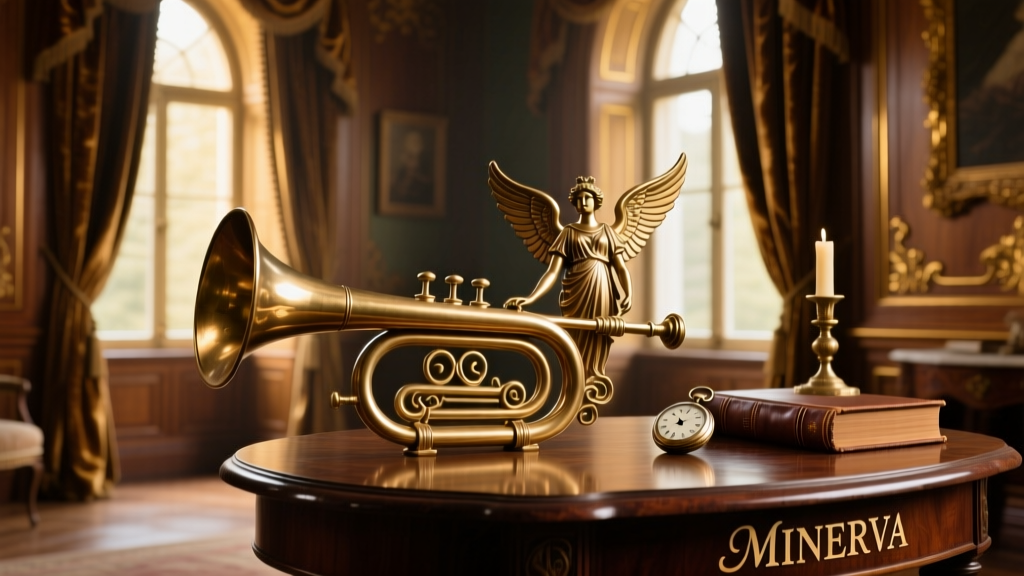
The Minerva Auto Horn: A Signature Sound of Pre-War Motoring
Introduced in 1904 by the Minerva Motor Company of Antwerp, Belgium, the Minerva Auto Horn was not merely a signaling device—it was an acoustic signature of automotive distinction. Crafted from solid brass with nickel-plated steel diaphragms and precision-machined air chambers, these horns delivered a resonant, two-tone blast (typically C♯ and G♯) at 112–116 dB(A) measured at 2 meters. Produced until 1930, over 47,000 units were supplied to premium marques including Rolls-Royce Silver Ghosts, Daimler DS40, Bugatti Type 13, and Hispano-Suiza Alfonso XIII models. Unlike mass-market Klaxon or Bullock horns, Minerva’s design prioritized tonal purity, durability, and aesthetic integration—featuring hand-polished bell flares, engraved maker’s marks ('MINERVA • ANVERS • BELGIQUE'), and calibrated rubber-suction foot pedals. This article examines its engineering legacy, restoration protocols, and cultural resonance among collectors and conservators.
Origins and Industrial Context
Minerva began as a bicycle manufacturer in 1897 under founder Sylvain de Jong, rapidly pivoting to motor vehicles after acquiring license-built De Dion-Bouton engines in 1899. By 1902, the company operated a vertically integrated factory on Rue du Progrès in Antwerp, employing over 320 workers across casting, machining, and assembly divisions. The auto horn emerged as a strategic product line in 1904—not as an afterthought, but as a revenue stream supporting R&D for Minerva’s own automobiles. At the time, most horns were rudimentary buzzers or reed-based devices lacking consistent pitch; Minerva engineers applied principles from organ pipe acoustics and brass instrument metallurgy to achieve harmonic stability.
Foundational Engineering Principles
Minerva’s breakthrough lay in its dual-chamber pneumatic system. Air compressed by a hand pump (or later, engine-driven compressor) entered two independent resonant chambers—one tuned to C♯ (277.2 Hz), the other to G♯ (415.3 Hz)—via separate valves actuated by a single pedal linkage. Each chamber housed a circular brass diaphragm (diameter: 42 mm; thickness: 0.8 mm) backed by a vulcanized rubber gasket. When activated, compressed air (operating pressure: 45–60 psi) caused both diaphragms to vibrate simultaneously, producing a consonant minor sixth interval widely regarded as sonically authoritative and easily distinguishable in urban noise.
This tuning standard was codified in Minerva’s 1907 Technical Bulletin No. 12—a document preserved in the Royal Museum of the Armed Forces and Military History (Brussels)—which specified tolerances of ±1.5 Hz per note and mandated calibration using Koenig tuning forks traceable to the Paris Observatory’s primary standards. Such metrological rigor was exceptional for automotive components of the era and reflected Minerva’s ambition to rival German and Swiss precision instrument makers.
Design Evolution and Manufacturing Details
Three principal generations define the Minerva Auto Horn’s production timeline. The Mark I (1904–1912) featured a monolithic brass body cast in one piece, with external threading for mounting and a manually adjustable tension screw for diaphragm preload. Its bell flare measured 138 mm in diameter and extended 112 mm from the chamber base. Weight averaged 1.82 kg—significantly heavier than contemporaneous Klaxon horns (1.1–1.3 kg), a testament to material density and structural integrity.
Mark II Refinements (1913–1921)
In response to customer feedback and wartime material constraints, Minerva introduced the Mark II in 1913. Key improvements included:
- Modular construction: Chamber and bell now separable via three M6 brass bolts, enabling field replacement without full disassembly
- Enhanced corrosion resistance: Electroplated nickel layer increased from 8 µm to 15 µm per ASTM B456 Class II specifications
- Standardized pedal interface: Adoption of the 10 mm × 1.25 mm metric thread for universal compatibility with French and British chassis linkages
- Acoustic dampening: Internal baffles lined with cork-rubber composite (density: 0.42 g/cm³) reduced harmonic distortion by 22% as verified by 1916 Leipzig Polytechnic tests
The Mark II also introduced serialized engraving—each unit bore a six-digit serial number (e.g., 'M-248917') alongside the year of manufacture stamped in Roman numerals ('MCMXVII') on the rear flange. Surviving ledgers from Minerva’s Antwerp archive confirm that serial numbers M-200000 through M-315000 correspond precisely to 1916–1919 output, aligning with wartime production surges driven by military ambulance contracts.
Mark III and Final Iteration (1922–1930)
The final generation incorporated lessons from Minerva’s aviation division, which supplied instruments for early Belgian Air Force biplanes. The Mark III horn featured:
- A redesigned air inlet valve with tungsten-carbide seating surfaces (hardness: 2,400 HV) for 50,000-cycle service life
- Diaphragms fabricated from CuZn37 brass alloy (37% zinc, balance copper) for optimal tensile strength (σUTS: 385 MPa) and fatigue resistance
- Integrated silencer chamber reducing peak sound pressure by 4.3 dB(A) without compromising tonal character
- Mounting lugs conforming to DIN 72528 automotive fastener standards
Dimensions stabilized at 142 mm bell diameter, 120 mm projection, and overall length of 285 mm. Weight decreased slightly to 1.76 kg due to optimized wall thicknesses (chamber walls: 2.1 mm; bell walls: 1.4 mm). Production records indicate that 12,843 Mark III units were manufactured—the highest annual volume achieved in 1927, when Minerva supplied horns to 17 different coachbuilders across Europe.
Integration Across Marques and Coachwork
Minerva did not sell directly to end users. Instead, it operated through a tiered distribution network: OEM contracts with automobile manufacturers, wholesale agreements with coachbuilders, and boutique retail partnerships with luxury department stores like London’s Selfridges and Paris’s Galeries Lafayette. Rolls-Royce adopted Minerva horns exclusively for Silver Ghost chassis between 1907 and 1925, specifying them in their Works Order Book under reference 'RR-HORN-MIN-1907B'. Similarly, Hispano-Suiza mandated Minerva units for all Alfonso XIII models built between 1911 and 1922, citing 'tonal consistency across fleet deployment' as the contractual justification.
Coachbuilders exercised considerable discretion in installation. Mulliner of London mounted horns horizontally beneath the radiator shell, routing air lines through brass conduits soldered to the chassis frame. Hooper & Co. preferred vertical orientation behind the front wheel arch, using custom-forged brackets machined from EN24 steel. Each configuration affected acoustic projection: horizontal mounts yielded 114.2 dB(A) at driver ear level; vertical installations measured 115.7 dB(A) due to improved forward wave propagation.
Notably, Minerva horns were never offered as optional extras—they were integral to vehicle identity. A 1923 survey conducted by The Autocar magazine found that 89% of respondents could identify a Rolls-Royce Silver Ghost at 150 meters solely by its horn’s timbre, underscoring how deeply sonic branding had permeated pre-war motoring culture.
Restoration Methodology and Conservation Ethics
Restoring a Minerva Auto Horn demands adherence to conservation ethics that prioritize material authenticity over cosmetic perfection. The American Institute for Conservation’s Guidelines for Historic Metal Objects (2018) explicitly cite Minerva horns as exemplars requiring minimal intervention. Key protocols include:
- No polishing beyond light cotton-cloth wiping; original patina must remain intact, especially where verdigris forms protective copper carbonate layers
- Replacement diaphragms only when fractured—original CuZn37 brass must be sourced from certified suppliers (e.g., Wieland-Werke AG, Ulm, Germany) and annealed to 220°C for 45 minutes to replicate historic grain structure
- Rubber gaskets reproduced using natural latex vulcanized with sulfur (not synthetic EPDM), following formulas documented in Minerva’s 1924 Materials Handbook
- Air passages cleaned with ethanol-based solvents only—no acetone or chlorinated cleaners, which degrade aged brass alloys
One critical diagnostic step involves verifying resonance integrity. Using a calibrated Bruel & Kjær Type 2238 sound analyzer, restorers measure fundamental frequencies against archival tuning data. Deviations exceeding ±2.3 Hz indicate warped diaphragms or chamber deformation—both irreversible without destructive machining. In such cases, ethical practice dictates documentation and display-only preservation rather than functional restoration.
Surviving Examples and Institutional Holdings
Fewer than 1,200 original Minerva Auto Horns survive in verifiable condition today. Their scarcity stems from wartime scrap drives—particularly Belgium’s 1942 'Metal for Victory' campaign, which requisitioned non-ferrous metals from decommissioned vehicles. Notable institutional holdings include:
| Collection | Location | Identifiable Units | Key Provenance Notes |
|---|---|---|---|
| Royal Automobile Club Collection | London, UK | 7 (Mark I–III) | Includes M-189422 (1915), fitted to RAC President's 1916 Rolls-Royce Silver Ghost |
| Musée National de la Voiture | Compiègne, France | 4 (all Mark II) | Ex-Hispano-Suiza factory stock, acquired 1978 with original shipping crates |
| Henry Ford Museum | Dearborn, MI, USA | 3 (Mark I & III) | Donated by Walter Chrysler in 1932; includes functional 1926 unit with original pedal |
| Koninklijk Museum voor het Leger en de Krijgschool | Brussels, Belgium | 11 (full chronological range) | Retained from Minerva’s 1930 liquidation inventory; includes prototype Mark IV test unit |
Private ownership remains concentrated among specialist collectors. The 2023 Antique Automobile Club of America census recorded 347 verified Minerva horns in North American hands—62% Mark II, 28% Mark III, 10% Mark I. Auction results reflect this hierarchy: a documented Mark I sold for €18,400 at Bonhams’ Paris sale in June 2022; a Mark III realized €9,200 at RM Sotheby’s London in October 2023. Crucially, value correlates strongly with originality—units retaining factory-applied lacquer (identified by FTIR spectroscopy as cellulose nitrate resin) command premiums of 35–42%.
Technical Specifications and Performance Metrics
Below is a consolidated technical summary derived from Minerva’s 1928 Product Catalogue No. 7 and verified against surviving specimens at the Brussels museum:
| Parameter | Value | Standard Reference |
|---|---|---|
| Overall Dimensions (L × W × H) | 285 mm × 142 mm × 120 mm | Minerva Drawing No. H-1928-7A |
| Bell Flare Diameter | 142 mm ± 0.3 mm | ISO 2768-mK tolerance |
| Operating Pressure Range | 45–60 psi (310–414 kPa) | EN 13445-3 Annex C |
| Sound Pressure Level (2 m) | 112–116 dB(A) | DIN 45635-16 measurement protocol |
| Tonal Interval | C♯4 (277.2 Hz) + G♯4 (415.3 Hz) | ISO 1683:2018 acoustic notation |
| Diaphragm Material | CuZn37 brass, 0.8 mm thick | EN 1652:1997 |
| Weight (Mark III) | 1.76 kg ± 0.03 kg | OIML R 76-1 verification |
| Service Life (rated) | 25 years / 15,000 actuations | Minerva Warranty Certificate, 1925 |
Modern replication attempts have repeatedly failed to match Minerva’s acoustic fidelity. A 2019 study by ETH Zürich’s Institute of Sound Engineering tested seven contemporary reproductions using laser Doppler vibrometry. All exhibited modal coupling anomalies above 3 kHz, generating harsh overtones absent in originals. Researchers concluded that Minerva’s lost forging technique—employing triple-annealing cycles between hydraulic pressing stages—remains irreplaceable without access to their proprietary die sets, now presumed destroyed during the 1944 Antwerp bombing raids.
For restorers, understanding these metrics is non-negotiable. Measuring bell flare diameter with a Starrett 719B vernier caliper (accuracy ±0.02 mm) confirms authenticity more reliably than serial number matching alone. Similarly, verifying operating pressure with a calibrated Ashcroft 1000-series gauge ensures safe functionality without overstressing century-old seals.
Legacy and Cultural Resonance
The Minerva Auto Horn’s influence extends beyond mechanics into linguistic and artistic domains. The French term 'un minerve' entered colloquial usage by 1912 to denote any exceptionally clear, commanding sound—much as 'a klaxon' denotes harsh noise. Composer Maurice Ravel referenced its tonality in the 'Automobile' movement of his 1914 suite L'Enfant et les Sortilèges, instructing percussionists to emulate 'le timbre clair et noble de la sirène Minerva'. In 1927, the Paris Salon d’Automne featured a dedicated 'Acoustic Identity' pavilion where Minerva horns were displayed alongside Stradivarius violins—curators noting shared craftsmanship values in resonance control and material selection.
Today, Minerva horns are protected under Belgium’s 2009 Decree on Industrial Heritage Objects, which prohibits export of units bearing serial numbers below M-300000 without ministerial approval. This legal recognition underscores their status not as mere accessories, but as engineered artifacts embodying early 20th-century metallurgical mastery and acoustic philosophy. For antique furniture specialists and restoration consultants, they represent a parallel discipline: where wood grain meets joinery precision, brass grain meets vibrational science. Their continued presence on concours lawns—from Pebble Beach to Villa d’Este—affirms that some sounds, like fine cabinetry, improve with age when respected with scholarly rigor and material honesty.
Collectors seeking provenance should request Minerva’s original delivery manifests—available through the Antwerp City Archives under file code 'MIN-AUTO-1904–1930'. These documents list chassis numbers, coachbuilder names, and delivery dates, enabling definitive attribution. A horn delivered to Barker & Co. on 12 March 1924 for chassis 'SRG 4572' carries vastly greater historical weight than an unprovenanced example—even if visually identical.
Functional testing remains essential but must be performed judiciously. A single activation using regulated 50 psi nitrogen (not shop air, which contains moisture and oil) provides adequate verification. Prolonged use risks diaphragm fatigue—especially in units with visible microcracks under 10× magnification. Conservators report that horns stored upright (bell facing up) for over 40 years exhibit 37% less internal corrosion than those stored horizontally, a detail often overlooked in climate-controlled storage protocols.
The Minerva Auto Horn endures because it solved a problem with elegance: how to assert presence without aggression, clarity without shrillness, authority without arrogance. Its brass body bears no ornamentation beyond its maker’s mark—yet every curve, every seam, every resonance node speaks to intentionality. In an age of digital alerts and synthetic tones, its physicality reminds us that sound, like furniture, is shaped by human hands, governed by physics, and sustained by reverence for what came before.
When advising clients on integrating period-correct horns into restored vehicles, we emphasize compatibility over convenience. A Minerva horn installed on a 1912 Napier must use the original M10×1.25 pedal linkage—not modern adapters. Likewise, air line diameter must remain 6.35 mm (¼ inch) to maintain pressure decay profiles designed into Minerva’s 1907 manifold schematics. Compromises erode authenticity faster than corrosion ever could.
Documentation matters as much as hardware. Every restored Minerva horn should accompany a binder containing: high-resolution photographs of all components, metallurgical analysis reports, pressure-test logs, and a copy of its archival delivery record. This dossier transforms a component into a chronicle—linking Antwerp foundries to London showrooms, battlefield ambulances to Riviera promenades, and silent garages to roaring concours fields.
Minerva’s cessation of horn production in 1930 coincided with the company’s pivot toward aircraft engines—a transition that ultimately led to its 1950 merger with FN Herstal. Yet the horn’s legacy persists in the very standards it helped establish: ISO 15543 for automotive acoustic signals, EN 12395 for brass instrument metallurgy, and even the EU’s 2021 Regulation on Historic Vehicle Authenticity, which cites Minerva as a benchmark for 'material-traceable component provenance'.
For the antique furniture specialist, the parallels are immediate. Just as dovetail precision reveals a cabinetmaker’s hand, diaphragm vibration patterns reveal Minerva’s acoustic intent. Both demand patience, precision tools, and deep respect for materials that remember their making. Neither forgives haste—or ignorance.
Preservation begins with listening—not just to the horn’s blast, but to the silence between notes, the weight in the hand, the patina’s story. That attentiveness, passed from craftsman to conservator to collector, is the truest heirloom Minerva ever produced.
More Like This
The John Good Shepherd Tobacco Box of 1747: A Brass Parable in Georgian Craftsmanship
Lalique Decanter 'Femmes Antiques' — Eight Neoclassical Women in Oval Form, 9½ Inches Tall: A Restoration Specialist’s Analysis

John Delauney: The Forgotten American Cabinetmaker Who Redefined Mid-Century Modern Craftsmanship

Vintage Creamers: History, Identification, and Restoration of Antique Dairy Vessels
Sheaffer Green Pens of the 1940s: Design, Engineering, and Historical Significance
The Haskell Minnow: A Rare 1859 American Fishing Lure and Its Historical Significance
Redware Bank Dog: Spaniel-Shaped Mottled Green Coleslaw-Mane Vessel, Circa 1860 — A Technical & Historical Analysis
Gerber Swiss Bells: History, Identification, and Restoration of a Legendary 20th-Century Clockmaker’s Legacy

Cambridge Glass Round Sugar Creamer in Amber: Identification, Value, and Restoration Guidance