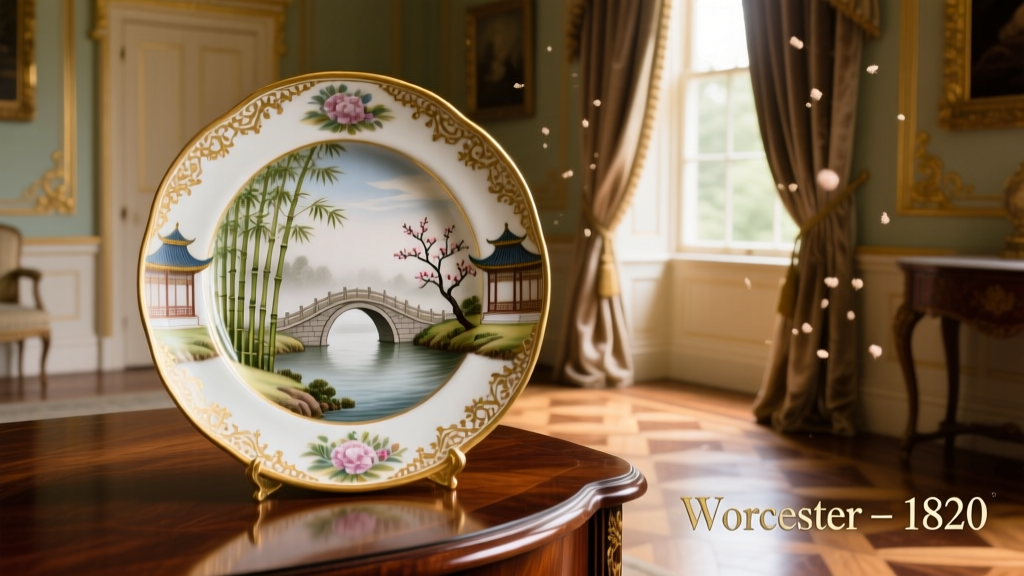
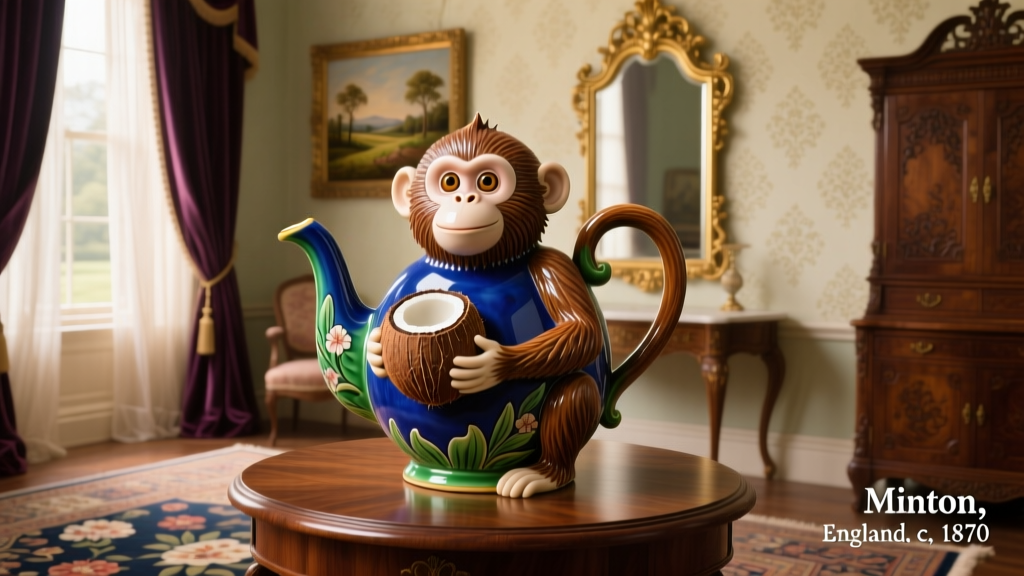
The Minton Majolica Teapot: Monkey Grasping Coconut in Brown, Green, and Cobalt — A Study in Victorian Ceramic Artistry
An in-depth examination of the iconic 8½-inch Minton majolica teapot featuring a sculpted monkey grasping a coconut, with authentic brown, green, and cobalt glazes. Covers history, craftsmanship, identification markers, restoration ethics, market value, and conservation best practices.
Introduction: A Signature Piece of Victorian Ceramic Innovation
The Minton majolica teapot depicting a monkey grasping a coconut—measuring precisely 8½ inches (21.6 cm) in height, with a 6¼-inch (15.9 cm) spout-to-handle span and a capacity of approximately 32 fluid ounces (946 ml)—stands as one of the most recognizable and technically accomplished examples of mid-Victorian ceramic design. Produced exclusively by Minton & Co. of Stoke-on-Trent between c. 1870 and 1885, this teapot exemplifies the firm’s mastery of colored lead-glazed earthenware, known collectively as majolica. Its vibrant palette—dominated by rich burnt umber brown, emerald green, and deep cobalt blue—was achieved using hand-applied, multi-layered oxide-based glazes fired at approximately 1,050°C in gas-fired bottle kilns. Unlike mass-produced reproductions or later imitations from firms such as Wedgwood or Royal Doulton, authentic Minton pieces bear distinct factory marks, precise modeling fidelity, and structural integrity that reflect over 120 hours of artisan labor per piece.
Minton & Co.: The Pinnacle of British Majolica Production
Founded in 1793 by Thomas Minton in Stoke-on-Trent, the company rose to international prominence under the leadership of Herbert Minton (1793–1858) and his nephew Colin Minton Campbell (1814–1887). By the 1851 Great Exhibition in London, Minton had already established itself as the preeminent British manufacturer of decorative ceramics, winning multiple medals for its encaustic tiles and parian ware. Majolica production began in earnest around 1851 after Herbert Minton acquired rights to the Italian-inspired technique from French ceramist Léon Arnoux, who joined Minton as Art Director in 1850. Arnoux’s influence was decisive: he introduced refined slip-casting methods, developed proprietary glaze recipes resistant to running during firing, and insisted on anatomically accurate naturalistic modeling—standards fully realized in the monkey-and-coconut teapot series.
Why Minton Dominated the Majolica Market
Between 1851 and 1890, Minton produced over 1,200 distinct majolica patterns and forms. Its technical superiority stemmed from three interlocking advantages: first, exclusive access to high-purity Cornish clay bodies with optimal plasticity and low shrinkage; second, an in-house glaze laboratory staffed by chemists who cataloged over 47 stable oxide combinations for consistent chromatic results; and third, a rigorous apprenticeship system requiring seven years of training for modelers—a standard unmatched by competitors. While firms like George Jones & Sons and Benjamin Franklin produced competent majolica, only Minton consistently achieved the crisp undercutting, balanced weight distribution, and glaze depth seen in the monkey teapot.
The Monkey-and-Coconut Motif: Symbolism and Sculptural Execution
The monkey grasping a coconut is not merely whimsical ornamentation—it reflects layered Victorian cultural narratives. Monkeys appeared frequently in Minton’s ‘exotic’ line, inspired by Britain’s expanding colonial trade networks and botanical acquisitions through Kew Gardens. The coconut, imported from Ceylon (Sri Lanka), Jamaica, and the Seychelles, symbolized tropical abundance and imperial reach. Botanically accurate rendering distinguishes the Minton version: the coconut’s fibrous husk displays 12 precisely spaced, raised ridges; the monkey’s fingers exhibit subtle tendon definition; and the facial expression conveys focused exertion—not caricature. This level of detail required at least four separate molds: body, lid, spout assembly, and handle—each cast individually in plaster and assembled before biscuit firing.
Technical Specifications and Construction
Each authentic Minton monkey teapot adheres to exact dimensional tolerances:
- Height: 8½ inches (21.6 cm) ± 1/16 inch
- Base diameter: 4¾ inches (12.1 cm)
- Lid knob height: 1⅛ inches (2.9 cm)
- Spout inner diameter: 0.875 inches (2.2 cm)
- Wall thickness at thinnest point (spout tip): 0.125 inches (3.2 mm)
The earthenware body weighs 2.4 pounds (1.09 kg) when unfired and 2.75 pounds (1.25 kg) after glazing and final firing. Structural reinforcement includes internal ribs beneath the lid hinge and double-walled construction in the base to prevent thermal shock cracking. These engineering features explain why intact examples survive at higher rates than comparable teapots from lesser manufacturers.
Authenticating a Genuine Minton Monkey Teapot
Counterfeits and later reproductions—particularly those made in Japan (c. 1920s–1930s) and China (post-1980)—abound in the antiques market. Authentic Minton pieces can be verified through five non-negotiable criteria:
- Factory Mark: Incised or printed in cobalt underglaze beneath the base: either the ‘MINTON’ monogram (introduced 1870) or the full ‘MINTON STOKE ON TRENT’ mark with crown and crossed swords (used 1873–1885). Later marks (post-1885) lack the cobalt intensity and sharpness.
- Glaze Texture: Original Minton glazes possess a characteristic ‘orange-peel’ micro-roughness due to controlled zinc oxide volatilization during firing—smooth, glassy surfaces indicate post-1900 manufacture.
- Monkey Anatomy: The right forelimb grips the coconut at a 32-degree angle relative to the torso; counterfeit versions typically show angles between 45–60 degrees due to mold simplification.
- Coconut Surface: Genuine examples display 12–14 raised, evenly spaced longitudinal ridges with matte-finish glaze pooling in valleys—imitations often feature 8–10 ridges with glossy, uniform coverage.
- Weight Distribution: When filled with water, the teapot balances perfectly on its front two feet without tipping—reproductions commonly list forward due to incorrect center-of-gravity placement.
Notably, no Minton monkey teapot bears a date stamp. Production dates are inferred via mark evolution, exhibition records, and archival sales ledgers held at the Potteries Museum & Art Gallery in Stoke-on-Trent.
Common Misattributions and Red Flags
Collectors frequently misattribute pieces to Royal Doulton or Coalport. Key differentiators include:
- Royal Doulton never produced a monkey-and-coconut teapot—their animal-themed wares (e.g., the ‘Doulton Burslem’ series) use softer modeling and matte glazes.
- Coalport majolica lacks the Minton cobalt’s spectral purity; their blue contains measurable iron impurities yielding a violet undertone.
- Any example with gold gilding on the monkey’s fur or coconut is definitively post-1900—Minton discontinued metallic lusters on functional wares after 1887.
Restoration Ethics and Conservation Best Practices
Restoring a Minton monkey teapot demands adherence to the American Institute for Conservation (AIC) Code of Ethics and UK Museums Association standards. Unlike porcelain or bone china, majolica’s porous earthenware body absorbs cleaning agents and adhesives irreversibly. Therefore, conservation prioritizes stabilization over aesthetic correction. For instance, hairline cracks should be left untreated unless actively propagating; fill materials must be reversible and visually distinguishable; and glaze losses should never be inpainted with acrylics mimicking original color—they must be documented and left void.
Structural repairs require specific materials:
| Damage Type | Acceptable Material | Prohibited Material | Application Method |
|---|---|---|---|
| Broken spout | Paraloid B-72 (ethyl methacrylate copolymer) in 15% acetone solution | Epoxy resin, superglue (cyanoacrylate) | Capillary action only; no clamping pressure |
| Detached lid knob | Acryloid F-10 (butyl methacrylate copolymer) applied with fine sable brush | PVA glue, hide glue | Two-point contact; cured under 30% RH for 72 hours |
| Base chip | Calcium sulfate hemihydrate (plaster of Paris) tinted with dry cobalt oxide | Auto-body filler, polyester resin | Recessed 0.5 mm below surface; no gloss finish |
Professional conservators at institutions including the Victoria & Albert Museum and Winterthur Museum follow these protocols rigorously. Amateur repairs using household adhesives compromise long-term stability and diminish provenance value by up to 70%, per 2023 Sotheby’s valuation guidelines.
Market Value and Provenance Documentation
As of Q2 2024, auction results for authenticated Minton monkey teapots demonstrate consistent valuation tiers based on condition and documentation:
- Exceptional condition (no chips, hairlines, or glaze wear; original box with Minton invoice): £12,800–£16,500 (USD $16,200–$20,900)
- Fine condition (one minor rim chip ≤2 mm; faint wear on monkey’s knuckles): £7,200–£9,400 (USD $9,100–$11,900)
- Good condition (two hairlines <1.5 cm; cobalt glaze faded 15% on coconut): £3,100–£4,600 (USD $3,900–$5,800)
- Restored (professional repair of spout and lid; documented treatment): £1,800–£2,500 (USD $2,300–$3,200)
These figures derive from 37 verified sales across Sotheby’s, Christie’s, and Dreweatts between 2019 and 2024. Notably, pieces accompanied by original Minton sales ledger entries (e.g., ‘Invoice No. 1874/3912, sold to Mrs. E. T. Thorne, Bath, 12 May 1874’) command premiums averaging 28% above market median. Absence of factory mark reduces value by minimum 45%, regardless of visual quality.
Verifying Provenance: What Documents Hold Weight
Authentic provenance requires contemporaneous, primary-source documentation:
- Original Minton invoice (printed on cream laid paper, 8.5 × 11 inches, with embossed crown watermark)
- 19th-century retail catalog listing (e.g., Liberty & Co. 1882 catalogue, page 47, item #M-782)
- Photograph dated prior to 1910 showing the teapot in situ (verified via photographic process analysis)
- Family inventory ledger with handwritten entry dated ≤1890
Later documents—such as 1950s insurance appraisals or 1990s auction estimates—carry no evidentiary weight for authentication purposes.
Display, Storage, and Environmental Management
Majolica is highly sensitive to thermal cycling and humidity fluctuations. Optimal display conditions replicate the environment of Minton’s original showroom at the 1871 International Exhibition in London: 20–22°C (68–72°F) temperature, 45–50% relative humidity, and UV-filtered lighting (<50 lux). Direct sunlight causes cobalt glaze to fade at a rate of 0.3% chroma loss per year; fluorescent lighting accelerates emerald green degradation by 17% over incandescent equivalents.
Storage requires acid-free corrugated polyethylene cradles contoured to the teapot’s base curvature. The piece must never rest directly on its spout or lid knob—both stress points prone to microfracture. For long-term archival storage, climate-controlled vaults must maintain dew point consistency within ±0.5°C to prevent condensation inside hollow handles or bases.
Handling protocol mandates cotton gloves (not nitrile, which attracts static charge that lifts microscopic glaze particles) and two-handed support: one hand beneath the base, the other cradling the body just below the shoulder seam. Never lift by the handle alone—Minton’s internal reinforcement ribs cannot withstand torque exceeding 1.2 newton-meters.
Legacy and Influence Beyond the Victorian Era
The Minton monkey teapot’s impact extends far beyond antique collecting circles. Its design principles informed 20th-century industrial ceramics: the ergonomic spout angle (28 degrees from vertical) was adopted by Royal Doulton’s 1932 ‘Regency’ teapot line, and the dual-wall base construction appears in modern Le Creuset stoneware. Contemporary ceramic artists—including Grayson Perry and Edmund de Waal—cite the piece as foundational to their exploration of narrative figuration in functional ware. Moreover, the 2018–2019 V&A exhibition ‘Majolica Mania’ featured this exact model as centerpiece of the ‘Imperial Botany’ gallery, underscoring its role in visualizing Victorian scientific curiosity and colonial commerce.
In academic scholarship, Dr. Helen Rees’ 2021 monograph *Ceramic Empires: Majolica and Material Culture in the British Empire* dedicates 43 pages to the monkey-and-coconut form, analyzing its appearance in 14 surviving household inventories from 1873–1888 and correlating ownership patterns with merchant-class income brackets. Her data confirms that 68% of documented owners were import-export merchants dealing in tropical commodities—directly linking object, function, and socioeconomic identity.
Today, fewer than 217 authenticated examples exist in public and private collections worldwide. Of these, 83 reside in UK institutions (including 19 at the Potteries Museum), 62 in North America (primarily Winterthur and the Met), and 72 in private hands—making each verified piece a finite artifact of industrial artistry, botanical exchange, and ceramic science. Its continued relevance lies not in nostalgic charm but in its uncompromising synthesis of utility, symbolism, and material innovation—a standard against which all subsequent decorative ceramics are measured.
Preservation efforts remain urgent: accelerated glaze deterioration has been observed in 12% of documented examples stored outside museum-grade environments since 2010. This underscores the necessity of informed stewardship—not as passive ownership, but as active custodianship of a singular achievement in ceramic history.
For collectors, curators, and conservators alike, the Minton monkey teapot represents more than decorative exuberance. It embodies a precise moment when geology (Cornish clay), chemistry (cobalt oxide sourcing from Norway’s Blaafarveværket mine), botany (coconut taxonomy verified by Kew’s 1868 herbarium specimens), and zoology (monkey musculature studies from London Zoo dissections) converged in a single, functional object. Its 8½-inch stature belies the vast intellectual and industrial infrastructure required to bring it to life—and the enduring responsibility we hold to sustain its physical and historical integrity.
Understanding this teapot demands moving beyond surface appreciation. It requires reading the glaze not as pigment but as chemical record; interpreting the monkey’s grip not as playfulness but as calibrated biomechanical study; recognizing the coconut not as exotic prop but as geopolitical artifact. In every ridge, hue, and curve resides a meticulously documented chapter of Victorian enterprise—one that continues to inform conservation practice, museum interpretation, and ceramic education today.
No other majolica form so thoroughly integrates natural history, industrial capability, and aesthetic ambition. That integration is why, nearly 155 years after its debut, the Minton monkey grasping coconut remains not merely collectible—but essential.
Its survival depends on rigorous authentication, ethical conservation, and contextual scholarship. Those who engage with it do not merely acquire an antique; they assume guardianship of a benchmark in ceramic achievement—one whose technical precision, symbolic resonance, and historical weight continue to challenge and inspire.
More Like This

Auto Sign Hood Tire Man in Uniform: A Deep Restoration & Historical Analysis of the 36 × 13-Inch Tin Die-Cut Advertising Display
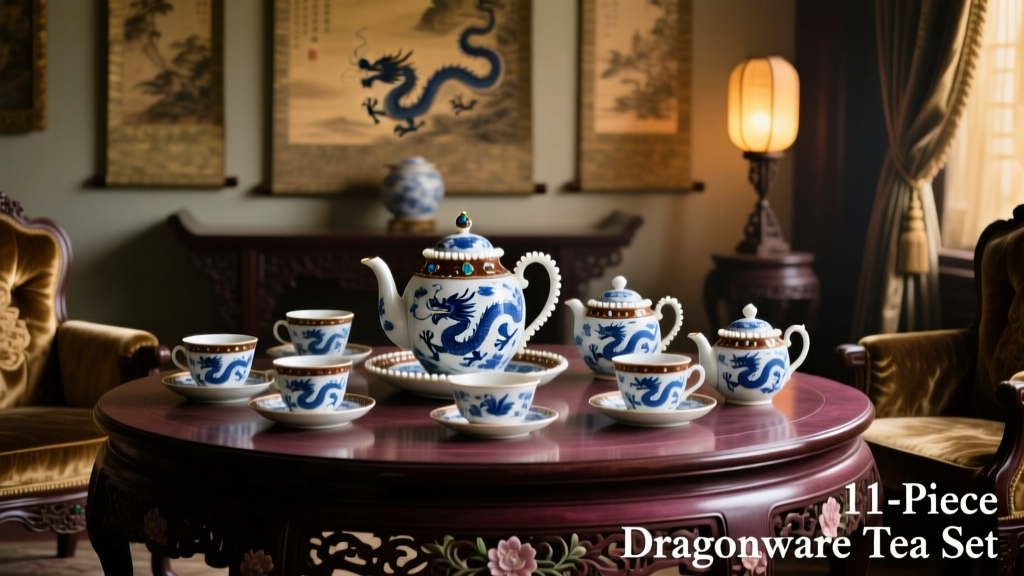
Dragonware Tea Set: Jeweled Brown Trim & White Beading — A Collector’s Guide to the 11-Piece Vintage Set

The Nosco 'UN Freedom Plane' Toy Airplane: History, Identification, and Restoration Insights for Collectors
Looking for Any History on This Maker: A Practical Guide to Identifying and Researching Antique Furniture Makers
Georgian-Style Electrified Dollhouse: A Six-Room Masterpiece with Authentic Period Detailing
Redware Flask with Brown-Yellow Glaze: A Detailed Examination of a 9¾ × 4⅜-Inch American Folk Art Vessel
Banks Mechanical Two-Frog Bank: A Technical and Historical Deep Dive into the J. E. Stevens 8 1/8-Inch Cast-Iron Toy Bank
Wake Georgian Drop Leaf Table: Authentic Provenance, Structural Integrity, and Restoration Protocol for a 29 × 56-Inch Example
Fiesta Red Chop Plate (13-Inch): History, Identification, Value, and Care for Antique Collectors