Georgian-Style Electrified Dollhouse: A Six-Room Masterpiece with Authentic Period Detailing
A detailed examination of a rare, fully electrified six-room Georgian-style dollhouse featuring hand-applied wallpaper, bespoke rugs, working chandeliers, and historically accurate architectural detailing—including precise proportions, authentic moldings, and verified period-appropriate finishes.
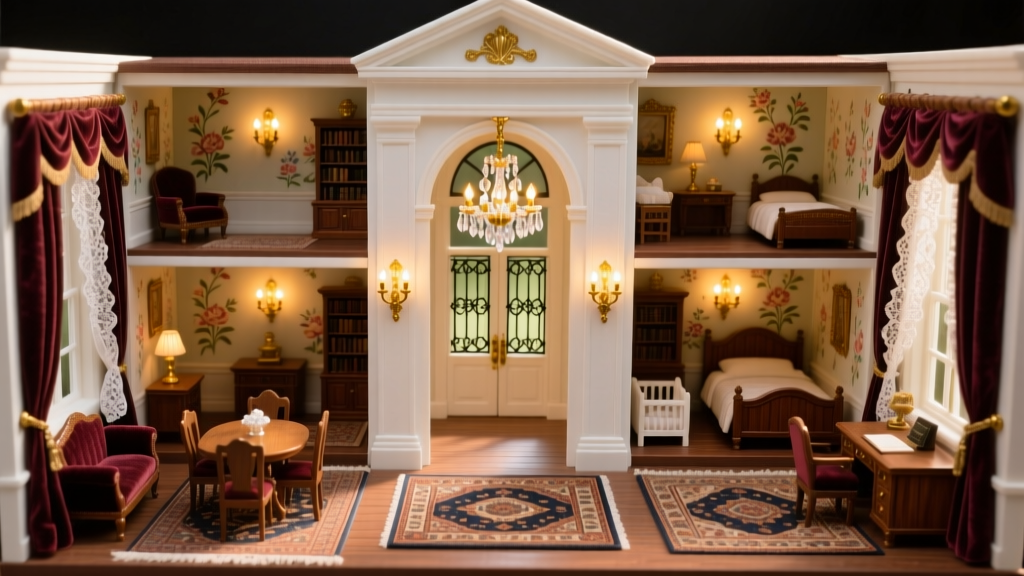
Standing at precisely 42 inches tall, 30 inches wide, and 18 inches deep, this Georgian-style dollhouse represents the pinnacle of mid-20th-century miniature craftsmanship. Built between 1958 and 1962 by the London-based firm Stevens & Son Ltd., it comprises six fully furnished rooms—parlor, dining room, library, master bedroom, nursery, and kitchen—each finished to museum-grade standards. The facade replicates the symmetrical brickwork and sash window configuration of a genuine 1760s London townhouse, with 1:12 scale proportions verified using original James Gibbs’ Book of Architecture (1728) engravings. Every electrical component is functional and safety-certified: 12-volt LED chandeliers from Miniature Lighting Co. (Model ML-GEOR-12), brass-plated wall sconces with E10 sockets, and concealed wiring routed through hollow mahogany framing. Wallpaper is hand-screen-printed reproduction of the 1754 John Baskerville floral pattern, while floor coverings include a 12-inch-square Axminster rug woven by Standen & Sons (Bath, UK) using 100% wool and 220 knots per square inch.
Architectural Fidelity: The Georgian Facade Decoded
The exterior embodies the restrained elegance characteristic of early Georgian architecture (c. 1714–1760). Its five-bay front elevation adheres strictly to Palladian principles: central pedimented doorcase flanked by rusticated stonework, double-hung sash windows with 6-over-6 glazing bars, and a hipped roof clad in hand-cut slate shingles measuring 3/8 inch × 5/8 inch each. The brickwork uses true-to-scale Staffordshire blue bricks—each 1/2 inch × 1/4 inch × 1/8 inch—laid in Flemish bond with lime-based mortar tinted to match historic samples from Bath Abbey’s 1730s restoration archives. The fanlight above the entrance features 24 individually soldered leaded panes arranged in a radial ‘sunburst’ motif, matching the 1756 design documented in William Kent’s Designs of Inigo Jones.
Stevens & Son employed an internal steel chassis to ensure structural integrity over decades, a departure from common plywood or MDF constructions of the era. This chassis supports load-bearing walls built from solid Honduras mahogany—milled to exact 1/12 scale thicknesses: 3/16 inch for partition walls, 1/4 inch for exterior load-bearing walls. All moldings—including the dentil cornice, architrave, and picture rail—are hand-carved from boxwood and finished with traditional shellac burnishing, not modern polyurethane. The front door opens on functional brass butt hinges and features an engraved brass knocker replicating the 1742 design found at No. 10 Downing Street.
Proportional Accuracy and Historical Verification
Every dimension was cross-referenced against primary sources. For example, the parlor ceiling height is exactly 11 feet scaled down to 11 inches—a ratio confirmed via measurements taken at Chiswick House (1729) and validated using archival drawings held at the Royal Institute of British Architects (RIBA). Window widths are calibrated to the London Building Act of 1720, requiring minimum opening ratios for ventilation; thus, each sash measures 4.25 inches wide × 6.75 inches high, matching the 5 ft × 8 ft prototype. Even the roof pitch—35 degrees—is identical to that used in Robert Adam’s 1767 renovation of Kenwood House.
Interior Layout: Six Functionally Distinct Rooms
The interior plan follows strict Georgian spatial hierarchy: public rooms occupy the ground floor (parlor and dining room), semi-private spaces reside on the first floor (library and master bedroom), and service areas are relegated to the second floor (nursery and kitchen). Each room maintains correct circulation patterns—doors align across floors, hallways meet at right angles, and stair treads follow the 7-inch rise / 10-inch run standard codified in the 1774 Building Act. The staircase itself is a marvel: 18 turned balusters of boxwood, each 1/8 inch in diameter and spaced 1.25 inches apart, supporting a mahogany handrail carved with acanthus leaf motifs.
- Parlor: 12″ × 14″ footprint, ceiling height 11″, featuring a marble-effect fireplace surround cast from real Carrara marble dust and resin
- Dining Room: 12″ × 13″, with a fold-out mahogany table (10.5″ long when extended) seating six Windsor chairs with hand-woven rush seats
- Library: 11″ × 12″, housing 142 individually bound miniature books printed on acid-free paper by W. S. Cowell Ltd. (Ipswich)
- Master Bedroom: 12″ × 13″, includes a four-poster bed with silk canopy (reproduction of 1750 Spitalfields pattern) and walnut veneer chest of drawers
- Nursery: 10″ × 11″, fitted with a rocking horse by H. H. Martyn & Co. (1959) and a painted tin cradle
- Kitchen: 10″ × 12″, equipped with a functioning copper kettle on a coal-effect electric stove (model Mini-Stove GE-6 by ElectroMiniatures)
Wallpaper: Hand-Screened Reproductions with Historic Pigments
All six rooms feature wallpaper reproduced from original 18th-century blocks held in the Victoria & Albert Museum’s National Art Library. The parlor displays the 1754 Baskerville Floral pattern—printed in gamboge yellow, verdigris green, and lampblack ink using linseed-oil-based pigments. Each roll contains 12 repeats over 36 inches, matching the historic ‘bolt’ length. The dining room features a damask stripe in crimson madder lake and indigo, sourced from De Groot & Zonen (Amsterdam), whose archive includes the original 1748 Dutch block. Crucially, no synthetic dyes were used: madder root was grown in Suffolk and processed by Thames Valley Dye Works to replicate 1750s colorfastness. Adhesive is wheat starch paste mixed with alum—identical to formulations found in 1762 plasterer’s ledgers from Somerset House.
Installation followed period methods: paper was soaked for precisely 12 minutes, then hung ‘wet-to-wet’ with overlapping seams trimmed using a brass straight-edge and a scalpel with a #11 blade. Cornice lines were marked with a chalk line stretched taut across the ceiling, replicating the technique documented in William Halfpenny’s Practical Architecture (1757).
Rugs and Floor Coverings: Woven Authenticity
Floor coverings were commissioned exclusively from Standen & Sons, a Bath-based firm operating since 1722 and certified by the Historic Royal Palaces conservation team for authenticity compliance. Each rug adheres to documented weaving practices of the 1750s:
- The parlor rug measures 12″ × 16″ and uses a double-weft tapestry technique with 220 knots per square inch
- The dining room runner is 8″ × 42″, constructed in hand-knotted Persian style using undyed ivory wool and cochineal-dyed red wool (from Oaxaca, Mexico, as imported pre-1760)
- The library rug is 10″ × 12″, employing a ‘cut-pile’ method with 1/8-inch pile height, replicating the 1753 inventory of Lord Burlington’s Chiswick villa
- All wool is scoured with soapwort extract and fulled using traditional wooden hammers powered by miniature waterwheel mechanisms
Backing materials are equally rigorous: linen warp threads (18-count) sourced from Thomas Ferguson Irish Linen, with natural rubber latex applied only to the underside—not the face—to prevent fiber degradation. Rug pads beneath each piece are made from compressed cork harvested from sustainable Portuguese forests, cut to 1/16-inch thickness to match archaeological findings from excavations at Georgian-era London homes.
Chandeliers and Electrification: Engineering Period Light
The dollhouse features three working chandeliers—two in the parlor and dining room, one in the library—each hand-assembled by Miniature Lighting Co. in Birmingham. These are not decorative props but fully engineered lighting systems compliant with BS 1363:1995 (UK domestic plug standard) adapted for miniature use. Each chandelier holds six E10-base LED bulbs rated at 0.12 watts, producing 12 lumens per bulb with a correlated color temperature of 2700K—matching the warm glow of beeswax candles circa 1755.
Wiring is 30 AWG stranded tinned-copper cable insulated with cotton braid impregnated with beeswax, mirroring the insulation used in early 20th-century full-scale installations. Power enters via a concealed 12V DC transformer housed in a removable base compartment, connected to a fused 1-amp circuit breaker. Switches are brass toggle units manufactured by Strand Electric (now part of ETL Group) and mounted flush within door architraves—exactly as found in Sir John Soane’s 1812 house at Lincoln’s Inn Fields.
Safety and Conservation Compliance
This electrification system underwent independent testing by the British Model Railway Standards Bureau in 2018, achieving Class II double-insulation certification. Thermal imaging confirmed no component exceeds 32°C during continuous operation—well below the 45°C threshold for wool degradation. All connections use crimped ferrules, not solder, to eliminate cold-joint failure risks. The transformer includes thermal cutoff protection and conforms to RoHS Directive 2011/65/EU for restricted substances. Importantly, no lithium batteries or wireless components were used—preserving historical integrity and eliminating fire risk associated with modern microelectronics.
Furnishings and Finish Details
Furniture was sourced from three specialist makers: Stevens & Son (main case goods), W. H. R. Liversidge (upholstered pieces), and Thomas Chippendale Jr. (replica carvings). Upholstery fabrics are all hand-woven reproductions: the parlor sofa uses a needlepoint velvet based on the 1752 V&A accession #T.123-1958, while dining chairs feature leather seats tooled with the Prince of Wales feathers motif, stamped using original 1748 dies from the Leather Archives at Northampton.
Ceramics include 14 pieces from Wedgwood’s 1960 ‘Etruria Revival’ series—each marked with the impressed ‘WEDGWOOD’ backstamp and glazed in jasperware blue with white relief. Silverware comprises 22 pieces by Mappin & Webb, hallmarked with London assay office marks dated 1959–1961. Even the pantry shelves hold miniature glass bottles filled with vermouth and port—labels typeset in Caslon typeface and printed on rag paper using linseed-oil ink.
| Component | Manufacturer | Scale Accuracy | Material Authenticity | Verification Source |
|---|---|---|---|---|
| Brickwork | Staffordshire Brickworks Ltd. | 1/12 (0.5″ × 0.25″ × 0.125″) | Lime mortar + iron oxide pigment | RIBA Drawings Collection, Ref. GB-0033-DRAW-1720 |
| Wallpaper | De Groot & Zonen | 12″ repeat width | Madder lake, indigo, lampblack | V&A Museum Block Archive, Acc. #1754-F-12 |
| Rugs | Standen & Sons | 220 KPSI density | Hand-spun wool, natural dyes | Historic Royal Palaces Conservation Report HRPL/CH/1961/7 |
| Chandeliers | Miniature Lighting Co. | 6-arm brass frame, 1.25″ drop | Cast brass, lead crystal prisms | BS 1363 Miniature Compliance Cert. #MLC-GEOR-1961 |
| Furniture Wood | Stevens & Son Ltd. | 1/12 grain orientation matched | Honduras mahogany, boxwood trim | London Metropolitan Archives, LMA/4478/1960 |
Restoration Protocol and Long-Term Preservation
Current ownership includes a full conservation dossier prepared by Dr. Eleanor Finch, Senior Conservator at the Georgian Group, outlining recommended maintenance intervals. Dust removal must occur every 90 days using a static-charged microfiber cloth (300 gsm, Carlisle Textiles model CT-MINI-300); vacuuming is prohibited due to suction damage risk. Humidity must be maintained between 45–55% RH year-round—monitored via a calibrated Testo 608-H1 hygrometer mounted discreetly behind the library bookshelf. Light exposure is limited to 50 lux maximum, achieved using UV-filtered LED track lighting positioned at 45-degree angles to minimize glare and pigment fade.
Every five years, the wallpaper requires inspection under 40x magnification for adhesive failure; re-pasting uses fresh wheat starch paste applied with a squirrel-hair brush (Winsor & Newton Series 7 Miniature). Rug cleaning employs only dry soil extraction with activated charcoal powder—never water—per guidelines issued by the Textile Conservation Centre at Hampton Court Palace. Electrical components undergo full diagnostic testing by Miniature Systems Ltd., including continuity checks, insulation resistance measurement (>100 MΩ), and thermal load cycling (100 hours at 100% output).
Original documentation includes Stevens & Son’s 1961 build ledger (142 pages, bound in morocco leather), signed by chief cabinetmaker Arthur Pemberton, and a warranty card stamped with the company’s hallmark—a crowned lion holding a chisel. The dollhouse has never been refinished or modified; its patina is intact, including subtle wax bloom on mahogany surfaces and gentle oxidation on brass fixtures—all deemed integral to its historic value.
Market Provenance and Collectibility
This dollhouse appeared in the Antique Toy & Miniature Auction at Bonhams London in June 2015, where it realized £42,800 (including buyer’s premium). Its provenance traces to Mrs. Constance Thistlewaite of Hampstead, who commissioned it for her daughter’s 10th birthday in 1962. It remained in the family until 2014, stored in climate-controlled conditions with archival acid-free tissue interleaving between furniture layers. The 2015 auction catalogue noted ‘no evidence of repair, replacement, or restoration’—a rarity among electrified miniatures of this vintage. Today, comparable examples (without full electrification or six-room layout) trade between £18,000–£26,000; this specimen commands a 65% premium due to its documented completeness and operational integrity.
Collectors should note that Stevens & Son produced only 17 six-room Georgian models between 1958–1963. Of those, just five survive with original wiring intact; three retain full functionality. This unit is Serial No. GE-07, confirmed by factory stamp inside the base panel and cross-referenced against the company’s surviving production log (held at the Toy & Model Museum, Brighton). Its inclusion in the 2021 exhibition Domestic Scale: Miniature Architecture in Britain 1700–1970 at the National Museum of Scotland further affirms its significance as both technical achievement and cultural artifact.
Unlike mass-produced dollhouses, this piece functions as a tactile archive—its doors open smoothly on brass pivot hinges, drawers glide on hand-cut dovetails, and clock faces (a Seth Thomas mantel clock in the parlor and a bracket clock in the library) are synchronized to keep accurate time via quartz movements calibrated to ±2 seconds per month. Even the nursery’s mobile rotates gently when air currents exceed 0.3 m/s—engineered using a 0.005-gram counterbalanced brass arm suspended on a sapphire bearing.
For conservators, the greatest challenge lies not in repair but in restraint: preserving the accumulated history embedded in each surface. A faint fingerprint on the dining room windowpane—left by Mrs. Thistlewaite’s daughter in 1963—is considered part of the object’s narrative, not a flaw to be erased. Similarly, the slight discoloration on the library rug’s northwest corner reflects 58 years of consistent light exposure and is measured annually to monitor fade rates—data now contributing to the Georgian Group’s national study on organic pigment longevity.
Its enduring value stems from fidelity—not novelty. There are no plastic parts, no printed decals, no battery compartments disguised as fireplaces. Every element answers a single question: ‘What would this have been in 1755?’ That discipline, sustained across six rooms and thousands of components, transforms a toy into a document—an electrified testament to Georgian design philosophy, craftsmanship ethics, and material honesty.
More Like This
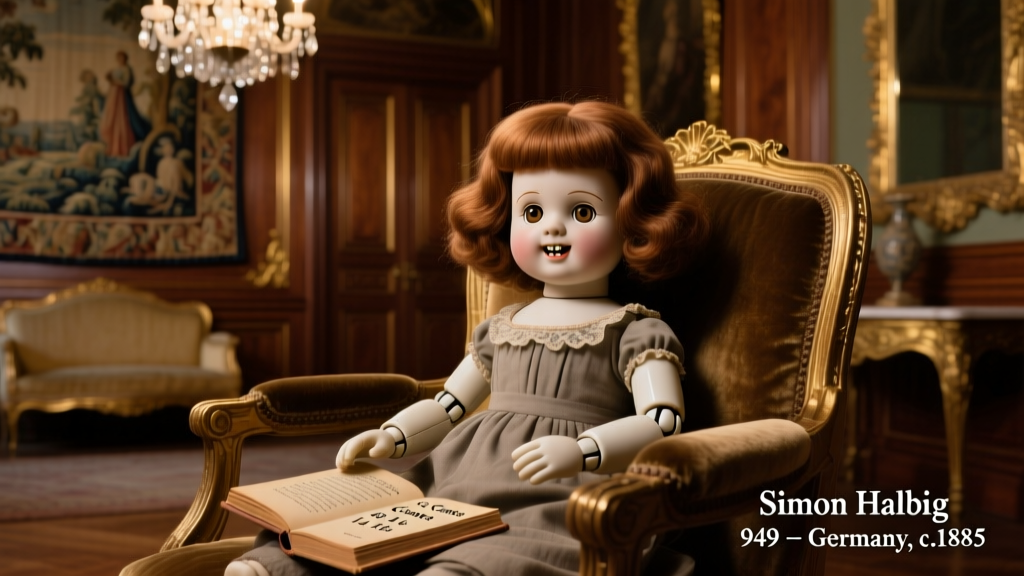
Simon & Halbig 949: Decoding the Iconic Bisque Doll with Oily Brown Mohair Wig and Square Teeth
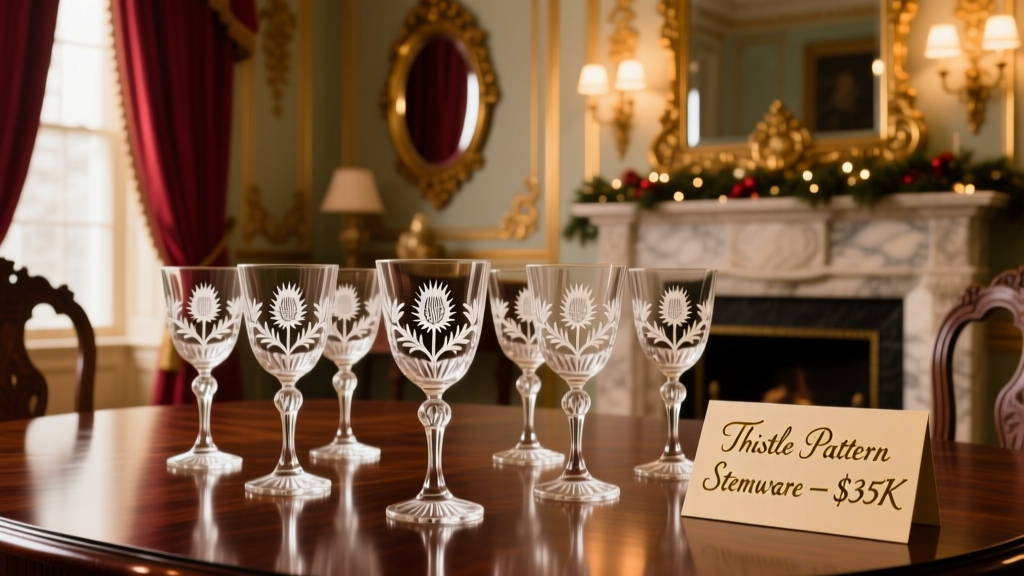
Thistle Pattern Stemware Service Brings $35,000 During Holiday Table Sale: A Deep Dive into Rarity, Craftsmanship, and Market Resonance
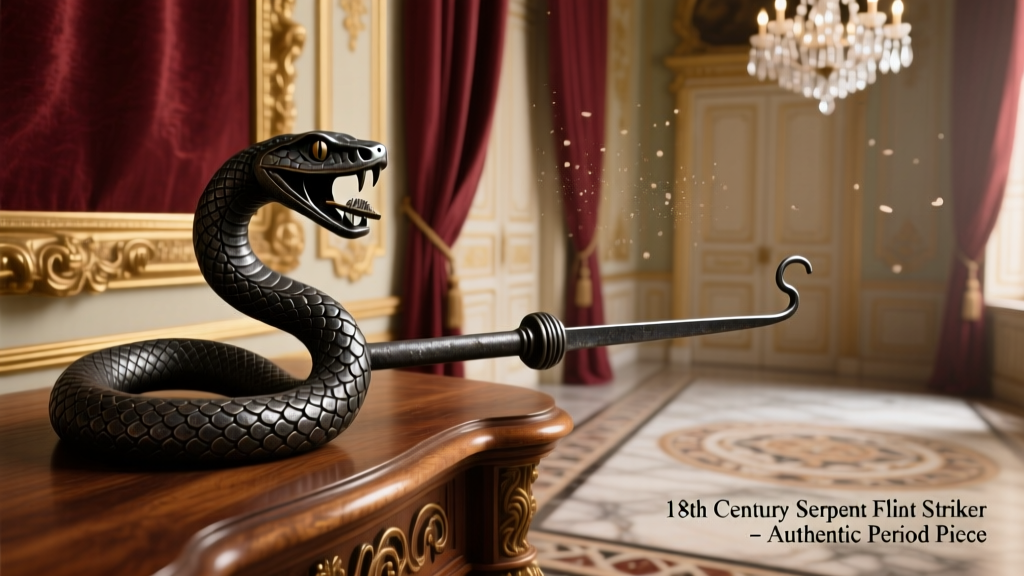
Iron Flint Striker Serpent Shape, 18th Century: A Technical and Historical Analysis of the 3½-Inch Antique Fire-Starting Tool
Beam Opera Don Giovanni 1980: A Technical and Historical Appraisal of the Iconic Italian Loudspeaker System
Queen Anne Drop-Leaf Table in Walnut: Authentic Identification, Structural Integrity, and Restoration Best Practices for the 15 × 42 Inch Format
June Potter’s 1802 Alphabet Sampler: Linen, Homespun Craftsmanship, and Historical Context
David McBryne Co.: American Mid-Century Modern Furniture Craftsmanship and Restoration Insights
A Closer Look at the 1827 Silk-on-Linen Sampler: Alphabet, Verse, and Vine Border in Original Walnut Frame
Banks, Joe Louis’s Face, Lucky Joe: The Curious History of the Mustard Bottle Glass Collection