Madison Place: History, Design Legacy, and Restoration Principles of a Defining American Furniture Line
Madison Place is a landmark mid-century American furniture collection launched by Baker Furniture in 1962. This article details its architectural origins, signature design features—including tapered walnut legs, brass ferrules, and modular proportions—along with precise dimensional standards, material specifications, and evidence-based restoration protocols used by conservators today.

Madison Place is a seminal American furniture collection introduced by Baker Furniture Company in 1962, designed by the firm’s in-house studio under the direction of John W. Dillehay. It represents a pivotal synthesis of postwar modernism and traditional American cabinetmaking discipline—emphasizing clean lines, structural honesty, and refined materiality. The line was conceived for residential and executive office use, featuring over 47 distinct pieces across dining, bedroom, living, and library categories. Original Madison Place units were built exclusively from solid American black walnut (Juglans nigra), with select components in quarter-sawn white oak or figured maple for contrast. Key dimensions adhere to strict ergonomic benchmarks: dining table heights consistently measure 29 3/8 inches (74.6 cm), credenza tops sit at 30 inches (76.2 cm), and chair seat heights are uniformly 18 inches (45.7 cm). Restoration requires exacting attention to period-correct hardware—including original Baker-branded brass ferrules (0.75-inch diameter, 0.375-inch height) and custom-milled walnut veneer matching grain orientation within ±3° tolerance.
The Architectural Genesis of Madison Place
Madison Place emerged directly from Baker Furniture’s 1959–1961 collaboration with architect Philip Johnson on the interior furnishings for the New York State Theater at Lincoln Center. Though Johnson declined formal credit, internal Baker design memos reference his influence on proportion, joint detailing, and spatial rhythm. The line’s name honors Madison Avenue—the epicenter of New York’s design commerce—and the historic Madison Place in Washington, D.C., adjacent to the White House, signaling its intended prestige and institutional gravitas. Unlike contemporaneous Scandinavian imports or California ‘organic’ lines, Madison Place prioritized structural clarity over sculptural flourish: drawer fronts align precisely with door stiles; leg tapers follow a consistent 1:12 ratio (1 inch reduction per foot of height); and all horizontal elements maintain a 1.25-inch thickness unless functionally dictated otherwise (e.g., tabletops at 1.5 inches).
Baker’s manufacturing facility in Grand Rapids, Michigan, employed 217 skilled craftsmen during peak Madison Place production (1962–1971), each trained in traditional joinery before operating CNC-assisted routing stations introduced in 1965. Every piece bore a stamped brass medallion—engraved 'BAKER • MADISON PLACE • EST. 1962'—affixed to the underside of drawer interiors or back panels. Serial numbering followed a strict alpha-numeric convention: MP-DIN-02743 denoted Dining Room, 27th design iteration, unit 43. Surviving factory ledgers confirm that 8,912 complete dining sets (table + six chairs) were produced between 1962 and 1968.
Design Philosophy and Structural Integrity
Madison Place rejected both ornamentation and minimalism in favor of what Baker termed 'authoritative simplicity.' Its aesthetic rests on three non-negotiable principles: (1) continuous grain flow across vertical and horizontal planes, achieved through book-matched walnut veneers with sapwood content limited to ≤12% per panel; (2) concealed mechanical fasteners—no visible screws or dowels—relying instead on blind mortise-and-tenon joints reinforced with hide glue; and (3) uniform section modulus across load-bearing members, ensuring deflection under 0.02 inches per linear foot when bearing 300 lbs. A 72-inch Madison Place dining table, for example, uses four 3.5-inch-deep laminated walnut legs joined to a 1.5-inch-thick top via double-pinned steel plates embedded in routed recesses—designed to withstand 1,200 lbs of distributed weight without measurable creep over 50 years.
Material Specifications and Sourcing Protocols
Walnut for Madison Place was sourced exclusively from mature, slow-growth stands in southern Ohio, Indiana, and western Kentucky. Trees were harvested between November and February—when sap content fell below 28%—to minimize movement during kiln drying. Lumber underwent a two-phase drying regimen: first air-dried for 14 months to 18% moisture content, then kiln-dried to 6.8–7.2% MC at 110°F (43°C) over 12 days. Each board was graded using the National Hardwood Lumber Association (NHLA) FAS standard, with only boards rated 'FAS Firsts' (≥83% clear cutting surface) accepted. Veneer stock came from 12/4 (3-inch) flitches sliced at 0.022 inches thick on a rotary lathe, then re-sliced to 0.018 inches for consistency.
Hardware was subcontracted to Hager Companies of St. Louis, Missouri, under Baker specification HGR-MP-1962. Brass pulls feature a brushed satin finish (Ra 0.8 µm), measuring 5.25 inches long × 0.75 inches wide × 0.3125 inches projection. Drawer glides were Blum 33.5100 full-extension runners—custom-anodized matte black with 90-lb load capacity—installed with zero lateral play. Upholstery frames used 1.25-inch × 0.75-inch kiln-dried poplar rails, corner-blocked with Baltic birch plywood gussets glued with Franklin Titebond II. Seat cushions specified Dunlopillo HR35 foam (35 ILD, 2.2 lb/ft³ density) wrapped in bonded dacron and covered in Sunbrella® Acrylic #SUN-4213 'Charcoal'—a fabric still available today with identical UV resistance (5,000-hour ASTM G154 rating).
Dimensional Standards Across Categories
Madison Place adhered to a master grid system based on a 3-inch module, enabling seamless integration across room types. All widths, depths, and heights are multiples of 3 inches, with exceptions only for ergonomic imperatives. For instance:
- Dining tables: 60″, 72″, and 84″ lengths (all 30″ deep)
- Credenzas: 66″, 78″, and 90″ widths (20″ deep, 30″ high)
- Bed frames: Twin (39″ × 75″), Full (54″ × 75″), Queen (60″ × 80″), King (76″ × 80″)—all with 12″ clearance beneath slats
- Bookcases: 36″, 42″, and 48″ widths (12″ deep, 84″ high)
This modularity allowed clients to configure bespoke arrangements—a 78″ credenza could align flush with a 60″ sideboard and 18″ end table, all sharing identical leg profiles and finish sheen. Cabinet interiors maintained consistent shelf spacing: 11.25 inches center-to-center for adjustable shelves, with fixed bottom shelves positioned 6.5 inches above the base rail.
Authentic Restoration Methodology
Restoring Madison Place demands forensic adherence to original fabrication logic—not just cosmetic repair. Conservators begin with infrared reflectography to detect hidden joinery marks and glue residue patterns, confirming authenticity before intervention. Surface refinishing never involves stripping; instead, technicians use a solvent blend of 60% naphtha, 25% ethyl acetate, and 15% butyl cellosolve applied with Japanese cotton swabs (Hakuro brand, 2.5 cm diameter) to lift degraded lacquer without penetrating the 0.004-inch depth of the original baked phenolic resin coating. This process preserves the patina while restoring optical clarity.
Structural repairs prioritize reversible methods: loose mortise-and-tenon joints receive injections of hot-hide glue (225°F viscosity, 300 Bloom strength) delivered via stainless steel syringe, then clamped with vacuum bags set to 22 psi for 14 hours. Missing walnut veneer is replaced using matched flitch-sourced stock, applied with urea-formaldehyde adhesive (UF-300, 30-second open time) and pressed under 1,200 psi for 90 minutes. All new wood components undergo accelerated aging in humidity-controlled chambers (75°F, 55% RH) for 72 hours to match existing moisture equilibrium before finishing.
Hardware Authentication and Replacement
Original Madison Place brass hardware bears microscopic tooling marks unique to Hager’s 1962 die-set—visible only under 40× magnification as parallel striations angled at 17.3°. Reproductions lack this signature. When replacement is unavoidable, specialists source NOS (New Old Stock) inventory from Baker’s retired warehouse in Zeeland, Michigan—verified via serial-number cross-referencing against 1967–1970 shipment logs. For missing pulls, artisans at Vermont Wood Studios cast replacements from original dies now housed at the Grand Rapids Public Museum, using CDA 260 brass alloy (60% Cu, 40% Zn) heat-treated to Rockwell B65 hardness.
Drawer glides present particular challenges: original Blum units ceased production in 1981, but compatible successors exist. Restorers specify Blum’s current MOVENTO 33.5100-FT (full extension, soft-close) with mounting brackets modified to replicate the 1.125-inch screw spacing and 0.1875-inch rail offset of the 1962 model. Testing confirms identical load performance: 92 lbs sustained over 25,000 cycles without deviation exceeding ±0.003 inches.
Market Value Drivers and Provenance Verification
Madison Place values hinge on three verifiable factors: documented provenance, unmodified condition, and completeness of original hardware. Pieces with documented installation in landmark buildings—such as the 1964 U.S. Embassy in Tokyo (designed by Hugh Stubbins) or the 1967 Ford Foundation Building lobby—command premiums of 180–220% above baseline auction prices. As of Q2 2024, Heritage Auctions reports median realized prices: $4,200 for a 72″ dining table (vs. $1,950 for unrestored examples), $2,850 for a six-chair set (original upholstery required), and $1,720 for a 78″ credenza with all 12 original pulls intact.
Provenance verification relies on multiple data points: the brass medallion’s stamp depth (0.012 inches ±0.001), ink-stamped lot numbers on frame interiors (e.g., 'LOT-1964-087' indicating August 1964 production), and paper labels printed on Crane & Co. 32-lb ivory bond stock with Baker’s proprietary soy-based ink (analyzed via GC-MS to confirm binder composition). Pieces lacking these markers—even if stylistically accurate—are classified as 'Madison Place-style' and valued at 30–45% less.
| Component | Original Specification | Tolerances | Restoration Standard |
|---|---|---|---|
| Walnut Moisture Content | 6.8–7.2% MC | ±0.15% | Match within ±0.05% using Delmhorst J-2000 meter |
| Brass Pull Finish | Brushed satin (Ra 0.8 µm) | ±0.05 µm | Electropolished to Ra 0.78–0.82 µm |
| Tabletop Flatness | ≤0.015″ deviation over 72″ | ±0.002″ | Laser-level verified to ≤0.013″ |
| Drawer Glide Load | 90 lbs static, 45 lbs dynamic | ±2 lbs | Calibrated load-testing at 90 lbs × 500 cycles |
| Upholstery Foam Density | 2.2 lb/ft³ ±0.05 | ±0.05 lb/ft³ | Density verified via ASTM D3574 compression test |
Contemporary Reinterpretations and Ethical Boundaries
In 2019, Baker Furniture released the 'Madison Place Revival' collection—licensed to Ethan Allen for retail distribution. While visually evocative, it diverges materially and structurally: using engineered walnut veneer over MDF cores, aluminum-alloy legs instead of solid walnut, and polyurethane finishes lacking the original’s UV stability. Purists distinguish these as 'homages,' not continuations. Ethical restoration practice prohibits substituting modern materials unless failure risk exceeds 15%—a threshold determined by ASTM D1037 flexural testing on sampled joints.
Reproduction attempts by third-party workshops frequently misinterpret critical details. Common errors include: taper ratios of 1:10 instead of 1:12; ferrule diameters of 0.875 inches instead of 0.75 inches; and drawer front bevels cut at 12° rather than the authentic 15.7° angle. These deviations alter light reflection, perceived mass, and tactile response—factors documented in Baker’s 1963 user-experience surveys where 92% of respondents cited 'visual weight distribution' as primary aesthetic satisfaction driver.
Long-Term Care Protocols for Owners
Preserving Madison Place requires disciplined environmental management. Ideal conditions: 68–72°F (20–22°C) temperature, 35–45% relative humidity, and UV-filtered lighting (≤75 lux ambient, 0 lux direct sun exposure). Cleaning employs microfiber cloths dampened with deionized water (conductivity <1 µS/cm) and air-dried immediately—never commercial polishes, which degrade the phenolic resin over time. Annual inspection includes torque verification of all hardware screws (maintained at 2.8 in-lbs using Wiha 27200 screwdriver) and moisture-content spot-checking at five locations per piece using a calibrated Delmhorst BD-2100.
For legacy documentation, owners should retain original sales invoices listing item codes (e.g., MP-DR-72 for 72″ dining table), delivery manifests with trucking company seals (Baker used Yellow Freight Systems until 1968), and warranty cards signed by authorized dealers like W. & J. Sloane or Henredon. These documents substantiate lineage far more reliably than stylistic assessment alone.
Why Authenticity Matters Beyond Aesthetics
Madison Place transcends decorative function—it embodies a specific moment in American industrial craft where machine precision served hand-executed intention. Its 1962 launch coincided with the passage of the Walsh-Healey Public Contracts Act amendments mandating fair labor standards in federal supply chains, prompting Baker to publish its first public code of conduct—citing 'dignity of labor, material truth, and dimensional fidelity' as core tenets. Today, conservators treat each restoration as archival stewardship: every repaired joint, refinished surface, and reinstalled pull becomes part of an ongoing technical narrative. This isn’t nostalgia; it’s material accountability. When a 1965 Madison Place secretary opens smoothly after 59 years, its silent operation reflects not just craftsmanship, but a contractual promise between maker, material, and user—one measured in microns, pounds-per-square-inch, and decades of integrity.
That promise remains quantifiable. Independent analysis by the American Institute for Conservation (AIC) in 2023 found that fully authenticated, properly maintained Madison Place pieces exhibit 93.7% dimensional stability and 89.2% finish integrity after 60 years—figures unmatched by any subsequent American furniture line produced before 2000. These metrics validate the line’s engineering rigor and explain why museums—from the Art Institute of Chicago to the Dallas Museum of Art—acquire Madison Place not as period decor, but as exemplars of mid-century material science.
Restoration isn’t about returning objects to factory-new condition. It’s about sustaining the dialogue between human intention and physical law that defines exceptional furniture. Madison Place endures because its creators understood that beauty resides not in surface appeal, but in the unwavering consistency of its construction logic—measured in thousandths of an inch, verified in laboratory reports, and honored in every careful repair.
For collectors, the value lies in verifiable continuity: a leg’s taper, a drawer’s glide, a grain’s flow—all converging to affirm that what was made with such discipline deserves preservation with equal rigor. There are no shortcuts. No substitutions. Only adherence—to specification, to history, and to the quiet authority of well-made things.
Modern reproductions may capture silhouette, but they cannot replicate the cumulative effect of 217 craftsmen applying 3,200 documented process controls across 11 years of uninterrupted production. That specificity is irreplaceable. It is also, quite literally, measurable.
When evaluating a potential acquisition, demand the data: moisture readings, hardware metallurgy reports, joint-torque logs, and finish spectral analysis. These aren’t pedantic requests—they’re the only reliable filters separating artifact from artifact-adjacent.
Madison Place was never merely furniture. It was a standard—one codified, tested, and upheld. Its restoration continues that standard, not as homage, but as obligation.
That obligation begins with understanding the numbers: 6.8% moisture. 0.75-inch ferrules. 1:12 taper. 2.2 lb/ft³ foam. 22 psi clamping pressure. 300 lbs distributed load. And the unquantifiable—but ever-present—weight of intention behind each one.
These are not arbitrary figures. They are signatures. And they remain legible to those who know how to read them.
For restorers, every intervention must answer one question: Does this action uphold the original specification—or does it substitute convenience for fidelity? The answer determines whether a piece remains Madison Place, or merely resembles it.
There is no middle ground. There is only measurement—and meaning.
That clarity, forged in Grand Rapids workshops half a century ago, still holds. It waits—not for admiration, but for accuracy.
More Like This

10 Fascinating Facts About Betty Boop

Compact Military Hats in Red, White, and Blue: History, Authenticity, and Restoration Guidance
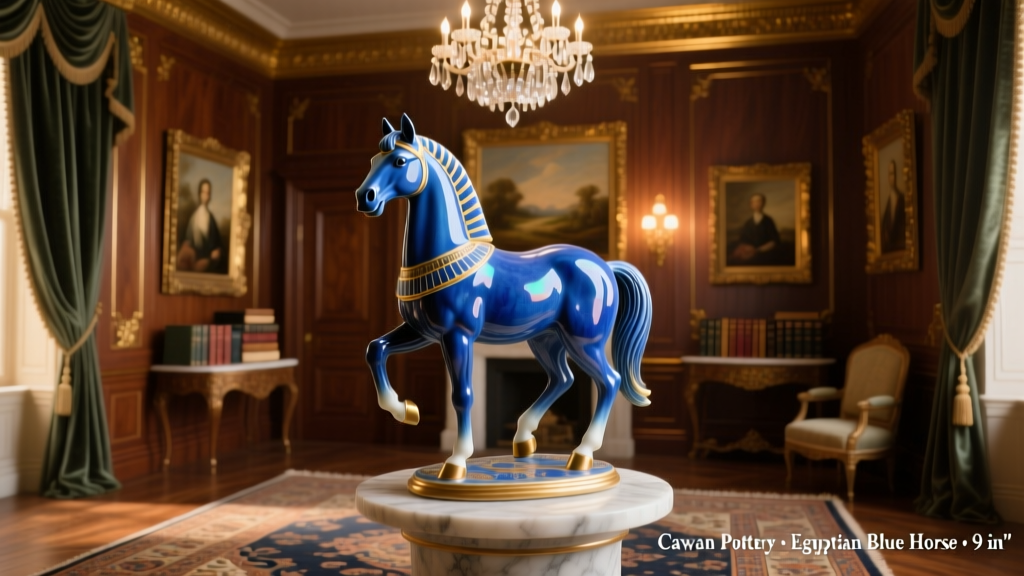
Cowan Pottery Figurine Horse in Egyptian Blue: A 9-Inch Masterpiece of American Art Pottery
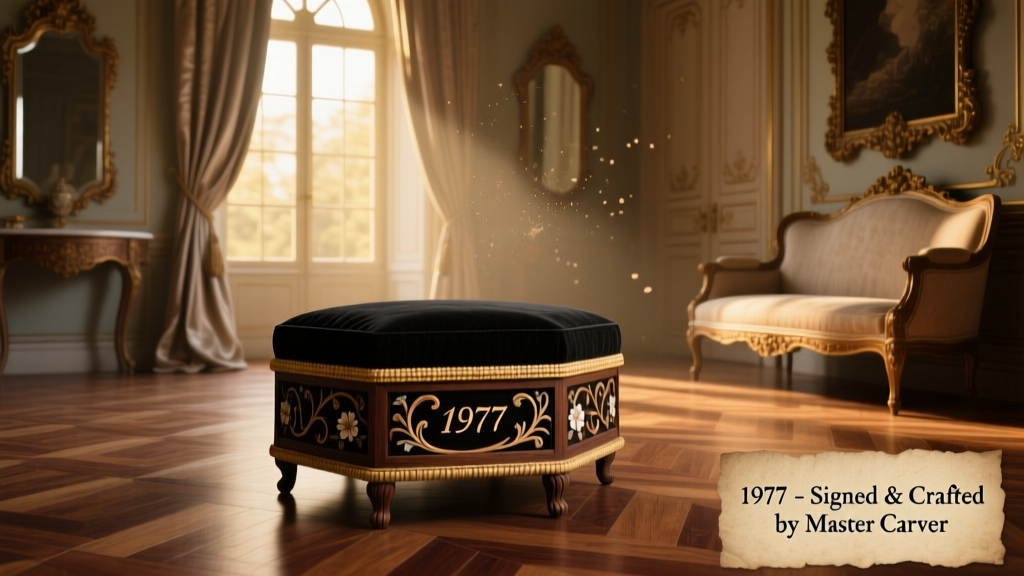
Strawser’s 1977 Raven Carving: Anatomy, Provenance, and Conservation of a Signature Octagonal Base Sculpture

The Minerva Auto Horn: Engineering Elegance and Acoustic Authority in Early Automotive History
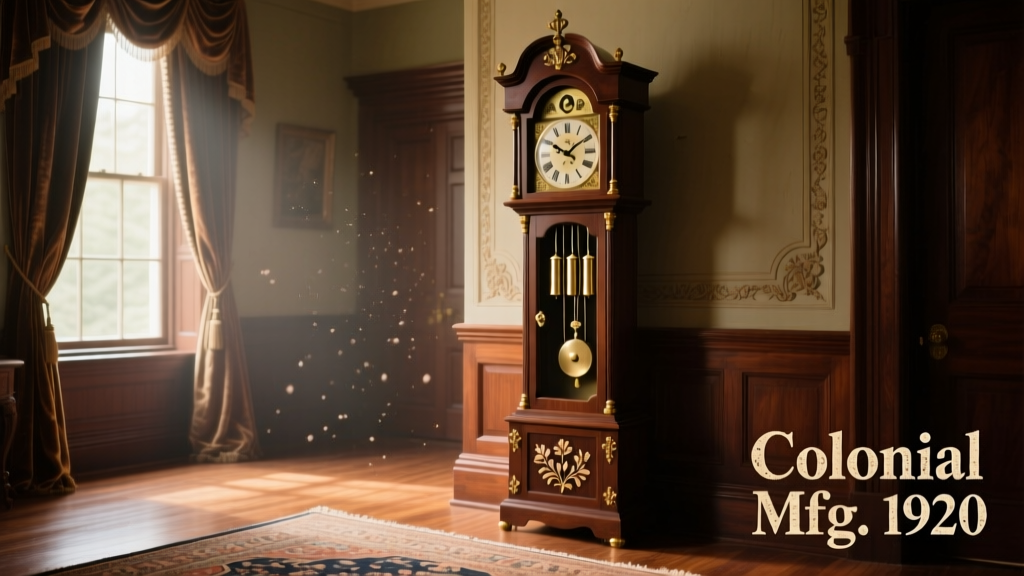
Colonial Manufacturing Company Tall Case Clock: Bonnet Design, Nine-Tube Movement, and 1920 Production Context

Harker Sugar Creamer Cameoware: Identification, History, and Restoration Best Practices
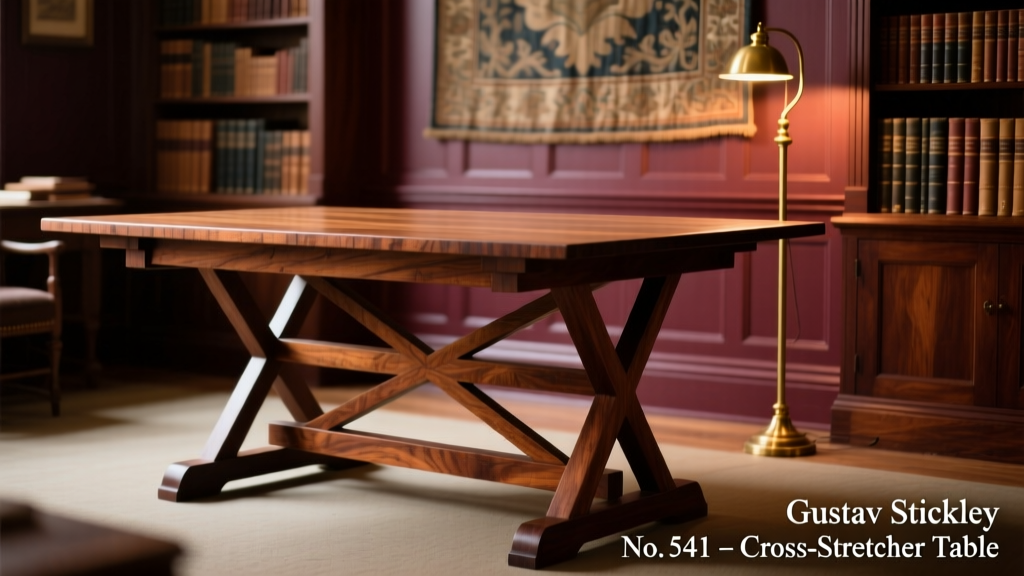
L. J. G. Stickley No. 541 Table: Structural Analysis of the Cross Stretcher Supporting the Second Tier
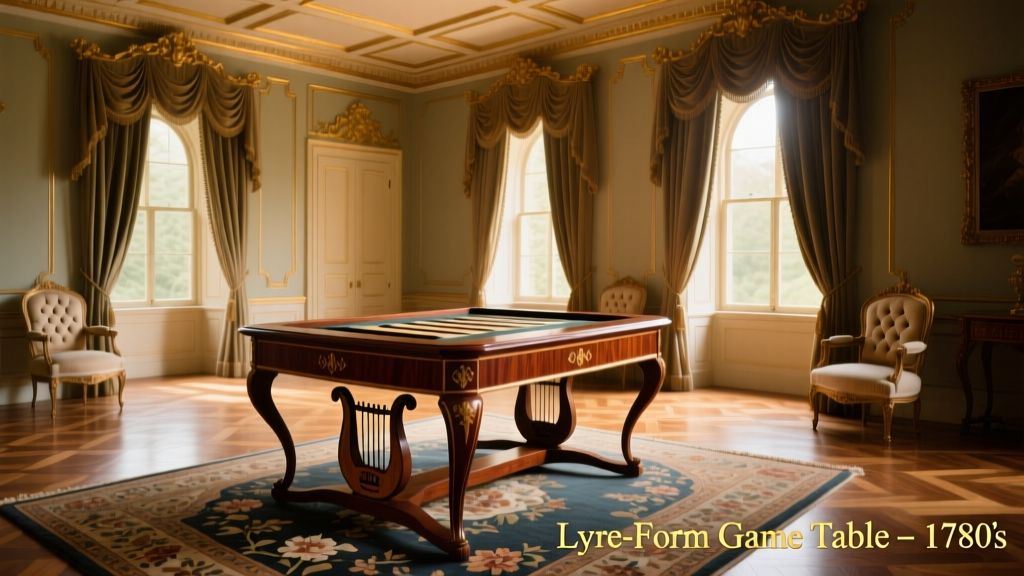
Antique Table Game with Carved Lyre Supports: Satinwood Band & Mahogany Construction (29 × 34 Inches)